- Latest available (Revised)
- Original (As enacted)
Income Tax Act 2007
You are here:
- UK Public General Acts
- 2007 c. 3
- Whole Act
- Previous
- Next

What Version
Advanced Features
- Show Geographical Extent(e.g. England, Wales, Scotland and Northern Ireland)
- Show Timeline of Changes
Opening Options
More Resources
Changes over time for: Income Tax Act 2007
Alternative versions:
- 20/03/2007- Amendment
- 06/04/2007- Amendment
- 17/07/2007- Amendment
- 19/07/2007- Amendment
- 01/09/2007- Amendment
- 01/10/2007- Amendment
- 10/12/2007- Amendment
- 03/01/2008- Amendment
- 12/03/2008- Amendment
- 01/04/2008- Amendment
- 06/04/2008- Amendment
- 10/07/2008- Amendment
- 21/07/2008- Amendment
- 22/07/2008- Amendment
- 31/10/2008- Amendment
- 24/11/2008- Amendment
- 01/01/2009- Amendment
- 03/02/2009- Amendment
- 01/04/2009- Amendment
- 06/04/2009- Amendment
- 22/04/2009- Amendment
- 23/04/2009- Amendment
- 21/07/2009- Amendment
- 13/08/2009- Amendment
- 01/10/2009- Amendment
- 01/12/2009- Amendment
- 01/01/2010- Amendment
- 18/03/2010- Amendment
- 01/04/2010- Amendment
- 06/04/2010- Amendment
- 08/04/2010- Amendment
- 27/07/2010- Amendment
- 02/12/2010- Amendment
- 16/12/2010- Amendment
- 01/01/2011- Amendment
- 01/02/2011- Amendment
- 01/04/2011- Amendment
- 06/04/2011- Amendment
- 19/07/2011- Amendment
- 13/10/2011- Amendment
- 06/12/2011- Amendment
- 01/01/2012- Amendment
- 15/01/2012- Amendment
- 08/03/2012- Amendment
- 14/03/2012- Amendment
- 01/04/2012- Amendment
- 06/04/2012- Amendment
- 01/07/2012- Amendment
- 17/07/2012- Amendment
- 19/07/2012- Amendment
- 06/12/2012- Amendment
- 19/12/2012- Amendment
- 31/01/2013- Amendment
- 01/03/2013- Amendment
- 01/04/2013- Amendment
- 06/04/2013- Amendment
- 17/07/2013- Amendment
- 26/07/2013- Amendment
- 07/08/2013- Amendment
- 05/12/2013- Amendment
- 01/01/2014- Amendment
- 01/03/2014- Amendment
- 01/04/2014- Amendment
- 06/04/2014- Amendment
- 08/04/2014- Amendment
- 28/04/2014- Amendment
- 17/07/2014- Amendment
- 01/08/2014- Amendment
- 01/12/2014- Amendment
- 10/12/2014- Amendment
- 19/03/2015- Amendment
- 26/03/2015- Amendment
- 01/04/2015- Amendment
- 06/04/2015- Amendment
- 08/07/2015- Amendment
- 21/10/2015- Amendment
- 18/11/2015- Amendment
- 30/11/2015- Amendment
- 01/01/2016- Amendment
- 17/02/2016- Amendment
- 06/04/2016- Amendment
- 19/07/2016- Amendment
- 15/09/2016- Amendment
- 19/10/2016- Amendment
- 14/11/2016- Amendment
- 30/11/2016- Amendment
- 05/12/2016- Amendment
- 24/03/2017- Amendment
- 06/04/2017- Amendment
- 27/04/2017- Amendment
- 31/05/2017- Amendment
- 29/06/2017- Amendment
- 03/07/2017- Amendment
- 31/07/2017- Amendment
- 16/11/2017- Amendment
- 28/11/2017- Amendment
- 29/11/2017- Amendment
- 30/11/2017- Amendment
- 15/12/2017- Amendment
- 01/01/2018- Amendment
- 03/01/2018- Amendment
- 15/03/2018- Amendment
- 06/04/2018- Amendment
- 24/07/2018- Amendment
- 06/11/2018- Amendment
- 07/02/2019- Amendment
- 12/02/2019- Amendment
- 06/04/2019- Amendment
- 05/07/2019- Amendment
- 05/11/2019- Amendment
- 02/12/2019- Amendment
- 18/01/2020- Amendment
- 23/03/2020- Amendment
- 06/04/2020- Amendment
- 20/05/2020- Amendment
- 22/07/2020- Amendment
- 07/12/2020- Amendment
- 31/12/2020- Amendment
- 01/02/2021- Amendment
- 01/04/2021- Amendment
- 06/04/2021- Amendment
- 31/05/2021- Amendment
- 10/06/2021- Amendment
- 31/07/2021- Amendment
- 13/12/2021- Amendment
- 24/02/2022- Amendment
- 18/03/2022- Amendment
- 06/04/2022- Amendment
- 24/05/2022- Amendment
- 27/05/2022- Amendment
- 30/06/2022- Amendment
- 01/04/2023- Amendment
- 06/04/2023- Amendment
- 01/06/2023- Amendment
- 16/01/2024- Amendment
- 23/01/2024- Amendment
- 22/02/2024- Amendment
- 06/04/2024- Amendment
- 24/05/2024- Amendment
- 27/05/2024- Amendment
- 03/09/2024- Amendment
- 17/01/2025- Amendment
- 21/01/2025- Amendment
- 20/03/2025- Amendment
- 06/04/2025- Amendment
- 20/01/2026- Amendment
- 18/03/2026- Amendment
- 06/04/2026- Amendment
- 25/06/2026- Amendment
- 15/07/2026- Amendment
- 16/09/2026- Amendment
Changes to legislation:
Income Tax Act 2007 is up to date with all changes known to be in force on or before 07 October 2026. There are changes that may be brought into force at a future date. Changes that have been made appear in the content and are referenced with annotations.
View outstanding changesChanges and effects yet to be applied to :
- s. 186A(4)(b)(i) word substituted by 2025 c. 36 s. 18(13)(a)
- s. 257DJ(4)(b)(i) word substituted by 2025 c. 36 s. 18(13)(b)
- s. 257MH(4)(b)(i) word substituted by 2025 c. 36 s. 18(13)(c)
- s. 297A(4)(b)(i) word substituted by 2025 c. 36 s. 18(13)(d)
- s. 332 words inserted by 2009 c. 10 Sch. 22 para. 11(5)(b)
- s. 332 words substituted by 2009 c. 10 Sch. 22 para. 11(5)(a)
- s. 811(6)(e) and word repealed by 2012 c. 14 Sch. 39 para. 28(1)
- s. 964(4)(b) words substituted by 2017 c. 32 Sch. 14 para. 36
- s. 989 words substituted by 2012 c. 14 Sch. 39 para. 28(2)
- Sch. 1 para. 179(2)(a) omitted by 2008 c. 9 s. 41(7)(k)
- Sch. 1 para. 179(2)(b) omitted by 2008 c. 9 s. 41(7)(k)
- Sch. 1 para. 180 omitted by 2008 c. 9 s. 41(7)(k)
- Sch. 1 para. 181 omitted by 2008 c. 9 s. 41(7)(k)
- Sch. 1 para. 232 repealed by 2012 c. 14 Sch. 39 para. 28(1)

Income Tax Act 2007
2007 CHAPTER 3
An Act to restate, with minor changes, certain enactments relating to income tax; and for connected purposes.
[20th March 2007]
Be it enacted by the Queen's most Excellent Majesty, by and with the advice and consent of the Lords Spiritual and Temporal, and Commons, in this present Parliament assembled, and by the authority of the same, as follows:—
Modifications etc. (not altering text)
C1Act modified (21.2.2009) by The Banking Act 2009 (Parts 2 and 3 Consequential Amendments) Order (S.I. 2009/317), art. 3, Sch.
Part 1U.K.Overview
1Overview of Income Tax ActsU.K.
(1)The following Acts make provision about income tax—
(a)ITEPA 2003 (which is about charges to tax on employment income, pension income and social security income [F1and makes provision for the high income child benefit [F2and winter fuel payment] charge]),
(b)ITTOIA 2005 (which is about charges to tax on trading income, property income, savings and investment income and some other miscellaneous income), and
(c)this Act (which contains the other main provisions about income tax).
(2)There are also provisions about income tax elsewhere: see in particular—
(a)[F3Part 2 of TIOPA 2010] (double taxation relief),
(b)CAA 2001 (allowances for capital expenditure), and
(c)Part 4 of FA 2004 (pension schemes etc).
(3)Schedule 1 to the Interpretation Act 1978 (c. 30) defines “the Income Tax Acts” (as all enactments relating to income tax).
Textual Amendments
F1Words in s. 1(1)(a) inserted (17.7.2012) (with effect in accordance with Sch. 1 para. 7 of the amending Act) by Finance Act 2012 (c. 14), Sch. 1 para. 6(2)
F2Words in s. 1(1)(a) inserted (for the tax year 2025-26 and subsequent tax years) by Finance Act 2026 (c. 11), Sch. 10 paras. 4(2), 5
F3Words in s. 1(2)(a) substituted (with effect in accordance with s. 381(1) of the amending Act) by Taxation (International and Other Provisions) Act 2010 (c. 8), s. 381(1), Sch. 8 para. 72 (with Sch. 9 paras. 1-9, 22)
2Overview of ActU.K.
(1)This Act has 17 Parts.
(2)Part 2 contains basic provisions about income tax including—
(a)provision about the annual nature of income tax (Chapter 1),
(b)the rates at which income tax is charged (Chapter 2), and
(c)the calculation of income tax liability (Chapter 3).
(3)Part 3 is about taxpayers' personal reliefs including—
(a)personal allowances (Chapter 2),
(b)blind persons' allowances (Chapter 2), and
(c)tax reductions for married couples and civil partners (Chapter 3).
(4)Part 4 is about loss relief including relief for—
(a)trade losses (Chapters 2 and 3),
(b)losses from property businesses (Chapter 4),
(c)losses in an employment or office (Chapter 5),
(d)losses on disposal of shares (Chapter 6), and
(e)losses from miscellaneous transactions (Chapter 7).
(5)Part 5 is about relief under the enterprise investment scheme.
[F4(5A)Part 5A is about relief under the seed enterprise investment scheme.]
[F5(5B)Part 5B is about relief for social investments.]
(6)Part 6 is about—
(a)relief for investment in venture capital trusts, and
(b)other matters relating to venture capital trusts.
(7)Part 7 is about community investment tax relief.
(8)Part 8 is about a variety of reliefs including relief for—
(a)interest payments (Chapter 1),
(b)gifts to charity including gift aid (Chapters 2 and 3),
(c)annual payments F6... (Chapter 4), and
(d)maintenance payments (Chapter 5).
(9)Part 9 contains special rules about settlements and trustees including—
(a)general provision about settlements and trustees (Chapter 2),
(b)special income tax rates for trusts (Chapters 3, [F74 and 5]),
(c)rules about trustees' expenses (Chapters 4 and 8),
(d)rules about trustees' discretionary payments (Chapter 7),
(e)F8... and
(f)rules about heritage maintenance settlements (Chapter 10).
[F9(9A)Part 9A is about the treatment of certain transactions in UK land.]
(10)Part 10 contains special rules about charitable trusts etc.
[F10(10A)Part 10A is about alternative finance arrangements.]
F11(11). . . . . . . . . . . . . . . . . . . . . . . . . . . . . . . .
[F12(11ZA)Part 11ZA is about manufactured payments.]
[F13(11A)Part 11A is about leasing arrangements involving finance leases or loans.]
(12)Part 12 is about accrued income profits.
[F14(12A)Part 12A is about sale and lease-back etc.]
(13)Part 13 is about tax avoidance in relation to—
(a)transactions in securities (Chapter 1),
(b)transfers of assets abroad (Chapter 2),
F15(c). . . . . . . . . . . . . . . . . . . . . . . . . . . . . . . .
(d)sales of occupation income (Chapter 4), F16...
(e)trade losses (Chapter 5) F17...
[F18(f)transfers of income streams (Chapter 5A).]
[F19(g)finance arrangements (Chapter 5B),
(h)loan or credit transactions (Chapter 5C),]
[F20(ha)disposals of assets through partnerships (Chapter 5D),]
[F21(hb)disguised investment management fees (Chapter 5E),]
[F22(hc)income-based carried interest (Chapter 5F),]
[F23(i)leases of plant and machinery (Chapter 6), and
(j)tax relief for interest (Chapter 7).]
(14)Part 14 deals with some miscellaneous rules about income tax liability, including—
[F24(za)an alternative basis for charge (the remittance basis) for certain income and gains of certain individuals (Chapter A1),]
(a)limits on liability to income tax for non-UK residents (Chapter 1),
[F25(aa)exemption for persons not domiciled in United Kingdom (Chapter 1A),]
(b)special rules about residence [F26and domicile (Chapters 2 and 2A)], F27...
[F28(ba)rules about UK representatives of non-UK residents (Chapters 2B and 2C),]
(c)rules about jointly held property (Chapter 3)[F29, and
(d)imposition of the charge to income tax on the receipts of certain types of company being wound up (Chapter 3A).]
(15)Part 15 is about the deduction of income tax at source.
(16)Part 16 contains definitions which apply for the purposes of the Income Tax Acts and other general provisions which apply for the purposes of those Acts.
(17)Part 17—
(a)contains provisions to be used in interpreting this Act,
(b)introduces Schedule 1 (minor and consequential amendments),
(c)introduces Schedule 2 (transitional provisions and savings),
(d)introduces Schedule 3 (repeals and revocations, including of spent enactments),
(e)introduces Schedule 4 (index of defined expressions that apply for the purposes of this Act),
(f)confers powers on the Treasury to make orders, and
(g)makes provision about the coming into force of this Act.
Textual Amendments
F4S. 2(5A) inserted (17.7.2012) (with effect in accordance with Sch. 6 para. 24(1) of the amending Act) by Finance Act 2012 (c. 14), Sch. 6 para. 7
F5S. 2(5B) inserted (17.7.2014) by Finance Act 2014 (c. 26), Sch. 11 para. 4
F6Words in s. 2(8)(c) omitted (with effect in accordance with s. 15(5) of the amending Act) by virtue of Finance Act 2013 (c. 29), s. 15(4)(a)
F7Words in s. 2(9)(b) substituted (6.4.2024 in relation to the tax year 2024-25 and subsequent tax years) by Finance (No. 2) Act 2023 (c. 30), Sch. 2 paras. 13(3)(a), 14(4)
F8S. 2(9)(e) omitted (6.4.2014) by virtue of The Unauthorised Unit Trusts (Tax) Regulations 2013 (S.I. 2013/2819), regs. 1(3), 37(2) (with reg. 32)
F9S. 2(9A) inserted (with effect in accordance with s. 82 of the amending Act) by Finance Act 2016 (c. 24), s. 79(2)(a) (and also with effect in accordance with Finance (No. 2) Act 2017 (c. 32), s. 39(1)(2))
F10S. 2(10A) inserted (with effect in accordance with s. 381(1) of the amending Act) by Taxation (International and Other Provisions) Act 2010 (c. 8), s. 381(1), Sch. 8 para. 220 (with Sch. 9 paras. 1-9, 22)
F11S. 2(11) omitted (1.1.2014) by virtue of Finance Act 2013 (c. 29), Sch. 1 para. 52, Sch. 29 para. 17(a)
F12S. 2(11ZA) inserted (1.1.2014) by Finance Act 2013 (c. 29), Sch. 1 para. 52, Sch. 29 para. 17(b)
F13S. 2(11A) inserted (with effect in accordance with s. 381(1) of the amending Act) by Taxation (International and Other Provisions) Act 2010 (c. 8), s. 381(1), Sch. 8 para. 238 (with Sch. 9 paras. 1-9, 22)
F14S. 2(12A) inserted (with effect in accordance with s. 381(1) of the amending Act) by Taxation (International and Other Provisions) Act 2010 (c. 8), s. 381(1), Sch. 8 para. 257 (with Sch. 9 paras. 1-9, 22)
F15S. 2(13)(c) omitted (with effect in accordance with s. 82 of the amending Act) by virtue of Finance Act 2016 (c. 24), s. 79(2)(b) (and also with effect in accordance with Finance (No. 2) Act 2017 (c. 32), s. 39(1)(2))
F16Word in s. 2(13)(d) omitted (with effect in accordance with Sch. 25 para. 10 of the amending Act) by virtue of Finance Act 2009 (c. 10), Sch. 25 para. 9(5)
F17Word in s. 2(13)(e) repealed (with effect in accordance with s. 381(1) of the amending Act) by Taxation (International and Other Provisions) Act 2010 (c. 8), s. 381(1), Sch. 8 para. 272, Sch. 10 Pt. 10 (with Sch. 9 paras. 1-9, 22)
F18S. 2(13)(f) and word inserted (with effect in accordance with Sch. 25 para. 10 of the amending Act) by Finance Act 2009 (c. 10), Sch. 25 para. 9(5)
F19S. 2(13)(g)(h) inserted (with effect in accordance with s. 381(1) of the amending Act) by Taxation (International and Other Provisions) Act 2010 (c. 8), s. 381(1), Sch. 8 para. 272 (with Sch. 9 paras. 1-9, 22)
F20S. 2(13)(ha) inserted (26.3.2015) by Finance Act 2015 (c. 11), s. 21(2)(a)
F21S. 2(13)(hb) inserted (with effect in accordance with s. 21(4) of the amending Act) by Finance Act 2015 (c. 11), s. 21(2)(b)
F22S. 2(13)(hc) inserted (with effect in accordance with s. 37(4) of the amending Act) by Finance Act 2016 (c. 24), s. 37(3)
F23S. 2(13)(i)(j) inserted (with effect in accordance with s. 381(1) of the amending Act) by Taxation (International and Other Provisions) Act 2010 (c. 8), s. 381(1), Sch. 7 para. 51 (with Sch. 9 paras. 1-9, 22)
F24S. 2(14)(za) inserted (21.7.2008 with effect in accordance with Sch. 7 para. 81 of the amending Act) by Finance Act 2008 (c. 9), Sch. 7 para. 75
F25S. 2(14)(aa) inserted (with effect in accordance with s. 52(3) of the amending Act) by Finance Act 2009 (c. 10), s. 52(2)
F26Words in s. 2(14)(b) substituted (with effect in accordance with s. 381(1) of the amending Act) by Taxation (International and Other Provisions) Act 2010 (c. 8), s. 381(1), Sch. 7 para. 76 (with Sch. 9 paras. 1-9, 22)
F27Word in s. 2(14) repealed (with effect in accordance with s. 381(1) of the amending Act) by Taxation (International and Other Provisions) Act 2010 (c. 8), s. 381(1), Sch. 8 para. 281(a), Sch. 10 Pt. 11 (with Sch. 9 paras. 1-9, 22)
F28S. 2(14)(ba) inserted (with effect in accordance with s. 381(1) of the amending Act) by Taxation (International and Other Provisions) Act 2010 (c. 8), s. 381(1), Sch. 8 para. 281(b) (with Sch. 9 paras. 1-9, 22)
F29S. 2(14)(d) and preceding word inserted (with effect in accordance with s. 381(1) of the amending Act) by Taxation (International and Other Provisions) Act 2010 (c. 8), s. 381(1), Sch. 7 para. 69 (with Sch. 9 paras. 1-9, 22)
Part 2U.K.Basic provisions
Chapter 1U.K.Charges to income tax
3Overview of charges to income taxU.K.
(1)Income tax is charged under—
(a)Part 2 of ITEPA 2003 (employment income),
(b)Part 9 of ITEPA 2003 (pension income),
(c)Part 10 of ITEPA 2003 (social security income),
(d)Part 2 of ITTOIA 2005 (trading income),
(e)Part 3 of ITTOIA 2005 (property income),
(f)Part 4 of ITTOIA 2005 (savings and investment income), and
(g)Part 5 of ITTOIA 2005 (miscellaneous income).
(2)Income tax is also charged under other provisions, including—
(a)Chapter 5 of Part 4 of FA 2004 (registered pension schemes: tax charges),
(b)section 7 of F(No.2)A 2005 (social security pension lump sums),
(c)Part 10 of this Act (special rules about charitable trusts etc),
(d)Chapter 2 of Part 12 of this Act (accrued income profits), F30...
(e)Part 13 of this Act (tax avoidance)[F31, and
(f)Chapter 3A of Part 14 of this Act (banks etc in compulsory liquidation).]
Textual Amendments
F30Word in s. 3(2) repealed (with effect in accordance with s. 381(1) of the amending Act) by Taxation (International and Other Provisions) Act 2010 (c. 8), s. 381(1), Sch. 7 para. 70(a), Sch. 10 Pt. 12 (with Sch. 9 paras. 1-9, 22)
F31S. 3(2)(f) And word inserted (with effect in accordance with s. 381(1) of the amending Act) by Taxation (International and Other Provisions) Act 2010 (c. 8), s. 381(1), Sch. 7 para. 70(b) (with Sch. 9 paras. 1-9, 22)
4Income tax an annual taxU.K.
(1)Income tax is charged for a year only if an Act so provides.
(2)A year for which income tax is charged is called a “tax year”.
(3)A tax year begins on 6 April and ends on the following 5 April.
(4)“The tax year 2007-08” means the tax year beginning on 6 April 2007 (and any corresponding expression in which two years are similarly mentioned is to be read in the same way).
(5)Every assessment to income tax must be made for a tax year.
(6)Subsection (5) is subject to Chapter 15 of Part 15 (by virtue of which an assessment may relate to a return period).
[F325Income tax and companiesU.K.
Section 3 of CTA 2009 disapplies the provisions of the Income Tax Acts relating to the charge to income tax in relation to income of a company (not accruing to it in a fiduciary or representative capacity) if—
(a)the company is UK resident, or
(b)the company is non-UK resident and [F33it is chargeable to corporation tax in respect of the income, or would be so chargeable but for an exemption.]]
Textual Amendments
F32S. 5 substituted (with effect in accordance with s. 1329(1) of the amending Act) by Corporation Tax Act 2009 (c. 4), s. 1329(1), Sch. 1 para. 700 (with Sch. 2 Pts. 1, 2)
F33Words in s. 5(b) substituted (6.4.2020) by Finance Act 2019 (c. 1), Sch. 5 paras. 9, 35 (with Sch. 5 para. 36)
Chapter 2U.K.Rates at which income tax is charged
The ratesU.K.
6The F34... basic rate [F35, higher rate and additional rate]U.K.
(1)The main rates at which income tax is charged are—
F36(a). . . . . . . . . . . . . . . . . . . . . . . . . . . . . . . .
(b)the basic rate, F37...
(c)the higher rate [F38, and
(d)the additional rate.]
(2)The F39... basic rate [F40, higher rate and additional rate] for a tax year are the rates determined as such by Parliament for the tax year.
F41(2A). . . . . . . . . . . . . . . . . . . . . . . . . . . . . . . .
F41(2B). . . . . . . . . . . . . . . . . . . . . . . . . . . . . . . .
F41(2C). . . . . . . . . . . . . . . . . . . . . . . . . . . . . . . .
(3)For other rates at which income tax is charged see—
F42(za). . . . . . . . . . . . . . . . . . . . . . . . . . . . . . . .
[F43(zb)section 6B ([F44the Welsh rates]),]
[F45(zc)section 6C (default basic, higher and additional rates),]
[F46(zd)section 6D (property basic, higher and additional rates),]
[F47(a)section 7 (starting rate for savings [F48and savings nil rate]),]
[F49(aa)section 7A (savings basic, higher and additional rates),]
(b)section 8 ([F50dividend nil rate,] dividend ordinary rate [F51, dividend upper rate and dividend additional rate]), and
(c)section 9 (trust rate [F52, property trust rate, savings trust rate] and dividend trust rate).
[F53(4)See also section 80C of the Scotland Act 1998 which makes provision for the purposes of section 11A (income charged at Scottish rates)]
Textual Amendments
F34Words in s. 6 heading omitted (21.7.2008 with effect in accordance with s. 5(6) of the amending Act) by virtue of Finance Act 2008 (c. 9), s. 5(5)
F35Words in s. 6 heading substituted (with effect in accordance with Sch. 2 para. 25 of the amending Act) by Finance Act 2009 (c. 10), Sch. 2 para. 2(3)
F36S. 6(1)(a) omitted (21.7.2008 with effect in accordance with s. 5(6) of the amending Act) by virtue of Finance Act 2008 (c. 9), s. 5(2)
F37Word in s. 6(1)(b) omitted (with effect in accordance with s. 6(6) of the amending Act) by virtue of Finance Act 2009 (c. 10), s. 6(2)
F38S. 6(1)(d) and preceding word inserted (with effect in accordance with s. 6(6) of the amending Act) by Finance Act 2009 (c. 10), s. 6(2)
F39Words in s. 6(2) omitted (21.7.2008 with effect in accordance with s. 5(6) of the amending Act) by virtue of Finance Act 2008 (c. 9), s. 5(3)
F40Words in s. 6(2) substituted (with effect in accordance with Sch. 2 para. 25 of the amending Act) by Finance Act 2009 (c. 10), Sch. 2 para. 2(2)
F41S. 6(2A)-(2C) omitted (with effect in accordance with Sch. 38 para. 12 of the amending Act) by virtue of Finance Act 2014 (c. 26), Sch. 38 para. 2(a)
F42S. 6(3)(za) omitted (30.11.2016 with effect in relation to tax year 2017-18 and subsequent tax years) by Scotland Act 2016 (c. 11), ss. 13(14), 14(3)(15), 72(3); S.I. 2016/1161, regs. 2, 3
F43S. 6(3)(zb) inserted (24.7.2018) by Wales Act 2014 (c. 29), ss. 9(2), 14, 29(4); S.I. 2018/892, art. 3 (with arts. 5, 6, 8)
F44Words in s. 6(3)(zb) substituted (for the tax year 2027-28 and subsequent tax years) by Finance Act 2026 (c. 11), s. 6(8), Sch. 1 para. 2(a)
F45S. 6(3)(zc) inserted (30.11.2016 with effect in relation to tax year 2017-18 and subsequent tax years) by Finance Act 2016 (c. 24), s. 6(5)(a)(24); S.I. 2016/1161, regs. 2, 3
F46S. 6(3)(zd) inserted (for the tax year 2027-28 and subsequent tax years) by Finance Act 2026 (c. 11), s. 6(8), Sch. 1 para. 2(b)
F47S. 6(3)(a) substituted (21.7.2008 with effect in accordance with s. 5(6) of the amending Act) by Finance Act 2008 (c. 9), s. 5(4)
F48Words in s. 6(3)(a) inserted (with effect for the tax year 2016-17 and subsequent years) by Finance Act 2016 (c. 24), s. 4(2)(17)
F49S. 6(3)(aa) inserted (30.11.2016 with effect in relation to tax year 2017-18 and subsequent tax years) by Finance Act 2016 (c. 24), s. 6(5)(b)(24); S.I. 2016/1161, regs. 2, 3
F50Words in s. 6(3)(b) inserted (with effect for the tax year 2016-17 and subsequent years) by Finance Act 2016 (c. 24), s. 5(2)(10)
F51Words in s. 6(3)(b) substituted (with effect in accordance with s. 6(6) of the amending Act) by Finance Act 2009 (c. 10), s. 6(3)
F52Words in s. 6(3)(c) inserted (for the tax year 2027-28 and subsequent tax years) by Finance Act 2026 (c. 11), s. 6(8), Sch. 1 para. 2(c)
F53S. 6(4) inserted (30.11.2016 with effect in relation to tax year 2017-18 and subsequent tax years) by Scotland Act 2016 (c. 11), ss. 13(14), 14(4)(15), 72(3); S.I. 2016/1161, regs. 2, 3
F546AThe Scottish basic, higher and additional ratesU.K.
. . . . . . . . . . . . . . . . . . . . . . . . . . . . . . . .
Textual Amendments
F54S. 6A omitted (30.11.2016 with effect in relation to tax year 2017-18 and subsequent tax years) by Scotland Act 2016 (c. 11), ss. 13(14), 14(5)(15), 72(3); S.I. 2016/1161, regs. 2, 3
[F556B[F56The Welsh rates]U.K.
(1)The Welsh basic rate, the Welsh higher rate and the Welsh additional rate for a tax year are calculated as follows.
Step 1 Take the basic rate, higher rate or additional rate.
Step 2 Deduct 10 percentage points.
Step 3 Add the Welsh rate (if any) set by the National Assembly for Wales for that year for the purpose of calculating the Welsh basic rate, the Welsh higher rate or the Welsh additional rate (as the case may be).
[F57(1A)The Welsh property basic rate, the Welsh property higher rate and the Welsh property additional rate for a tax year are calculated as follows.
Step 1
Take the property basic rate, property higher rate or property additional rate.
Step 2
Deduct 10 percentage points.
[F58Step 3
Add the Welsh rate (if any) set by Senedd Cymru for that year for the purpose of calculating the Welsh property basic rate, the Welsh property higher rate or the Welsh property additional rate (as the case may be).]]
(2)For provision about the setting of the Welsh rates, see Chapter 2 of Part 4A of the Government of Wales Act 2006.]
Textual Amendments
F55S. 6B inserted (24.7.2018) by Wales Act 2014 (c. 29), ss. 9(3), 14, 29(4); S.I. 2018/892, art. 3 (with arts. 5, 6, 8)
F56S. 6B heading substituted (for the tax year 2027-28 and subsequent tax years) by Finance Act 2026 (c. 11), s. 6(8), Sch. 1 para. 3(b)
F57S. 6B(1A) inserted (for the tax year 2027-28 and subsequent tax years) by Finance Act 2026 (c. 11), s. 6(8), Sch. 1 para. 3(a)
F58S. 6B(1A) Step 3 substituted (16.9.2026 for the tax year 2027-28 and subsequent tax years) by Finance Act 2026 (c. 11), Sch. 2 para. 2; S.I. 2026/1023, reg. 2
[F596C The default basic, higher and additional ratesU.K.
The default basic rate, default higher rate and default additional rate for a tax year are the rates determined as such by Parliament for the tax year.]
Textual Amendments
F59S. 6C inserted (30.11.2016 with effect in relation to tax year 2017-18 and subsequent tax years) by Finance Act 2016 (c. 24), s. 6(3)(24); S.I. 2016/1161, regs. 2, 3
[F606DThe property basic, higher and additional ratesU.K.
The property basic rate, the property higher rate and the property additional rate for a tax year are the rates determined as such by Parliament for the tax year.]
Textual Amendments
F60S. 6D inserted (for the tax year 2027-28 and subsequent tax years) by Finance Act 2026 (c. 11), s. 6(2)(8)
7The starting rate for savings [F61and savings nil rate] U.K.
[F62(1)]The starting rate for savings is 0%.
[F63(2)The savings nil rate is 0%]
Textual Amendments
F61Words in s. 7 heading inserted (with effect for the tax year 2016-17 and subsequent years) by Finance Act 2016 (c. 24), s. 4(3)(c)(17)
F62S. 7 renumbered as s. 7(1) (with effect for the tax year 2016-17 and subsequent years) by Finance Act 2016 (c. 24), s. 4(3)(a)(17)
F63S. 7(2) inserted (with effect for the tax year 2016-17 and subsequent years) by Finance Act 2016 (c. 24), s. 4(3)(b)(17)
[F647A The savings basic, higher and additional ratesU.K.
The savings basic rate, savings higher rate and savings additional rate for a tax year are the rates determined as such by Parliament for the tax year.]
Textual Amendments
F64S. 7A inserted (30.11.2016 with effect in relation to tax year 2017-18 and subsequent tax years) by Finance Act 2016 (c. 24), s. 6(4)(24); S.I. 2016/1161, regs. 2, 3
8The [F65dividend nil rate,] dividend ordinary rate[F66, dividend upper rate and dividend additional rate]U.K.
[F67(A1)The dividend nil rate is 0%.]
(1)The dividend ordinary rate is [F6810.75%].
(2)The dividend upper rate is [F6935.75%].
[F70(3)The dividend additional rate is [F7139.35%].]
Textual Amendments
F65Words in s. 8 heading inserted (with effect for the tax year 2016-17 and subsequent years) by Finance Act 2016 (c. 24), s. 5(3)(a)(10)
F66Words in s. 8 heading substituted (with effect in accordance with Sch. 2 para. 25 of the amending Act) by Finance Act 2009 (c. 10), Sch. 2 para. 3(3)
F67S. 8(A1) inserted (with effect for the tax year 2016-17 and subsequent years) by Finance Act 2016 (c. 24), s. 5(3)(b)(10)
F68Word in s. 8(1) substituted (for the tax year 2026-27 and subsequent tax years) by Finance Act 2026 (c. 11), s. 4(1)(a)(2)
F69Word in s. 8(2) substituted (for the tax year 2026-27 and subsequent tax years) by Finance Act 2026 (c. 11), s. 4(1)(b)(2)
F70S. 8(3) inserted (with effect in accordance with Sch. 2 para. 25 of the amending Act) by Finance Act 2009 (c. 10), Sch. 2 para. 3(2)
F71Word in s. 8(3) substituted (with effect for the tax year 2022-23 and subsequent tax years) by Finance Act 2022 (c. 3), s. 4(1)(c)(3)
9The trust rate [F72, property trust rate, savings trust rate] and dividend trust rateU.K.
(1)The trust rate is [F7345%].
[F74(1A)The property trust rate is 47%.
(1B)The savings trust rate is 47%.]
(2)The dividend trust rate is [F7539.35%].
Textual Amendments
F72Words in s. 9 heading inserted (for the tax year 2027-28 and subsequent tax years) by Finance Act 2026 (c. 11), s. 6(8), Sch. 1 para. 4(b)
F73Words in s. 9(1) substituted (17.7.2012) (with effect in accordance with s. 1(6) of the amending Act) by Finance Act 2012 (c. 14), s. 1(3)(b)
F74S. 9(1A)(1B) inserted (for the tax year 2027-28 and subsequent tax years) by Finance Act 2026 (c. 11), s. 6(8), Sch. 1 para. 4(a)
F75Word in s. 9(2) substituted (with effect for the tax year 2022-23 and subsequent tax years) by Finance Act 2022 (c. 3), s. 4(2)(3)
Income charged at particular ratesU.K.
[F769A Overview of sections 10 to 15U.K.
The general effect of sections 10 to 15 is outlined in the following table—
| Type of taxpayer | Rates payable on savings income | [F77Rates payable on property income | Rates payable on most dividend income | Rates payable on other income |
|---|---|---|---|---|
| UK resident individual who is neither a Scottish taxpayer nor a Welsh taxpayer | Savings rates | Property rates | Dividend rates | Main rates |
| Scottish taxpayer | Savings rates | Scottish rates | Dividend rates | Scottish rates |
| Welsh taxpayer | Savings rates | Welsh property rates | Dividend rates | Main rates while section 11B is not in force; Welsh rates if that section is in force |
| Non-UK resident individual | Savings rates | Property rates | Dividend rates | Default rates |
| Non-individual, except that some trustees in some circumstances are subject instead to the trust rate or the dividend trust rate | [F78Savings basic rate] | Property basic rate] | Dividend ordinary rate | Default basic rate |
Note: the table does not address the effect of some exceptions referred to in sections 10 to 15.]
Textual Amendments
F76S. 9A inserted (30.11.2016 with effect in relation to tax year 2017-18 and subsequent tax years) by Finance Act 2016 (c. 24), s. 6(2)(24); S.I. 2016/1161, regs. 2, 3
F77Words in s. 9A Table inserted (for the tax year 2027-28 and subsequent tax years) by Finance Act 2026 (c. 11), s. 6(8), Sch. 1 para. 5(a)
F78Words in s. 9A Table substituted (for the tax year 2027-28 and subsequent tax years) by Finance Act 2026 (c. 11), s. 6(8), Sch. 1 para. 5(b)
10Income charged at the F79... basic [F80, higher and additional] rates: individualsU.K.
F81(1). . . . . . . . . . . . . . . . . . . . . . . . . . . . . . . .
[F82(2)Income tax on an individual's income up to the basic rate limit is charged at the basic rate F83....]
(3)Income tax is charged at the higher rate on an individual's income above the basic rate limit [F84and up to the higher rate limit.]
[F85(3A)Income tax is charged at the additional rate on an individual's income above the higher rate limit.]
F86(3B). . . . . . . . . . . . . . . . . . . . . . . . . . . . . . . .
F86(3C). . . . . . . . . . . . . . . . . . . . . . . . . . . . . . . .
(4)This section is subject to—
F87. . . . . . . . . . . . . . . . . . . . . . . . . . . . . . . .
[F90section 11B (income charged at the Welsh basic, higher and additional rates),]
[F91section 11C (income charged at the default basic, higher and additional rates: non-UK resident individuals),
[F92section 11CA (income charged at the property basic, higher and additional rates: individuals),
section 11CB (income charged at the Welsh property basic, higher and additional rates: individuals),]
section 11D (savings income charged at the savings basic, higher and additional rates: individuals),
section 12 (savings income charged at the starting rate for savings),]
[F93section 12A (savings income charged at the savings nil rate),]
section 13 (income charged at the dividend ordinary and dividend upper rates: individuals), and
any other provisions of the Income Tax Acts which provide for income of an individual to be charged at different rates of income tax in some circumstances.
(5)The basic rate limit is [F94£37,700].
[F95(5A)The higher rate limit for a tax year is equal to—
(a)twice the amount specified in subsection (1) of section 35 (personal allowance) for the tax year, plus
(b)the amount specified in subsection (2) of that section (amount at which personal allowance starts to be withdrawn).
(5B)Before the start of the tax year the Treasury must make an order specifying the amount which is, as a result of subsection (5A), the higher rate limit for the tax year.]
[F96(6)The basic rate limit [F97and higher rate limit are] increased in some circumstances: see—
(a)section 414(2) (gift aid relief), and
(b)section 192(4) of FA 2004 (relief for pension contributions).
(7)See section 21 for indexation of the basic rate limit.]
Textual Amendments
F79Word in s. 10 heading omitted (21.7.2008 with effect in accordance with Sch. 1 para. 65 of the amending Act) by virtue of Finance Act 2008 (c. 9), Sch. 1 para. 3(6)
F80Words in s. 10 heading substituted (with effect in accordance with Sch. 2 para. 25 of the amending Act) by Finance Act 2009 (c. 10), Sch. 2 para. 4(6)
F81S. 10(1) omitted (21.7.2008 with effect in accordance with Sch. 1 para. 65 of the amending Act) by virtue of Finance Act 2008 (c. 9), Sch. 1 para. 3(2)
F82S. 10(2) substituted (21.7.2008 with effect in accordance with Sch. 1 para. 65 of the amending Act) by Finance Act 2008 (c. 9), Sch. 1 para. 3(3)
F83Words in s. 10(2) omitted (30.11.2016 with effect in relation to tax year 2017-18 and subsequent tax years) by Finance Act 2016 (c. 24), s. 6(6)(24); S.I. 2016/1161, regs. 2, 3
F84Words in s. 10(3) inserted (with effect in accordance with Sch. 2 para. 25 of the amending Act) by Finance Act 2009 (c. 10), Sch. 2 para. 4(2)
F85S. 10(3A) inserted (with effect in accordance with Sch. 2 para. 25 of the amending Act) by Finance Act 2009 (c. 10), Sch. 2 para. 4(3)
F86S. 10(3B)(3C) omitted (with effect in accordance with Sch. 38 para. 12 of the amending Act) by virtue of Finance Act 2014 (c. 26), Sch. 38 para. 4(a)
F87S. 10(4) entry omitted (21.7.2008 with effect in accordance with Sch. 1 para. 65 of the amending Act) by virtue of Finance Act 2008 (c. 9), Sch. 1 para. 3(4)
F88Words in s. 10(4) inserted (with effect in accordance with Sch. 38 para. 12 of the amending Act) by Finance Act 2014 (c. 26), Sch. 38 para. 4(b)
F89Word in s. 10(4) substituted (30.11.2016 with effect in relation to tax year 2017-18 and subsequent tax years) by Scotland Act 2016 (c. 11), ss. 13(14), 14(6)(15), 72(3); S.I. 2016/1161, regs. 2, 3
F90Words in s. 10(4) inserted (24.7.2018) by Wales Act 2014 (c. 29), ss. 9(4), 14, 29(4); S.I. 2018/892, art. 3 (with arts. 5, 6, 8)
F91Words in s. 10(4) inserted (30.11.2016 with effect in relation to tax year 2017-18 and subsequent tax years) by Finance Act 2016 (c. 24), s. 6(7)(24); S.I. 2016/1161, regs. 2, 3
F92Words in s. 10(4) inserted (for the tax year 2027-28 and subsequent tax years) by Finance Act 2026 (c. 11), s. 6(8), Sch. 1 para. 6
F93Words in s. 10(4) inserted (with effect for the tax year 2016-17 and subsequent years) by Finance Act 2016 (c. 24), s. 4(4)(17)
F94Sum in s. 10(5) specified (1.2.2021 with effect for the tax year 2021-22) by The Income Tax (Indexation) Order 2021 (S.I. 2021/111), art. 2
F95S. 10(5A)(5B) substituted for s. 10(5A) (with the substituted s. 10(5A) having effect for the tax year 2023-24 and subsequent tax years, and the substituted s. 10(5B) having effect for the tax year 2028-29 and subsequent tax years) by Finance Act 2023 (c. 1), s. 6(1)(3)(5)
F96S. 10(6)(7) inserted (21.7.2008 with effect in accordance with Sch. 1 para. 65 of the amending Act) by Finance Act 2008 (c. 9), Sch. 1 para. 3(5)
F97Words in s. 10(6) substituted (with effect in accordance with Sch. 2 para. 25 of the amending Act) by Finance Act 2009 (c. 10), Sch. 2 para. 4(5)
Modifications etc. (not altering text)
C2S. 10(5): sum specified (for the tax years 2022-23, 2023-24, 2024-25 and 2025-26) by Finance Act 2021 (c. 26), s. 5(1)
11Income charged at the [F98default basic rate: non-individuals]U.K.
(1)Income tax is charged at the [F99default] basic rate on the income of persons other than individuals.
(2)This section is subject to—
F100...
[F101section 11CC (income charged at the property basic rate: non-individuals),
section 11DA (income charged at the savings basic rate: non-individuals),]
section 14 (income charged at the dividend ordinary rate: other persons),
Chapters 3 to [F1025] of Part 9 (which provide for some income of trustees to be charged at [F103the property trust rate, the savings trust rate or] the dividend trust rate or at the trust rate), and
any other provisions of the Income Tax Acts which provide for income of persons other than individuals to be charged at different rates of income tax in some circumstances.
Textual Amendments
F98Words in s. 11 heading substituted (30.11.2016 with effect in relation to tax year 2017-18 and subsequent tax years) by Finance Act 2016 (c. 24), s. 6(8)(a)(24); S.I. 2016/1161, regs. 2, 3
F99Word in s. 11(1) inserted (30.11.2016 with effect in relation to tax year 2017-18 and subsequent tax years) by Finance Act 2016 (c. 24), s. 6(8)(b)(24); S.I. 2016/1161, regs. 2, 3
F100Words in s. 11(2) omitted (21.7.2008 with effect in accordance with Sch. 1 para. 65 of the amending Act) by virtue of Finance Act 2008 (c. 9), Sch. 1 para. 4
F101Words in s. 11(2) inserted (for the tax year 2027-28 and subsequent tax years) by Finance Act 2026 (c. 11), s. 6(8), Sch. 1 para. 7(a)
F102Word in s. 11(2) substituted (6.4.2024 in relation to the tax year 2024-25 and subsequent tax years) by Finance (No. 2) Act 2023 (c. 30), Sch. 2 paras. 13(3)(b), 14(4)
F103Words in s. 11(2) inserted (for the tax year 2027-28 and subsequent tax years) by Finance Act 2026 (c. 11), s. 6(8), Sch. 1 para. 7(b)
[F10411AIncome charged at [F105Scottish] ratesU.K.
[F106(1A)Income tax is charged at Scottish rates on the non-savings income of a Scottish taxpayer.]
(4)For the purposes of this section, “non-savings income” means income which is not savings income.
(5)This section is subject to—
section 13 (income charged at the dividend ordinary, upper and additional rates: individuals), and
any provisions of the Income Tax Acts (apart from section 10) which provide for income of an individual to be charged at different rates of income tax in some circumstances.
(6)Section 16 has effect for determining [F107which part of a Scottish taxpayer’s income consists of savings income].]
Textual Amendments
F104S. 11A inserted (with effect in accordance with Sch. 38 para. 12 of the amending Act) by Finance Act 2014 (c. 26), Sch. 38 para. 5
F105Word in s. 11A heading substituted (30.11.2016 with effect in relation to tax year 2017-18 and subsequent tax years) by Scotland Act 2016 (c. 11), ss. 13(10), 14(4)(15), 72(3); S.I. 2016/1161, regs. 2, 3
F106S. 11A(1A) substituted for s. 11A(1)-(3) (30.11.2016 with effect in relation to tax year 2017-18 and subsequent tax years) by Scotland Act 2016 (c. 11), ss. 13(10), 14(8)(15), 72(3); S.I. 2016/1161, regs. 2, 3
F107Words in s. 11A(6) substituted (30.11.2016 with effect in relation to tax year 2017-18 and subsequent tax years) by Scotland Act 2016 (c. 11), ss. 13(10), 14(9)(15), 72(3); S.I. 2016/1161, regs. 2, 3
[F10811BIncome charged at the Welsh basic, higher and additional ratesU.K.
(1)Income tax is charged at the Welsh basic rate on the income of a Welsh taxpayer which—
(a)is [F109neither property income nor savings income], and
(b)would otherwise be charged at the basic rate.
(2)Income tax is charged at the Welsh higher rate on the income of a Welsh taxpayer which—
(a)is [F110neither property income nor savings income], and
(b)would otherwise be charged at the higher rate.
(3)Income tax is charged at the Welsh additional rate on the income of a Welsh taxpayer which—
(a)is [F111neither property income nor savings income], and
(b)would otherwise be charged at the additional rate.
F112(4). . . . . . . . . . . . . . . . . . . . . . . . . . . . . . . .
(5)This section is subject to—
section 13 (income charged at the dividend ordinary, upper and additional rates: individuals), and
any provisions of the Income Tax Acts (apart from section 10) which provide for income of an individual to be charged at different rates of income tax in some circumstances.
(6)[F113Sections 16 and 16A have] effect for determining the extent to which the [F114income of a Welsh taxpayer which is neither property income nor savings income] would otherwise be charged at the basic, higher or additional rate.]
Textual Amendments
F108S. 11B inserted (24.7.2018) by Wales Act 2014 (c. 29), ss. 9(5), 14, 29(4); S.I. 2018/892, art. 3 (with arts. 5, 6, 8)
F109Words in s. 11B(1)(a) substituted (for the tax year 2027-28 and subsequent tax years) by Finance Act 2026 (c. 11), s. 6(8), Sch. 1 para. 8(a)
F110Words in s. 11B(2)(a) substituted (for the tax year 2027-28 and subsequent tax years) by Finance Act 2026 (c. 11), s. 6(8), Sch. 1 para. 8(a)
F111Words in s. 11B(3)(a) substituted (for the tax year 2027-28 and subsequent tax years) by Finance Act 2026 (c. 11), s. 6(8), Sch. 1 para. 8(a)
F112S. 11B(4) omitted (for the tax year 2027-28 and subsequent tax years) by virtue of Finance Act 2026 (c. 11), s. 6(8), Sch. 1 para. 8(b)
F113Words in s. 11B(6) substituted (for the tax year 2027-28 and subsequent tax years) by Finance Act 2026 (c. 11), s. 6(8), Sch. 1 para. 8(c)(i)
F114Words in s. 11B(6) substituted (for the tax year 2027-28 and subsequent tax years) by Finance Act 2026 (c. 11), s. 6(8), Sch. 1 para. 8(c)(ii)
[F11511C Income charged at the default basic, higher and additional rates: non-UK resident individualsU.K.
(1)Income tax on a non-UK resident individual’s income up to the basic rate limit is charged at the default basic rate.
(2)Income tax is charged at the default higher rate on a non-UK resident individual’s income above the basic rate limit and up to the higher rate limit.
(3)Income tax is charged at the default additional rate on a non-UK resident individual’s income above the higher rate limit.
(4)Subsections (1) to (3) are subject to—
[F116section 11CA (income charged at the property basic, higher and additional rates: individuals),]
section 11D (savings income charged at the savings basic, higher and additional rates),
section 12 (savings income charged at the starting rate for savings),
section 12A (savings income charged at the savings nil rate),
section 13 (income charged at the dividend ordinary, upper and additional rates: individuals), and
any other provisions of the Income Tax Acts (apart from section 10) which provide for income to be charged at different rates of income tax in some circumstances.
Textual Amendments
F115Ss. 11C, 11D inserted (30.11.2016 with effect in relation to tax year 2017-18 and subsequent tax years) by Finance Act 2016 (c. 24), s. 6(8)(b)(24); S.I. 2016/1161, regs. 2, 3
F116Words in s. 11C(4) inserted (for the tax year 2027-28 and subsequent tax years) by Finance Act 2026 (c. 11), s. 6(8), Sch. 1 para. 9
[F11711CAIncome charged at the property basic, higher and additional rates: individualsU.K.
(1)Income tax is charged at the property basic rate on an individual’s income which—
(a)is property income, and
(b)would otherwise be charged at the basic rate or the default basic rate.
(2)Income tax is charged at the property higher rate on an individual’s income which—
(a)is property income, and
(b)would otherwise be charged at the higher rate or the default higher rate.
(3)Income tax is charged at the property additional rate on an individual’s income which—
(a)is property income, and
(b)would otherwise be charged at the additional rate or the default additional rate.
(4)Subsections (1) to (3) are subject to—
section 11A (income charged at Scottish rates),
section 11CB (income charged at the Welsh property basic, higher and additional rates: individuals),
any other provisions of the Income Tax Acts which provide for income to be charged at different rates of income tax in some circumstances.
(5)Sections 16 and 16A have effect for determining the extent to which an individual’s property income would otherwise be charged at the basic, higher or additional rate or the default basic, default higher or default additional rate.]
Textual Amendments
F115Ss. 11C, 11D inserted (30.11.2016 with effect in relation to tax year 2017-18 and subsequent tax years) by Finance Act 2016 (c. 24), s. 6(8)(b)(24); S.I. 2016/1161, regs. 2, 3
F117S. 11CA inserted (for the tax year 2027-28 and subsequent tax years) by Finance Act 2026 (c. 11), s. 6(3)(8)
[F11811CBIncome charged at the Welsh property basic, higher and additional rates: individualsU.K.
(1)Income tax is charged at the Welsh property basic rate on the income of a Welsh taxpayer which—
(a)is property income, and
(b)would otherwise be charged at the Welsh basic rate.
(2)Income tax is charged at the Welsh property higher rate on the income of a Welsh taxpayer which—
(a)is property income, and
(b)would otherwise be charged at the Welsh higher rate.
(3)Income tax is charged at the Welsh property additional rate on the income of a Welsh taxpayer which—
(a)is property income, and
(b)would otherwise be charged at the Welsh additional rate.
(4)This section is subject to any provisions of the Income Tax Acts which provide for income to be charged at different rates of income tax in some circumstances.
(5)Sections 16 and 16A have effect for determining the extent to which the property income of a Welsh taxpayer would otherwise be charged at the Welsh basic, higher or additional rate.
Textual Amendments
F115Ss. 11C, 11D inserted (30.11.2016 with effect in relation to tax year 2017-18 and subsequent tax years) by Finance Act 2016 (c. 24), s. 6(8)(b)(24); S.I. 2016/1161, regs. 2, 3
F118Ss. 11CB, 11CC inserted (for the tax year 2027-28 and subsequent tax years) by Finance Act 2026 (c. 11), s. 6(8), Sch. 1 para. 10
11CCIncome charged at the property basic rate: non-individualsU.K.
(1)Income tax is charged at the property basic rate on the income of persons other than individuals which—
(a)is property income,
(b)would otherwise be charged at the default basic rate, and
(c)is not relevant foreign income charged in accordance with section 832 of ITTOIA 2005 (relevant foreign income charged on the remittance basis).
(2)This is subject to—
Chapters 3 to 5 of Part 9 (which provide for some income of trustees to be charged at special trust rates), and
any other provisions of the Income Tax Acts (apart from section 11) which provide for income of persons other than individuals to be charged at different rates of income tax in some circumstances.]
Textual Amendments
F115Ss. 11C, 11D inserted (30.11.2016 with effect in relation to tax year 2017-18 and subsequent tax years) by Finance Act 2016 (c. 24), s. 6(8)(b)(24); S.I. 2016/1161, regs. 2, 3
F118Ss. 11CB, 11CC inserted (for the tax year 2027-28 and subsequent tax years) by Finance Act 2026 (c. 11), s. 6(8), Sch. 1 para. 10
11DIncome charged at the savings basic, higher and additional rates [F119: individuals] U.K.
(1)Income tax is charged at the savings basic rate on an individual’s income which—
(a)is saving income, and
(b)would otherwise be charged at the basic rate or the default basic rate.
(2)Income tax is charged at the savings higher rate on an individual’s income which—
(a)is savings income, and
(b)would otherwise be charged at the higher rate or the default higher rate.
(3)Income tax is charged at the savings additional rate on an individual’s income which—
(a)is savings income, and
(b)would otherwise be charged at the additional rate or the default additional rate.
(4)Subsections (1) to (3)—
(a)have effect after sections 12 and 12A have been applied (so that any reference in subsections (1) to (3) to income which would otherwise be charged at a particular rate does not include income charged at the starting rate for savings or at the savings nil rate), and
(b)are subject to any other provisions of the Income Tax Acts (apart from sections 10 and 11C) which provide for income to be charged at different rates of income tax in some circumstances.
(5)Section 16 has effect for determining the extent to which an individual’s savings income above the starting rate limit for savings would otherwise be charged at the basic, higher or additional rate or the default basic, default higher or default additional rate.
(6)In relation to an individual who is a Scottish taxpayer, references in this section to income which would otherwise be charged at a particular rate are to be read as references to income that would, if the individual were not a Scottish taxpayer (but were UK resident), be charged at that rate (and subsection (5) is to be read accordingly).]
Textual Amendments
F115Ss. 11C, 11D inserted (30.11.2016 with effect in relation to tax year 2017-18 and subsequent tax years) by Finance Act 2016 (c. 24), s. 6(8)(b)(24); S.I. 2016/1161, regs. 2, 3
F119Word in s. 11D heading inserted (for the tax year 2027-28 and subsequent tax years) by Finance Act 2026 (c. 11), s. 6(8), Sch. 1 para. 11
[F12011DAIncome charged at the savings basic rate: non-individualsU.K.
(1)Income tax is charged at the savings basic rate on the income of persons other than individuals which—
(a)is savings income,
(b)would otherwise be charged at the default basic rate, and
(c)is not relevant foreign income charged in accordance with section 832 of ITTOIA 2005 (relevant foreign income charged on the remittance basis).
(2)This is subject to—
Chapters 3 to 5 of Part 9 (which provide for some income of trustees to be charged at special trust rates), and
any other provisions of the Income Tax Acts (apart from section 11) which provide for income of persons other than individuals to be charged at different rates of income tax in some circumstances.]
Textual Amendments
F120S. 11DA inserted (for the tax year 2027-28 and subsequent tax years) by Finance Act 2026 (c. 11), s. 6(8), Sch. 1 para. 12
[F12112Income charged at the starting rate for savingsU.K.
(1)Income tax is charged at the starting rate for savings F122... on so much of an individual's income up to the starting rate limit for savings [F123as—
(a)is savings income, and
(b)would otherwise be charged at the basic rate or the default basic rate].
(2)This is subject to any provisions of the Income Tax Acts (apart from section 10) which provide for income of an individual to be charged at different rates of income tax in some circumstances.
(3)The starting rate limit for savings is [F124£5,000].
(4)See section 21 for indexation of the starting rate limit for savings.
(5)Section 16 has effect for determining the extent to which a person's income up to the starting rate limit for savings consists of savings income.]
Textual Amendments
F121S. 12 substituted (21.7.2008 with effect in accordance with Sch. 1 para. 65 of the amending Act) by Finance Act 2008 (c. 9), Sch. 1 para. 5
F122Words in s. 12(1) omitted (30.11.2016 with effect in relation to tax year 2017-18 and subsequent tax years) by Finance Act 2016 (c. 24), s. 6(10)(a)(24); S.I. 2016/1161, regs. 2, 3
F123Words in s. 12(1) substituted (30.11.2016 with effect in relation to tax year 2017-18 and subsequent tax years) by Finance Act 2016 (c. 24), s. 6(10)(b)(24); S.I. 2016/1161, regs. 2, 3
F124Sum in s. 12(3) confirmed (for the tax year 2025-26) by Finance Act 2025 (c. 8), s. 4(1)
Modifications etc. (not altering text)
C3S. 12(3): sum confirmed (for the tax years 2026-27, 2027-28, 2028-29, 2029-30 and 2030-31) by Finance Act 2026 (c. 11), s. 9(1)
[F12512ASavings income charged at the savings nil rateU.K.
(1)This section applies in relation to an individual if—
(a)the amount of the individual's Step 3 income is greater than £L, where £L is the amount of the starting rate limit for savings, and
(b)when the individual's Step 3 income is split into two parts—
(i)one (“the individual's income up to the starting rate for savings”) consisting of the lowest £L of the individual's Step 3 income, and
(ii)the other (“the individual's income above the starting rate limit for savings”) consisting of the rest of the individual's Step 3 income,
some or all of the individual's income above the starting rate limit for savings consists of savings income (whether or not some or all of the individual's income up to the starting rate limit for savings consists of savings income).
(2)In this section—
£A is the amount of the individual's savings allowance (see section 12B),
“the excess” is so much of the individual's income above the starting rate limit for savings as consists of savings income, and
£X is the amount of the excess.
(3)If £X is less than or equal to £A, income tax is charged at the savings nil rate (rather than the basic, higher or additional rate [F126or the default basic, default higher or default additional rate]) on the excess.
(4)If £X is more than £A, income tax is charged at the savings nil rate (rather than the basic, higher or additional rate [F127or the default basic, default higher or default additional rate]) on the lowest £A of the excess.
(5)Subsections (3) and (4) are subject to any provisions of the Income Tax Acts (apart from [F128sections 10 and 11C]) which provide for income to be charged at different rates of income tax in some circumstances.
(6)Section 16 has effect for determining the extent to which the individual's income above the starting rate limit for savings consists of savings income.
(7)For the purposes of this section, an individual's “Step 3 income” is the individual's net income less allowances deducted at Step 3 of the calculation in section 23.
Textual Amendments
F125Ss. 12A, 12B inserted (with effect for the tax year 2016-17 and subsequent years) by Finance Act 2016 (c. 24), s. 4(5)(17)
F126Words in s. 12A(3) inserted (30.11.2016 with effect in relation to tax year 2017-18 and subsequent tax years) by Finance Act 2016 (c. 24), s. 6(11)(a)(24); S.I. 2016/1161, regs. 2, 3
F127Words in s. 12A(4) inserted (30.11.2016 with effect in relation to tax year 2017-18 and subsequent tax years) by Finance Act 2016 (c. 24), s. 6(11)(a)(24); S.I. 2016/1161, regs. 2, 3
F128Words in s. 12A(5) substituted (30.11.2016 with effect in relation to tax year 2017-18 and subsequent tax years) by Finance Act 2016 (c. 24), s. 6(11)(b)(24); S.I. 2016/1161, regs. 2, 3
12BIndividual's entitlement to a savings allowanceU.K.
(1)Subsections (2) to (4) determine the amount of an individual's savings allowance for a tax year.
(2)If any of the individual's income for the year is additional-rate income, the individual's savings allowance for the year is nil.
(3)If—
(a)any of the individual's income for the year is higher-rate income, and
(b)none of the individual's income for the year is additional-rate income,
the individual's savings allowance for the year is £500.
(4)If none of the individual's income for the year is higher-rate income, the individual's savings allowance for the year is £1,000.
(5)The Treasury may by regulations substitute a different amount for the amount for the time being specified in subsection (2), (3) or (4); and regulations under this subsection that have effect for a tax year may be made at any time before the end of that tax year.
(6)If regulations under subsection (5) reduce any amount, the regulations may not be made unless a draft of the instrument containing them (whether alone or together with regulations under subsection (5) which increase any amount) has been laid before, and approved by a resolution of, the House of Commons.
(7)Section 1014(4) (negative procedure) does not apply to regulations under subsection (5) which increase any amount if—
(a)the instrument containing them also contains regulations under subsection (5) which reduce any amount, and
(b)a draft of the instrument has been laid before, and approved by a resolution of, the House of Commons.
(8)For the purposes of this section—
(a)each of the following is “additional-rate income”—
(i)income on which income tax is charged at the additional rate [F129, property additional rate] [F130, default additional rate] or dividend additional rate,
(ii)income on which income tax would be charged at the additional rate [F131, or default additional rate,] but for section 12A (income charged at savings nil rate),
(iii)income on which income tax would be charged at the dividend additional rate but for section 13A (income charged at dividend nil rate), and
(iv)income of an individual who is a Scottish taxpayer or Welsh taxpayer which would, if the individual were not a Scottish taxpayer or Welsh taxpayer (as the case may be), be income on which income tax is charged at the additional rate [F132, property additional rate] [F133or default additional rate], and
(b)each of the following is “higher-rate income”—
(i)income on which income tax is charged at the higher rate [F134, property higher rate] [F135, default higher rate] or dividend upper rate,
(ii)income on which income tax would be charged at the higher rate [F136, or default higher rate,] but for section 12A (income charged at savings nil rate),
(iii)income on which income tax would be charged at the dividend upper rate but for section 13A (income charged at dividend nil rate), and
(iv)income of an individual who is a Scottish taxpayer or Welsh taxpayer which would, if the individual were not a Scottish taxpayer or Welsh taxpayer (as the case may be), be income on which income tax is charged at the higher rate [F137, property higher rate] [F138or default higher rate].]
Textual Amendments
F125Ss. 12A, 12B inserted (with effect for the tax year 2016-17 and subsequent years) by Finance Act 2016 (c. 24), s. 4(5)(17)
F129Words in s. 12B(8)(a)(i) inserted (for the tax year 2027-28 and subsequent tax years) by Finance Act 2026 (c. 11), s. 6(8), Sch. 1 para. 13(a)
F130Words in s. 12B(8)(a)(i) inserted (30.11.2016 with effect in relation to tax year 2017-18 and subsequent tax years) by Finance Act 2016 (c. 24), s. 6(12)(a)(24); S.I. 2016/1161, regs. 2, 3
F131Words in s. 12B(8)(a)(ii) inserted (30.11.2016 with effect in relation to tax year 2017-18 and subsequent tax years) by Finance Act 2016 (c. 24), s. 6(12)(b)(24); S.I. 2016/1161, regs. 2, 3
F132Words in s. 12B(8)(a)(iv) inserted (for the tax year 2027-28 and subsequent tax years) by Finance Act 2026 (c. 11), s. 6(8), Sch. 1 para. 13(a)
F133Words in s. 12B(8)(a)(iv) inserted (30.11.2016 with effect in relation to tax year 2017-18 and subsequent tax years) by Finance Act 2016 (c. 24), s. 6(12)(c)(24); S.I. 2016/1161, regs. 2, 3
F134Words in s. 12B(8)(b)(i) inserted (for the tax year 2027-28 and subsequent tax years) by Finance Act 2026 (c. 11), s. 6(8), Sch. 1 para. 13(b)
F135Words in s. 12B(8)(b)(i) inserted (30.11.2016 with effect in relation to tax year 2017-18 and subsequent tax years) by Finance Act 2016 (c. 24), s. 6(12)(d)(24); S.I. 2016/1161, regs. 2, 3
F136Words in s. 12B(8)(b)(ii) inserted (30.11.2016 with effect in relation to tax year 2017-18 and subsequent tax years) by Finance Act 2016 (c. 24), s. 6(12)(e)(24); S.I. 2016/1161, regs. 2, 3
F137Words in s. 12B(8)(b)(iv) inserted (for the tax year 2027-28 and subsequent tax years) by Finance Act 2026 (c. 11), s. 6(8), Sch. 1 para. 13(b)
F138Words in s. 12B(8)(b)(iv) inserted (30.11.2016 with effect in relation to tax year 2017-18 and subsequent tax years) by Finance Act 2016 (c. 24), s. 6(12)(f)(24); S.I. 2016/1161, regs. 2, 3
13Income charged at the dividend ordinary [F139, dividend upper and dividend additional] rates: individualsU.K.
(1)Income tax is charged at the dividend ordinary rate on an individual's income which—
(a)is dividend income,
(b)would otherwise be charged at the F140... basic rate, F141... [F142or the Welsh basic rate,] and
(c)is not relevant foreign income charged in accordance with section 832 of ITTOIA 2005 (relevant foreign income charged on the remittance basis).
(2)Income tax is charged at the dividend upper rate on an individual's income which—
(a)is dividend income, F143...
(b)would otherwise be charged at the higher rate, F144... [F145or the Welsh higher rate,] [F146 and
(c)is not relevant foreign income charged in accordance with section 832 of ITTOIA 2005.]
[F147(2A)Income tax is charged at the dividend additional rate on an individual's income which—
(a)is dividend income,
(b)would otherwise be charged at the additional rate, F148... [F149or the Welsh additional rate,] and
(c)is not relevant foreign income charged in accordance with section 832 of ITTOIA 2005.]
(3)Subsections (1) [F150to (2A)] are subject to any provisions of the Income Tax Acts (apart from section 10 [F151or 11A] [F152or 11B]) which provide for income to be charged at different rates of income tax in some circumstances.
(4)Section 16 has effect for determining the extent to which an individual's dividend income would otherwise be charged at the F153... basic [F154, higher or additional] rate F155... [F156or the Welsh basic, higher or additional rate].
[F157(5)In relation to an individual who is a Scottish taxpayer, references in this section to income that would otherwise be charged at a particular rate are to be read as references to income that would, if the individual were not a Scottish taxpayer, be charged at that rate (and subsection (4) is to be read accordingly).]
Textual Amendments
F139Words in s. 13 heading substituted (with effect in accordance with Sch. 2 para. 25 of the amending Act) by Finance Act 2009 (c. 10), Sch. 2 para. 5(5)
F140Words in s. 13(1)(b) omitted (21.7.2008 with effect in accordance with Sch. 1 para. 65 of the amending Act) by virtue of Finance Act 2008 (c. 9), Sch. 1 para. 6(a)
F141Words in s. 13(1)(b) omitted (30.11.2016 with effect in relation to tax year 2017-18 and subsequent tax years) by Scotland Act 2016 (c. 11), ss. 13(14), 14(11)(a)(15), 72(3); S.I. 2016/1161, regs. 2, 3
F142Words in s. 13(1)(b) inserted (24.7.2018) by Wales Act 2014 (c. 29), ss. 9(6)(a), 14, 29(4); S.I. 2018/892, art. 3 (with arts. 5, 6, 8)
F143Word in s. 13(2)(a) omitted (21.7.2008 with effect in accordance with s. 68(2) of the amending Act) by virtue of Finance Act 2008 (c. 9), s. 68(1)(a)
F144Words in s. 13(2)(b) omitted (30.11.2016 with effect in relation to tax year 2017-18 and subsequent tax years) by Scotland Act 2016 (c. 11), ss. 13(14), 14(11)(b)(15), 72(3); S.I. 2016/1161, regs. 2, 3
F145Words in s. 13(2)(b) inserted (24.7.2018) by Wales Act 2014 (c. 29), ss. 9(6)(b), 14, 29(4); S.I. 2018/892, art. 3 (with arts. 5, 6, 8)
F146S. 13(2)(c) and word inserted (21.7.2008 with effect in accordance with s. 68(2) of the amending Act) by Finance Act 2008 (c. 9), s. 68(1)(b)
F147S. 13(2A) inserted (with effect in accordance with Sch. 2 para. 25 of the amending Act) by Finance Act 2009 (c. 10), Sch. 2 para. 5(2)
F148Words in s. 13(2A)(b) omitted (30.11.2016 with effect in relation to tax year 2017-18 and subsequent tax years) by Scotland Act 2016 (c. 11), ss. 13(14), 14(11)(c)(15), 72(3); S.I. 2016/1161, regs. 2, 3
F149Words in s. 13(2A)(b) inserted (24.7.2018) by Wales Act 2014 (c. 29), ss. 9(6)(c), 14, 29(4); S.I. 2018/892, art. 3 (with arts. 5, 6, 8)
F150Words in s. 13(3) substituted (with effect in accordance with Sch. 2 para. 25 of the amending Act) by Finance Act 2009 (c. 10), Sch. 2 para. 5(3)
F151Words in s. 13(3) inserted (with effect in accordance with Sch. 38 para. 12 of the amending Act) by Finance Act 2014 (c. 26), Sch. 38 para. 6(d)
F152Words in s. 13(3) inserted (24.7.2018) by Wales Act 2014 (c. 29), ss. 9(6)(d), 14, 29(4); S.I. 2018/892, art. 3 (with arts. 5, 6, 8)
F153Word in s. 13(4) omitted (21.7.2008 with effect in accordance with Sch. 1 para. 65 of the amending Act) by virtue of Finance Act 2008 (c. 9), Sch. 1 para. 6(b)
F154Words in s. 13(4) substituted (with effect in accordance with Sch. 2 para. 25 of the amending Act) by Finance Act 2009 (c. 10), Sch. 2 para. 5(4)
F155Words in s. 13(4) omitted (30.11.2016 with effect in relation to tax year 2017-18 and subsequent tax years) by Scotland Act 2016 (c. 11), ss. 13(14), 14(11)(d)(15), 72(3); S.I. 2016/1161, regs. 2, 3
F156Words in s. 13(4) inserted (24.7.2018) by Wales Act 2014 (c. 29), ss. 9(6)(e), 14, 29(4); S.I. 2018/892, art. 3 (with arts. 5, 6, 8)
F157S. 13(5) inserted (30.11.2016 with effect in relation to tax year 2017-18 and subsequent tax years) by Scotland Act 2016 (c. 11), ss. 13(14), 14(11)(e)(15), 72(3); S.I. 2016/1161, regs. 2, 3
[F15813AIncome charged at the dividend nil rateU.K.
(1)Subsection (2) applies if, ignoring this section, at least some of an individual's income would be charged to income tax at the dividend ordinary rate, the dividend upper rate or the dividend additional rate.
(2)Income tax is charged at the dividend nil rate (rather than the dividend ordinary rate, dividend upper rate or dividend additional rate) on one or more amounts of the individual's income as follows—
Step 1 Identify the amount (“D”) of the individual's income which would, ignoring this section, be charged at the dividend ordinary rate.Rule 1A: If D is more than [F159£500], the first [F159£500] of D is charged at the dividend nil rate (rather than the dividend ordinary rate), and is the only amount charged at the dividend nil rate.Rule 1B: If D is equal to [F159£500], D is charged at the dividend nil rate (rather than the dividend ordinary rate), and is the only amount charged at the dividend nil rate.Rule 1C: If D is less than [F159£500] but more than nil, D is charged at the dividend nil rate (rather than the dividend ordinary rate).
Step 2 If D is less than [F159£500], identify the amount (“U”) of the individual's income which would, ignoring this section, be charged at the dividend upper rate.Rule 2A: If the total of D and U is more than [F159£500]—
(a)the first £M of U is charged at the dividend nil rate (rather than the dividend upper rate), where £M is the difference between [F159£500] and D, and
(b)the amounts charged under this Rule and Rule 1C are the only amounts charged at the dividend nil rate.
Rule 2B: If the total of D and U is equal to [F159£500], U is charged at the dividend nil rate (rather than the dividend upper rate), and the amounts charged under this Rule and Rule 1C are the only amounts charged at the dividend nil rate.Rule 2C: If the total of D and U is less than [F159£500] but more than nil, U is charged at the dividend nil rate (rather than the dividend upper rate).
Step 3 If the total of D and U is less than [F159£500], identify the amount (“A”) of the individual's income which would, ignoring this section, be charged at the dividend additional rate.Rule 3A: If the total of D, U and A is more than [F159£500], the first £X of A is charged at the dividend nil rate (rather than the dividend additional rate), where £X is the difference between—
[F159£500], and
the total of D and U,
and the amounts charged under this Rule, and Rules 1C and 2C, are the amounts charged at the dividend nil rate.Rule 3B: If the total of D, U and A is less than or equal to [F159£500], A is charged at the dividend nil rate (rather than the dividend additional rate), and the amounts charged under this Rule, and Rules 1C and 2C, are the amounts charged at the dividend nil rate.]
Textual Amendments
F158S. 13A inserted (with effect for the tax year 2016-17 and subsequent years) by Finance Act 2016 (c. 24), s. 5(5)(10)
F159Sum in s. 13A(2) substituted (6.4.2024 for the tax year 2024-25 and subsequent tax years) by Finance Act 2023 (c. 1), s. 7(3)(4)
14Income charged at the dividend ordinary rate: [F160non-individuals]U.K.
(1)Income tax is charged at the dividend ordinary rate on the income of persons other than individuals which—
(a)is dividend income,
(b)would otherwise be charged at [F161the default basic rate], and
(c)is not relevant foreign income charged in accordance with section 832 of ITTOIA 2005 (relevant foreign income charged on the remittance basis).
(2)This is subject to—
Chapters 3 to [F1625] of Part 9 (which provide for some income of trustees to be charged at the dividend trust rate or at the trust rate),
F163... and
any other provisions of the Income Tax Acts (apart from section 11) which provide for income of persons other than individuals to be charged at different rates of income tax in some circumstances.
Textual Amendments
F160Word in s. 14 heading substituted (for the tax year 2027-28 and subsequent tax years) by Finance Act 2026 (c. 11), s. 6(8), Sch. 1 para. 14(b)
F161Words in s. 14(1)(b) substituted (for the tax year 2027-28 and subsequent tax years) by Finance Act 2026 (c. 11), s. 6(8), Sch. 1 para. 14(a)
F162Word in s. 14(2) substituted (in relation to the tax year 2024-25 and subsequent tax years) by Finance (No. 2) Act 2023 (c. 30), Sch. 2 paras. 13(3)(c), 14(4)
F163Words in s. 14(2) omitted (6.4.2014) by virtue of The Unauthorised Unit Trusts (Tax) Regulations 2013 (S.I. 2013/2819), regs. 1(3), 37(3) (with reg. 32)
15Income charged at the trust rate [F164, the property trust rate, the savings trust rate] and the dividend trust rateU.K.
For the circumstances in which income tax is charged at the trust rate [F165, the property trust rate, the savings trust rate] and the dividend trust rate, see Chapters 3 to [F1665] of Part 9.
Textual Amendments
F164Words in s. 15 heading inserted (for the tax year 2027-28 and subsequent tax years) by Finance Act 2026 (c. 11), s. 6(8), Sch. 1 para. 15(b)
F165Words in s. 15 inserted (for the tax year 2027-28 and subsequent tax years) by Finance Act 2026 (c. 11), s. 6(8), Sch. 1 para. 15(a)
F166Word in s. 15 substituted (for the tax year 2024-25 and subsequent tax years) by Finance (No. 2) Act 2023 (c. 30), Sch. 2 paras. 13(3)(d), 14(4)
16Savings and dividend income to be treated as highest part of total incomeU.K.
(1)This section has effect for determining[F167 —
[F168(za)which part of a Scottish taxpayer's income consists of savings income,]
[F169(zb)the rate at which income tax would be charged on the income of a Welsh taxpayer which is neither property income nor savings income apart from section 11B but taking into account the effect of section 16A,]
(a)the extent to which a person's income up to the starting rate limit for savings consists of savings income,
[F170(aa)the extent to which a person's income above the starting rate limit for savings consists of savings income,] and
[F171(ab)the rate at which income tax would be charged on a person’s savings income above the starting rate limit for savings apart from sections 11D and 12A,]
(b)the rate at which income tax would be charged on a person's dividend income apart from section 13.]
(2)It also has effect for all other income tax purposes except for the purposes of—
F172(a). . . . . . . . . . . . . . . . . . . . . . . . . . . . . . . .
(b)sections 535 to 537 of ITTOIA 2005 (gains from contracts for life insurance etc: top slicing relief).
(3)If a person has savings income but no dividend income, the savings income is treated as the highest part of the person's total income.
(4)If a person has dividend income but no savings income, the dividend income is treated as the highest part of the person's total income.
(5)If a person has both savings income and dividend income—
(a)the savings income and dividend income are together treated as the highest part of the person's total income, and
(b)the dividend income is treated as the higher part of that part of the person's total income.
(6)See section 1012 for the relationship between—
(a)the rules in this section, and
(b)other rules requiring particular income to be treated as the highest part of a person's total income.
(7)References in this section to dividend income do not include dividend income which is relevant foreign income charged in accordance with section 832 of ITTOIA 2005 (relevant foreign income charged on the remittance basis).
Textual Amendments
F167Words in s. 16(1) substituted (21.7.2008 with effect in accordance with Sch. 1 para. 65 of the amending Act) by Finance Act 2008 (c. 9), Sch. 1 para. 7
F168S. 16(1)(za) substituted (30.11.2016 with effect in relation to tax year 2017-18 and subsequent tax years) by Scotland Act 2016 (c. 11), ss. 13(14), 14(12)(15), 72(3); S.I. 2016/1161, regs. 2, 3
F169S. 16(1)(zb) substituted (for the tax year 2027-28 and subsequent tax years) by Finance Act 2026 (c. 11), s. 6(8), Sch. 1 para. 16
F170S. 16(1)(aa) inserted (with effect for the tax year 2016-17 and subsequent years) by Finance Act 2016 (c. 24), s. 4(6)(17)
F171S. 16(1)(ab) inserted (30.11.2016 with effect in relation to tax year 2017-18 and subsequent tax years) by Finance Act 2016 (c. 24), s. 6(13)(24); S.I. 2016/1161, regs. 2, 3
F172S. 16(2)(a) omitted (for the tax year 2024-25 and subsequent tax years) by virtue of Finance (No. 2) Act 2023 (c. 30), Sch. 2 paras. 13(3)(e), 14(4)
[F17316ATreatment of property income in hierarchy of total incomeU.K.
(1)This section has effect for determining—
(a)which part of a Scottish taxpayer’s income consists of property income,
(b)the rate at which income tax would be charged on a person’s property income apart from section 11CA, and
(c)the rate at which income tax would be charged on the property income of a Welsh taxpayer apart from section 11CB.
(2)It also has effect for all other income tax purposes except for the purposes of sections 535 to 537 of ITTOIA 2005 (gains from contracts for life insurance etc: top slicing relief).
(3)If a person has property income but no dividend income or savings income, the property income is treated as the highest part of the person’s total income.
(4)If a person—
(a)has property income, and
(b)dividend income or savings income (or both dividend income and savings income),
the property income is treated as the part of the person’s total income immediately before the savings income or, if the person does not have savings income, immediately before the dividend income.]
Textual Amendments
F173S. 16A inserted (for the tax year 2027-28 and subsequent tax years) by Finance Act 2026 (c. 11), s. 6(4)(8)
17Repayment: tax paid at [F174greater] rate instead of [F175starting rate for savings] [F176or savings nil rate] U.K.
(1)This section applies if income tax [F177at a rate greater than the starting rate for savings] has been paid on income on which income tax is chargeable at the [F178starting rate for savings].
[F179(1A)This section also applies if income tax at a rate greater than the savings nil rate has been paid on income on which income tax is chargeable at the savings nil rate.]
(2)If a claim is made, any necessary repayment of tax must be made.
Textual Amendments
F174Word in s. 17 heading substituted (with effect for the tax year 2016-17 and subsequent years) by Finance Act 2016 (c. 24), s. 4(7)(b)(i)(17)
F175Words in s. 17 heading substituted (21.7.2008 with effect in accordance with Sch. 1 para. 65 of the amending Act) by Finance Act 2008 (c. 9), Sch. 1 para. 8(3)
F176Words in s. 17 heading inserted (with effect for the tax year 2016-17 and subsequent years) by Finance Act 2016 (c. 24), s. 4(7)(b)(ii)(17)
F177S. 17(1) words substituted (30.11.2016 with effect in relation to tax year 2017-18 and subsequent tax years) by Finance Act 2016 (c. 24), s. 6(14)(24); S.I. 2016/1161, regs. 2, 3
F178Words in s. 17(1) substituted (21.7.2008 with effect in accordance with Sch. 1 para. 65 of the amending Act) by Finance Act 2008 (c. 9), Sch. 1 para. 8(2)
F179S. 17(1A) inserted (with effect for the tax year 2016-17 and subsequent years) by Finance Act 2016 (c. 24), s. 4(7)(a)(17)
[F18017AMeaning of “property income”U.K.
(1)This section applies for the purposes of the Income Tax Acts.
(2)“Property income” is income which is—
(a)chargeable under Chapter 3 of Part 3 of ITTOIA 2005 (the profits of a UK property business or an overseas property business),
(b)chargeable under Chapter 7 of that Part (amounts treated as adjustment income under section 330),
(c)chargeable under Chapter 8 of that Part (rent receivable in connection with a UK section 12(4) concern),
(d)chargeable under Chapter 9 of that Part (rent receivable for UK electric-line wayleaves), and
(e)chargeable under Chapter 10 of that Part (post-cessation receipts arising from a UK property business).]
Textual Amendments
F180S. 17A inserted (for the tax year 2027-28 and subsequent tax years) by Finance Act 2026 (c. 11), s. 6(5)(8)
18Meaning of “savings income”U.K.
(1)This section applies for the purposes of the Income Tax Acts.
(2)“Savings income” is income—
(a)which is within subsection (3) or (4), and
(b)which is not relevant foreign income charged in accordance with section 832 of ITTOIA 2005 (relevant foreign income charged on the remittance basis).
(3)Income is within this subsection if it is—
(a)income chargeable under Chapter 2 of Part 4 of ITTOIA 2005 (interest),
(b)income chargeable under Chapter 7 of Part 4 of ITTOIA 2005 (purchased life annuity payments), other than income from annuities specified in section 718(2) of that Act (annuities purchased from certain life assurance premium payments or under wills etc),
(c)income chargeable under Chapter 8 of Part 4 of ITTOIA 2005 (profits from deeply discounted securities), or
(d)income chargeable under Chapter 2 of Part 12 of this Act (accrued income profits).
(4)Income is within this subsection if—
(a)it is chargeable under Chapter 9 of Part 4 of ITTOIA 2005 (gains from contracts for life insurance etc), and
(b)an individual is, or personal representatives [F181or trustees] are, liable for income tax on it (under section 465 [F182, 466 or 467] of that Act).
Textual Amendments
F181Words in s. 18(4)(b) inserted (for the tax year 2027-28 and subsequent tax years) by Finance Act 2026 (c. 11), s. 6(8), Sch. 1 para. 17(a)
F182Words in s. 18(4)(b) substituted (for the tax year 2027-28 and subsequent tax years) by Finance Act 2026 (c. 11), s. 6(8), Sch. 1 para. 17(b)
Modifications etc. (not altering text)
C4S. 18 excluded by Taxes Management Act 1970 (c. 9), s. 18E(2)(b) (as inserted (with effect in accordance with s. 381(1)) by Taxation (International and Other Provisions) Act 2010 (c. 8), s. 381(1), Sch. 7 para. 103 (with Sch. 9 paras. 1-9, 22))
19Meaning of “dividend income”U.K.
(1)This section applies for the purposes of the Income Tax Acts.
(2)“Dividend income” is income which is—
(a)chargeable under Chapter 3 of Part 4 of ITTOIA 2005 (dividends etc from UK resident companies),
(b)chargeable under Chapter 4 of that Part (dividends from non-UK resident companies),
(c)chargeable under Chapter 5 of that Part (stock dividends from UK resident companies),
(d)chargeable under Chapter 6 of that Part (release of loan to participator in close company), or
(e)a relevant foreign distribution chargeable under Chapter 8 of Part 5 of ITTOIA 2005 (income not otherwise charged).
(3)In subsection (2) “relevant foreign distribution” means a distribution of a non-UK resident company which—
(a)is not chargeable under Chapter 4 of Part 4 of ITTOIA 2005, but
(b)would be chargeable under Chapter 3 of that Part if the company were UK resident.
Starting rate limit and basic rate limitU.K.
F18320The starting rate limit and the basic rate limitU.K.
. . . . . . . . . . . . . . . . . . . . . . . . . . . . . . . .
Textual Amendments
F183S. 20 omitted (21.7.2008 with effect in accordance with Sch. 1 para. 65 of the amending Act) by virtue of Finance Act 2008 (c. 9), Sch. 1 para. 10
21Indexation of the [F184basic rate limit and starting rate limit for savings] U.K.
(1)This section applies if the [F185consumer prices index] for the September before the start of a tax year is higher than it was for the previous September.
F186(2). . . . . . . . . . . . . . . . . . . . . . . . . . . . . . . .
(3)The basic rate limit for the tax year is the amount found as follows.
Step 1
Increase the basic rate limit for the previous tax year by the same percentage as the percentage increase in the [F187consumer prices index].
Step 2
If the result of Step 1 is a multiple of £100, it is the basic rate limit for the tax year.
If the result of Step 1 is not a multiple of £100, round it up to the nearest amount which is a multiple of £100.
That amount is the basic rate limit for the tax year.
[F188(3A)The starting rate limit for savings for the tax year is the amount found as follows.
Step 1
Increase the starting rate limit for savings for the previous tax year by the same percentage as the percentage increase in the [F189consumer prices index].
Step 2
If the result of Step 1 is a multiple of £10, it is the starting rate limit for savings for the tax year.
If the result of Step 1 is not a multiple of £10, round it up to the nearest amount which is a multiple of £10.
That amount is the starting rate limit for savings for the tax year.]
(4)Subsections [F190(3) and (3A)] do not require a change to be made in the amounts deductible or repayable under PAYE regulations during the period beginning on 6 April and ending on 17 May in the tax year.
(5)Before the start of the tax year the Treasury must make an order replacing the amounts specified in [F191sections 10 and 12] with the amounts which, as a result of subsections [F192(3) and (3A)], are the [F193basic rate limit and starting rate limit for savings] for the tax year.
[F194(6)In this section “consumer prices index” means the all items consumer prices index published by the Statistics Board.]
Textual Amendments
F184Words in s. 21 heading substituted (21.7.2008) by Finance Act 2008 (c. 9), Sch. 1 para. 11(6)
F185Words in s. 21(1) substituted (with effect in accordance with s. 4(4) of the amending Act) by Finance Act 2014 (c. 26), s. 4(2)(a)
F186S. 21(2) omitted (21.7.2008) by virtue of Finance Act 2008 (c. 9), Sch. 1 para. 11(2)
F187Words in s. 21(3) substituted (with effect in accordance with s. 4(4) of the amending Act) by Finance Act 2014 (c. 26), s. 4(2)(a)
F188S. 21(3A) inserted (21.7.2008) by Finance Act 2008 (c. 9), Sch. 1 para. 11(3)
F189Words in s. 21(3A) substituted (with effect in accordance with s. 4(4) of the amending Act) by Finance Act 2014 (c. 26), s. 4(2)(a)
F190Words in s. 21(4) substituted (21.7.2008) by Finance Act 2008 (c. 9), Sch. 1 para. 11(4)
F191Words in s. 21(5) substituted (21.7.2008) by Finance Act 2008 (c. 9), Sch. 1 para. 11(5)(a)
F192Words in s. 21(5) substituted (21.7.2008) by Finance Act 2008 (c. 9), Sch. 1 para. 11(5)(b)
F193Words in s. 21(5) substituted (21.7.2008) by Finance Act 2008 (c. 9), Sch. 1 para. 11(5)(c)
F194S. 21(6) inserted (with effect in accordance with s. 4(4) of the amending Act) by Finance Act 2014 (c. 26), s. 4(2)(b)
Modifications etc. (not altering text)
C5S. 21 excluded (21.7.2009) by Finance Act 2009 (c. 10), s. 2(2)
C6S. 21 excluded (19.7.2011) by Finance Act 2011 (c. 11), s. 2(2)
C7S. 21 excluded (17.7.2012) by Finance Act 2012 (c. 14), s. 2(2)
C8S. 21 excluded (17.7.2013) by Finance Act 2013 (c. 29), s. 3(2)
C9S. 21 excluded (17.7.2014) by Finance Act 2014 (c. 26), ss. 1(4)(a), 2(2)(a)
C10S. 21 excluded (temp.) (17.7.2014) by Finance Act 2014 (c. 26), s. 3(3)
C11S. 21 excluded (26.3.2015) by Finance Act 2015 (c. 11), s. 4(2)
C12S. 21 excluded (6.4.2015 for the tax year 2015-16) by Finance Act 2014 (c. 26), s. 2(2)(a)
C13S. 21 excluded (temp.) (27.4.2017 in relation to the tax year 2017-18) by Finance Act 2017 (c. 10), s. 4(3)
C14S. 21 excluded (15.3.2018) by Finance Act 2018 (c. 3), s. 5
C15S. 21 excluded (12.2.2019) by Finance Act 2019 (c. 1), s. 5(5)(a)
C16S. 21 excluded (12.2.2019) by Finance Act 2019 (c. 1), s. 6
C17S. 21 excluded (for the tax year 2020-21) by Finance Act 2020 (c. 14), s. 4
C18S. 21 excluded (6.4.2021 for the tax year 2021-22) by Finance Act 2021 (c. 26), s. 4(2)
C19S. 21 excluded (for the tax year 2022-23) by Finance Act 2022 (c. 3), s. 5(2)
C20S. 21 excluded (for the tax years 2022-23, 2023-24, 2024-25 and 2025-26) by Finance Act 2021 (c. 26), s. 5(3)(a)
C21S. 21 excluded (6.4.2023 for the tax year 2023-24) by Finance Act 2023 (c. 30), s. 4(2)
C22S. 21 excluded (6.4.2024 for the tax year 2024-25) by Finance (No. 2) Act 2024 (c. 12), s. 4(2)
C23S. 21 excluded (for the tax year 2025-26) by Finance Act 2025 (c. 8), s. 4(2)
C24S. 21 excluded (for the tax years 2026-27, 2027-28, 2028-29, 2029-30 and 2030-31) by Finance Act 2026 (c. 11), s. 9(2)
Chapter 3U.K.Calculation of income tax liability
22Overview of ChapterU.K.
(1)This Chapter deals with the calculation of a person's income tax liability for a tax year.
(2)But it does not deal with any income tax liability mentioned in section 32.
(3)This Chapter needs to be read with Chapter 1 of Part 14 (limits on liability to income tax of non-UK residents).
23The calculation of income tax liabilityU.K.
To find the liability of a person (“the taxpayer”) to income tax for a tax year, take the following steps. Step 1
Identify the amounts of income on which the taxpayer is charged to income tax for the tax year.
The sum of those amounts is “total income”.
Each of those amounts is a “component” of total income.
Step 2
Deduct from the components the amount of any relief under a provision listed in relation to the taxpayer in section 24 to which the taxpayer is entitled for the tax year.
See [F195sections 24A and 25] for further provision about the deduction of those reliefs.
[F196See also section 24B which provides that a taxpayer’s net income is taken to be £0 in certain cases.]
The sum of the amounts of the components left after this step is “net income”.
Step 3
Deduct from the amounts of the components left after Step 2 any allowances to which the taxpayer is entitled for the tax year under Chapter 2 of Part 3 of this Act or F197... (individuals: personal allowance and blind person's allowance).
See section 25 for further provision about the deduction of those allowances.
Step 4
Calculate tax at each applicable rate on the amounts of the components left after Step 3.
See Chapter 2 of this Part for the rates at which income tax is charged and the income charged at particular rates.
If the taxpayer is a trustee, see also Chapters 3 to [F1985] and 10 of Part 9 (special rules about settlements and trustees) for further provision about the income charged at particular rates.
[F199See also section 863I of ITTOIA 2005 which provides for certain partnership profits to be charged at the additional rate.]
Step 5
Add together the amounts of tax calculated at Step 4.
Step 6
Deduct from the amount of tax calculated at Step 5 any tax reductions to which the taxpayer is entitled for the tax year under a provision listed in relation to the taxpayer in section 26.
See sections 27 to 29 for further provision about the deduction of those tax reductions.
Step 7
Add to the amount of tax left after Step 6 any amounts of tax for which the taxpayer is liable for the tax year under any provision listed in relation to the taxpayer in section 30.
The result is the taxpayer's liability to income tax for the tax year.
Textual Amendments
F195Words in s. 23 substituted (with effect in accordance with Sch. 3 para. 3 of the amending Act) by Finance Act 2013 (c. 29), Sch. 3 para. 2(2)
F196Words in s. 23 inserted (6.4.2024 in relation to the tax year 2024-25 and subsequent tax years) by Finance (No. 2) Act 2023 (c. 30), Sch. 2 paras. 10(2), 14(3)(a)
F197Words in s. 23 omitted (with effect in accordance with Sch. 1 para. 7 of the amending Act) by virtue of Finance Act 2009 (c. 10), Sch. 1 para. 6(o)(i)
F198Word in s. 23 substituted (6.4.2024 in relation to the tax year 2024-25 and subsequent tax years) by Finance (No. 2) Act 2023 (c. 30), Sch. 2 paras. 13(3)(f), 14(4)
F199Words in s. 23 inserted (with effect in accordance with Sch. 17 para. 21 of the amending Act) by Finance Act 2014 (c. 26), Sch. 17 para. 19
Modifications etc. (not altering text)
C25S. 23 applied (N.I.) (6.4.2009) by The Education (Student Loans) (Repayment) Regulations (Northern Ireland) 2009 (S.R. 2009/128), regs. 1(1), 24(3)
C26S. 23 modified (21.7.2009) by Finance Act 2009 (c. 10), Sch. 6 para. 1(5)
C27S. 23 applied (21.7.2009) by Finance Act 2009 (c. 10), Sch. 35 para. 1(10)
C28S. 23 applied (22.7.2020) by Finance Act 2020 (c. 14), Sch. 16 para. 10(1) (with Sch. 16 para. 10(3))
C29S. 23 applied (10.6.2021) by Finance Act 2021 (c. 26), Sch. 2 para. 2(5) (with Sch. 2 para. 3(2)(3))
C30S. 23 applied (10.6.2021) by Finance Act 2021 (c. 26), Sch. 2 para. 1(5) (with Sch. 2 para. 3(2)(3))
C31S. 23 applied (with application in accordance with Sch. 1 para. 64 of the amending Act) by Finance Act 2022 (c. 3), Sch. 1 para. 75(2)
C32S. 23 applied (with modifications) (20.3.2025) by Finance Act 2025 (c. 8), Sch. 10 para. 9(3)
24Reliefs deductible at Step 2U.K.
(1)If the taxpayer is an individual, the provisions referred to at Step 2 of the calculation in section 23 are—
(a)the following—
section 72 (early trade losses relief),
Chapter 6 of Part 4 (share loss relief),
Chapter 3 of Part 8 (gifts of shares, securities and real property to charities etc),
sections 457 and 458 of this Act or section 266(7) of ICTA (payments to trade unions or police organisations),
[F200 section 41P of ITEPA 2003 (deduction for amount that reflects qualifying foreign employment income),]
section 193(4) of FA 2004 (pension schemes: relief under net pay arrangement: excess relief), F201...
section 194(1) of FA 2004 (pension schemes: relief on making of claim), and
[F202section 845A of ITTOIA 2005 (claim for relief for qualifying new residents), and]
(b)the following—
section 64 (trade loss relief against general income),
section 83 (carry-forward trade loss relief),
section 89 (terminal trade loss relief),
section 96 (post-cessation trade relief),
section 118 (carry-forward property loss relief),
section 120 (property loss relief against general income),
section 125 (post-cessation property relief),
section 128 (employment loss relief against general income),
section 152 (loss relief against miscellaneous income),
Chapter 1 of Part 8 (interest payments),
[F203Chapter 1A of Part 8 (irrecoverable peer-to-peer loans),]
Chapter 4 of Part 8 (annual payments F204...),
section 574 (manufactured dividends on UK shares: payments by non-companies),
section 579 (manufactured interest on UK securities: payments not otherwise deductible),
Part 2 of CAA 2001 (plant and machinery allowances), in a case where the allowance is to be given effect under section 258 of that Act (special leasing of plant and machinery),
F205...
Part 8 of CAA 2001 (patent allowances), in a case where the allowance is to be given effect under section 479 of that Act (persons having qualifying non-trade expenditure),
section 555 of ITEPA 2003 (deduction for liabilities related to former employment),
section 446 of ITTOIA 2005 (strips of government securities: relief for losses),
section 454(4) of ITTOIA 2005 (listed securities held since 26 March 2003: relief for losses: persons other than trustees), and
section 600 of ITTOIA 2005 (relief for patent expenses).
(2)In any other case, the provisions referred to at Step 2 of the calculation in section 23 are—
(a)the provisions listed in subsection (1)(b), and
(b)[F206regulation 18 of the Unauthorised Unit Trusts (Tax) Regulations 2013].
Textual Amendments
F200Words in s. 24(1)(a) inserted (for the tax year 2025-26 and subsequent tax years) by Finance Act 2025 (c. 8), s. 38(3), Sch. 8 para. 2(2) (with Sch. 8 Pt. 3)
F201Word in s. 24(1)(a) omitted (for the tax year 2025-26 and subsequent tax years) by virtue of Finance Act 2025 (c. 8), s. 37(2)(a)(ii)(4)
F202Words in s. 24(1)(a) inserted (for the tax year 2025-26 and subsequent tax years) by Finance Act 2025 (c. 8), s. 37(2)(a)(i)(4)
F203Words in s. 24(1) inserted (15.9.2016) by Finance Act 2016 (c. 24), s. 32(3)
F204Words in s. 24(1)(b) omitted (with effect in accordance with s. 15(5) of the amending Act) by virtue of Finance Act 2013 (c. 29), s. 15(4)(b)
F205S. 24(1)(b) entry omitted (21.7.2008 with effect in accordance with Sch. 27 para. 30(1) of the amending Act) by virtue of Finance Act 2008 (c. 9), Sch. 27 para. 27(2)
F206Words in s. 24(2)(b) substituted (6.4.2014) by The Unauthorised Unit Trusts (Tax) Regulations 2013 (S.I. 2013/2819), regs. 1(3), 37(4) (with reg. 32)
[F20724ALimit on Step 2 deductionsU.K.
(1)If the taxpayer is an individual, there is a limit on certain deductions which may be made for the tax year at Step 2.
(2)The limit is determined as follows.
(3)Amount A must not exceed amount B.
(4)Amount A is—
(a)the deductions for the tax year at Step 2 for the reliefs listed in subsection (6) taken together, less
(b)so much of those deductions as fall within subsection (7).
(5)Amount B is—
(a)£50,000, or
(b)if more, 25% of the taxpayer's adjusted total income for the tax year (see subsection (8)).
(6)The reliefs are—
(a)relief under section 64 (trade loss relief against general income);
(b)relief under section 72 (early trade losses relief);
(c)relief under section 96 (post-cessation trade relief);
(d)relief under section 120 (property loss relief against general income);
(e)relief under section 125 (post-cessation property relief);
(f)relief under section 128 (employment loss relief against general income);
(g)relief under Chapter 6 of Part 4 (share loss relief);
(h)relief under Chapter 1 of Part 8 (interest payments);
(i)relief under section 555 of ITEPA 2003 (deduction for liabilities relating to former employment);
(j)relief under section 446 of ITTOIA 2005 (strips of government securities: relief for losses);
(k)relief under section 454(4) of ITTOIA 2005 (listed securities held since 26 March 2003: relief for losses: persons other than trustees).
(7)The deductions falling within this subsection are—
(a)deductions for amounts of relief so far as attributable to allowances under Part 3A of CAA 2001 (business premises renovation allowances);
(b)deductions for amounts of relief under a provision mentioned in subsection (6)(a) to (e) so far as made from profits of the trade or business to which the relief in question relates;
F208(c). . . . . . . . . . . . . . . . . . . . . . . . . . . . . . . .
(d)deductions for amounts of relief under the provision mentioned in subsection (6)(g)—
(i)where the shares in question fall within section 131(2)(a) (qualifying shares to which EIS relief is attributable), or
(ii)where SEIS relief is attributable to the shares in question as determined in accordance with Part 5A (seed enterprise investment scheme)[F209, or
(iii)where SI relief is attributable to the shares in question as determined in accordance with Part 5B (income tax relief for social investments).]
(8)The taxpayer's “adjusted total income” for the tax year is calculated as follows.
Step 1 Take the amount of the taxpayer's total income for the tax year.
Step 2 Add back the amounts of any deductions allowed under Part 12 of ITEPA 2003 (payroll giving) in calculating the taxpayer's income which is charged to tax for the tax year.
Step 3 If the taxpayer is given relief in accordance with section 192 of FA 2004 (pension schemes: relief at source) in respect of any contribution paid in the tax year under a pension scheme, deduct the gross amount of the contribution. The “gross” amount of a contribution is the amount of the contribution before deduction of tax under section 192(1) of FA 2004.
Step 4 If the taxpayer is entitled to a deduction for relief under section 193(4) or 194(1) of FA 2004 (pension schemes: excess relief under net payment arrangements or relief on making a claim) for the tax year, deduct the amount of the excess or contribution (as the case may be). The result is the taxpayer's adjusted total income for the tax year.]
Textual Amendments
F207S. 24A inserted (with effect in accordance with Sch. 3 para. 3 of the amending Act) by Finance Act 2013 (c. 29), Sch. 3 para. 1 (with Sch. 3 paras. 4, 5)
F208S. 24A(7)(c) omitted (6.4.2024 for the tax year 2024-25 and subsequent tax years) by virtue of Finance Act 2022 (c. 3), Sch. 1 paras. 39, 61(1)
F209S. 24A(7)(d)(iii) and word inserted (17.7.2014) by Finance Act 2014 (c. 26), Sch. 11 para. 5
[F21024BCalculation of net income at Step 2 for low income estates and trustsU.K.
(1) Subsection (2) applies in relation to a taxpayer if—1
(a)they are the personal representative of a deceased person and, ignoring this section, their net income in that capacity at the end of Step 2 of the calculation in section 23 would be equal to or less than the de minimis estates amount, or
(b)they are the trustee of a settlement (“the relevant settlement”) and, ignoring this section, their net income in that capacity at the end of that Step would be equal to or less than the de minimis trusts amount.
(2)The taxpayer’s net income in their capacity as a personal representative of a deceased person or trustee of a settlement (as the case may be) at the end of Step 2 of the calculation in section 23 is taken to be £0.
(3)The de minimis estates amount is £500.
(4)The de minimis trusts amount is—
(a)£500, or
(b)in a case where subsection (5) applies, the higher of—
(i)£100, and
(ii)the settlor’s threshold amount.
(5)This subsection applies where—
(a)the settlor in relation to the relevant settlement is also the settlor in relation to one or more qualifying settlements,
(b)ignoring this section, the trust rate income (within the meaning of Part 9) for the tax year of the trustees of the relevant settlement would be greater than £0, and
(c)the relevant settlement is a settlement in respect of which each of the conditions mentioned in subsection (9) is met throughout the tax year.
(6)The settlor’s threshold amount is the amount given by—

where QS is the total number of qualifying settlements.
(7)If there is more than one settlor in relation to the relevant settlement—
(a)calculate the threshold amount of each of them, and
(b)use the lowest of those threshold amounts for the purposes of subsection (4)(b)(ii).
(8)A settlement is a “qualifying settlement” if—
(a)it is not the relevant settlement,
(b)it is in existence at a time during the tax year,
(c)ignoring this section, the trust rate income (within the meaning of Part 9) for the tax year of the trustees of the settlement would be greater than £0, and
(d)it is a settlement in respect of which each of the conditions mentioned in subsection (9) is met throughout the tax year.
(9)The conditions are—
(a)the property comprised in the settlement is not held for a pensions purpose within the meaning of paragraph 7(3) of Schedule 1C to TCGA 1992 (property comprised in settlements held for a pensions purpose);
(b)no income arising under the settlement is treated as the income of the settlor as a result of section 624 of ITTOIA 2005 (income where settlor retains an interest);
(c)the settlement is not a qualifying trust within the meaning of section 34 or 35 of FA 2005 (trusts for the benefit of disabled persons or relevant minors);
(d)the settlement is not a heritage maintenance settlement within the meaning of Chapter 10 of Part 9 (heritage maintenance settlements) (see section 507(2) and (3)).]
Textual Amendments
F210S. 24B inserted (6.4.2024 in relation to the tax year 2024-25 and subsequent tax years) by Finance (No. 2) Act 2023 (c. 30), Sch. 2 paras. 10(3), 14(3)(a)
25Reliefs and allowances deductible at Steps 2 and 3: supplementaryU.K.
(1)This section supplements the provisions about reliefs and allowances in Steps 2 and 3 of the calculation in section 23.
(2)At Steps 2 and 3, deduct the reliefs and allowances in the way which will result in the greatest reduction in the taxpayer's liability to income tax.
(3)Subsection (2) is subject to—
section 65(2) to (4) (priority rule in relation to trade loss relief against general income),
section 80(2) (ring fence income),
section 83(3) and (4) (carry-forward trade loss relief against trade profits),
section 89(3) (terminal trade loss relief against trade profits),
section 93(2) (terminal trade loss relief and mineral extraction trade),
section 95(2) (foreign trades etc reliefs only against qualifying foreign income),
section 115(2) (restrictions on reliefs for firms exploiting films),
section 118(3) and (4) (carry-forward property loss relief against property business profits),
section 121(2) and (3) (priority rule in relation to property loss relief against general income),
section 129(2) to (4) (priority rule in relation to employment loss relief against general income),
section 133(4) (share loss relief against general income),
section 152(4) and (7) (loss relief against miscellaneous income),
[F211sections 412A(4), 412B(3) and 412C(3) (relief for irrecoverable peer-to-peer loans only against interest on certain loans),]
sections 574(3) to (8) and 575 (manufactured dividends on UK shares: restrictions on deductions),
section 579(2) to (5) and 580 (manufactured interest on UK securities: restrictions on deductions),
section 258 of CAA 2001 (special leasing of plant or machinery),
F212...
section 479 of that Act (persons having qualifying non-trade expenditure),
[F213section 41P of ITEPA 2003 (qualifying foreign employment income)],
section 601 of ITTOIA 2005 (how relief for patent expenses is given),
[F213section 845A of ITTOIA 2005 (qualifying foreign income)], and
any other provision of the Income Tax Acts under which reliefs or allowances deductible at Step 2 or 3 are not permitted to be deducted from particular components of income or are required to be deducted from particular components of income or in a different order.
[F214(3A)Subsection (2) is also subject to a requirement that the reliefs and allowances in Steps 2 and 3 must be deducted from components of income other than property income, savings income or dividend income (so far as it would otherwise be possible to do so) before they are deducted from property income, savings income or dividend income.]
(4)A relief or allowance may be deducted at Step 2 or 3 only so far as there is sufficient income from which to deduct it.
(5)In deciding whether there is sufficient income from which to deduct a relief or allowance, reliefs and allowances already deducted at Step 2 or 3 must be taken into account.
(6)Nothing in Step 2 or 3 is to be read as permitting a relief or allowance to be deducted more than once.
Textual Amendments
F211Words in s. 25(3) inserted (15.9.2016) by Finance Act 2016 (c. 24), s. 32(4)
F212S. 25(3) entry omitted (21.7.2008 with effect in accordance with Sch. 27 para. 30(1) of the amending Act) by virtue of Finance Act 2008 (c. 9), Sch. 27 para. 27(3)
F213Words in s. 25(3) inserted (for the tax year 2025-26 and subsequent tax years) by Finance Act 2026 (c. 11), Sch. 3 para. 1(3)(5)
F214S. 25(3A) inserted (for the tax year 2027-28 and subsequent tax years) by Finance Act 2026 (c. 11), s. 6(6)(8)
Modifications etc. (not altering text)
C33S. 25(2) modified (21.7.2009) by Finance Act 2009 (c. 10), Sch. 6 para. 1(6)
C34S. 25(2) excluded by 2005 c. 5, s. 535(8) (as inserted (with effect in relation to the tax year 2019-20 and subsequent tax years) by Finance Act 2020 (c. 14), s. 37(2)(5) (with s. 37(6)))
C35S. 25(2) modified (10.6.2021) by Finance Act 2021 (c. 26), Sch. 2 para. 1(6) (with Sch. 2 para. 3(2)(3))
C36S. 25(2) modified (10.6.2021) by Finance Act 2021 (c. 26), Sch. 2 para. 2(6) (with Sch. 2 para. 3(2)(3))
26Tax reductionsU.K.
(1)If the taxpayer is an individual, the provisions referred to at Step 6 of the calculation in section 23 are—
(a)the following—
Chapter 3 of Part 3 of this Act F215... (tax reductions for married couples and civil partners),
[F216Chapter 3A of Part 3 of this Act (transferable tax allowance for married couples and civil partners),]
Chapter 1 of Part 5 (EIS relief),
[F217Chapter 1 of Part 5A (SEIS relief),]
[F218Chapter 1 of Part 5B (relief for social investments),]
Chapter 2 of Part 6 (VCT relief),
Chapter 1 of Part 7 (community investment tax relief),
[F219section 399B (relief for non-deductible interest on loan to invest in partnership with residential property business),]
[F220section 414A(3) (gift aid where devolved basic rate is above basic rate),]
section 453 (qualifying maintenance payments),
F221. . . . . . . . . . . . . . . . . . . . . . . . . . . . . . . .
section 461 (spreading of patent royalty receipts),
section 353(1A) of ICTA (relief for interest on loan to buy life annuity),
[F222section 192A of FA 2004 (relief at source: additional relief),]
[F223section 274A of ITTOIA 2005 (property business: relief for non-deductible costs of a dwelling-related loan),]
section 535 of ITTOIA 2005 (top slicing relief), and
section 539 of ITTOIA 2005 (relief for deficiencies), and
(b)the following—
F224. . . . . . . . . . . . . . . . . . . . . . . . . . . . . . . .
F224. . . . . . . . . . . . . . . . . . . . . . . . . . . . . . . .
section 401 of ITTOIA 2005 (relief: [F225distribution repaying shares or security issued in earlier distribution]), F226...
sections 677 and 678 of ITTOIA 2005 (relief where foreign estates have borne UK income tax).
[F227sections 2 and 6 of TIOPA 2010 (double taxation relief: relief by agreement), and
section 18(1)(b) and (2) of TIOPA 2010 (relief for foreign tax where no double taxation arrangements).]
(2)In any other case, the provisions referred to at Step 6 of the calculation in section 23 are—
(a)the provisions listed in subsection (1)(b),
[F228(aa)section 274B of ITTOIA 2005 (trusts with accumulated or discretionary income derived from property business: relief for non-deductible costs of dwelling-related loans),] and
(b)section 26 of FA 2005 (trusts with vulnerable beneficiary: income tax relief).
Textual Amendments
F215Words in s. 26(1)(a) omitted (with effect in accordance with Sch. 1 para. 7 of the amending Act) by virtue of Finance Act 2009 (c. 10), Sch. 1 para. 6(o)(ii)
F216Words in s. 26(1)(a) inserted (with effect in accordance with s. 11(12) of the amending Act) by Finance Act 2014 (c. 26), s. 11(3)
F217S. 26(1)(a) entry inserted (17.7.2012) (with effect in accordance with Sch. 6 para. 24(1) of the amending Act) by Finance Act 2012 (c. 14), Sch. 6 para. 8
F218Words in s. 26(1)(a) inserted (17.7.2014) by Finance Act 2014 (c. 26), Sch. 11 para. 6
F219Words in s. 26(1)(a) inserted (18.11.2015) by Finance (No. 2) Act 2015 (c. 33), s. 24(8)(a)
F220Words in s. 26(1)(a) inserted (with effect in accordance with art 1(2) of the amending S.I.) by The Devolved Income Tax Rates (Consequential Amendments) Order 2019 (S.I. 2019/201), arts. 1(1), 12(3)
F221Words in s. 26(1)(a) omitted (17.7.2012) (with effect in accordance with Sch. 39 para. 32(6) of the amending Act) by virtue of Finance Act 2012 (c. 14), Sch. 39 para. 32(2)(a)
F222Words in s. 26(1)(a) inserted (with effect in accordance with art. 1(2) of the amending S.I.) by The Scottish Rate of Income Tax (Consequential Amendments) Order 2015 (S.I. 2015/1810), arts. 1(1), 5(2)
F223Words in s. 26(1)(a) inserted (18.11.2015) by Finance (No. 2) Act 2015 (c. 33), s. 24(8)(b)
F224Words in s. 26(1)(b) repealed (with effect in accordance with s. 381(1) of the amending Act) by Taxation (International and Other Provisions) Act 2010 (c. 8), s. 381(1), Sch. 8 para. 73(2), Sch. 10 Pt. 1 (with Sch. 9 paras. 1-9, 22)
F225Words in s. 26(1)(b) substituted (with effect in accordance with Sch. 1 para. 73 of the amending Act) by Finance Act 2016 (c. 24), Sch. 1 para. 63(2)
F226Word in s. 26(1)(b) repealed (with effect in accordance with s. 381(1) of the amending Act) by Taxation (International and Other Provisions) Act 2010 (c. 8), s. 381(1), Sch. 8 para. 73(3), Sch. 10 Pt. 1 (with Sch. 9 paras. 1-9, 22)
F227Words in s. 26(1)(b) inserted (with effect in accordance with s. 381(1) of the amending Act) by Taxation (International and Other Provisions) Act 2010 (c. 8), s. 381(1), Sch. 8 para. 73(4) (with Sch. 9 paras. 1-9, 22)
F228S. 26(2)(aa) inserted (18.11.2015) by Finance (No. 2) Act 2015 (c. 33), s. 24(9)
27Order of deducting tax reductions: individualsU.K.
(1)This section makes provision about the order in which tax reductions are to be deducted at Step 6 of the calculation in section 23, if the taxpayer is an individual.
(2)Deduct the tax reductions in the order which will result in the greatest reduction in the taxpayer's liability to income tax for the tax year.
(3)Subsection (2) is subject to subsections (4) to (6).
(4)If the taxpayer is entitled to tax reductions for the tax year under more than one of the provisions listed in subsection (5), a tax reduction under a provision mentioned earlier in the list must be deducted before a tax reduction under a provision mentioned later in the list.
(5)The provisions are—
Chapter 2 of Part 6 (VCT relief),
Chapter 1 of Part 5 (EIS relief),
[F229Chapter 1 of Part 5A (SEIS relief),]
[F230Chapter 1 of Part 5B (relief for social investments),]
Chapter 1 of Part 7 (community investment tax relief),
section 353(1A) of ICTA (relief for interest on loan to buy life annuity),
section 453 (qualifying maintenance payments),
F231. . . . . . . . . . . . . . . . . . . . . . . . . . . . . . . .
Chapter 3 of Part 3 of this Act F232... (tax reductions for married couples and civil partners).
(6)If the taxpayer is entitled to a tax reduction under—
(a)[F233sections 2 and 6 of TIOPA 2010] (double taxation arrangements: relief by agreement), or
(b)[F234section 18(1)(b) and (2) of TIOPA 2010] (relief for foreign tax where no double taxation arrangements),
that tax reduction must be deducted after any other tax reduction to which the taxpayer is entitled for the tax year.
Textual Amendments
F229Words in s. 27(5) inserted (17.7.2012) (with effect in accordance with Sch. 6 para. 24(1) of the amending Act) by Finance Act 2012 (c. 14), Sch. 6 para. 9
F230Words in s. 27(5) inserted (17.7.2014) by Finance Act 2014 (c. 26), Sch. 11 para. 7
F231Words in s. 27(5) omitted (17.7.2012) (with effect in accordance with Sch. 39 para. 32(6) of the amending Act) by virtue of Finance Act 2012 (c. 14), Sch. 39 para. 32(2)(a)
F232Words in s. 27(5) omitted (with effect in accordance with Sch. 1 para. 7 of the amending Act) by virtue of Finance Act 2009 (c. 10), Sch. 1 para. 6(o)(ii)
F233Words in s. 27(6)(a) substituted (with effect in accordance with s. 381(1) of the amending Act) by Taxation (International and Other Provisions) Act 2010 (c. 8), s. 381(1), Sch. 8 para. 74(a) (with Sch. 9 paras. 1-9, 22)
F234Words in s. 27(6)(b) substituted (with effect in accordance with s. 381(1) of the amending Act) by Taxation (International and Other Provisions) Act 2010 (c. 8), s. 381(1), Sch. 8 para. 74(b) (with Sch. 9 paras. 1-9, 22)
28Order of deducting tax reductions: other personsU.K.
(1)This section makes provision about the order in which tax reductions are to be deducted at Step 6 of the calculation in section 23, if the taxpayer is a person other than an individual.
(2)Deduct the tax reductions in the order which will result in the greatest reduction in the taxpayer's liability to income tax for the tax year.
(3)Subsection (2) is subject to subsections (4) and (5).
(4)If the taxpayer is entitled to a tax reduction under—
(a)[F235sections 2 and 6 of TIOPA 2010] (double taxation arrangements: relief by agreement), or
(b)[F236section 18(1)(b) and (2) of TIOPA 2010] (relief for foreign tax where no double taxation arrangements),
that tax reduction must be deducted after any other tax reduction to which the taxpayer is entitled for the tax year, subject to subsection (5).
(5)If the taxpayer is a trustee and is entitled to a tax reduction under section 26 of FA 2005 (trusts with vulnerable beneficiary: income tax relief) that tax reduction must be deducted after any other tax reduction to which the taxpayer is entitled for the tax year.
Textual Amendments
F235Words in s. 28(4)(a) substituted (with effect in accordance with s. 381(1) of the amending Act) by Taxation (International and Other Provisions) Act 2010 (c. 8), s. 381(1), Sch. 8 para. 75(a) (with Sch. 9 paras. 1-9, 22)
F236Words in s. 28(4)(b) substituted (with effect in accordance with s. 381(1) of the amending Act) by Taxation (International and Other Provisions) Act 2010 (c. 8), s. 381(1), Sch. 8 para. 75(b) (with Sch. 9 paras. 1-9, 22)
29Tax reductions: supplementaryU.K.
(1)This section supplements the provisions about tax reductions in Step 6 of the calculation in section 23.
(2)A tax reduction may be deducted at Step 6 only so far as there is sufficient tax calculated at Step 5 of the calculation from which to deduct it.
(3)In deciding whether there is sufficient tax calculated at Step 5 from which to deduct a tax reduction, tax reductions already deducted at Step 6 must be taken into account.
(4)Subsections (2) and (3) apply in addition to—
(a)[F237sections 36(1) to (5) and (7) and 41 of TIOPA 2010] (limits on credit for foreign tax), and
(b)any other provision of the Income Tax Acts that limits the amount of a tax reduction.
[F238(4A)If the taxpayer is an individual, the total of the tax reductions within subsection (4B) that are deducted at Step 6 must not be greater than—
A − B
where—
A is the amount of tax calculated at Step 5, and
B is the total amount of the tax treated under section 414 (gift aid) as deducted from gifts made by the taxpayer in the tax year.
(4B)A tax reduction is within this subsection if it is under—
Chapter 1 of Part 5 (EIS relief),
[F239Chapter 1 of Part 5A (SEIS relief),]
[F240Chapter 1 of Part 5B (relief for social investments),]
Chapter 2 of Part 6 (VCT relief), or
Chapter 1 of Part 7 (community investment tax relief).
(4C)Subsection (4A) applies in addition to subsections (2) and (3).]
(5)For the purposes of this Chapter, a person is treated as being entitled to a tax reduction under [F241sections 2 and 6 of TIOPA 2010] if the person is entitled to credit against income tax under double taxation arrangements.
Textual Amendments
F237Words in s. 29(4)(a) substituted (with effect in accordance with s. 381(1) of the amending Act) by Taxation (International and Other Provisions) Act 2010 (c. 8), s. 381(1), Sch. 8 para. 76(2) (with Sch. 9 paras. 1-9, 22)
F238S. 29(4A)-(4C) inserted (retrospective with effect in accordance with art. 1(2) of the amending S.I.) by The Income Tax Act 2007 (Amendment) (No. 2) Order 2009 (S.I. 2009/2859), art. 4(2)(b)
F239Words in s. 29(4B) inserted (with effect in accordance with s. 56(5) of the amending Act) by Finance Act 2013 (c. 29), s. 56(2)
F240Words in s. 29(4B) inserted (17.7.2014) by Finance Act 2014 (c. 26), Sch. 11 para. 8
F241Words in s. 29(5) substituted (with effect in accordance with s. 381(1) of the amending Act) by Taxation (International and Other Provisions) Act 2010 (c. 8), s. 381(1), Sch. 8 para. 76(3) (with Sch. 9 paras. 1-9, 22)
30Additional taxU.K.
(1)If the taxpayer is an individual, the provisions referred to at Step 7 of the calculation in section 23 are—
[F242section 414A(4) read with section 414A(5) (gift aid where devolved basic rate is below basic rate),]
section 424 (gift aid: charge to tax),
[F243section 809ZMA (tainted donations: clawback where tainting occurs in later year),]
[F243section 809ZMB (tainted donations: associated donations)]
[F244section 809ZN (tainted gift aid donations: charge to tax),]
[F244section 809ZO (tainted charity donations by trustees: charge to tax),]
[F245Chapter 8 of Part 10 of ITEPA 2003 (high income child benefit charge),]
[F246Chapter 9 of Part 10 of ITEPA 2003 (winter fuel payment charge),]
[F247section 192B of FA 2004 (relief at source: excessive relief given),]
section 205 of FA 2004 (pension schemes: the short service refund lump sum charge),
F248...
section 206 of FA 2004 (pension schemes: the special lump sum death benefits charge),
[F249section 208] of FA 2004 (pension schemes: the unauthorised payments charge),
[F250section 209] of FA 2004 (pension schemes: the unauthorised payments surcharge),
F251...
section 227 of FA 2004 (pension schemes: the annual allowance charge), and
[F252section 244A of FA 2004 (pension schemes: the overseas transfer charge),]
section 7 of F(No.2)A 2005 (social security pension lump sum).
[F253(2)If the taxpayer is a trustee, the provisions referred to at Step 7 of the calculation in section 23 are—
section 496 (discretionary payments by trustees: tax pool adjustment),
[F254section 809ZMA (tainted donations: clawback where tainting occurs in later year),]
[F254section 809ZMB (tainted donations: associated donations)]
section 809ZN (tainted gift aid donations: charge to tax), and
section 809ZO (tainted charity donations by trustees: charge to tax).]
Textual Amendments
F242Words in s. 30(1) inserted (with effect in accordance with art 1(2) of the amending S.I.) by The Devolved Income Tax Rates (Consequential Amendments) Order 2019 (S.I. 2019/201), arts. 1(1), 12(4)
F243Words in s. 30(1) inserted (with effect in accordance with s. 56(8) of the amending Act) by Finance Act 2026 (c. 11), s. 56(8), Sch. 9 para. 23(2)
F244Words in s. 30(1) inserted (with effect in accordance with Sch. 3 para. 27 of the amending Act) by Finance Act 2011 (c. 11), Sch. 3 para. 8(a)
F245Words in s. 30(1) inserted (with effect in accordance with Sch. 1 para. 7 of the amending Act) by Finance Act 2012 (c. 14), Sch. 1 para. 6(3)
F246Words in s. 30(1) inserted (for the tax year 2025-26 and subsequent tax years) by Finance Act 2026 (c. 11), Sch. 10 paras. 4(3), 5
F247Words in s. 30(1) inserted (with effect in accordance with art. 1(2) of the amending S.I.) by The Scottish Rate of Income Tax (Consequential Amendments) Order 2015 (S.I. 2015/1810), arts. 1(1), 5(3)
F248Words in s. 30(1) omitted (with effect in accordance with Sch. 5 para. 4 of the amending Act) by virtue of Finance Act 2016 (c. 24), Sch. 5 para. 3(2)
F249Words in s. 30(1) substituted (with effect in accordance with s. 99(2) of the amending Act) by Finance Act 2022 (c. 3), s. 99(1)(a)
F250Words in s. 30(1) substituted (with effect in accordance with s. 99(2) of the amending Act) by Finance Act 2022 (c. 3), s. 99(1)(b)
F251Words in s. 30(1) omitted (25.6.2026 for the tax year 2024-25 and subsequent tax years) by virtue of The Pensions (Abolition of Lifetime Allowance Charge etc) Regulations 2026 (S.I. 2026/698), regs. 1(2)(6), 6
F252Words in s. 30(1) inserted (with effect in accordance with s. 99(2) of the amending Act) by Finance Act 2022 (c. 3), s. 99(1)(c)
F253S. 30(2) substituted (with effect in accordance with Sch. 3 para. 27 of the amending Act) by Finance Act 2011 (c. 11), Sch. 3 para. 8(b)
F254Words in s. 30(2) inserted (with effect in accordance with s. 56(8) of the amending Act) by Finance Act 2026 (c. 11), s. 56(8), Sch. 9 para. 23(2)
31Total income: supplementaryU.K.
(1)This section applies for the purposes of calculating total income.
(2)Income from which a deduction in respect of income tax is to be made (or treated as made) at the basic [F255rate] [F256, [F257the property basic rate, the savings basic rate,] the Welsh basic rate] [F258or the Scottish basic rate] F259... in force for a tax year is treated as income of that tax year.
F260(3). . . . . . . . . . . . . . . . . . . . . . . . . . . . . . . .
(4)[F261Subsection (2) applies] even if all or part of the income, or the dividend or other distribution, accrued or will accrue in a different tax year.
(5)An assessment that has become final and conclusive for income tax purposes for a tax year is also final and conclusive for the purposes of calculating total income.
Textual Amendments
F255Word in s. 31(2) inserted (with effect in accordance with s. 11(12) of the amending Act) by Finance Act 2014 (c. 26), s. 11(4)
F256Words in s. 31(2) inserted (with effect in accordance with art. 1(2) of the amending S.I.) by The Devolved Income Tax Rates (Consequential Amendments) Order 2019 (S.I. 2019/201), arts. 1(1), 12(5)
F257Words in s. 31(2) inserted (for the tax year 2027-28 and subsequent tax years) by Finance Act 2026 (c. 11), s. 6(8), Sch. 1 para. 18
F258Words in s. 31(2) inserted (with effect in accordance with art. 1(2) of the amending S.I.) by The Scottish Rate of Income Tax (Consequential Amendments) Order 2015 (S.I. 2015/1810), arts. 1(1), 14(2)
F259Words in s. 31(2) omitted (21.7.2008 with effect in accordance with Sch. 1 para. 65 of the amending Act) by virtue of Finance Act 2008 (c. 9), Sch. 1 para. 12
F260S. 31(3) omitted (with effect in accordance with Sch. 1 para. 73 of the amending Act) by virtue of Finance Act 2016 (c. 24), Sch. 1 para. 63(3)(a)
F261Words in s. 31(4) substituted (with effect in accordance with Sch. 1 para. 73 of the amending Act) by Finance Act 2016 (c. 24), Sch. 1 para. 63(3)(b)
32Liability not dealt with in the calculationU.K.
The liabilities referred to in section 22(2) are income tax liability—
[F262under section 74C(5) (non-active traders: withdrawal of relief),]
under section 79(1) (capital allowances restrictions: withdrawal of relief),
under section 81(6) (dealings in commodity futures: withdrawal of relief),
under [F263section 103B(5)] (non-active partners: withdrawal of relief),
under section 235 (withdrawal or reduction of EIS relief),
[F264under section 257G (withdrawal or reduction of SEIS relief),]
[F265 under section 257S (withdrawal or reduction of relief for social investments),]
under sections 266 to 270 (withdrawal or reduction of VCT relief),
under section 372 (withdrawal or reduction of CITR),
under section 512 (heritage maintenance settlements: application of property for non-heritage purposes),
under Chapter 1 of Part 13 (transactions in securities),
under regulations made under section 918(4) (foreign payers of manufactured dividends: Real Estate Investment Trusts: the reverse charge),
under section 920 or 923 (foreign payers of manufactured interest or manufactured overseas dividends: the reverse charge),
under Chapter 15, 16 or 17 of Part 15 (deduction of tax at source: collection mechanisms),
F266. . . . . . . . . . . . . . . . . . . . . . . . . . . . . . . .
under paragraph 11(3) of Schedule 20 to FA 1994 (recovery of excess credit for overseas tax: changes for facilitating self-assessment),
of the person who is (or persons who are) the responsible person in relation to an employer-financed retirement benefits scheme under section 394(2) of ITEPA 2003,
under Chapter 5 of Part 4 of FA 2004 (registered pension schemes: tax charges), except any liability under a provision mentioned in section 30(1), F267...
under section 682(4) of ITTOIA 2005 (assessments, adjustments and claims after the administration period), so far as the liability represents a tax reduction given effect at Step 6 of the calculation in section 23[F268, and
under section 24(4) of TIOPA 2010 (recovery of excess credit for overseas tax).]
Textual Amendments
F262Words in s. 32 inserted (21.7.2008 with effect in accordance with Sch. 21 paras. 6, 7 of the amending Act) by Finance Act 2008 (c. 9), Sch. 21 para. 3
F263Words in s. 32 substituted (retrospective to 6.4.2007) by Finance Act 2007 (c. 11), Sch. 4 paras. 5, 21
F264Words in s. 32 inserted (with effect in accordance with s. 56(5) of the amending Act) by Finance Act 2013 (c. 29), s. 56(3)
F265Words in s. 32 inserted (17.7.2014) by Finance Act 2014 (c. 26), Sch. 11 para. 9
F266Words in s. 32 repealed (with effect in accordance with s. 381(1) of the amending Act) by Taxation (International and Other Provisions) Act 2010 (c. 8), s. 381(1), Sch. 8 para. 77(2), Sch. 10 Pt. 1 (with Sch. 9 paras. 1-9, 22)
F267Word in s. 32 repealed (with effect in accordance with s. 381(1) of the amending Act) by Taxation (International and Other Provisions) Act 2010 (c. 8), s. 381(1), Sch. 8 para. 77(3), Sch. 10 Pt. 1 (with Sch. 9 paras. 1-9, 22)
F268Words in s. 32 inserted (with effect in accordance with s. 381(1) of the amending Act) by Taxation (International and Other Provisions) Act 2010 (c. 8), s. 381(1), Sch. 8 para. 77(4) (with Sch. 9 paras. 1-9, 22)
Part 3U.K.Personal reliefs
Chapter 1U.K.Introduction
33Overview of PartU.K.
(1)This Part provides for personal reliefs.
(2)Chapter 2 provides for entitlement to a personal allowance and a blind person's allowance.
(3)Chapter 3 provides for tax reductions for married couples and civil partners [F269where a party to the marriage or civil partnership is born before 6 April 1935].
[F270(3A)Chapter 3A provides for a transferable tax allowance for married couples and civil partners.]
(4)Chapter 4 contains provision applicable for the purposes of Chapters 2 [F271, 3 and 3A], in particular—
(a)requirements about residence etc of claimants to allowances under Chapter 2 or tax reductions under Chapter 3 [F272or 3A], and
(b)indexation of the amounts of [F273the allowances under Chapter 2 and tax reductions under Chapter 3].
Textual Amendments
F269Words in s. 33(3) inserted (with effect in accordance with s. 11(12) of the amending Act) by Finance Act 2014 (c. 26), s. 11(5)(a)
F270S. 33(3A) inserted (with effect in accordance with s. 11(12) of the amending Act) by Finance Act 2014 (c. 26), s. 11(5)(b)
F271Words in s. 33(4) substituted (with effect in accordance with s. 11(12) of the amending Act) by Finance Act 2014 (c. 26), s. 11(5)(c)
F272Words in s. 33(4)(a) inserted (with effect in accordance with s. 11(12) of the amending Act) by Finance Act 2014 (c. 26), s. 11(5)(d)
F273Words in s. 33(4)(b) substituted (with effect in accordance with s. 11(12) of the amending Act) by Finance Act 2014 (c. 26), s. 11(5)(e)
Chapter 2U.K.Personal allowance and blind person's allowance
IntroductionU.K.
34Allowances under ChapterU.K.
(1)In this Chapter—
(a)[F274section 35 deals] with entitlement to a personal allowance,
(b)section 38 deals with entitlement to a blind person's allowance, and
(c)section 39 deals with the transfer of part of a blind person's allowance to a spouse or civil partner.
(2)An allowance under this Chapter is given effect at Step 3 of the calculation in section 23.
[F275(3)See also—
(a)section 809G, in relation to tax years before 2025-26 where a claim for the remittance basis to apply is made, and
(b) section 845E of ITTIOA 2005, in relation to tax years from 2025-26 where a foreign income claim, a foreign employment election or a foreign gain claim is made.
Those sections provide that where an individual makes such a claim or election for a tax year, the individual is not entitled to any allowance under this Chapter for that tax year.]
Textual Amendments
F274Words in s. 34(1)(a) substituted (with effect in accordance with s. 5(11) of the amending Act) by Finance Act 2015 (c. 11), s. 5(3)
F275S. 34(3) substituted (for the tax year 2025-26 and subsequent tax years) by Finance Act 2025 (c. 8), s. 37(2)(b)(4)
Personal allowancesU.K.
35[F276Personal allowance] U.K.
[F277(1)]An individual who makes a claim is entitled to a personal allowance of [F278£12,570] for a tax year if the individual [F279meets the requirements of section 56 (residence etc).]
[F280(2)For an individual whose adjusted net income exceeds £100,000, the allowance under subsection (1) is reduced by one-half of the excess.
(3)If the amount of any allowance that remains after the operation of subsection (2) would otherwise not be a multiple of £1, it is to be rounded up to the nearest amount which is a multiple of £1.
(4)For the meaning of “adjusted net income” see section 58.]
Textual Amendments
F276S. 35 heading substituted (with effect in accordance with s. 5(11) of the amending Act) by Finance Act 2015 (c. 11), s. 5(4)(b)
F277S. 35(1) renumbered (with effect in accordance with s. 4(4) of the amending Act) by Finance Act 2009 (c. 10), s. 4(1)
F278Sum in s. 35(1) specified (1.2.2021 with effect for the tax year 2021-22) by The Income Tax (Indexation) Order 2021 (S.I. 2021/111), art. 3(a)
F279Words in s. 35 substituted for s. 35(a)(b) (with effect in accordance with s. 5(11) of the amending Act) by Finance Act 2015 (c. 11), s. 5(4)(a)
F280S. 35(2)-(4) inserted (with effect in accordance with s. 4(4) of the amending Act) by Finance Act 2009 (c. 10), s. 4(1)
Modifications etc. (not altering text)
C37S. 35(1): sum specified (for the tax years 2022-23, 2023-24, 2024-25 and 2025-26) by Finance Act 2021 (c. 26), s. 5(2)
F28236Personal allowance for those [F281born after 5 April 1938 but before 6 April 1948] U.K.
. . . . . . . . . . . . . . . . . . . . . . . . . . . . . . . .
Textual Amendments
F281Words in s. 36 heading substituted (17.7.2012) (with effect in accordance with s. 1(8) of the amending Act) by Finance Act 2012 (c. 14), s. 4(3)(d)
F282S. 36 omitted (with effect in accordance with s. 2(9) of the amending Act) by virtue of Finance Act 2014 (c. 26), s. 2(5)
37Personal allowance for those [F283born before 6 April 1938] U.K.
[F284[F285(1)An individual who makes a claim is entitled to a personal allowance of £10,660, or (if greater) the section 35 amount, for a tax year if the individual—
(a)was born before 6 April 1938, and
(b)meets the requirements of section 56 (residence etc).]
(2)[F286If the allowance under subsection (1) is greater than the section 35 amount, for] an individual whose adjusted net income for the tax year exceeds [F287£27,700], the allowance under subsection (1)—
(a)is reduced by [F288an amount equal to half of that excess income], but
(b)is not reduced below [F289the [F290section 35 amount].]
[F291(2A)In this section “the section 35 amount” means the amount of any allowance to which the individual would be entitled under section 35 for the tax year if the individual had been born after 5 April 1948.]
(3)For the meaning of “adjusted net income” see section 58.]
Textual Amendments
F283Words in s. 37 heading substituted (17.7.2012) (with effect in accordance with s. 1(8) of the amending Act) by Finance Act 2012 (c. 14), s. 4(4)(d)
F284S. 37 omitted (26.3.2015 for the tax year 2016-17 and subsequent tax years) by virtue of Finance Act 2015 (c. 11), s. 5(5)(11)
F285S. 37(1) substituted (17.7.2012) (with effect in accordance with s. 1(8) of the amending Act) by Finance Act 2012 (c. 14), s. 4(4)(a)
F286Words in s. 37(2) substituted (17.7.2012) (with effect in accordance with s. 1(8) of the amending Act) by Finance Act 2012 (c. 14), s. 4(4)(b)(i)
F287Sum in s. 37(2) substituted (26.3.2015 for the tax year 2015-16) by Finance Act 2015 (c. 11), s. 2(1)(a)
F288Words in s. 37(2)(a) substituted (17.7.2012) (with effect in accordance with s. 1(8) of the amending Act) by Finance Act 2012 (c. 14), s. 4(4)(b)(ii)
F289Words in s. 37(2)(b) substituted (with effect in accordance with s. 4(4) of the amending Act) by Finance Act 2009 (c. 10), s. 4(2)
F290Words in s. 37(2)(b) substituted (17.7.2012) (with effect in accordance with s. 1(8) of the amending Act) by Finance Act 2012 (c. 14), s. 4(4)(b)(iii)
F291S. 37(2A) inserted (17.7.2012) (with effect in accordance with s. 1(8) of the amending Act) by Finance Act 2012 (c. 14), s. 4(4)(c)
Blind person's allowanceU.K.
38Blind person's allowanceU.K.
(1)An individual who makes a claim is entitled to a blind person's allowance of [F292£3,250] for a tax year if the individual—
(a)meets the first or second condition for the whole or part of the tax year, and
(b)meets the requirements of section 56 (residence etc).
(2)The first condition is that the individual is—
(a)registered as a severely sight-impaired adult in a register kept under section 77(1) of the Care Act 2014 (registers kept by local authorities in England), or
[F293(b)registered as a severely sight-impaired adult in a register kept under section 18(1) of the Social Services and Well-being (Wales) Act 2014 (registers kept by local authorities in Wales).]
(3)The second condition is that—
(a)the individual is ordinarily resident in Scotland or Northern Ireland, and
(b)because of the individual's blindness, the individual is unable to do any work for which eyesight is essential.
(4)If an individual who is entitled to a blind person's allowance for a particular tax year—
(a)became registered [F294as a blind person in a register kept under section 29 of the National Assistance Act 1948 or] as a severely sight-impaired person in a register kept under section 77(1) of the Care Act 2014 [F295or section 18(1) of the Social Services and Well-being (Wales) Act 2014] in the tax year, but
(b)obtained the evidence [F296of blindness or] of severe sight-impairment on the basis of which the registration was made in the preceding tax year,
the individual is treated as having met the first condition for the whole of the preceding tax year.
Textual Amendments
F292Sum in s. 38(1) substituted (with effect for the tax year 2026-27 and subsequent tax years) by The Income Tax (Indexation of Blind Person’s Allowance and Married Couple’s Allowance) Order 2026 (S.I. 2026/38), arts. 1(2), 2(a)
F293S. 38(2)(b) substituted (6.4.2016) by The Social Services and Well-being (Wales) Act 2014 (Consequential Amendments) Regulations 2016 (S.I. 2016/413), regs. 2(1), 256(2)
F294Words in s. 38(4)(a) omitted (E.W.) (6.4.2016) by virtue of The Social Services and Well-being (Wales) Act 2014 (Consequential Amendments) Regulations 2016 (S.I. 2016/413), regs. 2(1), 256(3)(a)(i)
F295Words in s. 38(4)(a) inserted (E.W.) (6.4.2016) by The Social Services and Well-being (Wales) Act 2014 (Consequential Amendments) Regulations 2016 (S.I. 2016/413), regs. 2(1), 256(3)(a)(ii)
F296Words in s. 38(4)(b) omitted (E.W.) (6.4.2016) by virtue of The Social Services and Well-being (Wales) Act 2014 (Consequential Amendments) Regulations 2016 (S.I. 2016/413), regs. 2(1), 256(3)(b)
39Transfer of part of blind person's allowance to a spouse or civil partnerU.K.
(1)This section applies to an individual who is entitled to a blind person's allowance under section 38 for a tax year if—
(a)the individual is a person whose spouse or civil partner is living with the individual for the whole or any part of the tax year, and
(b)the spouse or civil partner meets the requirements of section 56 (residence etc).
(2)If—
(a)the allowance exceeds the individual's remaining relievable income,
(b)the individual makes an election, and
(c)the individual's spouse or civil partner makes a claim,
the individual's spouse or civil partner is entitled to an allowance for the tax year equal to the amount of the excess.
(3)The individual's remaining relievable income is the amount found by—
(a)taking the amount of the individual's net income, and
(b)subtracting any personal allowance to which the individual is entitled for the tax year.
40Election for transfer of allowance under section 39U.K.
(1)An election under section 39—
(a)must be made [F297not more than 4 years after the end of] the tax year to which it relates, and
(b)cannot be withdrawn.
(2)If an individual makes an election for a tax year under section 39 the individual is treated as also giving notice under section 51(4) that section 51(1) (tax reductions for married couples and civil partners: transfer of unused relief) is to apply for the tax year.
Textual Amendments
F297Words in s. 40(1)(a) substituted (1.4.2010) by Finance Act 2008 (c. 9), s. 118(2), Sch. 39 para. 55; S.I. 2009/403, art. 2(2) (with art. 10)
SupplementaryU.K.
41Allowances in year of deathU.K.
(1)Any allowance to which an individual is entitled under this Chapter for any tax year, including the tax year in which the individual dies, is given in full.
F298(2). . . . . . . . . . . . . . . . . . . . . . . . . . . . . . . .
F299(3). . . . . . . . . . . . . . . . . . . . . . . . . . . . . . . .
Textual Amendments
F298S. 41(2) omitted (17.7.2012) (with effect in accordance with s. 1(8) of the amending Act) by virtue of Finance Act 2012 (c. 14), s. 4(5)
F299S. 41(3) omitted (17.7.2012) (with effect in accordance with s. 1(8) of the amending Act) by virtue of Finance Act 2012 (c. 14), s. 4(5)
Chapter 3U.K.Tax reductions for married couples and civil partners[F300: persons born before 6 April 1935]
Textual Amendments
F300Words in Pt. 3 Ch. 3 heading inserted (with effect in accordance with s. 11(12) of the amending Act) by Finance Act 2014 (c. 26), s. 11(6)
IntroductionU.K.
42Tax reductions under ChapterU.K.
(1)This Chapter contains provisions about entitlement to tax reductions in a case where a party to a marriage or civil partnership was born before 6 April 1935.
(2)Individuals are entitled to tax reductions under the following provisions of this Chapter—
(a)section 45 (marriages before 5 December 2005),
(b)section 46 (marriages and civil partnerships on or after 5 December 2005),
(c)section 47 (election by individual to transfer relief under section 45 or 46),
(d)section 48 (joint election to transfer relief under section 45 or 46),
(e)section 49 (election for partial transfer back of relief),
(f)section 51 (transfer of unused relief), and
(g)section 52 (transfer back of unused relief).
(3)The tax reductions under sections 45 to 49 are subject to section 54 (tax reductions in the year of marriage or entry into civil partnership).
(4)A tax reduction under this Chapter is given effect at Step 6 of the calculation in section 23.
43Meaning of “the minimum amount”U.K.
In this Chapter “the minimum amount” means [F301£4,530].
Textual Amendments
F301Sum in s. 43 substituted (with effect for the tax year 2026-27 and subsequent tax years) by The Income Tax (Indexation of Blind Person’s Allowance and Married Couple’s Allowance) Order 2026 (S.I. 2026/38), arts. 1(2), 2(b)
[F30243A.Meaning of “relevant conversion”U.K.
For the purposes of this Chapter, a civil partnership between two people results from a relevant conversion if—
(a)the civil partnership results from—
(i)the conversion of their marriage into a civil partnership under Part 3 of the Marriage and Civil Partnership (Northern Ireland) (No. 2) Regulations 2020, or
(ii)the conversion of their marriage into a civil partnership under Part 4 or 5 of those Regulations, and
(b)the marriage took place before 5 December 2005.]
Textual Amendments
44Election for new rules to applyU.K.
(1)In this Chapter “an election for the new rules to apply” means an election made by a husband and wife who got married before 5 December 2005 [F303, or by the civil partners in a civil partnership which results from a relevant conversion,] for the new rules to apply to them instead of the old rules.
(2)In subsection (1)—
“the new rules” means the rules for relief under section 46 (marriages and civil partnerships on or after 5 December 2005), and
“the old rules” means the rules for relief under section 45 (marriages before 5 December 2005).
(3)An election for the new rules to apply—
(a)must be made jointly by the parties to the marriage [F304or civil partnership],
(b)must be made before the first tax year for which it is to be in force,
(c)continues in force in each subsequent tax year, and
(d)cannot be withdrawn.
Textual Amendments
F303Words in s. 44(1) inserted (7.12.2020) by The Marriage and Civil Partnership (Northern Ireland) (No. 2) Regulations 2020 (S.I. 2020/1143), regs. 1(2), 45(3)(a)
F304Words in s. 44(3)(a) inserted (7.12.2020) by The Marriage and Civil Partnership (Northern Ireland) (No. 2) Regulations 2020 (S.I. 2020/1143), regs. 1(2), 45(3)(b)
Married couple's allowanceU.K.
45Marriages before 5 December 2005U.K.
(1)If a man—
(a)makes a claim for a tax year, and
(b)meets the conditions set out in subsection (2) [F305or the conditions set out in subsection (2A)],
he is entitled to a tax reduction for the tax year of 10% of the amount specified in subsection (3)(a) F306... .
(2)The conditions are that—
(a)for the whole or part of the tax year he is married and his wife is living with him,
(b)the marriage took place before 5 December 2005 and no election for the new rules to apply is in force for the tax year,
(c)he or his wife was born before 6 April 1935, and
(d)he meets the requirements of section 56 (residence etc).
[F307(2A)The conditions are that—
(a)for the whole or part of the tax year he is in a civil partnership and his female civil partner is living with him,
(b)the civil partnership results from a relevant conversion and no election for the new rules to apply is in force for the tax year,
(c)he or his civil partner was born before 6 April 1935, and
(d)he meets the requirements of section 56 (residence etc).]
(3)The amount is—
(a)[F308£11,700] if either the man or his wife [F309or civil partner] is aged 75 or over at some time in the tax year F310...
F310(b). . . . . . . . . . . . . . . . . . . . . . . . . . . . . . . .
(4)For a man whose adjusted net income for the tax year exceeds [F311£39,200], the amounts specified in subsection (3) are reduced by [F312half the excess].
(5)But subsection (4) does not reduce the amounts specified in subsection (3) below the minimum amount.
(6)For the meaning of “adjusted net income” see section 58.
Textual Amendments
F305Words in s. 45(1)(b) inserted (7.12.2020) by The Marriage and Civil Partnership (Northern Ireland) (No. 2) Regulations 2020 (S.I. 2020/1143), regs. 1(2), 45(4)(a)
F306Words in s. 45(1) repealed (31.1.2013) by Statute Law (Repeals) Act 2013 (c. 2), s. 3(2), Sch. 1 Pt. 10 Group 1
F307S. 45(2A) inserted (7.12.2020) by The Marriage and Civil Partnership (Northern Ireland) (No. 2) Regulations 2020 (S.I. 2020/1143), regs. 1(2), 45(4)(b)
F308Sum in s. 45(3)(a) substituted (with effect for the tax year 2026-27 and subsequent tax years) by The Income Tax (Indexation of Blind Person’s Allowance and Married Couple’s Allowance) Order 2026 (S.I. 2026/38), arts. 1(2), 2(c)
F309Words in s. 45(3)(a) inserted (7.12.2020) by The Marriage and Civil Partnership (Northern Ireland) (No. 2) Regulations 2020 (S.I. 2020/1143), regs. 1(2), 45(4)(c)
F310Words in s. 45(3) repealed (31.1.2013) by Statute Law (Repeals) Act 2013 (c. 2), s. 3(2), Sch. 1 Pt. 10 Group 1
F311Sum in s. 45(4) substituted (with effect for the tax year 2026-27 and subsequent tax years) by The Income Tax (Indexation of Blind Person’s Allowance and Married Couple’s Allowance) Order 2026 (S.I. 2026/38), arts. 1(2), 2(e)
F312Words in s. 45(4) substituted for s. 45(4)(a)(b) (with effect in accordance with s. 5(11) of the amending Act) by Finance Act 2015 (c. 11), s. 5(6)
46Marriages and civil partnerships on or after 5 December 2005U.K.
(1)If an individual—
(a)makes a claim for a tax year, and
(b)meets the conditions set out in subsection (2),
the individual is entitled to a tax reduction for the tax year of 10% of the amount specified in subsection (3)(a) F313....
(2)The conditions are that—
(a)for the whole or part of the tax year the individual is married or in a civil partnership and is living with the spouse or civil partner,
(b)the marriage took place, or the civil partnership was formed, on or after 5 December 2005 or, if the marriage took place before that date [F314or if the civil partnership results from a relevant conversion], an election for the new rules to apply is in force for the tax year,
(c)the individual, or the spouse or civil partner, was born before 6 April 1935,
(d)the individual meets the requirements of section 56 (residence etc), and
(e)the individual's net income for the tax year exceeds that of the spouse or civil partner or, if they have the same amount of net income for the tax year, the individual is specified in an election as the person to be entitled to relief under this section for the year.
(3)The amount is—
(a)[F315£11,700], if either the individual, or the spouse or civil partner, is aged 75 or over at some time in the tax year F316...
F316(b). . . . . . . . . . . . . . . . . . . . . . . . . . . . . . . .
(4)For an individual whose adjusted net income for the tax year exceeds [F317£39,200], the amounts specified in subsection (3) are reduced by [F318half the excess].
(5)But subsection (4) does not reduce the amounts specified in subsection (3) below the minimum amount.
(6)An election under subsection (2)(e)—
(a)is to be made jointly by the parties to the marriage or civil partnership, and
(b)is to be made [F319not more than 4 years after the end of] the tax year to which the election relates.
(7)For the meaning of “adjusted net income” see section 58.
Textual Amendments
F313Words in s. 46(1) repealed (31.1.2013) by Statute Law (Repeals) Act 2013 (c. 2), s. 3(2), Sch. 1 Pt. 10 Group 1
F314Words in s. 46(2)(b) inserted (7.12.2020) by The Marriage and Civil Partnership (Northern Ireland) (No. 2) Regulations 2020 (S.I. 2020/1143), regs. 1(2), 45(5)
F315Sum in s. 46(3)(a) substituted (with effect for the tax year 2026-27 and subsequent tax years) by The Income Tax (Indexation of Blind Person’s Allowance and Married Couple’s Allowance) Order 2026 (S.I. 2026/38), arts. 1(2), 2(d)
F316Words in s. 46(3) repealed (31.1.2013) by Statute Law (Repeals) Act 2013 (c. 2), s. 3(2), Sch. 1 Pt. 10 Group 1
F317Sum in s. 46(4) substituted (with effect for the tax year 2026-27 and subsequent tax years) by The Income Tax (Indexation of Blind Person’s Allowance and Married Couple’s Allowance) Order 2026 (S.I. 2026/38), arts. 1(2), 2(e)
F318Words in s. 46(4) substituted for s. 46(4)(a)(b) (with effect in accordance with s. 5(11) of the amending Act) by Finance Act 2015 (c. 11), s. 5(7)
F319Words in s. 46(6)(b) substituted (1.4.2010) by Finance Act 2008 (c. 9), s. 118(2), Sch. 39 para. 56; S.I. 2009/403, art. 2(2) (with art. 10)
Elections to transfer reliefU.K.
47Election by individual to transfer relief under section 45 or 46U.K.
(1)If—
(a)an individual's spouse or civil partner is entitled to a tax reduction under section 45 or 46 for a tax year, and
(b)the individual meets the conditions set out in subsection (2),
the individual is entitled to a tax reduction for that tax year of 10% of half the minimum amount.
(2)The conditions are that the individual—
(a)has made an election which is in force for the tax year,
(b)makes a claim, and
(c)meets the requirements of section 56 (residence etc).
(3)If an individual is entitled to a tax reduction under subsection (1), the tax reduction to which the individual's spouse or civil partner is entitled under section 45 or 46 is calculated for the tax year as if the appropriate amount were reduced by half the minimum amount.
(4)In subsection (3) “the appropriate amount” means—
(a)if the individual's spouse [F320or civil partner] is entitled to a tax reduction under section 45, the amount specified in section 45(3)(a) F321... , after any reductions under section 45(4) and 54(2), or
(b)if the individual's spouse or civil partner is entitled to a tax reduction under section 46, the amount specified in section 46(3)(a) F321... , after any reductions under sections 46(4) and 54(2).
Textual Amendments
F320Words in s. 47(4)(a) inserted (7.12.2020) by The Marriage and Civil Partnership (Northern Ireland) (No. 2) Regulations 2020 (S.I. 2020/1143), regs. 1(2), 45(6)
F321Words in s. 47(4) repealed (31.1.2013) by Statute Law (Repeals) Act 2013 (c. 2), s. 3(2), Sch. 1 Pt. 10 Group 1
48Joint election to transfer relief under section 45 or 46U.K.
(1)If—
(a)an individual's spouse or civil partner is entitled to a tax reduction under section 45 or 46 for a tax year, and
(b)the conditions set out in subsection (2) are met,
the individual is entitled to a tax reduction for that tax year of 10% of the minimum amount.
(2)The conditions are that—
(a)the individual and the individual's spouse or civil partner have made a joint election which is in force for the tax year,
(b)the individual makes a claim, and
(c)the individual meets the requirements of section 56 (residence etc).
(3)If an individual is entitled to a tax reduction under subsection (1), the tax reduction to which the individual's spouse or civil partner is entitled under section 45 or 46 is calculated for the tax year as if the appropriate amount were reduced by the minimum amount.
(4)In subsection (3) “the appropriate amount” means—
(a)if the individual's spouse [F322or civil partner] is entitled to a tax reduction under section 45, the amount specified in section 45(3)(a) F323... , after any reductions under section 45(4) and 54(2), or
(b)if the individual's spouse or civil partner is entitled to a tax reduction under section 46, the amount specified in section 46(3)(a) F323... , after any reductions under sections 46(4) and 54(2).
Textual Amendments
F322Words in s. 48(4)(a) inserted (7.12.2020) by The Marriage and Civil Partnership (Northern Ireland) (No. 2) Regulations 2020 (S.I. 2020/1143), regs. 1(2), 45(6)
F323Words in s. 48(4) repealed (31.1.2013) by Statute Law (Repeals) Act 2013 (c. 2), s. 3(2), Sch. 1 Pt. 10 Group 1
49Election for partial transfer back of reliefU.K.
(1)If an individual whose spouse or civil partner is entitled under section 48(1) to a tax reduction for a tax year—
(a)has made an election which is in force for the tax year, and
(b)makes a claim,
the individual is entitled to a tax reduction for that tax year of 10% of half the minimum amount (in addition to any tax reduction to which the individual is entitled under section 45 or 46).
(2)The amount of the tax reduction to which the individual's spouse or civil partner is entitled under section 48(1) for that tax year is 10% of half the minimum amount (instead of 10% of the minimum amount).
50Procedure for making and withdrawing elections under sections 47 to 49U.K.
(1)This section applies to elections under sections 47 to 49.
(2)An election—
(a)must, except in the cases dealt with by subsection (3), be made before the first tax year in which it is to be in force, and
(b)continues in force in each subsequent tax year until it is withdrawn.
(3)An election—
(a)may be made in the first tax year in which it is to be in force if that is the tax year in which the marriage takes place or the civil partnership is formed, and
(b)may be made in the first 30 days of the first tax year in which it is to be in force if appropriate notice is given before the tax year.
(4)In subsection (3), “appropriate notice” means notice given to an officer of Revenue and Customs by the individual or (in the case of a joint election) individuals concerned that it is intended to make the election.
(5)An election may be withdrawn only by—
(a)a notice given by the individual or individuals by whom the election was made, or
(b)a subsequent election under section 47, 48 or 49.
(6)If an election is withdrawn under subsection (5)(a), the withdrawal does not have effect until the tax year after the one in which the notice is given.
(7)A notice under subsection (5)(a)—
(a)must be given to an officer of Revenue and Customs, and
(b)must be in the form specified by the Commissioners for Her Majesty's Revenue and Customs.
Transfer of unused reliefU.K.
51Transfer of unused reliefU.K.
(1)If—
(a)an individual's spouse or civil partner is entitled to a tax reduction under section 45 or 46 for a tax year,
(b)the spouse or civil partner's MCA tax reductions are greater than the spouse or civil partner's comparable tax liability, and
(c)the conditions set out in subsection (4) are met,
the individual is entitled to a tax reduction for that tax year equal to the unused part of the spouse or civil partner's MCA tax reductions.
(2)The spouse or civil partner's MCA tax reductions are the sum of—
(a)the tax reduction to which the spouse or civil partner is entitled under section 45 or 46, and
(b)any tax reduction under section 49 to which the spouse or civil partner is entitled for the tax year.
(3)The unused part of the spouse or civil partner's MCA tax reductions is equal to—
(a)the spouse or civil partner's MCA tax reductions, less
(b)the spouse or civil partner's comparable tax liability.
(4)The conditions are that—
(a)the spouse or civil partner gives notice to an officer of Revenue and Customs that subsection (1) is to apply for the tax year,
(b)the individual makes a claim, and
(c)the individual meets the requirements of section 56 (residence etc).
(5)The tax reduction to which the individual is entitled under subsection (1) is in addition to any tax reduction to which the individual is entitled under section 47 or 48.
(6)The meaning of “comparable tax liability” is given in section 53.
52Transfer back of unused reliefU.K.
(1)If—
(a)an individual's spouse or civil partner is entitled to a tax reduction under section 47 or 48 for a tax year,
(b)the tax reduction is greater than the spouse or civil partner's comparable tax liability, and
(c)the conditions set out in subsection (3) are met,
the individual is entitled to a tax reduction for that tax year equal to the unused part of the spouse or civil partner's tax reduction.
(2)The unused part of the spouse or civil partner's tax reduction is equal to—
(a)the tax reduction to which the spouse or civil partner is entitled, less
(b)the spouse or civil partner's comparable tax liability.
(3)The conditions are that—
(a)the spouse or civil partner gives notice to an officer of Revenue and Customs that subsection (1) is to apply for the tax year, and
(b)the individual makes a claim.
(4)The tax reduction to which the individual is entitled under subsection (1) is in addition to any tax reduction to which the individual is entitled under section 45, 46 or 49.
(5)The meaning of “comparable tax liability” is given in section 53.
53Transfer of unused relief: generalU.K.
(1)For the purposes of sections 51 and 52, the comparable tax liability of an individual is the amount of the individual's tax left after Step 6 of the calculation in section 23 for the tax year, making that calculation with the modifications set out in subsections (2) and (3).
(2)In making that calculation, do not deduct any tax reduction under—
(a)[F324sections 2 and 6 of TIOPA 2010] (double taxation arrangements: relief by agreement), or
(b)[F325section 18(1)(b) and (2) of TIOPA 2010] (relief for foreign tax where there are no double taxation arrangements).
(3)If the individual's entitlement to a tax reduction under this Chapter is extinguished under section 423(4) (gift aid: restriction of reliefs) to any extent, deduct from the amount calculated in accordance with subsections (1) and (2) the amount by which the tax reduction is reduced.
(4)A notice under section 51 or 52—
(a)must be given [F326not more than 4 years after the end of] the tax year to which it relates,
(b)must be in the form specified by the Commissioners for Her Majesty's Revenue and Customs, and
(c)cannot be withdrawn.
(5)For the purposes of this section a person is treated as being entitled to a tax reduction under [F327sections 2 and 6 of TIOPA 2010] if the person is entitled to credit against income tax under double taxation arrangements.
Textual Amendments
F324Words in s. 53(2)(a) substituted (with effect in accordance with s. 381(1) of the amending Act) by Taxation (International and Other Provisions) Act 2010 (c. 8), s. 381(1), Sch. 8 para. 78(2)(a) (with Sch. 9 paras. 1-9, 22)
F325Words in s. 53(2)(b) substituted (with effect in accordance with s. 381(1) of the amending Act) by Taxation (International and Other Provisions) Act 2010 (c. 8), s. 381(1), Sch. 8 para. 78(2)(b) (with Sch. 9 paras. 1-9, 22)
F326Words in s. 53(4)(a) substituted (1.4.2010) by Finance Act 2008 (c. 9), s. 118(2), Sch. 39 para. 57; S.I. 2009/403, art. 2(2) (with art. 10)
F327Words in s. 53(5) substituted (with effect in accordance with s. 381(1) of the amending Act) by Taxation (International and Other Provisions) Act 2010 (c. 8), s. 381(1), Sch. 8 para. 78(3) (with Sch. 9 paras. 1-9, 22)
SupplementaryU.K.
54Tax reductions in the year of marriage or entry into civil partnershipU.K.
(1)Subsection (2) applies if an individual—
(a)gets married or enters into a civil partnership in a tax year, and
(b)claims a tax reduction under section 45 or 46 for that tax year.
(2)In calculating the amount of the tax reduction (if any) to which the individual is entitled under that section, the amounts specified in section 45(3) or 46(3) (as applicable) are reduced by one twelfth for each month of the tax year which is a month ending before the date on which—
(a)the marriage took place, or
(b)the civil partnership was formed.
(3)The reference in subsection (2) to the amounts specified in section 45(3) or 46(3) is to those amounts after any reduction under section 45(4) or 46(4).
(4)But if—
(a)the individual has previously been married or in a civil partnership in the same tax year, and
(b)the conditions in section 45(2) [F328or (2A)] or 46(2) are met in relation to the earlier marriage or civil partnership,
subsection (2) applies only if the claim is in respect of the later marriage or civil partnership.
(5)If a claim under section 47, 48 or 49 is for the tax year in which the marriage takes place, or the civil partnership is formed, the references in those sections to the minimum amount are to be read as references to the minimum amount reduced by one twelfth for each month of the tax year which is a month ending before the date on which—
(a)the marriage took place, or
(b)the civil partnership was formed.
(6)In this section, “month” means a period beginning with the sixth day of a calendar month and ending with the fifth day of the next calendar month.
Textual Amendments
F328Words in s. 54(4)(b) inserted (7.12.2020) by The Marriage and Civil Partnership (Northern Ireland) (No. 2) Regulations 2020 (S.I. 2020/1143), regs. 1(2), 45(7)
55Sections 45 to 53: supplementaryU.K.
(1)An individual is not entitled to more than one tax reduction under sections 45 to 48 for a tax year (regardless of whether the individual is a party to more than one marriage or civil partnership in the tax year).
(2)For the purposes of sections 45 and 46 an individual is treated as having reached the age of 75 in a tax year if the individual was due to reach the age of 75 in the tax year, but dies in the tax year before reaching that age.
(3)Unless this Chapter provides otherwise, a tax reduction to which an individual is entitled under this Chapter for a tax year, including the tax year in which the individual dies, is given in full.
[F329CHAPTER 3AU.K.Transferable tax allowance for married couples and civil partners
Textual Amendments
F329Pt. 3 Ch. 3A inserted (with effect in accordance with s. 11(12) of the amending Act) by Finance Act 2014 (c. 26), s. 11(2)
IntroductionU.K.
55ATax reduction under ChapterU.K.
(1)This Chapter contains provisions about the entitlement of a spouse or civil partner to a tax reduction in a case where the other party to the marriage or civil partnership has elected for a reduced personal allowance.
(2)A tax reduction under this Chapter is given effect at Step 6 of the calculation in section 23.
[F330(3)See also—
(a)section 809G, in relation to tax years before 2025-26 where a claim for the remittance basis to apply is made, and
(b) section 845E of ITTIOA 2005, in relation to tax years from 2025-26 where a foreign income claim, a foreign employment election or a foreign gain claim is made.
Those sections provide that where an individual makes such a claim or election for a tax year, the individual is not entitled to any tax reduction under this Chapter for that tax year.]
Textual Amendments
F330S. 55A(3) substituted (for the tax year 2025-26 and subsequent tax years) by Finance Act 2025 (c. 8), s. 37(2)(c)(4)
Tax reductionU.K.
55BTax reduction: entitlementU.K.
(1)An individual is entitled to a tax reduction for a tax year of the appropriate percentage of the transferable amount if the conditions in subsection (2) are met.
(2)The conditions are that—
[F331(a)the individual is the gaining party (see section 55C(1)(a)) in the case of an election under section 55C which is in force for the tax year,]
(b)the individual is not, for the tax year, liable to tax at a rate other than the basic rate, [F332the property basic rate,] [F333 the default basic rate, the savings basic rate,] [F334the dividend nil rate,] [F335the Scottish basic rate,] [F336a Scottish rate below the Scottish basic rate, the Scottish intermediate rate,] [F337the Welsh basic rate,] [F338the Welsh property basic rate,] the dividend ordinary rate [F339, the savings nil rate] or the starting rate for savings,
[F340(ba)if for the tax year the individual is liable to tax at the dividend nil rate, the individual would for that year neither be liable to tax at the dividend upper rate, nor be liable to tax at the dividend additional rate, if section 13A (dividend nil rate) were omitted,]
(c)the individual meets the requirements of section 56 (residence) for the tax year, and
(d)neither the individual nor the [F341relinquishing] spouse or civil partner makes a claim for the tax year under section 45 (married couple's allowance: marriages before 5 December 2005) or section 46 (married couple's allowance: marriages and civil partnerships on or after 5 December 2005).
(3)“The appropriate percentage” is the basic rate [F342or default basic rate] [F343or, in the case of a Scottish taxpayer [F344or Welsh taxpayer], the Scottish basic rate] [F345or Welsh basic rate] at which the individual would be charged to income tax for the tax year to which the reduction relates.
(4)“The transferable amount”—
(a)for the tax year 2015-16, is [F346£1,060], and
(b)for the tax year 2016-17 and subsequent tax years, is 10% of the amount of personal allowance specified in section 35(1) for the tax year to which the reduction relates.
(5)If the transferable amount calculated in accordance with subsection (4)(b) would otherwise not be a multiple of £10, it is to be rounded up to the nearest amount which is a multiple of £10.
[F347(5A)In this section “the relinquishing spouse or civil partner”, in relation to an election under section 55C, means the individual mentioned in section 55C(1)(a) by whom, or by whose personal representatives, the election is made.]
(6)If an individual is entitled to a tax reduction under subsection (1) [F348by reference to an election under section 55C], the personal allowance to which the [F349relinquishing] spouse or civil partner is entitled under section 35 F350... is reduced for the tax year by the transferable amount.
(7)If an individual who is entitled to a tax reduction for a tax year under subsection (1) dies during that tax year, subsection (6) is to be ignored (but this does not affect the individual's entitlement to the tax reduction).
Textual Amendments
F331S. 55B(2)(a) substituted (retrospective and with effect in accordance with s. 6(12)(b)(c) of the amending Act) by Finance Act 2018 (c. 3), s. 6(3)(a)(12)(a)
F332Words in s. 55B(2)(b) inserted (for the tax year 2027-28 and subsequent tax years) by Finance Act 2026 (c. 11), s. 6(8), Sch. 1 para. 19(a)
F333Words in s. 55B(2)(b) inserted (30.11.2016) (with effect in relation to tax year 2017-18 and subsequent tax years) by Finance Act 2016 (c. 24), s. 6(15)(a)(24); S.I. 2016/1161, regs. 2, 3
F334Words in s. 55B(2)(b) inserted (with effect for the tax year 2016-17 and subsequent years) by Finance Act 2016 (c. 24), s. 5(6)(a)(10)
F335Words in s. 55B(2)(b) inserted (with effect in accordance with art. 1(2) of the amending S.I.) by The Scottish Rate of Income Tax (Consequential Amendments) Order 2015 (S.I. 2015/1810), arts. 1(1), 14(3)(a)
F336Words in s. 55B(2)(b) inserted (6.4.2018) by The Scottish Rates of Income Tax (Consequential Amendments) Order 2018 (S.I. 2018/459), arts. 1(2), 6(2)
F337Words in s. 55B(2)(b) inserted (with effect in accordance with art. 1(2) of the amending S.I.) by The Devolved Income Tax Rates (Consequential Amendments) Order 2019 (S.I. 2019/201), arts. 1, 12(6)(a)
F338Words in s. 55B(2)(b) inserted (for the tax year 2027-28 and subsequent tax years) by Finance Act 2026 (c. 11), s. 6(8), Sch. 1 para. 19(b)
F339Words in s. 55B(2)(b) inserted (with effect for the tax year 2016-17 and subsequent years) by Finance Act 2016 (c. 24), s. 4(8)(17)
F340S. 55B(2)(ba) inserted (with effect for the tax year 2016-17 and subsequent years) by Finance Act 2016 (c. 24), s. 5(6)(b)(10)
F341Word in s. 55B(2)(d) substituted (retrospective and with effect in accordance with s. 6(12)(b)(c) of the amending Act) by Finance Act 2018 (c. 3), s. 6(3)(b)(12)(a)
F342Words in s. 55B(3) inserted (30.11.2016) (with effect in relation to tax year 2017-18 and subsequent tax years) by Finance Act 2016 (c. 24), s. 6(15)(b)(24); S.I. 2016/1161, regs. 2, 3
F343Words in s. 55B(3) inserted (with effect in accordance with art. 1(2) of the amending S.I.) by The Scottish Rate of Income Tax (Consequential Amendments) Order 2015 (S.I. 2015/1810), arts. 1(1), 14(3)(b)
F344Words in s. 55B(3) inserted (with effect in accordance with art. 1(2) of the amending S.I.) by The Devolved Income Tax Rates (Consequential Amendments) Order 2019 (S.I. 2019/201), arts. 1, 12(6)(b)(i)
F345Words in s. 55B(3) inserted (with effect in accordance with art. 1(2) of the amending S.I.) The Devolved Income Tax Rates (Consequential Amendments) Order 2019 (S.I. 2019/201), arts. 1, 12(6)(b)(ii)
F346 Sum in s. 55B(4)(a) substituted (with effect in accordance with s. 3(5) of the amending Act) by Finance Act 2015 (c. 11), s. 3(4)
F347S. 55B(5A) inserted (retrospective and with effect in accordance with s. 6(12)(b)(c) of the amending Act) by Finance Act 2018 (c. 3), s. 6(4)(12)(a)
F348Words in s. 55B(6) inserted (retrospective and with effect in accordance with s. 6(12)(b)(c) of the amending Act) by Finance Act 2018 (c. 3), s. 6(5)(a)(12)(a)
F349Word in s. 55B(6) substituted (retrospective and with effect in accordance with s. 6(12)(b)(c) of the amending Act) by Finance Act 2018 (c. 3), s. 6(5)(b)(12)(a)
F350Words in s. 55B(6) omitted (with effect in accordance with s. 5(11) of the amending Act) by virtue of Finance Act 2015 (c. 11), s. 5(8)
Election to reduce personal allowanceU.K.
55CElection to reduce personal allowanceU.K.
(1)An individual may make an election for the purposes of section 55B if—
(a)the individual is married to, or in a civil partnership with, the same person [F351(“the gaining party”)] —
(i)for the whole or part of the tax year concerned, and
(ii)when the election is made [F352or, where the election is made after the death of one or each of them, when they were last both living],
(b)the individual is entitled to a personal allowance under section 35 F353... for that tax year,
(c)assuming the individual's personal allowance was reduced as set out in section 55B(6), the individual would not for that year be liable to tax at a rate other than the basic rate, [F354the property basic rate,] [F355the default basic rate, the savings basic rate,] [F356the dividend nil rate,] [F357the Scottish basic rate,] [F358a Scottish rate below the Scottish basic rate, the Scottish intermediate rate,] [F359the Welsh basic rate,] [F360the Welsh property basic rate,] the dividend ordinary rate [F361, the savings nil rate] or the starting rate for savings,
[F362(ca)where on that assumption the individual would for the tax year be liable to tax at the dividend nil rate, the individual on that assumption would for that year neither be liable to tax at the dividend upper rate, nor be liable to tax at the dividend additional rate, if section 13A (dividend nil rate) were omitted,] and
(d)where the individual meets the requirements of section 56 (residence) for the tax year by reason of meeting the condition in subsection (3) of that section, the individual meets the condition in subsection (2) of this section.
(2)The condition is that the individual's hypothetical net income for the tax year concerned is less than the amount of the personal allowance to which the individual is entitled for that tax year under section 35 F363....
(3)For the purposes of subsection (2), an individual's “hypothetical net income” is the amount that would be that individual's net income calculated at Step 2 of section 23 if that individual's income tax liability were calculated on the basis that the individual—
(a)was UK resident for the tax year concerned (and the year was not a split year),
(b)was [F364not a qualifying new resident] for that tax year,
(c)in that tax year, did not fall to be regarded as resident in a country outside the United Kingdom for the purposes of double taxation arrangements having effect at the time, and
(d)for that tax year, had made a claim for any available relief under section 6 of TIOPA 2010 (as required by subsection (6) of that section).
(4)An individual's hypothetical net income for a tax year is, to the extent that it is not sterling, to be calculated by reference to the average exchange rate for the year ending on 31 March in the tax year concerned.
[F365(5)The personal representatives of an individual may make any election for the purposes of section 55B that the individual (if living) might make in relation to—
(a)the tax year in which the individual dies, or
(b)an earlier tax year.]
Textual Amendments
F351Words in s. 55C(1)(a) inserted (retrospective and with effect in accordance with s. 6(12)(b)(c) of the amending Act) by Finance Act 2018 (c. 3), s. 6(7)(a)(12)(a)
F352Words in s. 55C(1)(a)(ii) inserted (retrospective and with effect in accordance with s. 6(12)(b)(c) of the amending Act) by Finance Act 2018 (c. 3), s. 6(7)(b)(12)(a)
F353Words in s. 55C(1)(b) omitted (with effect in accordance with s. 5(11) of the amending Act) by virtue of Finance Act 2015 (c. 11), s. 5(9)
F354Words in s. 55C(1)(c) inserted (for the tax year 2027-28 and subsequent tax years) by Finance Act 2026 (c. 11), s. 6(8), Sch. 1 para. 20(a)
F355Words in s. 55B(3) inserted (30.11.2016) (with effect in relation to tax year 2017-18 and subsequent tax years) by Finance Act 2016 (c. 24), s. 6(16)(24); S.I. 2016/1161, regs. 2, 3
F356Words in s. 55C(1)(c) inserted (with effect for the tax year 2016-17 and subsequent years) by Finance Act 2016 (c. 24), s. 5(7)(a)(10)
F357Words in s. 55C(1)(c) inserted (with effect in accordance with art. 1(2) of the amending S.I.) by The Scottish Rate of Income Tax (Consequential Amendments) Order 2015 (S.I. 2015/1810), arts. 1(1), 14(4)
F358Words in s. 55C(1)(c) inserted (6.4.2018) by The Scottish Rates of Income Tax (Consequential Amendments) Order 2018 (S.I. 2018/459), arts. 1(2), 6(2)
F359Words in s. 55C(1)(c) inserted (with effect in accordance with art. 1(2) of the amending S.I.) by The Devolved Income Tax Rates (Consequential Amendments) Order 2019 (S.I. 2019/201), arts. 1(1), 12(7)
F360Words in s. 55C(1)(c) inserted (for the tax year 2027-28 and subsequent tax years) by Finance Act 2026 (c. 11), s. 6(8), Sch. 1 para. 20(b)
F361Words in s. 55C(1)(c) inserted (with effect for the tax year 2016-17 and subsequent years) by Finance Act 2016 (c. 24), s. 4(8)(17)
F362S. 55C(1)(ca) inserted (with effect for the tax year 2016-17 and subsequent years) by Finance Act 2016 (c. 24), s. 5(7)(b)(10)
F363Words in s. 55C(2) omitted (with effect in accordance with s. 5(11) of the amending Act) by virtue of Finance Act 2015 (c. 11), s. 5(9)
F364Words in s. 55C(3)(b) substituted (for the tax year 2025-26 and subsequent tax years) by Finance Act 2025 (c. 8), s. 40(4), Sch. 9 para. 8
F365S. 55C(5) inserted (retrospective and with effect in accordance with s. 6(12)(b)(c) of the amending Act) by Finance Act 2018 (c. 3), s. 6(8)(12)(a)
55DProcedure for elections under section 55CU.K.
(1)An election under section 55C is to be made not more than 4 years after the end of the tax year to which it relates.
(2)If the conditions in paragraphs (a) to (d) of section 55C(1) continue to be met, an election continues in force in each subsequent tax year unless—
(a)subsection (3) applies,
(b)the election is withdrawn, or
(c)it ceases to have effect under subsection (5).
(3)Where an election is made after the end of the tax year to which it relates [F366or is made after the death of either of the spouses or civil partners], the election has effect for the tax year to which it relates only (and accordingly does not continue in force for subsequent tax years under subsection (2)).
(4)An election may be withdrawn only by a notice given by the individual by whom the election was made [F367; an election made by an individual's personal representatives may not be withdrawn].
(5)If an individual's spouse or civil partner does not obtain a tax reduction under section 55B in respect of a tax year in which an election is in force the election ceases to have effect for subsequent tax years; but this does not prevent an individual making a further election for the purposes of section 55B(2)(a) (whether or not in relation to the same marriage or civil partnership).
(6)The withdrawal of an election under subsection (4) does not, except in the cases dealt with by subsection (7), have effect until the tax year after the one in which the notice is given.
(7)The withdrawal of an election under subsection (4) has effect for the tax year in which the notice is given if—
(a)in a case where the individual concerned met the condition in section 55C(1)(a) by reason of being married, the marriage has come to an end in that tax year, or
(b)in a case where the individual concerned met the condition in section 55C(1)(a) by reason of being in a civil partnership, the civil partnership has come to an end in that tax year.
(8)For the purposes of subsection (7)(a), a marriage comes to an end if any of the following is made in respect of it—
[F368(a)in England and Wales, a divorce order which has been made final, a nullity of marriage order which has been made final, a judicial separation order or a corresponding decree,]
(b)in Scotland, a decree of divorce, a declarator of nullity or a decree of separation [F369or]
[F370(c)in Northern Ireland, a decree absolute of divorce, a decree of nullity of marriage or a decree of judicial separation.]
(9)For the purposes of subsection (7)(b), a civil partnership comes to an end if any of the following is made in respect of it—
(a)a dissolution order or nullity order, which has been made final,
(b)a separation order, or
(c)in Scotland, a decree of dissolution, a declarator of nullity or a decree of separation.
(10)A notice under subsection (4) must—
(a)be given to an officer of Revenue and Customs, and
(b)must be in the form specified by the Commissioners for Her Majesty's Revenue and Customs.
(11)Paragraph 3(1)(b) of Schedule 1A to TMA 1970 (amendment of claims and elections) does not apply to an election under section 55C.
[F371(12)In subsection (8) “corresponding decree” means any of the following—
a decree absolute of divorce;
a decree absolute of nullity of marriage;
a decree of judicial separation.]
Textual Amendments
F366Words in s. 55D(3) inserted (retrospective and with effect in accordance with s. 6(12)(b)(c) of the amending Act) by Finance Act 2018 (c. 3), s. 6(10)(12)(a)
F367Words in s. 55D(4) inserted (retrospective and with effect in accordance with s. 6(12)(b)(c) of the amending Act) by Finance Act 2018 (c. 3), s. 6(11)(12)(a)
F368S. 55D(8)(a) substituted (6.4.2022) by Divorce, Dissolution and Separation Act 2020 (c. 11), s. 8(1)(8), Sch. para. 57(2)(a); S.I. 2022/283, reg. 2
F369Word in s. 55D(8)(b) inserted (6.4.2022) by Divorce, Dissolution and Separation Act 2020 (c. 11), s. 8(1)(8), Sch. para. 57(2)(b); S.I. 2022/283, reg. 2
F370S. 55D(8)(c) inserted (6.4.2022) by Divorce, Dissolution and Separation Act 2020 (c. 11), s. 8(1)(8), Sch. para. 57(2)(c); S.I. 2022/283, reg. 2
F371S. 55D(12) inserted (6.4.2022) by Divorce, Dissolution and Separation Act 2020 (c. 11), s. 8(1)(8), Sch. para. 57(3); S.I. 2022/283, reg. 2
SupplementaryU.K.
55ELimitation on number of tax reductions and electionsU.K.
(1)An individual is not entitled to more than one tax reduction under section 55B for a tax year (regardless of whether the individual is a party to more than one marriage or civil partnership in the tax year).
(2)An individual is not entitled to have more than one election for the purposes of section 55B which operates for a tax year (regardless of whether the individual is a party to more than one marriage or civil partnership in the tax year).]
Chapter 4U.K.General
56Residence etc of claimantsU.K.
(1)This section applies in relation to an individual who claims—
(a)an allowance under Chapter 2 (personal allowance and blind person's allowance) for a tax year, or
(b)a tax reduction under Chapter 3 [F372or 3A] (tax reductions for married couples and civil partners) for a tax year.
(2)The individual meets the requirements of this section if the individual—
(a)is UK resident for the tax year, or
(b)meets the condition in subsection (3).
(3)An individual meets the condition in this subsection if, at any time in the tax year, the individual—
[F373(za)is a [F374national of the United Kingdom or a] national of an EEA state,]
(a)is resident in the Isle of Man or the Channel Islands,
(b)has previously resided in the United Kingdom and is resident abroad for the sake of the health of—
(i)the individual, or
(ii)a member of the individual's family who is resident with the individual,
(c)is a person who is or has been employed in the service of the Crown,
(d)is employed in the service of any territory under Her Majesty's protection,
(e)is employed in the service of a missionary society, or
(f)is a person whose late spouse or late civil partner was employed in the service of the Crown.
Textual Amendments
F372Words in s. 56(1)(b) inserted (with effect in accordance with s. 11(12) of the amending Act) by Finance Act 2014 (c. 26), s. 11(7)
F373S. 56(3)(za) inserted (21.7.2008 with effect in accordance with s. 70(4) of the amending Act) by Finance Act 2008 (c. 9), s. 70(2)
F374Words in s. 56(3)(za) inserted (31.12.2020) by The Taxes (Amendments) (EU Exit) Regulations 2020 (S.I. 2020/332), regs. 1, 3(2)
57Indexation of allowancesU.K.
(1)This section provides for increases in the amounts specified in—
(a)section [F37535(1)] [F376(personal allowance)],
F377(b). . . . . . . . . . . . . . . . . . . . . . . . . . . . . . . .
F378(c). . . . . . . . . . . . . . . . . . . . . . . . . . . . . . . .
(d)section 38(1) (blind person's allowance),
(e)section 43 (tax reductions for married couples and civil partners: the minimum amount),
(f)section 45(3)(a) F379... (marriages before 5 December 2005),
(g)section 46(3)(a) F380... (marriages and civil partnerships on or after 5 December 2005), and
(h)sections 36(2), F381... 45(4) and 46(4) (adjusted net income limit).
(2)It applies if the [F382consumer prices index] for the September before the start of a tax year is higher than it was for the previous September.
(3)For the tax year—
(a)the allowances specified in sections [F38335(1)] [F384and] 38(1),
(b)the amounts specified in sections 45(3)(a) F385... and 46(3)(a) F385..., and
(c)the minimum amount specified in section 43,
are found as follows.
Step 1
Multiply the allowance, amount or (as the case may be) the minimum amount for the previous tax year by the same percentage as the percentage increase in the [F386consumer prices index].
Step 2
If the result of Step 1 is a multiple of £10, it is the increase for the tax year.
If the result of Step 1 is not a multiple of £10, round it up to the nearest amount which is a multiple of £10.
That amount is the increase for the tax year.
Step 3
Add the increase for the tax year to the allowance, amount or (as the case may be) the minimum amount for the previous tax year.
The result is the allowance, amount or (as the case may be) the minimum amount for the tax year.
(4)For the tax year, the adjusted net income limits specified in sections F387... F388... 45(4) and 46(4) are found as follows.
Step 1
Increase the adjusted net income limit for the previous tax year by the same percentage as the percentage increase in the [F389consumer prices index].
Step 2
If the result of Step 1 is a multiple of £100, it is the adjusted net income limit for the tax year.
If the result of Step 1 is not a multiple of £100, round it up to the nearest amount which is a multiple of £100.
That amount is the adjusted net income limit for the tax year.
(5)Subsections (1) to (4) do not require a change to be made in the amounts deductible or repayable under PAYE regulations during the period beginning on 6 April and ending on 17 May in the tax year.
(6)Before the start of the tax year the Treasury must make an order replacing the amounts specified in the provisions listed in subsection (1) with the amounts which, as a result of this section, are the allowances, amounts, the minimum amount and the adjusted net income limits for the tax year.
[F390(7)In this section “consumer prices index” means the all items consumer prices index published by the Statistics Board.]
F391(8). . . . . . . . . . . . . . . . . . . . . . . . . . . . . . . .
Textual Amendments
F375Word in s. 57(1)(a) substituted (with effect in accordance with s. 4(5) of the amending Act) by Finance Act 2009 (c. 10), s. 4(3)
F376Words in s. 57(1)(a) substituted (with effect in accordance with s. 5(11) of the amending Act) by Finance Act 2015 (c. 11), s. 5(10)(a)
F377S. 57(1)(b) omitted (17.7.2012) (with effect in accordance with s. 1(8) of the amending Act) by virtue of Finance Act 2012 (c. 14), s. 4(6)(a)(ii)
F378S. 57(1)(c) omitted (17.7.2012) (with effect in accordance with s. 1(8) of the amending Act) by virtue of Finance Act 2012 (c. 14), s. 4(6)(a)(ii)
F379Words in s. 57(1)(f) repealed (31.1.2013) by Statute Law (Repeals) Act 2013 (c. 2), s. 3(2), Sch. 1 Pt. 10 Group 1
F380Words in s. 57(1)(g) repealed (31.1.2013) by Statute Law (Repeals) Act 2013 (c. 2), s. 3(2), Sch. 1 Pt. 10 Group 1
F381Word in s. 57(1)(h) omitted (with effect in accordance with s. 5(11) of the amending Act) by virtue of Finance Act 2015 (c. 11), s. 5(10)(b)
F382Words in s. 57(2) substituted (with effect in accordance with s. 4(4) of the amending Act) by Finance Act 2014 (c. 26), s. 4(3)(a)
F383Word in s. 57(3)(a) substituted (with effect in accordance with s. 4(5) of the amending Act) by Finance Act 2009 (c. 10), s. 4(3)
F384Word in s. 57(3)(a) substituted (17.7.2012) (with effect in accordance with s. 1(8) of the amending Act) by Finance Act 2012 (c. 14), s. 4(6)(b)
F385Words in s. 57(3)(b) repealed (31.1.2013) by Statute Law (Repeals) Act 2013 (c. 2), s. 3(2), Sch. 1 Pt. 10 Group 1
F386Words in s. 57(3) substituted (with effect in accordance with s. 4(4) of the amending Act) by Finance Act 2014 (c. 26), s. 4(3)(a)
F387Word in s. 57(4) omitted (with effect in accordance with s. 2(9) of the amending Act) by virtue of Finance Act 2014 (c. 26), s. 2(8)(b)
F388Word in s. 57(4) omitted (with effect in accordance with s. 5(11) of the amending Act) by virtue of Finance Act 2015 (c. 11), s. 5(10)(c)
F389Words in s. 57(4) substituted (with effect in accordance with s. 4(4) of the amending Act) by Finance Act 2014 (c. 26), s. 4(3)(a)
F390S. 57(7) inserted (with effect in accordance with s. 4(4) of the amending Act) by Finance Act 2014 (c. 26), s. 4(3)(b)
F391S. 57(8) omitted (12.2.2019) by virtue of Finance Act 2019 (c. 1), s. 5(4)(a)
Modifications etc. (not altering text)
C38S. 57 excluded (21.7.2008) by Finance Act 2008 (c. 9), s. 2(2)(a)
C39S. 57 excluded (21.7.2008) by Finance Act 2008 (c. 9), s. 3(2)(a)
C40S. 57 excluded (21.7.2009) by Finance Act 2009 (c. 10), s. 3(2)(a)
C41S. 57 excluded (19.7.2011) by Finance Act 2011 (c. 11), s. 3(2)
C42S. 57 excluded (17.7.2012) by Finance Act 2012 (c. 14), s. 3(2)
C43S. 57 excluded (17.7.2013) by Finance Act 2013 (c. 29), s. 2(2)
C44S. 57 excluded (17.7.2014) by Finance Act 2014 (c. 26), s. 1(4)(b)
C45S. 57 excluded (17.7.2014) by Finance Act 2014 (c. 26), s. 2(2)(b)
C46S. 57 excluded (26.3.2015) by Finance Act 2015 (c. 11), ss. 2(2), 5(2)
C47S. 57 excluded (6.4.2015 for tax year 2015-16) by Finance Act 2014 (c. 26), s. 2(2)(b)
C48S. 57 excluded (12.2.2019) by Finance Act 2019 (c. 1), s. 5(5)(b)
C49S. 57 excluded (for the tax years 2022-23, 2023-24, 2024-25 and 2025-26) by Finance Act 2021 (c. 26), s. 5(3)(b)
F39257APersonal allowance linked to national minimum wageU.K.
. . . . . . . . . . . . . . . . . . . . . . . . . . . . . . . .
Textual Amendments
F392S. 57A omitted (12.2.2019) by virtue of Finance Act 2019 (c. 1), s. 5(4)(a)
58Meaning of “adjusted net income”U.K.
(1)For the purposes of Chapters 2 and 3, an individual's adjusted net income for a tax year is calculated as follows.
Step 1
Take the amount of the individual's net income for the tax year.
Step 2
If in the tax year the individual makes, or is treated under section 426 as making, a gift that is a qualifying donation for the purposes of Chapter 2 of Part 8 (gift aid) deduct the grossed up amount of the gift.
Step 3
If the individual is given relief in accordance with section 192 of FA 2004 (relief at source) in respect of any contribution paid in the tax year under a pension scheme, deduct the gross amount of the contribution.
Step 4
Add back any relief under section 457 or 458 (payments to trade unions or police organisations) that was deducted in calculating the individual's net income for the tax year.
The result is the individual's adjusted net income for the tax year.
(2)The grossed up amount of a gift is the amount of the gift grossed up by reference to the basic rate for the tax year F393....
(3)The gross amount of a contribution is the amount of the contribution before deduction of tax under section 192(1) of FA 2004.
[F394(4)This section is subject to section 809ZM(6) and section 809ZMB(3) (which prevent tainted donations and associated donations from being deducted at Step 2 in subsection (1)).]
Textual Amendments
F393Words in s. 58(2) omitted (6.4.2018) by virtue of The Scottish Rates of Income Tax (Consequential Amendments) Order 2018 (S.I. 2018/459), arts. 1(2), 6(3)
F394S. 58(4) substituted (with effect in accordance with s. 56(8) of the amending Act) by Finance Act 2026 (c. 11), s. 56(8), Sch. 9 para. 23(3)
Part 4U.K.Loss relief
Chapter 1U.K.Introduction
59Overview of PartU.K.
(1)This Part provides for income tax relief for—
(a)losses in a trade, profession or vocation (and certain post-cessation payments and events) (see Chapters 2 and 3),
(b)losses in a UK property business or overseas property business (and, in the case of a UK property business, certain post-cessation payments and events) (see Chapter 4),
(c)losses in an employment or office (see Chapter 5),
(d)losses on a disposal of certain shares (see Chapter 6), and
(e)losses in certain miscellaneous transactions (see Chapter 7).
(2)This Part needs to be read with Chapter 3 of Part 2 (calculation of income tax liability).
(3)For rules about the calculation of losses for the purposes of this Part, see—
(a)section 26 of ITTOIA 2005 (losses of a trade, profession or vocation calculated on same basis as profits),
(b)[F395sections 272 and 272ZA] of ITTOIA 2005 (which [F396apply] section 26 of that Act, so that losses of a UK property business or overseas property business are calculated on the same basis as profits),
(c)section 11 of ITEPA 2003 (calculation of “net taxable earnings”), and
(d)section 872 of ITTOIA 2005 (losses from miscellaneous transactions calculated on same basis as miscellaneous income).
Textual Amendments
F395Words in s. 59(3)(b) substituted (with effect in accordance with Sch. 2 para. 64 of the amending Act) by Finance (No. 2) Act 2017 (c. 32), Sch. 2 para. 61(a)
F396Word in s. 59(3)(b) substituted (with effect in accordance with Sch. 2 para. 64 of the amending Act) by Finance (No. 2) Act 2017 (c. 32), Sch. 2 para. 61(b)
Chapter 2U.K.Trade losses
IntroductionU.K.
60Overview of ChapterU.K.
(1)This Chapter—
(a)provides for trade loss relief against general income (see sections 64 to 70),
(b)provides for early trade losses relief (see sections 72 to 74),
(c)contains provision restricting both those reliefs [F397and capital gains relief (see sections 74ZA] to 82),
(d)provides for carry-forward trade loss relief (see sections 83 to 88),
(e)provides for terminal trade loss relief (see sections 89 to 94),
(f)contains restrictions on the above reliefs for trades, professions and vocations carried on wholly outside the United Kingdom (see section 95), and
(g)provides for post-cessation trade relief (see sections 96 to 100).
(2)This Chapter is subject to paragraph 2 of Schedule 1B to TMA 1970 (claims for loss relief involving two or more years).
(3)For a rule treating an individual as starting or permanently ceasing to carry on a trade, profession or vocation for income tax purposes (including those of this Part), see—
(a)section 17 of ITTOIA 2005 (effect of becoming or ceasing to be a UK resident),F398...
F398(b). . . . . . . . . . . . . . . . . . . . . . . . . . . . . . . .
(4)For the purposes of this Chapter sideways relief is—
(a)trade loss relief against general income, or
(b)early trade losses relief.
(5)References in this Chapter to a firm are to be read in the same way as references to a firm in Part 9 of ITTOIA 2005 (which contains special provision about partnerships).
Textual Amendments
F397Words in s. 60(1)(c) substituted (8.4.2010 with effect in accordance with Sch. 3 para. 11 of the amending Act) by Finance Act 2010 (c. 13), Sch. 3 para. 2
F398S. 60(3)(b) and word omitted (6.4.2024 for the tax year 2024-25 and subsequent tax years) by virtue of Finance Act 2022 (c. 3), Sch. 1 paras. 40, 61(1)
F39961Non-partners: losses of a tax yearU.K.
. . . . . . . . . . . . . . . . . . . . . . . . . . . . . . . .
Textual Amendments
F399S. 61 omitted (6.4.2024 for the tax year 2024-25 and subsequent tax years) by virtue of Finance Act 2022 (c. 3), Sch. 1 paras. 41, 61(1)
F40062Partners: losses of a tax year etcU.K.
. . . . . . . . . . . . . . . . . . . . . . . . . . . . . . . .
Textual Amendments
F400S. 62 omitted (6.4.2024 for the tax year 2024-25 and subsequent tax years) by virtue of Finance Act 2022 (c. 3), Sch. 1 paras. 41, 61(1)
63Prohibition against double countingU.K.
If relief is given under any provision of this Chapter for a loss or part of a loss, relief is not to be given for—
(a)the same loss, or
(b)the same part of the loss,
under any other provision of this Chapter or of the Income Tax Acts.
Modifications etc. (not altering text)
C50Ss. 61-63 modified (21.7.2009) by Finance Act 2009 (c. 10), Sch. 6 para. 2(4)
C51Ss. 61-63 modified (10.6.2021) by Finance Act 2021 (c. 26), Sch. 2 para. 3(4)
Trade loss relief against general incomeU.K.
64Deduction of losses from general incomeU.K.
(1)A person may make a claim for trade loss relief against general income if the person—
(a)carries on a trade in a tax year, and
(b)makes a loss in the trade in the tax year (“the loss-making year”).
(2)The claim is for the loss to be deducted in calculating the person's net income—
(a)for the loss-making year,
(b)for the previous tax year, or
(c)for both tax years.
(See Step 2 of the calculation in section 23.)
(3)If the claim is made in relation to both tax years, the claim must specify the tax year for which a deduction is to be made first.
(4)Otherwise the claim must specify either the loss-making year or the previous tax year.
(5)The claim must be made on or before the first anniversary of the normal self-assessment filing date for the loss-making year.
(6)Nothing in this section prevents a person who makes a claim specifying a particular tax year in respect of a loss from making a further claim specifying the other tax year in respect of the unused part of the loss.
(7)This section applies to professions and vocations as it applies to trades.
(8)This section needs to be read with—
(a)section 65 (how relief works),
(b)sections 66 to 70 (restrictions on the relief),
[F401(ba)sections [F40274ZA] to 74D (general restrictions on relief),]
F403(bb). . . . . . . . . . . . . . . . . . . . . . . . . . . . . . . .
(c)sections 75 to 79 (restrictions on the relief and early trade losses relief in relation to capital allowances), [F404 and]
(d)section 80 (restrictions on those reliefs in relation to ring fence income),
F405(e). . . . . . . . . . . . . . . . . . . . . . . . . . . . . . . .
F406(f). . . . . . . . . . . . . . . . . . . . . . . . . . . . . . . .
Textual Amendments
F401S. 64(8)(ba) inserted (21.7.2008 with effect in accordance with Sch. 21 paras. 6, 7 of the amending Act) by Finance Act 2008 (c. 9), Sch. 21 para. 4
F402Word in s. 64(8)(ba) substituted (8.4.2010 with effect in accordance with Sch. 3 para. 11 of the amending Act) by Finance Act 2010 (c. 13), Sch. 3 para. 3(a)
F403S. 64(8)(bb) omitted (6.4.2024 for the tax year 2024-25 and subsequent tax years) by virtue of Finance Act 2024 (c. 3), Sch. 10 paras. 45(2), 47 (with Sch. 10 paras. 48-50)
F404Word in s. 64(8)(c) inserted (8.4.2010 with effect in accordance with Sch. 3 para. 11 of the amending Act) by Finance Act 2010 (c. 13), Sch. 3 para. 3(b)
F405S. 64(8)(e) omitted (8.4.2010 with effect in accordance with Sch. 3 para. 11 of the amending Act) by virtue of Finance Act 2010 (c. 13), Sch. 3 para. 3(c)
F406S. 64(8)(f) and word omitted (21.7.2008 with effect in accordance with s. 66(8) of the amending Act) by virtue of Finance Act 2008 (c. 9), s. 66(4)(l)(i)
65How relief worksU.K.
(1)This subsection explains how the deductions are to be made.
The amount of the loss to be deducted at any step is limited in accordance with [F407 sections 24A and 25(4) and (5)].
Step 1
Deduct the loss in calculating the person's net income for the specified tax year.
Step 2
This step applies only if the claim is made in relation to both tax years.
Deduct the part of the loss not deducted at Step 1 in calculating the person's net income for the other tax year.
Other claims
If the loss has not been deducted in full at Steps 1 and 2, the person may use the part not so deducted in giving effect to any other relief under this Chapter (depending on the terms of the relief).
(2)There is a priority rule if a person—
(a)makes a claim for trade loss relief against general income (“the first claim”) in relation to the loss-making year, and
(b)makes a separate claim in respect of a loss made in the following tax year in relation to the same tax year as the first claim.
(3)The rule is that priority is given to making deductions under the first claim.
(4)For this purpose a “separate claim” means—
(a)a claim for trade loss relief against general income, or
(b)a claim for employment loss relief against general income under section 128.
Textual Amendments
F407Words in s. 65(1) substituted (with effect in accordance with Sch. 3 para. 3 of the amending Act) by Finance Act 2013 (c. 29), Sch. 3 para. 2(3)(a)
Restriction on relief for uncommercial tradesU.K.
66Restriction on relief unless trade is commercialU.K.
(1)Trade loss relief against general income for a loss made in a trade in a tax year is not available unless the trade is commercial.
(2)The trade is commercial if it is carried on throughout F408... the tax year—
(a)on a commercial basis, and
(b)with a view to the realisation of profits of the trade.
(3)If at any time a trade is carried on so as to afford a reasonable expectation of profit, it is treated as carried on at that time with a view to the realisation of profits.
(4)If the trade forms part of a larger undertaking, references to profits of the trade are to be read as references to profits of the undertaking as a whole.
(5)If there is a change in the [F409tax year] in the way in which the trade is carried on, the trade is treated as carried on throughout the [F409tax year] in the way in which it is carried on by the end of the [F409tax year].
(6)The restriction imposed by this section does not apply to a loss made in the exercise of functions conferred by or under an Act.
(7)This section applies to professions and vocations as it applies to trades.
Textual Amendments
F408Words in s. 66(2) omitted (6.4.2024 for the tax year 2024-25 and subsequent tax years) by virtue of Finance Act 2022 (c. 3), Sch. 1 paras. 42(2), 61(1)
F409Words in s. 66(5) substituted (6.4.2024 for the tax year 2024-25 and subsequent tax years) by Finance Act 2022 (c. 3), Sch. 1 paras. 42(3), 61(1)
Modifications etc. (not altering text)
C52Ss. 66-70 applied (21.7.2009) by Finance Act 2009 (c. 10), Sch. 6 para. 1(11)(a)
C53Ss. 66-70 applied (10.6.2021) by Finance Act 2021 (c. 26), Sch. 2 para. 3(1)(a)
Restriction on relief for “hobby” farming or market gardeningU.K.
67Restriction on relief in case of farming or market gardeningU.K.
(1)This section applies if a loss is made in a trade of farming or market gardening in a tax year (“the current tax year”).
(2)Trade loss relief against general income is not available for the loss if a loss, calculated without regard to capital allowances, was made in the trade in each of the previous 5 tax years (see section 70).
(3)This section does not prevent relief for the loss from being given if—
(a)the carrying on of the trade forms part of, and is ancillary to, a larger trading undertaking,
(b)the farming or market gardening activities meet the reasonable expectation of profit test (see section 68), or
(c)the trade was started, or treated as started, at any time within the 5 tax years before the current tax year (see section 69 below, as well as section 17 of ITTOIA 2005).
Modifications etc. (not altering text)
C52Ss. 66-70 applied (21.7.2009) by Finance Act 2009 (c. 10), Sch. 6 para. 1(11)(a)
C53Ss. 66-70 applied (10.6.2021) by Finance Act 2021 (c. 26), Sch. 2 para. 3(1)(a)
68Reasonable expectation of profitU.K.
(1)This section explains how the farming or market gardening activities (“the activities”) meet the reasonable expectation of profit test for the purposes of section 67.
(2)The test is decided by reference to the expectations of a competent farmer or market gardener (a “competent person”) carrying on the activities.
(3)The test is met if—
(a)a competent person carrying on the activities in the current tax year would reasonably expect future profits (see subsection (4)), but
(b)a competent person carrying on the activities at the beginning of the prior period of loss (see subsection (5)) could not reasonably have expected the activities to become profitable until after the end of the current tax year.
(4)In determining whether a competent person carrying on the activities in the current tax year would reasonably expect future profits regard must be had to—
(a)the nature of the whole of the activities, and
(b)the way in which the whole of the activities were carried on in the current tax year.
(5)“The prior period of loss” means—
(a)the 5 tax years before the current tax year, or
(b)if losses in the trade, calculated without regard to capital allowances, were also made in successive tax years before those 5 tax years (see section 70), the period comprising both the successive tax years and the 5 tax years.
Modifications etc. (not altering text)
C52Ss. 66-70 applied (21.7.2009) by Finance Act 2009 (c. 10), Sch. 6 para. 1(11)(a)
C53Ss. 66-70 applied (10.6.2021) by Finance Act 2021 (c. 26), Sch. 2 para. 3(1)(a)
69Whether trade is the same tradeU.K.
(1)This section applies for the purposes of sections 67 and 68.
(2)If there is a change in the persons carrying on a trade which involves all of the persons carrying it on before the change permanently ceasing to carry it on—
(a)the trade is treated as permanently ceasing to be carried on, and
(b)a new trade is treated as starting to be carried on,
at the date of the change (but see subsections (3) to (6)).
(3)A husband and wife are treated as the same person.
(4)Persons who are civil partners of each other are treated as the same person.
(5)A husband or wife is treated as the same person as—
(a)a company of which either one of them has control, or
(b)a company of which both have control.
(6)A person's civil partner is treated as the same person as—
(a)a company of which either of the civil partners has control, or
(b)a company of which both have control.
(7)“Control” [F410is to be read in accordance with sections 450 and 451 of CTA 2010].
Textual Amendments
F410Words in s. 69(7) substituted (with effect in accordance with s. 1184(1) of the amending Act) by Corporation Tax Act 2010 (c. 4), s. 1184(1), Sch. 1 para. 495 (with Sch. 2)
Modifications etc. (not altering text)
C52Ss. 66-70 applied (21.7.2009) by Finance Act 2009 (c. 10), Sch. 6 para. 1(11)(a)
C53Ss. 66-70 applied (10.6.2021) by Finance Act 2021 (c. 26), Sch. 2 para. 3(1)(a)
70Determining losses in previous tax yearsU.K.
(1)This section applies for the purposes of sections 67(2) and 68(5) in determining whether a loss, calculated without regard to capital allowances, is made in the trade in any tax year before the current tax year.
F411(2). . . . . . . . . . . . . . . . . . . . . . . . . . . . . . . .
(3)[F412The loss] is determined by reference to—
(a)the profits or losses of periods of account of the trade (calculated for income tax purposes, but without regard to capital allowances), or
(b)if (as a result of section 69) a person claiming the relief is treated as the same person as a company within the charge to corporation tax, the profits or losses of the company's accounting periods (calculated for corporation tax purposes, but without regard to capital allowances),
or by reference to both.
(4)If—
(a)a period of account does not coincide with a tax year, or
(b)an accounting period does not coincide with a tax year,
any of the steps in section [F4137A(2)] of ITTOIA 2005 may be taken to arrive at the profits or losses made in a tax year.
For this purpose references in section 203(2) of that Act F414... to periods of account are read as including accounting periods.
(5)The steps must be taken in accordance with section [F4157A(3) or (4)] of ITTOIA 2005.
(6)A loss in a trade is calculated without regard to capital allowances by ignoring—
(a)the allowances treated as expenses of the trade under CAA 2001, and
(b)the charges treated as receipts of the trade under that Act.
Textual Amendments
F411S. 70(2) omitted (with effect in accordance with Sch. 1 para. 61(1)(2) of the amending Act) by virtue of Finance Act 2022 (c. 3), Sch. 1 para. 43(2)
F412Words in s. 70(3) substituted (with effect in accordance with Sch. 1 para. 61(1)(2) of the amending Act) by Finance Act 2022 (c. 3), Sch. 1 para. 43(3)
F413Word in s. 70(4) substituted (with effect in accordance with Sch. 1 para. 61(1)(2) of the amending Act) by Finance Act 2022 (c. 3), Sch. 1 para. 43(4)(a)
F414Words in s. 70(4) omitted (with effect in accordance with Sch. 1 para. 61(1)(2) of the amending Act) by virtue of Finance Act 2022 (c. 3), Sch. 1 para. 43(4)(b)
F415Words in s. 70(5) substituted (with effect in accordance with Sch. 1 para. 61(1)(2) of the amending Act) by Finance Act 2022 (c. 3), Sch. 1 para. 43(5)
Modifications etc. (not altering text)
C52Ss. 66-70 applied (21.7.2009) by Finance Act 2009 (c. 10), Sch. 6 para. 1(11)(a)
C53Ss. 66-70 applied (10.6.2021) by Finance Act 2021 (c. 26), Sch. 2 para. 3(1)(a)
C54S. 70(2)(3)(a)(4)(a)(5) applied (with effect in accordance with s. 1184(1) of the amending Act) by Corporation Tax Act 2010 (c. 4), ss. 51(4), 1184(1) (with Sch. 2)
Use of trading loss as CGT lossU.K.
71Treating trade losses as CGT lossesU.K.
A person who cannot deduct all of a loss under a claim for trade loss relief against general income may be able to treat the unused part as an allowable loss for capital gains tax purposes: see sections 261B and 261C of TCGA 1992.
Early trade losses reliefU.K.
72Relief for individuals for losses in first 4 years of tradeU.K.
(1)An individual may make a claim for early trade losses relief if the individual makes a loss in a trade—
(a)in the tax year in which the trade is first carried on by the individual, or
(b)in any of the next 3 tax years.
(2)The claim is for the loss to be deducted in calculating the individual's net income for the 3 tax years before the one in which the loss is made (see Step 2 of the calculation in section 23).
(3)The claim must be made on or before the first anniversary of the normal self-assessment filing date for the tax year in which the loss is made.
(4)This section applies to professions and vocations as it applies to trades.
(5)This section needs to be read with—
(a)section 73 (how relief works),
(b)section 74 (restrictions on the relief [F416unless trade is commercial etc]),
[F417(ba)sections [F41874ZA] to 74D (general restrictions on relief),]
F419(bb). . . . . . . . . . . . . . . . . . . . . . . . . . . . . . . .
(c)sections 75 to 79 (restrictions on the relief and trade loss relief against general income in relation to capital allowances), [F420 and]
(d)section 80 (restrictions on those reliefs in relation to ring fence income),
F421(e). . . . . . . . . . . . . . . . . . . . . . . . . . . . . . . .
F422(f). . . . . . . . . . . . . . . . . . . . . . . . . . . . . . . .
Textual Amendments
F416Words in s. 72(5)(b) inserted (21.7.2008 with effect in accordance with Sch. 21 paras. 6, 7 of the amending Act) by Finance Act 2008 (c. 9), Sch. 21 para. 5(a)
F417S. 72(5)(ba) inserted (21.7.2008 with effect in accordance with Sch. 21 paras. 6, 7 of the amending Act) by Finance Act 2008 (c. 9), Sch. 21 para. 5(b)
F418Word in s. 72(5)(ba) substituted (8.4.2010 with effect in accordance with Sch. 3 para. 11 of the amending Act) by Finance Act 2010 (c. 13), Sch. 3 para. 4(a)
F419S. 72(5)(bb) omitted (6.4.2024 for the tax year 2024-25 and subsequent tax years) by virtue of Finance Act 2024 (c. 3), Sch. 10 paras. 45(3), 47 (with Sch. 10 paras. 48-50)
F420Word in s. 72(5)(c) inserted (8.4.2010 with effect in accordance with Sch. 3 para. 11 of the amending Act) by Finance Act 2010 (c. 13), Sch. 3 para. 4(b)
F421S. 72(5)(e) omitted (8.4.2010 with effect in accordance with Sch. 3 para. 11 of the amending Act) by virtue of Finance Act 2010 (c. 13), Sch. 3 para. 4(c)
F422S. 72(5)(f) and word omitted (21.7.2008 with effect in accordance with s. 66(8) of the amending Act) by virtue of Finance Act 2008 (c. 9), s. 66(4)(l)(ii)
73How relief worksU.K.
This section explains how the deductions are made for the 3 tax years mentioned in section 72(2). The amount of the loss to be deducted at any step is limited in accordance with [F423sections 24A and 25(4) and (5)] .
Step 1
Deduct the loss in calculating the individual's net income for the earliest of the 3 tax years.
Step 2
Deduct any part of the loss not deducted at Step 1 in calculating the individual's net income for the next tax year.
Step 3
Deduct any part of the loss not deducted at Step 1 or 2 in calculating the individual's net income for the latest of the 3 tax years.
Other claims
If the loss has not been deducted in full at Steps 1 to 3, the individual may use the part not so deducted in giving effect to any other relief under this Chapter (depending on the terms of the relief).
Textual Amendments
F423Words in s. 73 substituted (with effect in accordance with Sch. 3 para. 3 of the amending Act) by Finance Act 2013 (c. 29), Sch. 3 para. 2(3)(b)
74Restrictions on relief unless trade is commercial etcU.K.
(1)Early trade losses relief for a loss made by an individual in a trade in a tax year is not available unless the trade is commercial.
(2)The trade is commercial if it is carried on throughout F424... the tax year—
(a)on a commercial basis, and
(b)in such a way that profits of the trade could reasonably be expected to be made in the [F425tax year] or within a reasonable time afterwards.
(3)If the trade forms part of a larger undertaking, the reference to profits of the trade is to be read as a reference to profits of the undertaking as a whole.
(4)Early trade losses relief for a loss made by an individual is not available if—
(a)the individual first carries on the trade at a time when the individual has a spouse or civil partner and is living with the spouse or civil partner,
(b)the spouse or civil partner previously carried on the trade, and
(c)the loss is made in a tax year falling after the relevant 4 year period.
(5)The relevant 4 year period comprises—
(a)the tax year in which the spouse or civil partner first carried on the trade, and
(b)the next 3 tax years.
(6)This section applies to professions and vocations as it applies to trades.
Textual Amendments
F424Words in s. 74(2) omitted (6.4.2024 for the tax year 2024-25 and subsequent tax years) by virtue of Finance Act 2022 (c. 3), Sch. 1 paras. 44(a), 61(1)
F425Words in s. 74(2)(b) substituted (6.4.2024 for the tax year 2024-25 and subsequent tax years) by Finance Act 2022 (c. 3), Sch. 1 paras. 44(b), 61(1)
[F426General restrictions on sideways relief and capital gains reliefU.K.
Textual Amendments
F426Ss. 74A-74D and cross-heading inserted (21.7.2008 with effect in accordance with Sch. 21 paras. 6, 7 of the amending Act) by Finance Act 2008 (c. 9), Sch. 21 para. 2
[F42774ZANo relief for tax-generated lossesU.K.
(1)This section applies if—
(a)during a tax year a person carries on (alone or in partnership) a trade, profession or vocation (“the relevant activity”),
(b)the person makes a loss in the relevant activity in that tax year, and
(c)the loss arises directly or indirectly in consequence of, or otherwise in connection with, relevant tax avoidance arrangements.
(2)No sideways relief or capital gains relief may be given to the person for the loss (but subject to subsection (5)).
(3)In subsection (1) “relevant tax avoidance arrangements” means arrangements—
(a)to which the person is a party, and
(b)the main purpose, or one of the main purposes, of which is the obtaining of a reduction in tax liability by means of sideways relief or capital gains relief.
(4)In subsection (3) “arrangements” includes any agreement, understanding, scheme, transaction or series of transactions (whether or not legally enforceable).
(5)This section has no effect in relation to any loss that derives wholly from qualifying film expenditure (see section 74D).
(6)For the purposes of this section—
(a)capital gains relief is, in relation to a loss, the treatment of a loss as an allowable loss by virtue of section 261B of TCGA 1992 (use of trading loss as a CGT loss), and
(b)capital gains relief is given for a loss when it is so treated.]
Textual Amendments
F427S. 74ZA inserted (8.4.2010 with effect in accordance with Sch. 3 para. 11 of the amending Act) by Finance Act 2010 (c. 13), Sch. 3 para. 5
Modifications etc. (not altering text)
C55Ss. 74ZA-74D applied (10.6.2021) by Finance Act 2021 (c. 26), Sch. 2 para. 3(1)(b)
74AReliefs in any tax year not to exceed cap for tax yearU.K.
(1)This section applies if—
(a)during a tax year an individual carries on one or more trades, otherwise than as a partner in a firm, in a non-active capacity (see section 74C), and
(b)the individual makes a loss in any of those trades (an “affected loss”) in that tax year.
(2)There is a restriction on the amount of sideways relief and capital gains relief which (after applying the restrictions under the other provisions of this Chapter) may be given to the individual for any affected loss (but see subsections (7) and (8)).
(3)The restriction is that the total amount of the sideways relief and capital gains relief given to the individual for all the affected losses must not exceed the cap for that tax year.
(4)The cap for any tax year is £25,000.
(5)The Treasury may by order amend the sum for the time being specified in subsection (4).
(6)If—
(a)in a tax year an individual makes a loss to which the restriction under section 103C (losses in trade carried on by non-active or limited partner) applies, and
(b)sideways relief or capital gains relief is given to the individual for that loss,
the amount of the cap under this section for the tax year in the case of the individual is reduced by the amount of that loss.
(7)The restriction under this section does not apply to so much of any affected loss as derives from qualifying film expenditure (see section 74D).
(8)The restriction under this section does not affect the giving of sideways relief for a loss made in a trade against the profits of that trade.
(9)In this section “trade” does not include a trade which consists of the underwriting business of a member of Lloyd's (within the meaning of section 184 of FA 1993).
(10)For the purposes of this section—
(a)capital gains relief is, in relation to a loss, the treatment of a loss as an allowable loss by virtue of section 261B of TCGA 1992 (use of trading loss as a CGT loss), and
(b)capital gains relief is given for a loss when it is so treated.
Modifications etc. (not altering text)
C55Ss. 74ZA-74D applied (10.6.2021) by Finance Act 2021 (c. 26), Sch. 2 para. 3(1)(b)
F42874BNo relief for tax-generated lossesU.K.
. . . . . . . . . . . . . . . . . . . . . . . . . . . . . . . .
Textual Amendments
F428S. 74B omitted (8.4.2010 with effect in accordance with Sch. 3 para. 11 of the amending Act) by virtue of Finance Act 2010 (c. 13), Sch. 3 para. 6
74CMeaning of “non-active capacity” for purposes of [F429section 74A] etcU.K.
(1)For the purposes of [F430section 74A] an individual carries on a trade in a non-active capacity during a tax year if the individual—
(a)carries on the trade at a time during the year, and
(b)does not devote a significant amount of time to the trade in the relevant period for the tax year.
(2)For the purposes of this section an individual devotes a significant amount of time to a trade in the relevant period for a tax year if, in the relevant period, the individual spends an average of at least 10 hours a week personally engaged in activities of the trade and those activities are carried on—
(a)on a commercial basis, and
(b)with a view to the realisation of profits as a result of the activities.
[F431(3)For this purpose “the relevant period” means—
(a)where the individual first started to carry on the trade less than six months before the end of the tax year, the period of six months beginning with the date on which the individual first started to carry on the trade;
(b)where the individual permanently ceased to carry on the trade less than six months after the start of the tax year, the period of six months ending with the date on which the individual permanently ceased to carry on the trade;
(c)in any other case, the tax year.]
F432(4). . . . . . . . . . . . . . . . . . . . . . . . . . . . . . . .
(5)If—
(a)any relief is given on the assumption that the individual devoted or will devote a significant amount of time to the trade in the relevant period for a tax year, but
(b)the individual in fact failed or fails to do so,
the relief is withdrawn by the making of an assessment to income tax under this section.
Textual Amendments
F429Words in s. 74C heading substituted (8.4.2010 with effect in accordance with Sch. 3 para. 11 of the amending Act) by Finance Act 2010 (c. 13), Sch. 3 para. 7(3)
F430Words in s. 74C(1) substituted (8.4.2010 with effect in accordance with Sch. 3 para. 11 of the amending Act) by Finance Act 2010 (c. 13), Sch. 3 para. 7(2)
F431S. 74C(3) substituted (6.4.2024 for the tax year 2024-25 and subsequent tax years) by Finance Act 2022 (c. 3), Sch. 1 paras. 45(2), 61(1)
F432S. 74C(4) omitted (6.4.2024 for the tax year 2024-25 and subsequent tax years) by virtue of Finance Act 2022 (c. 3), Sch. 1 paras. 45(3), 61(1)
Modifications etc. (not altering text)
C55Ss. 74ZA-74D applied (10.6.2021) by Finance Act 2021 (c. 26), Sch. 2 para. 3(1)(b)
C56Ss. 74B-74D applied (21.7.2009) by Finance Act 2009 (c. 10), Sch. 6 para. 1(11)(b)
74DMeaning of “qualifying film expenditure” for purposes of sections [F43374ZA and 74A] U.K.
(1)For the purposes of sections [F43474ZA and 74A] expenditure is qualifying film expenditure if—
(a)it is deducted under a relevant film provision for the purposes of calculating the profits of a trade, or
(b)it is incidental expenditure which (although not deducted under a relevant film provision) is incurred in connection with the production of a film, or the acquisition of the original master version of a film, in relation to which expenditure is so deducted.
(2)Expenditure is incidental if it is on management, administration or obtaining finance.
(3)The extent to which expenditure is within subsection (1)(b) is determined on a just and reasonable basis.
(4)For the purposes of sections [F43574ZA and 74A] the amount of any loss that derives from qualifying film expenditure is determined on a just and reasonable basis.
(5)In this section—
“the acquisition of the original master version of a film” has the same meaning as in Chapter 9 of Part 2 of ITTOIA 2005 (see sections 130 and 132 of that Act),
“film” is to be read in accordance with paragraph 1 of Schedule 1 to the Films Act 1985, and
“a relevant film provision” means any one of sections 137 to 140 of ITTOIA 2005 (relief for certified master versions of films).]
Textual Amendments
F433Words in s. 74D heading substituted (8.4.2010 with effect in accordance with Sch. 3 para. 11 of the amending Act) by Finance Act 2010 (c. 13), Sch. 3 para. 8(3)
F434Words in s. 74D(1) substituted (8.4.2010 with effect in accordance with Sch. 3 para. 11 of the amending Act) by Finance Act 2010 (c. 13), Sch. 3 para. 8(2)
F435Words in s. 74D(4) substituted (8.4.2010 with effect in accordance with Sch. 3 para. 11 of the amending Act) by Finance Act 2010 (c. 13), Sch. 3 para. 8(2)
Modifications etc. (not altering text)
C55Ss. 74ZA-74D applied (10.6.2021) by Finance Act 2021 (c. 26), Sch. 2 para. 3(1)(b)
C56Ss. 74B-74D applied (21.7.2009) by Finance Act 2009 (c. 10), Sch. 6 para. 1(11)(b)
F436...U.K.
Textual Amendments
F436S. 74E and cross-heading omitted (6.4.2024 for the tax year 2024-25 and subsequent tax years) by virtue of Finance Act 2024 (c. 3), Sch. 10 paras. 8(a), 47 (with Sch. 10 paras. 48-50)
F43674ENo relief where cash basis used to calculate lossesU.K.
. . . . . . . . . . . . . . . . . . . . . . . . . . . . . . . .
Restrictions on sideways relief for certain capital allowancesU.K.
75Trade leasing allowances given to individualsU.K.
(1)Sideways relief is not available to an individual for so much of a loss as derives from a trade leasing allowance unless the individual meets the time commitment test.
(2)A trade leasing allowance is an allowance made under Part 2 of CAA 2001 in respect of—
(a)expenditure incurred on the provision of plant or machinery for leasing in the course of a trade, or
(b)expenditure incurred on the provision for the purposes of a trade of an asset which is not to be leased but which is fee-producing.
(3)An asset is fee-producing if payments in the nature of—
(a)royalties, or
(b)licence fees,
are to arise from rights granted by the individual in connection with the asset.
(4)To meet the time commitment test conditions A and B must be met.
(5)Condition A is that the individual must carry on the trade for a continuous period of at least 6 months beginning or ending in F437... the tax year in which the loss was made F438....
(6)Condition B is that substantially the whole of the individual's time must be given to carrying on the trade—
(a)for a continuous period of at least 6 months beginning or ending in the [F439tax year] (if the individual starts or permanently ceases to carry on the trade in the tax year (or does both)), or
(b)throughout [F440tax year] period (in any other case).
Textual Amendments
F437Words in s. 75(5) omitted (6.4.2024 for the tax year 2024-25 and subsequent tax years) by virtue of Finance Act 2022 (c. 3), Sch. 1 paras. 46(2)(a), 61(1)
F438Words in s. 75(5) omitted (6.4.2024 for the tax year 2024-25 and subsequent tax years) by virtue of Finance Act 2022 (c. 3), Sch. 1 paras. 46(2)(b), 61(1)
F439Words in s. 75(6)(a) substituted (6.4.2024 for the tax year 2024-25 and subsequent tax years) by Finance Act 2022 (c. 3), Sch. 1 paras. 46(3), 61(1)
F440Words in s. 75(6)(b) substituted (6.4.2024 for the tax year 2024-25 and subsequent tax years) by Finance Act 2022 (c. 3), Sch. 1 paras. 46(3), 61(1)
Modifications etc. (not altering text)
C57Ss. 75-79 applied (21.7.2009) by Finance Act 2009 (c. 10), Sch. 6 para. 1(11)(c)
C58Ss. 75-79 applied (10.6.2021) by Finance Act 2021 (c. 26), Sch. 2 para. 3(1)(d)
76First-year allowances [F441and annual investment allowances]: introductionU.K.
Sideways relief is not available to an individual for so much of a loss as derives from [F442an annual investment allowance or] a first-year allowance under Part 2 of CAA 2001 if either section 77 or 78 applies.
Textual Amendments
F441Words in s. 76 heading inserted (21.7.2008 with effect in accordance with Sch. 24 para. 23 of the amending Act) by Finance Act 2008 (c. 9), Sch. 24 para. 21(b)
F442Words in s. 76 inserted (21.7.2008 with effect in accordance with Sch. 24 para. 23 of the amending Act) by Finance Act 2008 (c. 9), Sch. 24 para. 21(a)
Modifications etc. (not altering text)
C57Ss. 75-79 applied (21.7.2009) by Finance Act 2009 (c. 10), Sch. 6 para. 1(11)(c)
C58Ss. 75-79 applied (10.6.2021) by Finance Act 2021 (c. 26), Sch. 2 para. 3(1)(d)
77First-year allowances: partnerships with companiesU.K.
(1)This section applies if—
(a)the first-year allowance is in respect of expenditure incurred at any time on the provision of plant or machinery for leasing in the course of a qualifying activity, and
(b)either the qualifying activity was at that time carried on by the individual in partnership with a company or arrangements have been made with a view to the activity being so carried on.
(2)It does not matter—
(a)if the firm includes other partners, or
(b)when the arrangements were made.
(3)For the purposes of this section—
(a)letting a ship on charter is treated as leasing the ship, and
(b)references to making arrangements include effecting schemes.
Modifications etc. (not altering text)
C57Ss. 75-79 applied (21.7.2009) by Finance Act 2009 (c. 10), Sch. 6 para. 1(11)(c)
C58Ss. 75-79 applied (10.6.2021) by Finance Act 2021 (c. 26), Sch. 2 para. 3(1)(d)
78First-year allowances [F443and annual investment allowances]: arrangements to reduce tax liabilitiesU.K.
(1)This section applies if—
(a)the [F444annual investment allowance or] first-year allowance is made in connection with a relevant qualifying activity or a relevant asset (see subsections (2) and (3)), and
(b)arrangements within subsection (4) have been made.
(2)A qualifying activity is a relevant one if—
(a)at the time when the expenditure was incurred, the activity was carried on by the individual as a partner in a firm, or
(b)at a later time, it has been carried on by the individual as a partner in a firm or transferred to a person connected with the individual.
(3)An asset is a relevant one if, after the time when the expenditure was incurred, the asset was transferred by the individual—
(a)to a person connected with the individual, or
(b)to a person at a price lower than its market value.
(4)Arrangements are within this subsection if as a result of them—
(a)the sole benefit, or
(b)the main benefit,
that might be expected to arise to the individual from the transaction under which the expenditure was incurred is the obtaining of a reduction in tax liability by means of sideways relief.
(5)It does not matter when the arrangements were made.
(6)References to making arrangements include effecting schemes.
Textual Amendments
F443Words in s. 78 heading inserted (21.7.2008 with effect in accordance with Sch. 24 para. 23 of the amending Act) by Finance Act 2008 (c. 9), Sch. 24 para. 22(b)
F444Words in s. 78(1)(a) inserted (21.7.2008 with effect in accordance with Sch. 24 para. 23 of the amending Act) by Finance Act 2008 (c. 9), Sch. 24 para. 22(a)
Modifications etc. (not altering text)
C57Ss. 75-79 applied (21.7.2009) by Finance Act 2009 (c. 10), Sch. 6 para. 1(11)(c)
C58Ss. 75-79 applied (10.6.2021) by Finance Act 2021 (c. 26), Sch. 2 para. 3(1)(d)
79Capital allowances restrictions: supplementaryU.K.
(1)If relief is given in a case to which section 75 or 76 applies, the relief is withdrawn by the making of an assessment to income tax under this section.
(2)Expressions which are used—
(a)in any of sections 75 to 78, and
(b)in Part 2 of CAA 2001,
have the same meaning in those sections as in that Part.
Modifications etc. (not altering text)
C57Ss. 75-79 applied (21.7.2009) by Finance Act 2009 (c. 10), Sch. 6 para. 1(11)(c)
C58Ss. 75-79 applied (10.6.2021) by Finance Act 2021 (c. 26), Sch. 2 para. 3(1)(d)
Restriction on sideways relief for specific tradesU.K.
80Ring fence incomeU.K.
(1)This section applies if—
(a)a person has income arising from oil extraction activities or oil rights (“ring fence income”), and
(b)the person makes a loss in any trade.
(2)Sideways relief for the loss is not to be given against the person's ring fence income except so far as the loss arises from oil extraction activities or oil rights.
(3)“Oil extraction activities” and “oil rights” have the [F445meaning given by sections 225A and 225B of ITTOIA 2005].
Textual Amendments
F445Words in s. 80(3) substituted (with effect in accordance with s. 381(1) of the amending Act) by Taxation (International and Other Provisions) Act 2010 (c. 8), s. 381(1), Sch. 8 para. 193 (with Sch. 9 paras. 1-9, 22)
Modifications etc. (not altering text)
C59S. 80 applied (21.7.2009) by Finance Act 2009 (c. 10), Sch. 6 para. 1(11)(d)
C60S. 80 applied (10.6.2021) by Finance Act 2021 (c. 26), Sch. 2 para. 3(1)(e)
F44681Dealings in commodity futuresU.K.
. . . . . . . . . . . . . . . . . . . . . . . . . . . . . . . .
Textual Amendments
F446S. 81 omitted (8.4.2010 with effect in accordance with Sch. 3 para. 11 of the amending Act) by virtue of Finance Act 2010 (c. 13), Sch. 3 para. 9
82Exploitation of filmsU.K.
In the case of a trade carried on by an individual which consists of or includes the exploitation of films—
(a)see [F447section 115] for a restriction on sideways relief if the trade was carried on by the individual as a partner in a firm, and
(b)see section 796 for a charge to income tax if the individual made a loss in the trade (whether carried on alone or as a partner in a firm) for which sideways relief is claimed.
Textual Amendments
F447Words in s. 82(a) substituted (retrospective to 6.4.2007) by Finance Act 2007 (c. 11), Sch. 4 paras. 6, 21
Carry-forward trade loss reliefU.K.
83Carry forward against subsequent trade profitsU.K.
(1)A person may make a claim for carry-forward trade loss relief if—
(a)the person has made a loss in a trade in a tax year, and
(b)relief for the loss has not been fully given under this Chapter or any other provision of the Income Tax Acts or under section 261B of TCGA 1992 (use of trading loss as a CGT loss).
(2)The claim is for the part of the loss for which relief has not been given under any such provision (“the unrelieved loss”) to be deducted in calculating the person's net income for subsequent tax years (see Step 2 of the calculation in section 23).
(3)But a deduction for that purpose is to be made only from profits of the trade.
(4)In calculating a person's net income for a tax year, deductions under this section from the profits of a trade are to be made before deductions of any other reliefs from those profits.
(5)This section applies to professions and vocations as it applies to trades (and section 84 is to be read accordingly).
(6)This section needs to be read with—
(a)section 84 (how relief works),
(b)section 85 (use of trade-related interest and dividends if trade profits insufficient),
(c)section 86 (trade transferred to a company),
(d)section 87 (ring fence trades),
(e)section 88 (carry forward of certain interest as loss), and
(f)[F448section 17(3)] of ITTOIA 2005 (effect of becoming or ceasing to be UK resident).
Textual Amendments
F448Words in s. 83(6)(f) substituted (6.4.2024 for the tax year 2024-25 and subsequent tax years) by Finance Act 2022 (c. 3), Sch. 1 paras. 47, 61(1)
Modifications etc. (not altering text)
C61S. 83 excluded (with effect in accordance with Sch. 18 para. 63 of the amending Act) by Finance Act 2016 (c. 24), Sch. 18 para. 20(6)
84How relief worksU.K.
This section explains how the deductions are to be made. The amount of the unrelieved loss to be deducted at any step is limited in accordance with section 25(4) and (5).
Step 1
Deduct the unrelieved loss from the profits of the trade of the next tax year.
Step 2
Deduct from the profits of the trade of the following tax year the amount of the unrelieved loss not previously deducted.
Step 3
Continue to apply Step 2 in relation to the profits of the trade of subsequent tax years until all the unrelieved loss is deducted.
85Use of trade-related interest and dividends if trade profits insufficientU.K.
(1)This section applies if carry-forward trade loss relief cannot be fully given in relation to the profits of a trade of a tax year because (apart from this section) there are no profits, or insufficient profits, of the trade of the tax year.
(2)For the purposes of the relief any interest or dividends for the tax year that relate to the trade are treated as profits of the trade of the tax year.
(3)Interest or dividends for the tax year relate to the trade if they—
(a)arise in the tax year, and
(b)would be brought into account in calculating the profits of the trade but for the fact that they have been subjected to tax under other provisions of the Income Tax Acts.
86Trade transferred to a companyU.K.
(1)This section applies if—
(a)a trade is carried on by an individual otherwise than as a partner in a firm or by individuals in partnership,
(b)the trade is transferred to a company,
(c)the consideration for the transfer is wholly or mainly the allotment of shares to the individual or individuals, and
(d)in the case of any individual to whom, or to whose nominee or nominees, shares are so allotted, the individual's total income for a relevant tax year includes income derived by the individual from the company.
(2)For the purposes of carry-forward trade loss relief, the income so derived is treated as—
(a)profits of the trade of the relevant tax year carried on by the individual, or
(b)if the trade was carried on by the individual in partnership, profits of the individual's notional trade of the relevant tax year.
(3)The tax year in which the transfer is made is a relevant one if—
(a)the individual is the beneficial owner of the shares allotted as mentioned above, and
(b)the company carries on the trade,
throughout the period beginning with the date of the transfer and ending with the next 5 April.
(4)Otherwise a tax year is a relevant one if—
(a)the individual is the beneficial owner of the shares allotted as mentioned above, and
(b)the company carries on the trade,
throughout the tax year.
(5)The income derived from the company may be by way of dividends on the shares or otherwise.
(6)This section applies to businesses which are not trades as it applies to trades.
87Ring fence tradesU.K.
(1)This section applies if—
(a)a person makes a loss in a tax year carrying on oil-related activities (within the meaning of section 16 of ITTOIA 2005),
(b)those activities are treated under that section as a separate trade for the tax year or a subsequent tax year,
(c)the person makes profits in a subsequent tax year from other activities, and
(d)the other activities and the oil-related activities would, but for that section, together form a single trade.
(2)For the purposes of carry-forward trade loss relief for the loss, the person may treat profits from the other activities in a subsequent tax year as if they were profits of the separate trade (despite section 16 of ITTOIA 2005).
88Carry forward of certain interest as lossU.K.
(1)This section applies if—
(a)an individual pays interest in a tax year which is eligible for relief under section 383 (as a result of section 388 or 398),
(b)the interest is an expense incurred wholly and exclusively for the purposes of a trade carried on wholly or partly in the United Kingdom, and
(c)relief under section 383 cannot be fully given in respect of the interest because there is no income or insufficient income in the tax year.
(2)For the purposes of carry-forward trade loss relief, the amount for which relief has not been given may be carried forward to subsequent tax years as if it were a loss made in the trade.
(3)This section applies to professions and vocations as it applies to trades.
Terminal trade loss reliefU.K.
89Carry back of losses on a permanent cessation of a tradeU.K.
(1)A person may make a claim for terminal trade loss relief if the person—
(a)permanently ceases to carry on a trade in a tax year (“the final tax year”), and
(b)makes a terminal loss in the trade (see section 90).
(2)The claim is for the total amount of terminal losses made in the trade by the person (“the relievable loss”) to be deducted in calculating the person's net income for the final tax year and the 3 previous tax years (see Step 2 of the calculation in section 23).
(3)But a deduction for that purpose is to be made only from profits of the trade.
(4)This section applies to professions and vocations as it applies to trades (and sections 90 and 91 are to be read accordingly).
(5)This section needs to be read with—
(a)section 91 (how relief works),
(b)section 92 (use of trade-related interest and dividends if trade profits insufficient),
(c)section 93 (mineral extraction trade and carry back of balancing allowances), and
(d)section 94 (carry back of certain interest as loss).
Modifications etc. (not altering text)
C62Ss. 89-91 applied (with application in accordance with Sch. 1 para. 64 of the amending Act) by Finance Act 2022 (c. 3), Sch. 1 para. 71(2)
90Losses that are “terminal losses”U.K.
(1)Each of the following is a terminal loss made in the trade—
(a)the loss (if any) made in the trade in the period beginning with the start of the final tax year and ending with the cessation, and
(b)the loss (if any) made in the trade in the period consisting of so much of the previous tax year as falls in the 12 months prior to the cessation.
(2)The profit or loss of a period mentioned in subsection (1)(a) or (b) (a “terminal loss period”) is determined by reference to the profits or losses of periods of account of the trade (calculated for income tax purposes).
(3)If no period of account coincides with a terminal loss period, any of the following steps may be taken if they are necessary in order to arrive at the profit or loss of the terminal loss period—
(a)apportioning the profit or loss of a period of account between the part of the period that falls in the terminal loss period and the part that does not, and
(b)adding the profit or loss of a period of account (or part of a period) to profits or losses of other periods of account (or parts).
(4)Section [F4497A(3) and (4)] of ITTOIA 2005 applies for the purposes of subsection (3) as it applies for the purposes of section [F4507A(2)] of that Act.
F451(5). . . . . . . . . . . . . . . . . . . . . . . . . . . . . . . .
(6)In the case of a notional trade carried on by a partner in a firm—
(a)the periods of account of the notional trade are taken to be the periods of account of the actual trade, and
(b)the references in subsections (2) and (3) to the profits or losses of periods of account of the trade are to the partner's share of the profits or losses of the actual trade determined in accordance with sections 849 and 850 of ITTOIA 2005.
Textual Amendments
F449Words in s. 90(4) substituted (6.4.2024 for the tax year 2024-25 and subsequent tax years) by Finance Act 2022 (c. 3), Sch. 1 paras. 48(2)(a), 61(1)
F450Word in s. 90(4) substituted (6.4.2024 for the tax year 2024-25 and subsequent tax years) by Finance Act 2022 (c. 3), Sch. 1 paras. 48(2)(b), 61(1)
F451S. 90(5) omitted (6.4.2024 for the tax year 2024-25 and subsequent tax years) by virtue of Finance Act 2022 (c. 3), Sch. 1 paras. 48(3), 61(1)
Modifications etc. (not altering text)
C62Ss. 89-91 applied (with application in accordance with Sch. 1 para. 64 of the amending Act) by Finance Act 2022 (c. 3), Sch. 1 para. 71(2)
91How relief worksU.K.
This section explains how the deductions are to be made. The amount of the relievable loss to be deducted at any step is limited in accordance with section 25(4) and (5).
Step 1
Deduct the relievable loss from the profits of the trade of the final tax year.
Step 2
Deduct any part of the relievable loss not deducted at Step 1 from the profits of the trade of the previous tax year.
Step 3
Deduct any part of the relievable loss not deducted at Step 1 or 2 from the profits of the trade of the tax year before the previous one.
Step 4
Deduct any part of the relievable loss not deducted at Step 1, 2 or 3 from the profits of the trade of the tax year before that one.
Other claims
If the relievable loss has not been deducted in full at Steps 1 to 4, the person may use the part not so deducted in giving effect to any other relief under this Chapter (depending on the terms of the relief).
Modifications etc. (not altering text)
C62Ss. 89-91 applied (with application in accordance with Sch. 1 para. 64 of the amending Act) by Finance Act 2022 (c. 3), Sch. 1 para. 71(2)
92Use of trade-related interest and dividends if trade profits insufficientU.K.
(1)This section applies if terminal trade loss relief cannot be fully given in relation to the profits of a trade of a tax year because (apart from this section) there are no profits, or insufficient profits, of the trade of the tax year.
(2)For the purposes of the relief any interest or dividends for the tax year that relate to the trade are treated as profits of the trade of the tax year.
(3)Interest or dividends for the tax year relate to the trade if they—
(a)arise in the tax year, and
(b)would be brought into account in calculating the profits of the trade but for the fact that they have been subjected to tax under other provisions of the Income Tax Acts.
93Mineral extraction trade and carry back of balancing allowancesU.K.
(1)This section applies if—
(a)a person permanently ceases to carry on a mineral extraction trade, and
(b)the person makes a claim for terminal trade loss relief and a claim in respect of a balancing allowance under section 355 of CAA 2001.
(2)Terminal trade loss relief must be given before relief under section 355 of CAA 2001.
(3)In giving effect to the terminal trade loss relief, the balancing allowance is to be ignored.
(4)“Mineral extraction trade” has the same meaning as in Part 5 of CAA 2001 (see section 394 of that Act).
94Carry back of certain interest as lossU.K.
(1)This section applies if—
(a)an individual pays interest in a tax year which is eligible for relief under section 383 (as a result of section 388 or 398),
(b)the interest is an expense incurred wholly and exclusively for the purposes of a trade carried on wholly or partly in the United Kingdom, and
(c)relief under section 383 cannot be fully given in respect of the interest because there is no income or insufficient income in the tax year.
(2)For the purposes of terminal trade loss relief, the amount for which relief has not been given may be treated as a loss made in the trade at the date of payment.
(3)This section applies to professions and vocations as it applies to trades.
Wholly foreign tradesU.K.
95Foreign trades etc: reliefs only against foreign incomeU.K.
(1)This section applies if a person—
(a)carries on a trade, profession or vocation wholly outside the United Kingdom, and
(b)makes a loss in the trade, profession or vocation.
(2)In that case—
(a)sideways relief for the loss is available only against the person's qualifying foreign income,
(b)trade income relief for the loss is available only against the person's qualifying foreign trade income, and
(c)section 261B of TCGA 1992 (use of trading loss as a CGT loss) does not apply in relation to the loss.
(3)“Trade income relief” means—
(a)carry-forward trade loss relief, or
(b)terminal trade loss relief.
(4)“Qualifying foreign income” means—
(a)qualifying foreign trade income, or
(b)income falling within section 23, 355, 575, 613, 615, 631 or 635 of ITEPA 2003 (foreign employment or pension income).
(5)“Qualifying foreign trade income” means the profits of any trade, profession or vocation carried on wholly outside the United Kingdom.
(6)But “qualifying foreign income” and “qualifying foreign trade income” do not include any income which is charged to income tax in accordance with section 832 of ITTOIA 2005 (relevant foreign income charged on the remittance basis).
Post-cessation trade reliefU.K.
96Post-cessation trade reliefU.K.
(1)A person may make a claim for post-cessation trade relief if, after permanently ceasing to carry on a trade—
(a)the person makes a qualifying payment, or
(b)a qualifying event occurs in relation to a debt owed to the person,
and the payment is made, or the event occurs, within 7 years of that cessation.
(2)If the claim is made in respect of a payment, the claim is for the payment to be deducted in calculating the person's net income for the tax year in which the payment is made (see Step 2 of the calculation in section 23).
(3)If the claim is made in respect of an event, the claim is for the appropriate amount of the debt to be deducted in calculating the person's net income for the relevant tax year (see Step 2 of the calculation in section 23).
(4)The claim must be made on or before the first anniversary of the normal self-assessment filing date for the tax year for which the deduction is to be made.
(5)If—
(a)the person is a company within the charge to income tax under Chapter 2 of Part 2 of ITTOIA 2005 in respect of a trade, and
(b)the company ceases at any time to be within that tax charge in respect of the trade,
the company is treated for the purposes of this section as permanently ceasing to carry on the trade at that time.
(6)This section applies to professions and vocations as it applies to trades (and sections 97 and 98 are to be read accordingly).
(7)This section needs to be read with—
(a)section 97 (meaning of “qualifying payment”),
(b)section 98 (meaning of “qualifying event” etc),
[F452(ba)section 98A (denial of relief for tax-generated payments or events),]
(c)section 99 (reduction of relief for unpaid trade expenses), and
(d)section 100 (prohibition against double counting).
Textual Amendments
F452S. 96(7)(ba) inserted (17.7.2012) (with effect in accordance with s. 9(5) of the amending Act) by Finance Act 2012 (c. 14), s. 9(2)
97Meaning of “qualifying payment”U.K.
(1)For the purposes of section 96 a person makes a “qualifying payment” after permanently ceasing to carry on a trade if the person makes a payment wholly and exclusively for any of purposes A to D.
(2)A payment is made for purpose A if it is made—
(a)in remedying defective work done, goods supplied or services provided in the course of the trade, or
(b)by way of damages (whether awarded or agreed) in respect of defective work done, goods supplied or services provided in the course of the trade.
(3)A payment is made for purpose B if it is made in meeting the expenses of legal or other professional services in connection with a claim (a “claim about defects”) that—
(a)work done in the course of the trade was defective,
(b)goods supplied in the course of the trade were defective, or
(c)services provided in the course of the trade were defective.
(4)A payment is made for purpose C if it is made in insuring—
(a)against liabilities arising out of any claim about defects, or
(b)against the liability to meet the expenses of legal or other professional services in connection with any claim about defects.
(5)A payment is made for purpose D if it is made for the purpose of collecting a debt which was brought into account in calculating the profits of the trade.
98Meaning of “qualifying event” etcU.K.
(1)This section explains for the purposes of section 96 what is meant by—
(a)a “qualifying event” occurring in relation to a debt owed to a person who has permanently ceased to carry on a trade, and
(b)“the appropriate amount of the debt” to be deducted in calculating a person's net income for “the relevant tax year”.
(2)A qualifying event occurs in relation to a debt owed to the person if—
(a)an unpaid debt was brought into account in calculating the profits of the trade,
(b)the person is entitled to the benefit of the debt, and
(c)the debt is released (in whole or in part) as part of a statutory insolvency arrangement (within the meaning of Part 2 of ITTOIA 2005).
The event occurs when the debt is released.
(3)The appropriate amount of the debt to be deducted is—
(a)the amount released, or
(b)if the person was entitled to only part of the benefit of the debt, the corresponding part of the amount released.
(4)The relevant tax year is the tax year in which the debt is released.
(5)A qualifying event also occurs in relation to a debt owed to the person if—
(a)an unpaid debt was brought into account in calculating the profits of the trade,
(b)the person is entitled to the benefit of the debt, and
(c)the debt proves to be bad.
The event occurs when the debt proves to be bad.
(6)The appropriate amount of the debt to be deducted is—
(a)the amount of the debt, or
(b)if the person was entitled to only part of the benefit of the debt, the corresponding part of the amount of the debt.
(7)The relevant tax year is the tax year specified in the claim.
(8)The person making the claim may specify—
(a)the tax year in which the debt proves to be bad, or
(b)a subsequent tax year throughout which the debt remains bad (so long as the tax year begins within 7 years of the cessation),
but, if the person has previously made a claim specifying a tax year in respect of the debt, the person may not specify another tax year in respect of it.
Modifications etc. (not altering text)
C63S. 98 applied (17.7.2012) by Finance Act 2012 (c. 14), s. 9(8)
[F45398ADenial of relief for tax-generated payments or eventsU.K.
(1)Post-cessation trade relief is not available to a person in respect of a payment or an event which is made or occurs directly or indirectly in consequence of, or otherwise in connection with, relevant tax avoidance arrangements (and, accordingly, no section 261D claim may be made in respect of the payment or event).
(2)For this purpose “relevant tax avoidance arrangements” means arrangements—
(a)to which the person is a party, and
(b)the main purpose, or one of the main purposes, of which is the obtaining of a reduction in tax liability as a result of the availability of post-cessation trade relief (whether by making a claim for that relief or a section 261D claim).
(3)In this section—
(a)“arrangements” includes any agreement, understanding, scheme, transaction or series of transactions (whether or not legally enforceable), and
(b)“section 261D claim” means a claim under section 261D of TCGA 1992.]
Textual Amendments
F453S. 98A inserted (17.7.2012) (with effect in accordance with s. 9(5)(7)(8) of the amending Act) by Finance Act 2012 (c. 14), s. 9(3)
99Reduction of relief for unpaid trade expensesU.K.
(1)This section applies for the purposes of post-cessation trade relief in respect of a person's trade if a deduction was made in calculating the profits of the trade for an expense not actually paid (an “unpaid expense”).
(2)The amount of the person's relief for a tax year is reduced (but not below nil) by—
(a)the total amount of unpaid expenses at the end of the tax year, or
(b)if the person carried on the trade as a partner in a firm, the person's share of the total amount of unpaid expenses at the end of the tax year.
(3)But any unpaid expense which is taken into account in reducing the amount of the person's relief for a tax year is left out of account in making reductions for subsequent tax years.
(4)If the person actually pays an amount in respect of an unpaid expense taken into account in reducing the amount of the person's relief, the person is treated as making a qualifying payment for the purposes of section 96.
(5)The amount of the qualifying payment is—
(a)the amount actually paid, or
(b)if less, the amount of the reduction.
(6)This section applies to professions and vocations as it applies to trades.
100Prohibition against double countingU.K.
(1)Post-cessation trade relief is not available for an amount for which relief is given, or is available, under any other provision of the Income Tax Acts.
(2)For this purpose—
(a)relief available under section 254 of ITTOIA 2005 (allowable deductions against post-cessation receipts) is treated as given for other amounts before any amount for which post-cessation trade relief is available, and
(b)relief under that section is treated as available if it would have been available but for the fact that the post-cessation receipts (against which the deductions would have been allowed) are exempt under section 524 of this Act.
101Treating excess post-cessation trade relief as CGT lossU.K.
A person who cannot deduct all of an amount under a claim for post-cessation trade relief may be able to treat the unused part as an allowable loss for capital gains tax purposes: see sections 261D and 261E of TCGA 1992.
Chapter 3U.K.Restrictions on trade loss relief for certain partners
IntroductionU.K.
102Overview of ChapterU.K.
(1)This Chapter restricts the amount of relief that may be given for any loss made by an individual in a trade carried on by the individual as—
(a)a limited partner in any tax year (see sections [F454103A, 103C to 105, 113A and 114]),
(b)a member of a limited liability partnership (an “LLP”) in any tax year (see sections [F455103C, 103D, 107 to 109, 113A and 114]), or
(c)a non-active partner [F456(see sections 103B to 103D and 110 to 114) ].
(2)This Chapter also restricts the amount of relief that may be given for any loss made by an individual in a trade carried on by the individual as a partner in a firm if the trade consists of or includes the exploitation of films (see [F457section 115 ]).
[F458(2A)This Chapter also provides for no relief to be given for a loss made by an individual in a trade carried on by the individual as a partner in a firm in certain cases where some or all of the loss is allocated to the individual rather than a person who is not an individual (see section 116A).]
(3)This Chapter needs to be read with sections 791 to 795 (income tax charge recovering excess relief for losses made by individuals carrying on a trade in partnership).
(4)See also—
(a)sections 796 to 803 (income tax charge in relation to individuals claiming relief for film-related trading losses), and
(b)sections 804 to 809 (income tax charge in relation to individuals carrying on a trade in partnership claiming relief for licence-related trading losses).
Textual Amendments
F454Words in s. 102(1)(a) substituted (retrospective to 6.4.2007) by Finance Act 2007 (c. 11), Sch. 4 paras. 7(2)(a), 21
F455Words in s. 102(1)(b) substituted (retrospective to 6.4.2007) by Finance Act 2007 (c. 11), Sch. 4 paras. 7(2)(b), 21
F456Words in s. 102(1)(c) substituted (retrospective to 6.4.2007) by Finance Act 2007 (c. 11), Sch. 4 paras. 7(2)(c), 21
F457Words in s. 102(2) substituted (retrospective to 6.4.2007) by Finance Act 2007 (c. 11), Sch. 4 paras. 7(3), 21
F458S. 102(2A) inserted (with effect in accordance with Sch. 17 para. 14 of the amending Act) by Finance Act 2014 (c. 26), Sch. 17 para. 8(2)
103Meaning of “sideways relief”, “capital gains relief” and “firm”U.K.
(1)For the purposes of this Chapter sideways relief is—
(a)trade loss relief against general income (see sections 64 to 70), or
(b)early trade losses relief (see sections 72 to 74).
(2)For the purposes of this Chapter—
(a)capital gains relief is, in relation to a loss, the treatment of the loss as an allowable loss by virtue of section 261B of TCGA 1992 (use of trading loss as a CGT loss), and
(b)capital gains relief is given for a loss when it is so treated.
(3)References in this Chapter to a firm are to be read in the same way as references to a firm in Part 9 of ITTOIA 2005 (which contains special provision about partnerships).
[F459103AMeaning of “limited partner”U.K.
(1) In this Chapter “ limited partner ” means an individual who carries on a trade—
(a)as a limited partner in a limited partnership registered under the Limited Partnerships Act 1907,
(b)as a partner in a firm who in substance acts as a limited partner in relation to the trade (see subsection (2)), or
(c)while the condition mentioned in subsection (3) is met in relation to the individual.
(2)An individual in substance acts as a limited partner in relation to a trade if the individual—
(a)is not entitled to take part in the management of the trade, and
(b)is entitled to have any liabilities (or those beyond a certain limit) for debts or obligations incurred for the purposes of the trade met or reimbursed by some other person.
(3)The condition referred to in subsection (1)(c) is that—
(a)the individual carries on the trade jointly with other persons,
(b)under the law of a territory outside the United Kingdom, the individual is not entitled to take part in the management of the trade, and
(c)under that law, the individual is not liable beyond a certain limit for debts or obligations incurred for the purposes of the trade.
(4)In the case of an individual who is a limited partner as a result of subsection (1)(c), references in this Chapter to the individual's firm are to be read as references to the relationship between the individual and the other persons mentioned in subsection (3)(a).
Textual Amendments
F459Ss. 103A, 103B inserted (retrospective to 6.4.2007) by Finance Act 2007 (c. 11), Sch. 4 paras. 8, 21
103B Meaning of “non-active partner” etc U.K.
(1)For the purposes of this Chapter an individual carries on a trade as a non-active partner during a tax year if the individual—
(a)carries on the trade as a partner in a firm at a time during the year,
(b)does not carry on the trade as a limited partner at any time during the year, and
(c)does not devote a significant amount of time to the trade in the relevant period for the year.
(2)For the purposes of this Chapter an individual devotes a significant amount of time to a trade in the relevant period for a tax year if, in that period, the individual spends an average of at least 10 hours a week personally engaged in activities [F460of the trade and those activities are carried on—
(a)on a commercial basis, and
(b)with a view to the realisation of profits as a result of the activities.]
[F461(3)For this purpose “the relevant period” means—
(a)where the individual first started to carry on the trade less than six months before the end of the tax year, the period of six months beginning with the date on which the individual first started to carry on the trade;
(b)where the individual permanently ceased to carry on the trade less than six months after the start of the tax year, the period of six months ending with the date on which the individual permanently ceased to carry on the trade;
(c)in any other case, the tax year.]
F462(4). . . . . . . . . . . . . . . . . . . . . . . . . . . . . . . .
(5)If—
(a)any relief is given on the assumption that the individual devoted or will devote a significant amount of time to the trade in the relevant period for a tax year, but
(b)the individual in fact failed or fails to do so,
the relief is withdrawn by the making of an assessment to income tax under this section.]
Textual Amendments
F459Ss. 103A, 103B inserted (retrospective to 6.4.2007) by Finance Act 2007 (c. 11), Sch. 4 paras. 8, 21
F460Words in s. 103B(2) substituted (21.7.2008 with effect in accordance with s. 61(2) of the amending Act) by Finance Act 2008 (c. 9), s. 61(1)
F461S. 103B(3) substituted (6.4.2024 for the tax year 2024-25 and subsequent tax years) by Finance Act 2022 (c. 3), Sch. 1 paras. 49(2), 61(1)
F462S. 103B(4) omitted (6.4.2024 for the tax year 2024-25 and subsequent tax years) by virtue of Finance Act 2022 (c. 3), Sch. 1 paras. 49(3), 61(1)
[F463Limit on amount of sideways relief and capital gains reliefU.K.
Textual Amendments
F463S. 103C and cross-heading inserted (with effect in accordance with Sch. 4 para. 1(2)-(13) of the amending Act) by Finance Act 2007 (c. 11), Sch. 4 para. 1(1)
103CLimit on reliefs in any tax year not to exceed cap for tax yearU.K.
(1)This section applies if an individual carries on one or more trades—
(a)as a non-active partner in a firm during a tax year, or
(b)as a limited partner in a firm at a time in that tax year,
and the individual makes a loss in any of those trades (an “affected loss”) in that tax year.
(2)There is a restriction on the amount of sideways relief and capital gains relief which (after applying the restrictions under the other provisions of this Chapter) may be given to the individual for any affected loss (but see subsections (6) and (7)).
(3)The restriction is that the total amount of the sideways relief and capital gains relief given to the individual for all the affected losses must not exceed the cap for that tax year.
(4)The cap for any tax year is £25,000.
(5)The Treasury may by order amend the sum for the time being specified in subsection (4).
(6)The restriction under this section does not apply to so much of any affected loss as derives from qualifying film expenditure (see section 103D).
(7)The restriction under this section does not affect the giving of sideways relief for a loss made in a trade against the profits of that trade.
(8) In this section “ trade ” does not include a trade which consists of the underwriting business of a member of Lloyd's (within the meaning of section 184 of FA 1993). ]
[F464103DMeaning of “qualifying film expenditure”U.K.
(1)For the purposes of this Chapter expenditure is qualifying film expenditure if—
(a) it is deducted under a relevant film provision for the purposes of the calculation required by section 849 of ITTOIA 2005 (calculation of firm's profits or losses), or
(b)it is incidental expenditure which (although not deducted under a relevant film provision) is incurred in connection with the production of a film, or the acquisition of the original master version of a film, in relation to which expenditure is so deducted.
(2)Expenditure is incidental if it is on management, administration or obtaining finance.
(3)The extent to which expenditure is within subsection (1)(b) is determined on a just and reasonable basis.
(4)For the purposes of this Chapter the amount of any loss that derives from qualifying film expenditure is determined on a just and reasonable basis.
(5)In this section—
“ the acquisition of the original master version of a film ” has the same meaning as in Chapter 9 of Part 2 of ITTOIA 2005 (see sections 130 and 132 of that Act),
“ film ” is to be read in accordance with paragraph 1 of Schedule 1 to the Films Act 1985, and
“ a relevant film provision ” means any one of sections 137 to 140 of ITTOIA 2005 (relief for certified master versions of films). ]
Textual Amendments
F464S. 103D inserted (retrospective to 6.4.2007) by Finance Act 2007 (c. 11), Sch. 4 paras. 9, 21
Limited partnersU.K.
104Restriction on reliefs for limited partnersU.K.
(1)This section applies if—
(a)at a time in a tax year (“the relevant tax year”) an individual carries on a trade (“the relevant trade”) as a limited partner in a firm, and
(b)the individual makes a loss in the relevant trade in the relevant tax year.
(2)There is a restriction on the amount of relief within subsection (3) which may be given to the individual for the loss.
(3)The relief within this subsection is—
(a)sideways relief against the individual's income apart from profits of the relevant trade, and
(b)capital gains relief.
(4)The restriction is that—
(a)the sum of the amount of the relief given and the total amount of all other relevant relief given, less
(b)the total amount of recovered relief,
must not exceed the individual's contribution to the firm as at the end of F465... the relevant tax year (see section 105).
(5)“Relevant relief” means sideways relief or capital gains relief given to the individual for—
(a)a loss made in the relevant trade in a tax year at a time during which the individual carries on that trade as a limited partner, or
(b)a loss made in the relevant trade in an early tax year during which the individual carries on that trade as a non-active partner F466....
(6)“The total amount of recovered relief” means the total amount of income treated as received by the individual under section 792 (recovery of excess relief) as a result of the application of that section in relation to claims for relief for losses made by the individual in the relevant trade.
(7)If the firm is carrying on, or has carried on, other trades apart from the relevant trade, for the purpose of determining the total amount of all other relevant relief and the total amount of recovered relief—
(a)apply subsection (5) in relation to each other trade as well as the relevant trade and then add the results together, and
(b)apply subsection (6) as if the reference to the relevant trade were a reference to the relevant trade or any of the other trades.
Textual Amendments
F465Words in s. 104(4) omitted (6.4.2024 for the tax year 2024-25 and subsequent tax years) by virtue of Finance Act 2022 (c. 3), Sch. 1 paras. 50, 61(1)
F466Words in s. 104(5) repealed (retrospective to 6.4.2007) by Finance Act 2007 (c. 11), Sch. 4 paras. 10(a), 21, Sch. 27 Pt. 2(1)
105Meaning of “contribution to the firm”U.K.
(1)For the purposes of section 104 the individual's contribution to the firm is the sum of amounts A and B.
(2)Amount A is the amount which the individual has contributed to the firm as capital less so much of that amount (if any) as is within subsection (4).
(3)In particular, the individual's share of any profits of the firm is to be included in the amount which the individual has contributed to the firm as capital so far as that share has been added to the firm's capital.
(4)An amount of capital is within this subsection if it is an amount which—
(a)the individual has previously drawn out or received back,
(b)the individual is or may be entitled to draw out or receive back at any time when the individual is carrying on a trade as a limited partner in the firm, or
(c)the individual is or may be entitled to require another person to reimburse to the individual.
(5)In subsection (4) any reference to drawing out or receiving back an amount is to doing so directly or indirectly but does not include drawing out or receiving back an amount which, because of its being drawn out or received back, is chargeable to income tax as profits of a trade.
(6)Amount B is the amount of the individual's total share of profits within subsection (7) except so far as—
(a)that share has been added to the firm's capital, or
(b)the individual has received that share in money or money's worth.
(7)Profits are within this subsection if they are from the relevant trade.
(8)In determining the amount of the individual's total share of profits within subsection (7) ignore the individual's share of any losses from the relevant trade which would (apart from this subsection) reduce that amount.
(9)In subsections (3), (7) and (8) any reference to profits or losses are to profits or losses calculated in accordance with generally accepted accounting practice (before any adjustment required or authorised by law in calculating profits or losses for income tax purposes).
(10)If the firm is carrying on, or has carried on, other trades apart from the relevant trade, subsections (7) and (8) have effect as if references to the relevant trade were references to the relevant trade or any of the other trades.
(11)This section needs to be read with [F467section 113A and any regulations made under section 114 (exclusion of amounts] in calculating the individual's contribution to the firm for the purposes of section 104).
Textual Amendments
F467Words in s. 105(11) substituted (retrospective to 6.4.2007) by Finance Act 2007 (c. 11), Sch. 4 paras. 11(a), 21
F468106Meaning of “limited partner”U.K.
. . . . . . . . . . . . . . . . . . . . . . . . . . . . . . . .
Textual Amendments
F468S. 106 repealed (retrospective to 6.4.2007) by Finance Act 2007 (c. 11), Sch. 4 paras. 12, 21, Sch. 27 Pt. 2(1)
Members of LLPsU.K.
107Restriction on reliefs for members of LLPsU.K.
(1)This section applies if—
(a)an individual carries on a trade (“the relevant trade”) as a member of an LLP at a time in a tax year, and
(b)the individual makes a loss in the relevant trade in the tax year (“the relevant tax year”).
(2)But if the relevant tax year is an early tax year during which the individual carries on the relevant trade as a non-active partner F469...—
(a)this section does not apply, and
(b)section 110 applies instead.
(3)There is a restriction on the amount of relief within subsection (4) which may be given to the individual for the loss.
(4)The relief within this subsection is—
(a)sideways relief against the individual's income apart from profits of the relevant trade, and
(b)capital gains relief.
(5)The restriction is that—
(a)the sum of the amount of the relief given and the total amount of all other relevant relief given, less
(b)the total amount of recovered relief,
must not exceed the individual's contribution to the LLP as at the end of F470... the relevant tax year (see section 108).
(6)“Relevant relief” means sideways relief or capital gains relief given to the individual for—
(a)a loss made in the relevant trade in a tax year at a time during which the individual carries on that trade as a member of an LLP, or
(b)a loss made in the relevant trade in an early tax year during which the individual carries on that trade as a non-active partner.
(7)“The total amount of recovered relief” means the total amount of income treated as received by the individual under section 792 (recovery of excess relief) as a result of the application of that section in relation to claims for relief for losses made by the individual in the relevant trade.
(8)If the LLP is carrying on, or has carried on, other trades apart from the relevant trade, for the purpose of determining the total amount of all other relevant relief and the total amount of recovered relief—
(a)apply subsection (6) in relation to each other trade as well as the relevant trade and then add the results together, and
(b)apply subsection (7) as if the reference to the relevant trade were a reference to the relevant trade or any of the other trades.
Textual Amendments
F469Words in s. 107(2) repealed (retrospective to 6.4.2007) by Finance Act 2007 (c. 11), Sch. 4 paras. 10(b), 21, Sch. 27 Pt. 2(1)
F470Words in s. 107(5) omitted (6.4.2024 for the tax year 2024-25 and subsequent tax years) by virtue of Finance Act 2022 (c. 3), Sch. 1 paras. 51, 61(1)
108Meaning of “contribution to the LLP”U.K.
(1)For the purposes of section 107 the individual's contribution to the LLP at any time (“the relevant time”) is the sum of amounts A and B.
(2)Amount A is the amount which the individual has contributed to the LLP as capital less so much of that amount (if any) as is within subsection (5).
(3)In particular, the individual's share of any profits of the LLP is to be included in the amount which the individual has contributed to the LLP as capital so far as that share has been added to the LLP's capital.
(4)In subsection (3) the reference to profits is to profits calculated in accordance with generally accepted accounting practice (before any adjustment required or authorised by law in calculating profits for income tax purposes).
(5)An amount of capital is within this subsection if it is an amount which—
(a)the individual has previously drawn out or received back,
(b)the individual draws out or receives back during the period of 5 years beginning with the relevant time,
(c)the individual is or may be entitled to draw out or receive back at any time when the individual is a member of the LLP, or
(d)the individual is or may be entitled to require another person to reimburse to the individual.
(6)In subsection (5) any reference to drawing out or receiving back an amount is to doing so directly or indirectly but does not include drawing out or receiving back an amount which, because of its being drawn out or received back, is chargeable to income tax as profits of a trade.
(7)Amount B is the amount of the individual's liability on a winding up of the LLP so far as that amount is not included in amount A.
(8)For the purposes of subsection (7) the amount of the individual's liability on a winding up of the LLP is the amount which—
(a)the individual is liable to contribute to the assets of the LLP in the event of its being wound up, and
(b)the individual remains liable to contribute for the period of at least 5 years beginning with the relevant time (or until the LLP is wound up, if that happens before the end of that period).
(9)This section needs to be read with [F471section 113A and any regulations made under section 114 (exclusion of amounts] in calculating the individual's contribution to the LLP for the purposes of section 107).
Textual Amendments
F471Words in s. 108(9) substituted (retrospective to 6.4.2007) by Finance Act 2007 (c. 11), Sch. 4 paras. 11(b), 21
109Unrelieved losses brought forwardU.K.
(1)This section applies for the purpose of determining an individual's entitlement to sideways relief and capital gains relief if—
(a)the individual carries on a trade as a member of an LLP at a time during a tax year (“the current tax year”), and
(b)as a result of section 107, sideways relief or capital gains relief has not been given to the individual for amounts of loss made in the trade in previous tax years as a member of the LLP.
(2)So far as they are not excluded by subsection (3), the amounts of loss mentioned in subsection (1)(b) are treated as having been made in the current tax year.
(3)An amount of loss is excluded so far as—
(a)as a result of this section, sideways relief or capital gains relief has been given to the individual for the amount for years prior to the current tax year or would have been so given had a claim been made, or
(b)other than as a result of this section, relief under the Income Tax Acts has been given to the individual for the amount for years prior to the current tax year or for the current tax year.
Non-active members of LLPs or other partnerships (apart from limited partnerships)U.K.
110Restriction on reliefs for non-active partners in early tax yearsU.K.
(1)This section applies if—
(a)an individual carries on a trade (“the relevant trade”) as a non-active partner in a firm during an early tax year F472..., and
(b)the individual makes a loss in the relevant trade in that tax year (“the relevant tax year”).
(2)There is a restriction on the amount of relief within subsection (3) which may be given to the individual for the loss.
(3)The relief within this subsection is—
(a)sideways relief against the individual's income apart from profits of the relevant trade, and
(b)capital gains relief.
(4)The restriction is that—
(a)the sum of the amount of the relief given and the total amount of all other relevant relief given, less
(b)the total amount of recovered relief,
must not exceed the individual's contribution to the firm as at the end of F473... the relevant tax year (see section 111).
(5)“Relevant relief” means sideways relief or capital gains relief given to the individual for—
(a)a loss made in the relevant trade in a tax year at a time during which the individual carries on that trade as a limited partner or as a member of an LLP, or
(b)a loss made in the relevant trade in an early tax year during which the individual carries on that trade as a non-active partner.
(6)“The total amount of recovered relief” means the total amount of income treated as received by the individual under section 792 (recovery of excess relief) as a result of the application of that section in relation to claims for relief for losses made by the individual in the relevant trade.
(7)If the firm is carrying on, or has carried on, other trades apart from the relevant trade, for the purpose of determining the total amount of all other relevant relief and the total amount of recovered relief—
(a)apply subsection (5) in relation to each other trade as well as the relevant trade and then add the results together, and
(b)apply subsection (6) as if the reference to the relevant trade were a reference to the relevant trade or any of the other trades.
(8)In this section “trade” does not include a trade which consists of the underwriting business of a member of Lloyd's (within the meaning of section 184 of FA 1993).
Textual Amendments
F472Words in s. 110(1)(a) repealed (retrospective to 6.4.2007) by Finance Act 2007 (c. 11), Sch. 4 paras. 10(c), 21, Sch. 27 Pt. 2(1)
F473Words in s. 110(4) omitted (6.4.2024 for the tax year 2024-25 and subsequent tax years) by virtue of Finance Act 2022 (c. 3), Sch. 1 paras. 52, 61(1)
111Meaning of “contribution to the firm”U.K.
(1)For the purposes of section 110 the individual's contribution to the firm at any time (“the relevant time”) is the sum of amount A and amount B and, if there is a winding up of the firm, amount C.
(2)Amount A is the amount which the individual has contributed to the firm as capital less so much of that amount (if any) as is within subsection (4).
(3)In particular, the individual's share of any profits of the firm is to be included in the amount which the individual has contributed to the firm as capital so far as that share has been added to the firm's capital.
(4)An amount of capital is within this subsection if it is an amount which—
(a)the individual has previously drawn out or received back,
(b)the individual draws out or receives back during the period of 5 years beginning with the relevant time,
(c)the individual is or may be entitled to draw out or receive back at any time when the individual is carrying on a trade as a partner in the firm, or
(d)the individual is or may be entitled to require another person to reimburse to the individual.
(5)In subsection (4) any reference to drawing out or receiving back an amount is to doing so directly or indirectly but does not include drawing out or receiving back an amount which, because of its being drawn out or received back, is chargeable to income tax as profits of a trade.
(6)Amount B is the amount of the individual's total share of profits within subsection (7) except so far as—
(a)that share has been added to the firm's capital, or
(b)the individual has received that share in money or money's worth.
(7)Profits are within this subsection if they are from the relevant trade.
(8)In determining the amount of the individual's total share of profits within subsection (7) ignore the individual's share of any losses from the relevant trade which would (apart from this subsection) reduce that amount.
(9)In subsections (3), (7) and (8) any reference to profits or losses are to profits or losses calculated in accordance with generally accepted accounting practice (before any adjustment required or authorised by law in calculating profits or losses for income tax purposes).
(10)If the firm is carrying on, or has carried on, other trades apart from the relevant trade, subsections (7) and (8) have effect as if references to the relevant trade were references to the relevant trade or any of the other trades.
Subsection (8) of section 110 applies for the purposes of this subsection as it applies for the purposes of that section.
(11)Amount C is the amount which the individual has contributed to the assets of the firm on its winding up so far as it is not included in amount A or B.
(12)This section needs to be read with [F474section 113A and any regulations made under section 114 (exclusion of amounts] in calculating the individual's contribution to the firm for the purposes of section 110).
Textual Amendments
F474Words in s. 111(12) substituted (retrospective to 6.4.2007) by Finance Act 2007 (c. 11), Sch. 4 paras. 11(c), 21
112[F475Meaning of “early tax year”]U.K.
F476(1). . . . . . . . . . . . . . . . . . . . . . . . . . . . . . . .
F476(2). . . . . . . . . . . . . . . . . . . . . . . . . . . . . . . .
F476(3). . . . . . . . . . . . . . . . . . . . . . . . . . . . . . . .
F476(4). . . . . . . . . . . . . . . . . . . . . . . . . . . . . . . .
F476(5). . . . . . . . . . . . . . . . . . . . . . . . . . . . . . . .
(6)In this Chapter “early tax year” means, in relation to an individual carrying on a trade—
(a)the tax year in which the individual first started to carry on the trade, or
(b)one of the next 3 tax years.
Textual Amendments
F475S. 112 heading substituted (retrospective to 6.4.2007) by Finance Act 2007 (c. 11), Sch. 4 paras. 13(b), 21
F476S. 112(1)-(5) repealed (retrospective to 6.4.2007) by Finance Act 2007 (c. 11), Sch. 4 paras. 13(a), 21, Sch. 27 Pt. 2(1)
113Unrelieved losses brought forwardU.K.
(1)This section applies for the purpose of determining an individual's entitlement to sideways relief and capital gains relief in relation to a trade if—
(a)at a time during a tax year (“the current tax year”) the individual carries on the trade as a partner in a firm or makes a contribution to the assets of a firm within subsection (2) on the firm's winding up, and
(b)as a result of section 110, sideways relief or capital gains relief has not been given to the individual for amounts of loss made in the trade in previous tax years.
(2)A firm is within this subsection if the individual has carried on the trade as a partner in the firm.
(3)So far as they are not excluded by subsection (4), the amounts of loss mentioned in subsection (1)(b) are treated as having been made in the current tax year.
(4)An amount of loss is excluded so far as—
(a)as a result of this section, sideways relief or capital gains relief has been given to the individual for the amount for years prior to the current tax year or would have been so given had a claim been made, or
(b)other than as a result of this section, relief under the Income Tax Acts has been given to the individual for the amount for years prior to the current tax year or for the current tax year.
(5)For the purpose of applying sections 107 and 110 in relation to the amounts of loss treated by this section as having been made in the current tax year—
(a)the individual is treated as having carried on the trade during the current tax year as a non-active partner in the firm, and
(b)the current tax year is treated as if it were an early tax year in relation to the individual's carrying on of the trade.
(6)Subsection (7) applies if the individual—
(a)made a contribution in the current tax year to the assets of the firm on its winding up, but
(b)did not carry on the trade as a partner in the firm in the current tax year.
(7)If this subsection applies—
(a)the restrictions under sections 66 and 74(1) do not apply in relation to the amounts of loss treated by this section as having been made in the current tax year, F477...
F477(b). . . . . . . . . . . . . . . . . . . . . . . . . . . . . . . .
(8)In subsection (1)(b) the reference to amounts of loss does not include amounts of loss which have been treated by section 109 as having been made in any previous tax year.
Textual Amendments
F477S. 113(7)(b) and word omitted (6.4.2024 for the tax year 2024-25 and subsequent tax years) by virtue of Finance Act 2022 (c. 3), Sch. 1 paras. 53, 61(1)
[F478Exclusion of amounts in calculating contribution to the firm or LLPU.K.
Textual Amendments
F478 S. 113A and cross-heading inserted (19.7.2007) by Finance Act 2007 (c. 11), Sch. 4 para. 2
113AExclusion of amounts contributed to access reliefU.K.
(1)An amount which an individual contributes to a firm as capital is to be excluded in calculating the individual's contribution to the firm for the purposes of section 104 or 110 if the contribution was made for a prohibited purpose (but see subsection (4)).
(2)If—
(a)an individual carries on a trade as a member of an LLP at a time in a tax year,
(b)the individual does not devote a significant amount of time to the trade in the relevant period for that year, and
(c)the individual contributes an amount to the LLP as capital at any time in that year,
that amount is to be excluded in calculating the individual's contribution to the LLP for the purposes of section 107 if the contribution was made for a prohibited purpose (but see subsection (4)).
(3)For the purposes of this section a contribution is made for a prohibited purpose if the main purpose, or one of the main purposes, of making the contribution is the obtaining of a reduction in tax liability by means of sideways relief or capital gains relief.
(4)This section has no effect in relation to the application of any restriction under section 104, 107 or 110 to any loss that derives wholly from qualifying film expenditure.]
F479...U.K.
Textual Amendments
F479S. 114 cross-heading omitted and s. 114 heading substituted (retrospective to 6.4.2007) by Finance Act 2007 (c. 11), Sch. 4 paras. 14, 21
114[F479 Power to exclude other amounts ]U.K.
(1)The Commissioners for Her Majesty's Revenue and Customs may by regulations provide that any amount of a specified description is to be excluded in calculating—
(a)the individual's contribution to the firm for the purposes of section 104 or 110, or
(b)the individual's contribution to the LLP for the purposes of section 107.
(2)“Specified” means specified in the regulations.
(3)The regulations may—
(a)make provision having retrospective effect,
(b)contain incidental, supplemental, consequential and transitional provision and savings, and
(c)make different provision for different cases or purposes.
(4)The provision which may be made as a result of subsection (3)(b) includes provision amending or repealing any provision of an Act passed before FA 2005.
(5)No regulations may be made under this section unless a draft of them has been laid before and approved by a resolution of the House of Commons.
Restrictions for film trades carried on in partnershipU.K.
115Restrictions on reliefs for firms exploiting filmsU.K.
(1)This section applies if—
(a)an individual carries on a trade as a partner in a firm at a time during a tax year,
(b)the trade consists of or includes the exploitation of films,
(c)the individual makes a loss in the trade in the tax year (“the affected tax year”),
(d)the individual does not devote a significant amount of time to the trade in the relevant period for the affected tax year F480...,
(e)the affected tax year is the one in which the individual first started to carry on the trade or is one of the next 3 tax years, and
(f)a relevant agreement existed at a time during the affected tax year which guaranteed the individual an amount of income (see subsections (5) to (9)).
(2)Sideways relief for the loss is not available to the individual, except against any of the individual's income which consists of profits of the trade.
(3)Capital gains relief for the loss is not available to the individual.
[F481(4)The restrictions under this section do not apply to so much of the loss (if any) as derives from qualifying film expenditure.]
(5)An agreement is relevant if—
(a)it is an agreement made with a view to the individual's carrying on the trade,
(b)it is an agreement made in the course of the individual's carrying it on, or
(c)it is related to an agreement falling within paragraph (a) or (b).
(6)An agreement is relevant whether or not the individual is or may be required under the agreement to contribute an amount to the trade.
(7)Agreements are related to one another if they are entered into under the same arrangement (regardless of when either agreement is entered into).
(8)A relevant agreement guarantees the individual an amount of income if it (or any part of it) is designed to secure the receipt by the individual of that amount (or at least that amount) of income.
(9)It does not matter when the amount of income is (or is to be) received.
(10)In this section “film” is to be read in accordance with paragraph 1 of Schedule 1 to the Films Act 1985 (c. 21).
Textual Amendments
F480Words in s. 115(1)(d) repealed (retrospective to 6.4.2007) by Finance Act 2007 (c. 11), Sch. 4 paras. 10(d), 21, Sch. 27 Pt. 2(1)
F481S. 115(4) substituted (retrospective to 6.4.2007) by Finance Act 2007 (c. 11), Sch. 4 paras. 15, 21
F482116Exclusion from restrictions under section 115: certain film expenditureU.K.
. . . . . . . . . . . . . . . . . . . . . . . . . . . . . . . .
Textual Amendments
F482S. 116 repealed (retrospective to 6.4.2007) by Finance Act 2007 (c. 11), Sch. 4 paras. 16, 21, Sch. 27 Pt. 2(1)
[F483Partnerships with mixed membership etcU.K.
Textual Amendments
F483S. 116A and cross-heading inserted (with effect in accordance with Sch. 17 para. 14 of the amending Act) by Finance Act 2014 (c. 26), Sch. 17 para. 8(2)
116AExcess loss allocation to partners who are individualsU.K.
(1)Subsection (2) applies if—
(a)in a tax year, an individual (“A”) makes a loss in a trade as a partner in a firm, and
(b)A's loss arises, wholly or partly—
(i)directly or indirectly in consequence of, or
(ii)otherwise in connection with,
relevant tax avoidance arrangements.
(2)No relevant loss relief may be given to A for A's loss.
(3)In subsection (1)(b) “relevant tax avoidance arrangements” means arrangements—
(a)to which A is party, and
(b)the main purpose, or one of the main purposes, of which is to secure that losses of a trade are allocated, or otherwise arise, in whole or in part to A, rather than a person who is not an individual, with a view to A obtaining relevant loss relief.
(4)In subsection (3)(b) references to A include references to A and other individuals.
(5)For the purposes of subsection (3)(b) it does not matter if the person who is not an individual is not a partner in the firm or is unknown or does not exist.
(6)In this section—
“arrangements” includes any agreement, understanding, scheme, transaction or series of transactions (whether or not legally enforceable), and
“relevant loss relief” means—
(a)sideways relief,
(b)relief under section 83 (carry-forward trade loss relief),
(c)relief under section 89 (terminal trade loss relief), or
(d)capital gains relief.
(7)This section applies to professions as it applies to trades.]
Chapter 4U.K.Losses from property businesses
IntroductionU.K.
117Overview of ChapterU.K.
(1)This Chapter—
(a)provides for losses made in a UK property business or overseas property business in a tax year to be carried forward for deduction from profits in subsequent tax years (see sections 118 and 119),
(b)provides in limited circumstances for relief against general income for losses made in a UK property business or overseas property business (see sections 120 to 124), and
(c)provides for relief for certain post-cessation payments and events in connection with a UK property business (see section 125).
F484(2). . . . . . . . . . . . . . . . . . . . . . . . . . . . . . . .
F485(2A). . . . . . . . . . . . . . . . . . . . . . . . . . . . . . . .
[F486(3)This Chapter also contains provision restricting relief under this Chapter (see [F487sections 127A [F488to 127C]]).]
Textual Amendments
F484S. 117(2) omitted (in relation to the tax year 2025-26 and subsequent tax years) by virtue of Finance Act 2025 (c. 8), Sch. 5 paras. 3(2), 12(1) (with Sch. 5 paras. 15, 16, 18(4), 19)
F485S. 117(2A) omitted (in relation to the tax year 2025-26 and subsequent tax years) by virtue of Finance Act 2025 (c. 8), Sch. 5 paras. 3(2), 12(1) (with Sch. 5 paras. 15, 16, 18(4), 19)
F486S. 117(3) inserted (8.4.2010 with effect in accordance with s. 25(5)-(7) of the amending Act) by Finance Act 2010 (c. 13), s. 25(2)
F487Words in s. 117(3) substituted (17.7.2012) (with effect in accordance with s. 10(5)-(7) of the amending Act) by Finance Act 2012 (c. 14), s. 10(2)
F488Words in s. 117(3) substituted (with effect in accordance with Sch. 17 para. 14 of the amending Act) by Finance Act 2014 (c. 26), Sch. 17 para. 9(2)
Carry-forward property loss reliefU.K.
118Carry forward against subsequent property business profitsU.K.
(1)Relief is given to a person under this section if the person—
(a)carries on a UK property business or overseas property business (alone or in partnership) in a tax year, and
(b)makes a loss in the business in the tax year.
(2)The relief is given by deducting the loss in calculating the person's net income for subsequent tax years (see Step 2 of the calculation in section 23).
(3)But a deduction for that purpose is to be made only from profits of the business.
(4)In calculating a person's net income for a tax year, deductions under this section from the profits of a business are to be made before deductions of any other reliefs from those profits.
(5)No relief is to be given under this section so far as relief for the loss is given under section 120.
(6)This section needs to be read with section 119 (how relief works).
Modifications etc. (not altering text)
C64S. 118 excluded (with effect in accordance with Sch. 18 para. 63 of the amending Act) by Finance Act 2016 (c. 24), Sch. 18 para. 20(7)
119How relief worksU.K.
This section explains how the deductions are to be made. The amount of the loss to be deducted at any step is limited in accordance with section 25(4) and (5).
Step 1
Deduct the loss from the profits of the business for the next tax year.
Step 2
Deduct from the profits of the business for the following tax year the amount of the loss not previously deducted.
Step 3
Continue to apply Step 2 in relation to the profits of the business for subsequent tax years until all the loss is deducted.
Property loss relief against general incomeU.K.
120Deduction of property losses from general incomeU.K.
(1)A person may make a claim for property loss relief against general income if—
(a)in a tax year (“the loss-making year”) the person makes a loss in a UK property business or overseas property business (whether carried on alone or in partnership), and
(b)the loss has a capital allowances connection or the business has a relevant agricultural connection.
(2)The claim is for the applicable amount of the loss to be deducted in calculating the person's net income—
(a)for the loss-making year, or
(b)for the next tax year.
(See Step 2 of the calculation in section 23.)
(3)The claim must specify the tax year for which the deduction is to be made.
(4)But if the applicable amount of the loss is not deducted in full in giving effect to a claim for the specified tax year, the person may make a separate claim for property loss relief against general income for the other tax year.
(5)For this purpose “the other tax year” means the tax year which was not specified in the claim already made, but which could have been specified.
(6)This section needs to be read with—
(a)section 121 (how relief works),
(b)section 122 (meaning of “the applicable amount of the loss”),
(c)section 123 (meaning of “the loss has a capital allowances connection” and “the business has a relevant agricultural connection”), and
(d)section 124 (supplementary).
[F489(7)See also section 127A (no relief for tax-generated losses attributable to annual investment allowance) [F490and section 127B (no relief for tax-generated agricultural expenses)] [F491and section 127BA (restriction of relief: cash basis)].]
Textual Amendments
F489S. 120(7) inserted (8.4.2010 with effect in accordance with s. 25(5)-(7) of the amending Act) by Finance Act 2010 (c. 13), s. 25(3)
F490Words in s. 120(7) inserted (17.7.2012) (with effect in accordance with s. 10(5)-(7) of the amending Act) by Finance Act 2012 (c. 14), s. 10(3)
F491Words in s. 120(7) inserted (with effect in accordance with Sch. 2 para. 64 of the amending Act) by Finance (No. 2) Act 2017 (c. 32), Sch. 2 para. 62(2)
121How relief worksU.K.
(1)This subsection explains how the deductions are to be made.
The amount of the applicable amount of the loss to be deducted at any step is limited in accordance with [F492sections 24A and 25(4) and (5)].
Step 1
Deduct the applicable amount of the loss in calculating the person's net income for the specified tax year.
Step 2
This step applies if the applicable amount of the loss has not been deducted in full and the person makes a separate claim for the other tax year.
Deduct the part of the applicable amount of the loss not deducted at Step 1 in calculating the person's net income for the other tax year.
Other relief
If the applicable amount of the loss has not been deducted in full at Steps 1 and 2, relief is given under section 118 for the part not so deducted.
(2)There is a priority rule if—
(a)a person makes a claim for property loss relief against general income (“the prior claim”) in respect of a loss made in a tax year,
(b)the prior claim specifies the next tax year as the one for which the deduction is to be made (“the relevant tax year”),
(c)the person makes another claim for property loss relief against general income in respect of a loss made in the relevant tax year, and
(d)that other claim also specifies the relevant tax year as the one for which the deduction is to be made.
(3)The rule is that priority is given to making deductions under the prior claim.
Textual Amendments
F492Words in s. 121(1) substituted (with effect in accordance with Sch. 3 para. 3 of the amending Act) by Finance Act 2013 (c. 29), Sch. 3 para. 2(3)(c)
122Meaning of “the applicable amount of the loss”U.K.
(1)This section defines “the applicable amount of the loss” for the purposes of sections 120 and 121.
(2)“The applicable amount of the loss” is—
(a)the amount of the loss, or
(b)if less, the amount arising from the relevant connection (see subsections (3) to (5)).
(3)If—
(a)the loss has a capital allowances connection, but
(b)the business does not have a relevant agricultural connection,
the amount arising from the relevant connection is the amount (“the net capital allowances”) by which the capital allowances exceed the charges under CAA 2001.
(4)If—
(a)the business has a relevant agricultural connection, but
(b)the loss does not have a capital allowances connection,
the amount arising from the relevant connection is the amount of the allowable agricultural expenses.
(5)If—
(a)the loss has a capital allowances connection, and
(b)the business has a relevant agricultural connection,
the amount arising from the relevant connection is the sum of the net capital allowances and the amount of the allowable agricultural expenses.
123Meaning of “the loss has a capital allowances connection” and “the business has a relevant agricultural connection”U.K.
(1)This section applies for the purposes of sections 120 and 122.
(2)The loss has a capital allowances connection if, in calculating the loss—
(a)the amount of the capital allowances treated as expenses of the business, exceeds
(b)the amount of any charges under CAA 2001 treated as receipts of the business.
[F493(2A)But any allowance under Part 2A of CAA 2001 (structures and buildings allowances) is to be ignored for the purposes of subsection (2).]
(3)The business has a relevant agricultural connection if—
(a)the business is carried on in relation to land that consists of or includes an agricultural estate, and
(b)allowable agricultural expenses deducted in calculating the loss are attributable to the estate.
(4)“Agricultural estate” means land—
(a)which is managed as one estate, and
(b)which consists of or includes land occupied wholly or mainly for purposes of husbandry.
(5)“Allowable agricultural expenses”, in relation to an agricultural estate, means any expenses attributable to the estate which are deductible—
(a)in respect of maintenance, repairs, insurance or management of the estate, and
(b)otherwise than in respect of interest payable on a loan.
(6)But expenses attributable to the parts of the estate used wholly for purposes other than those of husbandry are to be ignored.
(7)And if parts of the estate are used both—
(a)for purposes of husbandry, and
(b)for other purposes,
the expenses in respect of those parts are to be reduced so far as those parts are used for the other purposes.
Textual Amendments
124SupplementaryU.K.
(1)A claim for property loss relief against general income must be made on or before the first anniversary of the normal self-assessment filing date for the tax year specified in the claim.
(2)If a loss has previously been carried forward under section 118, the claim must be accompanied by the amendments of any return made under—
(a)section 8 of TMA 1970, or
(b)section 8A of TMA 1970,
that are necessary to give effect to section 118(5) (reducing the amount of the loss carried forward (if necessary, to nil)).
Post-cessation property reliefU.K.
125Post-cessation property reliefU.K.
(1)A person may make a claim for post-cessation property relief if, after permanently ceasing to carry on a UK property business (whether carried on alone or in partnership)—
(a)the person makes a qualifying payment, or
(b)a qualifying event occurs in relation to a debt owed to the person,
and the payment is made, or the event occurs, within 7 years of that cessation.
(2)If the claim is made in respect of a payment, the claim is for the payment to be deducted in calculating the person's net income for the tax year in which the payment is made (see Step 2 of the calculation in section 23).
(3)If the claim is made in respect of an event, the claim is for the appropriate amount of the debt to be deducted in calculating the person's net income for the relevant tax year (see Step 2 of the calculation in section 23).
(4)The claim must be made on or before the first anniversary of the normal self-assessment filing date for the tax year for which the deduction is to be made.
(5)If—
(a)the person is a company within the charge to income tax under Chapter 3 of Part 3 of ITTOIA 2005 in respect of a UK property business, and
(b)the company ceases at any time to be within that tax charge in respect of the business,
the company is treated for the purposes of this section as permanently ceasing to carry on the business at that time.
(6)The following provisions apply for the purposes of post-cessation property relief as they apply for the purposes of post-cessation trade relief (but as if any reference to a trade were to a UK property business)—
(a)section 97 (meaning of “qualifying payment”),
(b)section 98 (meaning of “qualifying event” etc),
[F494(ba)section 98A (denial of relief for tax-generated payments or events),]
(c)section 99 (reduction of relief for unpaid trade expenses), and
(d)section 100 (prohibition against double counting).
Textual Amendments
F494S. 125(6)(ba) inserted (17.7.2012) (with effect in accordance with s. 9(6)-(8) of the amending Act) by Finance Act 2012 (c. 14), s. 9(4)
126Treating excess post-cessation property relief as CGT lossU.K.
A person who cannot deduct all of an amount under a claim for post-cessation property relief may be able to treat the unused part as an allowable loss for capital gains tax purposes: see sections 261D and 261E of TCGA 1992.
F495...U.K.
Textual Amendments
F495S. 127 cross-heading omitted (in relation to the tax year 2025-26 and subsequent tax years) by virtue of Finance Act 2025 (c. 8), Sch. 5 paras. 3(3)(c), 12(1) (with Sch. 5 paras. 15, 16, 18(4), 19)
F496127UK furnished holiday lettings business treated as tradeU.K.
. . . . . . . . . . . . . . . . . . . . . . . . . . . . . . . .
Textual Amendments
F496S. 127 omitted (in relation to the tax year 2025-26 and subsequent tax years) by virtue of Finance Act 2025 (c. 8), Sch. 5 paras. 3(3)(a), 12(1) (with Sch. 5 paras. 15, 16, 18(4), 19)
F497127ZA EEA furnished holiday lettings business treated as tradeU.K.
. . . . . . . . . . . . . . . . . . . . . . . . . . . . . . . .
Textual Amendments
F497S. 127ZA omitted (in relation to the tax year 2025-26 and subsequent tax years) by virtue of Finance Act 2025 (c. 8), Sch. 5 paras. 3(3)(b), 12(1) (with Sch. 5 paras. 15, 16, 18(4), 19)
[F498Restrictions on reliefU.K.
Textual Amendments
F498S. 127A and cross-heading inserted (8.4.2010 with effect in accordance with s. 25(5)-(7) of the amending Act) by Finance Act 2010 (c. 13), s. 25(4)
127ANo relief for tax-generated losses attributable to annual investment allowanceU.K.
(1)This section applies if—
(a)in a tax year a person makes a loss in a UK property business or overseas property business (whether carried on alone or in partnership),
(b)the loss has a capital allowances connection (see section 123(2)), and
(c)the loss arises directly or indirectly in consequence of, or otherwise in connection with, relevant tax avoidance arrangements.
(2)No property loss relief against general income may be given to the person for so much of the applicable amount of the loss as is attributable to an annual investment allowance.
(3)For the purposes of subsection (2), the applicable amount of the loss is to be treated as attributable to capital allowances before anything else and to an annual investment allowance before any other capital allowance.
(4)In subsection (1) “relevant tax avoidance arrangements” means arrangements—
(a)to which the person is a party, and
(b)the main purpose, or one of the main purposes, of which is being in a position to make use of an annual investment allowance in the obtaining of a reduction in tax liability by means of property loss relief against general income.
(5)In subsection (4) “arrangements” includes any agreement, understanding, scheme, transaction or series of transactions (whether or not legally enforceable).
(6)In this section “the applicable amount of the loss” has the meaning given by section 122.]
[F499127BNo relief for tax-generated agricultural expensesU.K.
(1)This section applies if—
(a)in a tax year a person makes a loss in a UK property business or overseas property business (whether carried on alone or in partnership),
(b)the business has a relevant agricultural connection for the purposes of section 120 (see section 123(3) to (7)), and
(c)any allowable agricultural expenses deducted in calculating the loss arise directly or indirectly in consequence of, or otherwise in connection with, relevant tax avoidance arrangements.
(2)No property loss relief against general income may be given to the person for so much of the applicable amount of the loss as is attributable to expenses falling within subsection (1)(c).
(3)For the purposes of subsection (2), the applicable amount of the loss is to be treated as attributable to expenses falling within subsection (1)(c) before anything else.
(4)In subsection (1) “relevant tax avoidance arrangements” means arrangements—
(a)to which the person is a party, and
(b)the main purpose, or one of the main purposes, of which is the obtaining of a reduction in tax liability by means of property loss relief against general income.
(5)In subsection (4) “arrangements” includes any agreement, understanding, scheme, transaction or series of transactions (whether or not legally enforceable).
(6)In this section “the applicable amount of the loss” has the meaning given by section 122 and “allowable agricultural expenses” has the meaning given by section 123.]
Textual Amendments
F499S. 127B inserted (17.7.2012) (with effect in accordance with s. 10(5)-(7) of the amending Act) by Finance Act 2012 (c. 14), s. 10(4)
[F500127BARestriction of relief: cash basisU.K.
(1)This section applies if—
(a)in a tax year a person makes a loss in a UK property business or overseas property business (whether carried on alone or in partnership), and
(b)the profits of the business are calculated on the cash basis for the tax year (see section 271D of ITTOIA 2005).
(2)No property loss relief against general income may be given to the person for the loss.]
Textual Amendments
F500S. 127BA inserted (with effect in accordance with Sch. 2 para. 64 of the amending Act) by Finance (No. 2) Act 2017 (c. 32), Sch. 2 para. 62(3)
[F501127CExcess loss allocation to partners who are individualsU.K.
(1)Subsection (2) applies if—
(a)in a tax year, an individual (“A”) makes a loss in a UK property business or an overseas property business as a partner in a firm, and
(b)A's loss arises, wholly or partly—
(i)directly or indirectly in consequence of, or
(ii)otherwise in connection with,
relevant tax avoidance arrangements.
(2)No relevant loss relief may be given to A for A's loss.
(3)In subsection (1)(b) “relevant tax avoidance arrangements” means arrangements—
(a)to which A is party, and
(b)the main purpose, or one of the main purposes, of which is to secure that losses of a UK property business or an overseas property business are allocated, or otherwise arise, in whole or in part to A, rather than a person who is not an individual, with a view to A obtaining relevant loss relief.
(4)In subsection (3)(b) references to A include references to A and other individuals.
(5)For the purposes of subsection (3)(b) it does not matter if the person who is not an individual is not a partner in the firm or is unknown or does not exist.
(6)In this section—
“arrangements” includes any agreement, understanding, scheme, transaction or series of transactions (whether or not legally enforceable), and
“relevant loss relief” means relief under section 118 (carry-forward property loss relief) or section 120 (property loss relief against general income).]
Textual Amendments
F501S. 127C inserted (with effect in accordance with Sch. 17 para. 14 of the amending Act) by Finance Act 2014 (c. 26), Sch. 17 para. 9(3)
Chapter 5U.K.Losses in an employment or office
128Employment loss relief against general incomeU.K.
(1)A person may make a claim for employment loss relief against general income if the person—
(a)is in employment or holds an office in a tax year, and
(b)makes a loss in the employment or office in the tax year (“the loss-making year”).
(2)The claim is for the loss to be deducted in calculating the person's net income—
(a)for the loss-making year,
(b)for the previous tax year, or
(c)for both tax years.
(See Step 2 of the calculation in section 23.)
(3)If the claim is made in relation to both tax years, the claim must specify the year for which a deduction is to be made first.
(4)Otherwise the claim must specify either the loss-making year or the previous tax year.
(5)The claim must be made on or before the first anniversary of the normal self-assessment filing date for the loss-making year.
[F502(5A)No claim may be made in respect of the loss if and to the extent that it is made as a result of anything done in pursuance of arrangements the main purpose, or one of the main purposes, of which is the avoidance of tax.]
(6)Nothing in this section prevents a person who makes a claim specifying a particular tax year in respect of a loss from making a further claim specifying the other tax year in respect of the unused part of the loss.
(7)This Chapter is subject to paragraph 2 of Schedule 1B to TMA 1970 (claims for loss relief involving two or more years).
(8)This section needs to be read with section 129 (how relief works).
Textual Amendments
F502S. 128(5A) inserted (with effect in accordance with s. 68(2) of the amending Act) by Finance Act 2009 (c. 10), s. 68(1) (with s. 68(3))
129How relief worksU.K.
(1)This subsection explains how the deductions are to be made.
The amount of the loss to be deducted at any step is limited in accordance with [F503sections 24A and 25(4) and (5)].
Step 1
Deduct the loss in calculating the person's net income for the specified tax year.
Step 2
This step applies only if the claim is made in relation to both tax years.
Deduct the part of the loss not deducted at Step 1 in calculating the person's net income for the other tax year.
(2)There is a priority rule if a person—
(a)makes a claim for employment loss relief against general income (“the first claim”) in relation to the loss-making year, and
(b)makes a separate claim in respect of a loss made in the following tax year in relation to the same tax year as the first claim.
(3)The rule is that priority is given to making deductions under the first claim.
(4)For this purpose a “separate claim” means—
(a)a claim for employment loss relief against general income, or
(b)a claim for trade loss relief against general income (see sections 64 to 70).
Textual Amendments
F503Words in s. 129(1) substituted (with effect in accordance with Sch. 3 para. 3 of the amending Act) by Finance Act 2013 (c. 29), Sch. 3 para. 2(3)(d)
130Treating loss in employment or office as CGT lossU.K.
A person who cannot deduct all of a loss in an employment or office under a claim for employment loss relief against general income may be able to treat the unused part as an allowable loss for capital gains tax purposes: see sections 261B and 261C of TCGA 1992.
Chapter 6U.K.Losses on disposal of shares
Share loss relief against general incomeU.K.
131Share loss reliefU.K.
(1)An individual is eligible for relief under this Chapter (“share loss relief”) if—
(a)the individual incurs an allowable loss for capital gains tax purposes on the disposal of any shares in any tax year (“the year of the loss”), and
(b)the shares are qualifying shares.
This is subject to subsections (3) and (4) and section 136(2).
(2)Shares are qualifying shares for the purposes of this Chapter if—
(a)EIS relief is attributable to them, or
(b)if EIS relief is not attributable to them, they are shares in a qualifying trading company which have been subscribed for by the individual.
(3)Subsection (1) applies only if the disposal of the shares is—
(a)by way of a bargain made at arm's length,
(b)by way of a distribution in the course of dissolving or winding up the company,
(c)a disposal within section 24(1) of TCGA 1992 (entire loss, destruction dissipation or extinction of asset), or
(d)a deemed disposal under section 24(2) of that Act (claim that value of the asset has become negligible).
(4)Subsection (1) does not apply to any allowable loss incurred on the disposal if—
(a)the shares are the subject of an exchange or arrangement of the kind mentioned in section 135 or 136 of TCGA 1992 (company reconstructions etc), and
(b)because of section 137 of that Act, the exchange or arrangement involves a disposal of the shares.
132Entitlement to claimU.K.
(1)An individual who is eligible for share loss relief may make a claim for the loss to be deducted in calculating the individual's net income—
(a)for the year of the loss,
(b)for the previous tax year, or
(c)for both tax years.
(See Step 2 of the calculation in section 23.)
(2)If the claim is made in relation to both tax years, the claim must specify the year for which a deduction is to be made first.
(3)Otherwise the claim must specify either the year of the loss or the previous tax year.
(4)The claim must be made on or before the first anniversary of the normal self-assessment filing date for the year of the loss.
133How relief worksU.K.
(1)This subsection explains how the deductions are to be made.
The amount of the loss to be deducted at any step is limited in accordance with [F504sections 24A and 25(4) and (5)] .
Step 1
Deduct the loss in calculating the individual's net income for the specified tax year.
Step 2
This step applies only if the claim is made in relation to both tax years.
Deduct the part of the loss not deducted at Step 1 in calculating the individual's net income for the other tax year.
(2)Subsection (1) is subject to sections 136(5) and 147 (which set limits on the amounts of share loss relief that may be obtained in particular cases).
(3)If an individual—
(a)makes a claim for share loss relief against income (“the first claim”) in relation to the year of the loss, and
(b)makes a separate claim for share loss relief against income in respect of a loss made in the following tax year in relation to the same tax year as the first claim,
priority is to be given to making deductions under the first claim.
(4)Any share loss relief claimed in respect of any income has priority over any relief claimed in respect of that income under section 64 (deduction of losses from general income) or 72 (early trade losses relief).
(5)A claim for share loss relief does not affect any claim for a deduction under TCGA 1992 for so much of the allowable loss as is not deducted under subsection (1).
Textual Amendments
F504Words in s. 133(1) substituted (with effect in accordance with Sch. 3 para. 3 of the amending Act) by Finance Act 2013 (c. 29), Sch. 3 para. 2(3)(e)
Shares to which EIS relief is not attributableU.K.
134Qualifying trading companiesU.K.
(1)In relation to shares to which EIS relief is not attributable (see section 131(2)(b)), a qualifying trading company is a company which meets each of conditions A to [F505C].
(2)Condition A is that the company either—
(a)meets each of the following requirements on the date of the disposal—
(i)the trading requirement (see section 137),
(ii)the control and independence requirement (see section 139),
(iii)the qualifying subsidiaries requirement (see section 140), and
(iv)the property managing subsidiaries requirement (see section 141), or
(b)has ceased to meet any of those requirements at a time which is not more than 3 years before that date and has not since that time been an excluded company, an investment company or a trading company.
(3)Condition B is that the company either—
(a)has met each of the requirements mentioned in condition A for a continuous period of 6 years ending on that date or at that time, or
(b)has met each of those requirements for a shorter continuous period ending on that date or at that time and has not before the beginning of that period been an excluded company, an investment company or a trading company.
(4)Condition C is that the company—
(a)met the gross assets requirement (see section 142) both immediately before and immediately after the issue of the shares in respect of which the share loss relief is claimed, and
(b)met the unquoted status requirement (see section 143) at the relevant time within the meaning of that section.
F506(5). . . . . . . . . . . . . . . . . . . . . . . . . . . . . . . .
Textual Amendments
F505Word in s. 134(1) substituted (with effect in accordance with s. 38(3) of the amending Act) by Finance Act 2020 (c. 14), s. 38(2)(a)(i)
F506S. 134(5) repealed (with effect in accordance with s. 38(3) of the amending Act) by Finance Act 2020 (c. 14), s. 38(1)(a)
135Subscriptions for sharesU.K.
(1)This section has effect in relation to shares to which EIS relief is not attributable.
(2)An individual subscribes for shares in a company if they are issued to the individual by the company in consideration of money or money's worth.
(3)If—
(a)an individual (“A”) subscribed for, or is treated under subsection (4) or this subsection as having subscribed for, any shares,
(b)A transferred the shares to another individual (“B”) during their lives, and
(c)A was B's spouse or civil partner at the time of the transfer,
B is treated as having subscribed for the shares.
(4)If—
(a)an individual has subscribed for, or is treated under subsection (3) or this subsection as having subscribed for, any shares, and
(b)any corresponding bonus shares are subsequently issued to the individual,
the individual is treated as having subscribed for the bonus shares.
136Disposals of new sharesU.K.
(1)This section has effect in relation to shares to which EIS relief is not attributable.
(2)If—
(a)an individual disposes of shares (“the new shares”), and
(b)the new shares are, by virtue of section 127 of TCGA 1992 (reorganisation etc treated as not involving disposal), identified with other shares (“the old shares”) previously held by the individual,
the individual is not eligible for share loss relief on the disposal of the new shares unless [F507condition A or B] is met.
This is subject to section 145(3).
(3)Condition A is that the individual would have been eligible for share loss relief on a disposal of the old shares—
(a)if the individual had incurred an allowable loss in disposing of them by way of a bargain made at arm's length on the occasion of the disposal that would have occurred but for section 127 of TCGA 1992, and
(b)where applicable, if this Chapter had then been in force.
(4)Condition B is that the individual gave for the new shares consideration in money or money's worth other than consideration of the kind mentioned in paragraph (a) or (b) of section 128(2) of TCGA 1992 (“new consideration”).
(5)If the individual relies on condition B, the amount of share loss relief on the disposal of the new shares must not exceed the amount or value of the new consideration taken into account as a deduction in calculating the amount of the loss incurred on the disposal.
Textual Amendments
F507Words in s. 136(2) substituted (with effect in accordance with s. 1184(1) of the amending Act) by Corporation Tax Act 2010 (c. 4), s. 1184(1), Sch. 1 para. 496 (with Sch. 2)
Qualifying trading companies: the requirementsU.K.
137The trading requirementU.K.
(1)The trading requirement is that—
(a)the company, ignoring any incidental purposes, exists wholly for the purpose of carrying on one or more qualifying trades, or
(b)the company is a parent company and the business of the group does not consist wholly or as to a substantial part in the carrying on of non-qualifying activities.
(2)If the company intends that one or more other companies should become its qualifying subsidiaries with a view to their carrying on one or more qualifying trades—
(a)the company is treated as a parent company for the purposes of subsection (1)(b), and
(b)the reference in subsection (1)(b) to the group includes the company and any existing or future company that will be its qualifying subsidiary after the intention in question is carried into effect.
This subsection does not apply at any time after the abandonment of that intention.
(3)For the purpose of subsection (1)(b) the business of the group means what would be the business of the group if the activities of the group companies taken together were regarded as one business.
(4)For the purpose of determining the business of a group, activities are ignored so far as they are activities carried on by a mainly trading subsidiary otherwise than for its main purpose.
(5)For the purposes of determining the business of a group, activities of a group company are ignored so far as they consist in—
(a)the holding of shares in or securities of a qualifying subsidiary of the parent company,
(b)the making of loans to another group company,
(c)the holding and managing of property used by a group company for the purpose of one or more qualifying trades carried on by a group company, or
(d)the holding and managing of property used by a group company for the purpose of research and development from which it is intended—
(i)that a qualifying trade to be carried on by a group company will be derived, or
(ii)that a qualifying trade carried on or to be carried on by a group company will benefit.
(6)Any reference in subsection (5)(d)(i) or (ii) to a group company includes a reference to any existing or future company which will be a group company at any future time.
(7)In this section—
“excluded activities” has the meaning given by section 192 read with sections 193 to 199,
“group” means a parent company and its qualifying subsidiaries,
“group company”, in relation to a group, means the parent company or any of its qualifying subsidiaries,
“incidental purposes” means purposes having no significant effect (other than in relation to incidental matters) on the extent of the activities of the company in question,
“mainly trading subsidiary” means a subsidiary which, apart from incidental purposes, exists wholly for the purpose of carrying on one or more qualifying trades, and any reference to the main purpose of such a subsidiary is to be read accordingly,
“non-qualifying activities” means—
(a)excluded activities, and
(b)activities (other than research and development) carried on otherwise than in the course of a trade,
“parent company” means a company that has one or more qualifying subsidiaries,
“qualifying subsidiary” is to be read in accordance with section 191,
“qualifying trade” has the meaning given by section 189, and
“research and development” has the meaning given by section 1006.
(8)In sections 189(1)(b) and 194(4)(c) (as applied by subsection (7) for the purposes of the definitions of “excluded activities” and “qualifying trade”) “period B” means the continuous period that is relevant for the purposes of section 134(3).
[F508(9)In section 195 as applied by subsection (7) for the purposes mentioned in subsection (8), references to the issuing company are to be read as references to the company mentioned in subsection (1).]
Textual Amendments
F508S. 137(9) inserted (retrospective to 6.4.2007) by Finance Act 2007 (c. 11), Sch. 16 paras. 11(5), 13
138Ceasing to meet trading requirement because of administration or receivershipU.K.
(1)A company is not regarded as ceasing to meet the trading requirement merely because of anything done in consequence of the company or any of its subsidiaries being in administration or receivership.
This has effect subject to subsections (2) and (3).
(2)Subsection (1) applies only if—
(a)the entry into administration or receivership, and
(b)everything done as a result of the company concerned being in administration or receivership,
is for genuine commercial reasons, and is not part of a scheme or arrangement the main purpose or one of the main purposes of which is the avoidance of tax.
(3)A company ceases to meet the trading requirement if before the time that is relevant for the purposes of section 134(2)—
(a)a resolution is passed, or an order is made, for the winding up of the company or any of its subsidiaries (or, in the case of a winding up otherwise than under the Insolvency Act 1986 or the Insolvency (Northern Ireland) Order 1989, any other act is done for the like purpose), or
(b)the company or any of its subsidiaries is dissolved without winding up.
This is subject to subsection (4).
(4)Subsection (3) does not apply if —
(a)the winding up is for genuine commercial reasons, and is not part of a scheme or arrangement the main purpose or one of the main purposes of which is the avoidance of tax, and
(b)the company continues, during the winding up, to be a trading company.
(5)References in this section to a company being “in administration” or “in receivership” are to be read in accordance with section 252.
139The control and independence requirementU.K.
(1)The control element of the requirement is that—
(a)the company must not control (whether on its own or together with any person connected with it) any company which is not a qualifying subsidiary of the company, and
(b)no arrangements must be in existence by virtue of which the company could fail to meet paragraph (a) (whether at a time during the continuous period that is relevant for the purposes of section 134(3) or otherwise).
(2)The independence element of the requirement is that—
(a)the company must not—
(i)be a 51% subsidiary of another company, or
(ii)be under the control of another company (or of another company and any other person connected with that other company), without being a 51% subsidiary of that other company, and
(b)no arrangements must be in existence by virtue of which the company could fail to meet paragraph (a) (whether at a time during the continuous period that is relevant for the purposes of section 134(3) or otherwise).
(3)This section is subject to section 145(3).
(4)In this section—
“arrangements” includes any scheme, agreement or understanding, whether or not legally enforceable,
“control”, in subsection (1)(a), is to be read in accordance with [F509sections 450 and 451 of CTA 2010],
“qualifying subsidiary” is to be read in accordance with section 191.
Textual Amendments
F509Words in s. 139(4) substituted (with effect in accordance with s. 1184(1) of the amending Act) by Corporation Tax Act 2010 (c. 4), s. 1184(1), Sch. 1 para. 497 (with Sch. 2)
140The qualifying subsidiaries requirementU.K.
(1)The qualifying subsidiaries requirement is that any subsidiary that the company has must be a qualifying subsidiary of the company.
(2)In this section “qualifying subsidiary” is to be read in accordance with section 191.
141The property managing subsidiaries requirementU.K.
(1)The property managing subsidiaries requirement is that any property managing subsidiary that the company has must be a qualifying 90% subsidiary of the company.
(2)In this section—
“property managing subsidiary” has the meaning given by section 188(2),
“qualifying 90% subsidiary” has the meaning given by section 190.
142The gross assets requirementU.K.
(1)The gross assets requirement in the case of a single company is that the value of the company's gross assets—
(a)must not exceed £7 million immediately before the shares in respect of which the share loss relief is claimed are issued, and
(b)must not exceed £8 million immediately afterwards.
(2)The gross assets requirement in the case of a parent company is that the value of the group assets—
(a)must not exceed £7 million immediately before the shares in respect of which the share loss relief is claimed are issued, and
(b)must not exceed £8 million immediately afterwards.
(3)The value of the group assets means the sum of the values of the gross assets of each of the members of the group, ignoring any that consist in rights against, or shares in or securities of, another member of the group.
(4)In this section—
“group” means a parent company and its qualifying subsidiaries,
“parent company” means a company that has one or more qualifying subsidiaries,
“qualifying subsidiary” is to be read in accordance with section 191, and
“single company” means a company that does not have one or more qualifying subsidiaries.
143The unquoted status requirementU.K.
(1)The unquoted status requirement is that, at the time (“the relevant time”) at which the shares in respect of which the share loss relief is claimed are issued—
(a)the company must be an unquoted company,
(b)there must be no arrangements in existence for the company to cease to be an unquoted company, and
(c)there must be no arrangements in existence for the company to become a subsidiary of another company (“the new company”) by virtue of an exchange of shares, or shares and securities, if—
(i)section 145 applies in relation to the exchange, and
(ii)arrangements have been made with a view to the new company ceasing to be an unquoted company.
(2)The arrangements referred to in subsection (1)(b) and (c)(ii) do not include arrangements in consequence of which any shares, stocks, debentures or other securities of the company or the new company are at any subsequent time—
(a)listed on a stock exchange that is a recognised stock exchange by virtue of an order made under section [F5101005(1)(b)], or
(b)listed on an exchange, or dealt in by any means, designated by an order made for the purposes of section 184(3)(b) or (c),
if the order was made after the relevant time.
(3)In this section—
“arrangements” includes any scheme, agreement or understanding, whether or not legally enforceable, and
“unquoted company” has the meaning given by section 184(2).
Textual Amendments
F510Word in s. 143(2)(a) substituted (19.7.2007) by Finance Act 2007 (c. 11), Sch. 26 para. 12(2)
144Power to amend requirements by Treasury orderU.K.
The Treasury may by order make such amendments of sections 137 to 143 as they consider appropriate.
Qualifying trading companies: supplementaryU.K.
145Relief after an exchange of shares for shares in another companyU.K.
(1)This section and section 146 apply in relation to shares to which EIS relief is not attributable if—
(a)a company (“the new company”) in which the only issued shares are subscriber shares acquires all the shares (“old shares”) in another company (“the old company”),
(b)the consideration for the old shares consists wholly of the issue of shares (“new shares”) in the new company,
(c)the consideration for the new shares of each description consists wholly of old shares of the corresponding description,
(d)new shares of each description are issued to the holders of old shares of the corresponding description in respect of and in proportion to their holdings, and
(e)by virtue of section 127 of TCGA 1992 as applied by section 135(3) of that Act (company reconstructions etc), the exchange of shares is not to be treated as involving a disposal of the old shares or an acquisition of the new shares.
In this subsection references to shares, except in the expressions “shares to which EIS relief is not attributable” and “subscriber shares”, include securities.
(2)For the purposes of this Chapter the exchange of shares is not regarded as involving any disposal of the old shares or any acquisition of the new shares.
(3)Nothing in—
(a)section 136(2) (disposals of new shares), and
(b)section 139 (the control and independence requirement),
applies in relation to such an exchange of shares, or shares and securities, as is mentioned in subsection (1) or, in the case of section 139, arrangements with a view to such an exchange.
(4)For the purposes of this section old shares and new shares are of a corresponding description if, on the assumption that they were shares in the same company, they would be of the same class and carry the same rights.
(5)References in section 146 to “old shares”, “new shares”, “the old company” and “the new company” are to be read in accordance with this section.
146Substitution of new shares for old sharesU.K.
(1)Subsection (2) applies if, in the case of any new shares held by an individual or by a nominee for an individual, the old shares for which they were exchanged were shares—
(a)to which EIS relief was not attributable, and
(b)which had been subscribed for by the individual.
(2)This Chapter has effect in relation to any subsequent disposal or other event as if—
(a)the new shares had been subscribed for by the individual at the time when, and for the amount for which, the old shares were subscribed for by the individual,
(b)the new shares had been issued by the new company at the time when the old shares were issued to the individual by the old company, and
(c)any requirements of this Chapter which were met at any time before the exchange by the old company had been met at that time by the new company.
[F511(3)Nothing in subsection (2) applies in relation to section 195(7) as applied by section 137(7) for the purposes mentioned in section 137(8).]
Textual Amendments
F511S. 146(3) inserted (retrospective to 6.4.2007) by Finance Act 2007 (c. 11), Sch. 16 paras. 11(6), 13
Limits on share loss relief and mixed holdingsU.K.
147Limits on share loss reliefU.K.
(1)Subsection (2) applies if—
(a)an individual disposes of any qualifying shares,
(b)those shares either—
(i)form part of a section 104 holding F512... at the time of the disposal, F513...
[F514(ii)at a time earlier than the time of the disposal but after 5 April 2008 formed part of a section 104 holding, or
(iii)at a time earlier than that time and than 6 April 2008 formed part of an old section 104 holding or a 1982 holding, and]
(c)the individual makes a claim under section 132 in respect of a loss incurred on the disposal.
(2)The amount of share loss relief on the disposal is not to exceed the sums that would be allowed as deductions in calculating the amount of the loss if the qualifying shares had not formed part of the holding.
(3)Subsection (4) applies if—
(a)an individual disposes of any qualifying shares,
(b)the qualifying shares, and other shares that are not capable of being qualifying shares, are for the purposes of TCGA 1992 to be treated as acquired by a single transaction by virtue of section 105(1)(a) of that Act (disposal of shares acquired on same day etc), and
(c)the individual makes a claim under section 132 in respect of a loss incurred on the disposal.
(4)The amount of share loss relief on the disposal is not to exceed the sums that would be allowed as deductions in calculating the amount of the loss if—
(a)the qualifying shares were to be treated as acquired by a single transaction, and
(b)the other shares were not to be so treated.
(5)Subsection (6) applies if—
(a)an individual disposes of any qualifying shares,
(b)the qualifying shares (taken as a single asset), and other shares in the same company that are not capable of being qualifying shares (taken as a single asset), are for the purposes of TCGA 1992 to be treated as the same asset by virtue of section 127 of that Act (reorganisation etc treated as not involving disposal), and
(c)the individual makes a claim under section 132 in respect of a loss incurred on the disposal,
References in this subsection and subsection (6) to other shares in the same company include debentures of the same company.
(6)The amount of share loss relief on the disposal is not to exceed the sums that would be allowed as deductions in calculating the amount of the loss if the qualifying shares and the other shares in the same company were not to be treated as the same asset.
(7)In this section—
“section 104 holding” has the meaning given by section 104(3) of TCGA 1992 [F515and “old section 104 holding” is a holding that was a section 104 holding within the meaning of that provision as it applied in relation to disposals before 6 April 2008], and
“1982 holding” has the meaning given by section 109(1) of that Act [F516as it applied in relation to disposals before 6 April 2008].
(8)For the purposes of this section and section 148, shares to which EIS relief is not attributable are not capable of being qualifying shares at any time if—
(a)the individual acquired the shares otherwise than by subscription, [F517or]
(b)condition C in section 134(4) was not met in relation to the issue of the shares, F518...
F518(c). . . . . . . . . . . . . . . . . . . . . . . . . . . . . . . .
(9)For the purposes of subsection (5), shares to which EIS relief is not attributable are not capable of being qualifying shares at any time if they are shares of a different class from the shares mentioned in paragraph (a) of that subsection.
Textual Amendments
F512Words in s. 147(1)(b)(i) omitted (21.7.2008 with effect in accordance with Sch. 2 para. 100 of the amending Act) by virtue of Finance Act 2008 (c. 9), Sch. 2 para. 98(2)(a)
F513Word in s. 147(1)(b)(i) omitted (21.7.2008 with effect in accordance with Sch. 2 para. 100 of the amending Act) by virtue of Finance Act 2008 (c. 9), Sch. 2 para. 98(2)(a)
F514S. 147(1)(b)(ii)(iii) substituted (21.7.2008 with effect in accordance with Sch. 2 para. 100 of the amending Act) for s. 147(1)(b)(ii) by Finance Act 2008 (c. 9), Sch. 2 para. 98(2)(b)
F515Words in s. 147(7) inserted (21.7.2008 with effect in accordance with Sch. 2 para. 100 of the amending Act) by Finance Act 2008 (c. 9), Sch. 2 para. 98(3)(a)
F516Words in s. 147(7) inserted (21.7.2008 with effect in accordance with Sch. 2 para. 100 of the amending Act) by Finance Act 2008 (c. 9), Sch. 2 para. 98(3)(b)
F517Word in s. 147(8)(a) inserted (with effect in accordance with s. 38(3) of the amending Act) by Finance Act 2020 (c. 14), s. 38(2)(a)(ii)
F518S. 147(8)(c) and word omitted (with effect in accordance with s. 38(3) of the amending Act) by virtue of Finance Act 2020 (c. 14), s. 38(2)(a)(ii)
148Disposal of shares forming part of mixed holdingU.K.
(1)This section applies if an individual disposes of shares forming part of a mixed holding of shares, that is, a holding of shares in a company which includes—
(a)shares that are not capable of being qualifying shares, and
(b)other shares.
(2)Any question—
(a)whether a disposal by the individual of shares forming part of the mixed holding is of qualifying shares, or
(b)as to which of any qualifying shares acquired by the individual at different times such a disposal relates to,
is to be determined as provided by the following provisions of this section.
(3)Any such question as is mentioned in subsection (2) is to be determined—
(a)except in a case falling within paragraph (b)—
(i)in accordance with subsection (4), and
(ii)in the case of shares which under that subsection are identified with the whole or any part of a section 104 holding F519..., in accordance with subsection (5),
(b)in the case of a mixed holding which includes any of the following—
[F520(ai)shares to which SEIS relief is attributable (as determined in accordance with Part 5A),]
(i)shares issued before 1 January 1994 in respect of which relief has been given under Chapter 3 of Part 7 of ICTA (business expansion scheme) and has not been withdrawn,
(ii)shares to which EIS relief is attributable, and
(iii)shares to which deferral relief (within the meaning of Schedule 5B to TCGA 1992) is attributable,
in accordance with subsection (6).
(4)For the purposes of subsection (3)(a)(i), the question is to be determined by identifying the shares disposed of in accordance with sections 105 to 105B and 106A of TCGA 1992.
(5)For the purposes of subsection (3)(a)(ii), the question is to be determined by treating the disposal and any previous disposal by the individual out of the section 104 F521... holding as relating to shares acquired later rather than earlier.
(6)For the purposes of subsection (3)(b), the question is to be determined—
(a)in relation to shares issued before 1 January 1994, as provided by subsections (3) to (4C) of section 299 of ICTA (as that section has effect in relation to shares so issued),
(b)in relation to shares issued on or after that date and before 6 April 2007, as provided by subsections (6) to (6D) of that section (as that section has effect in relation to shares so issued), and
(c)in relation to shares issued on or after 6 April 2007, as provided by section 246 of this Act.
(7)Any such question as is mentioned in subsection (2) which cannot be determined as provided by subsections (3) to (6) is to be determined on a just and reasonable basis.
(8)In this section “holding” means any number of shares of the same class held by one individual in the same capacity, growing or diminishing as shares of that class are acquired or disposed of.
For this purpose—
(a)shares are not to be treated as being of the same class unless they are so treated by the practice of a recognised stock exchange or would be so treated if dealt in on such an exchange, and
(b)subsection (4) of section 104 of TCGA 1992 applies as it applies for the purposes of subsection (1) of that section.
(9)In this section “section 104 holding” [F522has] the same meaning as in section 147.
Textual Amendments
F519Words in s. 148(3)(a)(ii) omitted (21.7.2008 with effect in accordance with Sch. 2 para. 100 of the amending Act) by virtue of Finance Act 2008 (c. 9), Sch. 2 para. 99(2)
F520S. 148(3)(b)(ai) inserted (with effect in accordance with Sch. 3 para. 3 of the amending Act) by Finance Act 2013 (c. 29), Sch. 3 para. 2(4)
F521Words in s. 148(5) omitted (21.7.2008 with effect in accordance with Sch. 2 para. 100 of the amending Act) by virtue of Finance Act 2008 (c. 9), Sch. 2 para. 99(3)
F522Word in s. 148(9) substituted (21.7.2008 with effect in accordance with Sch. 2 para. 100 of the amending Act) by Finance Act 2008 (c. 9), Sch. 2 para. 99(4)
149Section 148: supplementaryU.K.
(1)In the case of a disposal of shares within section 148(3)(b)(ii) or (iii) to which section 105A of TCGA 1992 (election for alternative treatment: approved-scheme shares) applies—
(a)section 299 of ICTA (identification of shares) has effect for the purposes of section 148(6)(b), and
(b)section 246 of this Act has effect for the purposes of section 148(6)(c),
with the same modifications as those with which they have effect for the purposes of section 150A(4) of TCGA 1992 (enterprise investment schemes).
(2)In a case to which section 127 of TCGA 1992 (reorganisation etc treated as not involving disposal) applies (including a case where that section applies by virtue of an enactment relating to chargeable gains), shares included in the new holding are treated for the purposes of section 148 as acquired when the original shares were acquired.
(3)Any shares held or disposed of by a nominee or bare trustee for an individual are treated for the purposes of section 148 as held or disposed of by that individual.
(4)In this section “new holding” and “” have the same meaning as in section 127 of TCGA 1992 (or, as the case may be, that section as applied by the enactment concerned).
Miscellaneous and supplementaryU.K.
150Deemed time of issue for certain sharesU.K.
(1)In this section “the relevant provisions” means—
F523...
section 142(1)(a) and (2)(a),
section 143(1), and
section 146(2)(b).
(2)If—
(a)any shares were issued to an individual (“A”) or are treated under subsection (3) or this subsection as having been issued to A at a particular time,
(b)the shares are transferred by A to another individual (“B”) during their lives, and
(c)A was B's spouse or civil partner at the time of the transfer,
the shares are treated for the purposes of the relevant provisions as having been issued to B at the time they were issued to A or are treated as having been so issued.
(3)If—
(a)any shares (“the original shares”) have been issued to an individual, or are treated under subsection (2) or this subsection as having been issued to an individual at a particular time, and
(b)any corresponding bonus shares are subsequently issued to the individual,
the bonus shares are treated for the purposes of the relevant provisions as having been issued at the time the original shares were issued to the individual or are treated as having been so issued.
Textual Amendments
F523Words in s. 150(1) omitted (with effect in accordance with s. 38(3) of the amending Act) by virtue of Finance Act 2020 (c. 14), s. 38(2)(a)(iii)
151Interpretation of ChapterU.K.
(1)In this Chapter (subject to subsections (2) to (8))—
“” means shares which are issued otherwise than for payment (whether in cash or otherwise),
“civil partner” refers to one of two civil partners who are living together,
“”, in relation to any shares, means bonus shares which—
(a)are issued in respect of those shares, and
(b)are in the same company, are of the same class, and carry the same rights, as those shares,
“EIS relief” means—
(a)EIS income tax relief under Part 5 of this Act, and
(b)in relation to shares issued after 31 December 1993 and before 6 April 2007, relief under Chapter 3 of Part 7 of ICTA (enterprise investment scheme),
“excluded company” means a company which—
(a)has a trade which consists wholly or mainly of dealing in land, in commodities or futures or in shares, securities or other financial instruments,
(b)has a trade which is not carried on on a commercial basis and in such a way that profits in the trade can reasonably be expected to be realised,
(c)is a holding company of a group other than a trading group, or
(d)is a building society or a [F524registered society],
“group” (except in sections 137 and 142) means a company which has one or more 51% subsidiaries together with that or those subsidiaries,
“holding company” means a company whose business consists wholly or mainly in the holding of shares or securities of companies which are its 51% subsidiaries,
[F525“investment company” means a company—
(a)whose business consists wholly or mainly in the making of investments, and
(b)which derives the principal part of its income from the making of investments,
but does not include the holding company of a trading group,]
“” has the meaning given by section 131(2),
[F526“registered society” means—
(a)a registered society within the meaning of the Co-operative and Community Benefit Societies Act 2014,
(b)a society registered or treated as registered under the Industrial and Provident Societies Act (Northern Ireland) 1969, or
(c)an SCE formed in accordance with Council Regulation (EC) No 1435/2003 on the Statute for a European Cooperative Society,]
“shares”—
(a)includes stock, but
(b)does not include shares or stock not forming part of a company's ordinary share capital,
“” has the meaning given by section 131(1),
“spouse” refers to one of two spouses who are living together,
“trading company” means a company other than an excluded company which is—
(a)a company whose business consists wholly or mainly of the carrying on of a trade or trades, or
(b)the holding company of a trading group,
“trading group” means a group the business of whose members, when taken together, consists wholly or mainly in the carrying on of a trade or trades, and
“the year of the loss” has the meaning given by section 131(1).
(2)For the purposes of the definition of “corresponding bonus shares” in subsection (1), shares are not treated as being of the same class unless they would be so treated if dealt in on [F527a recognised stock exchange].
(3)In section 148(3)(b) and (6) “” does not include stock.
(4)Except as provided by subsection (5), paragraph (b) of [F528the definition of shares in subsection (1)] does not apply in the definition of “excluded company” in subsection (1) or in sections 145(1) to (4) and 147(3) to (6), (8) and (9).
(5)Paragraph (b) of that definition applies in relation to the expression “shares to which EIS relief is not attributable” in section 145(1).
(6)The definition of “shares” in subsection (1) does not apply in sections 137(5)(a), 142(3) and 143(1)(c) and (2).
(7)For the purposes of the definition of “trading group” in subsection (1), any trade carried on by a subsidiary which is an excluded company is treated as not constituting a trade.
(8)For the purposes of this Chapter a disposal of shares which results in an allowable loss for capital gains tax purposes is treated as made at the time when the disposal is made or treated as made for the purposes of TCGA 1992.
Textual Amendments
F524Words in s. 151(1) substituted (1.8.2014) by Co-operative and Community Benefit Societies Act 2014 (c. 14), s. 154, Sch. 4 para. 105(2) (with Sch. 5)
F525Words in s. 151(1) substituted (with effect in accordance with s. 1184(1) of the amending Act) by Corporation Tax Act 2010 (c. 4), s. 1184(1), Sch. 1 para. 498(2) (with Sch. 2)
F526Words in s. 151(1) substituted (1.8.2014) by Co-operative and Community Benefit Societies Act 2014 (c. 14), s. 154, Sch. 4 para. 105(3) (with Sch. 5) (as amended (1.8.2014) by Finance Act 2014 (c. 26), Sch. 39 paras. 10, 15)
F527Words in s. 151(2) substituted (19.7.2007) by Finance Act 2007 (c. 11), Sch. 26 para. 12(3)
F528Words in s. 151(4) substituted (with effect in accordance with s. 1184(1) of the amending Act) by Corporation Tax Act 2010 (c. 4), s. 1184(1), Sch. 1 para. 498(3) (with Sch. 2)
Chapter 7U.K.Losses from miscellaneous transactions
Loss relief against miscellaneous incomeU.K.
152Losses from miscellaneous transactionsU.K.
[F529(1)If in a tax year (“the loss-making year”) a person makes a loss in a relevant transaction, the person may make a claim for loss relief against relevant miscellaneous income.]
(2)A transaction is a relevant one if, assuming there were profits or other income arising from it—
(a)those profits or that other income would be [F530income on which income tax is charged under, or by virtue of, a relevant section 1016 provision (“the relevant provision”)], and
(b)the person would be liable for income tax charged on those profits or that other income.
[F531(2A)A relevant section 1016 provision” means a provision to which section 1016 applies, other than—
(a)regulation 17 of the Offshore Funds (Tax) Regulations 2009 (S.I. 2009/3001) (treatment of participants in non-reporting funds: charge to tax on disposal of asset), or
(b)Chapter 9 of Part 4 of ITTOIA 2005 (gains from contracts for life insurance etc).]
(3)The claim is for the loss to be deducted in calculating the person's net income for the loss-making year and subsequent tax years (see Step 2 of the calculation in section 23).
(4)But a deduction for that purpose is to be made only from the person's [F532relevant] miscellaneous income.
(5)[F533 The person's “relevant miscellaneous income] is so much of the person's total income as is—
(a)income or gains arising from transactions, and
[F534(b)income on which income tax is charged under, or by virtue of, the relevant provision.]
This is subject to subsection (6).
(6)If the loss was made by the person as a partner in a partnership, the transactions covered by subsection (5)(a) are limited to transactions entered into by the partnership.
(7)In calculating a person's net income for a tax year, deductions under this section from the person's [F535relevant] miscellaneous income are to be made before deductions of any other reliefs from that [F535relevant] miscellaneous income.
F536(8). . . . . . . . . . . . . . . . . . . . . . . . . . . . . . . .
(9)This section needs to be read with—
(a)section 153 (how relief works),
(b)section 154 (transactions in deposit rights),F537...
[F538(ba)section 154A (anti-avoidance), and]
(c)section 155 (claims).
Textual Amendments
F529S. 152(1) substituted (with effect and application in accordance with s. 22(8) of the amending Act) by Finance Act 2015 (c. 11), s. 22(2)(a)
F530Words in s. 152(2)(a) substituted (with effect and application in accordance with s. 22(8) of the amending Act) by Finance Act 2015 (c. 11), s. 22(2)(b)
F531S. 152(2A) inserted (with effect and application in accordance with s. 22(8) of the amending Act) by Finance Act 2015 (c. 11), s. 22(2)(c)
F532Word in s. 152(4) inserted (with effect and application in accordance with s. 22(8) of the amending Act) by Finance Act 2015 (c. 11), s. 22(2)(d)
F533Words in s. 152(5) substituted (with effect and application in accordance with s. 22(8) of the amending Act) by Finance Act 2015 (c. 11), s. 22(2)(e)
F534S. 152(5)(b) substituted (with effect and application in accordance with s. 22(8) of the amending Act) by Finance Act 2015 (c. 11), s. 22(2)(f)
F535Word in s. 152(7) inserted (with effect and application in accordance with s. 22(8) of the amending Act) by Finance Act 2015 (c. 11), s. 22(2)(g)
F536S. 152(8) omitted (with effect and application in accordance with s. 22(8) of the amending Act) by virtue of Finance Act 2015 (c. 11), s. 22(2)(h)
F537Word in s. 152(9)(b) omitted (with effect in accordance with s. 22(9) of the amending Act) by virtue of Finance Act 2015 (c. 11), s. 22(2)(i)
F538S. 152(9)(ba) inserted (with effect in accordance with s. 22(9) of the amending Act) by Finance Act 2015 (c. 11), s. 22(2)(i)
153How relief worksU.K.
This section explains how the deductions are to be made. The amount of the loss to be deducted at any step is limited in accordance with section 25(4) and (5).
Step 1
Deduct the loss from the [F539relevant] miscellaneous income for the loss-making year.
Step 2
Deduct from the [F539relevant] miscellaneous income for the next tax year the amount of the loss not previously deducted.
Step 3
Continue to apply Step 2 in relation to [F539relevant] miscellaneous income for subsequent tax years until all the loss is deducted.
Textual Amendments
F539Word in s. 153 inserted (with effect and application in accordance with s. 22(8) of the amending Act) by Finance Act 2015 (c. 11), s. 22(3)
Modifications etc. (not altering text)
C65S. 153 modified (21.7.2009) by Finance Act 2009 (c. 10), s. 69(4)
Deposit rightsU.K.
154Transactions in deposit rightsU.K.
(1)This section applies if—
(a)a person makes a loss from the disposal or exercise of a right to receive an amount,
(b)the disposal or exercise is a transaction in a deposit under Chapter 11 of Part 4 of ITTOIA 2005 (see subsection (2)), and
(c)the person's total income for a tax year includes interest payable on the amount.
(2)The disposal or exercise is a transaction in a deposit under Chapter 11 of Part 4 of ITTOIA 2005 if, assuming there were a profit or gain from it, the profit or gain would be charged to tax under that Chapter.
(3)For the purposes of the giving of loss relief against [F540relevant] miscellaneous income for the loss mentioned in subsection (1)(a), the interest mentioned in subsection (1)(c) is treated as [F541relevant miscellaneous income, for the tax year, in relation to the loss.]
Textual Amendments
F540Word in s. 154(3) inserted (with effect and application in accordance with s. 22(8) of the amending Act) by Finance Act 2015 (c. 11), s. 22(4)(a)
F541Words in s. 154(3) substituted (with effect and application in accordance with s. 22(8) of the amending Act) by Finance Act 2015 (c. 11), s. 22(4)(b)
SupplementaryU.K.
[F542154AAnti-avoidanceU.K.
(1)Subsection (2) applies if—
(a)a person makes a loss in a relevant transaction, and
(b)that loss arises directly or indirectly in consequence of, or otherwise in connection with, relevant tax avoidance arrangements.
(2)The person is not to be given loss relief under section 152 for the loss.
(3)Subsection (4) applies if—
(a)a person has income on which income tax is chargeable under, or by virtue of, a relevant section 1016 provision, and
(b)that income arises directly or indirectly in consequence of, or otherwise in connection with, relevant tax avoidance arrangements.
(4)The person is not to be given loss relief against that income under section 152.
(5)In this section “relevant tax avoidance arrangements” means arrangements—
(a)to which the person is party, and
(b)the main purpose, or one of the main purposes, of which is to obtain a reduction in tax liability by means of loss relief under section 152.
(6)In subsection (5) “arrangements” includes any agreement, understanding, scheme, transaction or series of transactions (whether or not legally enforceable).]
Textual Amendments
F542S. 154A inserted (with effect and application in accordance with s. 22(9)-(11) of the amending Act) by Finance Act 2015 (c. 11), s. 22(5)
155Time limit for claiming reliefU.K.
(1)So far as a claim for loss relief against [F543relevant] miscellaneous income concerns the amount of the loss for a tax year, it must be made [F544not more than 4 years after the end of] the tax year.
(2)But—
(a)the question whether, and
(b)if so, how much,
loss relief against [F543relevant] miscellaneous income should be given for a tax year may be the subject of a separate claim made [F545not more than 4 years after the end of] the tax year.
Textual Amendments
F543Word in s. 155(1)(2) inserted (with effect and application in accordance with s. 22(8) of the amending Act) by Finance Act 2015 (c. 11), s. 22(6)
F544Words in s. 155(1) substituted (1.4.2010) by Finance Act 2008 (c. 9), s. 118(2), Sch. 39 para. 58; S.I. 2009/403, art. 2(2) (with art. 10)
F545Words in s. 155(2) substituted (1.4.2010) by Finance Act 2008 (c. 9), s. 118(2), Sch. 39 para. 58; S.I. 2009/403, art. 2(2) (with art. 10)
Part 5U.K.Enterprise investment scheme
Chapter 1U.K.Introduction
EIS reliefU.K.
156Meaning of “EIS relief” and commencementU.K.
(1)This Part provides for EIS income tax relief (“EIS relief”), that is, entitlement to tax reductions in respect of amounts subscribed by individuals for shares.
(2)In this Part “EIS” stands for the enterprise investment scheme.
(3)In accordance with section 1034(3), this Part has effect only in relation to shares issued on or after 6 April 2007.
This is subject to Schedule 2 (transitional provisions and savings).
157Eligibility for EIS reliefU.K.
(1)An individual (“the investor”) is eligible for EIS relief in respect of an amount subscribed by the investor on the investor's own behalf for an issue of shares in a company (“the issuing company”) if—
[F546(za)the risk-to-capital condition is met (see section 157A),]
(a)the shares (“the relevant shares”) are issued to the investor,
[F547(aa)the shares are issued before 6 April [F5482035],]
(b)the investor is a qualifying investor in relation to the relevant shares (see Chapter 2),
(c)the general requirements (including requirements as to the purpose of the issue of shares and the use of money raised) are met in respect of the relevant shares (see Chapter 3), and
(d)the issuing company is a qualifying company in relation to the relevant shares (see Chapter 4).
[F549(1A)The Treasury may, by regulations, amend subsection (1)(aa) to substitute a different date for the date for the time being specified there.]
F550(2). . . . . . . . . . . . . . . . . . . . . . . . . . . . . . . .
F551(3). . . . . . . . . . . . . . . . . . . . . . . . . . . . . . . .
Textual Amendments
F546S. 157(1)(za) inserted (15.3.2018) by Finance Act 2018 (c. 3), s. 14(1)(a)(4); S.I. 2018/931, reg. 2(a)
F547S. 157(1)(aa) inserted (18.11.2015) by Finance (No. 2) Act 2015 (c. 33), Sch. 5 para. 2(2)
F548Word in s. 157(1)(aa) substituted (3.9.2024) by Finance Act 2024 (c. 3), s. 11(1)(a)(2); S.I. 2024/897, reg. 2
F549S. 157(1A) inserted (18.11.2015) by Finance (No. 2) Act 2015 (c. 33), Sch. 5 para. 2(3)
F550S. 157(2) omitted (17.7.2012) (with effect in accordance with Sch. 7 para. 22 of the amending Act) by virtue of Finance Act 2012 (c. 14), Sch. 7 para. 2
F551S. 157(3) omitted (17.7.2012) (with effect in accordance with Sch. 7 para. 22 of the amending Act) by virtue of Finance Act 2012 (c. 14), Sch. 7 para. 2
[F552157ARisk-to-capital conditionU.K.
(1)The risk-to-capital condition is met if, having regard to all the circumstances existing at the time of the issue of the shares, it would be reasonable to conclude that—
(a)the issuing company has objectives to grow and develop its trade in the long-term, and
(b)there is a significant risk that there will be a loss of capital of an amount greater than the net investment return.
(2)For the purposes of subsection (1)(b)—
(a)the risk is to be determined by reference to a loss of capital, and the net investment return, for the investors generally,
(b)the reference to a loss of capital is to a loss of some or all of the amounts subscribed for the shares by the investors, and
(c)the reference to the net investment return is to the net investment return to the investors (whether by way of income or capital growth) taking into account the value of EIS relief.
(3)For the purposes of subsection (1) the circumstances to which regard may be had include—
(a)the extent to which the company's objectives include increasing the number of its employees or the turnover of its trade,
(b)the nature of the company's sources of income, including the extent to which there is a significant risk of the company not receiving some or all of the income,
(c)the extent to which the company has or is likely to have assets, or is or could become a party to arrangements for acquiring assets, that could be used to secure financing from any person,
(d)the extent to which the activities of the company are sub-contracted to persons who are not connected with it,
(e)the nature of the company's ownership structure or management structure, including the extent to which others participate in or devise the structure,
(f)how any opportunity for investment in the company is marketed, and
(g)the extent to which arrangements are in place under which opportunities for investments in the company are or may be marketed with, or otherwise associated with, opportunities for investments in other companies or entities.
(4)If the issuing company is a parent company—
(a)any reference in this section to the company's trade is to what would be the trade of the group if the activities of the group companies taken together were regarded as one trade, and
(b)any reference in subsection (3)(a) to (e) to the company is to any group company.]
Textual Amendments
F552S. 157A inserted (15.3.2018) by Finance Act 2018 (c. 3), s. 14(1)(b)(4); S.I. 2018/931, reg. 2(a)
158Form and amount of EIS reliefU.K.
(1)If an individual—
(a)is eligible for EIS relief in respect of any amount subscribed for shares, and
(b)makes a claim in respect of all or some of the shares included in the issue,
the individual is entitled to a tax reduction for the tax year in which the shares were issued (“the current year”).
This is subject to the provisions of this Part.
(2)The amount of the tax reduction to which the individual is entitled is the amount equal to tax at the [F553EIS rate] for the current year on—
(a)the amount or, as the case may be, the sum of the amounts subscribed for shares issued in that year in respect of which the individual is eligible for and claims EIS relief [F554(qualifying shares)], or
(b)if less, [F555the allowable amount].
[F556(2ZA)The allowable amount is—
(a)if the qualifying shares do not include any KIC shares: £1 million;
(b)if the amount, or the sum of the amounts, subscribed for qualifying shares that are KIC shares is £1 million or more: £2 million;
(c)if neither paragraph (a) nor paragraph (b) applies: £1 million plus the amount, or the sum of the amounts, subscribed for qualifying shares that are KIC shares.
(2ZB)In subsection (2ZA) “KIC shares” means shares in a company which, or in companies each of which, is a knowledge-intensive company at the time the shares are issued (see section 252A and subsection (6)).]
[F557(2A)In this Part “the EIS rate” means [F55830%].]
(3)The tax reduction is given effect at Step 6 of the calculation in section 23.
(4)F559... if in the case of any issue of shares—
(a)which are issued F559... in the current year, and
(b)in respect of the amount subscribed for which the individual is eligible for EIS relief,
the individual so claims, [F560subsections (1) to (2ZB)] apply as if, in respect of such part of that issue as may be specified in the claim, the shares had been issued in the preceding tax year; and the individual's liability to tax for both tax years is determined accordingly.
F561(5). . . . . . . . . . . . . . . . . . . . . . . . . . . . . . . .
[F562(6)If the issuing company began to carry on a trade less than three years before the date the relevant shares are issued, section 252A as it applies for the purposes of this section has effect with the substitution of the following subsections for subsections (2) to (4A)—
“(2)The first operating costs condition is that in at least one of the relevant three succeeding years at least 15% of the relevant operating costs constitute expenditure on research and development or innovation.
(3)The second operating costs condition is that in each of the relevant three succeeding years at least 10% of the relevant operating costs constitute such expenditure.
(4)In subsections (2) and (3)—
“relevant operating costs” means—
(a)if the issuing company is a single company at the time the relevant shares are issued, the operating costs of that company, and
(b)if the issuing company is a parent company at the time the relevant shares are issued, the sum of—
(i)the operating costs of the issuing company, and
(ii)the operating costs of each company which is a qualifying subsidiary of the issuing company at that time, excluding a company's operating costs for any of the relevant three succeeding years during any part of which the company is not a qualifying subsidiary of the issuing company;
“the relevant three succeeding years” means the three consecutive years the first of which begins with the date the relevant shares are issued.”
(7)In subsection (6) “trade” includes—
(a)any business or profession,
(b)so far as not within paragraph (a), the carrying on of research and development activities from which it is intended a trade will be derived or will benefit,
(c)preparing to carry on a trade.]
Textual Amendments
F553Words in s. 158(2) substituted (21.7.2008 with effect in accordance with Sch. 1 para. 65 of the amending Act) by Finance Act 2008 (c. 9), Sch. 1 para. 13(2)
F554Words in s. 158(2)(a) inserted (6.4.2018) by Finance Act 2018 (c. 3), Sch. 4 paras. 1(2), 10; S.I. 2018/931, reg. 3(a)
F555Words in s. 158(2)(b) substituted (6.4.2018) by Finance Act 2018 (c. 3), Sch. 4 para. 1(3), 10; S.I. 2018/931, reg. 3(a)
F556S. 158(2ZA)(2ZB) inserted (6.4.2018) by Finance Act 2018 (c. 3), Sch. 4 paras. 1(4), 10; S.I. 2018/931, reg. 3(a)
F557S. 158(2A) inserted (21.7.2008 with effect in accordance with Sch. 1 para. 65 of the amending Act) by Finance Act 2008 (c. 9), Sch. 1 para. 13(3)
F558Word in s. 158(2A) substituted (13.10.2011) (with effect in accordance with s. 42(7)(8) of the amending Act) by Finance Act 2011 (c. 11), s. 42(2)(6); S.I. 2011/2459, art. 2
F559Words in s. 158(4) omitted (with effect in accordance with Sch. 8 para. 13(2) of the amending Act) by virtue of Finance Act 2009 (c. 10), Sch. 8 para. 6(2)
F560Words in s. 158(4) substituted (6.4.2018) by Finance Act 2018 (c. 3), Sch. 4 paras. 1(5), 10; S.I. 2018/931, reg. 3(a)
F561S. 158(5) omitted (with effect in accordance with Sch. 8 para. 13(3) of the amending Act) by virtue of Finance Act 2009 (c. 10), Sch. 8 para. 6(3)
F562S. 158(6)(7) inserted (6.4.2018) by Finance Act 2018 (c. 3), Sch. 4 paras. 1(6), 10; S.I. 2018/931, reg. 3(a)
MiscellaneousU.K.
159Periods A, B and CU.K.
(1)This section applies for the purposes of this Part in relation to any shares issued by a company.
(2)“Period A” means the period—
(a)beginning—
(i)with the incorporation of the company, or
(ii)if the company was incorporated more than two years before the date on which the shares were issued, two years before that date, and
(b)ending immediately before the termination date relating to the shares (see section 256).
(3)“Period B” means the period—
(a)beginning with the issue of the shares, and
(b)ending immediately before the termination date relating to the shares.
(4)“Period C” means the period—
(a)beginning 12 months before the issue of the shares, and
(b)ending immediately before the termination date relating to the shares.
160Overview of other Chapters of PartU.K.
In this Part—
(a)Chapter 5 provides for the attribution of EIS relief to shares and the making of claims for such relief,
(b)Chapter 6 provides for EIS relief to be withdrawn or reduced in the circumstances mentioned in that Chapter,
(c)Chapter 7 makes provision with respect to the procedure for the withdrawal or reduction of EIS relief, and
(d)Chapter 8 contains supplementary and general provisions.
161Other tax reliefs relating to EISU.K.
(1)Chapter 6 of Part 4 (losses on disposal of shares) provides for relief against the income of an individual who incurs an allowable loss for capital gains tax purposes on a disposal of shares to which EIS relief is attributable.
(2)Subsection (3) of section 392 (loan to buy interest in close company) provides that subsection (2)(a) of that section does not apply if at any time—
(a)the individual by whom the shares are acquired, or
(b)that individual's spouse or civil partner,
makes a claim for EIS relief in respect of the shares.
(3)Section 150A of TCGA 1992 makes provision about gains or losses on the disposal of shares to which EIS relief is attributable.
(4)Schedule 5B to TCGA 1992 provides relief in respect of the re-investment under EIS of the proceeds of assets disposed of in circumstances where there would otherwise be a chargeable gain.
F563(5). . . . . . . . . . . . . . . . . . . . . . . . . . . . . . . .
Textual Amendments
F563S. 161(5) omitted (21.7.2008 with effect in accordance with Sch. 2 para. 56(3) of the amending Act) by virtue of Finance Act 2008 (c. 9), Sch. 2 para. 54
Chapter 2U.K.The investor
IntroductionU.K.
162Overview of ChapterU.K.
The investor is a qualifying investor in relation to the relevant shares if the requirements of this Chapter are met as to—
(a)no connection with the issuing company (see section 163),
(b)no linked loans (see section 164), F564...
[F565(ba)existing shareholdings (see section 164A), and]
(c)no tax avoidance (see section 165).
Textual Amendments
F564Word in s. 162(b) omitted (with effect in accordance with Sch. 5 para. 23 of the amending Act) by virtue of Finance (No. 2) Act 2015 (c. 33), Sch. 5 para. 3
F565S. 162(ba) inserted (with effect in accordance with Sch. 5 para. 23 of the amending Act) by Finance (No. 2) Act 2015 (c. 33), Sch. 5 para. 3
The requirementsU.K.
163The no connection with the issuing company requirementU.K.
(1)The investor must not be connected with the issuing company (whether before or after its incorporation) at any time during the period—
(a)beginning two years before the issue of the shares, and
(b)ending immediately before the termination date relating to the shares.
(2)This is subject to section 169(1).
164The no linked loans requirementU.K.
(1)No linked loan is to be made by any person, at any time in period A, to the investor or an associate of the investor.
(2)In this section “linked loan” means any loan which—
(a)would not have been made, or
(b)would not have been made on the same terms,
if the investor had not subscribed for the relevant shares, or had not been proposing to do so.
(3)References in this section to the making by any person of a loan to the investor or an associate of the investor include references—
(a)to the giving by that person of any credit to the investor or any associate of the investor, and
(b)to the assignment to that person of a debt due from the investor or any associate of the investor.
[F566164AThe existing shareholdings requirementU.K.
(1)If, at the time the relevant shares are issued, the investor holds any other shares in a company within subsection (2) (“C”), those other shares must be—
(a)a risk finance investment, or
(b)subscriber shares which—
(i)were issued to, and have since they were issued been continuously held by, the investor, or
(ii)were acquired by the investor at a time when C had not issued any shares other than subscriber shares and had not begun to carry on or make preparations for carrying on any trade or business.
(2)The companies referred to in subsection (1) are—
(a)the issuing company, and
(b)any company which is a qualifying subsidiary of the issuing company at the time the relevant shares are issued.
(3)Shares in a company are a “risk finance investment” if—
(a)they are issued by the company to the investor, and
(b)(at any time) the company provides a compliance statement under section 205, 257ED or 257PB in respect of the issue of shares which includes those shares.]
Textual Amendments
F566S. 164A inserted (with effect in accordance with Sch. 5 para. 23 of the amending Act) by Finance (No. 2) Act 2015 (c. 33), Sch. 5 para. 4
165The no tax avoidance requirementU.K.
The relevant shares must be subscribed for by the investor for genuine commercial reasons, and not as part of a scheme or arrangement the main purpose or one of the main purposes of which is the avoidance of tax.
Meaning of connection with issuing companyU.K.
166Connection with issuing companyU.K.
(1)For the purposes of this Chapter (except section 168(4)), an individual is connected with the issuing company if the individual or an associate of the individual is connected with that company under—
(a)section 167 (employees, directors and partners),
(b)section 170 (persons interested in capital etc of company), or
(c)section 171 (persons subscribing for shares under certain arrangements).
[F567(1A)But see section 252A(12) for provision which disapplies section 168.]
(2)See too section 257(2).
Textual Amendments
F567S. 166(1A) inserted (with effect in accordance with Sch. 5 para. 23 of the amending Act) by Finance (No. 2) Act 2015 (c. 33), Sch. 5 para. 5
167Employees, directors and partnersU.K.
(1)An individual is connected with the issuing company if the individual—
(a)is an employee of—
(i)the issuing company,
(ii)any subsidiary of the issuing company, or
(iii)a partner of the issuing company or any of its subsidiaries,
(b)is a partner of—
(i)the issuing company, or
(ii)any subsidiary of the issuing company, or
(c)subject to section 168, is a director of—
(i)the issuing company,
(ii)any subsidiary of the issuing company, or
(iii)a company which is a partner of the issuing company or any of its subsidiaries.
(2)In subsection (1) “subsidiary”, in relation to the issuing company, means a company which at any time in period A is a 51% subsidiary of the issuing company, whether or not it is such a subsidiary while the individual or associate concerned is such an employee, partner or director as is mentioned in that subsection.
(3)For the purposes of this section and sections 168 and 169, in the case of an individual (“A”) who is both a director and an employee of a company—
(a)references (however expressed) to A in A's capacity as a director of the company include A in A's capacity as an employee of the company, but
(b)(apart from that) A is to be treated as a director, and not as an employee, of the company.
168Directors excluded from connectionU.K.
(1)An individual is not connected with the issuing company under section 167 merely because the individual, or an associate of the individual, is a director of that or another company unless the individual or associate (or a partnership of which the individual or associate is a member)—
(a)receives a payment from the issuing company or a related person during the period mentioned in section 163, or
(b)is entitled to receive such a payment in respect of that period or any part of it.
(2)For the purposes of subsection (1) the following are ignored—
(a)any payment or reimbursement of travelling or other expenses wholly, exclusively and necessarily incurred by the individual or an associate of the individual in the performance of the individual's or associate's duties as a director,
(b)any interest which represents no more than a reasonable commercial return on money lent to the issuing company or a related person,
(c)any dividend or other distribution which does not exceed a normal return on the investment,
(d)any payment for the supply of goods which does not exceed their market value,
(e)any payment of rent for any property occupied by the issuing company or a related person which does not exceed a reasonable and commercial rent for the property, and
(f)any necessary and reasonable remuneration which meets the conditions in subsection (3).
(3)The conditions are that the remuneration—
(a)is paid for services rendered to the issuing company or related person in the course of a trade or profession carried on wholly or partly in the United Kingdom (not being secretarial or managerial services or services of a kind provided by the person to whom they are rendered), and
(b)is taken into account in calculating for tax purposes the profits of that trade or profession.
(4)In this section—
(a)“”, in relation to the issuing company, means—
(i)any company of which the individual or an associate of the individual is a director and which is a subsidiary or partner of the issuing company, or a partner of a subsidiary of the issuing company, and
(ii)any person connected with the issuing company or with a company falling within sub-paragraph (i), and
(b)any reference to a payment to an individual includes a payment made to the individual indirectly or to the individual's order or for the individual's benefit.
(5)In this section and section 169 “subsidiary”, in relation to the issuing company, means a company which at any time in period A is a 51% subsidiary of the issuing company.
169Directors qualifying for relief despite connectionU.K.
(1)Section 163(1) does not prevent the investor from being a qualifying investor despite the investor's connection with the issuing company at any time in period A relating to the relevant shares if—
(a)the investor is connected with that company merely because of the investor, or the investor's associate—
(i)being a director of, or of a company which is a partner of, the issuing company or a subsidiary of the issuing company, and
(ii)being in receipt of, or entitled to receive, remuneration as such, and
(b)conditions A and B and (where applicable) condition C are met.
(2)Condition A is that, in relation to the director (“D”), whether D is the investor or an associate of the investor—
(a)D's remuneration, or
(b)the remuneration to which D is entitled,
consists only of remuneration which is reasonable remuneration for services rendered to the company of which D is a director in D's capacity as such.
(3)Condition B is that the investor was issued with the relevant shares, or a previous issue of shares in the issuing company which meet the requirements of section 173(2), at a time when the investor had never been—
(a)connected with the issuing company, or
(b)involved in carrying on (whether on the investor's own account or as a partner, director or employee) the whole or any part of the trade, business or profession carried on by the issuing company or a subsidiary of that company.
(4)Condition C is that, if the issue of the relevant shares did not meet condition B, they were issued before [F568—
(a)the termination date relating to the latest issue of shares which met that condition, or
(b)if that issue is an issue in respect of which the investor is eligible for SEIS relief (within the meaning of Part 5A), before the date specified in section 257AC(4) in relation to the shares.]
(5)For the purposes of condition A any necessary and reasonable remuneration falling within section 168(2)(f) is to be left out of account.
(6)In this section “remuneration” includes any benefit or facility.
Textual Amendments
F568Words in s. 169(4) substituted (17.7.2012) (with effect in accordance with Sch. 6 para. 24(1) of the amending Act) by Finance Act 2012 (c. 14), Sch. 6 para. 10
170Persons interested in capital etc of companyU.K.
(1)An individual is connected with the issuing company if the individual directly or indirectly possesses or is entitled to acquire more than 30% of—
(a)the ordinary share capital of the company or any subsidiary of the company,
(b)the F569... issued share capital of the company or any such subsidiary, or
(c)the voting power in the company or any such subsidiary.
(2)An individual is connected with the issuing company if the individual directly or indirectly possesses or is entitled to acquire such rights as would—
(a)in the event of the winding up of the company or any subsidiary of the company, or
(b)in any other circumstances,
entitle the individual to receive more than 30% of the assets of the company or subsidiary (“the company in question”) which would then be available for distribution to equity holders of the company in question.
(3)For the purposes of subsection (2)—
(a)the persons who are equity holders of the company in question, and
(b)the percentage of the assets of the company in question to which the individual would be entitled,
are determined in accordance with [F570Chapter 6 of Part 5 of CTA 2010].
(4)In making that determination—
(a)references in [F571section 166 of that Act to company A] are to be read as references to an equity holder, and
(b)references in that [F572section] to a winding up are to be read as including references to any other circumstances in which assets of the company in question are available for distribution to its equity holders.
(5)An individual is not connected with a company merely because one or more shares in the company are held by the individual or by an associate of the individual, at a time when the company—
(a)has not issued any shares other than subscriber shares, and
(b)has not begun to carry on, or make preparations for carrying on, any trade or business.
(6)An individual is connected with the issuing company if the individual has control of the issuing company or of any subsidiary of that company.
(7)In this section “subsidiary”, in relation to the issuing company, means a company which at any time in period A is a 51% subsidiary of the issuing company, whether or not it is such a subsidiary while the individual concerned has, or is entitled to acquire, such capital, voting power, rights or control as are mentioned in this section.
F573(8). . . . . . . . . . . . . . . . . . . . . . . . . . . . . . . .
(9)For the purposes of this section—
(a)an individual is treated as entitled to acquire anything which the individual is entitled to acquire at a future date or will at a future date be entitled to acquire, and
(b)there is attributed to any individual any rights or powers of any other person who is an associate of the individual.
F574(10). . . . . . . . . . . . . . . . . . . . . . . . . . . . . . . .
Textual Amendments
F569Words in s. 170(1)(b) omitted (17.7.2012) (with effect in accordance with Sch. 7 para. 22 of the amending Act) by virtue of Finance Act 2012 (c. 14), Sch. 7 para. 4(a)
F570Words in s. 170(3) substituted (with effect in accordance with s. 1184(1) of the amending Act) by Corporation Tax Act 2010 (c. 4), s. 1184(1), Sch. 1 para. 499(a) (with Sch. 2)
F571Words in s. 170(4)(a) substituted (with effect in accordance with s. 1184(1) of the amending Act) by Corporation Tax Act 2010 (c. 4), s. 1184(1), Sch. 1 para. 499(b) (with Sch. 2)
F572Word in s. 170(4)(b) substituted (with effect in accordance with s. 1184(1) of the amending Act) by Corporation Tax Act 2010 (c. 4), s. 1184(1), Sch. 1 para. 499(c) (with Sch. 2)
F573S. 170(8) omitted (17.7.2012) (with effect in accordance with Sch. 7 para. 22 of the amending Act) by virtue of Finance Act 2012 (c. 14), Sch. 7 para. 4(b)
F574S. 170(10) omitted (17.7.2012) (with effect in accordance with Sch. 7 para. 22 of the amending Act) by virtue of Finance Act 2012 (c. 14), Sch. 7 para. 4(b)
171Persons subscribing for shares under certain arrangementsU.K.
(1)This section applies if an individual (“A”) subscribes for shares in a company (“the company”) with which A is not connected under section 167 or 170.
(2)If—
(a)A subscribes for the shares as part of an arrangement, and
(b)the arrangement provides for another person to subscribe for shares in another company with which (assuming it to be the issuing company) A, or any other individual who is a party to the arrangement, is connected,
A is connected with the company under this section.
Chapter 3U.K.General requirements
IntroductionU.K.
172Overview of ChapterU.K.
The general requirements are met in respect of the relevant shares if the requirements of this Chapter are met as to—
(a)the shares (see section 173),
[F575(aa)the maximum amount raised annually through risk [F576finance investments] (see section 173A),]
[F577(aaa)the maximum risk finance investments at the issue date (see section 173AA),
(aab)the maximum risk finance investments at times during period B (see section 173AB),]
F578(ab). . . . . . . . . . . . . . . . . . . . . . . . . . . . . . . .
(b)the purpose of the issue (see section 174),
(c)the use of the money raised (see section 175),
[F579(ca)the permitted maximum age (see section 175A),]
(d)the minimum period (see section 176),
(e)no pre-arranged exits (see section 177), and
(f)no tax avoidance (see section 178)[F580, and
(g)no disqualifying arrangements (see section 178A)].
Textual Amendments
F575S. 172(aa) inserted (19.7.2007) by Finance Act 2007 (c. 11), Sch. 16 para. 5(2) (with Sch. 16 para. 5(5)(6))
F576Words in s. 172(aa) substituted (with effect in accordance with Sch. 5 para. 23 of the amending Act) by Finance (No. 2) Act 2015 (c. 33), Sch. 5 para. 6(a)
F577S. 172(aaa)(aab) inserted (with effect in accordance with Sch. 5 para. 23 of the amending Act) by Finance (No. 2) Act 2015 (c. 33), Sch. 5 para. 6(b)
F578S. 172(ab) omitted (with effect in accordance with Sch. 5 para. 21 of the amending Act) by virtue of Finance (No. 2) Act 2015 (c. 33), Sch. 5 para. 6(c)
F579S. 172(ca) inserted (with effect in accordance with Sch. 5 para. 23 of the amending Act) by Finance (No. 2) Act 2015 (c. 33), Sch. 5 para. 6(d)
F580S. 172(g) and preceding word inserted (17.7.2012) (with effect in accordance with Sch. 7 para. 22 of the amending Act) by Finance Act 2012 (c. 14), Sch. 7 para. 5
The requirementsU.K.
173The shares requirementU.K.
(1)The relevant shares must meet—
(a)the requirements of subsection (2), and
(b)unless they are bonus shares, the requirements of subsection (3).
(2)Shares meet the requirements of this subsection if they are ordinary shares which do not, at any time during period B, carry—
[F581(a)any present or future preferential right to dividends that is within subsection (2A),
(aa)any present or future preferential right to a company's assets on its winding up,] or
(b)any present or future right to be redeemed.
[F582(2A)A preferential right to dividends carried by a share in a company is within this subsection if—
(a)the amount of any dividends payable pursuant to the right, or the date or dates on which they are payable, depend to any extent on a decision of the company, the holder of the share or any other person, or
(b)the amount of any dividends that become payable at any time pursuant to the right includes any amount that became payable at any earlier time pursuant to the right, but has not been paid.]
(3)Shares meet the requirements of this subsection if they—
(a)are subscribed for wholly in cash, and
(b)are fully paid up at the time they are issued.
(4)Shares are not fully paid up for the purposes of subsection (3)(b) if there is any undertaking to pay cash to any person at a future date in respect of the acquisition of the shares.
Textual Amendments
F581S. 173(2)(a)(aa) substituted (17.7.2012) for s. 173(2)(a) (with effect in accordance with Sch. 7 para. 22 of the amending Act) by Finance Act 2012 (c. 14), Sch. 7 para. 6(2)
F582S. 173(2A) inserted (17.7.2012) (with effect in accordance with Sch. 7 para. 22 of the amending Act) by Finance Act 2012 (c. 14), Sch. 7 para. 6(3)
[F583173AThe maximum amount raised annually through risk [F584finance investments] requirementU.K.
(1)The total amount of relevant investments made in the issuing company in the year ending with the date the relevant shares are issued [F585must not exceed—
[F586(a)if at that date the issuing company is a knowledge-intensive company (see section 252A and subsection (5A)) and—
(i)not a specified Northern Ireland company, £20 million;
(ii)a specified Northern Ireland company, £10 million, and
(b)if at that date the issuing company is not a knowledge-intensive company and—
(i)not a specified Northern Ireland company, £10 million;
(ii)a specified Northern Ireland company, £5 million.]]
[F587(2)In subsection (1), the reference to relevant investments made in the issuing company includes—
(a)a relevant investment made in any company that has at any time in the year mentioned there been a 51% subsidiary of the issuing company (including investments made in such a company before it became such a subsidiary but, if it is not such a subsidiary at the end of that year, not those made after it last ceased to be such a subsidiary),
(b)any other relevant investment made in a company to the extent that the money raised by the investment has been employed for the purposes of a trade carried on by another company that has at any time in that year been a 51% subsidiary of the issuing company (but, if it is not such a subsidiary at the end of that year, ignoring any money so employed after it last ceased to be such a subsidiary), and
(c)any other relevant investment made in a company if—
(i)the money raised by the investment has been employed for the purposes of a trade carried on by that company or another person, and
(ii)in that year, after the investment was made, the trade (or a part of it) became a relevant transferred trade (see subsection (2B)).
(2A)If only a proportion of the money raised by a relevant investment is employed for the purposes of a trade which becomes a relevant transferred trade, the reference in subsection (2)(c) to the relevant investment is to be read as a reference to the corresponding proportion of that investment.
(2B)Where—
(a)in the year mentioned in subsection (1) a trade is transferred—
(i)to the issuing company,
(ii)to a company that has at any time during that year been a 51% subsidiary of the issuing company, or
(iii)to a partnership of which a company within sub-paragraph (i) or (ii) is a member,
(including where it is transferred to a company within sub-paragraph (ii), or a partnership of which such a company is a member, in that year before the company became such a subsidiary but, if the company is not such a subsidiary at the end of that year, not where it is transferred to such a company or partnership after the company last ceased to be such a subsidiary), and
(b)that trade or a part of it was previously (at any time) carried on by another person,
the trade or part mentioned in paragraph (b) becomes a “ relevant transferred trade ” at the time it is transferred as mentioned in paragraph (a).]
(3)A “relevant investment” is made in a company if—
(a) an investment (of any kind) in the company is made by a VCT , or
(b)the company issues shares (money having been subscribed for them), and (at any time) the company provides—
(i)a compliance statement under section 205, or
[F588(ia)a compliance statement under section 257ED (seed enterprise investment scheme).]
F589(ii). . . . . . . . . . . . . . . . . . . . . . . . . . . . . . . .
in respect of the shares[F590, or
[F591(ba)an investment is made in the company and (at any time) the company provides a compliance statement under section 257PB (tax relief for social investments) in respect of the investment, or]
(c)any other investment is made in the company which is aid received by it pursuant to a measure approved by the European Commission [F592before IP completion day] as compatible with Article 107 of the Treaty on the Functioning of the European Union in accordance with the principles laid down in the [F593European Commission's Guidelines on State aid to promote risk finance investment] [F594(as those guidelines had effect at the time of the approval)].]
(4)An investment within subsection (3)(b) is regarded as made when the shares are issued.
[F595(5)Section 257KB applies in determining for those purposes when an investment within subsection (3)(ba) is made as it applies for the purposes of Part 5B (tax relief on social investments).]
[F596(5A)If the issuing company began to carry on a trade less than three years before the date the relevant shares are issued, section 252A as it applies for the purposes of this section has effect with the substitution of the following subsections for subsections (2) to (4A)—
“(2)The first operating costs condition is that in at least one of the relevant three succeeding years at least 15% of the relevant operating costs constitute expenditure on research and development or innovation.
(3)The second operating costs condition is that in each of the relevant three succeeding years at least 10% of the relevant operating costs constitute such expenditure.
(4)In subsections (2) and (3)—
“relevant operating costs” means—
(a)if the issuing company is a single company at the time the relevant shares are issued, the operating costs of that company, and
(b)if the issuing company is a parent company at the time the relevant shares are issued, the sum of—
(i)the operating costs of the issuing company, and
(ii)the operating costs of each company which is a qualifying subsidiary of the issuing company at that time, excluding a company's operating costs for any of the relevant three succeeding years during any part of which the company is not a qualifying subsidiary of the issuing company;
“the relevant three succeeding years” means the three consecutive years the first of which begins with the date the relevant shares are issued.”]
[F597(6)For the purposes of this section—
(a)references to a trade include a part of a trade (and references to the carrying on of a trade are to be construed accordingly);
(b)when determining the amount of money raised by a relevant investment which has been employed for the purposes of a trade such apportionments are to be made as are just and reasonable.
(7)In this section “trade” includes—
(a)any business or profession,
(b)so far as not within paragraph (a), the carrying on of research and development activities from which it is intended a trade will be derived or will benefit, and
(c)preparing to carry on a trade.]]
Textual Amendments
F583S. 173A inserted (19.7.2007) by Finance Act 2007 (c. 11), Sch. 16 para. 5(3) (with Sch. 16 para. 5(5)(6)8)
F584Words in s. 173A heading substituted (with effect in accordance with Sch. 5 para. 23 of the amending Act) by Finance (No. 2) Act 2015 (c. 33), Sch. 5 para. 7(6)
F585Words in s. 173A(1) substituted (6.4.2018) by Finance Act 2018 (c. 3), Sch. 4 paras. 2(2), 10; S.I. 2018/931, reg. 3(a)
F586S. 173A(1)(a)(b) substituted (6.4.2026) by Finance Act 2026 (c. 11), s. 14(2)(8)
F587S. 173A(2)-(2B) substituted for s. 173A(2) (with effect in accordance with Sch. 5 para. 23 of the amending Act) by Finance (No. 2) Act 2015 (c. 33), Sch. 5 para. 7(2)
F588S. 173A(3)(b)(ia) inserted (17.7.2012) (with effect in accordance with Sch. 6 para. 24(1) of the amending Act) by Finance Act 2012 (c. 14), Sch. 6 para. 12
F589S. 173A(3)(b)(ii) omitted (17.7.2012) (with effect in accordance with Sch. 7 para. 22 of the amending Act) by virtue of Finance Act 2012 (c. 14), Sch. 7 para. 7(3)(a)
F590S. 173A(3)(c) and preceding word inserted (17.7.2012) (with effect in accordance with Sch. 7 para. 22 of the amending Act) by Finance Act 2012 (c. 14), Sch. 7 para. 7(3)(b)
F591S. 173A(3)(ba) inserted (with effect in accordance with Sch. 5 para. 23 of the amending Act) by Finance (No. 2) Act 2015 (c. 33), Sch. 5 para. 7(3)(a)
F592Words in s. 173A(3)(c) inserted (31.12.2020) by The Taxes (State Aid) (Amendments) (EU Exit) Regulations 2020 (S.I. 2020/1499), regs. 1, 4(2)(a)
F593Words in s. 173A(3)(c) substituted (with effect in accordance with Sch. 5 para. 23 of the amending Act) by Finance (No. 2) Act 2015 (c. 33), Sch. 5 para. 7(3)(b)
F594Words in s. 173A(3)(c) substituted (31.12.2020) by The Taxes (State Aid) (Amendments) (EU Exit) Regulations 2020 (S.I. 2020/1499), regs. 1, 4(2)(b)
F595S. 173A(5) inserted (with effect in accordance with Sch. 5 para. 23 of the amending Act) by Finance (No. 2) Act 2015 (c. 33), Sch. 5 para. 7(4)
F596S. 173A(5A) inserted (6.4.2018) by Finance Act 2018 (c. 3), Sch. 4 paras. 2(3), 10; S.I. 2018/931, reg. 3(a)
F597S. 173A(6)(7) inserted (with effect in accordance with Sch. 5 para. 23 of the amending Act) by Finance (No. 2) Act 2015 (c. 33), Sch. 5 para. 7(5)
Modifications etc. (not altering text)
C66S. 173A(3)(4) applied by 1992 c. 12, Sch. 5B para. 1(6) (as inserted (19.7.2007) by Finance Act 2007 (c. 11), Sch. 16 para. 7(2)(b))
[F598173AAMaximum risk finance investments at the issue date requirementU.K.
(1)The total amount of relevant investments made in the issuing company on or before the issue date must not exceed—
[F599(a)if at the issue date the issuing company is a knowledge-intensive company (see section 252A) and—
(i)not a specified Northern Ireland company, £40 million;
(ii)a specified Northern Ireland company, £20 million, and
(b)if at the issue date the issuing company is not a knowledge-intensive company and—
(i)not a specified Northern Ireland company, £24 million;
(ii)a specified Northern Ireland company, £12 million.]
(2)In subsection (1) the reference to relevant investments made in the issuing company includes—
(a)any relevant investment made in any company that at the issue date is, or has at any time before that date been, a 51% subsidiary of the issuing company (including investments made in such a company before it became such a subsidiary but, if it is not such a subsidiary at the issue date, not investments made in it after it last ceased to be such a subsidiary),
(b)any other relevant investment made in a company to the extent that the money raised by the investment has been employed for the purposes of a trade carried on by another company that has at any time before the issue date been a 51% subsidiary of the issuing company (but, if it is not such a subsidiary at that date, ignoring any money so employed after it last ceased to be such a subsidiary), and
(c)any other relevant investment made in a company if—
(i)the money raised by the investment has been employed for the purposes of a trade carried on by that company or another person, and
(ii)after the investment was made, but on or before the issue date, that trade became a relevant transferred trade (see subsection (4)).
(3)If only a proportion of the money raised by a relevant investment is employed for the purposes of a trade which becomes a relevant transferred trade, the reference in subsection (2)(c) to the relevant investment is to be read as a reference to the corresponding proportion of that investment.
(4)Where—
(a)at any time on or before the issue date, a trade is transferred—
(i)to the issuing company,
(ii)to a company that at the issue date is, or has at any time before that date been, a 51% subsidiary of the issuing company, or
(iii)to a partnership of which a company within sub-paragraph (i) or (ii) is a member,
(including where it is transferred to a company within sub-paragraph (ii), or a partnership of which such a company is a member, before the company became such a subsidiary but, if the company is not such a subsidiary at the issue date, not where it is transferred to such a company or partnership after the company last ceased to be such a subsidiary), and
(b)the trade or a part of it was previously (at any time) carried on by another person,
the trade or part mentioned in paragraph (b) becomes a “ relevant transferred trade ” at the time it is transferred as mentioned in paragraph (a).
(5)In this section—
“the issue date” means the date on which the relevant shares are issued;
“relevant investment” has the meaning given by section 173A(3), and section 173A(4) and (5) (which determines when certain investments are made) applies for the purposes of this section;
and section 173A(6) and (7) (meaning of “trade” etc) applies for the purposes of this section as it applies for the purposes of section 173A.
Textual Amendments
F598Ss. 173AA, 173AB inserted (with effect in accordance with Sch. 5 para. 23 of the amending Act) by Finance (No. 2) Act 2015 (c. 33), Sch. 5 para. 8
F599S. 173AA(1)(a)(b) substituted (6.4.2026) by Finance Act 2026 (c. 11), s. 14(3)(8)
173ABMaximum risk finance investments during period B requirementU.K.
(1)The requirement of this section applies if condition A or B is met.
(2)Condition A is that—
(a)a company becomes a 51% subsidiary of the issuing company at any time during period B,
(b)all or part of the money raised by the issue of the relevant shares is employed for the purposes of a qualifying business activity which consists wholly or in part of a trade carried on by that company, and
(c)that trade (or a part of it) was carried on by that company before it became a 51% subsidiary as mentioned in paragraph (a).
(3)Condition B is that all or part of the money raised by the issue of the relevant shares is employed for the purposes of a qualifying business activity which consists wholly or in part of a trade which, during period B, becomes a relevant transferred trade.
(4)The requirement of this section is that, at all times in period B, the total of the relevant investments made in the issuing company before the time in question (“the relevant time”) must not exceed—
[F600(a)if at the issue date the issuing company is a knowledge-intensive company (see section 252A) and—
(i)not a specified Northern Ireland company, £40 million;
(ii)a specified Northern Ireland company, £20 million, and
(b)if at the issue date the issuing company is not a knowledge-intensive company and—
(i)not a specified Northern Ireland company, £24 million;
(ii)a specified Northern Ireland company, £12 million.]
(5)In subsection (4) the reference to relevant investments made in the issuing company includes—
(a)any relevant investment made in any company that at any time before the relevant time has been a 51% subsidiary of the issuing company (including investments made in a company before it became such a subsidiary but, if it is not such a subsidiary at the relevant time, not investments made in it after it last ceased to be such a subsidiary),
(b)any other relevant investment made in a company to the extent that the money raised by the investment has been employed for the purposes of a trade carried on by another company that has at any time before the relevant time been a 51% subsidiary of the issuing company (but, if it is not such a subsidiary at the relevant time, ignoring any money so employed after it last ceased to be such a subsidiary), and
(c)any other relevant investments made in a company where—
(i)the money raised by the investment has been employed for the purposes of a trade carried on by that company or another person, and
(ii)after the investment was made, but before the relevant time, that trade (or a part of it) becomes a relevant transferred trade (see subsection (7)).
(6)If only a proportion of the money raised by a relevant investment is employed for the purposes of a trade which became a relevant transferred trade, the reference in subsection (5)(c) to the relevant investment is to be read as a reference to the corresponding proportion of that investment.
(7)Where—
(a)before the relevant time, a trade is transferred—
(i)to the issuing company,
(ii)to a company that is at the relevant time, or has before that time been, a 51% subsidiary of the issuing company, or
(iii)to a partnership of which a company within sub-paragraph (i) or (ii) is a member,
(including where it is transferred to a company within sub-paragraph (ii), or a partnership of which such a company is a member, before the company became such a subsidiary but, if the company is not such a subsidiary at the relevant time, not where it is transferred to such a company or partnership after the company last ceased to be such a subsidiary), and
(b)the trade or a part of it was previously (at any time) carried on by another person,
the trade or part mentioned in paragraph (b) becomes a “ relevant transferred trade ” at the time it is transferred as mentioned in paragraph (a).
(8)In this section—
“the issue date” means the date on which the relevant shares are issued, and
“relevant investment” has the meaning given by section 173A(3), and section 173A(4) and (5) (which determines when certain investments are made) applies for the purposes of this section;
and section 173A(6) and (7) (meaning of “trade” etc) applies for the purposes of this section as it applies for the purposes of section 173A.]
Textual Amendments
F598Ss. 173AA, 173AB inserted (with effect in accordance with Sch. 5 para. 23 of the amending Act) by Finance (No. 2) Act 2015 (c. 33), Sch. 5 para. 8
F600S. 173AB(4)(a)(b) substituted (6.4.2026) by Finance Act 2026 (c. 11), s. 14(4)(8)
F601173BThe spending of money raised by SEIS investment requirementU.K.
. . . . . . . . . . . . . . . . . . . . . . . . . . . . . . . .
Textual Amendments
F601S. 173B omitted (with effect in accordance with Sch. 5 para. 21 of the amending Act) by virtue of Finance (No. 2) Act 2015 (c. 33), Sch. 5 para. 9
174The purpose of the issue requirementU.K.
[F602(1)]The relevant shares (other than any of them which are bonus shares) must be issued in order to raise money for the purpose of a qualifying business activity [F603so as to promote business growth and development].
[F604(2)For this purpose “business growth and development” means the growth and development of—
(a)if the issuing company is a single company, the business of that company, and
(b)if the issuing company is a parent company, what would be the business of the group if the activities of the group companies taken together were regarded as one business.]
Textual Amendments
F602S. 174(1): s. 174 renumbered as s. 174(1) (with effect in accordance with Sch. 5 para. 23 of the amending Act) by Finance (No. 2) Act 2015 (c. 33), Sch. 5 para. 10(2)
F603Words in s. 174(1) inserted (with effect in accordance with Sch. 5 para. 23 of the amending Act) by Finance (No. 2) Act 2015 (c. 33), Sch. 5 para. 10(3)
F604S. 174(2) inserted (with effect in accordance with Sch. 5 para. 23 of the amending Act) by Finance (No. 2) Act 2015 (c. 33), Sch. 5 para. 10(4)
175The use of the money raised requirementU.K.
[F605(1)[F606A] requirement of this section is that all of the money raised by the issue of the relevant shares (other than any of them which are bonus shares) is, no later than the time mentioned in subsection (3), employed wholly for the purpose of the qualifying business activity for which it was raised.]
[F607(1ZA)Employing money raised by the issue of the relevant shares (whether on its own or together with other money) on the acquisition, directly or indirectly, of—
(a)an interest in another company such that a company becomes a 51% subsidiary of the issuing company,
(b)a further interest in a company which is a 51% subsidiary of the issuing company,
(c)a trade,
(d)intangible assets employed for the purposes of a trade, or
(e)goodwill employed for the purposes of a trade,
does not amount to employing that money for the purposes of a qualifying business activity.
(1ZB)The Treasury may by regulations provide that subsection (1ZA) does not apply in relation to acquisitions of intangible assets which are of a description specified, or which occur in circumstances specified, in the regulations.
(1ZC)For the purposes of subsections (1ZA) and (1ZB)—
“goodwill” has the same meaning as in Part 8 of CTA 2009 (see section 715(3));
“intangible assets” means any asset which falls to be treated as an intangible asset in accordance with generally accepted accountancy practice;
and section 173A(6) and (7) (meaning of “trade” etc) applies as it applies for the purposes of section 173A.
(1A)Also, otherwise employing money on the acquisition of shares or stock in a company does not of itself amount to employing the money for the purposes of a qualifying business activity.]
[F608(1B)Another requirement of this section is that, of the money raised by the issue of the relevant shares (other than any of them which are bonus shares), only such part of that money as could have been raised by an issue of shares falling within subsection (1C) is employed for the purposes of a qualifying business activity that is carried on by one or more specified Northern Ireland companies.
(1C)Shares fall within this subsection if the general requirements referred to in section 172 as they apply in relation to shares issued by a specified Northern Ireland company are met in respect of them.]
(2)The [F609requirement in subsection (1) does] not fail to be met merely because an amount of money which is not significant is employed for another purpose.
(3)The time referred to in [F610subsection (1)] is—
(a)the end of the period of [F611two years] beginning with the issue of the shares, or
(b)in the case of money raised only for the purpose of an activity to which section 179(2) applies, the end of the period of [F611two years] beginning with—
(i)the issue of the shares, or
(ii)if later, the time when the company or a qualifying 90% subsidiary of the company begins to carry on the qualifying trade.
(4)In determining for the purposes of subsection (3)(b) when a qualifying trade is begun to be carried on by a qualifying 90% subsidiary of a company, any carrying on by it of the trade before it became such a subsidiary is ignored.
Textual Amendments
F605S. 175(1) substituted (with effect in accordance with Sch. 8 para. 11 of the amending Act) by Finance Act 2009 (c. 10), Sch. 8 para. 7(2)
F606Word in s. 175(1) substituted (6.4.2026) by Finance Act 2026 (c. 11), s. 14(5)(a)(8)
F607S. 175(1ZA)-(1A) substituted for s. 175(1A) (with effect in accordance with Sch. 5 para. 23 of the amending Act) by Finance (No. 2) Act 2015 (c. 33), Sch. 5 para. 11(2)
F608S. 175(1B)(1C) inserted (6.4.2026) by Finance Act 2026 (c. 11), s. 14(5)(b)(8)
F609Words in s. 175(2) substituted (with effect in accordance with Sch. 8 para. 11 of the amending Act) by Finance Act 2009 (c. 10), Sch. 8 para. 7(3)
F610Words in s. 175(3) substituted (with effect in accordance with Sch. 8 para. 11 of the amending Act) by Finance Act 2009 (c. 10), Sch. 8 para. 7(4)(a)
F611Words in s. 175(3) substituted (with effect in accordance with Sch. 8 para. 11 of the amending Act) by Finance Act 2009 (c. 10), Sch. 8 para. 7(4)(b)
[F612175AThe permitted maximum age requirementU.K.
(1)The requirement of this section is that, if the relevant shares are issued after the initial investing period, condition A, B or C must be met.
(2)“The initial investing period” means—
(a)where the issuing company is a knowledge-intensive company at the issue date, the period of 10 years [F613beginning with—
(i)the relevant first commercial sale, or
(ii)if the issuing company so elects, the date by reference to which that company is treated as reaching an annual turnover of £200,000 (see section 252B),] and
(b)in any other case, the period of 7 years beginning with that sale.
(3)Condition A is that—
(a)a relevant investment was made in the issuing company before the end of the initial investing period, and
(b)some or all of the money raised by that investment was employed for the purposes of the relevant qualifying business activity (or a part of it).
(4)Condition B is that—
(a)the total amount of relevant investments made in the issuing company in a period of 30 consecutive days which includes the issue date is at least 50% of the average turnover amount, and
(b)the money raised by those investments is employed for the purpose of entering a new product or geographical market.
(5)Condition C is that—
(a)condition B in subsection (4) or condition B in section 294A(4) (VCT: permitted company age requirement) was previously met in relation to one or more relevant investments made in the issuing company, and
(b)some or all of the money raised by those investments was employed for the purposes of the relevant qualifying business activity.
(6)“The relevant first commercial sale” means the earliest of the following—
(a)the first commercial sale made by the issuing company;
(b)the first commercial sale made by a company that is at the issue date, or before that date has been, a 51% subsidiary of the issuing company (including a sale made by a company before it became such a subsidiary but, if it is not such a subsidiary at the issue date, not a sale made after it last ceased to be such a subsidiary);
(c)the first commercial sale made by any person who previously (at any time) carried on a trade which was subsequently carried on, on or before the issue date, by—
(i)the issuing company, or
(ii)a company that is at the issue date, or before that date has been, a 51% subsidiary of the issuing company,
(including a trade subsequently carried on by such a company before it became such a subsidiary but, if it is not such a subsidiary at the issue date, not a trade which it carried on only after it last ceased to be such a subsidiary);
(d)the first commercial sale made by a company which becomes a 51% subsidiary of the issuing company after the issue date in circumstances where all or part of the money raised by the issue of the relevant shares is employed for the purposes of an activity carried on by that subsidiary (including a sale made by such a company before it became such a subsidiary);
(e)the first commercial sale made by any person who previously (at any time) carried on a trade which was subsequently carried on by a company mentioned in paragraph (d) (including a trade carried on by such a company before it became such a subsidiary);
(f)if the money raised by the issue of the relevant shares (or any part of it) is employed for the purposes of a trade which has been transferred, after the issue date, to the issuing company or a 51% subsidiary of that company (or a partnership of which the issuing company or such a subsidiary is a member), having previously (at any time) been carried on by another person, the first commercial sale made by that other person.
(7)“The average turnover amount” means one fifth of the total relevant turnover amount for the [F614relevant five year period.]
[F615(7A)Subject to subsection (7B), the relevant five year period is the five year period which ends immediately before the beginning of the last accounts filing period.
(7B)If the last accounts filing period ends more than 12 months before the issue date, the relevant five year period is the five year period which ends 12 months before the issue date.]
(8)In this section—
“entering a new product or geographical market” has the same meaning as in Commission Regulation (EU) No 651/2014 (General block exemption Regulation) [F616as it had effect in the United Kingdom immediately before IP completion day];
“first commercial sale” has the same meaning as in the European Commission's Guidelines on State aid to promote risk finance investments [F617(as those guidelines had effect in the United Kingdom immediately before IP completion day)];
“the issue date” means the date on which the relevant shares are issued;
“the last accounts filing period” means the last period for filing (within the meaning of section 442 of the Companies Act 2006) for the issuing company which ends before the date on which the relevant shares are issued;
“relevant investment” has the meaning given by section 173A(3), and section 173A(4) and (5) (which determines when certain investments are made) applies for the purposes of this section;
“relevant qualifying business activity” means the qualifying business activity for which the money raised by the issue of the relevant shares is employed;
“the total relevant turnover amount” for a period is—
(a)if the issuing company is a single company at the issue date, the sum of—
(i)the issuing company's turnover for that period,
(ii)if all or part of the money raised by the issue of the relevant shares is employed for the purposes of an activity carried on by a company which becomes a 51% subsidiary of the issuing company after the issue date, the turnover for that period of that subsidiary (or, if there is more than one, each of them), and
(iii)if all or part of the money raised by the issue of the relevant shares is employed for the purposes of a transferred trade, the turnover of that trade for so much of that period as falls before the trade became a transferred trade (except to the extent that it is already included in calculating the amounts within sub-paragraphs (i) and (ii));
(b)if the issuing company is a parent company at the issue date, the sum of—
(i)the issuing company's turnover for that period,
(ii)the turnover for that period of each company which at the issue date is a qualifying subsidiary of the issuing company,
(iii)if all or part of the money raised by the issue of the relevant shares is employed for the purposes of an activity carried on by a company which becomes a 51% subsidiary of the issuing company after the issue date, the turnover for that period of that subsidiary (or, if there is more than one, each of them), and
(iv)if all or part of the money raised by the issue of the relevant shares is employed for the purposes of a transferred trade, the turnover of that trade for so much of that period as falls before the trade became a transferred trade (except to the extent that it is already included in calculating the amounts within sub-paragraphs (i) to (iii));
“transferred trade” means a trade which has been transferred to the company which is carrying on the trade at the time the money raised by the issue of the relevant shares is employed or to a partnership of which that company is a member;
“turnover”—
(a)in relation to a company, has the meaning given by section 474(1) of the Companies Act 2006 and is to be determined by reference to the accounts of companies and amounts recognised for accounting purposes (and such apportionments of those amounts as are just and reasonable are to be made for the purpose of determining a company's turnover for a period);
(b)in relation to any other person carrying on a trade, also has the meaning given by section 474(1) of that Act (reading references in that provision to a company as references to the person) and is to be determined by reference to the accounts of the person and amounts recognised for accounting purposes (and such apportionments of those amounts as are just and reasonable are to be made for the purpose of determining a person's turnover for a period);
(c)in relation to a transferred trade carried on by a company or other person, means such proportion of the turnover of the company or other person as it is just and reasonable to attribute to the transferred trade;
and section 173A(6) and (7) (meaning of “trade” etc) applies for the purposes of this section as it applies for the purposes of section 173A.]
Textual Amendments
F612S. 175A inserted (with effect in accordance with Sch. 5 para. 23 of the amending Act) by Finance (No. 2) Act 2015 (c. 33), Sch. 5 para. 12
F613Words in s. 175A(2)(a) substituted (6.4.2018) by Finance Act 2018 (c. 3), Sch. 4 paras. 5, 10; S.I. 2018/931, reg. 3(a)
F614Words in s. 175A(7) substituted (retrospectively) by Finance Act 2016 (c. 24), s. 29(1)(a)(6) (with s. 30)
F615S. 175A(7A)(7B) inserted (retrospectively) by Finance Act 2016 (c. 24), s. 29(1)(b)(6) (with s. 30)
F616Words in s. 175A(8) inserted (31.12.2020) by The Taxes (State Aid) (Amendments) (EU Exit) Regulations 2020 (S.I. 2020/1499), regs. 1, 4(3)(a)
F617Words in s. 175A(8) substituted (31.12.2020) by The Taxes (State Aid) (Amendments) (EU Exit) Regulations 2020 (S.I. 2020/1499), regs. 1, 4(3)(b)
176The minimum period requirementU.K.
(1)The issue of shares which includes the relevant shares must meet—
(a)the requirement of subsection (2) in a case where the money raised by an issue of shares is raised wholly for the purpose of a qualifying business activity falling within section 179(2),
(b)the requirement of subsection (3) in a case where the money raised by an issue of shares is raised wholly or partly for the purpose of a qualifying business activity falling within section 179(4).
(2)The requirement is that—
(a)the trade concerned must have been carried on for a period of at least 4 months ending at or after the time of the issue, and
(b)throughout that period—
(i)the trade must have been carried on by the issuing company or a qualifying 90% subsidiary of that company, and
(ii)the trade must not have been carried on by any other person.
(3)The requirement is that—
(a)the research and development concerned must have been carried on for a period of at least 4 months ending at or after the time of the issue, and
(b)throughout that period—
(i)the research and development must have been carried on by the issuing company or a qualifying 90% subsidiary of that company, and
(ii)the research and development must not have been carried on by any other person.
(4)If—
(a)merely because of the issuing company or any other company being wound up, or dissolved without winding up—
(i)the trade is carried on as mentioned in subsection (2), or
(ii)the research and development is carried on as mentioned in subsection (3),
for a period shorter than 4 months, and
(b)the winding up or dissolution—
(i)is for genuine commercial reasons, and
(ii)is not part of a scheme or arrangement the main purpose or one of the main purposes of which is the avoidance of tax,
subsection (2) or, as the case may be, (3) has effect as if it referred to that shorter period.
(5)If—
(a)merely because of anything done as a result of the issuing company or any other company being in administration or receivership—
(i)the trade is carried on as mentioned in subsection (2), or
(ii)the research and development is carried on as mentioned in subsection (3),
for a period shorter than 4 months, and
(b)the entry into administration or receivership, and everything done as a result of the company concerned being in administration or receivership—
(i)is for genuine commercial reasons, and
(ii)is not part of a scheme or arrangement the main purpose or one of the main purposes of which is the avoidance of tax,
subsection (2) or, as the case may be, (3) has effect as if it referred to that shorter period.
177The no pre-arranged exits requirementU.K.
(1)The issuing arrangements for the relevant shares must not include—
(a)arrangements with a view to the subsequent repurchase, exchange or other disposal of those shares or of other shares in or securities of the issuing company,
(b)arrangements for or with a view to the cessation of any trade which is being or is to be or may be carried on by the issuing company or a person connected with that company,
(c)arrangements for the disposal of, or of a substantial amount (in terms of value) of, the assets of the issuing company or of a person connected with that company, or
(d)arrangements the main purpose or one of the main purposes of which is (by means of any insurance, indemnity or guarantee or otherwise) to provide partial or complete protection for persons investing in shares in the issuing company against what would otherwise be the risks attached to making the investment.
[F618(2)The arrangements referred to in subsection (1)(a) do not include—
(a)any arrangements with a view to such an exchange of shares, or shares and securities, as is mentioned in section 247(1), or
(b)any arrangements with a view to any shares in the issuing company being exchanged for, or converted into, shares in that company of a different class.]
(3)The arrangements referred to in subsection (1)(b) and (c) do not include any arrangements applicable only on the winding up of a company except in a case where—
(a)the issuing arrangements include arrangements for the company to be wound up, or
(b)the arrangements are applicable on the winding up of the company otherwise than for genuine commercial reasons.
(4)The arrangements referred to in subsection (1)(d) do not include any arrangements which are confined to the provision—
(a)for the issuing company itself, or
(b)if the issuing company is a parent company that meets the trading requirement in section 181(2)(b), for the issuing company itself, for the issuing company itself and one or more of its subsidiaries or for one or more of its subsidiaries,
of any such protection against the risks arising in the course of carrying on its business as might reasonably be expected to be provided in normal commercial circumstances.
(5)In this section “the issuing arrangements” means—
(a)the arrangements under which the shares are issued to the individual, and
(b)any arrangements made before the issue of the shares to the individual in relation to or in connection with that issue.
Textual Amendments
F618S. 177(2) substituted (with effect in accordance with s. 11(4) of the amending Act) by Finance (No. 2) Act 2017 (c. 32), s. 11(2)
178The no tax avoidance requirementU.K.
The relevant shares must be issued for genuine commercial reasons, and not as part of a scheme or arrangement the main purpose or one of the main purposes of which is the avoidance of tax.
[F619178AThe no disqualifying arrangements requirementU.K.
(1)The relevant shares must not be issued, nor any money raised by the issue employed, in consequence or anticipation of, or otherwise in connection with, disqualifying arrangements.
(2)Arrangements are “disqualifying arrangements” if—
(a)the main purpose, or one of the main purposes, of the arrangements is to secure—
(i)that a qualifying business activity is or will be carried on by the issuing company or a qualifying 90% subsidiary of that company, and
(ii)that one or more persons (whether or not including any party to the arrangements) may obtain relevant tax relief in respect of shares issued by the issuing company which raise money for the purposes of that activity or that such shares may comprise part of the qualifying holdings of a VCT,
(b)that activity is the relevant qualifying business activity, and
(c)one or both of conditions A and B are met.
(3)Condition A is that, as a (direct or indirect) result of the money raised by the issue of the relevant shares being employed as required by section 175, an amount representing the whole or the majority of the amount raised is, in the course of the arrangements, paid to or for the benefit of a relevant person or relevant persons.
(4)Condition B is that, in the absence of the arrangements, it would have been reasonable to expect that the whole or greater part of the component activities of the relevant qualifying business activity would have been carried on as part of another business by a relevant person or relevant persons.
(5)For the purposes of this section it is immaterial whether the issuing company is a party to the arrangements.
(6)In this section—
“component activities” means—
(a)if the relevant qualifying business activity is activity A (see section 179(2)), the carrying on of a qualifying trade or preparing to carry on such a trade, which constitutes that activity, and
(b)if the relevant qualifying business activity is activity B (see section 179(4)), the carrying on of research and development which constitutes that activity;
“qualifying holdings”, in relation to the issuing company, is to be construed in accordance with section 286 (VCTs: qualifying holdings);
“relevant person” means a person who is a party to the arrangements or a person connected with such a party;
“relevant qualifying business activity” means the activity for the purposes of which the issue of the relevant shares raised money;
“relevant tax relief”, in respect of shares, means one or more of the following—
(a)EIS relief in respect of the shares;
(b)SEIS relief under Part 5A in respect of the shares;
(ba)[F620SI relief under Part 5B in respect of the shares;]
(c)relief under Chapter 6 of Part 4 (losses on disposal of shares) in respect of the shares;
(d)relief under section 150A or 150E of TCGA 1992 (enterprise investment scheme) in respect of the shares;
(e)relief under Schedule 5B to that Act (enterprise investment scheme: reinvestment) in consequence of which deferral relief is attributable to the shares (see paragraph 19(2) of that Schedule);
(f)relief under Schedule 5BB to that Act (seed enterprise investment scheme: re-investment) in consequence of which SEIS re-investment relief is attributable to the shares (see paragraph 4 of that Schedule).]
Textual Amendments
F619S. 178A inserted (17.7.2012) (with effect in accordance with Sch. 7 para. 22 of the amending Act) by Finance Act 2012 (c. 14), Sch. 7 para. 9
F620Words in s. 178A(6) inserted (with effect in accordance with Sch. 1 para. 16 of the amending Act) by Finance (No. 2) Act 2017 (c. 32), Sch. 1 para. 11(2)
Meaning of “qualifying business activity”U.K.
179Meaning of “qualifying business activity”U.K.
(1)In this Part “qualifying business activity”, in relation to the issuing company, means—
(a)activity A, or
(b)activity B,
if it is carried on by the company or a qualifying 90% subsidiary of the company.
F621. . . . . . . . . . . . . . . . . . . . . . . . . . . . . . . .
(2)Activity A is—
(a)the carrying on of a qualifying trade which, on the date the relevant shares are issued, the company or a qualifying 90% subsidiary of the company is carrying on, or
(b)the activity of preparing to carry on (or preparing to carry on and then carrying on) a qualifying trade—
(i)which, on that date, is intended to be carried on F622... by the company or such a subsidiary, and
(ii)which is begun to be carried on by the company or such a subsidiary within two years after that date.
F623(3). . . . . . . . . . . . . . . . . . . . . . . . . . . . . . . .
(4)Activity B is the carrying on of research and development—
(a)which, on the date the relevant shares are issued, the company or a qualifying 90% subsidiary of the company is carrying on, or which the company or such a subsidiary begins to carry on immediately afterwards, and
(b)from which, on that date, it is intended—
(i)that a qualifying trade which the company or such a subsidiary will carry on F624... will be derived, or
(ii)that a qualifying trade which the company or such a subsidiary is carrying on, or will carry on, F625... will benefit.
F626(5). . . . . . . . . . . . . . . . . . . . . . . . . . . . . . . .
(6)In determining—
(a)for the purposes of subsection (2)(b) when a qualifying trade is begun to be carried on by a qualifying 90% subsidiary of the company, or
(b)for the purposes of subsection (4)(a) when research and development is begun to be carried on by such a subsidiary,
any carrying on of the trade or, as the case may be, the research and development by it before it became such a subsidiary is ignored.
(7)References in subsection (2)(b)(i) or (4)(b) to a qualifying 90% subsidiary of the company include references to any existing or future company which will be such a subsidiary at any future time.
Textual Amendments
F621Words in s. 179(1) omitted (17.7.2012) (with effect in accordance with Sch. 7 para. 22 of the amending Act) by virtue of Finance Act 2012 (c. 14), Sch. 7 para. 10
F622Words in s. 179(2)(b)(i) omitted (6.4.2011) (with effect in accordance with Sch. 2 paras. 7(1), 8 of the amending Act) by virtue of Finance (No. 3) Act 2010 (c. 33), Sch. 2 para. 1(2)(a); S.I. 2011/662, art. 2
F623S. 179(3) omitted (6.4.2011) (with effect in accordance with Sch. 2 paras. 7(1), 8 of the amending Act) by virtue of Finance (No. 3) Act 2010 (c. 33), Sch. 2 para. 1(2)(b); S.I. 2011/662, art. 2
F624Words in s. 179(4)(b)(i) omitted (6.4.2011) (with effect in accordance with Sch. 2 paras. 7(1), 8 of the amending Act) by virtue of Finance (No. 3) Act 2010 (c. 33), Sch. 2 para. 1(2)(c); S.I. 2011/662, art. 2
F625Words in s. 179(4)(b)(ii) omitted (6.4.2011) (with effect in accordance with Sch. 2 paras. 7(1), 8 of the amending Act) by virtue of Finance (No. 3) Act 2010 (c. 33), Sch. 2 para. 1(2)(c); S.I. 2011/662, art. 2
F626S. 179(5) omitted (6.4.2011) (with effect in accordance with Sch. 2 paras. 7(1), 8 of the amending Act) by virtue of Finance (No. 3) Act 2010 (c. 33), Sch. 2 para. 1(2)(d); S.I. 2011/662, art. 2
Chapter 4U.K.The issuing company
IntroductionU.K.
180Overview of ChapterU.K.
The issuing company is a qualifying company in relation to the relevant shares if the requirements of this Chapter are met as to—
[F627(za)UK permanent establishment (see section 180A),
(zb)financial health (see section 180B),]
(a)trading (see section 181),
(b)the issuing company to carry on the qualifying business activity (see section 183),
(c)unquoted status (see section 184),
(d)control and independence (see section 185),
(e)gross assets (see section 186),
[F628(ea)number of employees (see section 186A),]
(f)qualifying subsidiaries (see section 187), and
(g)property managing subsidiaries (see section 188).
Textual Amendments
F627S. 180(za)(zb) inserted (6.4.2011) (with effect in accordance with Sch. 2 paras. 7(1), 8 of the amending Act) by Finance (No. 3) Act 2010 (c. 33), Sch. 2 para. 1(3); S.I. 2011/662, art. 2
F628S. 180(ea) inserted (19.7.2007) by Finance Act 2007 (c. 11), Sch. 16 para. 2(2) (with Sch. 16 para. 2(4)(5))
The requirementsU.K.
[F629180AThe UK permanent establishment requirementU.K.
(1)The issuing company must meet the UK permanent establishment requirement throughout period B.
(2)The UK permanent establishment requirement is that the issuing company has a permanent establishment in the United Kingdom.
Textual Amendments
F629Ss. 180A, 180B inserted (6.4.2011) (with effect in accordance with Sch. 2 paras. 7(1), 8 of the amending Act) by Finance (No. 3) Act 2010 (c. 33), Sch. 2 para. 1(4); S.I. 2011/662, art. 2
180BThe financial health requirementU.K.
(1)The issuing company must meet the financial health requirement at the beginning of period B.
(2)The financial health requirement is that the issuing company is not in difficulty.
(3)The issuing company is “in difficulty” if it is reasonable to assume that it would be regarded as a firm in difficulty for the purposes of the Community Guidelines on State Aid for Rescuing and Restructuring Firms in Difficulty (2004/C 244/02) [F630as those guidelines had effect in the United Kingdom immediately before IP completion day].]
Textual Amendments
F629Ss. 180A, 180B inserted (6.4.2011) (with effect in accordance with Sch. 2 paras. 7(1), 8 of the amending Act) by Finance (No. 3) Act 2010 (c. 33), Sch. 2 para. 1(4); S.I. 2011/662, art. 2
F630Words in s. 180B(3) inserted (31.12.2020) by The Taxes (State Aid) (Amendments) (EU Exit) Regulations 2020 (S.I. 2020/1499), regs. 1, 4(4)
181The trading requirementU.K.
(1)The issuing company must meet the trading requirement throughout period B.
(2)The trading requirement is that—
(a)the company, ignoring any incidental purposes, exists wholly for the purpose of carrying on one or more qualifying trades, or
(b)the company is a parent company and the business of the group does not consist wholly or as to a substantial part in the carrying on of non-qualifying activities.
(3)If the company intends that one or more other companies should become its qualifying subsidiaries with a view to their carrying on one or more qualifying trades—
(a)the company is treated as a parent company for the purposes of subsection (2)(b), and
(b)the reference in subsection (2)(b) to the group includes the company and any existing or future company that will be its qualifying subsidiary after the intention in question is carried into effect.
This subsection does not apply at any time after the abandonment of that intention.
(4)For the purpose of subsection (2)(b) the business of the group means what would be the business of the group if the activities of the group companies taken together were regarded as one business.
(5)For the purpose of determining the business of a group, activities are ignored so far as they are activities carried on by a mainly trading subsidiary otherwise than for its main purpose.
(6)For the purposes of determining the business of a group, activities of a group company are ignored so far as they consist in—
(a)the holding of shares in or securities of a qualifying subsidiary of the parent company,
(b)the making of loans to another group company,
(c)the holding and managing of property used by a group company for the purpose of one or more qualifying trades carried on by a group company, or
(d)the holding and managing of property used by a group company for the purpose of research and development from which it is intended—
(i)that a qualifying trade to be carried on by a group company will be derived, or
(ii)that a qualifying trade carried on or to be carried on by a group company will benefit.
(7)Any reference in subsection (6)(d)(i) or (ii) to a group company includes a reference to any existing or future company which will be a group company at any future time.
(8)In this section—
“incidental purposes” means purposes having no significant effect (other than in relation to incidental matters) on the extent of the activities of the company in question,
“mainly trading subsidiary” means a qualifying subsidiary which, apart from incidental purposes, exists wholly for the purpose of carrying on one or more qualifying trades, and any reference to the main purpose of such a subsidiary is to be read accordingly, and
“non-qualifying activities” means—
(a)excluded activities, and
(b)activities (other than research and development) carried on otherwise than in the course of a trade.
(9)This section is supplemented by section 189 (meaning of “qualifying trade”) and sections 192 to 199 (excluded activities).
182Ceasing to meet trading requirement because of administration or receivershipU.K.
(1)A company is not regarded as ceasing to meet the trading requirement merely because of anything done in consequence of the company or any of its subsidiaries being in administration or receivership.
This has effect subject to subsections (2) and (3).
(2)Subsection (1) applies only if—
(a)the entry into administration or receivership, and
(b)everything done as a result of the company concerned being in administration or receivership,
is for genuine commercial reasons, and is not part of a scheme or arrangement the main purpose or one of the main purposes of which is the avoidance of tax.
(3)A company ceases to meet the trading requirement if before the end of period B—
(a)a resolution is passed, or an order is made, for the winding up of the company or any of its subsidiaries (or, in the case of a winding up otherwise than under the Insolvency Act 1986 (c. 45) or the Insolvency (Northern Ireland) Order 1989 (S.I. 1989/2405 (N.I. 19)), any other act is done for the like purpose), or
(b)the company or any of its subsidiaries is dissolved without winding up.
This is subject to subsection (4).
(4)Subsection (3) does not apply if the winding up or dissolution is for genuine commercial reasons, and is not part of a scheme or arrangement the main purpose or one of the main purposes of which is the avoidance of tax.
183The issuing company to carry on the qualifying business activity requirementU.K.
(1)The requirement of this section is met in relation to the issuing company if, at no time in period B, is any of the following—
(a)the relevant qualifying trade,
(b)relevant preparation work (if any), and
(c)relevant research and development (if any),
carried on by a person other than the issuing company or a qualifying 90% subsidiary of that company.
(2)Subsection (3) has effect for the purpose of determining whether the requirement of this section is met in relation to the issuing company in a case where relevant preparation work is carried out by that company or a qualifying 90% subsidiary of that company.
(3)The carrying on of the relevant qualifying trade by a company other than the issuing company or a subsidiary of that company is to be ignored if it takes place at any time in period B before the issuing company or any qualifying 90% subsidiary of that company begins to carry on that trade.
(4)The requirement of this section is not regarded as failing to be met in relation to the issuing company if, merely because of any act or event within subsection (5), the relevant qualifying trade—
(a)ceases to be carried on in period B by the issuing company or any qualifying 90% subsidiary of that company, and
(b)is subsequently carried on in that period by a person who is not at any time in period C connected with the issuing company.
(5)The following are acts and events within this subsection—
(a)anything done as a consequence of the issuing company or any other company being in administration or receivership, and
(b)the issuing company or any other company being wound up, or dissolved without being wound up.
(6)Subsection (4) applies only if—
(a)the entry into administration or receivership, and everything done as a consequence of the company concerned being in administration or receivership, or
(b)the winding up or dissolution,
is for genuine commercial reasons, and is not part of a scheme or arrangement the main purpose or one of the main purposes of which is the avoidance of tax.
(7)In this section—
“relevant preparation work” means preparations within section 179(2)(b) which are the subject of the qualifying business activity mentioned in section 174,
“the relevant qualifying trade” means the qualifying trade which is the subject of that qualifying business activity,
“relevant research and development” means—
(a)research and development within section 179(4) which is the subject of that qualifying business activity, and
(b)any other preparations for the carrying on of the qualifying trade which is the subject of that activity.
184The unquoted status requirementU.K.
(1)At the beginning of period B—
(a)the issuing company must be an unquoted company,
(b)there must be no arrangements in existence for the issuing company to cease to be an unquoted company, and
(c)there must be no arrangements in existence for the issuing company to become a subsidiary of another company (“the new company”) by virtue of an exchange of shares, or shares and securities, if—
(i)section 247 applies in relation to the exchange, and
(ii)arrangements have been made with a view to the new company ceasing to be an unquoted company.
(2)In this section “unquoted company” means a company none of whose shares, stocks, debentures or other securities are marketed to the general public.
(3)For the purposes of subsection (2), shares, stocks, debentures or other securities are marketed to the general public if they are—
(a)listed on [F631a recognised stock exchange,]
(b)listed on a designated exchange in a country outside the United Kingdom, or
(c)dealt in outside the United Kingdom by such means as may be designated.
(4)In subsection (3)(b) and (c) “designated” means designated by an order made by the Commissioners for Her Majesty's Revenue and Customs for the purposes of that provision.
(5)An order made for the purposes of subsection (3)(b) may designate an exchange by name, or by reference to any class or description of exchanges, including a class or description framed by reference to any authority or approval given in a country outside the United Kingdom.
(6)The arrangements referred to in subsection (1)(b) and (c)(ii) do not include arrangements in consequence of which any shares, stocks, debentures or other securities of the company are at any subsequent time—
(a)listed on a stock exchange that is a recognised stock exchange by virtue of an order made under section [F6321005(1)(b)], or
(b)listed on an exchange, or dealt in by any means, designated by an order made for the purposes of subsection (3)(b) or (c),
if the order was made after the beginning of period B.
Textual Amendments
F631Words in s. 184(3)(a) substituted (19.7.2007) by Finance Act 2007 (c. 11), Sch. 26 para. 12(4)(a)
F632Word in s. 184(6)(a) substituted (19.7.2007) by Finance Act 2007 (c. 11), Sch. 26 para. 12(4)(b)
185The control and independence requirementU.K.
(1)The control element of the requirement is that—
(a)the issuing company must not at any time in period B control (whether on its own or together with any person connected with it) any company which is not a qualifying subsidiary of the issuing company, and
(b)no arrangements must be in existence at any time in that period by virtue of which the issuing company could fail to meet paragraph (a) (whether during that period or otherwise).
(2)The independence element of the requirement is that—
(a)the issuing company must not at any time in period B—
(i)be a 51% subsidiary of another company, or
(ii)be under the control of another company (or of another company and any other person connected with that other company), without being a 51% subsidiary of that other company, and
(b)no arrangements must be in existence at any time in that period by virtue of which the issuing company could fail to meet paragraph (a) (whether during that period or otherwise).
(3)This section is subject to section 247(4) (exchange of shares).
186The gross assets requirementU.K.
[F633(A1)In the case of relevant shares issued by a single company that is not a specified Northern Ireland company, the value of the company’s gross assets—
(a)must not exceed £30 million immediately before the relevant share issue, and
(b)must not exceed £35 million immediately afterwards.
(A2)In the case of relevant shares issued by a parent company that is not a specified Northern Ireland company, the value of the group assets—
(a)must not exceed £30 million immediately before the relevant share issue, and
(b)must not exceed £35 million immediately afterwards.]
(1)In the case of relevant shares issued by a single company [F634that is a specified Northern Ireland company], the value of the company's assets—
(a)must not exceed [F635£15 million] immediately before the relevant share issue, and
(b)must not exceed [F636£16 million] immediately afterwards.
(2)In the case of relevant shares issued by a parent company [F637that is a specified Northern Ireland company], the value of the group assets—
(a)must not exceed [F638£15 million] immediately before the relevant share issue, and
(b)must not exceed [F639£16 million] immediately afterwards.
(3)In this section—
(a)the relevant share issue is the issue of shares in the company that includes the relevant shares, and
(b)the value of the group assets is the sum of the values of the gross assets of each of the members of the group, ignoring any that consist in rights against, or shares in or securities of, another member of the group.
Textual Amendments
F633S. 186(A1)(A2) inserted (6.4.2026) by Finance Act 2026 (c. 11), s. 14(6)(a)(8)
F634Words in s. 186(1) inserted (6.4.2026) by Finance Act 2026 (c. 11), s. 14(6)(b)(8)
F635Words in s. 186(1)(a) substituted (19.7.2012) (with effect in accordance with Sch. 7 para. 23(2) of the amending Act) by Finance Act 2012 (c. 14), Sch. 7 paras. 11(a), 23(1); S.I. 2012/1896, art. 2(b)
F636Words in s. 186(1)(b) substituted (19.7.2012) (with effect in accordance with Sch. 7 para. 23(2) of the amending Act) by Finance Act 2012 (c. 14), Sch. 7 paras. 11(b), 23(1); S.I. 2012/1896, art. 2(b)
F637Words in s. 186(2) inserted (6.4.2026) by Finance Act 2026 (c. 11), s. 14(6)(c)(8)
F638Words in s. 186(2)(a) substituted (19.7.2012) (with effect in accordance with Sch. 7 para. 23(2) of the amending Act) by Finance Act 2012 (c. 14), Sch. 7 paras. 11(a), 23(1); S.I. 2012/1896, art. 2(b)
F639Words in s. 186(2)(b) substituted (19.7.2012) (with effect in accordance with Sch. 7 para. 23(2) of the amending Act) by Finance Act 2012 (c. 14), Sch. 7 paras. 11(b), 23(1); S.I. 2012/1896, art. 2(b)
[F640186AThe number of employees requirementU.K.
(1)If the issuing company is a single company, the full-time equivalent employee number for it must be less than [F641the permitted limit] when the relevant shares are issued.
(2)If the issuing company is a parent company, the sum of—
(a)the full-time equivalent employee number for it, and
(b)the full-time equivalent employee numbers for each of its qualifying subsidiaries,
must be less than [F642the permitted limit] when the relevant shares are issued.
(3)The full-time equivalent employee number for a company is calculated as follows—
Step 1
Find the number of full-time employees of the company.
Step 2
Add, for each employee of the company who is not a full-time employee, such fraction as is just and reasonable.
The result is the full-time equivalent employee number.
[F643(3A)The permitted limit” means—
(a)if the issuing company is a knowledge-intensive company (see section 252A) at the time the relevant shares are issued, 500, and
(b)in any other case, 250.
(3B)The Treasury may by regulations amend subsection (3A)(a) or (b) by substituting a different number for the number for the time being specified there.]
(4)In this section references to an employee—
(a)include a director, but
(b)do not include—
(i)an employee on maternity [F644, paternity [F645, shared parental [F646, parental bereavement or neonatal care]]] leave, or
(ii)a student on vocational training.]
Textual Amendments
F640S. 186A inserted (19.7.2007) by Finance Act 2007 (c. 11), Sch. 16 para. 2(3) (with Sch. 16 para. 2(4)(5))
F641Words in s. 186A(1) substituted (with effect in accordance with Sch. 5 para. 23 of the amending Act) by Finance (No. 2) Act 2015 (c. 33), Sch. 5 para. 13(a)
F642Words in s. 186A(2) substituted (with effect in accordance with Sch. 5 para. 23 of the amending Act) by Finance (No. 2) Act 2015 (c. 33), Sch. 5 para. 13(a)
F643 S. 186A(3A)(3B) inserted (with effect in accordance with Sch. 5 para. 23 of the amending Act) by Finance (No. 2) Act 2015 (c. 33), Sch. 5 para. 13(b)
F644Words in s. 186A(4)(b)(i) substituted (1.12.2014) by Children and Families Act 2014 (c. 6), s. 139(6), Sch. 7 para. 70; S.I. 2014/1640, art. 5(2)(cc)
F645Words in s. 186A(4)(b)(i) substituted (18.1.2020) by Parental Bereavement (Leave and Pay) Act 2018 (c. 24), s. 2(2), Sch. para. 51; S.I. 2020/45, reg. 2
F646Words in s. 186A(4)(b)(i) substituted (17.1.2025) by Neonatal Care (Leave and Pay) Act 2023 (c. 20), s. 3(3), Sch. para. 51; S.I. 2025/41, reg. 2
187The qualifying subsidiaries requirementU.K.
Any subsidiary that the issuing company has at any time in period B must be a qualifying subsidiary of the company.
188The property managing subsidiaries requirementU.K.
(1)Any property managing subsidiary that the issuing company has at any time in period B must be a qualifying 90% subsidiary of the company.
(2)“Property managing subsidiary” means a subsidiary of the company whose business consists wholly or mainly in the holding or managing of land or any property deriving its value from land.
(3)In subsection (2) references to property deriving its value from land include—
(a)any shareholding in a company deriving its value directly or indirectly from land,
(b)any partnership interest deriving its value directly or indirectly from land,
(c)any interest in settled property deriving its value directly or indirectly from land, and
(d)any option, consent or embargo affecting the disposition of land.
DefinitionsU.K.
189Meaning of “qualifying trade”U.K.
(1)For the purposes of this Part, a trade is a qualifying trade if—
(a)it is conducted on a commercial basis and with a view to the realisation of profits, and
(b)it does not at any time in period B consist wholly or as to a substantial part in the carrying on of excluded activities.
(2)References in this section and sections 192 to 198 to a trade are to be read without regard to the definition of “trade” in section 989.
190Meaning of “qualifying 90% subsidiary”U.K.
(1)For the purposes of this Part, a company (“the subsidiary”) is a qualifying 90% subsidiary of another company (“the relevant company”) if the following conditions are met—
(a)the relevant company possesses at least 90% of the issued share capital of, and at least 90% of the voting power in, the subsidiary,
(b)the relevant company would—
(i)in the event of a winding up of the subsidiary, or
(ii)in any other circumstances,
be beneficially entitled to receive at least 90% of the assets of the subsidiary which would then be available for distribution to equity holders of the subsidiary,
(c)the relevant company is beneficially entitled to receive at least 90% of any profits of the subsidiary which are available for distribution to equity holders of the subsidiary,
(d)no person other than the relevant company has control of the subsidiary, and
(e)no arrangements are in existence by virtue of which any of the conditions in paragraphs (a) to (d) would cease to be met.
[F647(1A)For the purposes of this Part, a company (“company A”) which is a subsidiary of another company (“company B”) is a qualifying 90% subsidiary of a third company (“company C”) if—
(a)company A is a qualifying 90% subsidiary of company B, and company B is a qualifying 100% subsidiary of company C, or
(b)company A is a qualifying 100% subsidiary of company B, and company B is a qualifying 90% subsidiary of company C.
(1B)For the purposes of subsection (1A), no account is to be taken of any control company C may have of company A.
(1C)For those purposes, a company (“company X”) is a qualifying 100% subsidiary of another company (“company Y”) at any time when the conditions in subsection (1)(a) to (e) would be met if—
(a)company X were the subsidiary,
(b)company Y were the relevant company, and
(c)in subsection (1) for “at least 90%” in each place there were substituted “100%”.]
(2)Subsections (3), (4) and (5) of section 191 (conditions not regarded as ceasing to be met because of winding up, dissolution, administration, receivership or arrangements for disposal not having tax avoidance as main purpose) apply in relation to the conditions in subsection (1)—
(a)as they apply in relation to the conditions in subsection (2) of that section, but
(b)with the omission from subsection (5) of “or (as the case may be) by another subsidiary”.
(3)For the purposes of subsection (1)—
(a)the persons who are equity holders of the subsidiary, and
(b)the percentage of the assets of the subsidiary to which an equity holder would be entitled,
are to be determined in accordance with [F648Chapter 6 of Part 5 of CTA 2010].
(4)In making that determination—
(a)references in [F649section 166 of that Act to company A] are to be read as references to an equity holder, and
(b)references in that [F650section] to a winding up are to be read as including references to any other circumstances in which assets of the subsidiary are available for distribution to its equity holders.
Textual Amendments
F647S. 190(1A)-(1C) inserted (retrospective to 6.4.2007) by Finance Act 2007 (c. 11), Sch. 16 paras. 16(2), 18
F648Words in s. 190(3) substituted (with effect in accordance with s. 1184(1) of the amending Act) by Corporation Tax Act 2010 (c. 4), s. 1184(1), Sch. 1 para. 500(a) (with Sch. 2)
F649Words in s. 190(4)(a) substituted (with effect in accordance with s. 1184(1) of the amending Act) by Corporation Tax Act 2010 (c. 4), s. 1184(1), Sch. 1 para. 500(b) (with Sch. 2)
F650Word in s. 190(4)(b) substituted (with effect in accordance with s. 1184(1) of the amending Act) by Corporation Tax Act 2010 (c. 4), s. 1184(1), Sch. 1 para. 500(c) (with Sch. 2)
191Meaning of “qualifying subsidiary”U.K.
(1)For the purposes of this Part, a company (“the subsidiary”) is a qualifying subsidiary of another company (“the relevant company”) if the following conditions are met.
(2)The conditions are that—
(a)the subsidiary is a 51% subsidiary of the relevant company,
(b)no person other than the relevant company, or another of its subsidiaries, has control of the subsidiary, and
(c)no arrangements are in existence by virtue of which either of the conditions in paragraphs (a) and (b) would cease to be met.
(3)The conditions do not cease to be met merely because the subsidiary or any other company is wound up, or dissolved without winding up, if the winding up or dissolution—
(a)is for genuine commercial reasons, and
(b)is not part of a scheme or arrangement the main purpose or one of the main purposes of which is the avoidance of tax.
(4)The conditions do not cease to be met merely because of anything done as a consequence of the subsidiary or any other company being in administration or receivership, if—
(a)the entry into administration or receivership, and
(b)everything done as a consequence of the company concerned being in administration or receivership,
is for genuine commercial reasons, and is not part of a scheme or arrangement the main purpose or one of the main purposes of which is the avoidance of tax.
(5)The conditions do not cease to be met merely because arrangements are in existence for the disposal by the relevant company or (as the case may be) by another subsidiary of all its interest in the subsidiary, if the disposal—
(a)is to be for genuine commercial reasons, and
(b)is not to be part of a scheme or arrangement the main purpose or one of the main purposes of which is the avoidance of tax.
Modifications etc. (not altering text)
C67S. 191 applied (with modifications) (with effect in accordance with s. 1184(1) of the amending Act) by Corporation Tax Act 2010 (c. 4), s. 1184(1), Sch. 2 para. 42 (with Sch. 2)
[F651191AMeaning of “permanent establishment”U.K.
(1)This section applies for the purposes of this Part.
(2)A company has a “permanent establishment” in the United Kingdom if (and only if)—
(a)it has a fixed place of business there through which the business of the company is wholly or partly carried on, or
(b)an agent acting on behalf of the company has and habitually exercises there authority to enter into contracts on behalf of the company.
(3)For the purposes of this section “fixed place of business” includes (without prejudice to the generality of that expression)—
(a)a place of management,
(b)a branch,
(c)an office,
(d)a factory,
(e)a workshop,
(f)a mine, an oil or gas well, a quarry or any other place of extraction of natural resources, and
(g)a building site or construction or installation project.
(4)If the condition in subsection (5) is met, a company is not regarded as having a permanent establishment in the United Kingdom by reason of the fact that—
(a)a fixed place of business is maintained there for the purpose of carrying on activities for the company, or
(b)an agent carries on activities there for and on behalf of the company.
(5)The condition is that, in relation to the business of the company as a whole, the activities carried on are only of a preparatory or auxiliary character.
(6)For this purpose “activities of a preparatory or auxiliary character” include (without prejudice to the generality of that expression)—
(a)the use of facilities for the purpose of storage, display or delivery of goods or merchandise belonging to the company,
(b)the maintenance of a stock of goods or merchandise belonging to the company for the purpose of storage, display or delivery,
(c)the maintenance of a stock of goods or merchandise belonging to the company for the purpose of processing by another person, and
(d)purchasing goods or merchandise, or collecting information, for the company.
(7)A company is not regarded as having a permanent establishment in the United Kingdom by reason of the fact that it carries on business there through an agent of independent status (including a broker or a general commission agent) acting in the ordinary course of the agent's business.
(8)A company is not regarded as having a permanent establishment in the United Kingdom by reason of the fact that it controls a company that—
(a)is resident there, or
(b)carries on business there (whether through a permanent establishment or otherwise).
(9)The Treasury may by regulations amend this section.]
Textual Amendments
F651S. 191A inserted (6.4.2011) (with effect in accordance with Sch. 2 paras. 7(1), 8 of the amending Act) by Finance (No. 3) Act 2010 (c. 33), Sch. 2 para. 1(5); S.I. 2011/662, art. 2
Excluded activitiesU.K.
192Meaning of “excluded activities”U.K.
(1)The following are excluded activities for the purposes of sections 181 and 189—
(a)dealing in land, in commodities or futures or in shares, securities or other financial instruments,
(b)dealing in goods otherwise than in the course of an ordinary trade of wholesale or retail distribution,
(c)banking, insurance, money-lending, debt-factoring, hire-purchase financing or other financial activities,
(d)leasing (including letting ships on charter or other assets on hire),
(e)receiving royalties or licence fees,
(f)providing legal or accountancy services,
(g)property development,
(h)farming or market gardening,
(i)holding, managing or occupying woodlands, any other forestry activities or timber production,
[F652(ia)shipbuilding,
(ib)producing coal,
(ic)producing steel,]
(j)operating or managing hotels or comparable establishments or managing property used as an hotel or comparable establishment,
(k)operating or managing nursing homes or residential care homes or managing property used as a nursing home or residential care home, F653...
[F654(ka)generating or exporting electricity or making electricity generating capacity available,
(kb)generating heat,
(kc)generating any form of energy not within paragraph (ka) or (kb),
(kd)producing gas or fuel, and]
(l)any activities which are excluded activities under section 199 (provision of services or facilities for another business).
(2)Subsection (1) is supplemented by the following provisions—
(a)section 193 (wholesale and retail distribution),
(b)section 194 (leasing of ships),
(c)section 195 (receipt of royalties and licence fees),
(d)section 196 (property development),
[F655(da)section 196A (shipbuilding),
(db)section 196B (producing coal),
(dc)section 196C (producing steel),]
(e)section 197 (hotels and comparable establishments), F656...
(f)section 198 (nursing homes and residential care homes) , F657... [F658and
(g)section 198A (export of electricity).]
F659(h). . . . . . . . . . . . . . . . . . . . . . . . . . . . . . . .
Textual Amendments
F652S. 192(1)(ia)-(ic) inserted (retrospective to 6.4.2008) by Finance Act 2008 (c. 9), Sch. 11 paras. 5(a), 10 (with Sch. 11 para. 11)
F653Word in s. 192(1)(k) omitted (17.7.2012) (with effect in accordance with Sch. 7 para. 24 of the amending Act) by virtue of Finance Act 2012 (c. 14), Sch. 7 para. 13(2)
F654S. 192(1)(ka)-(kd) substituted for s. 192(1)(ka)-(kc) (with effect in accordance with s. 28(5) of the amending Act) by Finance Act 2016 (c. 24), s. 28(1)
F655S. 192(2)(da)-(dc) inserted (retrospective to 6.4.2008) by Finance Act 2008 (c. 9), Sch. 11 paras. 5(b), 10 (with Sch. 11 para. 11)
F656Word in s. 192(2)(e) omitted (17.7.2012) (with effect in accordance with Sch. 7 para. 24 of the amending Act) by virtue of Finance Act 2012 (c. 14), Sch. 7 para. 13(3)
F657Word in s. 192(2)(f) omitted (with effect in accordance with s. 56(8) of the amending Act) by virtue of Finance Act 2014 (c. 26), s. 56(2)(b)
F658S. 192(2)(g) and word substituted for s. 192(2)(g) (with effect in accordance with s. 28(5) of the amending Act) by Finance Act 2016 (c. 24), s. 28(3)(a)(i)
F659S. 192(2)(h) omitted (with effect in accordance with s. 28(5) of the amending Act) by Finance Act 2016 (c. 24), s. 28(3)(a)(ii)
Modifications etc. (not altering text)
C68S. 192 applied (with modifications) (with effect in accordance with s. 1184(1) of the amending Act) by Corporation Tax Act 2010 (c. 4), s. 1184(1), Sch. 2 para. 43 (with Sch. 2)
193Excluded activities: wholesale and retail distributionU.K.
(1)This section supplements section 192(1)(b).
(2)In this section—
(a)subsections (3) and (4) are for determining whether a trade is a trade of wholesale or retail distribution, and
(b)subsections (5) and (6) are for determining whether a trade of wholesale or retail distribution is an ordinary trade of wholesale or retail distribution.
(3)A trade of wholesale distribution is one in which goods are offered for sale and sold to persons for resale by them, or for processing and resale by them, to members of the general public for their use or consumption.
(4)A trade of retail distribution is one in which goods are offered or exposed for sale and sold to members of the general public for their use or consumption.
(5)A trade of wholesale or retail distribution is not an ordinary trade of wholesale or retail distribution if—
(a)it consists to a substantial extent—
(i)in dealing in goods of a kind which are collected or held as an investment, or
(ii)in that activity and any other excluded activity taken together, and
(b)a substantial proportion of those goods are held for a period which is significantly longer than the period for which the trader would reasonably be expected to hold them while trying to dispose of them at their market value.
(6)In determining whether a trade of wholesale or retail distribution is an ordinary trade of wholesale or retail distribution regard is to be had to the extent to which it has the following features—
(a)the goods are bought by the trader in quantities larger than those in which the trader sells them,
(b)the goods are bought and sold by the trader in different markets,
(c)the trader employs staff and incurs expenses in the trade in addition to the cost of the goods and, in the case of a trade carried on by a company, in addition to any remuneration paid to any person connected with it,
(d)there are purchases from or sales to persons who are connected with the trader,
(e)purchases are matched with forward sales or vice versa,
(f)the goods are held by the trader for longer than is normal for goods of the kind in question,
(g)the trade is carried on otherwise than at a place or places commonly used for wholesale or retail trade,
(h)the trader does not take physical possession of the goods.
(7)In subsection (6)—
(a)the features in paragraphs (a) to (c) are regarded as indications that the trade is an ordinary trade of wholesale or retail distribution, and
(b)those in paragraphs (d) to (h) are regarded as indications to the contrary.
Modifications etc. (not altering text)
C69S. 193(5)(b) applied (with modifications) (with effect in accordance with s. 1184(1) of the amending Act) by Corporation Tax Act 2010 (c. 4), s. 1184(1), Sch. 2 para. 44 (with Sch. 2)
194Excluded activities: leasing of shipsU.K.
(1)This section supplements section 192(1)(d) so far as it relates to the leasing of ships other than offshore installations or pleasure craft.
(2)In the following provisions “ship” accordingly means a ship other than an offshore installation or a pleasure craft.
(3)If the requirements of subsection (4) are met, a trade is not to be regarded as consisting in the carrying on of excluded activities within section 192(1)(d) as a result only of its consisting in letting ships on charter.
(4)The requirements of this subsection are that—
(a)every ship let on charter by the company carrying on the trade is beneficially owned by the company,
(b)every ship beneficially owned by the company is registered in the United Kingdom,
(c)throughout period B the company is solely responsible for arranging the marketing of the services of its ships, and
(d)the conditions mentioned in subsection (5) are met in relation to every letting on charter by the company.
(5)The conditions referred to in subsection (4)(d) are—
(a)the letting is for a period not exceeding 12 months and no provision is made at any time (whether in the charterparty or otherwise) for extending it beyond that period otherwise than at the option of the charterer,
(b)no provision for the grant of a new letting to end more than 12 months after the provision is made (whether in the charterparty or otherwise) is in force during the period of the letting otherwise than at the option of the charterer,
(c)the letting is by way of a bargain at arm's length between the company and a person who is not connected with it,
(d)under the terms of the charter the company is responsible as principal—
(i)for taking, throughout the period of the charter, management decisions in relation to the ship, other than those of a kind generally regarded by persons engaged in trade of the kind in question as matters of husbandry, and
(ii)for defraying all expenses in connection with the ship throughout that period, or substantially all such expenses, other than those directly incidental to a particular voyage or to the employment of the ship during that period, and
(e)no arrangements exist by virtue of which a person other than the company may be appointed to be responsible for the matters mentioned in paragraph (d) on behalf of the company.
(6)If in the case of the company carrying on the trade (“the letting company”) the charterer is also a company and—
(a)the charterer is a qualifying subsidiary of the letting company, or
(b)the letting company is a qualifying subsidiary of the charterer, or
(c)both companies are qualifying subsidiaries of a third company,
subsection (5) has effect with the omission of paragraph (c).
(7)If any of the requirements of subsection (4) is not met in relation to any lettings of ships, the trade is not, as a result, to be treated as consisting in the carrying on of excluded activities if—
(a)those lettings, and
(b)any other excluded activities
do not, taken together, amount to a substantial part of the trade.
(8)In this section “pleasure craft” means any ship of a kind primarily used for sport or recreation.
Modifications etc. (not altering text)
C70S. 194 applied (with modifications) (with effect in accordance with s. 1184(1) of the amending Act) by Corporation Tax Act 2010 (c. 4), s. 1184(1), Sch. 2 para. 45 (with Sch. 2)
195Excluded activities: receipt of royalties and licence feesU.K.
(1)This section supplements section 192(1)(e) (receipt of royalties and licence fees).
(2)If the requirement of subsection (3) is met, a trade is not to be regarded as consisting in the carrying on of excluded activities within section 192(1)(e) as a result only of its consisting to a substantial extent in the receiving of royalties or licence fees.
(3)The requirement of this subsection is that the royalties or licence fees (or all but for a part that is not a substantial part in terms of value) are attributable to the exploitation of relevant intangible assets.
(4)For this purpose an intangible asset is a “relevant intangible asset” if the whole or greater part (in terms of value) of it has been created—
[F660(a)by the issuing company, or]
[F660(b)by a company which was a qualifying subsidiary of the issuing company throughout a period during which it created the whole or greater part (in terms of value) of the intangible asset.]
(5)In the case of an intangible asset that is intellectual property, references to the creation of an asset by a company are to its creation in circumstances in which the right to exploit it vests in the company (whether alone or jointly with others).
(6)In this section—
F661...
“intangible asset” means any asset which falls to be treated as an intangible asset in accordance with generally accepted accountancy practice,
“intellectual property” means—
(a)any patent, trade mark, registered design, copyright, design right, performer's right or plant breeder's right, or
(b)any rights under the law of a country or territory outside the United Kingdom which correspond or are similar to those falling within paragraph (a).
[F662(7)If—
(a)the issuing company acquired all the shares (“old shares”) in another company (“the old company”) at a time when the only shares issued in the issuing company were subscriber shares, and
(b)the consideration for the old shares consisted wholly of the issue of shares in the issuing company,
references in subsection (4) to the issuing company include the old company.]
Textual Amendments
F660S. 195(4)(a)(b) substituted (retrospective to 6.4.2007) by Finance Act 2007 (c. 11), Sch. 16 paras. 11(7)(a), 13
F661Words in s. 195(6) repealed (retrospective to 6.4.2007) by Finance Act 2007 (c. 11), Sch. 16 paras. 11(7)(b), 13, Sch. 27 Pt. 2(16)
F662S. 195(7) inserted (retrospective to 6.4.2007) by Finance Act 2007 (c. 11), Sch. 16 paras. 11(7)(c), 13
Modifications etc. (not altering text)
C71S. 195 applied (with modifications) (with effect in accordance with s. 1184(1) of the amending Act) by Corporation Tax Act 2010 (c. 4), s. 1184(1), Sch. 2 para. 46 (with Sch. 2)
C72S. 195 modified (with effect in accordance with s. 1184(1) of the amending Act) by Corporation Tax Act 2010 (c. 4), ss. 79(9), 1184(1) (with Sch. 2)
196Excluded activities: property developmentU.K.
(1)This section supplements section 192(1)(g).
(2)“Property development” means the development of land—
(a)by a company which has, or at any time has had, an interest in the land, and
(b)with the sole or main object of realising a gain from the disposal of an interest in the land when it is developed.
(3)For this purpose “interest in land” means, subject to subsection (4)—
(a)any estate, interest or right in or over land, including any right affecting the use or disposition of land, or
(b)any right to obtain such an estate, interest or right from another which is conditional on the other's ability to grant it.
(4)References in this section to an interest in land do not include—
(a)the interest of a creditor (other than a creditor in respect of a rentcharge) whose debt is secured by way of mortgage, an agreement for a mortgage or a charge of any kind over land, or
(b)in the case of land in Scotland, the interest of a creditor in a charge or security of any kind over land.
[F663196AExcluded activities: shipbuildingU.K.
In section 192(1)(ia) “shipbuilding” has the same meaning as in the Framework on state aid to shipbuilding (2003/C 317/06), published in the Official Journal on 30 December 2003 [F664, except that references in that Framework to building in the Union are to be read as including building in the United Kingdom].
Textual Amendments
F663Ss. 196A-196C inserted (retrospective to 6.4.2008) by Finance Act 2008 (c. 9), Sch. 11 paras. 6, 10 (with Sch. 11 para. 11)
F664Words in s. 196A inserted (31.12.2020) by The Taxes (State Aid) (Amendments) (EU Exit) Regulations 2020 (S.I. 2020/1499), regs. 1, 4(5)
196BExcluded activities: producing coalU.K.
(1)This section supplements section 192(1)(ib).
(2)“Coal” has the meaning given by Article 2 of Council Regulation (EC) No. 1407/2002 (state aid to coal industry).
(3)The production of coal includes the extraction of it.
Textual Amendments
F663Ss. 196A-196C inserted (retrospective to 6.4.2008) by Finance Act 2008 (c. 9), Sch. 11 paras. 6, 10 (with Sch. 11 para. 11)
196CExcluded activities: producing steelU.K.
In section 192(1)(ic) “steel” means any of the steel products listed in Annex 1 to the Guidelines on national regional aid (2006/C 54/08), published in the Official Journal on 4 March 2006.]
Textual Amendments
F663Ss. 196A-196C inserted (retrospective to 6.4.2008) by Finance Act 2008 (c. 9), Sch. 11 paras. 6, 10 (with Sch. 11 para. 11)
197Excluded activities: hotels and comparable establishmentsU.K.
(1)This section supplements section 192(1)(j).
(2)The reference to a comparable establishment is to a guest house, hostel or other establishment the main purpose of maintaining which is the provision of facilities for overnight accommodation (with or without catering services).
(3)The activities of a person are not to be taken to fall within section 192(1)(j) unless that person has an estate or interest in, or is in occupation of, the hotel or comparable establishment in question.
198Excluded activities: nursing homes and residential care homesU.K.
(1)This section supplements section 192(1)(k).
(2)“Nursing home” means any establishment which exists wholly or mainly for the provision of nursing care—
(a)for persons suffering from sickness, injury or infirmity, or
(b)for women who are pregnant or have given birth.
(3)“Residential care home” means any establishment which exists wholly or mainly for the provision of residential accommodation, together with board and personal care, for persons in need of personal care because of—
(a)old age,
(b)mental or physical disability,
(c)past or present dependence on alcohol or drugs,
(d)any past illnesses, or
(e)past or present mental disorder.
(4)The activities of a person are not to be taken to fall within section 192(1)(k) unless that person has an estate or interest in, or is in occupation of, the nursing home or residential care home in question.
[F665198AExcluded activities: F666... export of electricityU.K.
(1)This section supplements section 192(1)(ka).
(2)Electricity is exported if it is exported onto a distribution system or transmission system (within the meaning of section 4 of the Electricity Act 1989).
F667(3). . . . . . . . . . . . . . . . . . . . . . . . . . . . . . . .
F667(4). . . . . . . . . . . . . . . . . . . . . . . . . . . . . . . .
F668(5). . . . . . . . . . . . . . . . . . . . . . . . . . . . . . . .
F668(6). . . . . . . . . . . . . . . . . . . . . . . . . . . . . . . .
F669(7). . . . . . . . . . . . . . . . . . . . . . . . . . . . . . . .
F669(8). . . . . . . . . . . . . . . . . . . . . . . . . . . . . . . .
F667(9). . . . . . . . . . . . . . . . . . . . . . . . . . . . . . . .]
Textual Amendments
F665S. 198A inserted (17.7.2012) (with effect in accordance with Sch. 7 para. 24 of the amending Act) by Finance Act 2012 (c. 14), Sch. 7 para. 14
F666Words in s. 198A heading omitted (with effect in accordance with s. 28(5) of the amending Act) by virtue of Finance Act 2016 (c. 24), s. 28(3)(b)(i)
F667S. 198A(3)-(9) omitted (with effect in accordance with s. 28(5) of the amending Act) by virtue of Finance Act 2016 (c. 24), s. 28(3)(b)(ii)
F668S. 198A(5)(6) omitted (with effect in accordance with Sch. 6 para. 14 of the amending Act) by virtue of Finance Act 2015 (c. 11), Sch. 6 para. 10(2)(a); S.I. 2015/1836, reg. 2(a)
F669S. 198A(7)(8) omitted (with effect in accordance with Sch. 6 para. 5 of the amending Act) by virtue of Finance Act 2015 (c. 11), Sch. 6 para. 4(1)(b)
F670198BExcluded activities: subsidised generation of heat and subsidised production of gas or fuelU.K.
. . . . . . . . . . . . . . . . . . . . . . . . . . . . . . . .
Textual Amendments
F670S. 198B omitted (with effect in accordance with s. 28(5) of the amending Act) by virtue of Finance Act 2016 (c. 24), s. 28(3)(c)
199Excluded activities: provision of services or facilities for another businessU.K.
(1)Providing services or facilities for a business carried on by another person (other than a company of which the provider of the services or facilities is a qualifying subsidiary) is an excluded activity if—
(a)the business consists wholly or as to a substantial part of activities falling within any of paragraphs (a) to [F671(ka)] of section 192(1), and
(b)a controlling interest in the business is held by a person who also has a controlling interest in the business carried on by the provider of the services or facilities.
(2)Subsections (3) to (5) explain what is meant by a controlling interest in a business for the purposes of subsection (1)(b).
(3)In the case of a business carried on by a company, a person (“A”) has a controlling interest in the business if—
(a)A controls the company,
(b)the company is a close company and A or an associate of A is a director of the company and is either—
(i)the beneficial owner of more than 30% of the ordinary share capital of the company, or
(ii)able, directly or through the medium of other companies or by any other indirect means, to control more than 30% of that share capital, or
(c)at least half the business could, in accordance with [F672section 942 of CTA 2010], be regarded as belonging to A for the purposes of [F673section 941 of that Act].
(4)In any other case, a person has a controlling interest in a business if the person is entitled to at least half the assets used for, or of the income arising from, the business.
(5)For the purposes of this section—
(a)any rights or powers of a person who is an associate of another are to be attributed to that other person, and
(b)“business” includes any trade, profession or vocation.
Textual Amendments
F671Word in s. 199(1)(a) substituted (17.7.2012) (with effect in accordance with Sch. 7 para. 24 of the amending Act) by Finance Act 2012 (c. 14), Sch. 7 para. 15
F672Words in s. 199(3)(c) substituted (with effect in accordance with s. 1184(1) of the amending Act) by Corporation Tax Act 2010 (c. 4), s. 1184(1), Sch. 1 para. 501(a) (with Sch. 2)
F673Words in s. 199(3)(c) substituted (with effect in accordance with s. 1184(1) of the amending Act) by Corporation Tax Act 2010 (c. 4), s. 1184(1), Sch. 1 para. 501(b) (with Sch. 2)
Modifications etc. (not altering text)
C73S. 199 applied (with modifications) (with effect in accordance with s. 1184(1) of the amending Act) by Corporation Tax Act 2010 (c. 4), s. 1184(1), Sch. 2 para. 49 (with Sch. 2)
SupplementaryU.K.
F674200Power to amend by Treasury orderU.K.
. . . . . . . . . . . . . . . . . . . . . . . . . . . . . . . .
Textual Amendments
F674S. 200 omitted (18.11.2015) by virtue of Finance (No. 2) Act 2015 (c. 33), Sch. 5 para. 14
Chapter 5U.K.Attribution of and claims for EIS relief
AttributionU.K.
201Attribution of EIS relief to sharesU.K.
(1)References in this Part, in relation to any individual, to the EIS relief attributable to any shares or issue of shares are to be read as references to any reduction made in the individual's liability to income tax that is attributed to those shares or that issue in accordance with this section.
This is subject to the provisions of Chapters 6 and 7 providing for the withdrawal or reduction of EIS relief.
(2)If an individual's liability to income tax is reduced in any tax year, then—
(a)if the reduction is obtained because of one issue of shares, the amount of the reduction is attributed to that issue, and
(b)if the reduction is obtained because of two or more issues of shares, the amount of the reduction—
(i)is apportioned between those issues in the same proportions as the amounts claimed by the individual in respect of each issue, and
(ii)is attributed to those issues accordingly.
(3)If under this section an amount of any reduction of income tax is attributed to an issue of shares (“the original issue”) to an individual, a proportionate part of that amount is attributed to each share in respect of which the claim was made.
(4)If corresponding bonus shares are issued to the individual in respect of any shares (“the original shares”) to which EIS relief is attributed—
(a)a proportionate part of the total amount attributed to the original shares immediately before the bonus shares are issued is attributed to each of the shares in the holding comprising the original shares and the bonus shares, and
(b)after the issue of the bonus shares, this Part applies as if the original issue had included those shares.
(5)In subsection (4) “” means bonus shares which are in the same company, of the same class, and carry the same rights as the original shares.
(6)If section 158(1) and (2) applies in the case of any issue of shares as if part of the issue had been issued in a previous tax year, this section has effect as if that part and the remainder were separate issues of shares (and that part had been issued on a day in the previous tax year).
(7)If, at a time when EIS relief is attributable to, or to any part of, any issue of shares, the relief falls to be withdrawn or reduced under Chapters 6 and 7—
(a)if it falls to be withdrawn, the relief attributable to each of the shares in question is reduced to nil, and
(b)if it falls to be reduced by any amount, the relief attributable to each of the shares in question is reduced by a proportionate part of that amount.
Claims: generalU.K.
202Time for making claims for EIS reliefU.K.
(1)A claim for EIS relief in respect of shares issued by a company in any tax year may be made—
(a)not earlier than the time the requirement in section 176(2) or (3) (trade etc must have been carried on for 4 months) is first met, and
(b)not later than the fifth anniversary of the normal self-assessment filing date for the tax year.
(2)If section 158(1) and (2) applies in the case of any issue of shares as if part of the issue had been issued in a previous tax year, this section has effect as if that part and the remainder were separate issues of shares (and that part had been issued on a day in the previous tax year).
203Entitlement to claimU.K.
(1)The investor is entitled to make a claim for EIS relief in respect of the amount subscribed by the investor for the relevant shares if the investor has received from the issuing company a compliance certificate in respect of those shares.
(2)For the purposes of PAYE regulations no regard is to be had to EIS relief unless a claim for it has been duly made.
(3)No application may be made under section 55(3) or (4) of TMA 1970 (application for postponement of payment of tax pending appeal) on the ground that the investor is eligible for EIS relief unless a claim for the relief has been duly made by the investor.
Claims: supporting documentsU.K.
204Compliance certificatesU.K.
(1)A “compliance certificate” is a certificate which—
(a)is issued by the issuing company in respect of the relevant shares,
(b)states that, except so far as they fall to be met by or in relation to the investor, the requirements for EIS relief are for the time being met in relation to those shares, and
(c)is in such form as the Commissioners for Her Majesty's Revenue and Customs may direct.
(2)Before issuing a compliance certificate in respect of the relevant shares, the issuing company must provide an officer of Revenue and Customs with a compliance statement in respect of the issue of shares which includes the relevant shares.
(3)The issuing company must not issue a compliance certificate without the authority of an officer of Revenue and Customs.
(4)If the issuing company, or a person connected with the issuing company, has given notice to an officer of Revenue and Customs under section 241 of this Act or paragraph 16(2) or (4) of Schedule 5B to TCGA 1992, a compliance certificate must not be issued unless the authority is given or renewed after the receipt of the notice.
(5)If an officer of Revenue and Customs—
(a)has been requested to give or renew an authority to issue a compliance certificate, and
(b)has decided whether or not to do so,
the officer must give notice of the officer's decision to the issuing company.
205Compliance statementsU.K.
(1)A “compliance statement” is a statement, in respect of an issue of shares, to the effect that, except so far as they fall to be met by or in relation to the individuals to whom shares included in that issue have been issued, the requirements for EIS relief (see section 157)—
(a)are for the time being met in relation to the shares to which the statement relates, and
(b)have been so met at all times since the shares were issued.
(2)In determining for the purposes of subsection (1) whether the requirements for EIS relief are met at any time in relation to the issue of shares, references in this Part to “the relevant shares” are read as references to the shares included in the issue.
(3)A compliance statement must be in such form as the Commissioners for Her Majesty's Revenue and Customs direct and must contain—
(a)such additional information as the Commissioners reasonably require, including in particular information relating to the persons who have requested the issue of compliance certificates,
(b)a declaration that the statement is correct to the best of the issuing company's knowledge and belief, and
(c)such other declarations as the Commissioners may reasonably require.
(4)The issuing company may not provide an officer of Revenue and Customs with a compliance statement in respect of any shares issued by it in any tax year—
(a)before the requirement in section 176(2) or (3) (trade etc must have been carried on for 4 months) is met, or
(b)later than two years after the end of that tax year or, if that requirement is first met after the end of that tax year, later than two years after the requirement is first met.
206Appeal against refusal to authorise compliance certificateU.K.
For the purpose of the provisions of TMA 1970 relating to appeals, the refusal of an officer of Revenue and Customs to authorise the issue of a compliance certificate is taken to be a decision disallowing a claim by the issuing company.
207Penalties for fraudulent certificate or statement etcU.K.
The issuing company is liable to a penalty not exceeding £3,000 if—
(a)it issues a compliance certificate, or provides a compliance statement, which is made fraudulently or negligently, or
(b)it issues a compliance certificate in contravention of section 204(3) or (4).
Chapter 6U.K.Withdrawal or reduction of EIS relief
IntroductionU.K.
208Overview of ChapterU.K.
This Chapter provides for EIS relief to be withdrawn or reduced under—
(a)section 209 (disposal of shares),
(b)section 211 (call options),
(c)section 212 (put options),
(d)section 213 (value received by the investor),
(e)section 224 (repayments etc of share capital to other persons),
(f)section 232 (acquisition of a trade or trading assets),
(g)section 233 (acquisition of share capital), and
(h)section 234 (relief subsequently found not to have been due).
DisposalsU.K.
209Disposal of sharesU.K.
(1)This section applies if—
(a)the investor disposes of any of the relevant shares,
(b)the disposal takes place before period A ends, and
(c)EIS relief is attributable to the shares.
(2)If the disposal is not made by way of a bargain made at arm's length, the EIS relief attributable to the shares must be withdrawn.
(3)If the disposal is made by way of a bargain made at arm's length, the EIS relief attributable to the shares must—
(a)if it is greater than the amount given by the formula set out below, be reduced by that amount, and
(b)in any other case, be withdrawn.
F675The formula is—

where—
R is the amount or value of the consideration received by the investor for the shares, and
(4)This section does not apply to a disposal of shares to which an amount of EIS relief is attributable if—
(a)the disposal was made by an individual (“A”) to another individual (“B”), and
(b)A and B were married to, or were civil partners of, each other and living together at the time of the disposal.
(5)Section 246 contains rules for determining which shares of any class are treated as disposed of for the purposes of this section if the investor disposes of some but not all the shares of that class which are held by the investor.
[F678(6)Nothing in this section applies to a disposal of shares occurring as a result of the investor’s death.]
Textual Amendments
F675Formula in s. 209(3) amended (21.7.2008 with effect in accordance with Sch. 1 para. 65 of the amending Act) by Finance Act 2008 (c. 9), Sch. 1 para. 14(a)
F676Words in s. 209(3) substituted (21.7.2008 with effect in accordance with Sch. 1 para. 65 of the amending Act) by Finance Act 2008 (c. 9), Sch. 1 para. 14(b)
F677Words in s. 209(3) substituted (13.10.2011) (with effect in accordance with s. 42(7)(8) of the amending Act) by Finance Act 2011 (c. 11), s. 42(3)(a)(6); S.I. 2011/2459, art. 2
F678S. 209(6) inserted (with effect in accordance with Sch. 7 para. 22 of the amending Act) by Finance Act 2012 (c. 14), Sch. 7 para. 17
210Cases where maximum EIS relief not obtainedU.K.
(1)If the investor's liability to income tax is reduced for any tax year in respect of any issue of shares and—
(a)the amount of the reduction (“A”), is less than
(b)the amount (“B”) which is equal to tax at the [F679EIS original rate] on the amount on which the investor claims EIS relief in respect of the shares,
section 209(3) has effect in relation to a disposal of any of the shares as if the amount or value referred to as “R” were reduced by multiplying it by the fraction—
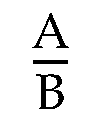
(2)If section 158(1) and (2) applies in the case of any issue of shares as if part of the issue had been issued in a previous tax year, subsection (1) has effect as if that part and the remainder were separate issues of shares (and that part had been issued on a day in the previous tax year).
(3)If the amount of EIS relief attributable to any of the relevant shares has been reduced before the EIS relief was obtained, the amount referred to in subsection (1) as A is to be treated for the purposes of that subsection as the amount that it would have been without that reduction.
(4)Subsection (3) does not apply to a reduction of EIS relief by virtue of section 201(4) (attribution of EIS relief if there is a corresponding issue of bonus shares).
Textual Amendments
F679Words in s. 210(1)(b) substituted (13.10.2011) (with effect in accordance with s. 42(7)(8) of the amending Act) by Finance Act 2011 (c. 11), s. 42(3)(b)(6); S.I. 2011/2459, art. 2
211Call optionsU.K.
(1)This section applies if the investor grants an option which, if exercised, would bind the investor to sell any of the relevant shares.
(2)The grant of the option is treated for the purposes of section 209 as a disposal of the shares to which the option relates.
(3)Nothing in this section prejudices section 177 (no pre-arranged exits).
212Put optionsU.K.
(1)This section applies if, at any time in period A, a person grants the investor an option which, if exercised, would bind the grantor to purchase any of the relevant shares.
(2)Any EIS relief attributable to the shares to which the option relates must be withdrawn.
(3)For the purposes of subsection (2) the shares to which an option relates are those which, if—
(a)the option were exercised immediately after the grant, and
(b)any shares in the issuing company acquired by the investor after the grant were disposed of immediately after being acquired,
would be treated for the purposes of section 209 as disposed of in pursuance of the option.
Value received by investorU.K.
213Value received by the investorU.K.
(1)This section applies if the investor receives any value from the issuing company at any time in period C relating to the relevant shares.
(2)Any EIS relief attributable to the shares must—
(a)if it is greater than the amount given by the formula set out below, be reduced by that amount, and
(b)in any other case, be withdrawn.
The formula is— F680
where—
R is the amount of the value received by the investor, and
(3)This section is subject to the following sections—
(a)section 214 (value received: receipts of insignificant value),
(b)section 218 (value received where there is more than one issue of shares),
(c)section 219 (value received where part of share issue treated as made in previous tax year),
(d)section 220 (cases where maximum EIS relief not obtained),
(e)section 221 (receipts of value by and from connected persons etc), and
(f)section 222 (receipt of replacement value).
Sections 218 to 220 are to be applied in the order in which they appear in this Part.
(4)Value received is to be ignored, for the purposes of this section, to the extent to which EIS relief attributable to the shares has already been withdrawn or reduced on its account.
(5)For the purposes of this section and sections 214 to 223, an individual who acquires any relevant shares on such a transfer as is mentioned in section 245 (spouses or civil partners) is treated as the investor.
Textual Amendments
F680Formula in s. 213(2) amended (21.7.2008 with effect in accordance with Sch. 1 para. 65 of the amending Act) by Finance Act 2008 (c. 9), Sch. 1 para. 16(a)
F681Words in s. 213(2) substituted (21.7.2008 with effect in accordance with Sch. 1 para. 65 of the amending Act) by Finance Act 2008 (c. 9), Sch. 1 para. 16(b)
F682Words in s. 213(2) substituted (13.10.2011) (with effect in accordance with s. 42(7)(8) of the amending Act) by Finance Act 2011 (c. 11), s. 42(3)(c)(6); S.I. 2011/2459, art. 2
Modifications etc. (not altering text)
C74S. 213 excluded (20.5.2020) by Finance Act 2020 (c. 14), s. 110(1)(2)
214Value received: receipts of insignificant valueU.K.
(1)Section 213(2) does not apply if the receipt of value is a receipt of insignificant value.
This is subject to subsection (2).
(2)If—
(a)value is received (“the relevant receipt”) by the investor from the issuing company at any time in period C relating to the relevant shares,
(b)the investor has received from the issuing company one or more receipts of insignificant value at a time or times—
(i)during that period, but
(ii)not later than the time of the relevant receipt, and
(c)the total amount of the value of the receipts within paragraph (a) and (b) is not an amount of insignificant value,
the investor is treated for the purposes of this Chapter as if the relevant receipt had been a receipt of an amount of value equal to that total amount.
(3)A receipt does not fall within subsection (2)(b) if it has previously formed part of a total amount falling within subsection (2)(c).
215Meaning of “receipts of insignificant value”U.K.
(1)This section applies for the purposes of section 214.
(2)“A receipt of insignificant value” means a receipt of an amount of insignificant value, that is, an amount of value which—
(a)is not more than £1,000, or
(b)if it is more than £1,000, is insignificant in relation to the amount subscribed by the investor for the relevant shares.
This is subject to subsection (3).
(3)If at any time in the period—
(a)beginning 12 months before the issue of the relevant shares, and
(b)ending at the end of the issue date,
repayment arrangements are in existence, no amount of value received by the investor is treated as a receipt of insignificant value.
(4)For this purpose “repayment arrangements” means arrangements which provide for the investor to receive, or to be entitled to receive, any value from the issuing company at any time in period C relating to the relevant shares.
(5)For the purposes of this section—
(a)the references to the investor include references to any person who at any time in period C relating to the relevant shares is an associate of the investor (whether or not that person is such an associate at the material time), and
(b)the reference in subsection (4) to the issuing company includes a reference to a person who at any time in period C relating to the relevant shares is connected with that company (whether or not that person is so connected at the material time).
216When value is receivedU.K.
(1)This section applies for the purposes of sections 213 (value received by the investor) and 218 (value received where there is more than one issue of shares).
(2)The investor receives value from the issuing company at any time when the issuing company—
(a)repays, redeems or repurchases any of its share capital or securities which belong to the investor or makes any payment to the investor for giving up the investor's right to any of the issuing company's share capital or any security on its cancellation or extinguishment,
(b)repays, in pursuance of any arrangements for or in connection with the acquisition of the shares in respect of which EIS relief is claimed, any debt owed to the investor other than a debt which was incurred by the company—
(i)on or after the date of issue of those shares, and
(ii)otherwise than in consideration of the extinguishment of a debt incurred before that date,
(c)makes to the investor any payment for giving up on its extinguishment the investor's right to any debt, other than a debt in respect of a repayment of the kind mentioned in section 168(2)(a) or (f) (ignoring of certain expenses or remuneration) or an ordinary trade debt,
(d)releases or waives any liability of the investor to the issuing company or discharges or undertakes to discharge any liability of the investor to a third person,
(e)makes a loan or advance to the investor which has not been repaid in full before the issue of the shares in respect of which EIS relief is claimed,
(f)provides a benefit or facility for the investor,
(g)transfers an asset to the investor for no consideration or for consideration less than its market value or acquires an asset from the investor for consideration greater than its market value, or
(h)makes to the investor any other payment except—
(i)a payment of a kind mentioned in any of the provisions of section 168(2) (ignoring of certain payments), or
(ii)a payment in discharge of an ordinary trade debt.
(3)For the purposes of subsection (2)(d) the issuing company is to be treated as having released or waived a liability if the liability is not discharged within 12 months of the time when it ought to have been discharged.
(4)For the purposes of subsection (2)(e) the following is to be treated as if it were a loan made by the issuing company to the investor—
(a)the amount of any debt (other than an ordinary trade debt) incurred by the investor to the issuing company, and
(b)the amount of any debt due from the investor to a third party which has been assigned to the issuing company.
(5)The investor also receives value from the issuing company if—
(a)in respect of ordinary shares held by the investor any payment or asset is received in a winding up or in connection with a dissolution of the company, and
(b)the winding up or dissolution falls within section 182(4) (no tax avoidance).
(6)The investor also receives value from the issuing company if any person who would, for the purposes of section 163, be treated as connected with the company—
(a)purchases any of its share capital or securities which belong to the investor, or
(b)makes any payment to the investor for giving up any right in relation to any of the company's share capital or securities.
(7)If because of the investor's disposal of shares in a company any EIS relief attributable to those shares is withdrawn or reduced under section 209, the investor is not to be treated as receiving value from the company in respect of the disposal.
(8)The investor is not to be treated as receiving value from the issuing company merely because of the payment to the investor, or any associate of the investor, of any remuneration for services rendered to that company as a director if the remuneration is reasonable remuneration.
(9)Section 167(3) (director also an employee) applies for the purposes of subsection (8) as it applies for the purposes of section 167, and the reference in that subsection to the payment of remuneration includes the provision of any benefit or facility.
(10)In this section “ordinary trade debt” means any debt for goods or services supplied in the ordinary course of a trade or business if any credit given—
(a)is for not more than 6 months, and
(b)is not longer than that normally given to customers of the person carrying on the trade or business.
217The amount of value receivedU.K.
In a case falling within a provision listed in column 1 of the following table, the amount of value received for the purposes of sections 213 and 218 is given by the corresponding entry in column 2 of the table.
| Provision | The amount of value received |
|---|---|
| Section 216(2)(a), (b) or (c) | The amount received by the investor or, if greater, the market value of the shares, securities or debt |
| Section 216(2)(d) | The amount of the liability |
| Section 216(2)(e) | The amount of the loan or advance, less the amount of any repayment made before the issue of the relevant shares |
| Section 216(2)(f) | The cost to the issuing company of providing the benefit or facility, less any consideration given for it by the investor |
| Section 216(2)(g) | The difference between the market value of the asset and the consideration (if any) given for it |
| Section 216(2)(h) | The amount of the payment |
| Section 216(5) | The amount of the payment or the market value of the asset |
| Section 216(6) | The amount received by the investor or, if greater, the market value of the shares or securities |
218Value received where there is more than one issue of sharesU.K.
(1)This section applies if—
(a)two or more issues of shares in the issuing company have been made to the investor which include shares in respect of which the investor obtains EIS relief, and
(b)value is received by the investor at any time in the applicable periods for two or more of those issues.
(2)Section 213(2) has effect in relation to the shares included in each of the issues referred to in subsection (1)(b) as if the amount of value referred to as “R” were reduced by multiplying it by the fraction—
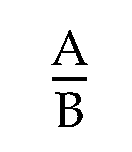
where—
A is the amount on which the investor obtains EIS relief in respect of the shares included in the issue in question, and
B is the sum of that amount and the corresponding amount or amounts in respect of the other issue or issues.
(3)For the purposes of subsection (1) “the applicable period” for an issue of shares is period C in relation to those shares.
219Value received where part of share issue treated as made in previous tax yearU.K.
(1)This section applies if—
(a)section 213(2) applies to an issue of shares, and
(b)section 158(1) and (2) (form and amount of EIS relief) applies in the case of that issue as if part of the issue had been issued in a previous tax year.
(2)This subsection explains how the calculation under section 213(2) is to be made.
Step 1
Apportion the amount referred to as “R” between the tax year in which the shares were issued and the previous tax year by multiplying that amount by the fraction—
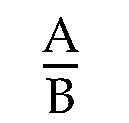
where—
A is the amount on which the investor obtains EIS relief in respect of the shares treated as issued in the tax year in question, and
B is the sum of that amount and the corresponding amount in respect of the shares treated as issued in the other tax year.
Step 2
In relation to each of the amounts (“R1” and “R2”) so apportioned to the two tax years, calculate the amounts (“X1” and “X2”) that would be given by the formula if there were separate issues of shares in those tax years.
In calculating amounts X1 and X2, apply section 220 if appropriate but do not apply section 218.
Step 3
Add amounts X1 and X2 together.
The result is the required amount.
220Cases where maximum EIS relief not obtainedU.K.
(1)If the investor's liability to income tax is reduced for any tax year in respect of any issue of shares and—
(a)the amount of the reduction (“A”), is less than
(b)the amount (“B”) which is equal to income tax at the [F683EIS original rate] on the amount on which the investor claims EIS relief in respect of the shares,
section 213(2) has effect in relation to any value received as if the amount referred to as “R” were reduced by multiplying it by the fraction—
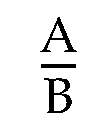
(2)If the amount of EIS relief attributable to any of the relevant shares has been reduced before the EIS relief was obtained, the amount referred to in subsection (1) as “A” is to be treated for the purposes of that subsection as the amount that it would have been without that reduction.
(3)Subsection (2) does not apply to a reduction of EIS relief by virtue of section 201(4) (attribution of EIS relief where there is a corresponding issue of bonus shares).
Textual Amendments
F683Words in s. 220(1)(b) substituted (13.10.2011) (with effect in accordance with s. 42(7)(8) of the amending Act) by Finance Act 2011 (c. 11), s. 42(3)(d)(6); S.I. 2011/2459, art. 2
221Receipts of value by and from connected persons etcU.K.
In sections 213, 214 and 216 to 218—
(a)any reference to a payment or transfer to the investor includes a reference to a payment or transfer made to the investor indirectly or to the investor's order or for the investor's benefit,
(b)any reference to the investor includes a reference to an associate of the investor, and
(c)any reference to the issuing company includes a reference to a person who at any time in period A relating to the relevant shares is connected with that company (whether or not that person is so connected at the material time).
222Receipt of replacement valueU.K.
(1)If—
(a)any EIS relief attributable to the relevant shares would, in the absence of this section, be reduced or withdrawn under section 213 because of a receipt of value within section 216(2) or (6) (“the original value”),
(b)the original supplier receives value (“the replacement value”) from the original recipient and the receipt is a qualifying receipt, and
(c)the amount of the replacement value is at least the amount of the original value,
section 213 does not, because of the receipt of the original value, have effect to reduce or withdraw the EIS relief.
This is subject to section 223(1) and (2).
(2)For the purposes of this section—
“the original recipient” means the person who receives the original value,
“the original supplier” means the person from whom that value was received.
(3)If the amount of the original value is, by virtue of section 218, treated as reduced for the purposes of section 213(2) as it applies in relation to the relevant shares in question, the reference in subsection (1)(c) to the amount of the original value is to be read as a reference to the amount of that value ignoring the reduction.
(4)A receipt of the replacement value is a qualifying receipt for the purposes of subsection (1) if it arises—
(a)because of the original recipient doing one or more of the following—
(i)making a payment to the original supplier, other than a payment within paragraph (c) or a payment to which subsection (5) applies,
(ii)acquiring any asset from the original supplier for a consideration the amount or value of which is more than the market value of the asset,
(iii)disposing of any asset to the original supplier for no consideration or for a consideration the amount or value of which is less than the market value of the asset,
(b)if the receipt of the original value was within section 216(2)(d), because of an event the effect of which is to reverse the event which constituted the receipt of the original value, or
(c)if the receipt of the original value was within section 216(6), because of the original recipient repurchasing the share capital or securities in question, or (as the case may be) re-acquiring the right in question, for a consideration the amount or value of which is at least the amount of the original value.
(5)This subsection applies to—
(a)any payment for any goods, services or facilities, provided (whether in the course of trade or otherwise) by—
(i)the original supplier, or
(ii)any other person who, at any time in period C relating to the relevant shares, is an associate of, or is connected with, that supplier (whether or not the other person is such an associate, or is so connected, at the material time),
which is reasonable in relation to the market value of those goods, services or facilities,
(b)any payment of any interest which represents no more than a reasonable commercial return on any money lent to—
(i)the original recipient, or
(ii)any person who, at any time in period C relating to the relevant shares, is an associate of that recipient (whether or not the person is such an associate at the material time),
(c)any payment for the acquisition of an asset which does not exceed its market value,
(d)any payment, as rent for any property occupied by—
(i)the original recipient, or
(ii)any person who, at any time in period C relating to the relevant shares, is an associate of that recipient (whether or not the person is such an associate at the material time),
of an amount not exceeding a reasonable and commercial rent for the property,
(e)any payment in discharge of an ordinary trade debt, and
(f)any payment for shares in or securities of any company in circumstances that do not fall within subsection (4)(a)(ii).
(6)For the purposes of this section, the amount of the replacement value is—
(a)in a case within paragraph (a) of subsection (4), the sum of—
(i)the amount of any payment within sub-paragraph (i) of that paragraph, and
(ii)the difference between the market value of any asset to which sub-paragraph (ii) or (iii) of that paragraph applies and the amount or value of the consideration (if any) received for it,
(b)in a case within subsection (4)(b), the same as the amount of the original value, and
(c)in a case within subsection (4)(c), the amount or value of the consideration received by the original supplier.
Section 217 applies for the purpose of determining the amount of the original value.
(7)In this section—
(a)any reference to a payment to a person (however expressed) includes a reference to a payment made to the person indirectly or to the person's order or for the person's benefit, and
(b)“ordinary trade debt” has the meaning given by section 216(10).
223Section 222: supplementaryU.K.
(1)The receipt of the replacement value by the original supplier is ignored for the purposes of section 222(1) to the extent to which it has previously been set (under that section) against a receipt of value to prevent any reduction or withdrawal of EIS relief under section 213.
(2)The receipt of the replacement value by the original supplier (“the event”) is ignored for the purposes of section 222 if—
(a)the event occurs before period C relating to the relevant shares,
(b)if the event occurs after the time the original recipient receives the original value, it does not occur as soon after that time as is reasonably practicable in the circumstances, or
(c)if an appeal has been brought by the investor against an assessment to withdraw or reduce any EIS relief attributable to the relevant shares because of the receipt of the original value, the event occurs more than 60 days after the day on which the amount of relief which falls to be withdrawn has been finally determined.
But nothing in section 222 or this section requires the replacement value to be received after the original value.
(3)This subsection applies if—
(a)the receipt of the replacement value by the original supplier is a qualifying receipt for the purposes of section 222(1), and
(b)in consequence of the receipt any receipts of value are ignored for the purposes of section 213 as that section applies in relation to the shares in question or any other shares subscribed for by the investor, and
(c)the event which gives rise to the receipt is (or includes) a subscription for shares by—
(i)the investor, or
(ii)any person who at any time in period C relating to the relevant shares is an associate of the investor (whether or not the person is such an associate at the material time).
(4)If either of the following applies—
(a)subsection (3), and
(b)paragraph 13C(3) of Schedule 5B to TCGA 1992 (which makes corresponding provision in relation to relief under that Schedule in respect of re-investment under EIS),
the person who subscribes for the shares is not to be eligible for any EIS relief in relation to those shares or any other shares in the same issue.
(5)In this section “the original recipient”, “the original supplier” and “replacement value” have the same meaning as in section 222.
Repayments etc of share capital to other personsU.K.
224Repayments etc of share capital to other personsU.K.
(1)This section applies if any EIS relief is attributable to shares held by an individual and, at any time in period C, the issuing company or any subsidiary—
(a)repays, redeems or repurchases any of its share capital which belongs to any member other than—
(i)the individual, or
(ii)a person who falls within subsection (4), or
(b)makes any payment to any such member for giving up the member's right to any of the share capital of the company or subsidiary on its cancellation or extinguishment.
(2)The EIS relief must—
(a)if it is greater than the amount given by the formula set out below, be reduced by that amount, and
(b)in any other case, be withdrawn.
The formula is— F684
(3)This section is subject to the following sections—
(a)section 225 (insignificant repayments ignored for the purposes of this section),
(b)section 226 (amount of repayments etc where there is more than one issue of shares),
(c)section 227 (single issue affecting more than one individual),
(d)section 228 (single issue treated as made partly in previous tax year),
(e)section 229 (maximum relief not obtained for share issue),
(f)section 230 (repayment of authorised minimum within 12 months), and
(g)section 231 (restriction on withdrawal of relief).
Sections 226 to 229 are to be applied in the order in which they appear in this Part.
(4)A person falls within this subsection if the repayment—
(a)causes any EIS relief attributable to that person's shares in the issuing company to be withdrawn or reduced by virtue of—
(i)section 209 (disposal of shares), or
(ii)section 216(2)(a) (receipt of value by virtue of repayment of share capital etc),
[F687(aa)causes any SEIS relief attributable to that person's shares in the issuing company to be withdrawn or reduced by virtue of—
(i)section 257FA (disposal of shares), or
(ii)section 257FH(2)(a) (receipt of value by virtue of repayment of share capital etc),]
(b)causes any investment relief under Schedule 15 to FA 2000 (the corporate venturing scheme) attributable to that person's shares in the issuing company to be withdrawn or reduced by virtue of—
(i)paragraph 46 of that Schedule (disposal of shares), or
(ii)paragraph 49(1)(a) of that Schedule (receipt of value by virtue of repayment of share capital etc), or
(c)gives rise to a qualifying chargeable event within the meaning of paragraph 14(4) of Schedule 5B to TCGA 1992 (EIS: deferral relief) in respect of that person's shares in the issuing company.
(5)A repayment is treated as having the effect mentioned in subsection (4)(a), [F688(aa),] (b) or (c) if it would have that effect were it not a receipt of insignificant value for the purposes of whichever of the following is applicable—
(a)section 213,
[F689(aa)section 257FE,]
(b)paragraph 47 of Schedule 15 to FA 2000, and
(c)paragraph 13 of Schedule 5B to TCGA 1992.
(6)A repayment is to be ignored, for the purposes of this section, to the extent to which EIS relief attributable to any shares has already been withdrawn or reduced on its account.
(7)In this section and sections 225 to 231—
(a)“repayment” means a repayment, redemption, repurchase or payment mentioned in subsection (1)(a) or (b), and
(b)references to a subsidiary of a company are references to a company which, at any time in period A relating to the shares in question, is a 51% subsidiary of the company, whether or not it is such a subsidiary at the time of the repayment.
Textual Amendments
F684Formula in s. 224(2) amended (21.7.2008 with effect in accordance with Sch. 1 para. 65 of the amending Act) by Finance Act 2008 (c. 9), Sch. 1 para. 18(a)
F685Words in s. 224(2) substituted (21.7.2008 with effect in accordance with Sch. 1 para. 65 of the amending Act) by Finance Act 2008 (c. 9), Sch. 1 para. 18(b)
F686Words in s. 224(2) substituted (13.10.2011) (with effect in accordance with s. 42(7)(8) of the amending Act) by Finance Act 2011 (c. 11), s. 42(3)(e)(6); S.I. 2011/2459, art. 2
F687S. 224(4)(aa) inserted (with effect in accordance with Sch. 5 para. 22 of the amending Act) by Finance (No. 2) Act 2015 (c. 33), Sch. 5 para. 15(2)
F688Word in s. 224(5) inserted (with effect in accordance with Sch. 5 para. 22 of the amending Act) by Finance (No. 2) Act 2015 (c. 33), Sch. 5 para. 15(3)(a)
F689S. 224(5)(aa) inserted (with effect in accordance with Sch. 5 para. 22 of the amending Act) by Finance (No. 2) Act 2015 (c. 33), Sch. 5 para. 15(3)(b)
225Insignificant repayments ignored for purposes of section 224U.K.
(1)A repayment is ignored for the purposes of section 224 (repayments etc of share capital to other persons) if both—
(a)the market value of the shares to which it relates (“the target shares”) immediately before the event occurs, and
(b)the amount received by the member in question,
are insignificant in relation to the market value of the remaining issued share capital of the issuing company (or, as the case may be, the subsidiary) immediately after the event occurs.
This is subject to subsection (3).
(2)For the purposes of subsection (1) it is assumed that the target shares are cancelled at the time the repayment is made.
(3)Subsection (1) does not apply if repayment arrangements are in existence at any time in the period—
(a)beginning 12 months before the issue of the relevant shares, and
(b)ending at the end of the issue date.
(4)For this purpose “repayment arrangements” means arrangements which provide—
(a)for a repayment by the issuing company or any subsidiary of that company (whether or not it is such a subsidiary at the time the arrangements are made), or
(b)for anyone to be entitled to such a repayment,
at any time in period C relating to the relevant shares.
226Amount of repayments etc where there is more than one issue of sharesU.K.
(1)This section applies if, in relation to the same repayment, section 224(2) applies to EIS relief attributable to two or more issues of shares.
(2)Section 224(2) has effect in relation to the shares included in each of those issues as if the amount referred to as “R” were reduced by multiplying it by the fraction—
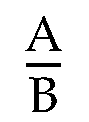
where—
A is the amount on which EIS relief was obtained by the individuals in respect of shares which are included in the issue and to which EIS relief is or, but for section 224(2)(b), would be attributable, and
B is the sum of that amount and the corresponding amount or amounts in respect of the other issue or issues.
227Single issue affecting more than one individualU.K.
(1)This section applies if, in relation to the same repayment, section 224(2) applies to EIS relief attributable to shares held by two or more individuals.
(2)Section 224(2) has effect in relation to each individual as if the amount referred to as “R” were reduced by multiplying it by the fraction—
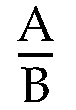
where—
A is the amount on which the individual obtains EIS relief in respect of the shares to which EIS relief is or, but for section 224(2)(b), would be attributable, and
B is the sum of that amount and the corresponding amount or amounts on which the other individual or individuals obtain EIS relief in respect of such shares.
228Single issue treated as made partly in previous tax yearU.K.
(1)This section applies if—
(a)section 224(2) applies to EIS relief attributable to shares held by an individual, and
(b)part of the issue of shares has been treated as issued to the individual in a previous tax year for the purposes of section 158(1) and (2) (form and amount of EIS relief).
(2)This subsection explains how the calculation under section 224(2) is to be made.
Step 1
Apportion the amount referred to as “R” between the tax year in which the shares were issued and the previous tax year by multiplying that amount by the fraction—
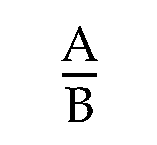
where—
A is the amount on which the individual obtains EIS relief in respect of the shares treated as issued in the tax year in question, and
B is the sum of that amount and the corresponding amount in respect of the shares treated as issued in the other tax year.
Step 2
In relation to each of the amounts (“R1” and “R2”) so apportioned to the two tax years, calculate the amounts (“X1” and “X2”) that would be given by the formula if there were separate issues of shares in those tax years.
In calculating amounts X1 and X2, apply section 229 if appropriate but do not apply section 226 or 227.
Step 3
Add amounts X1 and X2 together.
The result is the required amount.
229Maximum relief not obtained for share issueU.K.
(1)This section applies if section 224(2) applies to EIS relief attributable to shares held by an individual and—
(a)the amount of the reduction (“A”) in the individual's liability to income tax for any tax year in respect of the shares, is less than
(b)the amount (“B”) which is equal to income tax at the [F690EIS original rate] on the amount on which the individual claims EIS relief in respect of the shares.
(2)Section 224(2) has effect as if the amount referred to as “R” were reduced by multiplying it by the fraction—
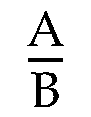
(3)If the amount of EIS relief attributable to any of the relevant shares has been reduced before the EIS relief was obtained, the amount referred to in subsections (1) and (2) as “A” is to be treated for the purposes of those subsections as the amount that it would have been without that reduction.
(4)Subsection (3) does not apply to a reduction of EIS relief by virtue of section 201(4) (attribution of EIS relief where there is a corresponding issue of bonus shares).
Textual Amendments
F690Words in s. 229(1)(b) substituted (13.10.2011) (with effect in accordance with s. 42(7)(8) of the amending Act) by Finance Act 2011 (c. 11), s. 42(3)(f)(6); S.I. 2011/2459, art. 2
230Repayment of authorised minimum within 12 monthsU.K.
(1)This section applies if—
[F691(a)a company issues share capital (“the original shares”) of nominal value equal to the authorised minimum (within the meaning of the Companies Act 2006) for the purposes of complying with section 761 of that Act (public company: requirement as to minimum share capital),]
(b)the registrar of companies issues the company with a certificate under that section.
(2)Section 224(2) does not apply in relation to any redemption of the original shares within 12 months of the date on which they were issued.
F692(3). . . . . . . . . . . . . . . . . . . . . . . . . . . . . . . .
Textual Amendments
F691S. 230(1)(a) substituted (6.4.2008) by Companies Act 2006 (Consequential Amendments) (Taxes and National Insurance) Order 2008 (S.I. 2008/954), arts. 1(1), 39(2) (with art. 4)
F692S. 230(3) repealed (6.4.2008) by Companies Act 2006 (Consequential Amendments) (Taxes and National Insurance) Order 2008 (S.I. 2008/954), arts. 1(1), 39(2), Sch. (with art. 4)
231Restriction on withdrawal of relief under section 224U.K.
(1)This section applies if, because of a repayment, any investment relief which is attributable under Schedule 15 to FA 2000 to any shares is withdrawn under paragraph 56(2) of that Schedule.
(2)For the purposes of this section “the relevant amount” is the amount determined by the formula—
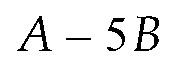
where—
A is the amount of the repayment, and
B is the total amount of investment relief withdrawn because of the repayment.
(3)If the relevant amount does not exceed £1,000, the repayment is ignored for the purposes of section 224(1), unless repayment arrangements are in existence at any time in the period—
(a)beginning 12 months before the issue of the shares mentioned in subsection (1), and
(b)ending at the end of the issue date.
(4)For this purpose “repayment arrangements” means arrangements which provide—
(a)for a repayment by the issuing company or any subsidiary of that company, or
(b)for anyone to be entitled to such a repayment,
at any time.
(5)Subsection (4)(a) applies in relation to a subsidiary of the issuing company whether or not it is such a subsidiary when the arrangements were made.
(6)If the repayment is not ignored by virtue of subsection (3), the amount received because of the repayment is treated for the purposes of section 224(2) as an amount equal to the relevant amount.
(7)In this section—
(a)“investment relief” has the same meaning as in Schedule 15 to FA 2000 (corporate venturing scheme), and
(b)references to the withdrawal of investment relief include its reduction.
MiscellaneousU.K.
232Acquisition of a trade or trading assetsU.K.
(1)Any EIS relief attributable to any shares in a company held by an individual is withdrawn if—
(a)at any time in period A, the company or any qualifying subsidiary—
(i)begins to carry on as its trade, or as part of its trade, a trade which was previously carried on at any time in that period otherwise than by the company or any qualifying subsidiary, or
(ii)acquires the whole, or the greater part, of the assets used for the purposes of a trade previously so carried on, and
(b)the individual is a person, or one of a group of persons, to whom subsection (2) or (3) applies.
(2)This subsection applies to any person or group of persons—
(a)to whom an interest amounting in total to more than a half share in the trade (as previously carried on) belonged at any time in period A, and
(b)who is or are a person or group of persons to whom such an interest in the trade carried on by the company belongs or has, at any such time, belonged.
(3)This subsection applies to any person or group of persons who—
(a)control or, at any time in period A, have controlled the company, and
(b)is or are a person or group of persons who, at any such time, controlled another company which previously carried on the trade.
(4)For the purposes of subsection (2)—
(a)[F693for the purpose of determining] the person to whom a trade belongs and, if a trade belongs to two or more persons, their respective shares in [F694that trade—
(i)apply section 941(6) of CTA 2010, and
(ii)an interest in a trade belonging to a company may be treated in accordance with any of the options set out in section 942 of that Act, and]
(b)any interest, rights or powers of a person who is an associate of another person are treated as those of that other person.
(5)In determining whether any EIS relief attributable to any shares in the issuing company held by an individual who—
(a)is a director of, or of a company which is a partner of, the issuing company or any qualifying subsidiary, and
(b)is in receipt of, or entitled to receive, remuneration as such a director falling within section 169(2) (reasonable remuneration for services),
is to be withdrawn, the reference in subsection (3)(b), and (so far as relating to that provision) the reference in subsection (1)(a)(i), to any time in period A are to be read as references to any time before the end of period A.
(6)Section 167(3) (director also an employee) applies for the purposes of subsection (5) as it applies for the purposes of section 168, and in subsection (5) “remuneration” includes any benefit or facility.
(7)In this section “trade” includes any business or profession, and references to a trade previously carried on include references to part of such a trade.
Textual Amendments
F693Words in s. 232(4)(a) inserted (with effect in accordance with s. 1184(1) of the amending Act) by Corporation Tax Act 2010 (c. 4), s. 1184(1), Sch. 1 para. 502(a) (with Sch. 2)
F694Words in s. 232(4)(a) substituted (with effect in accordance with s. 1184(1) of the amending Act) by Corporation Tax Act 2010 (c. 4), s. 1184(1), Sch. 1 para. 502(b) (with Sch. 2)
233Acquisition of share capitalU.K.
(1)Any EIS relief attributable to any shares in a company held by an individual is withdrawn if —
(a)the company comes to acquire all of the issued share capital of another company at any time in period A, and
(b)the individual is a person, or one of a group of persons, to whom subsection (2) applies.
(2)This subsection applies to any person or group of persons who—
(a)control or have, at any time in period A, controlled the company, and
(b)is or are a person or group of persons who, at any such time, controlled the other company.
(3)In determining whether any EIS relief attributable to any shares in the issuing company held by an individual who—
(a)is a director of, or of a company which is a partner of, the issuing company or any qualifying subsidiary, and
(b)is in receipt of, or entitled to receive, remuneration as such a director falling within section 169(2),
is to be withdrawn, the reference in subsection (2)(b) to any time in period A is to be read as a reference to any time before the end of period A.
(4)Section 167(3) applies for the purposes of subsection (3) as it applies for the purposes of section 168, and in subsection (3) “remuneration” includes any benefit or facility.
234Relief subsequently found not to have been dueU.K.
(1)Any EIS relief obtained by the investor which is subsequently found not to have been due must be withdrawn.
(2)EIS relief obtained by the investor in respect of the relevant shares may not be withdrawn on the ground—
(a)that the requirements of sections 174 and 175 (the purpose of the issue and use of money raised requirements) are not met in respect of the shares, or
(b)that the issuing company is not a qualifying company in relation to the shares (see Chapter 4),
unless the requirements of subsection (3) are met.
(3)The requirements of this subsection are met if either—
(a)the issuing company has given notice under section 241, or paragraph 16(2) or (4) of Schedule 5B to TCGA 1992, (information to be provided by issuing company etc) in relation to the relevant issue of shares, or
(b)an officer of Revenue and Customs has given notice to that company stating the officer's opinion that, because of the ground in question, the whole or any part of the EIS relief obtained by any individual in respect of shares included in the relevant issue of shares was not due.
(4)In this section “” means the issue of shares in the issuing company which includes the relevant shares.
Chapter 7U.K.Withdrawal or reduction of EIS relief: procedure
Assessments and appealsU.K.
235Assessments for the withdrawal or reduction of EIS reliefU.K.
If any EIS relief which has been obtained falls to be withdrawn or reduced under Chapter 6, it must be withdrawn or reduced by the making of an assessment to income tax for the tax year for which the relief was obtained.
236Appeals against section 234(3)(b) noticesU.K.
(1)For the purposes of the provisions of TMA 1970 relating to appeals, the giving of notice by an officer of Revenue and Customs under section 234(3)(b) is taken to be a decision disallowing a claim by the issuing company.
(2)If any issue has been determined on an appeal brought by virtue of paragraph 1A(6) of Schedule 5B to TCGA 1992 (appeal against notice that shares never have been, or have ceased to be, eligible shares), the determination is conclusive for the purposes of any appeal brought by virtue of subsection (1) on which that issue arises.
237Time limits for assessmentsU.K.
(1)An officer of Revenue and Customs may F695... —
(a)make an assessment for withdrawing or reducing the EIS relief attributable to any of the relevant shares, or
(b)give a notice under section 234(3)(b),
[F696at any time not more than] 6 years after the end of the relevant tax year.
(2)In subsection (1) “the relevant tax year” means—
(a)the tax year in which the time mentioned in section 175(3) (the use of money raised requirement) falls, or
(b)the tax year in which the event which causes the EIS relief to be withdrawn or reduced occurs,
whichever is the later.
(3)Subsection (1) is without prejudice to section [F69736(1A)] of TMA 1970 [F698(loss of tax brought about deliberately etc)].
Textual Amendments
F695Word in s. 237(1) omitted (1.4.2010) by virtue of Finance Act 2008 (c. 9), s. 118(2), Sch. 39 para. 59(2)(a); S.I. 2009/403, art. 2(2) (with art. 10)
F696Words in s. 237(1) substituted (1.4.2010) by Finance Act 2008 (c. 9), s. 118(2), Sch. 39 para. 59(2)(b); S.I. 2009/403, art. 2(2) (with art. 10)
F697Word in s. 237(3) substituted (1.4.2010) by Finance Act 2008 (c. 9), s. 118(2), Sch. 39 para. 59(3)(a); S.I. 2009/403, art. 2(2) (with art. 10)
F698Words in s. 237(3) substituted (1.4.2010) by Finance Act 2008 (c. 9), s. 118(2), Sch. 39 para. 59(3)(b); S.I. 2009/403, art. 2(2) (with art. 10)
238Cases where assessment not to be madeU.K.
(1)No assessment for withdrawing or reducing EIS relief in respect of shares issued to an individual may be made because of an event occurring after the individual's death.
(2)Subsection (3) applies if an individual has, by a disposal or disposals to which section 209(3) applies, disposed of all shares which—
(a)have been issued to the individual by the issuing company, and
(b)are shares—
(i)to which EIS relief is attributable, or
(ii)in relation to which period A has not come to an end.
(3)No assessment for withdrawing or reducing EIS relief in respect of those shares may be made because of any subsequent event unless the event occurs at a time when the individual is connected with the company within the meaning of section 166.
InterestU.K.
239Date from which interest is chargeableU.K.
(1)In its application to an assessment made by virtue of section 235 in the case of relief withdrawn or reduced by virtue of a provision listed [F699in subsection (2)], section 86 of TMA 1970 (interest on overdue income tax) has effect as if the relevant date were [F70031 January next following the tax year for which the assessment is made].
F701. . . . . . . . . . . . . . . . . . . . . . . . . . . . . . . .
[F702(2)The provisions are—
section 163,
section 164,
section 173A,
any of [F703sections 180A to 188],
section 209,
section 212(1),
section 213,
section 224,
section 232, and
section 233.]
Textual Amendments
F699Words in s. 239(1) substituted (21.7.2009) by Finance Act 2009 (c. 10), s. 105(2)(a)
F700Words in s. 239(1) substituted (21.7.2009) by Finance Act 2009 (c. 10), s. 105(2)(b)
F701S. 239(1) Table omitted (21.7.2009) by virtue of Finance Act 2009 (c. 10), s. 105(2)(c)
F702S. 239(2) substituted (21.7.2009) by Finance Act 2009 (c. 10), s. 105(3)
F703Words in s. 239(2) substituted (retrospective to 6.4.2012) by Finance Act 2012 (c. 14), Sch. 7 paras. 18, 25
InformationU.K.
240Information to be provided by the investorU.K.
(1)This section applies if the investor has obtained EIS relief in respect of the relevant shares, and an event occurs as a result of which—
(a)the investor is not a qualifying investor in relation to the shares,
(b)the EIS relief falls to be withdrawn or reduced by virtue of section 164 (no linked loans requirement),
(c)the EIS relief falls to be withdrawn or reduced under—
(i)section 209 (disposal of shares),
(ii)section 211 (call options), or
(iii)section 212 (put options), or
(d)the EIS relief falls to be withdrawn or reduced under section 213 (receipt of value by the investor), or would fall to be so withdrawn or reduced but for section 222 (receipt of replacement value).
(2)The investor must within 60 days of coming to know of the event give a notice to an officer of Revenue and Customs containing particulars of the event.
(3)If the investor—
(a)is required under this section to give notice of a receipt of value which is within section 213, or would be within that section but for section 222, and
(b)has knowledge of any replacement value received (or expected to be received) because of a qualifying receipt,
the notice must include particulars of that receipt of replacement value (or expected receipt).
(4)In subsection (3) “qualifying receipt” and “replacement value” are to be read in accordance with section 222.
241Information to be provided by the issuing company etcU.K.
(1)This section applies if the issuing company has provided an officer of Revenue and Customs with a compliance statement in respect of an issue of shares and an event occurs as a result of which—
[F704(za)a requirement of any of the following provisions is not met in respect of the shares included in the issue, or would not be met if EIS relief had been obtained in respect of those shares—
(i)section 173A (the maximum amount raised annually through risk finance investments),
(ii)section 173AA (the maximum amount raised through risk finance investments at the issue date),
(iii)section 173AB (the maximum amount raised through finance investments during period B),
(iv)section 175A (the permitted maximum age requirement),]
(a)the requirement of section 175 (the use of money raised) is not met in respect of any of the shares included in the issue, or would not be met if EIS relief had been obtained in respect of the shares in question,
(b)any provision of Chapter 4 has effect to prevent the issuing company being a qualifying company in relation to any of the shares included in the issue, or would have such an effect if EIS relief had been obtained in respect of the shares in question, or
(c)any provision of Chapter 6 which is listed in subsection (2) has effect to cause any EIS relief attributable to any of the shares included in the issue to be withdrawn or reduced, or—
(i)would have such an effect if EIS relief had been obtained in respect of the shares in question, or
(ii)in the case of section 213, would have such an effect but for section 222 (receipt of replacement value).
(2)The provisions are—
(a)section 213 (value received by the investor),
(b)section 224 (repayments etc of share capital to other persons),
(c)section 232 (acquisition of a trade or trading assets), and
(d)section 233 (acquisition of share capital).
(3)If this section applies—
(a)the issuing company, and
(b)any person connected with the issuing company who has knowledge of the matters mentioned in subsection (1),
must give a notice to an officer of Revenue and Customs containing particulars of the event.
(4)Any notice required to be given by the issuing company under subsection (3)(a) must be given—
(a)within 60 days of the event, or
(b)if the event is a receipt of value within section 216(2) from a person connected with the company (see section 221), within 60 days of the company coming to know of the event.
(5)Any notice required to be given by a person under subsection (3)(b) must be given within 60 days of the person coming to know of the event.
(6)If a person—
(a)is required under this section to give notice of a receipt of value which is within section 213, or would be within that section but for section 222, and
(b)has knowledge of any replacement value received (or expected to be received) because of a qualifying receipt,
the notice must include particulars of that receipt of replacement value (or expected receipt).
(7)In subsection (6) “qualifying receipt” and “replacement value” are to be read in accordance with section 222.
Textual Amendments
F704S. 241(1)(za) inserted (with effect in accordance with Sch. 5 para. 23 of the amending Act) by Finance (No. 2) Act 2015 (c. 33), Sch. 5 para. 16
242Power to require information where section 240 or 241 applies or could have appliedU.K.
(1)This section applies if an officer of Revenue and Customs has reason to believe that a person—
(a)has not given a notice which the person is required to give under section 240 or 241 in respect of any event,
(b)has given or received value within the meaning of section 216(2) or (6) which, but for the fact that the amount given or received was an amount of insignificant value, would have triggered a requirement to give such a notice, or
(c)has made or received any repayment within the meaning given by section 224(7) which, but for the fact that it falls to be ignored for the purposes of section 224 by virtue of section 225(1), would have triggered a requirement to give a notice under section 241.
(2)The officer may by notice require the person concerned to supply the officer, within such time as the officer may specify in the notice, with such information relating to the event as the officer may reasonably require for the purposes of this Part.
(3)The period specified in a notice under subsection (2) must be at least 60 days.
(4)In subsection (1)(b) the reference to an amount of insignificant value is construed in accordance with section 215(2).
243Power to require information in other casesU.K.
(1)Subsection (2) applies if EIS relief is claimed in respect of shares in a company, and an officer of Revenue and Customs has reason to believe that it may not be due because of any such arrangement or scheme as is mentioned in—
(a)section 165 or 182(2) or (4) (no tax avoidance),
(b)section 171 (persons subscribing for shares under certain arrangements),
(c)section 176(4) or (5), 183(6) or 191(3), (4) or (5) (winding up, administration etc),
(d)section 177(1) (no pre-arranged exits), F705...
[F706(da)section 178A (no disqualifying arrangements), or]
(e)section 185(1) or (2), 190(1) or 191(2) (conditions ceasing to be met).
The reference in paragraph (c) to subsections (3), (4) and (5) of section 191 is to be read as including those subsections as applied by section 190(2).
(2)The officer may by notice require any person concerned to supply the officer within such time as may be specified in the notice with—
(a)a declaration in writing stating whether or not, according to the information which that person has or can reasonably obtain, any such arrangement or scheme exists or has existed, and
(b)such other information as the officer may reasonably require for the purposes of the provision in question and as that person has or can reasonably obtain.
(3)The period specified in a notice under subsection (2) must be at least 60 days.
(4)For the purposes of subsection (2), in a case falling within a provision listed in column 1 of the following table, the person concerned is given by the corresponding entry in column 2 of the table.
| Provision | The person concerned |
|---|---|
| Subsection (1)(a) | The claimant, the company and any person controlling the company |
| Subsection (1)(b) | The claimant |
| Subsection (1)(c) | The claimant, the company, any other company in question and any person controlling the company or any other company in question |
| Subsection (1)(d) | The claimant, the company and any person connected with the company |
| [F707Subsection (1)(da) | The claimant, the company, any person controlling the company and any person whom an officer of Revenue and Customs has reason to believe may be a party to the arrangements in question] |
| Subsection (1)(e) | The company and any person controlling the company |
References in this subsection to the claimant include references to any person to whom the claimant appears to have made such a transfer as is mentioned in section 245 (spouses or civil partners) of any of the shares in question.
(5)If EIS relief has been obtained in respect of shares in a company—
(a)any person who receives from the company any payment or asset which may constitute value received (by the person or another) for the purposes of section 213, and
(b)any person on whose behalf such a payment or asset is received,
must, if so required by an officer of Revenue and Customs, state whether the payment or asset so received is received on behalf of any other person and, if so, the name and address of that other person.
(6)If EIS relief has been claimed in respect of shares in a company—
(a)any person who holds or has held shares in the company, and
(b)any person on whose behalf any such shares are or were held,
must, if so required by an officer of Revenue and Customs, state whether the shares so held are or were held on behalf of any other person and, if so, the name and address of that other person.
Textual Amendments
F705Word in s. 243(1)(d) omitted (17.7.2012) (with effect in accordance with Sch. 7 para. 22 of the amending Act) by virtue of Finance Act 2012 (c. 14), Sch. 7 para. 19(a)
F706S. 243(1)(da) inserted (17.7.2012) (with effect in accordance with Sch. 7 para. 22 of the amending Act) by Finance Act 2012 (c. 14), Sch. 7 para. 19(a)
F707Words in s. 243(4) inserted (17.7.2012) (with effect in accordance with Sch. 7 para. 22 of the amending Act) by Finance Act 2012 (c. 14), Sch. 7 para. 19(b)
244Obligations of secrecyU.K.
No obligation of secrecy imposed by statute or otherwise prevents an officer of Revenue and Customs from disclosing to a company that EIS relief has been obtained or claimed in respect of a particular number or proportion of its shares.
Chapter 8U.K.Supplementary and general
Disposals of sharesU.K.
245Transfers between spouses or civil partnersU.K.
(1)This section applies if—
(a)shares to which an amount of EIS relief is attributable were issued to an individual (“A”),
(b)A transferred the shares to another individual (“B”) during their lives,
(c)A was married to, or was the civil partner of, B at the time of the transfer, and
(d)section 209 (disposal of shares) does not apply to the transfer.
(2)This Part has effect, in relation to any subsequent disposal or other event, as if—
(a)B were the individual who had subscribed for the shares,
(b)the amount that B had subscribed for the shares were the amount that A had subscribed for them,
(c)B's liability to income tax had been reduced in respect of the shares for the same tax year as that for which A's was so reduced,
(d)the amount by which B's liability to income tax had been reduced in respect of the shares were the same as that by which A's liability to income tax had been so reduced, and
(e)that amount of EIS relief had continued to be attributable to the shares despite the transfer.
(3)If the amount of EIS relief attributable to the shares had been reduced before the relief was obtained by A—
(a)this Part has effect, in relation to any subsequent disposal or other event, as if the amount of EIS relief attributable to the shares transferred to B had been correspondingly reduced before the relief was obtained by B, and
(b)sections 210(3), 220(2) and 229(3) apply in relation to B as they would have applied in relation to A.
(4)If, because of any such disposal or other event, an assessment for reducing or withdrawing EIS relief is to be made, the assessment is to be made on B.
246Identification of shares on a disposalU.K.
(1)The rules in subsections (2) and (3) are for determining which shares of any class are treated as disposed of for the purposes of—
(a)section 209 (disposal of shares), or
(b)section 245 (spouses or civil partners),
if the investor disposes of some but not all of the shares of that class which the investor holds in a company.
(2)Shares acquired on an earlier day are treated as disposed of before shares acquired on a later day.
(3)Shares acquired on the same day are treated as disposed of in the following order—
(a)first any to which [F708no EIS relief, deferral relief or SEIS relief] is attributable,
[F709(aa)next any to which SEIS relief is attributable,]
(b)next any to which deferral relief, but not EIS relief, is attributable,
(c)next any to which EIS relief, but not deferral relief, is attributable, and
(d)finally any to which both EIS relief and deferral relief are attributable.
(4)Any shares within paragraph (c) or (d) of subsection (3) which are treated by section 201(6) as issued on an earlier day are treated as disposed of before any other shares falling within that paragraph of subsection (3).
(5)The following—
(a)any shares to which EIS relief is attributable and which were transferred to an individual as mentioned in section 245, and
(b)any shares to which deferral relief, but not EIS relief, is attributable and which were acquired by an individual on a disposal to which section 58 of TCGA 1992 applies,
are treated for the purposes of subsections (2) and (3) as acquired by the individual on the day on which they were issued.
(6)In a case to which section 127 of TCGA 1992 applies (including the case where that section applies by virtue of an enactment relating to chargeable gains), shares included in the new holding are treated for the purposes of subsections (2) and (3) as acquired when the original shares were acquired.
(7)In this section—
“deferral relief” has the same meaning as in Schedule 5B to TCGA 1992,
“new holding” and “” have the same meaning as in section 127 of TCGA 1992 (or, as the case may be, that section as applied by the enactment concerned).
[F710“SEIS relief” means relief under Part 5A (seed enterprise investment scheme).]
Textual Amendments
F708Words in s. 246(3)(a) substituted (17.7.2012) (with effect in accordance with Sch. 6 para. 24(1) of the amending Act) by Finance Act 2012 (c. 14), Sch. 6 para. 14(2)(a)
F709S. 246(3)(aa) inserted (17.7.2012) (with effect in accordance with Sch. 6 para. 24(1) of the amending Act) by Finance Act 2012 (c. 14), Sch. 6 para. 14(2)(b)
F710Words in s. 246(7) inserted (17.7.2012) (with effect in accordance with Sch. 6 para. 24(1) of the amending Act) by Finance Act 2012 (c. 14), Sch. 6 para. 14(3)
Acquisition of issuing companyU.K.
247Continuity of EIS relief where issuing company is acquired by new companyU.K.
(1)This section applies if—
(a)a company (“the new company”) in which the only issued shares are subscriber shares acquires all the shares (“old shares) in another company (“the old company”),
(b)the consideration for the old shares consists wholly of the issue of shares (“new shares”) in the new company,
(c)the consideration for the new shares of each description consists wholly of old shares of the corresponding description,
(d)new shares of each description are issued to the holders of old shares of the corresponding description in respect of and in proportion to their holdings,
(e)at some time before the issue of the new shares—
(i)the old company issued shares which meet the requirements of section 173(2), and
(ii)a compliance certificate in respect of those shares was issued by that company for the purposes of subsection (1) of section 203 and in accordance with section 204, and
(f)before the issue of the new shares the Commissioners for Her Majesty's Revenue and Customs have, on the application of the new company or the old company, notified that company that they are satisfied that the exchange of shares—
(i)will be effected for genuine commercial reasons, and
(ii)will not form part of any such scheme or arrangements as are mentioned in section 137(1) of TCGA 1992 (schemes with avoidance purposes).
In this subsection references to shares, except in the expressions “subscriber shares” and “shares which meet the requirements of section 173(2)”, include securities.
(2)Subsection (2) of section 138 of TCGA 1992 (procedure for advance clearance) applies for the purposes of subsection (1)(f) as it applies for the purposes of subsection (1) of that section.
(3)For the purposes of this Part—
(a)the exchange of shares is not regarded as involving any disposal of the old shares or any acquisition of the new shares, and
(b)any EIS relief which is attributable to any old shares is attributable instead to the new shares for which they are exchanged.
[F711(3A)In section 173AB(2)(a) and in the definition of “the total relevant turnover amount” in section 175A(8), references to a company becoming a 51% subsidiary of the issuing company after the issue date do not include a company becoming such a subsidiary as a result of an exchange of shares as mentioned in subsection (1).]
(4)Nothing in section 185 (the control and independence requirement) applies in relation to such an exchange of shares, or shares and securities, as is mentioned in subsection (1), or arrangements with a view to such an exchange.
(5)For the purposes of this section old shares and new shares are of a corresponding description if, on the assumption that they were shares in the same company, they would be of the same class and carry the same rights.
(6)References in sections 248 and 249 to “old shares”, “new shares”, “the old company” and “the new company” are to be read in accordance with this section.
Textual Amendments
F711S. 247(3A) inserted (with effect in accordance with Sch. 5 para. 23 of the amending Act) by Finance (No. 2) Act 2015 (c. 33), Sch. 5 para. 17
248Carry over of obligations etc where EIS relief attributed to new sharesU.K.
(1)This section applies if, under section 247, any EIS relief which is attributable to any old shares becomes attributable instead to any new shares.
(2)This Part has effect as if anything which, under—
(a)section 203(1) (entitlement to claim),
(b)section 234(3) (relief subsequently found not to be due), or
(c)sections 241 to 244 (information to be provided),
has been done, or is required to be done, by or in relation to the old company had been done, or were required to be done, by or in relation to the new company.
(3)Any appeal brought by the old company against a notice under section 234(3)(b) may be prosecuted by the new company as if it had been brought by that company.
249Substitution of new shares for old sharesU.K.
(1)Subsection (2) applies if, in the case of any new shares held by an individual to which EIS relief becomes attributable under section 247, the old shares for which they were exchanged were subscribed for by and issued to the individual.
(2)This Part[F712; (except section 195(7))] has effect as if—
(a)the new shares had been subscribed for by the individual at the time when, and for the amount for which, the old shares were subscribed for by the individual,
(b)the new shares had been issued to the individual by the new company at the time when the old shares were issued to the individual by the old company,
(c)the claim for EIS relief made in respect of the old shares had been made in respect of the new shares, and
(d)the individual's liability to income tax had been reduced in respect of the new shares for the same tax year as that for which the individual's liability was so reduced in respect of the old shares.
(3)Subsection (4) applies if, in the case of any new shares held by an individual to which EIS relief becomes so attributable under section 247, the old shares for which they were exchanged were transferred to the individual as mentioned in section 245.
(4)This Part[F713; (except section 195(7))] has effect in relation to any subsequent disposal or other event as if—
(a)the new shares had been subscribed for by the individual at the time when, and for the amount for which, the old shares were subscribed for,
(b)the new shares had been issued by the new company at the time when the old shares were issued by the old company,
(c)the claim for EIS relief made in respect of the old shares had been made in respect of the new shares, and
(d)the individual's liability to income tax had been reduced in respect of the new shares for the same tax year as that for which the liability of the individual who subscribed for the old shares was so reduced in respect of those shares.
Textual Amendments
F712Words in s. 249(2) inserted (retrospective to 6.4.2007) by Finance Act 2007 (c. 11), Sch. 16 paras. 11(8)(a), 13
F713Words in s. 249(4) inserted (retrospective to 6.4.2007) by Finance Act 2007 (c. 11), Sch. 16 paras. 11(8)(b), 13
Nominees etcU.K.
250Nominees and bare trusteesU.K.
(1)Shares subscribed for, issued to, held by or disposed of for an individual by a nominee are treated for the purposes of this Part as subscribed for, issued to, held by or disposed of by the individual.
(2)If shares have been issued to a bare trust for two or more beneficiaries, this Part has effect (with the necessary modifications) as if—
(a)each beneficiary had subscribed as an individual for all of those shares, and
(b)the amount subscribed by each beneficiary was equal to the total amount subscribed on the issue of those shares divided by the number of beneficiaries.
(3)In subsection (2) and section 251 “” means shares which meet the requirements of section 173(2).
251Approved [F714knowledge-intensive fund] as nomineeU.K.
(1)[F715This section applies] if an individual claims EIS relief in respect of shares in a company at a time when—
(a)the shares have been issued to the managers of [F716an approved knowledge-intensive fund] as nominee for the individual,
(b)the fund has closed, that is to say, no further investments in the fund are to be accepted, F717...
(c)the amounts which the managers have, as nominee for the individual, subscribed for shares issued within [F71812] months after the closing of the fund represent at least [F71950%] of the individual's investment in the fund.
[F720(d)the amounts which the managers have, as nominee for the individual, subscribed for shares issued within 24 months after the closing of the fund represent at least 90% of the individual’s investment in the fund,
(e)within that 24 month period at least 80% of the individual’s investment in the fund is represented by shares in companies which are knowledge-intensive companies at the time the shares are issued, and
(f)the managers have met such conditions with respect to the provision of information to HMRC Commissioners as the Commissioners consider appropriate for the purposes of this section.]
F721...
[F722(1A)In this section “the managers of an approved knowledge-intensive fund” means the person or persons having the management of an investment fund—
(a)which is, in the opinion of HMRC Commissioners, a fund established for the purpose of investing wholly, or substantially wholly, in shares in companies which are knowledge-intensive companies at the time the shares are issued, and
(b)which is, having met such other conditions as HMRC Commissioners consider appropriate for the purposes of this section, approved by them for those purposes.]
(2)F723... Section 158 (form and amount of EIS relief) and section 201 (attribution of EIS relief to shares) have effect as if—
(a)any reference to the tax year or other period in which the shares are issued were a reference to the tax year or other period in which the fund closes, and
(b)any reference to the time of the issue of the shares, or the time of the subscription for the shares, were a reference to the time of the closing of the fund.
[F724(2A)Accordingly, in a case where section 158 has effect with the modifications in subsection (2), the reference in section 158(4) to the issue of the shares in the preceding tax year is to the issue of the shares in the tax year preceding the tax year in which the fund closes (and references elsewhere in this Part to the issue of shares in a previous tax year are to be read accordingly).]
F725(3). . . . . . . . . . . . . . . . . . . . . . . . . . . . . . . .
(4)If an individual claims EIS relief in respect of shares in a company which have been issued to the managers of [F726an approved knowledge-intensive fund] as nominee for the individual, section 203(1) (entitlement to claim) applies as if —
(a)it required the certificate referred to in that section to be issued by the company to the managers, and
(b)it provided that no claim for EIS relief may be made unless the person making the claim has received from the managers a certificate issued by the managers in accordance with subsection (5).
(5)A certificate is issued in accordance with this subsection if—
(a)it certifies that the managers hold compliance certificates issued to them by the companies concerned, for the purposes of section 203(1), in respect of the holding of shares shown on the managers' certificate, and
(b)it is in such form as [F727HMRC Commissioners] may authorise.
(6)The managers of [F728an approved knowledge-intensive fund] may be required by a notice given to them by an officer of Revenue and Customs to deliver to the officer, within the time limited by the notice, a return of the holdings of shares shown on certificates issued by them in accordance with subsection (5) in the tax year to which the return relates.
(7)Section 207 (penalties for fraudulent certificate or statement etc) does not apply in relation to any certificate issued by the managers of [F729an approved knowledge-intensive fund] for the purposes of subsection (4).
[F730(8)In this section “HMRC Commissioners” means the Commissioners for Her Majesty’s Revenue and Customs.]
Textual Amendments
F714Words in s. 215 heading substituted (6.4.2020 with effect in accordance with s. 36(12) of the amending Act) by Finance Act 2020 (c. 14), s. 36(11)
F715Words in s. 215(1) substituted (6.4.2020 with effect in accordance with s. 36(12) of the amending Act) by Finance Act 2020 (c. 14), s. 36(2)(a)
F716Words in s. 215(1)(a) substituted (6.4.2020 with effect in accordance with s. 36(12) of the amending Act) by Finance Act 2020 (c. 14), s. 36(2)(b)
F717Word in s. 215(1)(b) omitted (6.4.2020 with effect in accordance with s. 36(12) of the amending Act) by Finance Act 2020 (c. 14), s. 36(2)(c)
F718Word in s. 251(1)(c) substituted (with effect in accordance with Sch. 16 para. 19(2) of the amending Act) by Finance Act 2007 (c. 11), Sch. 16 para. 19(1)
F719Word in s. 215(1)(d) substituted (6.4.2020 with effect in accordance with s. 36(12) of the amending Act) by Finance Act 2020 (c. 14), s. 36(2)(d)
F720S. 215(1)(d)-(f) inserted (6.4.2020 with effect in accordance with s. 36(12) of the amending Act) by Finance Act 2020 (c. 14), s. 36(2)(e)
F721Words in s. 215(1) omitted (6.4.2020 with effect in accordance with s. 36(12) of the amending Act) by Finance Act 2020 (c. 14), s. 36(2)(f)
F722S. 215(1A) inserted (6.4.2020 with effect in accordance with s. 36(12) of the amending Act) by Finance Act 2020 (c. 14), s. 36(3)
F723Words in s. 215(2) omitted (6.4.2020 with effect in accordance with s. 36(12) of the amending Act) by Finance Act 2020 (c. 14), s. 36(4)
F724S. 215(2A) inserted (6.4.2020 with effect in accordance with s. 36(12) of the amending Act) by Finance Act 2020 (c. 14), s. 36(5)
F725S. 251(3) omitted (17.7.2012) by virtue of Finance Act 2012 (c. 14), Sch. 7 para. 20
F726Words in s. 215(4) substituted (6.4.2020 with effect in accordance with s. 36(12) of the amending Act) by Finance Act 2020 (c. 14), s. 36(6)
F727Words in s. 215(5)(b) substituted (6.4.2020 with effect in accordance with s. 36(12) of the amending Act) by Finance Act 2020 (c. 14), s. 36(7)
F728Words in s. 215(6) substituted (6.4.2020 with effect in accordance with s. 36(12) of the amending Act) by Finance Act 2020 (c. 14), s. 36(8)
F729Words in s. 215(7) substituted (6.4.2020 with effect in accordance with s. 36(12) of the amending Act) by Finance Act 2020 (c. 14), s. 36(9)
F730S. 215(8) inserted (6.4.2020 with effect in accordance with s. 36(12) of the amending Act) by Finance Act 2020 (c. 14), s. 36(10)
[F731Powers to amendU.K.
Textual Amendments
F731S. 251A and cross-heading inserted (18.11.2015) by Finance (No. 2) Act 2015 (c. 33), Sch. 5 para. 18
251APowers to amend Chapters 2 to 4 by Treasury regulationsU.K.
(1)The Treasury may by regulations add to, repeal or otherwise amend any provision of—
(a)Chapter 2 (the requirements to be met in relation to the investor),
(b)Chapter 3 (the general requirements to be met in respect of the relevant shares), or
(c)Chapter 4 (the requirements to be met by the issuing company for it to be a qualifying company in relation to the relevant shares).
(2)Regulations under this section may—
(a)make different provision for different cases or purposes;
(b)contain incidental, supplemental, consequential and transitional provision and savings.
(3)The provision which may be made as a result of subsection (2)(b) includes provision amending any provision of this or any other Act (including an Act passed after this Act).
(4)Regulations under this section may, so long as they do not increase any person's liability to any tax, be made to have retrospective effect in relation to any time in the tax year in which they are made or the previous tax year.
(5)This section is without prejudice to any other power to amend any provision of this Part.
(6)A statutory instrument containing regulations under this section may not be made unless a draft of it has been laid before and approved by a resolution of the House of Commons.]
InterpretationU.K.
252Meaning of a company being “in administration” or “in receivership”U.K.
(1)References in this Part to a company being “in administration” or “in receivership” are to be read as follows.
(2)A company is “in administration” if—
(a)it is in administration within the meaning of Schedule B1 to the Insolvency Act 1986 (c. 45) or Schedule B1 to the Insolvency (Northern Ireland) Order 1989 (S.I. 1989/2405 (N.I. 19)), or
(b)there is in force in relation to it under the law of a country or territory outside the United Kingdom any appointment corresponding to an appointment of an administrator under either of those Schedules.
(3)A company is “in receivership” if there is in force in relation to it—
(a)an order for the appointment of an administrative receiver, a receiver and manager or a receiver under Chapter 1 or 2 of Part 3 of the Insolvency Act 1986 or Part 4 of the Insolvency (Northern Ireland) Order 1989, or
(b)any corresponding order under the law of a country or territory outside the United Kingdom.
Modifications etc. (not altering text)
C75S. 252 applied (with modifications) (with effect in accordance with s. 1184(1) of the amending Act) by Corporation Tax Act 2010 (c. 4), s. 1184(1), Sch. 2 para. 50(2)-(5) (with Sch. 2)
[F732252AMeaning of “knowledge-intensive company”U.K.
(1)For the purposes of this Part, the issuing company is a “knowledge-intensive company” at the time the relevant shares are issued if the company meets—
(a)one or both of the operating costs conditions (see subsections (2) and (3)), and
(b)one or both of—
(i)the innovation condition (see subsection (5)), and
(ii)the skilled employee condition (see subsection (8)).
(2)The first operating costs condition is that in at least one of the relevant three preceding years at least 15% of the relevant operating costs constituted expenditure on research and development or innovation.
(3)The second operating costs condition is that in each of the relevant three preceding years at least 10% of the relevant operating costs constituted such expenditure.
(4)In subsections (2) and (3)—
“relevant operating costs” means—
(a)if the issuing company is a single company at the time the relevant shares are issued, the operating costs of that company, and
(b)if the issuing company is a parent company at the time the relevant shares are issued, the sum of—
(i)the operating costs of the issuing company, and
(ii)the operating costs of each company which is a qualifying subsidiary of the issuing company at that time;
“the relevant three preceding years” [F733means, subject to subsection (4A), the three consecutive years the last of which ends immediately before the beginning of the last accounts filing period.]
[F734(4A)If the last accounts filing period ends more than 12 months before the date on which the relevant shares are issued, the relevant three preceding years are the three consecutive years the last of which ends 12 months before the date on which the relevant shares are issued.]
(5)“The innovation condition” is—
(a)where the issuing company is a single company, that—
(i)the issuing company is engaged in intellectual property creation at the time the relevant shares are issued, and
(ii)it is reasonable to assume that, within 10 years of the issue of the relevant shares, one or a combination of—
(a)the exploitation of relevant intellectual property held by the company, and
(b)business which results from new or improved products, processes or services utilising relevant intellectual property held by the company,
will form the greater part of its business;
(b)where the issuing company is a parent company, that—
(i)the parent company or one or more of its qualifying subsidiaries (or both that company and one or more of those subsidiaries) is or are engaged in intellectual property creation at the time the relevant shares are issued, and
(ii)it is reasonable to assume that, within 10 years of the issue of the relevant shares, one or a combination of—
(a)the exploitation of relevant intellectual property held by the parent company or any of its qualifying subsidiaries, and
(b)business which results from new or improved products, processes or services utilising relevant intellectual property held by the parent company or any of its qualifying subsidiaries,
will form the greater part of what would be the business of the group if the activities of the group companies taken together are regarded as one business.
(6)For the purposes of subsection (5), a company is engaged in intellectual property creation if—
(a)relevant intellectual property is being created by the company, or has been created by it within the previous three years,
(b)the company is taking, or preparing to take, steps in order that relevant intellectual property will be created by it, or
(c)the company is carrying on activity which is the subject of a written evaluation which—
(i)has been prepared by an independent expert, and
(ii)includes a statement to the effect that, in the opinion of the expert, it is reasonable to assume that relevant intellectual property will, in the foreseeable future, be created by the company.
(7)For the purposes of this section—
(a)intellectual property is “relevant” intellectual property, in relation to a company, if the whole or greater part (in terms of value) of it is created by the company, and
(b)intellectual property is created by a company if it is created in circumstances in which the right to exploit it vests in the company (whether alone or jointly with others).
(8)“The skilled employee condition” is that throughout period B—
(a)if the issuing company is a single company, the FTE skilled employee number is at least 20% of the FTE employee number, and
(b)if the issuing company is a parent company, the FTE group skilled employee number is at least 20% of the FTE group employee number.
(9)But, in subsection (8), the reference to period B does not include any period during which the issuing company, by virtue of section 182 (companies in administration or receivership), is not regarded as having ceased to meet the trading requirement.
(10)In this section—
“FTE employee number” for a company is the full-time equivalent employee number determined in accordance with section 186A(3);
“FTE group employee number” means the sum of—
(a)the FTE employee number for the issuing company, and
(b)the FTE employee number for each of its qualifying subsidiaries;
“FTE group skilled employee number” means the sum of—
(a)the FTE skilled employee number for the issuing company, and
(b)the FTE skilled employee number for each of its qualifying subsidiaries;
“FTE skilled employee number” for a company is determined in accordance with section 186A(3) in the same way as the full-time equivalent employee number except that only employees of the company who—
(a)hold a relevant HE qualification, and
(b)are engaged directly in research and development or innovation activities carried on—
(i)if the issuing company is a single company, by that company, or
(ii)if the issuing company is a parent company, by that company or any qualifying subsidiary of that company,
are to be taken into account;
“independent expert”, in relation to an evaluation of activity of a company, means an individual who—
(a)is not connected with the issuing company,
(b)holds a relevant HE qualification, and
(c)is an expert in the area of research and development or innovation being or to be pursued by the company in question;
“intellectual property” has the meaning given by section 195(6);
“the last accounts filing period” means the last period for filing (within the meaning of section 442 of the Companies Act 2006) for the issuing company which ends before the date on which the relevant shares were issued;
“operating costs”, of a company for a period of account, means expenses of the company which are recognised as expenses in the company's profit and loss account or income statement for that period, other than expenses relating to transactions between that company and another company at a time when both companies are members of the same group (but see also subsection (11));
“relevant HE qualification” means—
(a)a qualification which is at level 7, or a higher level, of the framework for higher education qualifications in England, Wales and Northern Ireland (as that framework may be amended or replaced from time to time),
(b)a qualification which is at level 11, or a higher level, of the framework for qualifications of higher education institutions in Scotland (as that framework may be amended or replaced from time to time), or
(c)a comparable qualification to one within paragraph (a) or (b).
(11)Such apportionments as are just and reasonable are to be made to amounts recognised in a company's profit and loss account or income statement for the purpose of determining the company's operating costs for a year.
(12)When determining whether an individual is connected with the issuing company for the purposes of this section, section 168 is to be ignored.
(13)The Treasury may by regulations amend this section for the purposes of adding, amending or removing a condition which must be met for a company to be a knowledge-intensive company.
(14)A statutory instrument containing regulations under subsection (13) may not be made unless a draft of it has been laid before and approved by a resolution of the House of Commons.]
Textual Amendments
F732S. 252A inserted (18.11.2015) by Finance (No. 2) Act 2015 (c. 33), Sch. 5 para. 19
F733Words in s. 252A(4) substituted (retrospectively) by Finance Act 2016 (c. 24), s. 29(2)(a)(6) (with s. 30)
F734S. 252A(4A) inserted (retrospectively) by Finance Act 2016 (c. 24), s. 29(2)(b)(6) (with s. 30)
[F735252BKnowledge-intensive company reaching turnover of £200,000U.K.
(1)This section has effect for the purposes of section 175A(2)(a)(ii) (alternative initial investing period in case of knowledge-intensive company).
(2)Where—
(a)the annual turnover of the issuing company in relation to an accounting period (see subsection (3)) is £200,000 or more, and
(b)the annual turnover for the company in relation to each previous accounting period is less than £200,000,
the company is treated as reaching an annual turnover of £200,000 or more by reference to the specified date (see subsection (4)).
(3)The annual turnover in relation to an accounting period is—
(a)the turnover for that accounting period (if the accounting period is for 12 months), or
(b)the turnover for the period of 12 months ending when that accounting period ends (if not).
(4)The specified date is—
(a)in the case of an accounting period of 12 months or less, the last day of that accounting period;
(b)in the case of an accounting period of more than 12 months, the last day of the period of 12 months beginning when that accounting period begins.
(5)The turnover of the issuing company for a period (“the period”) is treated for the purposes of this section as including the relevant turnover of any company that is a member of the same group as the issuing company during the whole or any part of the period (a “group company”).
(6)The relevant turnover of a group company is—
(a)its turnover for the period, if the group company is a member of the same group as the issuing company for the whole of the period;
(b)if the group company is a member of the same group as the issuing company for part of the period, its turnover for that part of the period.
(7)Any necessary apportionments of turnover are to be made, on a time basis according to the respective lengths of the periods in question, for the purposes of subsections (3)(b) and (6).
(8)In this section “turnover” has the meaning given by section 474(1) of the Companies Act 2006 and is to be determined by reference to—
(a)the accounts of the company, and
(b)amounts recognised for accounting purposes.]
Textual Amendments
F735S. 252B inserted (6.4.2018) by Finance Act 2018 (c. 3), Sch. 4 paras. 6, 10; S.I. 2018/931, reg. 3(a)
253Meaning of “associate”U.K.
(1)In this Part “associate”, in relation to a person, means—
(a)any relative or partner of that person,
(b)the trustee or trustees of any settlement in relation to which that person, or any relative of that person (living or dead), is or was a settlor, and
(c)if that person has an interest in any shares or obligations of a company which are subject to any trust or are part of the estate of a deceased person—
(i)the trustee or trustees of the settlement concerned or, as the case may be, the personal representatives of the deceased, and
(ii)if that person is a company, any other company which has an interest in those shares or obligations.
(2)In subsection (1)(a) and (b) “relative” means spouse or civil partner, ancestor or lineal descendant.
254Meaning of “disposal of shares”U.K.
(1)In this Part references to a disposal of shares include references to a disposal of an interest or right in or over shares.
(2)An individual is to be treated, for the purposes of this Part, as disposing of any shares which the individual is treated by virtue of section 136 of TCGA 1992 as exchanging for other shares.
255Meaning of “issue of shares”U.K.
(1)In this Part—
(a)references (however expressed) to an issue of shares in any company are to such of the shares in the company as are of the same class and are issued on the same day, and
(b)references (however expressed) to an issue of shares in any company to an individual are to such of the shares in the company as are of the same class and are issued to the individual on the same day.
(2)Subsection (1)(b) has effect subject to sections 201(6), 202(2), 210(2), 219(1) and 228(1).
256Meaning of “the termination date”U.K.
(1)In this Part “the termination date”, in relation to any shares issued by a company, means—
(a)the third anniversary of the issue date, or
(b)if—
(i)the money raised by the issue was raised wholly or mainly for the purpose of a qualifying business activity within section 179(2) (the issuing company or a qualifying 90% subsidiary of that company carrying on or preparing to carry on a qualifying trade), and
(ii)neither the issuing company nor any of its qualifying 90% subsidiaries had begun to carry on the trade in question on the issue date,
the third anniversary of the date on which the issuing company or any qualifying 90% subsidiary of that company begins to carry on that trade.
(2)In determining for the purposes of subsection (1) when a qualifying trade is begun to be carried on by a qualifying 90% subsidiary of a company, any carrying on of the trade by it before it became such a subsidiary is to be ignored.
[F736256AMeaning of “the EIS original rate”U.K.
In this Part “the EIS original rate”, in relation to EIS relief, means the EIS rate for the tax year for which the EIS relief was obtained.]
Textual Amendments
F736S. 256A inserted (13.10.2011) (with effect in accordance with s. 42(7)(8) of the amending Act) by Finance Act 2011 (c. 11), s. 42(4)(6); S.I. 2011/2459, art. 2
[F737256BMeaning of “specified Northern Ireland company”U.K.
For the purposes of this Part, a “specified Northern Ireland company” means a company that—
(a)has its registered office in Northern Ireland, and
(b)carries on a trade involving—
(i)a trade in goods, or
(ii)the generation, transmission, distribution, supply, wholesale trade or cross-border exchange of electricity.]
Textual Amendments
F737S. 256B inserted (6.4.2026) by Finance Act 2026 (c. 11), s. 14(7)(8)
257Minor definitions etcU.K.
(1)In this Part—
[F738“arrangements” includes any scheme, agreement, understanding, transaction or series of transactions (whether or not legally enforceable);]
“” means shares which are issued otherwise than for payment (whether in cash or otherwise),
“director” is read in accordance with [F739section 452 of CTA 2010],
“group” means a parent company and its qualifying subsidiaries,
“group company”, in relation to a group, means the parent company or any of its qualifying subsidiaries,
“” means shares forming part of a company's ordinary share capital,
“parent company” means a company that has one or more qualifying subsidiaries and “single company” means a company that does not,
“period A”, “period B” and “period C” have the meaning given by section 159, and
“research and development” has the meaning given by section 1006.
(2)Section 993 (connected persons) does not apply for the purposes of Chapter 2 (other than section 168(4)).
(3)Section 995 (control) does not apply for the purposes of the following provisions—
section 185(1)(a),
section 199(3)(a) and (b)(ii),
section 232(3),
section 233(2), and
section 243(4),
and in those provisions “control” is to be read in accordance with [F740sections 450 and 451 of CTA 2010].
(4)In this Part—
(a)references in any provision to the reduction of any EIS relief attributable to any shares include a reference—
(i)to the reduction of the relief to nil, and
(ii)if no relief has yet been obtained, to the reduction of the amount which apart from that provision would be the EIS relief, and
(b)references to the withdrawal of EIS relief in respect of any shares are—
(i)to the withdrawal of the EIS relief attributable to those shares, or
(ii)if no relief has yet been obtained, to ceasing to be eligible for EIS relief in respect of those shares.
(5)For the purposes of this Part shares in a company are not treated as being of the same class unless they would be so treated if dealt in on [F741a recognised stock exchange].
(6)For the purposes of this Part the market value at any time of any asset is the price which it might reasonably be expected to fetch on a sale at that time in the open market free from any interest or right which exists by way of security in or over it.
(7)In this Part—
(a)references to EIS relief obtained by an individual in respect of any shares include references to EIS relief obtained by the individual in respect of those shares at any time after the individual has disposed of them, and
(b)references to the withdrawal or reduction of EIS relief obtained by an individual in respect of any shares include references to the withdrawal or reduction of EIS relief obtained by the individual in respect of those shares at any such time.
(8)In the case of requirements that cannot be met until a future date, references in this Part to requirements being met for the time being are to nothing having occurred to prevent their being met.
Textual Amendments
F738Words in s. 257(1) substituted (retrospective to 6.4.2012) by Finance Act 2012 (c. 14), Sch. 7 paras. 21, 25
F739Words in s. 257(1) substituted (with effect in accordance with s. 1184(1) of the amending Act) by Corporation Tax Act 2010 (c. 4), s. 1184(1), Sch. 1 para. 503(a) (with Sch. 2)
F740Words in s. 257(3) substituted (with effect in accordance with s. 1184(1) of the amending Act) by Corporation Tax Act 2010 (c. 4), s. 1184(1), Sch. 1 para. 503(b) (with Sch. 2)
F741Words in s. 257(5) substituted (19.7.2007) by Finance Act 2007 (c. 11), Sch. 26 para. 12(5)
[F742PART 5AU.K.Seed enterprise investment scheme
Textual Amendments
F742Pt. 5A inserted (17.7.2012) (with effect in accordance with Sch. 6 para. 24(1) of the amending Act) by Finance Act 2012 (c. 14), Sch. 6 para. 1
Modifications etc. (not altering text)
C76Pt. 5A applied by Taxation of Chargeable Gains Act 1992 (c. 12), Sch. 5BB para. 8(4) (as inserted (17.7.2012) by Finance Act 2012 (c. 14), Sch. 6 para. 5)
CHAPTER 1U.K.Introduction
SEIS reliefU.K.
257AMeaning of “SEIS relief” and commencementU.K.
(1)This Part provides for SEIS income tax relief (“SEIS relief”), that is, entitlement to tax reductions in respect of amounts subscribed by individuals for shares in companies carrying on new businesses.
(2)In this Part “SEIS” stands for the seed enterprise investment scheme.
[F743(3)This Part has effect in relation to shares issued on or after 6 April 2012 only.]
F744(4). . . . . . . . . . . . . . . . . . . . . . . . . . . . . . . .
Textual Amendments
F743S. 257A(3) substituted (17.7.2014) by Finance Act 2014 (c. 26), s. 54(2)
F744S. 257A(4) omitted (17.7.2014) by virtue of Finance Act 2014 (c. 26), s. 54(3)
257AAEligibility for SEIS reliefU.K.
An individual (“the investor”) is eligible for SEIS relief in respect of an amount subscribed by the investor on the investor's own behalf for an issue of shares in a company (“the issuing company”) if—
[F745(za)the risk-to-capital condition is met (see section 257AAA),]
(a)the shares (“the relevant shares”) are issued to the investor,
(b)the investor is a qualifying investor in relation to the relevant shares (see Chapter 2),
(c)the general requirements (including requirements as to the purpose of the issue of shares and the use of money raised) are met in respect of the relevant shares (see Chapter 3), and
(d)the issuing company is a qualifying company in relation to the relevant shares (see Chapter 4).
Textual Amendments
F745S. 257AA(za) inserted (15.3.2018) by Finance Act 2018 (c. 3), s. 14(2)(a)(4); S.I. 2018/931, reg. 2(a)
[F746257AAARisk-to-capital conditionU.K.
(1)The risk-to-capital condition is met if, having regard to all the circumstances existing at the time of the issue of the shares, it would be reasonable to conclude that—
(a)the issuing company has objectives to grow and develop its trade in the long-term, and
(b)there is a significant risk that there will be a loss of capital of an amount greater than the net investment return.
(2)For the purposes of subsection (1)(b)—
(a)the risk is to be determined by reference to a loss of capital, and the net investment return, for the investors generally,
(b)the reference to a loss of capital is to a loss of some or all of the amounts subscribed for the shares by the investors, and
(c)the reference to the net investment return is to the net investment return to the investors (whether by way of income or capital growth) taking into account the value of SEIS relief.
(3)For the purposes of subsection (1) the circumstances to which regard may be had include—
(a)the extent to which the company's objectives include increasing the number of its employees or the turnover of its trade,
(b)the nature of the company's sources of income, including the extent to which there is a significant risk of the company not receiving some or all of the income,
(c)the extent to which the company has or is likely to have assets, or is or could become a party to arrangements for acquiring assets, that could be used to secure financing from any person,
(d)the extent to which the activities of the company are sub-contracted to persons who are not connected with it,
(e)the nature of the company's ownership structure or management structure, including the extent to which others participate in or devise the structure,
(f)how any opportunity for investment in the company is marketed, and
(g)the extent to which arrangements are in place under which opportunities for investments in the company are or may be marketed with, or otherwise associated with, opportunities for investments in other companies or entities.
(4)If the issuing company is a parent company—
(a)any reference in this section to the company's trade is to what would be the trade of the group if the activities of the group companies taken together were regarded as one trade, and
(b)any reference in subsection (3)(a) to (e) to the company is to any group company.]
Textual Amendments
F746S. 257AAA inserted (15.3.2018) by Finance Act 2018 (c. 3), s. 14(2)(b)(4); S.I. 2018/931, reg. 2(a)
257ABForm and amount of SEIS reliefU.K.
(1)If an individual—
(a)is eligible for SEIS relief in respect of any amount subscribed for shares, and
(b)makes a claim in respect of all or some of the shares included in the issue,
the individual is entitled to a tax reduction for the tax year in which the shares were issued (“the current tax year”).
This is subject to the provisions of this Part.
(2)The amount of the tax reduction to which the individual is entitled is the amount equal to tax at the SEIS rate for the current tax year on—
(a)the amount or, as the case may be, the sum of the amounts subscribed for shares issued in that year in respect of which the individual is eligible for and claims SEIS relief, or
(b)if less, [F747£200,000].
(3)In this Part “the SEIS rate” means 50%.
(4)The tax reduction is given effect at Step 6 of the calculation in section 23.
(5)If in the case of any issue of shares—
(a)which are issued in the current tax year, and
(b)in respect of the amount subscribed for which the individual is eligible for SEIS relief,
the individual so claims, subsections (1) and (2) apply as if, in respect of such part of that issue as may be specified in the claim, the shares had been issued in the preceding tax year, and the individual's liability to tax for both tax years is determined accordingly.
Textual Amendments
F747Sum in s. 257AB(2)(b) substituted (6.4.2023 in relation to shares issued on or after that date) by Finance Act 2023 (c. 30), s. 15(2)(7)
MiscellaneousU.K.
257ACMeaning of “period A” and “period B”U.K.
(1)This section applies for the purposes of this Part in relation to any shares issued by a company.
(2)“Period A” means the period—
(a)beginning with the incorporation of the company, and
(b)ending immediately before the termination date relating to the shares.
(3)“Period B” means the period—
(a)beginning with the issue of the shares, and
(b)ending immediately before the termination date relating to the shares.
(4)In this section “the termination date”, in relation to the shares, means the third anniversary of the date on which the shares are issued.
257ADOverview of other Chapters of PartU.K.
In this Part—
(a)Chapter 5 provides for the attribution of SEIS relief to shares and the making of claims for such relief,
(b)Chapter 6 provides for SEIS relief to be withdrawn or reduced in the circumstances mentioned in that Chapter,
(c)Chapter 7 makes provision with respect to the procedure for the withdrawal or reduction of SEIS relief, and
(d)Chapter 8 contains supplementary and general provisions.
257AE CGT reliefs relating to SEISU.K.
(1)Section 150E of TCGA 1992 makes provision about gains or losses on the disposal of shares to which SEIS relief is attributable.
(2)Schedule 5BB to that Act provides relief in respect of the re-investment under SEIS of the proceeds of assets disposed of in circumstances where there would otherwise be a chargeable gain.
CHAPTER 2U.K.The investor
IntroductionU.K.
257BOverview of ChapterU.K.
The investor is a qualifying investor in relation to the relevant shares if the requirements of this Chapter are met as to—
(a)no employee investors (see section 257BA),
(b)no substantial interest in the issuing company (see section 257BB),
(c)no related investment arrangements (see section 257BC),
(d)no linked loans (see section 257BD), and
(e)no tax avoidance (see section 257BE).
The requirementsU.K.
257BAThe no employee investors requirementU.K.
(1)Neither the investor nor an associate of the investor may, at any time during period B, be an employee of the issuing company or of any qualifying subsidiary of that company.
(2)For this purpose a person is not to be treated as an employee of the issuing company, or of any qualifying subsidiary of that company, at any time when the person is a director of that company.
257BBThe no substantial interest in the issuing company requirementU.K.
The investor must not have a substantial interest in the issuing company at any time during period A.
257BCThe no related investment arrangements requirementU.K.
The investor (“P”) must not subscribe for the relevant shares as part of an arrangement which provides for another person to subscribe for shares in another company in which P, or any other individual who is party to the arrangement, has a substantial interest.
257BDThe no linked loan requirementU.K.
(1)No linked loan is to be made by any person, at any time in period A, to the investor or an associate of the investor.
(2)In this section “linked loan” means any loan which—
(a)would not have been made, or
(b)would not have been made on the same terms,
if the investor had not subscribed for the relevant shares, or had not been proposing to do so.
(3)References in this section to the making by any person of a loan to the investor or an associate of the investor include a reference—
(a)to the giving by that person of any credit to the investor or any associate of the investor, and
(b)to the assignment to that person of a debt due from the investor or any associate of the investor.
257BEThe no tax avoidance requirementU.K.
The relevant shares must be subscribed for by the investor for genuine commercial reasons, and not as part of a scheme or arrangement the main purpose or one of the main purposes of which is the avoidance of tax.
Meaning of substantial interest in a companyU.K.
257BFPersons with a substantial interest in a companyU.K.
(1)An individual has a substantial interest in a company if the individual directly or indirectly possesses or is entitled to acquire more than 30% of—
(a)the ordinary share capital of the company or any subsidiary of the company,
(b)the issued share capital of the company or any such subsidiary, or
(c)the voting power in the company or any such subsidiary.
(2)An individual has a substantial interest in a company if the individual directly or indirectly possesses or is entitled to acquire such rights as would—
(a)in the event of the winding up of the company or any subsidiary of the company, or
(b)in any other circumstances,
entitle the individual to receive more than 30% of the assets of the company or subsidiary (“the company in question”) which would then be available for distribution to equity holders of the company in question.
(3)For the purposes of subsection (2)—
(a)the persons who are equity holders of the company in question, and
(b)the percentage of the assets of the company in question to which the individual would be entitled,
are determined in accordance with Chapter 6 of Part 5 of CTA 2010.
(4)In making that determination—
(a)references in section 166 of that Act to company A are to be read as references to an equity holder, and
(b)references in that section to a winding up are to be read as including a reference to any other circumstances in which assets of the company in question are available for distribution to its equity holders.
(5)An individual does not have a substantial interest in a company merely because one or more shares in the company are held by the individual or by an associate of the individual, at a time when the company—
(a)has not issued any shares other than subscriber shares, and
(b)has not begun to carry on, or make preparations for carrying on, any trade or business.
(6)An individual has a substantial interest in a company if the individual has control of the company or any subsidiary of that company.
(7)For the purposes of this section—
(a)an individual is treated as entitled to acquire anything which the individual is entitled to acquire at a future date or will at a future date be entitled to acquire, and
(b)there is attributed to any individual any rights or powers of any other person who is an associate of the individual.
(8)In this section “subsidiary”, in relation to a company, means a company which at any time in period A is a 51% subsidiary of the company, whether or not it is such a subsidiary while the individual concerned has, or is entitled to acquire, such capital, voting power, rights or control as are mentioned in this section.
CHAPTER 3U.K.General requirements
IntroductionU.K.
257COverview of ChapterU.K.
The general requirements are met in respect of the relevant shares if the requirements of this Chapter are met as to—
(a)the shares (see section 257CA),
(b)the purpose of the issue (see section 257CB),
(c)the spending of the money raised (see section 257CC),
(d)no pre-arranged exits (see section 257CD),
(e)no tax avoidance (see section 257CE), and
(f)no disqualifying arrangements (see section 257CF).
The requirementsU.K.
257CAThe shares requirementU.K.
(1)The relevant shares must meet—
(a)the requirements of subsection (2), and
(b)unless they are bonus shares, the requirements of subsection (4).
(2)Shares meet the requirements of this subsection if they are ordinary shares which do not, at any time during period B, carry—
(a)any present or future preferential right to dividends that is within subsection (3),
(b)any present or future preferential right to a company's assets on its winding up, or
(c)any present or future right to be redeemed.
(3)A preferential right to dividends carried by a share in a company is within this subsection if—
(a)the amount of any dividends payable pursuant to the right, or the date or dates on which they are payable, depend to any extent on a decision of the company, the holder of the share or any other person, or
(b)the amount of any dividends that become payable at any time pursuant to the right includes any amount that became payable at any earlier time pursuant to the right but has not been paid.
(4)Shares meet the requirements of this subsection if they—
(a)are subscribed for wholly in cash, and
(b)are fully paid up at the time they are issued.
(5)Shares are not fully paid up for the purposes of subsection (4)(b) if there is any undertaking to pay cash to any person at a future date in respect of the acquisition of the shares.
257CBThe purpose of the issue requirementU.K.
(1)The relevant shares (other than any of them which are bonus shares) must be issued in order to raise money for the purposes of a qualifying business activity carried on, or to be carried on, by the issuing company or a qualifying 90% subsidiary of that company.
(2)For the meaning of “qualifying business activity” see section 257HG.
257CCThe spending of the money raised requirementU.K.
(1)The requirement of this section is that before the end of period B all of the money raised by the issue of the relevant shares (other than any of them which are bonus shares) is spent for the purposes of the qualifying business activity for which it was raised.
(2)Spending money on the acquisition of shares or stock in a company does not of itself amount to spending the money for the purposes of a qualifying business activity.
(3)This requirement does not fail to be met merely because an amount of money which is not significant is spent for another purpose or remains unspent at the end of period B.
257CDThe no pre-arranged exits requirementU.K.
(1)The issuing arrangements for the relevant shares must not include—
(a)arrangements with a view to the subsequent repurchase, exchange or other disposal of those shares or of other shares in or securities of the issuing company,
(b)arrangements for or with a view to the cessation of any trade which is being or is to be or may be carried on by the issuing company or a person connected with that company,
(c)arrangements for the disposal of, or of a substantial amount (in terms of value) of, the assets of the issuing company or of a person connected with that company, or
(d)arrangements the main purpose of which, or one of the main purposes of which, is (by means of any insurance, indemnity or guarantee or otherwise) to provide partial or complete protection for persons investing in shares in the issuing company against what would otherwise be the risks attached to making the investment.
[F748(2)The arrangements referred to in subsection (1)(a) do not include—
(a)any arrangements with a view to such an exchange of shares, or shares and securities, as is mentioned in section 257HB(1), or
(b)any arrangements with a view to any shares in the issuing company being exchanged for, or converted into, shares in that company of a different class.]
(3)The arrangements referred to in subsection (1)(b) and (c) do not include any arrangements applicable only on the winding up of a company except in a case where—
(a)the issuing arrangements include arrangements for the company to be wound up, or
(b)the arrangements are applicable to the winding up of the company otherwise than for genuine commercial reasons.
(4)The arrangements referred to in subsection (1)(d) do not include any arrangements which are confined to the provision—
(a)for the issuing company itself, or
(b)if the issuing company is a parent company that meets the trading requirement in section 257DA(2)(b), for the issuing company itself, for the issuing company itself and one or more of its subsidiaries or for one or more of its subsidiaries,
of any such protection against risks arising in the course of carrying on its business as might reasonably be expected to be provided in normal commercial circumstances.
(5)In this section “the issuing arrangements” means—
(a)the arrangements under which the shares are issued to the individual,
(b)any arrangements made, before the shares were issued, in relation to or in connection with the issue, and
(c)if before the shares were issued information on pre-arranged exits was made available to any prospective subscribers for shares in the issuing company, any arrangements made during period B.
(6)For the purposes of subsection (5)(c) “information on pre-arranged exits” means any information indicating the possibility of making, during period B, arrangements of the kind described in paragraph (a), (b), (c) or (d) of subsection (1).
Textual Amendments
F748S. 257CD(2) substituted (with effect in accordance with s. 11(4) of the amending Act) by Finance (No. 2) Act 2017 (c. 32), s. 11(3)
257CEThe no tax avoidance requirementU.K.
The relevant shares must be issued for genuine commercial reasons, and not as part of a scheme or arrangement the main purpose or one of the main purposes of which is the avoidance of tax.
257CFThe no disqualifying arrangements requirementU.K.
(1)The relevant shares must not be issued, nor any money raised by the issue spent, in consequence or anticipation of, or otherwise in connection with, disqualifying arrangements.
(2)Arrangements are “disqualifying arrangements” if—
(a)the main purpose, or one of the main purposes, of the arrangements is to secure—
(i)that a qualifying business activity is or will be carried on by the issuing company or a qualifying 90% subsidiary of that company, and
(ii)that one or more persons (whether or not including any party to the arrangements) may obtain relevant tax relief in respect of shares issued by the issuing company which raise money for the purposes of that activity or that such shares may comprise part of the qualifying holdings of a VCT,
(b)that activity is the relevant qualifying business activity, and
(c)one or both of conditions A and B are met.
(3)Condition A is that, as a (direct or indirect) result of the money raised by the issue of the relevant shares being spent as required by section 257CC, an amount representing the whole or the majority of the amount raised is, in the course of the arrangements, paid to or for the benefit of a relevant person or relevant persons.
(4)Condition B is that, in the absence of the arrangements, it would have been reasonable to expect that the whole or greater part of the component activities of the relevant qualifying business activity would have been carried on as part of another business by a relevant person or relevant persons.
(5)For the purposes of this section it is immaterial whether the issuing company is a party to the arrangements.
(6)In this section—
“component activities” means—
(a)if the relevant qualifying business activity is activity A (see section 257HG(2)), the carrying on of a qualifying trade, or preparing to carry on such a trade, which constitutes that activity, and
(b)if the relevant qualifying business activity is activity B (see section 257HG(4)), the carrying on of research and development which constitutes that activity;
“qualifying holdings”, in relation to the issuing company, is to be construed in accordance with section 286 (VCTs: qualifying holdings);
“relevant person” means a person who is a party to the arrangements or a person connected with such a party;
“relevant qualifying business activity” means the activity for the purposes of which the issue of the relevant shares raised money;
“relevant tax relief”, in respect of shares, means one or more of the following—
(a)SEIS relief in respect of the shares;
(b)EIS relief in respect of the shares;
(ba)[F749SI relief under Part 5B in respect of the shares;]
(c)relief under Chapter 6 of Part 4 (losses on disposal of shares) in respect of the shares;
(d)relief under section 150A or 150E of TCGA 1992 (enterprise investment scheme) in respect of the shares;
(e)relief under Schedule 5B to that Act (enterprise investment scheme: re-investment) in consequence of which deferral relief is attributable to the shares (see paragraph 19(2) of that Schedule);
(f)relief under Schedule 5BB to that Act (seed enterprise investment scheme: re-investment) in consequence of which SEIS re-investment relief is attributable to the shares (see paragraph 4 of that Schedule).
Textual Amendments
F749Words in s. 257CF(6) inserted (with effect in accordance with Sch. 1 para. 16 of the amending Act) by Finance (No. 2) Act 2017 (c. 32), Sch. 1 para. 11(3)
CHAPTER 4U.K.The issuing company
IntroductionU.K.
257DOverview of ChapterU.K.
The issuing company is a qualifying company in relation to the relevant shares if the requirements of this Chapter are met as to—
(a)trading (see section 257DA),
(b)the issuing company's carrying on of the qualifying business activity (see section 257DC),
(c)UK permanent establishment (see section 257DD),
(d)financial health (see section 257DE),
(e)unquoted status (see section 257DF),
(f)control and independence (see 257DG),
(g)no partnerships (see section 257DH),
(h)gross assets (see section 257DI),
(i)number of employees (see section 257DJ),
(j)no previous other risk capital scheme investments (see section 257DK),
(k)the amount raised through the SEIS (see section 257DL),
(l)qualifying subsidiaries (see section 257DM), and
(m)property managing subsidiaries (see section 257DN).
The requirementsU.K.
257DAThe trading requirementU.K.
(1)The issuing company must meet the trading requirement throughout period B.
(2)The trading requirement is that—
(a)the company, ignoring any incidental purposes, exists wholly for the purpose of carrying on one or more new qualifying trades (see section 257HF), or
(b)the company is a parent company and the business of the group does not consist wholly or as to a substantial part in the carrying on of non-qualifying activities.
(3)If the company intends that one or more other companies should become its qualifying subsidiaries with a view to their carrying on one or more new qualifying trades—
(a)the company is treated as a parent company for the purposes of subsection (2)(b), and
(b)the reference in subsection (2)(b) to the group includes the company and any existing or future company that will be its qualifying subsidiary after the intention in question is carried into effect.
This subsection does not apply at any time after the abandonment of that intention.
(4)For the purpose of subsection (2)(b) the business of the group means what would be the business of the group if the activities of the group companies taken together were regarded as one business.
(5)For the purpose of determining the business of a group, activities are ignored so far as they are activities carried on by a mainly trading subsidiary otherwise than for its main purpose.
(6)For the purposes of determining the business of a group, activities of a group company are ignored so far as they consist in—
(a)the holding of shares in or securities of a qualifying subsidiary of the parent company,
(b)the making of loans to another group company,
(c)the holding and managing of property used by a group company for the purpose of one or more qualifying trades carried on by a group company, or
(d)the holding and managing of property used by a group company for the purpose of research and development from which it is intended—
(i)that a qualifying trade to be carried on by a group company will be derived, or
(ii)that a qualifying trade carried on or to be carried on by a group company will benefit.
(7)Any reference in subsection (6)(d)(i) or (ii) to a group company includes a reference to any existing or future company which will be a group company at any future time.
(8)Where period B begins after the incorporation of the company, the requirement of subsection (2) must have been complied with since its incorporation; but for the purposes of that subsection any interval between the incorporation of the company and the time when it commenced business is to be ignored.
(9)In this section—
“incidental purposes” means purposes having no significant effect (other than in relation to incidental matters) on the extent of the activities of the company in question;
“mainly trading subsidiary” means a qualifying subsidiary which, apart from incidental purposes, exists wholly for the purpose of carrying on one or more qualifying trades, and any reference to the main purpose of such a subsidiary is to be read accordingly;
“non-qualifying activities” means—
(a)excluded activities (within the meaning of sections 192 to 199), and
(b)activities (other than research and development) carried on otherwise than in the course of a trade;
“qualifying trade” has the same meaning as in Part 5 (see sections 189 and 192 to 200).
257DBCeasing to meet trading requirement: administration etcU.K.
(1)A company is not regarded as ceasing to meet the trading requirement merely because of anything done in consequence of the company or any of its subsidiaries being in administration or receivership.
This is subject to subsections (2) and (3).
(2)Subsection (1) applies only if—
(a)the entry into administration or receivership, and
(b)everything done as a result of the company concerned being in administration or receivership,
is for genuine commercial reasons, and is not part of a scheme or arrangement the main purpose or one of the main purposes of which is the avoidance of tax.
(3)A company ceases to meet the trading requirement if before the end of period B—
(a)a resolution is passed, or an order is made, for the winding up of the company or any of its subsidiaries (or, in the case of a winding up otherwise than under the Insolvency Act 1986 or the Insolvency (Northern Ireland) Order 1989, any other act is done for the like purpose), or
(b)the company or any of its subsidiaries is dissolved without winding up.
This is subject to subsection (4).
(4)Subsection (3) does not apply if the winding up or dissolution is for genuine commercial reasons, and is not part of a scheme or arrangement the main purpose or one of the main purposes of which is the avoidance of tax.
257DCThe issuing company to carry on the qualifying business activityU.K.
(1)The requirement of this section is met in relation to the issuing company if, at no time in period B, is any of the following—
(a)the relevant new qualifying trade,
(b)relevant preparation work (if any), and
(c)relevant research and development (if any),
carried on by a person other than the issuing company or a qualifying 90% subsidiary of that company.
(2)Subsection (3) has effect for the purpose of determining whether the requirement of this section is met in relation to the issuing company in a case where relevant preparation work is carried out by that company or a qualifying 90% subsidiary of that company.
(3)The carrying on of the relevant new qualifying trade by a company other than the issuing company or a subsidiary of that company is to be ignored if it takes place at any time in period B before the issuing company or any qualifying 90% subsidiary of that company begins to carry on that trade.
(4)The requirement of this section is not regarded as failing to be met in relation to the issuing company if, merely because of any act or event within subsection (5), the relevant new qualifying trade—
(a)ceases to be carried on in period B by the issuing company or any qualifying 90% subsidiary of that company, and
(b)is subsequently carried on in that period by a person who is not at any time in period A connected with the issuing company.
(5)The following are acts and events within this subsection—
(a)anything done as a consequence of the issuing company or any other company being in administration or receivership, and
(b)the issuing company or any other company being wound up, or dissolved without being wound up.
(6)Subsection (4) applies only if—
(a)the entry into administration or receivership, and everything done as a consequence of the company concerned being in administration or receivership, or
(b)the winding up or dissolution,
is for genuine commercial reasons, and is not part of a scheme or arrangement the main purpose or one of the main purposes of which is the avoidance of tax.
(7)In this section—
“the relevant new qualifying trade” means the new qualifying trade which is the subject of that qualifying business activity;
“relevant preparation work” means preparations within section 257HG(2)(b) which are the subject of the qualifying business activity mentioned in section 257CB;
“relevant research and development” means—
(a)research and development within section 257HG(3) which is the subject of that qualifying business activity, and
(b)any other preparations for the carrying on of the new qualifying trade which is the subject of that activity.
257DDThe UK permanent establishment requirementU.K.
(1)The issuing company must meet the UK permanent establishment requirement throughout period B.
(2)The UK permanent establishment requirement is that the issuing company has a permanent establishment in the United Kingdom.
257DEThe financial health requirementU.K.
(1)The issuing company must meet the financial health requirement at the beginning of period B.
(2)The financial health requirement is that the issuing company is not in difficulty.
(3)The issuing company is “in difficulty” if it is reasonable to assume that it would be regarded as a firm in difficulty for the purposes of the Community Guidelines on State Aid for Rescuing and Restructuring Firms in Difficulty (2004/C 244/02) [F750as those guidelines had effect in the United Kingdom immediately before IP completion day].
Textual Amendments
F750Words in s. 257DE(3) inserted (31.12.2020) by The Taxes (State Aid) (Amendments) (EU Exit) Regulations 2020 (S.I. 2020/1499), regs. 1, 4(6)
257DFThe unquoted status requirementU.K.
(1)At the beginning of period B—
(a)the issuing company must be an unquoted company,
(b)there must be no arrangements in existence for the issuing company to cease to be an unquoted company, and
(c)there must be no arrangements in existence for the issuing company to become a subsidiary of another company (“the new company”) by virtue of an exchange of shares, or shares and securities, if—
(i)section 257HB applies in relation to the exchange, and
(ii)arrangements have been made with a view to the new company ceasing to be an unquoted company.
(2)In this section “unquoted company” means a company none of whose shares, stocks, debentures or other securities are marketed to the general public.
(3)For the purposes of subsection (2), shares, stock, debentures or other securities are marketed to the general public if they are—
(a)listed on a recognised stock exchange,
(b)listed on a designated exchange in a country outside the United Kingdom, or
(c)dealt in outside the United Kingdom by such means as may be designated.
(4)In subsection (3)(b) and (c) “designated” means designated by an order made by the Commissioners for Her Majesty's Revenue and Customs for the purposes of that provision.
(5)An order made for the purposes of subsection (3)(b) may designate an exchange by name, or by reference to any class or description of exchanges, including a class or description framed by reference to any authority or approval given in a country outside the United Kingdom.
(6)The arrangements referred to in subsection (1)(b) and (c)(ii) do not include arrangements in consequence of which any shares, stocks, debentures or other securities of the company are at any subsequent time—
(a)listed on a stock exchange that is a recognised stock exchange by virtue of an order made under section 1005(1)(b), or
(b)listed on an exchange, or dealt in by any means, designated by an order made for the purposes of subsection (3)(b) or (c),
if the order was made after the beginning of period B.
257DGThe control and independence requirementU.K.
(1)The control element of the requirement is that—
(a)the issuing company must not at any time in period A control (whether on its own or together with any person connected with it) any company which is not a qualifying subsidiary of the issuing company, and
(b)no arrangements must be in existence at any time in that period by virtue of which the issuing company could fail to meet paragraph (a) (whether during that period or otherwise).
[F751(2)The independence element of the requirement is that—
(a)the issuing company must not at any time in period A (ignoring any on-the-shelf period) be within subsection (2A), and
(b)no arrangements must be in existence at any time in period A by virtue of which the issuing company could be within that subsection (whether during period A or otherwise).
(2A)The issuing company is within this subsection at any time if it is under the control of any other company (or of another company and any other person connected with that other company).
(2B)In subsection (2)(a) “on-the-shelf period” means a period during which the issuing company—
(a)has not issued any shares other than subscriber shares, and
(b)has not begun to carry on, or make preparations for carrying on, any trade or business.]
(3)This section is subject to section 257HB(4) (exchange of shares).
Textual Amendments
F751S. 257DG(2)-(2B) substituted for s. 257DG(2) (with effect in accordance with s. 56(6) of the amending Act) by Finance Act 2013 (c. 29), s. 56(4)
257DHThe no partnerships requirementU.K.
(1)Neither the issuing company nor any qualifying 90% subsidiary of that company may, at any time during period A, be a member of a partnership.
(2)“Partnership” includes—
(a)a limited liability partnership, and
(b)an entity established under the law of a territory outside the United Kingdom of a similar character to a partnership,
and “member”, in relation to a partnership, is to be read accordingly.
257DIThe gross assets requirementU.K.
(1)In the case of relevant shares issued by a single company, the value of the company's assets must not exceed [F752£350,000] immediately before the relevant shares are issued.
(2)In the case of relevant shares issued by a parent company, the value of the group assets must not exceed [F753£350,000] immediately before the relevant shares are issued.
(3)For the purposes of this section the value of the group assets is the sum of the values of the gross assets of each of the members of the group, ignoring any that consist in rights against, or shares in or securities of, another member of the group.
Textual Amendments
F752Sum in s. 257DI(1) substituted (6.4.2023 in relation to shares issued on or after that date) by Finance Act 2023 (c. 30), s. 15(3)(a)(7)
F753Sum in s. 257DI(2) substituted (6.4.2023 in relation to shares issued on or after that date) by Finance Act 2023 (c. 30), s. 15(3)(b)(7)
257DJThe number of employees requirementU.K.
(1)If the issuing company is a single company, the full-time equivalent employee number for it must be less than 25 when the relevant shares are issued.
(2)If the issuing company is a parent company, the sum of—
(a)the full-time equivalent employee number for it, and
(b)the full-time equivalent employee numbers for each of its qualifying subsidiaries,
must be less than 25 when the relevant shares are issued.
(3)The full-time equivalent employee number for a company is calculated as follows—
Step 1 Find the number of full-time employees of the company.
Step 2 Add, for each employee of the company who is not a full-time employee, such fraction as is just and reasonable. The result is the full-time equivalent employee number.
(4)In this section references to an employee—
(a)include a director, but
(b)do not include—
(i)an employee on maternity [F754, paternity [F755, shared parental [F756, parental bereavement or neonatal care]]] leave, or
(ii)a student on vocational training.
Textual Amendments
F754Words in s. 257DJ(4)(b)(i) substituted (1.12.2014) by Children and Families Act 2014 (c. 6), s. 139(6), Sch. 7 para. 71; S.I. 2014/1640, art. 5(2)(cc)
F755Words in s. 257DJ(4)(b)(i) substituted (18.1.2020) by Parental Bereavement (Leave and Pay) Act 2018 (c. 24), s. 2(2), Sch. para. 52; S.I. 2020/45, reg. 2
F756Words in s. 257DJ(4)(b)(i) substituted (17.1.2025) by Neonatal Care (Leave and Pay) Act 2023 (c. 20), s. 3(3), Sch. para. 52; S.I. 2025/41, reg. 2
257DKNo previous other risk capital scheme investmentsU.K.
(1)The requirement of this section is that—
(a)no EIS investment or VCT investment is or has been made in the issuing company on or before the day on which the relevant shares are issued, and
(b)no EIS investment or VCT investment has been made on or before that day in a company which at the time the relevant shares are issued is a qualifying subsidiary of the issuing company.
(2)An “EIS investment” is made in the company if the company—
(a)issues shares (money having been subscribed for them), and
(b)(at any time) provides a compliance statement under section 205 in respect of the shares;
and the EIS investment is regarded as made when the shares are issued.
(3)A “VCT investment” is made in the company if an investment (of any kind) in the company is made by a VCT.
257DLThe amount raised through the SEISU.K.
(1)The sum of the following amounts must not exceed [F757£250,000]—
(a)the amount of the SEIS investment made in the issuing company which includes the relevant shares (“the current investment”),
(b)the amount of other SEIS investments made in the issuing company on the same day as the current investment,
(c)the amount of any SEIS investments made in the issuing company during the period of 3 years ending immediately before that day, and
(d)the total of any other aid which—
(i)is granted to the issuing company on the day the current investment is made or during that period, and
(ii)disregarding any SEIS investment within paragraph (a) or (b), would be de minimis aid.
(2)An “SEIS investment” is made in a company if—
(a)the company issues shares (money having been subscribed for them), and
(b)(at any time) the company provides a compliance statement under section 257ED in respect of the shares;
and an SEIS investment is made on the day when the shares are issued, and the amount of the investment is the amount subscribed for the shares.
(3)“De minimis aid” means de minimis aid within the meaning of Article 2 of Commission Regulation (EC) No 1998/2006 (de minimis aid).
The amount of the aid is the amount of the grant, or if the aid is not in the form of a grant, the gross grant equivalent amount (within the meaning of that Regulation).
(4)Subsection (5) applies where, in relation to the current investment—
(a)the sum of the amounts mentioned in subsection (1) exceeds [F758£250,000], but
(b)the sum of the amounts in paragraphs (c) and (d) of that subsection does not exceed [F759£250,000].
(5)In the case of the current investment and each other SEIS investment made in the issuing company on the same day (if any)—
(a)the appropriate proportion of the shares in the issue constituting the investment and the remainder are to be treated as two separate issues for the purposes of this Part, and
(b)the requirement in subsection (1) is to be treated as met in respect of the issue comprised of the appropriate proportion of the shares in the issue, but not in respect of the issue comprised of the remaining shares.
(6)“The appropriate proportion” of the shares is—

where—
A is [F760£250,000],
B is the sum of the amounts in paragraphs (c) and (d) of subsection (1), and
C is the sum of the amounts in paragraphs (a) and (b) of that subsection.
Textual Amendments
F757Sum in s. 257DL(1) substituted (6.4.2023 in relation to shares issued on or after that date) by Finance Act 2023 (c. 30), s. 15(4)(a)(7)
F758Sum in s. 257DL(4)(a) substituted (6.4.2023 in relation to shares issued on or after that date) by Finance Act 2023 (c. 30), s. 15(4)(b)(7)
F759Sum in s. 257DL(4)(b) substituted (6.4.2023 in relation to shares issued on or after that date) by Finance Act 2023 (c. 30), s. 15(4)(c)(7)
F760Sum in s. 257DL(6) substituted (6.4.2023 in relation to shares issued on or after that date) by Finance Act 2023 (c. 30), s. 15(4)(d)(7)
257DMThe qualifying subsidiaries requirementU.K.
Any subsidiary that the issuing company has at any time in period B must be a qualifying subsidiary of the company.
257DNThe property managing subsidiaries requirementU.K.
(1)Any property managing subsidiary that the issuing company has at any time in period B must be a qualifying 90% subsidiary of the company.
(2)“Property managing subsidiary” means a subsidiary of the company whose business consists wholly or mainly in the holding or managing of land or any property deriving its value from land.
(3)In subsection (2) references to property deriving its value from land include—
(a)any shareholding in a company deriving its value directly or indirectly from land,
(b)any interest in settled property deriving its value directly or indirectly from land, and
(c)any option, consent or embargo affecting the disposition of land.
CHAPTER 5U.K.Attribution and claims for SEIS relief
AttributionU.K.
257EAttribution of SEIS relief to sharesU.K.
(1)References in this Part, in relation to any individual, to the SEIS relief attributable to any shares or issue of shares are to be read as references to any reduction made in the individual's liability to income tax that is attributed to those shares or that issue in accordance with this section.
This is subject to the provisions of Chapters 6 and 7 providing for the withdrawal or reduction of SEIS relief.
(2)If an individual's liability to income tax is reduced in any tax year, then—
(a)if the reduction is obtained because of one issue of shares, the amount of the tax reduction is attributed to that issue, and
(b)if the reduction is obtained because of two or more issues of shares, the amount of the reduction—
(i)is apportioned between those issues in the same proportions as the amounts claimed by the individual in respect of each issue, and
(ii)is attributed to those issues accordingly.
(3)If under this section an amount of any reduction of income tax is attributed to an issue of shares (“the original issue”), a proportionate part of that amount is attributed to each share in respect of which the claim is made.
(4)If corresponding bonus shares are issued to the individual in respect of any shares (“the original shares”) to which SEIS relief is attributed—
(a)a proportionate part of the total amount attributed to the original shares immediately before the bonus shares are issued is attributed to each of the shares in the holding comprising the original shares and the bonus shares, and
(b)after the issue of the bonus shares, this Part applies as if the original issue had included those shares.
(5)In subsection (4) “corresponding bonus shares” means bonus shares which are in the same company, of the same class, and carry the same rights as the original shares.
(6)If section 257AB(1) and (2) applies in the case of any issue of shares as if part of the issue had been issued in a previous tax year, this section has effect as if that part and the remainder were separate issues of shares (and that part had been issued on a day in the previous tax year).
(7)If, at a time when SEIS relief is attributable to, or to any part of, any issue of shares, the relief falls to be withdrawn or reduced under Chapters 6 and 7—
(a)if it falls to be withdrawn, the relief attributable to each of the shares in question is reduced to nil, and
(b)if it falls to be reduced by any amount, the relief attributable to each of the shares in question is reduced by a proportionate part of that amount.
Claims: generalU.K.
257EATime for making claims for SEIS reliefU.K.
(1)A claim for SEIS relief in respect of shares issued by a company in any tax year may not be made later than the fifth anniversary of the normal self-assessment filing date for the tax year.
(2)If section 257AB(1) and (2) applies in the case of any issue of shares as if part of the issue had been issued in a previous tax year, this section has effect as if that part and the remainder were separate issues of shares (and that part had been issued on a day in the previous tax year).
Modifications etc. (not altering text)
C77S. 257EA applied by Taxation of Chargeable Gains Act 1992 (c. 12), Sch. 5BB para. 3(1) (as inserted (17.7.2012) by Finance Act 2012 (c. 14), Sch. 6 para. 5)
257EBEntitlement to claimU.K.
(1)The investor is entitled to make a claim for SEIS relief in respect of the amount subscribed by the investor for the relevant shares if the investor has received from the issuing company a compliance certificate in respect of those shares.
(2)For the purposes of PAYE regulations no regard is to be had to SEIS relief unless a claim for it has been duly made.
(3)No application may be made under section 55(3) or (4) of TMA 1970 (application for postponement of payment of tax pending appeal) on the ground that the investor is eligible for SEIS relief unless a claim for the relief has been duly made by the investor.
Claims: supporting documentsU.K.
257ECCompliance certificatesU.K.
(1)A “compliance certificate” is a certificate which—
(a)is issued by the issuing company in respect of the relevant shares,
(b)states that, except so far as they fall to be met by or in relation to the investor, the requirements for SEIS relief (see section 257AA) are for the time being met in relation to those shares, and
(c)is in such form as the Commissioners for Her Majesty's Revenue and Customs may direct.
(2)Before issuing a compliance certificate in respect of the relevant shares, the issuing company must provide an officer of Revenue and Customs with a compliance statement in respect of the issue of shares which includes the relevant shares.
(3)The issuing company must not issue a compliance certificate without the authority of an officer of Revenue and Customs.
(4)If the issuing company, or a person connected with the issuing company, has given notice to an officer of Revenue and Customs under section 257GF, a compliance certificate must not be issued unless the authority is given or renewed after the receipt of the notice.
(5)If an officer of Revenue and Customs—
(a)has been requested to give or renew an authority to issue a compliance certificate, and
(b)has decided whether or not to do so,
the officer must give notice of the officer's decision to the issuing company.
257EDCompliance statementsU.K.
(1)A “compliance statement” is a statement, in respect of an issue of shares, to the effect that, except so far as they fall to be met by or in relation to the individuals to whom shares included in that issue have been issued, the requirements for SEIS relief (see section 257AA)—
(a)are for the time being met in relation to the shares to which the statement relates, and
(b)have been so met at all times since the shares were issued.
(2)In determining for the purposes of subsection (1) whether the requirements for SEIS relief are met at any time in relation to the issue of shares, references in this Part to the relevant shares are read as references to the shares included in the issue.
(3)A compliance statement must not be made in respect of an issue of shares before at least one of the following conditions is met—
(a)at least 70% of the money raised by the issue has been spent for the purposes of the qualifying business activity for which it was raised;
(b)the new qualifying trade which constitutes the qualifying business activity or to which that activity relates has been carried on by the issuing company or a qualifying 90% subsidiary of that company for at least 4 months.
(4)A compliance statement must be in such form as the Commissioners for Her Majesty's Revenue and Customs direct and must—
(a)state which of the conditions in subsection (3) is met at the time the statement is made,
(b)contain such additional information as the Commissioners reasonably require, including in particular information relating to the persons who have requested the issue of compliance certificates,
(c)contain a declaration that the statement is correct to the best of the issuing company's knowledge and belief, and
(d)contain such other declarations as the Commissioners may reasonably require.
257EEAppeal against refusal to authorise compliance certificateU.K.
For the purposes of the provisions of TMA 1970 relating to appeals, the refusal of an officer of Revenue and Customs to authorise the issue of a compliance certificate is taken to be a decision disallowing a claim by the issuing company.
257EFPenalties for fraudulent certificate or statement etcU.K.
The issuing company is liable to a penalty not exceeding £3,000 if—
(a)it issues a compliance certificate, or provides a compliance statement, which is made fraudulently or negligently, or
(b)it issues a compliance certificate in contravention of section 257EC(3) or (4).
257EGPower to amend sections 257EC and 257EDU.K.
(1)The Treasury may by order make such amendments of sections 257EC and 257ED as they consider appropriate.
(2)An order under this section may include incidental, supplemental, consequential and transitional provision and savings.
CHAPTER 6U.K.Withdrawal or reduction of SEIS relief
IntroductionU.K.
257FOverview of ChapterU.K.
This Chapter provides for SEIS relief to be withdrawn or reduced under—
(a)section 257FA (disposal of shares),
(b)section 257FC (call options),
(c)section 257FD (put options),
(d)section 257FE (value received by the investor),
(e)section 257FP (acquisition of a trade or trading asset),
(f)section 257FQ (acquisition of share capital), and
(g)section 257FR (relief subsequently found not to have been due).
257FADisposal of sharesU.K.
(1)This section applies if—
(a)the investor disposes of any of the relevant shares,
(b)the disposal takes place before period B ends, and
(c)SEIS relief is attributable to the shares.
(2)If the disposal is not made by way of a bargain made at arm's length, the SEIS relief attributable to the shares must be withdrawn.
(3)If the disposal is made by way of a bargain made at arm's length, the SEIS relief attributable to the shares must—
(a)if it is greater than the amount given by the formula set out below, be reduced by that amount, and
(b)in any other case, be withdrawn.
The formula is—
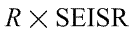
where—
R is the amount or value of the consideration received by the investor for the shares, and
SEISR is the SEIS rate.
(4)This section does not apply to a disposal of shares to which an amount of SEIS relief is attributable if—
(a)the disposal was made by an individual (“A”) to another individual (“B”), and
(b)A and B were married to, or were civil partners of, each other and living together at the time of the disposal.
(5)Section 257HA contains rules for determining which shares of any class are treated as disposed of for the purposes of this section if the investor disposes of some but not all of the shares of that class which are held by the investor.
(6)Nothing in this section applies to a disposal of shares occurring as a result of the investor's death.
257FBCases where maximum SEIS relief not obtainedU.K.
(1)If the investor's liability to income tax is reduced for any tax year in respect of any issue of shares and—
(a)the amount of the reduction (“A”), is less than
(b)the amount (“B”) which is equal to tax at the SEIS rate on the amount on which the investor claims SEIS relief in respect of the shares,
section 257FA(3) has effect in relation to a disposal of any of the shares as if the amount or value referred to as “R” were reduced by multiplying it by the fraction—

(2)If section 257AB(1) and (2) applies in the case of any issue of shares as if part of the issue had been issued in a previous tax year, subsection (1) has effect as if that part and the remainder were separate issues of shares (and that part had been issued on a day in the previous tax year).
(3)If the amount of SEIS relief attributable to any of the relevant shares has been reduced before the SEIS relief was obtained, the amount referred to in subsection (1) as A is to be treated for the purposes of that subsection as the amount that it would have been without that reduction.
(4)Subsection (3) does not apply to a reduction of SEIS relief by virtue of section 257E(4) (attribution of SEIS relief if there is a corresponding issue of bonus shares).
257FCCall optionsU.K.
(1)This section applies if the investor grants an option which, if exercised, would bind the investor to sell any of the relevant shares.
(2)The grant of the option is treated for the purposes of section 257FA as a disposal of the shares to which the option relates.
(3)Nothing in this section prejudices section 257CD (no pre-arranged exits).
257FDPut optionsU.K.
(1)This section applies if, at any time in period A, a person grants the investor an option which, if exercised, would bind the grantor to purchase any of the relevant shares.
(2)Any SEIS relief attributable to the shares to which the option relates must be withdrawn.
(3)For the purposes of subsection (2) the shares to which an option relates are those which, if—
(a)the option were exercised immediately after the grant, and
(b)any shares in the issuing company acquired by the investor after the grant were disposed of immediately after being acquired,
would be treated for the purposes of section 257FA as disposed of in pursuance of the option.
Value received by investorU.K.
257FEValue received by the investorU.K.
(1)This section applies if the investor receives any value from the issuing company at any time in period A relating to the relevant shares.
(2)Any SEIS relief attributable to the shares must—
(a)if it is greater than the amount given by the formula set out below, be reduced by that amount, and
(b)in any other case, be withdrawn.
The formula is—
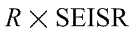
where—
R is the amount of the value received by the investor, and
SEISR is the SEIS rate.
(3)This section is subject to the following sections—
(a)section 257FF (value received: receipts of insignificant value),
(b)section 257FJ (value received where there is more than one issue of shares),
(c)section 257FK (value received where part of share issue treated as made in previous tax year),
(d)section 257FL (cases where maximum SEIS relief not obtained),
(e)section 257FM (receipts of value by and from connected persons etc), and
(f)section 257FN (receipt of replacement value).
Sections 257FJ to 257FL are to be applied in the order in which they appear in this Part.
(4)Value received is to be ignored, for the purposes of this section, to the extent to which SEIS relief attributable to the shares has already been withdrawn or reduced on its account.
(5)For the purposes of this section and sections 257FF to 257FO, an individual who acquires any relevant shares on such a transfer as is mentioned in section 257H (spouses or civil partners) is treated as the investor.
Modifications etc. (not altering text)
C78S. 257FE excluded (20.5.2020) by Finance Act 2020 (c. 14), s. 110(1)(3)
257FFValue received: receipts of insignificant valueU.K.
(1)Section 257FE(2) does not apply if the receipt of value is a receipt of insignificant value.
This is subject to subsection (2).
(2)If—
(a)value is received (“the relevant receipt”) by the investor from the issuing company at any time in period A relating to the relevant shares,
(b)the investor has received from the issuing company one or more receipts of insignificant value at a time or times—
(i)during that period, but
(ii)not later than the time of the relevant receipt, and
(c)the total value of the receipts within paragraphs (a) and (b) is not an amount of insignificant value,
the investor is treated for the purposes of this Chapter as if the relevant receipt had been a receipt of an amount of value equal to that total amount.
(3)A receipt does not fall within subsection (2)(b) if it has previously formed part of a total amount falling within subsection (2)(c).
257FGMeaning of “a receipt of insignificant value”U.K.
(1)This section applies for the purposes of section 257FF.
(2)“A receipt of insignificant value” means a receipt of an amount of insignificant value, that is, an amount of value which—
(a)is not more than £1,000, or
(b)if it is more than £1,000, is insignificant in relation to the amount subscribed by the investor for the relevant shares.
This is subject to subsection (3).
(3)If at any time in the period—
(a)beginning 12 months before the issue of the relevant shares, and
(b)ending at the end of the issue date,
repayment arrangements are in existence, no amount of value received by the investor is treated as a receipt of insignificant value.
(4)For this purpose “repayment arrangements” means arrangements which provide for the investor to receive, or to be entitled to receive, any value from the issuing company at any time in period A relating to the relevant shares.
(5)For the purposes of this section—
(a)the references in this section to the investor include a reference to any person who at any time in period A relating to the relevant shares is an associate of the investor (whether or not that person is such an associate at the material time), and
(b)the reference in subsection (4) to the issuing company includes a reference to a person who at any time in period A relating to the relevant shares is connected with that company (whether or not that person is so connected at the material time).
257FHWhen value is receivedU.K.
(1)This section applies for the purposes of sections 257FE (value received by the investor) and 257FJ (value received where there is more than one issue).
(2)The investor receives value from the issuing company at any time when the issuing company—
(a)repays, redeems or repurchases any of its share capital or securities which belong to the investor or makes any payment to the investor for giving up the investor's right to any of the issuing company's share capital or any security on its cancellation or extinguishment,
(b)repays, in pursuance of any arrangements for or in connection with the acquisition of the shares in respect of which SEIS relief is claimed, any debt owed to the investor other than a debt which was incurred by the company—
(i)on or after the date of issue of those shares, and
(ii)otherwise than in consideration of the extinguishment of a debt incurred before that date,
(c)makes to the investor any payment for giving up on its extinguishment the investor's right to any debt, other than a debt in respect of a payment of the kind mentioned in subsection (3)(a) or (f) or an ordinary trade debt,
(d)releases or waives any liability of the investor to the issuing company or discharges or undertakes to discharge any liability of the investor to a third person,
(e)makes a loan or advance to the investor which has not been repaid in full before the issue of the shares in respect of which SEIS relief is claimed,
(f)provides a benefit or facility for the investor,
(g)transfers an asset to the investor for no consideration or for consideration less than its market value or acquires an asset from the investor for consideration greater than its market value, or
(h)makes to the investor any other payment except—
(i)an excluded payment, or
(ii)a payment in discharge of an ordinary trade debt.
(3)“Excluded payment” means—
(a)any payment or reimbursement of travelling or other expenses, exclusively and necessarily incurred by the investor or an associate of the investor in the performance of the investor's or associate's duties as a director,
(b)any interest which represents no more than a reasonable commercial return on money lent to the issuing company or any person connected with that company,
(c)any dividend or other distribution which does not exceed a normal return on the investment,
(d)any payment for the supply of goods which does not exceed their market value,
(e)any payment of rent for any property occupied by the issuing company or a person connected with that company which does not exceed a reasonable and commercial rent for the property, and
(f)any necessary and reasonable remuneration which meets the conditions in subsection (4).
(4)The conditions are that the remuneration—
(a)is paid for services rendered to the issuing company or a person connected with that company in the course of a trade or profession (not being secretarial or managerial services or services of a kind provided by the person to whom they are rendered), and
(b)is taken into account in calculating for tax purposes the profits of that trade or profession.
(5)For the purposes of subsection (2)(d) the issuing company is to be treated as having released or waived a liability if the liability is not discharged within 12 months of the time when it ought to have been discharged.
(6)For the purposes of subsection (2)(e) the following is to be treated as if it were a loan made by the issuing company to the investor—
(a)the amount of any debt (other than an ordinary trade debt) incurred by the investor to the issuing company, and
(b)the amount of any debt due from the investor to a third party which has been assigned to the issuing company.
(7)The investor also receives value from the issuing company if—
(a)in respect of ordinary shares held by the investor any payment or asset is received in a winding up or in connection with a dissolution of the company, and
(b)the winding up or dissolution falls within section 257DB(4) (no tax avoidance).
(8)The investor also receives value from the issuing company if a person within subsection (9)—
(a)purchases any of its share capital or securities which belong to the investor, or
(b)makes any payment to the investor for giving up any right in relation to any of the company's share capital or securities.
(9)Those persons are—
(a)any person who has a substantial interest in the company within the meaning of section 257BB;
(b)any employee of the issuing company;
(c)any director of the issuing company.
(10)If because of the investor's disposal of shares in a company any SEIS relief attributable to those shares is withdrawn or reduced under section 257FA, the investor is not to be treated as receiving value from the company in respect of the disposal.
(11)The investor is not to be treated as receiving value from the issuing company merely because of the payment to the investor, or any associate of the investor, of any remuneration for services rendered to that company as a director if the remuneration is reasonable remuneration.
(12)For the purposes of subsection (11)—
(a)the reference in that subsection to the payment of remuneration includes a reference to the provision of any benefit or facility, and
(b)in the case of an individual who is both a director and an employee of a company, the reference in that subsection to services rendered to that company as a director includes a reference to services rendered to that company as an employee.
(13)In this section—
(a)“ordinary trade debt” means any debt for goods or services supplied in the ordinary course of a trade or business if any credit given—
(i)is for not more than 6 months, and
(ii)is not longer than that normally given to customers of the person carrying on the trade or business, and
(b)any reference to a payment to an individual includes a payment made to the individual indirectly or to the individual's order or for the individual's benefit.
257FIThe amount of value receivedU.K.
In a case falling within a provision listed in column 1 of the following table, the amount of value received for the purposes of sections 257FE and 257FJ is given by the corresponding entry in column 2 of the table.
| Provision | The amount of value received |
|---|---|
| Section 257FH(2)(a), (b) or (c) | The amount received by the investor or, if greater, the market value of the shares, securities or debt |
| Section 257FH(2)(d) | The amount of the liability |
| Section 257FH(2)(e) | The amount of the loan or advance, less the amount of any repayment made before the issue of the relevant shares |
| Section 257FH(2)(f) | The cost to the issuing company of providing the benefit or facility, less any consideration given for it by the investor |
| Section 257FH(2)(g) | The difference between the market value of the asset and the consideration (if any) given for it |
| Section 257FH(2)(h) | The amount of the payment |
| Section 257FH(7) | The amount of the payment or the market value of the asset |
| Section 257FH(8) | The amount received by the investor or, if greater, the market value of the shares or securities |
257FJValue received where there is more than one issueU.K.
(1)This section applies if—
(a)two or more issues of shares in the issuing company have been made to the investor which include shares in respect of which the investor obtains SEIS relief, and
(b)value is received by the investor at any time in the applicable periods for two or more of those issues.
(2)Section 257FE(2) has effect in relation to the shares included in each of the issues referred to in subsection (1)(b) as if the amount of value referred to as “R” were reduced by multiplying it by the fraction—

where—
A is the amount on which the investor obtains SEIS relief in respect of the shares included in the issue in question, and
B is the sum of that amount and the corresponding amount or amounts in respect of the other issue or issues.
(3)For the purposes of subsection (1) “the applicable period” for an issue of shares is period A in relation to those shares.
257FKValue received where part of issue treated as made in previous tax yearU.K.
(1)This section applies if—
(a)section 257FE(2) applies to an issue of shares, and
(b)section 257AB(1) and (2) (form and amount of SEIS relief) applies in the case of that issue as if part of the issue had been issued in a previous tax year.
(2)This subsection explains how the calculation under section 257FE(2) is to be made.
Step 1 Apportion the amount referred to as “R” between the tax year in which the shares were issued and the previous tax year by multiplying that amount by the fraction—
where—
A is the amount on which the investor obtains SEIS relief in respect of the shares treated as issued in the tax year in question, and
B is the sum of that amount and the corresponding amount in respect of the shares treated as issued in the other tax year.
Step 2 In relation to each of the amounts (“R1” and “R2”) so apportioned to the two tax years, calculate the amounts (“X1” and “X2”) that would be given by the formula if there were separate issues of shares in those tax years. In calculating amounts X1 and X2, apply section 257FL if appropriate but do not apply section 257FJ.
Step 3 Add amounts X1 and X2 together. The result is the required amount.

257FLCases where maximum SEIS relief not obtainedU.K.
(1)If the investor's liability to income tax is reduced for any tax year in respect of any issue of shares and—
(a)the amount of the reduction (“A”), is less than
(b)the amount (“B”) which is equal to income tax at the SEIS rate on the amount on which the investor claims SEIS relief in respect of the shares,
section 257FE(2) has effect in relation to any value received as if the amount referred to as “R” were reduced by multiplying it by the fraction—

(2)If the amount of SEIS relief attributable to any of the relevant shares has been reduced before the SEIS relief was obtained, the amount referred to in subsection (1) as A is to be treated for the purposes of that subsection as the amount that it would have been without that reduction.
(3)Subsection (2) does not apply to a reduction of SEIS relief by virtue of section 257E(4) (attribution of SEIS relief where there is a corresponding issue of bonus shares).
257FMReceipts of value by and from connected persons etcU.K.
In sections 257FE, 257FF and 257FH to 257FJ—
(a)any reference to a payment or transfer to the investor includes a reference to a payment or transfer made to the investor indirectly or to the investor's order or for the investor's benefit,
(b)any reference to the investor includes a reference to an associate of the investor, and
(c)any reference to the issuing company includes a reference to a person who at any time in period A relating to the relevant shares is connected with that company (whether or not that person is so connected at the material time).
257FNReceipt of replacement valueU.K.
(1)If—
(a)any SEIS relief attributable to the relevant shares would, in the absence of this section, be reduced or withdrawn under section 257FE because of a receipt of value within section 257FH(2), (7) or (8) (“the original value”),
(b)the original supplier receives value (“replacement value”) from the original recipient and the receipt is a qualifying receipt, and
(c)the amount of the replacement value is at least the amount of the original value,
section 257FE does not, because of the receipt of value, have effect to reduce or withdraw the SEIS relief.
This is subject to section 257FO(1) and (2).
(2)For the purposes of this section—
“the original recipient” means the person who receives the original value;
“the original supplier” means the person from whom that value was received.
(3)If the amount of the original value is, by virtue of section 257FJ, treated as reduced for the purposes of section 257FE(2) as it applies in relation to the relevant shares in question, the reference in subsection (1)(c) to the amount of the original value is to be read as a reference to the amount of that value ignoring the reduction.
(4)A receipt of the replacement value is a qualifying receipt for the purposes of subsection (1) if it arises—
(a)because of the original recipient doing one or more of the following—
(i)making a payment to the original supplier, other than a payment within paragraph (c) or a payment to which subsection (5) applies,
(ii)acquiring any asset from the original supplier for a consideration the amount or value of which is more than the market value of the asset,
(iii)disposing of any asset to the original supplier for no consideration or for a consideration the amount or value of which is less than the market value of the asset,
(b)if the receipt of the original value was within section 257FH(2)(d), because of an event the effect of which is to reverse the event which constituted the receipt of the original value, or
(c)if the receipt of the original value was within section 257FH(8), because of the original recipient repurchasing the share capital or securities in question, or (as the case may be) re-acquiring the right in question, for a consideration the amount or value of which is at least the amount of the original value.
(5)This subsection applies to—
(a)any payment for any goods, services or facilities, provided (whether in the course of trade or otherwise) by—
(i)the original supplier, or
(ii)any other person who, at any time in period A relating to the relevant shares, is an associate of, or is connected with, that supplier (whether or not the other person is such an associate, or is so connected, at the material time),
which is reasonable in relation to the market value of those goods, services or facilities,
(b)any payment of any interest which represents no more than a reasonable commercial return on any money lent to—
(i)the original recipient, or
(ii)any person who, at any time in period A relating to the relevant shares, is an associate of that recipient (whether or not the person is such an associate at the material time),
(c)any payment for the acquisition of an asset which does not exceed its market value,
(d)any payment, as rent for any property occupied by—
(i)the original recipient, or
(ii)any person who, at any time in period A relating to the relevant shares, is an associate of that recipient (whether or not the person is such an associate at the material time),
of an amount not exceeding a reasonable and commercial rent for the property,
(e)any payment in discharge of an ordinary trade debt, and
(f)any payment for shares in or securities of any company in circumstances that do not fall within subsection (4)(a)(ii).
(6)For the purposes of this section, the amount of the replacement value is—
(a)in a case within paragraph (a) of subsection (4), the sum of—
(i)the amount of any payment within sub-paragraph (i) of that paragraph, and
(ii)the difference between the market value of any asset to which sub-paragraph (ii) or (iii) of that paragraph applies and the amount or value of the consideration (if any) received for it,
(b)in a case within subsection (4)(b), the same as the amount of the original value, and
(c)in a case within subsection (4)(c), the amount or value of the consideration received by the original supplier.
Section 257FI applies for the purpose of determining the original value.
(7)In this section—
(a)any reference to a payment to a person (however expressed) includes a reference to a payment made to the person indirectly or to the person's order or for the person's benefit, and
(b)“ordinary trade debt” has the meaning given by section 257FH(13).
257FOSection 257FN: supplementaryU.K.
(1)The receipt of the replacement value by the original supplier is ignored for the purposes of section 257FN(1) to the extent to which it has previously been set (under that section) against a receipt of value to prevent any reduction or withdrawal of SEIS relief under section 257FE.
(2)The receipt of the replacement value by the original supplier (“the event”) is ignored for the purposes of section 257FN if—
(a)the event occurs before period A relating to the relevant shares,
(b)if the event occurs after the time the original recipient receives the original value, it does not occur as soon after that time as is reasonably practicable in the circumstances, or
(c)if an appeal has been brought by the investor against an assessment to withdraw or reduce any SEIS relief attributable to the relevant shares because of the receipt of the original value, the event occurs more than 60 days after the day on which the amount of relief which falls to be withdrawn has been finally determined.
But nothing in section 257FN or this section requires the replacement value to be received after the original value.
(3)This subsection applies if—
(a)the receipt of the replacement value by the original supplier is a qualifying receipt for the purposes of section 257FN(1),
(b)in consequence of the receipt, any receipts of value are ignored for the purposes of section 257FE as that section applies in relation to the shares in question or any other shares subscribed for by the investor, and
(c)the event which gives rise to the receipt is (or includes) a subscription for shares by—
(i)the investor, or
(ii)any person who at any time in period A relating to the relevant shares is an associate of the investor (whether or not the person is such an associate at the material time).
(4)If subsection (3) applies, the person who subscribes for the shares is not to be eligible for any SEIS relief in relation to those shares or any other shares in the same issue.
(5)In this section “the original recipient”, “the original supplier” and “replacement value” have the same meaning as in section 257FN.
MiscellaneousU.K.
257FPAcquisition of trade or trading assetsU.K.
(1)Any SEIS relief attributable to any shares in a company held by an individual is withdrawn if—
(a)at any time in period A, the company or any qualifying subsidiary—
(i)begins to carry on as its trade, or as part of its trade, a trade which was previously carried on at any time in that period otherwise than by the company or any qualifying subsidiary, or
(ii)acquires the whole, or the greater part, of the assets used for the purposes of a trade previously so carried on, and
(b)the individual is a person, or one of a group of persons, to whom subsection (2) or (3) applies.
(2)This subsection applies to any person or group of persons—
(a)to whom an interest amounting in total to more than a half share in the trade (as previously carried on) belonged at any time in period A, and
(b)who is a person or group of persons to whom such an interest in the trade carried on by the company belongs or has, at any such time, belonged.
(3)This subsection applies to any person or group of persons who—
(a)controls or, at any time in period A, has controlled the company, and
(b)at any such time, controlled another company which previously carried on the trade.
(4)For the purposes of subsection (2)—
(a)for the purposes of determining the person to whom a trade belongs and, if a trade belongs to two or more persons, their respective shares in that trade—
(i)apply section 941(6) of CTA 2010, and
(ii)an interest in a trade belonging to a company may be treated in accordance with any of the options set out in section 942 of that Act, and
(b)any interest, rights or powers of a person who is an associate of another person are treated as those of that other person.
(5)In this section “trade” includes any business or profession, and references to a trade previously carried on include references to part of such a trade.
257FQAcquisition of share capitalU.K.
(1)Any SEIS relief attributable to any shares in a company held by an individual is withdrawn if—
(a)the company comes to acquire all of the issued share capital of another company at any time in period A, and
(b)the individual is a person, or one of a group of persons, to whom subsection (2) applies.
(2)This subsection applies to any person or group of persons who—
(a)controls or, at any time in period A, has controlled the company, and
(b)at any such time, controlled the other company.
257FRRelief subsequently found not to have been dueU.K.
(1)Any SEIS relief obtained by the investor which is subsequently found not to have been due must be withdrawn.
(2)SEIS relief obtained by the investor in respect of the relevant shares may not be withdrawn on the ground—
(a)that the requirements of sections 257CB and 257CC (the purpose of the issue and use of money raised requirements) are not met in respect of the shares, or
(b)that the issuing company is not a qualifying company in relation to the shares (see Chapter 4),
unless the requirements of subsection (3) are met.
(3)The requirements of this subsection are met if either—
(a)the issuing company has given notice under section 257GF (information to be provided by issuing company etc) in relation to the relevant issue of shares, or
(b)an officer of Revenue and Customs has given notice to that company stating the officer's opinion that, because of the ground in question, the whole or any part of the SEIS relief obtained by any individual in respect of shares included in the relevant issue of shares was not due.
(4)In this section “the relevant issue of shares” means the issue of shares in the issuing company which includes the relevant shares.
CHAPTER 7U.K.Withdrawal or reduction of SEIS relief: procedure
Assessments and appealsU.K.
257GAssessments for the withdrawal or reduction of SEIS reliefU.K.
If any SEIS relief which has been obtained falls to be withdrawn or reduced under Chapter 6, it must be withdrawn or reduced by the making of an assessment to income tax for the tax year for which the relief was obtained.
257GAAppeals against section 257FR(3)(b) noticesU.K.
For the purposes of the provisions of TMA 1970 relating to appeals, the giving of notice by an officer of Revenue and Customs under section 257FR(3)(b) is taken to be a decision disallowing a claim by the issuing company.
257GBTime limits for assessmentsU.K.
(1)An officer of Revenue and Customs may—
(a)make an assessment for withdrawing or reducing the SEIS relief attributable to any of the relevant shares, or
(b)give a notice under section 257FR(3),
at any time not more than 6 years after the end of the relevant tax year.
(2)In subsection (1) “the relevant tax year” means—
(a)the tax year in which period B ends, or
(b)the tax year in which the event which causes the SEIS relief to be withdrawn or reduced occurs,
whichever is the later.
(3)Subsection (1) is without prejudice to section 36(1A) of TMA 1970 (loss of tax brought about deliberately etc).
257GCCases where assessments not to be madeU.K.
(1)No assessment for withdrawing or reducing SEIS relief in respect of shares issued to an individual may be made because of an event occurring after the individual's death.
(2)Subsection (3) applies if an individual has, by a disposal or disposals to which section 257FA(3) applies, disposed of all shares which—
(a)have been issued to the individual by the issuing company, and
(b)are shares—
(i)to which SEIS relief is attributable, or
(ii)in relation to which period A has not come to an end.
(3)No assessment for withdrawing or reducing SEIS relief in respect of those shares may be made because of any subsequent event unless the event occurs at a time when the individual—
(a)has a substantial interest in the company within the meaning of section 257BB,
(b)is an employee of the issuing company, or
(c)is a director of the issuing company.
InterestU.K.
257GDDate from which interest is chargeableU.K.
(1)In its application to an assessment made by virtue of section 257G in the case of relief withdrawn or reduced by virtue of a provision listed in subsection (2), section 86 of TMA 1970 (interest on overdue income tax) has effect as if the relevant date were 31 January next following the tax year in which the assessment is made.
(2)The provisions are—
(a)section 257BB (no substantial interest in the issuing company),
(b)section 257BD (no linked loan requirement),
(c)sections 257DA to 257DN (Chapter 4 requirements),
(d)section 257FA (disposal of shares),
(e)section 257FD (put options),
(f)section 257FE (receipt of value by the investor),
(g)section 257FP (acquisition of a trade or trading asset),
(h)section 257FQ (acquisition of share capital).
InformationU.K.
257GEInformation to be provided by the investorU.K.
(1)This section applies if the investor has obtained SEIS relief in respect of the relevant shares, and an event occurs as a result of which—
(a)the investor is not a qualifying investor in relation to the shares,
(b)the SEIS relief falls to be withdrawn or reduced by virtue of section 257BD (no linked loans requirement),
(c)the SEIS relief falls to be withdrawn or reduced under—
(i)section 257FA (disposal of shares),
(ii)section 257FC (call options), or
(iii)section 257FD (put options), or
(d)the SEIS relief falls to be withdrawn or reduced under section 257FE (receipt of value by the investor), or would fall to be so withdrawn or reduced but for section 257FN (receipt of replacement value).
(2)The investor must within 60 days of coming to know of the event give a notice to an officer of Revenue and Customs containing particulars of the event.
(3)If the investor—
(a)is required under this section to give notice of a receipt of value which is within section 257FE, or would be within that section but for section 257FN, and
(b)has knowledge of any replacement value received (or expected to be received) because of a qualifying receipt,
the notice must include particulars of that receipt of replacement value (or expected receipt).
(4)In subsection (3) “qualifying receipt” and “replacement value” are to be read in accordance with section 257FN.
257GFInformation to be provided by the issuing company etcU.K.
(1)This section applies if the issuing company has provided an officer of Revenue and Customs with a compliance statement in respect of an issue of shares and an event occurs as a result of which—
(a)the requirement of section 257CC (spending of the money raised) is not met in respect of any of the shares included in the issue, or would not be met if SEIS relief had been obtained in respect of the shares in question,
(b)any provision of Chapter 4 has effect to prevent the issuing company being a qualifying company in relation to any of the shares included in the issue, or would have such an effect if SEIS relief had been obtained in respect of the shares in question, or
(c)any of the provisions of Chapter 6 mentioned in subsection (2) has effect to cause any SEIS relief attributable to any of the shares included in the issue to be withdrawn or reduced, or—
(i)would have such an effect if SEIS relief had been obtained in respect of the shares in question, or
(ii)in the case of section 257FE, would have such an effect but for section 257FN (receipt of replacement value).
(2)The provision are—
(a)section 257FE (value received by the investor),
(b)section 257FP (acquisition of a trade or trading asset), and
(c)section 257FQ (acquisition of share capital).
(3)If this section applies—
(a)the issuing company, and
(b)any person connected with the issuing company who has knowledge of the matters mentioned in subsection (1),
must give a notice to an officer of Revenue and Customs containing particulars of the event.
(4)Any notice required to be given by the issuing company under subsection (3)(a) must be given—
(a)within 60 days of the event, or
(b)if the event is a receipt of value within section 257FH(2) from a person connected with the company (see section 257FM), within 60 days of the company coming to know of the event.
(5)Any notice required to be given by a person under subsection (3)(b) must be given within 60 days of the person coming to know of the event.
(6)If a person—
(a)is required under this section to give notice of a receipt of value which is within section 257FE, or would be within that section but for section 257FN, and
(b)has knowledge of any replacement value received (or expected to be received) because of a qualifying receipt,
the notice must include particulars of that receipt of replacement value (or expected receipt).
(7)In subsection (6) “qualifying receipt” and “replacement value” are to be read in accordance with section 257FN.
257GGPower to require information where section 257GE or 257GF applies or could have appliedU.K.
(1)This section applies if an officer of Revenue and Customs has reason to believe that a person—
(a)has not given a notice which the person is required to give under section 257GE or 257GF in respect of any event, or
(b)has given or received value within the meaning of section 257FH(2) or (8) which, but for the fact that the amount given or received was an amount of insignificant value, would have triggered a requirement to give such a notice.
(2)The officer may by notice require the person concerned to supply the officer, within such time as the officer may specify in the notice, with such information relating to the event as the officer may reasonably require for the purposes of this Part.
(3)The period specified in a notice under subsection (2) must be at least 60 days.
(4)In subsection (1)(b), the reference to an amount of insignificant value is construed in accordance with section 257FG(2).
257GHPower to require information in other casesU.K.
(1)Subsection (2) applies if SEIS relief is claimed in respect of shares in a company, and an officer of Revenue and Customs has reason to believe that it may not be due because of any such arrangements or scheme as is mentioned in—
(a)section 257BC (no related investment arrangements),
(b)section 257BE or 257DB(2) or (4) (no tax avoidance),
(c)section 257CD(1) (no pre-arranged exits),
(d)section 257CF (no disqualifying arrangements),
(e)section 257DB(4) (winding up, administration etc), or
(f)section 257DG(1) or (2) (conditions ceasing to be met).
(2)The officer may by notice require any person concerned to supply the officer within such time as may be specified in the notice with—
(a)a declaration in writing stating whether or not, according to the information which that person has or can reasonably obtain, any such arrangement or scheme exists or has existed, and
(b)such other information as the officer may reasonably require for the purposes of the provision in question and as that person has or can reasonably obtain.
(3)The period specified in a notice under subsection (2) must be at least 60 days.
(4)For the purposes of subsection (2), in a case falling within a provision listed in column 1 of the following table, the person concerned is given by the corresponding entry in column 2 of the table.
| Provision | The person concerned |
|---|---|
| Subsection (1)(a) | The claimant, the company and any person controlling the company |
| Subsection (1)(b) | The claimant |
| Subsection (1)(c) | The claimant, the company and any person connected with the company |
| Subsection (1)(d) | The claimant, the company, any person controlling the company and any person who an officer of Revenue and Customs has reason to believe may be a party to the arrangements in question |
| Subsection (1)(e) | The claimant, the company, any other company in question and any person controlling the company or any other company in question |
| Subsection (1)(f) | The company and any person controlling the company |
References in this subsection to the claimant include references to any person to whom the claimant appears to have made such a transfer as is mentioned in section 257H (spouses or civil partners) of any of the shares in question.
(5)If SEIS relief has been obtained in respect of shares in a company—
(a)any person who receives from the company any payment or asset which may constitute value received (by the person or another) for the purposes of section 257FE, and
(b)any person on whose behalf such a payment or asset is received,
must, if so required by an officer of Revenue and Customs, state whether the payment or asset so received is received on behalf of any other person and, if so, the name and address of that other person.
(6)If SEIS relief has been claimed in respect of shares in a company—
(a)any person who holds or has held shares in the company, and
(b)any person on whose behalf any such shares are or were held,
must, if so required by an officer of Revenue and Customs, state whether the shares so held are or were held on behalf of any other person and, if so, the name and address of that other person.
257GIObligations of secrecyU.K.
No obligation of secrecy imposed by statute or otherwise prevents an officer of Revenue and Customs from disclosing to a company that SEIS relief has been obtained or claimed in respect of a particular number or proportion of its shares.
CHAPTER 8U.K.Supplementary and general
Disposals of sharesU.K.
257HTransfers between spouses or civil partnersU.K.
(1)This section applies if—
(a)shares to which an amount of SEIS relief is attributable were issued to an individual (“A”),
(b)A transferred the shares to another individual (“B”) during their lives,
(c)A was married to, or was the civil partner of, B at the time of the transfer, and
(d)section 257FA (disposal of shares) does not apply to the transfer.
(2)This Part has effect, in relation to any subsequent disposal or other event, as if—
(a)B were the individual who had subscribed for the shares,
(b)the amount that B had subscribed for the shares were the amount that A had subscribed for them,
(c)B's liability to income tax had been reduced in respect of the shares for the same tax year as that for which A's was so reduced,
(d)the amount by which B's liability to income tax had been reduced in respect of the shares were the same as that by which A's liability to income tax had been so reduced, and
(e)that amount of SEIS relief had continued to be attributable to the shares despite the transfer.
(3)If the amount of SEIS relief attributable to the shares had been reduced before the relief was obtained by A—
(a)this Part has effect, in relation to any subsequent disposal or other event, as if the amount of SEIS relief attributable to the shares transferred to B had been correspondingly reduced before the relief was obtained by B, and
(b)sections 257FB(3) and 257FL(2) apply in relation to B as they would have applied in relation to A.
(4)If, because of any such disposal or other event, an assessment for reducing or withdrawing SEIS relief is to be made, the assessment is to be made on B.
257HAIdentification of shares on a disposalU.K.
(1)The rules in subsections (2) and (3) are for determining which shares of any class are treated as disposed of for the purposes of—
(a)section 257FA (disposal of shares), or
(b)section 257H (spouses or civil partners),
if the investor disposes of some but not all of the shares of that class which the investor holds in a company.
(2)Shares acquired on an earlier day are treated as disposed of before shares acquired on a later day.
(3)Shares acquired on the same day are treated as disposed of in the following order—
(a)first any to which no SEIS relief is attributable,
(b)next any to which SEIS relief (but not SEIS re-investment relief) is attributable, and
(c)next any to which SEIS relief and SEIS re-investment relief are attributable.
(4)Any shares to which SEIS relief is attributable and which were transferred to an individual as mentioned in section 257H are treated for the purposes of subsections (2) and (3) as acquired by the individual on the day on which they were issued.
(5)In a case to which section 127 of TCGA 1992 applies (including the case where that section applies by virtue of an enactment relating to chargeable gains), shares included in the new holding are treated for the purposes of subsections (2) and (3) as acquired when the original shares were acquired.
(6)In this section—
“new holding” and “original shares” have the same meaning as in section 127 of TCGA 1992 (or, as the case may be, that section as applied by the enactment concerned);
“SEIS re-investment relief” means relief under Schedule 5BB to TCGA 1992.
Acquisition of issuing companyU.K.
257HBContinuity of SEIS relief where issuing company is acquired by new companyU.K.
(1)This section applies if—
(a)a company (“the new company”) in which the only issued shares are subscriber shares acquires all the shares (“old shares”) in another company (“the old company”),
(b)the consideration for the old shares consists wholly of the issue of shares (“new shares”) in the new company,
(c)the consideration for the new shares of each description consists wholly of old shares of the corresponding description,
(d)new shares of each description are issued to the holders of old shares of the corresponding description in respect of and in proportion to their holdings,
(e)at some time before the issue of the new shares—
(i)the old company issued shares which meet the requirements of section 257CA(2), and
(ii)a compliance certificate in respect of those shares was issued by that company for the purposes of subsection (1) of section 257EB and in accordance with section 257EC, and
(f)before the issue of the new shares the Commissioners for Her Majesty's Revenue and Customs have, on the application of the new company or the old company, notified that company that they are satisfied that the exchange of shares—
(i)will be effected for genuine commercial reasons, and
(ii)will not form part of any such scheme or arrangements as are mentioned in section 137(1) of TCGA 1992 (schemes with avoidance purposes).
In this subsection references to shares, except in the expressions “subscriber shares” and “shares which meet the requirements of section 257CA(2)“, include securities.
(2)Subsection (2) of section 138 of TCGA 1992 (procedure for advance clearance) applies for the purposes of subsection (1)(f) as it applies for the purposes of subsection (1) of that section.
(3)For the purposes of this Part—
(a)the exchange of shares is not regarded as involving any disposal of the old shares or any acquisition of the new shares, and
(b)any SEIS relief which is attributable to any old shares is attributable instead to the new shares for which they are exchanged.
(4)Nothing in section 257DG (the control and independence requirement) applies in relation to such an exchange of shares, or shares and securities, as is mentioned in subsection (1), or arrangements with a view to such an exchange.
(5)For the purposes of this section old shares and new shares are of a corresponding description if, on the assumption that they were shares in the same company, they would be of the same class and carry the same rights.
(6)References in sections 257HC and 257HD to “old shares”, “new shares”, “the old company” and “the new company” are to be read in accordance with this section.
257HCCarry over of obligations etc where SEIS relief attributed to new sharesU.K.
(1)This section applies if, under section 257HB, any SEIS relief which is attributable to any old shares becomes attributable instead to any new shares.
(2)This Part has effect as if anything which under—
(a)section 257EB(1) (entitlement to claim),
(b)section 257FR(3) (relief subsequently found not to be due), or
(c)sections 257GF to 257GH (information to be provided),
has been done, or is required to be done, by or in relation to the old company had been done, or were required to be done, by or in relation to the new company.
(3)Any appeal brought by the old company against a notice under section 257FR(3)(b) may be prosecuted by the new company as if it had been brought by that company.
257HDSubstitution of new shares for old sharesU.K.
(1)Subsection (2) applies if, in the case of any new shares held by an individual to which SEIS relief becomes attributable under section 257HB, the old shares for which they were exchanged were subscribed for by and issued to the individual.
(2)This Part has effect as if—
(a)the new shares had been subscribed for by the individual at the time when, and for the amount for which, the old shares were subscribed for by the individual,
(b)the new shares had been issued to the individual by the new company at the time when the old shares were issued to the individual by the old company,
(c)the claim for SEIS relief made in respect of the old shares had been made in respect of the new shares, and
(d)the individual's liability to income tax had been reduced in respect of the new shares for the same tax year as that for which the individual's liability was so reduced in respect of the old shares.
(3)Subsection (4) applies if, in the case of any new shares held by an individual to which SEIS relief becomes so attributable under section 257HB, the old shares for which they were exchanged were transferred to the individual as mentioned in section 257H.
(4)This Part has effect in relation to any subsequent disposal or other event as if—
(a)the new shares had been subscribed for by the individual at the time when, and for the amount for which, the old shares were subscribed for,
(b)the new shares had been issued by the new company at the time when the old shares were issued by the old company,
(c)the claim for SEIS relief made in respect of the old shares had been made in respect of the new shares, and
(d)the individual's liability to income tax had been reduced in respect of the new shares for the same tax year as that for which the liability of the individual who subscribed for the old shares was so reduced in respect of those shares.
Nominees etcU.K.
257HENominees and bare trusteesU.K.
(1)Shares subscribed for, issued to, held by or disposed of for an individual by a nominee are treated for the purposes of this Part as subscribed for, issued to, held by or disposed of by the individual.
(2)If shares have been issued to a bare trust for two or more beneficiaries, this Part has effect (with the necessary modifications) as if—
(a)each beneficiary had subscribed as an individual for all of those shares, and
(b)the amount subscribed by each beneficiary was equal to the total amount subscribed on the issue of those shares divided by the number of beneficiaries.
(3)In subsection (2) “shares” means shares which meet the requirements of section 257CA(2).
InterpretationU.K.
257HFMeaning of “new qualifying trade”U.K.
(1)For the purposes of this Part a qualifying trade carried on by the issuing company or a qualifying 90% subsidiary of that company (“the relevant company”) is a “new qualifying trade” if (and only if)—
(a)the trade does not begin to be carried on (whether by the relevant company or any other person) before the [F761three] year pre-investment period, and
(b)at no time before the relevant company begins to carry on the trade was any other trade being carried on by the issuing company or by any company that was a 51% subsidiary of the issuing company at the time in question.
(2)In this section—
“qualifying trade” has the same meaning as in Part 5 (see sections 189 and 192 to 200);
[F762“three year pre-investment period” means the period of 3 years ending immediately before the day on which the relevant shares are issued.]
Textual Amendments
F761Word in s. 257HF(1)(a) substituted (6.4.2023 in relation to shares issued on or after that date) by Finance Act 2023 (c. 30), s. 15(5)(a)(7)
F762Words in s. 257HF(2) substituted (6.4.2023 in relation to shares issued on or after that date) by Finance Act 2023 (c. 30), s. 15(5)(b)(7)
257HGMeaning of “qualifying business activity”U.K.
(1)In this Part “qualifying business activity”, in relation to the issuing company, means—
(a)activity A, or
(b)activity B,
if it is carried on by the company or a qualifying 90% subsidiary of the company.
This is subject to subsection (3).
(2)Activity A is—
(a)the carrying on of a new qualifying trade which, on the date the relevant shares are issued, the company or a qualifying 90% subsidiary of the company is carrying on, or
(b)the activity of preparing to carry on (or preparing to carry on and then carrying on) a new qualifying trade—
(i)which, on that date, is intended to be carried on by the company or such a subsidiary, and
(ii)which is begun to be carried on by the company or such a subsidiary.
(3)Activity B is the carrying on of research and development—
(a)which, on the date the relevant shares are issued, the company or a qualifying 90% subsidiary of the company is carrying on, or which the company or such a subsidiary begins to carry on immediately afterwards, and
(b)from which, on that date, it is intended—
(i)that a new qualifying trade which the company or such a subsidiary will carry on will be derived, or
(ii)that a new qualifying trade which the company or such a subsidiary is carrying on, or will carry on, will benefit.
(4)For the purposes of subsection (3)(a), when research and development is begun to be carried on by a qualifying 90% subsidiary of the issuing company, any carrying on of the research and development by it before it became such a subsidiary is ignored.
(5)References in subsection (2)(b)(i) or (3)(b) to a qualifying 90% subsidiary of the issuing company include references to any existing or future company which will be such a subsidiary at any future time.
257HHMeaning of “disposal of shares”U.K.
(1)In this Part references to a disposal of shares include a reference to a disposal of an interest or right in or over shares.
(2)An individual is to be treated, for the purposes of this Part, as disposing of any shares which the individual is treated by virtue of section 136 of TCGA 1992 as exchanging for other shares.
257HIMeaning of “issue of shares”U.K.
(1)In this Part—
(a)references (however expressed) to an issue of shares in any company are to such of the shares in the company as are of the same class and issued on the same day, and
(b)references (however expressed) to an issue of shares in any company to an individual are to such of the shares in the company as are of the same class and are issued to the individual in one capacity on the same day.
(2)Subsection (1)(b) has effect subject to sections 257E(6), 257EA(2), 257FB(2) and 257FK(1).
257HJMinor definitionsU.K.
(1)In this Part—
“arrangements” includes any scheme, agreement, understanding, transaction or series of transactions (whether or not legally enforceable);
“associate” has the same meaning as in Part 5 (see section 253);
“bonus shares” means shares which are issued otherwise than for payment (whether in cash or otherwise);
“director” is read in accordance with section 452 of CTA 2010;
“EIS relief” means relief under Part 5;
“group” means a parent company and its qualifying subsidiaries;
“group company”, in relation to a group, means the parent company or any of its qualifying subsidiaries;
“ordinary shares” means shares forming part of a company's ordinary share capital;
“parent company” means a company that has one or more qualifying subsidiaries, and “single company” means a company that does not;
“permanent establishment” has the same meaning as in Part 5 (see section 191A);
“qualifying subsidiary” has the same meaning as in Part 5 (see section 191);
“qualifying 90% subsidiary” has the same meaning as in Part 5 (see section 190);
“research and development” has the meaning given by section 1006.
(2)Section 252 (meaning of a company being “in administration” or “in receivership”) applies for the purposes of this Part.
(3)Section 995 (control) does not apply for the purposes of the following provisions—
(a)section 257DG(1)(a),
(b)section 257FP,
(c)section 257FQ,
(d)section 257GH(4);
and in those provisions “control” is to be read in accordance with sections 450 and 451 of CTA 2010.
(4)In this Part—
(a)references in any provision to the reduction of any SEIS relief attributable to any shares include a reference—
(i)to the reduction of the relief to nil, and
(ii)if no relief has yet been obtained, to the reduction of the amount which apart from that provision would be the SEIS relief, and
(b)references to the withdrawal of SEIS relief in respect of any shares are—
(i)to the withdrawal of the SEIS relief attributable to those shares, or
(ii)if no relief has yet been obtained, to ceasing to be eligible for SEIS relief in respect of those shares.
(5)For the purposes of this Part shares in a company are not treated as being of the same class unless they would be so treated if dealt in on a recognised stock exchange.
(6)For the purposes of this Part the market value at any time of any asset is the price which it might reasonably be expected to fetch on a sale at that time in the open market free from any interest or right which exists by way of security in or over it.
(7)In this Part—
(a)references to SEIS relief obtained by an individual in respect of any shares include a reference to SEIS relief obtained by the individual in respect of those shares at any time after the individual has disposed of them, and
(b)references to the withdrawal or reduction of SEIS relief obtained by an individual in respect of any shares include a reference to the withdrawal or reduction of SEIS relief obtained by the individual in respect of those shares at any time.
(8)In the case of requirements that cannot be met until a future date, references in this Part to requirements being met for the time being are to nothing having occurred to prevent their being met.]
[F763PART 5BU.K.Tax relief for social investments
Textual Amendments
F763Pt. 5B inserted (17.7.2014) by Finance Act 2014 (c. 26), Sch. 11 para. 1
CHAPTER 1U.K.Introduction
257JMeaning of “SI relief” and “social enterprise”U.K.
(1)This Part provides for income tax relief for social investments (“SI relief”), that is, entitlement to tax reductions in respect of amounts invested in social enterprises by individuals.
(2)In this Part “social enterprise” means—
(a)a community interest company,
(b)a community benefit society (see section 257JB) that is not a charity,
(c)a charity,
(d)an accredited social impact contractor (see section 257JD), or
(e)any other body prescribed, or of a description prescribed, by an order made by the Treasury.
(3)An order under subsection (2)(e) may make provision as to the bodies which are social enterprises for the purposes of this Part at times before the order comes into force or FA 2014 is passed but, where a body is a social enterprise for the purposes of this Part as a result of an order under subsection (2)(e) that has come into force, no subsequent order under subsection (2)(e) may undo that result in respect of times before the subsequent order comes into force.
257JAForm and amount of reliefU.K.
(1)If an individual—
(a)is eligible for SI relief in respect of any amount, and
(b)makes a claim in respect of all or some of the amount,
the individual is entitled to a tax reduction for the tax year in which the amount was invested.
This is subject to the provisions of this Part.
(2)The amount of the reduction to which an individual is entitled under this Part for any particular tax year is the amount equal to tax, at the SI rate for that year, on—
(a)the amount or, as the case may be, the sum of the amounts invested in that year in respect of which the individual is eligible for and claims SI relief, or
(b)if less, £1 million.
(3)The tax reduction is given effect at Step 6 in section 23.
(4)If an individual—
(a)is eligible for and claims SI relief in respect of an amount, and
(b)makes a claim for part of that amount to be treated for the purposes of subsections (1) and (2) as if it had been invested not in the tax year in which it was actually invested but in the preceding tax year,
those subsections apply, and the individual's liability to tax for both tax years is determined, in accordance with the claim.
(5)In this Part “the SI rate” means 30%.
257JBMeaning of “community benefit society”U.K.
(1)In this Part “community benefit society” means a body that—
(a)is registered as a community benefit society under the 2014 Act,
(b)is a pre-commencement society (within the meaning of the 2014 Act) that meets the condition in section 2(2)(a)(ii) of the 2014 Act, or
(c)is a society registered, or treated as registered, under section 1 of the Industrial and Provident Societies Act (Northern Ireland) 1969 in the case of which the condition in section 1(2)(b) of that Act is fulfilled,
and in respect of which the condition in subsection (2) is met.
(2)The condition is that—
(a)the body is of a kind prescribed by regulation 5 of, and
(b)the body's rules include a rule in the terms set out in Schedule 1 to,
the Community Benefit Societies (Restriction on Use of Assets) Regulations 2006 (S.I. 2006/264) or the Community Benefit Societies (Restriction on Use of Assets) Regulations (Northern Ireland) 2006 (S.R. 2006/258).
(3)The Treasury may by order amend this section for the purpose of—
(a)replacing—
(i)the condition in subsection (2), or
(ii)the condition, or all or any of the conditions, for the time being replacing the condition in subsection (2),
with one or more other conditions;
(b)varying—
(i)the condition in subsection (2), or
(ii)the condition, or any of the conditions, for the time being replacing the condition in subsection (2);
(c)dispensing with—
(i)the condition in subsection (2), or
(ii)the condition, or all or any of the conditions, for the time being replacing the condition in subsection (2).
(4)In this section—
“the 2014 Act” means the Co-operative and Community Benefit Societies Act 2014;
“the 2010 Act” means the Co-operative and Community Benefit Societies and Credit Unions Act 2010.
(5)While neither the 2014 Act, nor section 1 of the 2010 Act, is in force, subsection (1) of this section has effect as if for paragraphs (a) and (b) of that subsection there were substituted—
“(a)is a society registered, or treated as registered, under section 1 of the Industrial and Provident Societies Act 1965 in the case of which the condition in section 1(2)(b) of that Act is fulfilled, or”.
(6)If section 1 of the 2010 Act (registration of societies) comes into force before the 2014 Act comes into force then, with effect from the coming into force of that section and until the coming into force of the 2014 Act, subsection (1) of this section has effect as if for paragraphs (a) and (b) of that subsection there were substituted—
“(a)is registered as a community benefit society under section 1 of the Industrial and Provident Societies Act 1965 (“the 1965 Act”),
(b)is a pre-2010 Act society (as defined by section 4A(1) of the 1965 Act) that meets the condition in section 1(3) of the 1965 Act, or”.
(7)In the event that section 2 of the 2010 Act (renaming of the 1965 Act) is brought into force before its repeal by the 2014 Act takes effect then, with effect from the coming into force of that section, subsections (5) and (6) of this section have effect as if, in the provisions which they substitute, the references to the Industrial and Provident Societies Act 1965 were references to the Co-operative and Community Benefit Societies and Credit Unions Act 1965.
257JCCharities that are trustsU.K.
In this Part (except section 257JD), a reference to a company includes a reference to a charity that is a trust.
257JDAccreditation as a social impact contractorU.K.
(1)In this Part “accredited social impact contractor” means a company limited by shares that is accredited under this section as a social impact contractor.
(2)Applications for accreditation as a social impact contractor must be made to a Minister of the Crown in the form and manner specified by a Minister of the Crown.
(3)A Minister of the Crown is to accredit a company if, but only if, that Minister is satisfied that—
(a)the company has entered into a social impact contract (see section 257JE),
(b)the company is, and at all times since its incorporation has been, established—
(i)for the purpose of entering into and carrying out a social impact contract, or for that purpose and purposes incidental to it, but
(ii)for no other purpose, and
(c)the activities of the company in carrying out that contract will not consist wholly, or as to a substantial part, in excluded activities (see section 257MQ).
(4)If a Minister of the Crown is satisfied that the condition in subsection (3)(b) or (c) has ceased to be met in relation to a company that is an accredited social impact contractor, that Minister is to withdraw the company's accreditation with effect from the time the condition ceased to be met or a later time.
257JEMeaning of “social impact contract”U.K.
(1)In this Part “social impact contract” means a contract that meets such criteria as may be specified in regulations made by the Treasury.
(2)The criteria which may be specified under subsection (1) include, in particular, criteria as to a party to the contract other than the company seeking accreditation.
(3)Criteria may be specified in regulations under subsection (1) by reference to material published by, or on behalf of, a Minister of the Crown after the making of the regulations (as well as by reference to material published before the making of the regulations).
(4)Regulations under subsection (1) may make different provision for different cases or circumstances or in relation to different areas.
257JFAccreditations: supplementary provisionsU.K.
(1)An accreditation must be made so as to be conditional on compliance with—
(a)any requirements imposed by or under regulations, and
(b)any other requirements considered appropriate by the Minister of the Crown who is accrediting the company concerned.
(2)The requirements that may be imposed by virtue of subsection (1) include requirements relating to the provision of information.
(3)Regulations may—
(a)make further provision about applications for accreditation,
(b)make provision for the variation of an accreditation (including its provisions as to its duration),
(c)make provision which, in a case where a company is or has been an accredited social impact contractor, imposes or authorises the imposition of requirements on the company, or on any other party to the social impact contract concerned, to provide information,
(d)make provision about the consequences of a failure to comply with any requirement of an accreditation imposed by virtue of subsection (1) or with any requirement imposed by virtue of paragraph (c), including in particular—
(i)provision for the withdrawal of the accreditation concerned with effect from the time of the failure or a later time, and
(ii)provision for the imposition of penalties,
(e)make provision for publication of information about an accreditation or accredited social impact contractor, and
(f)make provision for reviews of, or for appeals to the tribunal against, any of the following—
(i)a refusal to grant or vary an accreditation,
(ii)the imposition of a requirement under subsection (1)(b),
(iii)the withdrawal of an accreditation (whether under section 257JD(4) or by virtue of provision made under paragraph (d)(i)), and
(iv)the imposition or amount of a penalty imposed by virtue of provision made under paragraph (d)(ii).
(4)Regulations under subsection (1) or (3) may—
(a)make provision for the making of decisions by a Minister of the Crown as to any matter required to be decided for the purposes of the regulations,
(b)be framed by reference to material published by, or on behalf of, a Minister of the Crown after the making of the regulations (as well as by reference to material published before the making of the regulations),
(c)make different provision for different cases or circumstances or in relation to different areas, and
(d)contain incidental, supplemental, consequential and transitional provision and savings.
(5)In this section—
“accreditation” means accreditation under section 257JD, and
“regulations” means regulations made by the Treasury.
257JGPeriod of accreditation as a social impact contractorU.K.
(1)An accreditation under section 257JD has effect for a period—
(a)beginning with the day specified in the accreditation, and
(b)of a length specified in, or determined in accordance with, the accreditation.
(2)The day specified under subsection (1)(a) in an accreditation may not be earlier than 6 April 2014 but subject to that—
(a)may be, or be earlier than, the day it is decided to grant the accreditation (and in particular may be, or be earlier than, the day the application for the accreditation is made), and
(b)may be earlier than the day section 257JD comes into force.
(3)This section has effect subject to sections 257JD(4) and 257JF(3)(d)(i) (withdrawal of accreditations).
257JHFunctions of Ministers of the Crown under sections 257JD to 257JGU.K.
(1)A Minister of the Crown may delegate any function given to a Minister of the Crown by or under sections 257JD to 257JG other than a power of the Treasury to make regulations.
(2)In those sections and this section “Minister of Crown” has the meaning given by section 8(1) of the Ministers of the Crown Act 1975.
CHAPTER 2U.K.Eligibility for relief: basic rule and key definitions
EligibilityU.K.
257KEligibility for SI reliefU.K.
(1)An individual (“the investor”) who invests in a social enterprise is eligible for SI relief in respect of the amount invested if—
(a)the investment is made—
(i)by the investor on the investor's own behalf,
(ii)on or after 6 April 2014, and
(iii)before [F7646 April 2023] (but see subsection (5)), and
(b)the conditions set out in Chapters 3 and 4 are met.
(2)Subsection (1)(b) is subject to the provisions in sections 257LB and 257MJ to 257MN which provide for conditions set out in those sections not to apply where the social enterprise is an accredited social impact contractor.
(3)The investor is not eligible for SI relief in respect of the amount invested if—
(a)the investor has obtained in respect of that amount, or any part of it, relief under—
(i)Part 5 (enterprise investment scheme),
(ii)Part 5A (seed enterprise investment scheme), or
(iii)Part 7 (community investment tax relief), or
(b)that amount, or any part of it, has under Schedule 5B to TCGA 1992 (enterprise investment scheme: re-investment) been set against a chargeable gain.
(4)Investments made by, subscribed for, issued to, held by or disposed of for an individual by a nominee are treated for the purposes of this Part as made by, subscribed for, issued to, held by or disposed of by the individual.
(5)The Treasury may by order substitute a later date for the date for time being specified in subsection (1)(a)(iii).
Textual Amendments
F764Words in s. 257K(1)(a)(iii) substituted (10.6.2021) by Finance Act 2021 (c. 26), s. 20(a)
Key definitionsU.K.
257KAKey to reading the rest of the PartU.K.
In the following provisions of this Part (except section 257N), a reference to—
“the amount invested”,
“the investment”,
“the investor”, or
“the social enterprise”,
is to be read in accordance with section 257K(1).
257KBWhen investment is made, and “investment date”U.K.
(1)For the purposes of this Part “the investment date” means the date on which the investment is made.
(2)So far as the investment is in shares, for the purposes of this Part it is made when the shares are issued to the investor by the social enterprise.
(3)If the investment, so far as it is in qualifying debt investments (see section 257L), involves making the only advance covered by the debenture or debentures concerned, for the purposes of this Part it is made—
(a)when the social enterprise issues the debenture or debentures to the investor, or
(b)in a case where there is to be no such issuing, when the debenture or debentures, so far as relating to the advance, take effect between the social enterprise and the investor.
(4)If the investment, so far as it is in qualifying debt investments, involves making the first of multiple advances covered by the debenture or debentures concerned, for the purposes of this Part it is made—
(a)when the social enterprise issues the debenture or debentures to the investor, or
(b)in a case where there is to be no such issuing, when the debenture or debentures, so far as relating to all of those advances, take effect between the social enterprise and the investor.
(5)If the investment, so far as it is in qualifying debt investments, involves making the second of multiple advances covered by the debenture or debentures concerned, or a subsequent one of those advances, for the purposes of this Part it is made—
(a)when the amount of that advance is fully advanced in cash, or
(b)if later—
(i)when the social enterprise issues the debenture or debentures to the investor, or
(ii)in a case where there is to be no such issuing, when the debenture or debentures, so far as relating to all of those advances, takes effect between the social enterprise and the investor.
(6)For the purposes of subsections (3) to (5) “debenture” includes any instrument creating or acknowledging indebtedness.
257KC“Shorter applicable period” and “longer applicable period”U.K.
(1)In this Part “the shorter applicable period” and “the longer applicable period” have the meaning given by this section.
(2)The shorter applicable period begins with the investment date.
(3)The longer applicable period begins with—
(a)the day on which the social enterprise is—
(i)incorporated (if it is a body corporate), or
(ii)established (in any other case), or
(b)if later, the day whose first anniversary is the investment date.
(4)Each of the periods ends with the third anniversary of the investment date.
CHAPTER 3U.K.Eligibility: conditions relating to the investor and the investment
257LInvestment to be in new shares or new qualifying debt investmentsU.K.
(1)At all times during the shorter applicable period, the investment must be in—
(a)shares that meet conditions A and B and are issued to the investor by the social enterprise in return for the amount invested, or
(b)qualifying debt investments of which the investor is the holder in return for advancing the amount invested to the social enterprise.
(2)Condition A is that the shares must carry none of the following—
(a)a right to a return which, or any part of which, is a fixed amount;
(b)a right to a return which, or any part of which, is at a fixed rate;
(c)a right to a return which, or any part of which, is otherwise fixed by reference to the amount invested;
(d)a right to a return which, or any part of which, is fixed by reference to some other factor that is not contingent on successful financial performance by the social enterprise;
(e)a right to a return at a rate greater than a reasonable commercial rate.
(3)Condition B is that, for the purpose of determining the amounts due in respect of the shares to their holder in the event of the winding-up of the social enterprise—
(a)those amounts rank after all debts of the social enterprise except any due to holders of qualifying debt investments in the social enterprise in respect of their qualifying debt investments, and
(b)the shares do not rank above any other shares in the social enterprise.
(4)In this Part “qualifying debt investments”, in relation to the social enterprise, means any debentures of the social enterprise in respect of which the following conditions are met—
(a)neither the principal of the debt concerned, nor any return on that, is charged on any assets,
(b)the rate of any such return is not greater than a reasonable commercial rate of return, and
(c)in the event of the winding-up of the social enterprise and so far as the law allows, any sums due in respect of the debt (whether principal or return)—
(i)are subordinated to all other debts of the social enterprise except sums due in the case of other unsecured debentures of the social enterprise which rank equally,
(ii)rank equally, if there are shares in the social enterprise and they all rank equally among themselves, with amounts due to share-holders in respect of their shares, and
(iii)rank equally, if there are shares in the social enterprise and they do not all rank equally, with amounts due in respect of their shares to the holders of shares that do not rank above any other shares.
(5)The condition in subsection (3)(a) or (4)(c)(i) is met even if the sums concerned do not rank after debts which are postponed—
(a)by rules under section 411 of the Insolvency Act 1986, or
(b)by or under any other enactment.
(6)For the purposes of subsection (4) “debenture” includes any instrument creating or acknowledging indebtedness.
257LACondition that the amount invested must have been paid overU.K.
(1)So far as the investment is in shares—
(a)the shares must be subscribed for wholly in cash, and
(b)must be fully paid up at the time they are issued.
(2)If the investment, so far as it is in qualifying debt investments, involves making—
(a)the only advance covered by the debenture or debentures concerned, or
(b)one of multiple advances covered by the debenture or debentures concerned,
the full amount of that advance must have been advanced wholly in cash by the time the investment is made.
(3)For the purposes of this section—
(a)shares are not fully paid up, or
(b)the full nominal amount of qualifying debt investments has not been advanced,
if there is any undertaking to pay cash to any person at a future time in respect of the acquisition of the shares or investments.
(4)For the purposes of subsection (2) “debenture” includes any instrument creating or acknowledging indebtedness.
257LBThe no pre-arranged exits requirementsU.K.
(1)There must not at any time in the shorter applicable period be any arrangements in existence for the investment to be redeemed, repaid, repurchased, exchanged or otherwise disposed of in that period.
(2)The issuing arrangements for the investment must not include—
(a)arrangements for or with a view to the cessation of any trade which is being or is to be or may be carried on by the social enterprise or a person connected with the social enterprise, or
(b)arrangements for the disposal of, or of a substantial amount (in terms of value) of, the assets of the social enterprise or of a person connected with the social enterprise.
(3)The arrangements referred to in subsection (2)(a) and (b) do not include any arrangements applicable only on the winding-up of a company except in a case where—
(a)the issuing arrangements include arrangements for the company to be wound up, or
(b)the arrangements are applicable on the winding-up of the company otherwise than for genuine commercial reasons.
(4)In this section “the issuing arrangements” means—
(a)the arrangements under which the investor makes the investment, and
(b)any arrangements made before, and in relation to or in connection with, the making of the investment by the investor.
(5)Subsections (2) to (4) do not apply if the social enterprise is an accredited social impact contractor.
257LCThe no risk avoidance requirementU.K.
(1)There must not at any time in the shorter applicable period be any arrangements in existence the main purpose or one of the main purposes of which is (by means of any insurance, indemnity, guarantee, hedging of risk or otherwise) to provide partial or complete protection for the investor against what would otherwise be the risks attached to making the investment.
(2)The arrangements referred to in subsection (1) do not include any arrangements which are confined to the provision—
(a)for the social enterprise itself, or
(b)if the social enterprise is a parent company that meets the trading requirement in section 257MJ(2)(c) or is a parent company that is an accredited social impact contractor—
(i)for the social enterprise itself,
(ii)for the social enterprise itself and one or more of its subsidiaries, or
(iii)for one or more of the subsidiaries of the social enterprise,
of any such protection against the risks arising in the course of carrying on its business as might reasonably be expected to be provided in normal commercial circumstances.
257LDThe no linked loans requirementU.K.
(1)No linked loan is to be made by any person, at any time in the longer applicable period, to the investor or an associate of the investor.
(2)In this section “linked loan” means any loan which—
(a)would not have been made, or
(b)would not have been made on the same terms,
if the investor had not made the investment, or had not been proposing to do so.
(3)References in this section to the making by any person of a loan to the investor or an associate of the investor include—
(a)references to the giving by that person of any credit to the investor or any associate of the investor, and
(b)references to the assignment to that person of a debt due from the investor or any associate of the investor.
[F765257LDAThe existing investments requirementU.K.
(1)If at the time immediately before the investment is made the investor holds any shares in or debentures of—
(a)the social enterprise, or
(b)a company which at that time is a qualifying subsidiary of the social enterprise,
those shares or debentures must be risk finance investments or (in the case of shares) permitted subscriber shares.
(2)A share or debenture is a “risk finance investment” for the purposes of this section if—
(a)it is a share that was issued to the investor, or a debenture of which the investor is the holder in return for advancing an amount, and
(b)at any time, a compliance statement under section 205, 257ED or 257PB is provided in respect of it or of shares or investments including it.
(3)Subscriber shares are “permitted subscriber shares” for the purposes of this section if—
(a)they were issued to the investor and have been continuously held by the investor since they were issued, or
(b)they were acquired by the investor at a time when the company which issued them—
(i)had issued no shares other than subscriber shares, and
(ii)had not begun to carry on or make preparations for carrying on any trade or business.
(4)In this section “debenture” is to be read in accordance with section 257L(6).]
Textual Amendments
F765S. 257LDA inserted (with effect in accordance with Sch. 1 para. 14(1)(2) of the amending Act) by Finance (No. 2) Act 2017 (c. 32), Sch. 1 para. 3
257LEThe no tax avoidance requirementU.K.
The investment must not be made as part of any arrangements the main purpose or one of the main purposes of which is the avoidance of tax.
[F766257LEAThe no disqualifying arrangements requirementU.K.
(1)The investment must not be made, and money raised by the social enterprise from the making of the investment must not be employed,—
(a)in consequence or anticipation of disqualifying arrangements, or
(b)otherwise in connection with disqualifying arrangements.
(2)Arrangements are “disqualifying arrangements” if—
(a)the main purpose, or one of the main purposes, of the arrangements is to secure both that an activity is or will be carried on by the social enterprise or a 90% social subsidiary of the social enterprise and that—
(i)one or more persons (whether or not including any party to the arrangements) may obtain relevant tax relief in respect of a qualifying investment which raises money for the purposes of that activity, or
(ii)shares issued by the social enterprise which raise money for the purposes of that activity may comprise part of the qualifying holdings of a VCT,
(b)that activity is the relevant qualifying activity, and
(c)one or both of conditions A and B are met.
(3)Condition A is that, as a (direct or indirect) result of the money raised by the investment being employed as required by section 257MM, an amount representing the whole or the majority of the amount raised is, in the course of the arrangements, paid to or for the benefit of a relevant person or relevant persons.
(4)Condition B is that, in the absence of the arrangements, it would have been reasonable to expect that the whole or greater part of the component activities of the relevant qualifying activity would have been carried on as part of another business by a relevant person or relevant persons.
(5)For the purposes of this section it is immaterial whether the social enterprise is a party to the arrangements.
(6)In this section—
“90% social subsidiary” is to be read in accordance with section 257MV;
“component activities” means the carrying on of a qualifying trade or preparing to carry on such a trade, which constitutes the relevant qualifying activity;
a “qualifying investment” means—
(a)shares in the social enterprise, or
(b)a qualifying debt investment in the social enterprise (see section 257L);
“qualifying holdings”, in relation to the social enterprise, is to be construed in accordance with section 286 (VCTs: qualifying holdings);
“relevant person” means a person who is a party to the arrangements or a person connected with such a party;
“relevant qualifying activity” means the qualifying trade or activity mentioned in section 257ML(1) for the purposes of which the investment raised money;
“relevant tax relief” has the meaning given by subsection (7).
(7)“Relevant tax relief”—
(a)in relation to a qualifying debt investment, means SI relief in respect of that investment;
(b)in relation to shares, means one or more of the following—
(i)SI relief in respect of the shares;
(ii)EIS relief (within the meaning of Part 5) in respect of the shares;
(iii)SEIS relief (within the meaning of Part 5A) in respect of the shares;
(iv)relief under Chapter 6 of Part 4 (losses on disposal of shares) in respect of the shares;
(v)relief under section 150A or 150E of TCGA 1992 (EIS and SEIS) in respect of the shares;
(vi)relief under Schedule 5B to that Act (EIS: reinvestment) in consequence of which deferral relief is attributable to the shares (see paragraph 19(2) of that Schedule);
(vii)relief under Schedule 5BB to that Act (SEIS: re-investment) in consequence of which SEIS re-investment relief is attributable to the shares (see paragraph 4 of that Schedule).]
Textual Amendments
F766S. 257LEA inserted (with effect in accordance with Sch. 1 para. 14(3)(4) of the amending Act) by Finance (No. 2) Act 2017 (c. 32), Sch. 1 para. 4
257LFRestrictions on being an employee, partner or paid directorU.K.
(1)This section applies—
(a)to the investor, and
(b)to any individual who is an associate of the investor.
(2)An individual to whom this section applies must not at any time in the longer applicable period be—
(a)an employee of—
(i)the social enterprise,
(ii)any subsidiary of the social enterprise,
(iii)a partner of the social enterprise, or
(iv)a partner of any subsidiary of the social enterprise,
(b)a partner of—
(i)the social enterprise, or
(ii)any subsidiary of the social enterprise,
(c)a trustee of—
(i)the social enterprise, or
(ii)any subsidiary of the social enterprise, or
(d)a remunerated director of—
(i)the social enterprise, or
(ii)a linked company.
(3)In this section—
“linked company” means—
(a)a subsidiary of the social enterprise,
(b)a company which is a partner of the social enterprise, or
(c)a company which is a partner of a subsidiary of the social enterprise;
“related person” means—
(a)the social enterprise,
(b)a person connected with the social enterprise,
(c)a linked company of which the individual is a director, or
(d)a person connected with such a company;
“subsidiary”, in relation to the social enterprise, means a company which at any time in the longer applicable period is a 51% subsidiary of the social enterprise (and such a company is therefore a subsidiary of the social enterprise for the purposes of this section even at times when it is not a 51% subsidiary of the social enterprise).
(4)For the purposes of subsection (2)(d), an individual who is a director of the social enterprise or a linked company is “remunerated” if the individual (or a partnership of which the individual is a member)—
(a)receives at any time in the longer applicable period a payment from a related person, or
(b)is entitled to receive a payment from a related person in respect of any time in the longer applicable period.
(5)For the purposes of subsection (4) the following are ignored—
(a)any payment or reimbursement of travelling or other expenses wholly, exclusively and necessarily incurred by the individual in the performance of the individual's duties as a director,
(b)any interest which represents no more than a reasonable commercial return on money lent to a related person,
(c)any dividend or other distribution which does not exceed a normal return on the investment,
(d)any payment for the supply of goods which does not exceed their market value,
(e)any payment of rent for any property occupied by a related person which does not exceed a reasonable and commercial rent for the property,
(f)any necessary and reasonable remuneration which—
(i)is paid for services, rendered to a related person in the course of a trade or profession, that are not secretarial services and are not managerial services and are not services of a kind provided by the person to whom they are rendered, and
(ii)is taken into account in calculating for tax purposes the profits of that trade or profession, and
(g)if condition A is met and (where applicable) condition B is also met, any other reasonable remuneration (including any benefit or facility) received by the individual, or to which the individual is entitled, for services rendered by the individual—
(i)to the company (whether the social enterprise or a linked company) of which the individual is a director, and
(ii)in the individual's capacity as a director of that company.
(6)Condition A is that the investor made the investment, or previously made another investment meeting the requirement in section 257L(1), at a time (“the qualifying time”) when—
(a)the requirements of this section and sections 257LG and 257LH (even if the three sections were not then in force) would have been met even if each other reference in the three sections to any time in the longer applicable period were a reference to any time before the qualifying time, and
(b)the investor had never been involved in carrying on (whether on the investor's own account or as a partner, director or employee) the whole or any part of the trade, business or profession carried on by the social enterprise or a subsidiary of the social enterprise.
(7)Condition B is that—
(a)the investment did not meet condition A (but a previous investment did), and
(b)the investment was made before the third anniversary of the date when the investor last made an investment in the social enterprise which met condition A.
(8)References in this section to an individual in the individual's capacity as a director of a company include, if the individual is both a director and an employee of the company, references to the individual in the individual's capacity as an employee of the company but, apart from that, an individual who is both a director and an employee of a company is treated for the purposes of this section as a director, and not an employee, of the company.
(9)In subsections (2), (4) and (5) “director” does not include a trustee of a charity that is a trust.
257LGThe requirement not to be interested in capital etc of social enterpriseU.K.
(1)This section applies—
(a)to the investor, and
(b)to any individual who is an associate of the investor.
(2)In this section “related company” means—
(a)the social enterprise, or
(b)a company which at any time in the longer applicable period is a 51% subsidiary of the social enterprise (and such a company is therefore a related company for the purposes of this section even at times when it is not a 51% subsidiary of the social enterprise).
(3)There must not be any time in the longer applicable period when an individual to whom this section applies has control of a related company.
(4)There must not be any time in the longer applicable period when an individual to whom this section applies directly or indirectly possesses or is entitled to acquire—
(a)more than 30% of the ordinary share capital of a related company,
(b)more than 30% of the loan capital of a related company, or
(c)more than 30% of the voting power in a related company.
(5)For the purposes of subsections (3) and (4) ignore any shares in a related company held by the individual, or by an associate of the individual, at a time when that company—
(a)has not issued any shares other than subscriber shares, and
(b)has not begun to carry on, or make preparations for carrying on, any trade or business.
(6)For the purposes of this section, the loan capital of a company—
(a)is treated as including any debt incurred by the company—
(i)for any money borrowed or capital assets acquired by the company,
(ii)for any right to receive income created in favour of the company, or
(iii)for consideration the value of which to the company was (at the time when the debt was incurred) substantially less than the amount of the debt (including any premium on it), and
(b)is treated as not including any debt incurred by the company by overdrawing an account with a person carrying on a business of banking if the debt arose in the ordinary course of that business.
(7)For the purposes of this section—
(a)an individual is treated as entitled to acquire anything which the individual is entitled to acquire at a future date or will at a future date be entitled to acquire, and
(b)there is attributed to any individual any rights or powers of any other person who is an associate of the individual.
257LHRequirement for no collusion with a non-qualifying investorU.K.
There must not at any time in the longer applicable period be any arrangements—
(a)as part of which—
(i)the investor makes the investment, or
(ii)the investor, or an individual who is an associate of the investor, makes any other investment in the social enterprise,
(b)which provide for a person to make an investment in a company other than the social enterprise, where that person is not the individual (“A”) who invests as mentioned in paragraph (a), and
(c)to which there is a party (whether or not A) who is an individual in relation to whom not all of the requirements in sections 257LF and 257LG would be met if—
(i)references in those sections to the investor were read as references to that individual, and
(ii)references in those sections to the social enterprise were read as references to the company mentioned in paragraph (b).
CHAPTER 4U.K.Eligibility: conditions relating to the social enterprise
Conditions relating to the social enterprise[F767: general] U.K.
Textual Amendments
F767Word in s. 257M cross-heading inserted (with effect in accordance with Sch. 1 para. 14(1)(2) of the amending Act) by Finance (No. 2) Act 2017 (c. 32), Sch. 1 para. 6(1)
257MThe continuing to be a social enterprise requirementU.K.
The social enterprise must be a social enterprise throughout the shorter applicable period.
F768257MAThe amount raised from investments potentially eligible for reliefU.K.
. . . . . . . . . . . . . . . . . . . . . . . . . . . . . . . .
Textual Amendments
F768S. 257MA omitted (with effect in accordance with Sch. 1 para. 14(1)(2) of the amending Act) by virtue of Finance (No. 2) Act 2017 (c. 32), Sch. 1 para. 6(2)
F769257MBPower to amend limits on amounts raisedU.K.
. . . . . . . . . . . . . . . . . . . . . . . . . . . . . . . .
Textual Amendments
F769S. 257MB omitted (with effect in accordance with Sch. 1 para. 14(1)(2) of the amending Act) by virtue of Finance (No. 2) Act 2017 (c. 32), Sch. 1 para. 6(2)
257MCThe gross assets requirementU.K.
(1)If the social enterprise is a single company, the value of its assets—
(a)must not exceed £15 million immediately before the investment is made, and
(b)must not exceed £16 million immediately after the investment is made.
(2)If the social enterprise is a parent company, the value of the group assets—
(a)must not exceed £15 million immediately before the investment is made, and
(b)must not exceed £16 million immediately after the investment is made.
(3)For the purposes of subsection (2), the value of the group assets is the sum of the values of the gross assets of each of the members of the group, ignoring any assets that consist in rights against, or shares in or securities of, another member of the group.
257MDThe unquoted status requirementU.K.
(1)At the beginning of the shorter applicable period—
(a)the social enterprise must not be a quoted company,
(b)there must be no arrangements in existence for the social enterprise to become a quoted company, and
(c)there must be no arrangements in existence for the social enterprise to become a subsidiary of a company (“the new company”) by virtue of an exchange of shares, or shares and securities, if arrangements have been made with a view to the new company becoming a quoted company.
(2)For the purpose of this section, a company is a “quoted company” if any shares, stocks, debentures or other securities of the company are—
(a)listed on a recognised stock exchange,
(b)listed on a designated exchange in a country outside the United Kingdom, or
(c)dealt in outside the United Kingdom by such means as may be designated.
(3)In subsection (2)(b) and (c) “designated” means designated by an order made by the Commissioners for Her Majesty's Revenue and Customs for the purposes of that provision.
(4)An order made for the purposes of subsection (2)(b) may designate an exchange by name, or by reference to any class or description of exchanges, including a class or description framed by reference to any authority or approval given in a country outside the United Kingdom.
(5)The arrangements referred to in subsection (1)(b), and the second arrangements referred to in subsection (1)(c), do not include arrangements in consequence of which any shares, stocks, debentures or other securities of the social enterprise or the new company (as the case may be) are at any subsequent time—
(a)listed on a stock exchange that is a recognised stock exchange by virtue of an order under section 1005(1)(b), or
(b)listed on an exchange, or dealt in by any means, designated by an order made for the purposes of subsection (2)(b) or (c),
if the order was made after the beginning of the shorter applicable period.
257METhe control and independence requirementsU.K.
(1)The social enterprise must not at any time in the shorter applicable period control (whether on its own or together with any person connected with it) any company which is not a qualifying subsidiary of the social enterprise.
(2)The social enterprise must not at any time in the shorter applicable period—
(a)be a 51% subsidiary of a company, or
(b)be under the control of a company, or under the control of a company and a person connected with that company, without being a 51% subsidiary of the company.
(3)No arrangements must be in existence at any time in the shorter applicable period by virtue of which the social enterprise could fail to meet either or both of subsections (1) and (2) (whether during that period or otherwise).
257MFThe qualifying subsidiaries requirementU.K.
Any subsidiary that the social enterprise has at any time in the shorter applicable period must be a qualifying subsidiary of the social enterprise.
257MGThe property-managing subsidiaries requirementU.K.
(1)Any property-managing subsidiary that the social enterprise has at any time in the shorter applicable period must be a 90% social subsidiary of the social enterprise.
(2)In subsection (1) “property-managing subsidiary” means a subsidiary of the social enterprise whose business consists wholly or mainly in the holding or managing of land or any property deriving its value (directly or indirectly) from land.
257MHThe number of employees requirementU.K.
(1)If the social enterprise is a single company, the full-time equivalent employee number for it must be less than [F770250] when the investment is made.
(2)If the social enterprise is a parent company, the sum of—
(a)the full-time equivalent employee number for it, and
(b)the full-time equivalent employee number for each of its qualifying subsidiaries,
must be less than [F770250] when the investment is made.
(3)The full-time equivalent employee number for a company is calculated by taking the number of full-time employees of the company and adding, for each employee of the company who is not a full-time employee, such fraction as is just and reasonable.
(4)In this section “employee”—
(a)includes a director, but
(b)does not include—
(i)an employee on maternity [F771, paternity [F772, parental bereavement or neonatal care]] leave, or
(ii)a student on vocational training.
Textual Amendments
F770Word in s. 257MH(1)(2) substituted (with effect in accordance with Sch. 1 para. 14(1)(2) of the amending Act) by Finance (No. 2) Act 2017 (c. 32), Sch. 1 para. 7
F771Words in s. 257MH(4)(b)(i) substituted (18.1.2020) by Parental Bereavement (Leave and Pay) Act 2018 (c. 24), s. 2(2), Sch. para. 53; S.I. 2020/45, reg. 2
F772Words in s. 257MH(4)(b)(i) substituted (17.1.2025) by Neonatal Care (Leave and Pay) Act 2023 (c. 20), s. 3(3), Sch. para. 53; S.I. 2025/41, reg. 2
257MIThe no partnership requirementU.K.
(1)The requirements in this section apply during the shorter applicable period.
(2)The social enterprise must not be a member of any partnership.
(3)Each 90% social subsidiary of the social enterprise must not be a member of a partnership.
[F773257MIAThe financial health requirementU.K.
(1)The social enterprise must meet the financial health requirement at the beginning of the shorter applicable period.
(2)The financial health requirement is that the social enterprise is not in difficulty.
(3)The social enterprise is “in difficulty” if it is reasonable to assume that it would be regarded as a firm in difficulty for the purposes of the Community Guidelines on State Aid for Rescuing and Restructuring Firms in Difficulty (2004/C 244/02).]
Textual Amendments
F773S. 257MIA inserted (with effect in accordance with Sch. 1 para. 14(1)(2) of the amending Act) by Finance (No. 2) Act 2017 (c. 32), Sch. 1 para. 8
257MJThe trading requirementU.K.
(1)The social enterprise must meet the trading requirement throughout the shorter applicable period, but this does not apply if the social enterprise is an accredited social impact contractor.
(2)The trading requirement is that—
(a)the social enterprise is a charity,
(b)the social enterprise is a single company that is not a charity, and its business—
(i)does not, if things done for incidental purposes are ignored, consist to any extent in the carrying-on of non-trade activities, and
(ii)does not consist wholly, or as to a substantial part, in the carrying-on of excluded activities, or
(c)the social enterprise is a parent company that is not a charity, and the business of the group does not consist wholly, or as to a substantial part, in the carrying-on of non-qualifying activities.
(3)If the social enterprise intends that one or more companies should become its qualifying subsidiaries with a view to their carrying on one or more qualifying trades—
(a)the social enterprise is treated as a parent company for the purposes of subsection (2)(b) and (c), and
(b)the reference in subsection (2)(c) to the group includes the social enterprise and any existing or future company that will be its qualifying subsidiary after the intention in question is carried out,
but this subsection does not apply at any time after the abandonment of that intention.
(4)For the purposes of subsection (2)(c) “the business of the group” means what would be the business of the group if the activities of the group companies taken together were regarded as one business.
(5)For the purposes of determining the business of a group, activities of a group company are ignored so far as they are activities carried on by a mainly trading subsidiary otherwise than for its main purpose.
(6)For the purposes of determining the business of a group, activities of a group company are ignored so far as they consist in—
(a)the holding of shares in or securities of a qualifying subsidiary of the parent company,
(b)the making of loans to another group company, or
(c)the holding and managing of property used by a group company for the purpose of one or more qualifying trades carried on by a group company.
(7)In this section—
“incidental purposes” means purposes having no significant effect (other than in relation to incidental matters) on the extent of the activities of the body in question,
“mainly trading subsidiary” means a qualifying subsidiary which, apart from incidental purposes, exists wholly for the purpose of carrying on one or more qualifying trades, and any reference to the main purpose of such a subsidiary is to be read accordingly,
“non-qualifying activities” means—
(a)excluded activities, and
(b)activities, other than activities carried on by a charity, that are carried on otherwise than in the course of a trade, and
“non-trade activities” means activities which are neither of the following—
(a)activities carried on in the course of a trade, and
(b)activities carried on in the course of preparing to carry on a trade.
257MKCeasing to meet trading requirement: administration or receivershipU.K.
(1)The social enterprise is not regarded as ceasing to meet the trading requirement merely because of anything done in consequence of the social enterprise or any of its subsidiaries being in administration or receivership, but this is subject to subsections (2) and (3).
(2)Subsection (1) applies only if—
(a)the entry into administration or receivership, and
(b)everything done as a result of the company concerned being in administration or receivership,
is for genuine commercial reasons, and is not part of any arrangements the main purpose or one of the main purposes of which is the avoidance of tax.
(3)The social enterprise ceases to meet the trading requirement if before the end of the shorter applicable period—
(a)a resolution is passed, or an order is made, for the winding-up of the social enterprise or any of its subsidiaries (or, in the case of a winding-up otherwise than under the Insolvency Act 1986 or the Insolvency (Northern Ireland) Order 1989 (S.I. 1989/2405 (N.I. 19)), any other act is done for the like purpose), or
(b)the company or any of its subsidiaries is dissolved without winding-up,
but this is subject to subsection (4).
(4)Subsection (3) does not apply if the winding-up or dissolution is for genuine commercial reasons, and is not part of any arrangements the main purpose or one of the main purposes of which is the avoidance of tax.
257MLThe issue must be to raise money for chosen trade or preparing for itU.K.
(1)The social enterprise must be a party to the making of the investment (so far as not in bonus shares) in order to raise money for the carrying-on, by the social enterprise or a 90% social subsidiary of the social enterprise, of—
(a)a qualifying trade which on the investment date is carried on by the social enterprise or a 90% social subsidiary of the social enterprise, or
(b)the activity of preparing to carry on (or preparing to carry on and then carrying on) a qualifying trade—
(i)which on the investment date is intended to be carried on by the social enterprise or a 90% social subsidiary of the social enterprise, and
(ii)which is begun to be carried by the social enterprise or such a subsidiary within 2 years after that date.
(2)In this Chapter—
(a)the purpose within subsection (1) for which money is raised is referred to as “the funded purpose”,
(b)the qualifying trade mentioned in subsection (1)(a) or (b) is referred to as “the chosen trade”, and
(c)if the funded purpose is the carrying-on of the activity mentioned in subsection (1)(b), “relevant preparation work” means preparations that form the whole or part of the activity.
(3)In determining for the purposes of subsection (1)(b) when a qualifying trade is begun to be carried on by a 90% social subsidiary of the social enterprise, any carrying-on of the trade by it before it became such a subsidiary is ignored.
(4)The reference in subsection (1)(b)(i) to a 90% social subsidiary of the social enterprise includes a reference to any existing or future body which will be such a subsidiary at any future time.
(5)This section does not apply if the social enterprise is an accredited social impact contractor.
257MMRequirement to use money raised and to trade for minimum periodU.K.
(1)All of the money raised by the social enterprise from the making of the investment must, no later than the end of 28 months beginning with the investment date, be employed wholly for the funded purpose.
(2)The chosen trade must have been carried on for a period of at least 4 months ending at or after the time the investment is made and, throughout that period, the trade—
(a)must have been carried on by the social enterprise or a 90% social subsidiary of the social enterprise, and
(b)must not have been carried on by any other person.
(3)Employing money on the acquisition of shares or stock in a body does not of itself amount to employing the money for the funded purpose.
[F774(3A)Employing money on the repayment of a loan does not amount to employing the money for the funded purpose.]
(4)Subsection (1) does not fail to be met merely because an amount of money which is not significant is employed for other purposes.
(5)If—
(a)merely because of the social enterprise or any other company being wound up, or dissolved without winding-up, the qualifying trade is carried on as mentioned in subsection (2) for a period shorter than 4 months, and
(b)the winding-up or dissolution—
(i)is for genuine commercial reasons, and
(ii)is not part of any arrangements the main purpose or one of the main purposes of which is the avoidance of tax,
subsection (2) has effect as if it referred to that shorter period.
(6)If—
(a)merely because of anything done as a result of the social enterprise or any other company being in administration or receivership, the chosen trade is carried on as mentioned in subsection (2) for a period shorter than 4 months, and
(b)the entry into administration or receivership, and everything done as a result of the company concerned being in administration or receivership—
(i)is for genuine commercial reasons, and
(ii)is not part of any arrangements the main purpose or one of the main purposes of which is the avoidance of tax,
subsection (2) has effect as if it referred to that shorter period.
(7)If the social enterprise is an accredited social impact contractor, the preceding provisions of this section apply with the following modifications—
(a)in subsection (1), for “28 months” substitute “ 24 months ”,
(b)in that subsection, for “the funded purpose” substitute “ the carrying out of the social impact contract concerned ”, and
(c)omit subsections (2), (3), [F775(3A),] (5) and (6).
Textual Amendments
F774S. 257MM(3A) inserted (with effect in accordance with Sch. 1 para. 14(1)(2) of the amending Act) by Finance (No. 2) Act 2017 (c. 32), Sch. 1 para. 9(2)
F775Word in s. 257MM(7)(c) inserted (with effect in accordance with Sch. 1 para. 14(1)(2) of the amending Act) by Finance (No. 2) Act 2017 (c. 32), Sch. 1 para. 9(3)
257MNThe social enterprise must carry on the chosen tradeU.K.
(1)There must not be a time in the shorter applicable period when—
(a)the chosen trade, or
(b)relevant preparation work,
is carried on by a person who is neither the social enterprise nor a 90% social subsidiary of the social enterprise.
(2)If relevant preparation work is carried out in the shorter applicable period by the social enterprise or a 90% social subsidiary of the social enterprise then, for the purposes of determining whether the requirement in subsection (1) is met, ignore any carrying-on of the chosen trade that takes place in that period before the trade begins to be carried on by a person who is the social enterprise or a 90% social subsidiary of the social enterprise.
(3)The requirement in subsection (1) is not regarded as failing to be met if, merely because of any act or event within subsection (4), the chosen trade—
(a)ceases to be carried on in the shorter applicable period by the social enterprise or any 90% social subsidiary of the social enterprise, and
(b)it is subsequently carried on in that period by a person who is not any time in the longer applicable period connected with the social enterprise.
(4)The acts and events within this subsection are—
(a)anything done as a consequence of the social enterprise or any other company being in administration or receivership, and
(b)the social enterprise or any other company being wound up, or dissolved without being wound up.
(5)Subsection (4) applies only if—
(a)the entry into administration or receivership, and everything done as a consequence of the company concerned being in administration or receivership, or
(b)the winding-up or dissolution,
is for genuine commercial reasons, and is not part of any arrangements the main purpose or one of the main purposes of which is the avoidance of tax.
(6)This section does not apply if the social enterprise is an accredited social impact contractor.
[F776Limits on amounts that may be investedU.K.
Textual Amendments
F776Ss. 257MNA-257MNE and cross-heading inserted (with effect in accordance with Sch. 1 para. 14(1)(2) of the amending Act) by Finance (No. 2) Act 2017 (c. 32), Sch. 1 para. 6(3)
257MNAMaximum amount where investment made in first 7 yearsU.K.
(1)This section applies where—
(a)the investment is made before the end of the period of 7 years beginning with the relevant first commercial sale, or
(b)the investment is made after that period but—
(i)a relevant investment was made in the social enterprise before the end of that period, and
(ii)some or all of the money raised by that relevant investment was employed for the purposes of (or of part of) the qualifying activity for which the money raised by the investment is employed.
(2)Where this section applies, the total amount of relevant investments made in the social enterprise on or before the date when the investment is made must not exceed £1.5 million.
(3)The reference in subsection (2) to relevant investments “made in the social enterprise” is to be read with section 257MNB.
(4)In this section—
“qualifying activity” means—
(a)a qualifying trade within paragraph (a) of section 257ML(1) carried on by the social enterprise or a 90% social subsidiary of the social enterprise, or
(b)an activity within paragraph (b) of section 257ML(1) so carried on;
“the relevant first commercial sale” has the meaning given by section 175A(6), reading—
(a)references to the issuing company as references to the social enterprise,
(b)references to the issue date as references to the investment date, and
(c)references to money raised by the issue of the relevant shares as references to money raised by the investment;
“relevant investment” has the meaning given by section 173A(3) (reading references in section 173A(3) to a company as including any social enterprise).
(5)Section 173A(4) and (5) apply to determine for the purposes of this section when a relevant investment is made.
(6)Where the social enterprise is an accredited social impact contractor—
(a)the reference in subsection (1)(a) to the relevant first commercial sale is to be read as a reference to the date on which the social enterprise first entered into a social impact contract;
(b)the reference in subsection (1)(b) to the qualifying activity mentioned there is to be read as a reference to the carrying out of the social impact contract for which the money raised by the investment is employed.
(7)For provision about maximum amounts where this section does not apply, see section 257MNC.
257MNBSection 257MNA: supplementaryU.K.
(1)In section 257MNA(2) the reference to relevant investments “made in the social enterprise” includes—
(a)relevant investments made in a company which, at the material date, is or has been a 51% subsidiary of the social enterprise,
(b)any other relevant investment made in a company to the extent that the money raised by that relevant investment has been employed for the purposes of a trade carried on by another company (“company X”) which, at the material date, is or has been a 51% subsidiary of the social enterprise, and
(c)any other relevant investment made in a company if—
(i)the money raised by that relevant investment has been employed for the purposes of a trade carried on by that company or another person, and
(ii)after that relevant investment was made, but on or before the material date, that trade became a transferred trade (see subsection (5)).
(2)The investments within paragraph (a) of subsection (1)—
(a)include investments made in a company mentioned in that paragraph before it became a 51% subsidiary of the social enterprise, but
(b)where a company mentioned in that paragraph is not a 51% subsidiary of the social enterprise at the material date, do not include any investments made in that company after it last ceased to be such a subsidiary.
(3)For the purposes of subsection (1)(b), where company X is not a 51% subsidiary of the social enterprise at the material date, any money employed after company X last ceased to be such a subsidiary is to be ignored.
(4)Where only a proportion of the money raised by a relevant investment is employed for the purposes of a trade which becomes a transferred trade, only the corresponding proportion of that relevant investment is to be treated as falling within subsection (1)(c).
(5)For the purposes of this section, if—
(a)on or before the material date a trade is transferred—
(i)to the social enterprise,
(ii)to a company which, at the material date, is or has been a 51% subsidiary of the social enterprise, or
(iii)to a partnership of which the social enterprise, or a company within sub-paragraph (ii), is a member, and
(b)the trade or part of it was at any time before the transfer carried on by another person,
the trade or part mentioned in paragraph (b) becomes a “ transferred trade ” when it is transferred as mentioned in paragraph (a).
(6)The cases within subsection (5)(a)—
(a)include the case where the trade is transferred to a company within subsection (5)(a)(ii), or a partnership of which such a company is a member, before the company became a 51% subsidiary of the social enterprise, but
(b)where a company within subsection (5)(a)(ii) is not a 51% subsidiary of the social enterprise at the material date, do not include the case where the trade is transferred to that company, or a partnership of which that company is a member, after that company last ceased to be such a subsidiary.
(7)In this section—
“the material date” means the date on which the investment is made;
“relevant investment” has the meaning given by section 173A(3) (reading references in section 173A(3) to a company as including any social enterprise).
(8)Section 173A(4) and (5) apply to determine for the purposes of this section when a relevant investment is made.
(9)Section 173A(6) and (7) (meaning of “trade” etc) apply also for the purposes of this section.
257MNCMaximum amount for cases outside section 257MNAU.K.
(1)This section applies where—
(a)the investment is made at any time after the period mentioned in section 257MNA(1)(a), and
(b)it is not the case that the conditions in section 257MNA(1)(b)(i) and (ii) are met.
(2)Where this section applies—
(a)the total amount of relevant investments made in the social enterprise on or before the date when the investment is made must not exceed £1.5 million, and
(b)the amount invested must not be more than the amount mentioned in subsection (3).
(3)That amount is the amount given by the formula—

where—
T is the total of any relevant investments made in the social enterprise in the aid period,
M is the total of any de minimis aid, other than relevant investments, that is granted during the aid period—
(a)
to the social enterprise, or
(b)
to a qualifying subsidiary of the social enterprise at a time when it is such a subsidiary,
RCG is the highest rate at which capital gains tax is charged in the aid period, and
RSI is the highest SI rate in the aid period.
(4)In subsection (3) “the aid period” means the 3 years—
(a)ending with the day on which the investment is made, but
(b)in the case of that day, including only the part of the day before the investment is made.
(5)In this section “de minimis aid” means de minimis aid which fulfils the conditions laid down [F777in Commission Regulation (EU) No 1407/2013 (de minimis aid) as it had effect in the United Kingdom immediately before IP completion day].
F778(a). . . . . . . . . . . . . . . . . . . . . . . . . . . . . . . .
F778(b). . . . . . . . . . . . . . . . . . . . . . . . . . . . . . . .
(6)For the purposes of subsection (3), the amount of any de minimis aid is the amount of the grant or, if the aid is not in the form of a grant, the gross grant equivalent amount within the meaning of that Regulation [F779as it had effect in the United Kingdom immediately before IP completion day].
(7)For the purposes of subsection (3), if—
(a)the investment or any relevant investment is made, or
(b)any aid is granted,
in sterling or any other currency that is not the euro, its amount is to be converted into euros at an appropriate spot rate of exchange for the date on which the investment is made or the aid is paid.
(8)In this section “relevant investment” has the meaning given by section 173A(3) (reading references in section 173A(3) to a company as including any social enterprise).
(9)Section 173A(4) and (5) apply to determine for the purposes of this section when a relevant investment is made.
(10)Section 257MNB (which expands the meaning of “relevant investments made in the social enterprise”) applies for the purposes of each of subsections (2) and (3) above as it applies for the purposes of section 257MNA(2).
Textual Amendments
F777Words in s. 257MNC(5) inserted (31.12.2020) by The Taxes (State Aid) (Amendments) (EU Exit) Regulations 2020 (S.I. 2020/1499), regs. 1, 4(7)(a)(i)
F778S. 257MNC(5)(a)(b) omitted (31.12.2020) by virtue of The Taxes (State Aid) (Amendments) (EU Exit) Regulations 2020 (S.I. 2020/1499), regs. 1, 4(7)(a)(ii)
F779Words in s. 257MNC(6) substituted (31.12.2020) by The Taxes (State Aid) (Amendments) (EU Exit) Regulations 2020 (S.I. 2020/1499), regs. 1, 4(7)(b)
257MNDLimit on investment in shorter applicable periodU.K.
(1)This section applies where condition A or condition B is met.
(2)Condition A is that—
(a)a company becomes a 51% subsidiary of the social enterprise at any time during the shorter applicable period,
(b)all or part of the money raised by the investment is employed for the purposes of a qualifying activity which consists wholly or partly of a trade carried on by that company, and
(c)that trade (or part of it) was carried on by that company before it became a 51% subsidiary as mentioned in paragraph (a).
(3)Condition B is that all or part of the money raised by the investment is employed for the purposes of a qualifying activity which consists wholly or partly of a trade which, during the shorter applicable period, becomes a transferred trade (see subsection (9)).
(4)Where this section applies, at each time in the shorter applicable period (“the relevant time”) the total of the relevant investments made in the social enterprise before that time must not exceed £1.5 million.
(5)In subsection (4) the reference to relevant investments “made in the social enterprise” includes—
(a)relevant investments made in a company which at any time before the relevant time has been a 51% subsidiary of the social enterprise,
(b)any other relevant investment made in a company to the extent that the money raised by that relevant investment has been employed for the purposes of a trade carried on by another company (“company X”) which at any time before the relevant time has been a 51% subsidiary of the social enterprise, and
(c)any other relevant investment made in a company if—
(i)the money raised by that relevant investment has been employed for the purposes of a trade carried on by that company or another person, and
(ii)after that relevant investment was made, but before the relevant time, that trade (or part of it) became a transferred trade.
(6)The investments within paragraph (a) of subsection (5)—
(a)include investments made in a company mentioned in that paragraph before it became a 51% subsidiary of the social enterprise, but
(b)where a company mentioned in that paragraph is not a 51% subsidiary of the social enterprise at the relevant time, do not include any investments made in that company after it last ceased to be such a subsidiary.
(7)For the purposes of subsection (5)(b), where company X is not a 51% subsidiary of the social enterprise at the relevant time, any money employed after company X last ceased to be such a subsidiary is to be ignored.
(8)Where only a proportion of the money raised by a relevant investment is employed for the purposes of a trade which becomes a transferred trade, only the corresponding proportion of that relevant investment is to be treated as falling within subsection (5)(c).
(9)For the purposes of this section, if—
(a)before the relevant time, a trade is transferred—
(i)to the social enterprise,
(ii)to a company which, at the relevant time, is or has been a 51% subsidiary of the social enterprise, or
(iii)to a partnership of which the social enterprise, or a company within sub-paragraph (ii), is a member, and
(b)the trade or part of it was at any time before the transfer carried on by another person,
the trade or part mentioned in paragraph (b) becomes a “ transferred trade ” when it is transferred as mentioned in paragraph (a).
(10)The cases within subsection (9)(a)—
(a)include the case where the trade is transferred to a company within subsection (9)(a)(ii), or a partnership of which such a company is a member, before the company became a 51% subsidiary of the social enterprise, but
(b)where a company within subsection (9)(a)(ii) is not a 51% subsidiary of the social enterprise at the relevant time, do not include the case where the trade is transferred to that company, or a partnership of which that company is a member, after that company last ceased to be such a subsidiary.
(11)In this section—
“qualifying activity” has the same meaning as in section 257MNA (see subsection (4) of that section);
“relevant investment” has the meaning given by section 173A(3) (reading references in section 173A(3) to a company as including any social enterprise).
(12)Section 173A(4) and (5) apply to determine for the purposes of this section when a relevant investment is made.
(13)Section 173A(6) and (7) (meaning of “trade” etc) apply also for the purposes of this section.
257MNEPower to amend limits on amounts that may be investedU.K.
(1)The Treasury may by regulations substitute a different figure for the figure for the time being specified in section 257MNA(2), 257MNC(2) or (3) or 257MND(4).
(2)Regulations under this section may make incidental, supplemental, consequential, transitional or saving provision.
(3)Regulations under this section may not be made unless a draft of the instrument containing them has been laid before, and approved by a resolution of, the House of Commons.]
Interpretation of conditions relating to the social enterpriseU.K.
257MPMeaning of “qualifying trade”U.K.
(1)For the purposes of this Chapter, a trade is a qualifying trade if—
(a)it is conducted on a commercial basis and with a view to the realisation of profits, and
(b)it does not at any time in the shorter applicable period consist wholly or as to a substantial part in the carrying-on of excluded activities.
(2)References in this section and sections 257MQ to 257MT (excluded activities) to a trade are to be read without regard to the definition of “trade” in section 989.
257MQMeaning of “excluded activity”U.K.
(1)The following are excluded activities for the purposes of sections 257JD, 257MJ and 257MP—
(a)dealing in land, in commodities or futures or in shares, securities or other financial instruments,
(b)banking, insurance, money-lending, debt-factoring, hire-purchase financing or other financial activities F780...,
[F781(ba)leasing (including letting ships on charter or other assets on hire),
(bb)receiving royalties or licence fees,
(bc)operating or managing nursing homes or residential care homes or managing property used as a nursing home or residential care home (see section 257MQA),
(bd)generating electricity, exporting electricity (see subsection (3)) or making electricity generating capacity available,
(be)generating heat,
(bf)generating any form of energy not within paragraph (bd) or (be),
(bg)producing gas or fuel,]
(c)property development (see section 257MR),
(d)activities in the fishery and aquaculture sector that is covered by Council Regulation (EC) No. 104/2000 of 17 December 1999 on the common organisation of the markets in fishery and aquaculture products,
(e)the primary production of products listed in Annex I to the Treaty on the Functioning of the European Union (agricultural etc products), with the exception of products covered by Council Regulation EC() No. 104/2000 (fishery and aquaculture products),
F782(f). . . . . . . . . . . . . . . . . . . . . . . . . . . . . . . .
(g)road freight transport for hire or reward, and
(h)providing services or facilities for a business carried on by another person (other than a company of which the provider of the services or facilities is a qualifying subsidiary) if—
(i)the business consists wholly or as to a substantial part of activities falling within any of paragraphs (a) to (g), and
(ii)a controlling interest (see section 257MT) in the business is held by a person who also has a controlling interest in the business carried on by the provider of the services or facilities.
F783(2). . . . . . . . . . . . . . . . . . . . . . . . . . . . . . . .
[F784(3)For the purposes of subsection (1)(bd) electricity is exported if it is exported onto a distribution system or transmission system (within the meaning of section 4 of the Electricity Act 1989).]
Textual Amendments
F780Words in s. 257MQ(1)(b) omitted (with application in accordance with Sch. 1 para. 15 of the amending Act) by virtue of Finance (No. 2) Act 2017 (c. 32), Sch. 1 para. 10(2)(a)
F781Ss. 257MQ(1)(ba)-(bg) inserted (with application in accordance with Sch. 1 para. 15 of the amending Act) by Finance (No. 2) Act 2017 (c. 32), Sch. 1 para. 10(2)(b)
F782S. 257MQ(1)(f) omitted (with application in accordance with Sch. 6 para. 14 of the amending Act) by virtue of Finance Act 2015 (c. 11), Sch. 6 para. 13(2); S. 257MQ(1)(f) omitted (with application in accordance with Sch. 1 para. 15 of the amending Act) by virtue of Finance (No. 2) Act 2017 (c. 32), Sch. 1 para. 10(2)(c)
F783S. 257MQ(2) omitted (with application in accordance with Sch. 1 para. 15 of the amending Act) by virtue of Finance (No. 2) Act 2017 (c. 32), Sch. 1 para. 10(3)
F784S. 257MQ(3) inserted (with application in accordance with Sch. 1 para. 15 of the amending Act) by Finance (No. 2) Act 2017 (c. 32), Sch. 1 para. 10(4)
[F785257MQAExcluded activities: nursing homes and residential care homesU.K.
(1)This section supplements section 257MQ(1)(bc).
(2)“Nursing home” means any establishment which exists wholly or mainly for the provision of nursing care—
(a)for persons suffering from sickness, injury or infirmity, or
(b)for women who are pregnant or have given birth.
(3)“Residential care home” means any establishment which exists wholly or mainly for the provision of residential accommodation, together with board and personal care, for persons in need of personal care because of—
(a)old age,
(b)mental or physical disability,
(c)past or present dependence on alcohol or drugs,
(d)any past illnesses, or
(e)past or present mental disorder.
(4)The activities of a person are not to be taken to fall within section 257MQ(1)(bc) unless that person has an estate or interest in, or is in occupation of, the nursing home or residential care home in question.]
Textual Amendments
F785S. 257MQA inserted (with application in accordance with Sch. 1 para. 15 of the amending Act) by Finance (No. 2) Act 2017 (c. 32), Sch. 1 para. 10(5)
257MRExcluded activities: property developmentU.K.
(1)For the purposes of section 257MQ(1)(c) “property development” means the development of land—
(a)by a company which has, or at any time has had, an interest in the land, and
(b)with the sole or main object of realising a gain from the disposal of an interest in the land when it is developed.
(2)For the purposes of subsection (1) “interest in land” means (subject to subsection (3))—
(a)any estate, interest or right in or over land, including any right affecting the use or disposition of land, or
(b)any right to obtain such an estate, interest or right from another which is conditional on the other's ability to grant it.
(3)References in this section to an interest in land do not include—
(a)the interest of a creditor (other than a creditor in respect of a rentcharge) whose debt is secured by way of mortgage, an agreement for a mortgage or a charge of any kind over land, or
(b)in the case of land in Scotland, the interest of a creditor in a charge or security of any kind over land.
F786257MSExcluded activity: subsidised generation or export of electricityU.K.
. . . . . . . . . . . . . . . . . . . . . . . . . . . . . . . .
Textual Amendments
F786S. 257MS omitted: (with application in accordance with Sch. 6 para. 14 of the amending Act) by virtue of Finance Act 2015 (c. 11), Sch. 6 para. 13(3); (with application in accordance with Sch. 1 para. 15 of the amending Act) by virtue of Finance (No. 2) Act 2017 (c. 32), Sch. 1 para. 10(6)
257MTExcluded activity: providing services or facilities for another businessU.K.
(1)This section explains what is meant by a controlling interest in a business for the purposes of section 257MQ(1)(h).
(2)In the case of a business carried on by a company, a person (“A”) has a controlling interest in the business if—
(a)A controls the company,
(b)the company is a close company and A, or an associate of A, is a director of the company and either—
(i)is the beneficial owner of more than 30% of the ordinary share capital of the company, or
(ii)is able, directly or through the medium of other companies or by any other indirect means, to control more than 30% of that share capital, or
(c)at least half of the business could, in accordance with section 942 of CTA 2010, be regarded as belonging to A for the purposes of section 941 of CTA 2010 (company reconstructions without a change of ownership).
(3)In any other case, a person has a controlling interest in a business if the person is entitled to at least half of the assets used for, or of the income arising from, the business.
(4)For the purposes of this section—
(a)any rights or powers of a person who is an associate of another are to be attributed to that other person, and
(b)“business” includes any trade, profession or vocation.
257MUMeaning of “qualifying subsidiary”U.K.
(1)For the purposes of this Part, a company (“the subsidiary”) is a qualifying subsidiary of another company (“the parent”) if—
(a)the subsidiary is a 51% subsidiary of the parent,
(b)no person other than the parent, or another of its subsidiaries, has control of the subsidiary, and
(c)no arrangements are in existence as a result of which either of the conditions in paragraphs (a) and (b) would cease to be met.
(2)The conditions in subsection (1)(a) to (c) do not cease to be met merely because the subsidiary or any other company is wound up, or dissolved without winding up, if the winding-up or dissolution—
(a)is for genuine commercial reasons, and
(b)is not part of any arrangements the main purpose or one of the main purposes of which is the avoidance of tax.
(3)The conditions in subsection (1)(a) to (c) do not cease to be met merely because of anything done as a consequence of the subsidiary or another company being in administration, or receivership, if—
(a)the entry into administration or receivership, and
(b)everything done as a consequence of the company concerned being in administration or receivership,
is for genuine commercial reasons, and is not part of any arrangements the main purpose or one of the main purposes of which is the avoidance of tax.
(4)The conditions in subsection (1)(a) to (c) do not cease to be met merely because arrangements are in existence for the disposal by the parent or (as the case may be) by another subsidiary of all its interest in the subsidiary if the disposal—
(a)is to be for genuine commercial reasons, and
(b)is not to be part of any arrangements the main purpose or one of the main purposes of which is the avoidance of tax.
257MVMeaning of “90% social subsidiary” of a social enterpriseU.K.
(1)For the purposes of this Chapter, a company (“the subsidiary”) is a 90% social subsidiary of another company (“the parent”) if—
(a)the subsidiary is a social enterprise,
(b)the parent possesses at least 90% of the issued share capital of, and at least 90% of the voting power in, the subsidiary,
(c)the parent would—
(i)in the event of a winding-up of the subsidiary, or
(ii)in any other circumstances,
be beneficially entitled to receive at least 90% of the assets of the subsidiary which would then be available for distribution to equity holders of the subsidiary,
(d)the parent is beneficially entitled to receive at least 90% of any profits of the subsidiary which are available for distribution to equity holders of the subsidiary,
(e)no person other than the parent has control of the subsidiary, and
(f)no arrangements are in existence as a result of which any of the conditions in paragraphs (a) to (e) would cease to be met.
(2)For the purposes of this Chapter, a company (“company A”) which is a subsidiary of another company (“company B”) is a 90% social subsidiary of a third company (“company C”) if—
(a)company A is a 90% social subsidiary of company B, and company B is a 100% social subsidiary of company C, or
(b)company A is a 100% social subsidiary of company B, and company B is a 90% social subsidiary of company C.
(3)For the purposes of subsection (2) no account is to be taken of any control company C may have of company A.
(4)For the purposes of subsection (2), a company (“company X”) is a 100% social subsidiary of another company (“company Y”) at any time when the conditions in subsection (1)(a) to (f) would be met if—
(a)company X were the subsidiary,
(b)company Y were the parent, and
(c)in subsection (1) for “at least 90%” there were substituted “ 100% ”.
(5)The conditions in subsection (1)(a) to (f) do not cease to be met merely because of anything done as a consequence of the subsidiary or any other company being wound up, or dissolved without being wound up, if the winding-up or dissolution—
(a)is for genuine commercial reasons, and
(b)is not part of any arrangements the main purpose or one of the main purposes of which is the avoidance of tax.
(6)The conditions in subsection (1)(a) to (f) do not cease to be met merely because of anything done as a consequence of the subsidiary or any other company being in administration, or receivership, if—
(a)the entry into administration or receivership, and
(b)everything done as a consequence of the company concerned being in administration or receivership,
is for genuine commercial reasons, and is not part of any arrangements the main purpose or one of the main purposes of which is the avoidance of tax.
(7)The conditions in subsection (1)(a) to (f) do not cease to be met merely because any arrangements are in existence for the disposal by the parent of all its interest in the subsidiary if the disposal—
(a)is to be for genuine commercial reasons, and
(b)is not to be part of any arrangements the main purpose or one of the main purposes of which is the avoidance of tax.
(8)For the purposes of subsection (1)—
(a)the persons who are equity holders of the subsidiary, and
(b)the percentage of the assets of the subsidiary to which an equity holder would be entitled,
are to be determined in accordance with Chapter 6 of Part 5 of CTA 2010.
(9)In making that determination—
(a)references in section 166 of that Act to company A are to be read as references to an equity holder, and
(b)references in that section to winding up are to be read as including references to any other circumstances in which assets of the subsidiary are available for distribution to its equity holders.
[F787257MWExcluded activities: power to amendU.K.
(1)The Treasury may by regulations add to, repeal or otherwise amend any provision of sections 257MQ to 257MT (excluded activities).
(2)Regulations under this section may—
(a)make different provision for different cases or purposes;
(b)contain incidental, supplemental, consequential and transitional provision and savings.
(3)So far as they cause an activity to cease to be an excluded activity, amendments made by regulations under this section may have effect in relation to times before they come into force, but not times before 6 April 2015.
(4)This section is without prejudice to any other power to amend any provision of this Part.]
Textual Amendments
F787S. 257MW inserted (with effect in accordance with Sch. 6 para. 5 of the amending Act) by Finance Act 2015 (c. 11), Sch. 6 para. 1
CHAPTER 5U.K.Attribution of relief
257NAttribution of SI relief to investmentsU.K.
(1)References in this Part, in relation to any individual, to the SI relief attributable to any investment are to be read as references to any reduction made in the individual's liability to income tax that is attributed to that investment in accordance with this section.
This is subject to the provisions of this Part providing for the withdrawal or reduction of SI relief.
(2)If an individual's liability to income tax is reduced under this Part in any tax year, then—
(a)if the reduction is obtained because of a single distinct investment, the amount of the reduction is attributed to that investment, and
(b)if the reduction is obtained because of two or more distinct investments, the amount of the reduction—
(i)is apportioned between the distinct investments in the same proportions as the amounts claimed by the individual in respect of each of those investments, and
(ii)is attributed to those investments accordingly.
(3)In this section “distinct investment” means an investment, made on a single day, in—
(a)a single share or single qualifying debt investment, or
(b)two or more shares, or two or more qualifying debt investments, where the shares or qualifying debt investments are in the same social enterprise and of the same class.
(4)If under this section an amount of any reduction in income tax is attributed to a distinct investment—
(a)in the case of a distinct investment of the kind mentioned in subsection (3)(a), that amount is attributed to the share, or qualifying debt investment, concerned, and
(b)in the case of a distinct investment of the kind mentioned in subsection (3)(b), a proportionate part of that amount is attributed to each of the shares, or qualifying debt investments, concerned.
(5)If corresponding bonus shares are issued to an individual in respect of any shares (“the original shares”) to which SI relief is attributed—
(a)a proportionate part of the total amount attributed to the original shares immediately before the bonus shares are issued is attributed to each of the shares in the holding comprising the original shares and the bonus shares, and
(b)after the issue of the bonus shares, this Part applies as if those shares had been issued to the individual on the same day as the original shares.
(6)In subsection (5) “corresponding bonus shares” means bonus shares which are in the same company, of the same class, and carry the same rights, as the original shares.
(7)If section 257JA(1) and (2) apply in the case of any investment as if part of the amount invested had been invested in a previous tax year, this section has effect as if that part and the remainder had been invested by separate investments (and that part had been invested by an investment made on a day in the previous tax year).
(8)For the purposes of this section, shares or other investments in a company are not treated as being of the same class unless they would be so treated if dealt in on a recognised stock exchange.
CHAPTER 6U.K.Claims for relief
257PTime for making claims for SI reliefU.K.
(1)A claim for SI relief in respect of the amount invested may be made—
(a)not earlier than the time the requirement in section 257MM(2) (chosen trade must have been carried on for 4 months) is first met, and
(b)not later than the fifth anniversary of the normal self-assessment filing date for the tax year in which the investment is made.
(2)If the social enterprise is an accredited social impact contractor, subsection (1) applies with the omission of its paragraph (a).
(3)If section 257JA(1) and (2) apply as if part of the amount invested had been invested in a previous tax year, subsection (1) has effect as if that part and the remainder had been invested by separate investments (and that part had been invested by an investment made on a day in the previous tax year).
Modifications etc. (not altering text)
C79S. 257P(1) applied (with modifications) by 1992 c. 12, Sch. 8B para. 8(1) (as inserted (17.7.2014) by Finance Act 2014 (c. 26), Sch. 12 para. 3)
257PAEntitlement to claimU.K.
(1)The investor is entitled to make a claim for SI relief in respect of the amount invested if the investor has received from the social enterprise a compliance certificate in respect of that amount.
(2)For the purposes of PAYE regulations, no regard is to be had to SI relief unless a claim for it has been duly made.
(3)No application may be under section 55(3) or (4) of TMA 1970 (application for postponement of payment of tax pending appeal) on the ground that the investor is entitled to SI relief unless a claim for the relief has been duly made by the investor.
Modifications etc. (not altering text)
C80S. 257PA(1) applied (with modifications) by 1992 c. 12, Sch. 8B para. 8(1) (as inserted (17.7.2014) by Finance Act 2014 (c. 26), Sch. 12 para. 3)
257PBCompliance statementsU.K.
(1)For the purposes of this Part, a “compliance statement” in respect of the investment is a statement by the social enterprise to the effect that, except so far as they fall to be met by or in relation to the individual, the requirements for SI relief—
(a)are for the time being met in relation to the investment (or in relation to investments that include the investment), and
(b)have been so met at all times since the investment was made.
(2)A compliance statement must be in such form as the Commissioners for Her Majesty's Revenue and Customs may direct and must contain—
(a)such additional information as the Commissioners may reasonably require, including in particular information relating to the persons who have requested the issue of compliance certificates,
(b)a declaration that the statement is correct to the best of the social enterprise's knowledge and belief, and
(c)such other declarations as the Commissioners may reasonably require.
(3)The social enterprise may not provide an officer of Revenue and Customs with a compliance statement in respect of the investment—
(a)before the requirement in section 257MM(2) (trade must have been carried for 4 months) is met, or
(b)later than 2 years after the end of the tax year in which the investment is made or, if that requirement is first met after the end of that tax year, later than 2 years after the requirement is first met.
(4)If the social enterprise is an accredited social impact contractor, subsection (3) applies with the omission of its paragraph (a).
Modifications etc. (not altering text)
C81Ss. 257PB-257PD applied (with modifications) by 1992 c. 12, Sch. 8B para. 8(1) (as inserted (17.7.2014) by Finance Act 2014 (c. 26), Sch. 12 para. 3)
257PCCompliance certificatesU.K.
(1)For the purposes of this Chapter, a “compliance certificate” is a certificate which—
(a)is issued by the social enterprise in respect of the investment,
(b)states that, except so far as they fall to be met by or in relation to the individual, the requirements for SI relief are for the time being met in relation to the investment, and
(c)is in such form as the Commissioners for Her Majesty's Revenue and Customs may direct.
(2)Before issuing a compliance certificate, the social enterprise must provide an officer of Revenue and Customs with a compliance statement in respect of the investment.
(3)The social enterprise must not issue a compliance certificate without the authority of an officer of Revenue and Customs.
(4)If the social enterprise, or a person connected with the social enterprise, has under section 257SF given a notice to an officer of Revenue and Customs that relates (whether or not exclusively) to the investment, a compliance certificate must not be issued unless the authority mentioned in subsection (3) of this section is given or renewed after receipt of the notice.
(5)If—
(a)an officer of Revenue and Customs has been requested to give or renew an authority to issue a compliance certificate, and
(b)an officer of Revenue and Customs has decided whether or not to do so,
an officer of Revenue and Customs must give notice of the decision to the social enterprise.
(6)For the purposes of the provisions of TMA 1970 relating to appeals, the refusal of an officer of Revenue and Customs to authorise the issue of a compliance certificate is taken to be a decision disallowing a claim by the social enterprise.
(7)In the case of requirements that cannot be met until a future time, references in this section to requirements being met for the time being are to nothing having occurred to prevent their being met.
Modifications etc. (not altering text)
C81Ss. 257PB-257PD applied (with modifications) by 1992 c. 12, Sch. 8B para. 8(1) (as inserted (17.7.2014) by Finance Act 2014 (c. 26), Sch. 12 para. 3)
257PDPenalties for fraudulent certificate or statement etcU.K.
The social enterprise is liable to a penalty not exceeding £3,000 if—
(a)it issues a compliance certificate, or provides a compliance statement, which is made fraudulently or negligently, or
(b)it issues a compliance certificate in contravention of section 257PC(3) or (4).
Modifications etc. (not altering text)
C81Ss. 257PB-257PD applied (with modifications) by 1992 c. 12, Sch. 8B para. 8(1) (as inserted (17.7.2014) by Finance Act 2014 (c. 26), Sch. 12 para. 3)
257PEPower to amend ChapterU.K.
(1)The Treasury may by order amend this Chapter.
(2)An order under this section may include consequential, incidental or transitional provision or savings, including consequential amendments, repeals or revocations of provision made by or under an enactment (including this Act) whenever passed or made.
(3)An order under this section may make different provision for different cases or purposes.
(4)An order under this section may, in particular, make provision for persons to be liable to penalties whose amount, or maximum amount, does not exceed £3,000.
Modifications etc. (not altering text)
C82S. 257PE(2) modified by 1992 c. 12, Sch. 8B para. 8(2) (as inserted (17.7.2014) by Finance Act 2014 (c. 26), Sch. 12 para. 3)
CHAPTER 7U.K.Withdrawal or reduction of SI relief
Value received by the investorU.K.
257QEffect of the investor receiving value from the social enterpriseU.K.
(1)If the investor receives any value from the social enterprise at any time in the longer applicable period, any SI relief given in respect of the investment must—
(a)if it is greater than the amount given by the formula set out in subsection (2), be reduced by that amount, and
(b)in any other case, be withdrawn.
(2)The formula is—

where—
V is the amount of the value received, and
R is the SI rate for the tax year for which the SI relief was given.
(3)Subsections (1) and (2) are subject to—
(a)section 257QA (value received: insignificant receipts),
(b)section 257QB (value received where there is more than one issue of investments),
(c)section 257QC (value received where part of investment treated as made in previous tax year),
(d)section 257QD (cases where maximum SI relief not obtained),
(e)section 257QG (receipts of value by and from connected persons etc), and
(f)section 257QH (receipt of replacement value).
(4)Sections 257QB to 257QD are to be applied in the order in which they appear in this Part.
(5)Value received is to be ignored, for the purposes of this section, so far as SI relief attributable to the investment has already been withdrawn or reduced on its account.
(6)For the purposes of this section and sections 257QA to 257QI, an individual—
(a)who acquires any part of the investment, and
(b)who does so on such a transfer as is mentioned in section 257T (spouses or civil partners),
is treated as the investor.
257QAValue received: insignificant receiptsU.K.
(1)In this section “insignificant receipt” means a receipt whose amount—
(a)is not more than £1,000, or
(b)is more than £1,000 but is insignificant in relation to the amount invested.
(2)Section 257Q(1) does not apply to an insignificant receipt, subject as follows.
(3)Section 257Q(1) applies to all receipts within the longer applicable period if, at any time on the investment date or in the preceding 12 months, arrangements are in existence providing for the investor to receive, or to be entitled to receive, value from the social enterprise at any time in the longer applicable period.
(4)Once section 257Q(1) has applied to a receipt, it applies also to all other receipts within the longer applicable period except any earlier insignificant receipts.
(5)The amount of the first receipt to which section 257Q(1) applies is treated as increased by the total amount of any earlier insignificant receipts.
(6)In subsection (3)—
(a)the reference to the investor includes any person who at any time in the longer applicable period is an associate of the investor (whether or not an associate at the material time), and
(b)the reference to the social enterprise includes any person who at any time in the longer applicable period is connected with the social enterprise (whether or not connected at the material time).
257QBValue received where there is more than one issue of investmentsU.K.
(1)Subsection (3) applies if—
(a)a time in the longer applicable period when the investor receives value from the social enterprise is within the period that for the purposes of this Part is the longer applicable period in relation to another investment in the social enterprise, and
(b)that other investment is one for which the investor has SI relief.
(2)That other investment is an “overlapping investment” for the purposes of subsection (3).
(3)Section 257Q(2) has effect in relation to the investment as if the amount V were reduced by multiplying it by—

where—
I is the amount on which the investor has SI relief in the case of the investment, and
T is the total of that amount and the corresponding amount for each overlapping investment.
257QCValue received where part of investment treated as made in previous tax yearU.K.
(1)Subsection (2) applies if—
(a)section 257Q(1) applies to a receipt, and
(b)section 257JA(1) and (2) apply as if part of the amount invested had been invested in a previous tax year.
(2)The calculation under section 257Q(2) in relation to that receipt is to be made as follows—
Step 1 Apportion the amount referred to as “V” between the tax year in which the investment was made and the preceding tax year by multiplying that amount by—
where—
A is the part of the amount invested on which the investor obtains SI relief for the tax year in question, and
B is the sum of—
(a)that part, and
(b)the part of the amount invested on which the investor obtains SI relief for the other tax year.
Step 2 In relation to each of the amounts (“V1” and “V2”) so apportioned to the two tax years, calculate the amounts (“X1” and “X2”) that would be given by the formula if separate investments had been made in those tax years. In calculating amounts X1 and X2, apply section 257QD if appropriate but do not apply section 257QB.
Step 3 Add amounts X1 and X2 together. The result is the required amount.

257QDCases where maximum SI relief not obtainedU.K.
(1)If the investor's liability to income tax is reduced for any tax year in respect of the investment and—
(a)the amount of the reduction (“A”), is less than
(b)the amount (“B”) which is equal to income tax at the SI rate for that tax year on the amount on which the investor has SI relief in the case of the investment,
section 257Q(2) has effect in relation to any value received as if the amount referred to as “V” were reduced by multiplying it by—

(2)If the amount of SI relief attributable to the investment has been reduced before the SI relief was obtained, the amount referred to in subsection (1) as “A” is to be treated for the purposes of that subsection as the amount that it would have been without that reduction.
(3)Subsection (2) does not apply to a reduction of SI relief as a result of section 257N(5) (attribution of SI relief where there is a corresponding issue of bonus shares).
257QEWhen value is receivedU.K.
(1)This section applies for the purposes of sections 257Q and 257QB.
(2)The investor receives value from the social enterprise at any time when the social enterprise—
(a)repays, redeems or repurchases any investments in the social enterprise which belong to the investor, or makes any payment to the investor for giving up the investor's right to investments in the social enterprise on their cancellation or extinguishment,
(b)repays, in pursuance of any arrangements for or in connection with the making of the investment, any debt owed to the investor other than a debt which was incurred by the social enterprise—
(i)on or after the investment date, and
(ii)otherwise than in consideration of the extinguishment of a debt incurred before that date,
(c)makes to the investor any payment for giving up on its extinguishment the investor's right to any debt, other than—
(i)a debt in respect of a repayment of the kind mentioned in section 257LF(5)(a) or (f), or
(ii)an ordinary trade debt,
(d)releases or waives any liability of the investor to the social enterprise or discharges or undertakes to discharge any liability of the investor to a third person,
(e)makes a loan or advance to the investor which has not been repaid in full before the investment is made,
(f)provides a benefit or facility for the investor by providing, at a price less than the arm's-length price or free of charge, goods or services for whose provision the social enterprise ordinarily makes a charge,
(g)otherwise provides any benefit or facility for the investor,
(h)transfers an asset to the investor for no consideration or for consideration less than its market value or acquires an asset from the investor for consideration greater than its market value, or
(i)makes to the investor any other payment except—
(i)a payment of a kind mentioned in section 257LF(5), or
(ii)a payment in discharge of an ordinary trade debt.
(3)For the purposes of subsection (2)(d), the social enterprise is treated as having released or waived a liability if the liability is not discharged within 12 months of the time when it ought to have been discharged.
(4)For the purposes of subsection (2)(e), each of the following is treated as a loan made by the social enterprise to the investor—
(a)the amount of any debt, other than an ordinary trade debt, incurred by the investor to the social enterprise, and
(b)the amount of any debt due from the investor to a third party which has been assigned to the social enterprise.
(5)The investor also receives value from the social enterprise if—
(a)in respect of ordinary shares, or qualifying debt investments, held by the investor any payment or asset is received in a winding-up or dissolution of the social enterprise, and
(b)the winding-up or dissolution is for genuine commercial reasons, and is not part of any arrangements the main purpose or one of the main purposes of which is the avoidance of tax.
(6)The investor also receives value from the social enterprise if—
(a)a person—
(i)purchases any investments in the social enterprise which belong to the investor, or
(ii)makes any payment to the investor for giving up any right in relation to any investments in the social enterprise, and
(b)that person is an individual in relation to whom not all of the requirements in sections 257LF and 257LG would be met if references in those sections to the investor were read as references to that person.
(7)If, because of the investor's disposal of investments in the social enterprise, any SI relief attributable to those investments is withdrawn or reduced under section 257R, the investor is not to be treated as receiving value from the social enterprise in respect of the disposal.
(8)If the investor is a director of the social enterprise, the investor is not to be treated as receiving value from the social enterprise merely because of the payment to the investor of reasonable remuneration (including any benefit or facility) for any services rendered to the social enterprise as a director or employee.
(9)In this section “ordinary trade debt” means any debt for goods or services supplied in the ordinary course of a trade or business if any credit given—
(a)is for not more than 6 months, and
(b)is not for longer than that normally given to customers of the person carrying on the trade or business.
257QFThe amount of value receivedU.K.
In a case falling within a provision listed in column 1 of the following table, the amount of value received for the purposes of sections 257Q and 257QB is given by the corresponding entry in column 2 of the table.
| Provision | The amount of value received |
|---|---|
| Section 257QE(2)(a), (b) or (c) | The amount received by the investor or, if greater, the market value of the investments or debt |
| Section 257QE(2)(d) | The amount of the liability |
| Section 257QE(2)(e) | The amount of the loan or advance, less the amount of any repayment made before the investment is made |
| Section 257QE(2)(f) | The arm's-length price for the goods or services, less any amount paid for them by the investor |
| Section 257QE(2)(g) | The cost to the social enterprise of providing the benefit or facility, less any consideration given for it by the investor |
| Section 257QE(2)(h) | The difference between the market value of the asset and the consideration (if any) given for it |
| Section 257QE(2)(i) | The amount of the payment |
| Section 257QE(5) | The amount of the payment or the market value of the asset |
| Section 257QE(6) | The amount received by the investor or, if greater, the market value of the investments |
257QGReceipts of value by and from connected persons etcU.K.
In sections 257Q, 257QA, 257QB, 257QE and 257QF—
(a)any reference to a payment or transfer to the investor includes a reference to a payment or transfer made to the investor indirectly or to the investor's order or for the investor's benefit,
(b)any reference to the investor includes a reference to an associate of the investor, and
(c)any reference to the social enterprise includes a reference to a person who at any time in the longer applicable period is connected with the social enterprise (whether or not that person is so connected at the material time).
257QHReceipt of replacement valueU.K.
(1)If—
(a)any SI relief attributable to the investment would, in the absence of this section, be reduced or withdrawn under section 257Q because of a receipt of value within section 257QE(2) or (6) (“the original value”),
(b)the original supplier receives value (“the replacement value”) from the original recipient and the receipt is a qualifying receipt, and
(c)the amount of the replacement value is at least the amount of the original value,
section 257Q does not, because of the receipt of the original value, have effect to withdraw or reduce the SI relief.
This is subject to section 257QI(1) and (2).
(2)For the purposes of this section—
“the original recipient” means the person who receives the original value, and
“the original supplier” means the person from whom that value was received.
(3)If the amount of the original value is, by virtue of section 257QB, treated as reduced for the purposes of section 257Q(2) as it applies in relation to the investment, the reference in subsection (1)(c) to the amount of the original value is to be read as a reference to the amount of that value ignoring the reduction.
(4)A receipt of the replacement value is a qualifying receipt for the purposes of subsection (1) if it arises—
(a)because of the original recipient doing one or more of the following—
(i)making a payment to the original supplier, other than a payment within paragraph (c) or a payment to which subsection (5) applies,
(ii)acquiring any asset from the original supplier for a consideration the amount or value of which is more than the market value of the asset, and
(iii)disposing of any asset to the original supplier for no consideration or for a consideration the amount or value of which is less than the market value of the asset,
(b)if the receipt of the original value was within section 257QE(2)(d), because of an event the effect of which is to reverse the event which constituted the receipt of the original value, or
(c)if the receipt of the original value was within section 257QE(6), because of the original recipient repurchasing the investments in question, or (as the case may be) re-acquiring the right in question, for a consideration the amount or value of which is at least the amount of the original value.
(5)This subsection applies to—
(a)any payment for any goods, services or facilities, provided (whether in the course of trade or otherwise) by—
(i)the original supplier, or
(ii)any other person who at any time in the longer applicable period is an associate of, or is connected with, the original supplier (whether or not the person is such an associate, or is so connected, at the material time),
which is reasonable in relation to the market value of those goods, services or facilities,
(b)any payment of any interest which represents no more than a reasonable commercial return on any money lent to—
(i)the original recipient, or
(ii)any other person who at any time in the longer applicable period is an associate of the original recipient (whether or not the person is such an associate at the material time),
(c)any payment for the acquisition of an asset which does not exceed its market value,
(d)any payment, as rent for any property occupied by—
(i)the original recipient, or
(ii)any person who at any time in the longer applicable period is an associate of the original recipient (whether or not the person is such an associate at the material time),
of an amount not exceeding a reasonable and commercial rent for the property,
(e)any payment in discharge of an ordinary trade debt, and
(f)any payment for shares in or securities of any company in circumstances that do not fall within subsection (4)(a)(ii).
(6)For the purposes of this section, the amount of the replacement value is—
(a)in a case within paragraph (a) of subsection (4), the sum of—
(i)the amount of any payment within sub-paragraph (i) of that paragraph, and
(ii)the difference between the market value of any asset to which sub-paragraph (ii) or (iii) of that paragraph applies and the amount or value of the consideration (if any) received for it,
(b)in a case within subsection (4)(b), the same as the amount of the original value, and
(c)in a case within subsection (4)(c), the amount or value of the consideration received by the original supplier.
Section 257QF applies for the purpose of determining the amount of the original value.
(7)In this section—
(a)any reference to a payment to a person (however expressed) includes a reference to a payment made to the person indirectly or to the person's order or for the person's benefit, and
(b)“ordinary trade debt” has the meaning given by section 257QE(9).
257QISection 257QH: supplementaryU.K.
(1)The receipt of the replacement value by the original supplier is ignored for the purposes of section 257QH(1) to the extent to which it has previously been set under section 257QH against a receipt of value to prevent any reduction or withdrawal of SI relief under section 257Q.
(2)The receipt of the replacement value by the original supplier (“the event”) is ignored for the purposes of section 257QH if—
(a)the event occurs before the longer applicable period,
(b)where the event occurs after the time the original recipient receives the original value, it does not occur as soon after that time as is reasonably practicable in the circumstances, or
(c)where an appeal has been brought by the investor against an assessment to withdraw or reduce any SI relief attributable to the investment because of the receipt of the original value, the event occurs more than 60 days after the day on which the amount of the relief which falls to be withdrawn has been finally determined.
But nothing in section 257QH or this section requires the replacement value to be received after the original value.
(3)This subsection applies if—
(a)the receipt of the replacement value by the original supplier is a qualifying receipt for the purposes of section 257QH(1), and
(b)in consequence of the receipt, any receipts of value are ignored for the purposes of section 257Q as that section applies in relation to the investment or any other investments made by the investor, and
(c)the event which gives rise to the receipt is (or includes) the making of an investment by—
(i)the investor, or
(ii)any person who at any time in the longer applicable period is an associate of the investor (whether or not the person is such an associate at the material time).
(4)If subsection (3) applies, the person who makes the investment concerned is not to be eligible for SI relief in relation to the investment concerned or any other investments in the same issue.
(5)In this section “the original recipient”, “the original supplier” and “replacement value” have the same meaning as in section 257QH.
Repayments etc of investments to other personsU.K.
257QJRepayments etc of share capital to other personsU.K.
(1)This section applies if any SI relief is attributable to the whole or any part of the investment and, at any time in the longer applicable period, the social enterprise or any subsidiary—
(a)repays, redeems or repurchases any of its share capital which belongs to any member other than—
(i)the investor, or
(ii)a person who falls within subsection (5), or
(b)makes any payment to any such member for giving up the member's right to any of the share capital of the social enterprise or subsidiary on its cancellation or extinguishment.
(2)The SI relief must—
(a)if it is greater than the amount given by the formula set out in subsection (3), be reduced by that amount, and
(b)in any other case, be withdrawn.
(3)The formula is—

where—
A is the amount received by the member, and
R is the SI rate for the tax year for which the SI relief was given.
(4)This section is subject to sections 257QK to 257QP; and sections 257QL to 257QO are to be applied in the order in which they appear in this Part.
(5)A person falls within this subsection if the repayment causes any SI relief attributable to that person's shares in the social enterprise to be withdrawn or reduced by virtue of—
(a)section 257QE(2)(a) (receipt of value by virtue of repayment of investments etc), or
(b)section 257R (disposal of whole or part of the investment).
(6)A repayment is treated as having the effect mentioned in subsection (5)(a) if it would have that effect were it not an insignificant receipt; and here “insignificant receipt” is to be read in accordance with section 257QA(1).
(7)A repayment is to be ignored, for the purposes of this section, to the extent to which SI relief attributable to any shares has already been withdrawn or reduced on its account.
(8)In this section and sections 257QK to 257QP—
(a)“repayment” means a repayment, redemption, repurchase or payment mentioned in subsection (1)(a) or (b), and
(b)references to a subsidiary of the social enterprise are references to a company which at any time in the longer applicable period is a 51% subsidiary of the social enterprise (whether or not it is such a subsidiary at the time of the repayment).
257QKInsignificant payments ignored for the purposes of section 257QJU.K.
(1)A repayment is ignored for the purposes of section 257QJ if both—
(a)the market value of the shares to which it relates (“the target shares”) immediately before the event occurs, and
(b)the amount received by the member in question,
are insignificant in relation to the market value of the remaining issued share capital of the social enterprise, or (as the case may be) the subsidiary, immediately after the event occurs.
This is subject to subsection (3).
(2)For the purposes of subsection (1) it is to be assumed that the target shares are cancelled at the time the repayment is made.
(3)Subsection (1) does not apply if repayment arrangements are in existence at any time in the period—
(a)beginning 12 months before the investment date, and
(b)ending at the end of the investment date.
(4)For this purpose “repayment arrangements” means arrangements which provide—
(a)for a repayment by the social enterprise or any subsidiary of the social enterprise (whether or not it is such a subsidiary at the time the arrangements are made), or
(b)for anyone to be entitled to such a repayment,
at any time in the longer applicable period.
257QLAmount of repayments etc if there is more than one issue of sharesU.K.
(1)This section applies if, in relation to the same repayment, section 257QJ(2) applies to SI relief attributable to two or more issues of shares.
(2)Section 257QJ(3) has effect in relation to the shares included in each of those issues as if the amount referred to as A were reduced by multiplying it by the fraction—

where—
I is the amount on which SI relief was obtained by individuals in respect of shares which are included in the issue and to which SI relief is or, but for section 257QJ(2)(b), would be attributable, and
T is the total of that amount and the corresponding amount or amounts in respect of the other issue or issues.
257QMSingle issue affecting more than one individualU.K.
(1)This section applies if, in relation to the same repayment, section 257QJ(2) applies to SI relief attributable to shares held by two or more individuals.
(2)Section 257QJ(3) has effect in relation to each individual as if the amount referred to as A were reduced by multiplying it by the fraction—

where—
I is the amount on which the individual obtains SI relief in respect of the shares to which SI relief is or, but for section 257QJ(2)(b), would be attributable, and
T is the total of that amount and the corresponding amount or amounts on which the other individual or individuals obtain SI relief in respect of such shares.
257QNSingle issue treated as made partly in previous tax yearU.K.
(1)This section applies if—
(a)section 257QJ(2) applies to SI relief attributable to shares held by an individual, and
(b)part of the issue of shares has been treated as issued to the individual in a previous tax year for the purposes of section 257JA(1) and (2).
(2)This subsection explains how the calculation under section 257QJ(3) is to be made.
Step 1 Apportion the amount referred to as A between the tax year in which the shares were issued and the previous tax year by multiplying that amount by the fraction—
where—
I is the amount on which the individual obtains SI relief in respect of the shares treated as issued in the tax year in question, and
T is the total of that amount and the corresponding amount in respect of the shares treated as issued in the other tax year.
Step 2 In relation to each of the amounts (“A1” and “A2”) so apportioned to the two tax years, calculate the amounts (“X1” and “X2”) that would be given by the formula if there were separate issues of shares in those tax years. In calculating amounts X1 and X2, apply section 257QO if appropriate but do not apply section 257QL or 257QM.
Step 3 Add amounts X1 and X2 together. The result is the required amount.

257QOMaximum relief not obtained for share issueU.K.
(1)This section applies if section 257QJ(2) applies to SI relief attributable to shares held by the investor and—
(a)the amount of the reduction (“D”) in the investor's liability to income tax for any tax year in respect of the shares, is less than
(b)the amount given by—

where—
I is the amount on which the investor claims SI relief in respect of the investment, and
R is the SI rate for the tax year for which the SI relief was given.
(2)Section 257QJ(3) has effect as if the amount referred to as A were reduced by multiplying it by the fraction—

(3)If the amount of SI relief attributable to any of the shares has been reduced before the SI relief was obtained, the amount referred to in subsections (1) and (2) as D is to be treated for the purposes of those subsections as the amount it would have been without that reduction.
(4)Subsection (3) does not apply to a reduction of SI relief by virtue of section 257N(5) (attribution of SI relief where there is a corresponding issue of bonus shares).
257QPRepayment of authorised minimum within 12 monthsU.K.
(1)This section applies if—
(a)a company issues share capital (“the original shares”) of nominal value equal to the authorised minimum (within the meaning of the Companies Act 2006) for the purposes of complying with section 761 of that Act (public company: requirement as to minimum share capital), and
(b)the registrar of companies issues the company with a certificate under that section.
(2)Section 257QJ(2) does not apply in relation to any redemption of the original shares within 12 months of the date on which they were issued.
MiscellaneousU.K.
257QQAcquisition of a trade or trading assetsU.K.
(1)Any SI relief attributable to the investment is withdrawn if—
(a)at any time in the longer applicable period, the social enterprise or any qualifying subsidiary—
(i)begins to carry on as its trade, or as part of its trade, a trade which was previously carried on at any time in that period otherwise than by the social enterprise or any qualifying subsidiary, or
(ii)acquires the whole, or the greater part, of the assets used for the purposes of a trade previously so carried on, and
(b)the investor is a person, or one of a group of persons, to whom subsection (2) or (3) applies.
(2)This subsection applies to any person or group of persons—
(a)to whom an interest amounting in total to more than a half share in the trade (as previously carried on) belonged at any time in the longer applicable period, and
(b)who is or are a person or group of persons to whom such an interest in the trade carried on by the social enterprise belongs or has, at any such time, belonged.
(3)This subsection applies to any person or group of persons who—
(a)control or, at any time in the longer applicable period, have controlled the social enterprise, and
(b)is or are a person or group of persons who, at any such time, controlled another company which previously carried on the trade.
(4)For the purposes of subsection (2)—
(a)for the purpose of determining the person to whom a trade belongs and, if a trade belongs to two or more persons, their respective shares in that trade—
(i)apply section 941(6) of CTA 2010, and
(ii)an interest in a trade belonging to a company may be treated in accordance with any of the options set out in section 942 of that Act, and
(b)any interest, rights or powers of a person who is an associate of another person are treated as those of that other person.
(5)If the investor—
(a)is a director of, or of a company which is a partner of, the social enterprise or any qualifying subsidiary, and
(b)is in receipt of, or entitled to receive, remuneration as such a director falling within section 257LF(5)(g) (reasonable remuneration for services),
then, in determining whether any SI relief attributable to the investment is to be withdrawn, the reference in subsection (3)(b), and (so far as relating to that provision) the reference in subsection (1)(a)(i), to any time in the longer applicable period are to be read as references to any time before the end of the longer applicable period.
(6)Section 257LF(8) (director also an employee) applies for the purposes of subsection (5) as it applies for the purposes of section 257LF, and in subsection (5) “remuneration” includes any benefit or facility.
(7)In this section “trade” includes any business or profession, and references to a trade previously carried on include references to part of such a trade.
257QRAcquisition of share capitalU.K.
(1)Any SI relief attributable to the investment is withdrawn if—
(a)the social enterprise comes to acquire all of the issued share capital of another company at any time in the longer applicable period, and
(b)the investor is a person, or one of a group of persons, to whom subsection (2) applies.
(2)This subsection applies to any person or group of persons who—
(a)control or have, at any time in the longer applicable period, controlled the social enterprise, and
(b)is or are a person or group of persons who, at any such time, controlled the other company.
(3)If the investor—
(a)is a director of, or of a company which is a partner of, the social enterprise or any qualifying subsidiary, and
(b)is in receipt of, or entitled to receive, remuneration as such a director falling within section 257LF(5)(g) (reasonable remuneration for services),
then, in determining whether any SI relief attributable to the investment is to be withdrawn, the reference in subsection (2)(b) to any time in the longer applicable period is to be read as a reference to any time before the end of the longer applicable period.
(4)Section 257LF(8) (director also an employee) applies for the purposes of subsection (3) as it applies for the purposes of section 257LF, and in subsection (3) “remuneration” includes any benefit or facility.
257QSRelief subsequently found not to have been dueU.K.
(1)Any SI relief obtained by the investor which is subsequently found not to have been due must be withdrawn.
(2)SI relief obtained by the investor in respect of the investment may not be withdrawn on the ground that the requirements of Chapter 4 are not met unless the requirements of subsection (3) are met.
(3)The requirements of this subsection are met if either—
(a)the social enterprise has given notice under section 257SF in relation to the investment (information to be provided by the social enterprise etc), or
(b)an officer of Revenue and Customs has given notice to the social enterprise stating the officer's opinion that, because of the ground in question, the whole or any part of the SI relief attributable to the investment (whether alone or with other SI relief) was not due.
DisposalsU.K.
257RDisposal of whole or part of the investmentU.K.
(1)This section applies if—
(a)the investor disposes of the whole or part of the investment,
(b)the disposal takes place before the shorter applicable period ends,
(c)SI relief is attributable to the shares, or qualifying debt investments, disposed of,
(d)the disposal is not to an individual who—
(i)is the spouse, or civil partner, of the investor, and
(ii)is living together with the investor at the time of the disposal, and
(e)the disposal does not occur as a result of the investor's death.
(2)If the disposal is not made by way of a bargain at arm's length, the SI relief attributable to those shares, or qualifying debt investments, must be withdrawn.
(3)If the disposal is made by way of a bargain at arm's length, the SI relief attributable to those shares or qualifying debt investments must—
(a)if it is greater than the amount given by the formula set out in subsection (4), be reduced by that amount, and
(b)in any other case, be withdrawn.
(4)The formula is—

where—
C is the amount or value of the consideration received by the investor for the shares or qualifying debt investments, and
R is the SI rate for the tax year for which the SI relief was given.
257RACases where maximum relief not obtainedU.K.
(1)Subsection (2) applies if the investor's liability to income tax for any tax year is reduced under this Part in respect of the investment and—
(a)the amount of the reduction (“D”), is less than
(b)the amount given by—

where—
A is the amount on which the investor claims SI relief in respect of the investment, and
R is the SI rate for that tax year.
(2)Section 257R(3) and (4) have effect as if the amount or value referred to as C were reduced by multiplying it by the fraction—

(3)If section 257JA(1) and (2) apply in the case of the investment as if part of it had been made in a previous tax year, subsections (1) and (2) of this section have effect as if that part and the remainder had been invested by separate investments (and that part had been invested by an investment made on a day in the previous tax year).
(4)If the amount of SI relief attributable to the investment or any part of it has been reduced before SI relief was obtained, the amount referred to in subsections (1) and (2) as D is to be treated for the purposes of those subsections as the amount that it would have been without that reduction.
(5)Subsection (4) does not apply to a reduction of SI relief by virtue of section 257N(5) (attribution of SI relief if there is a corresponding issue of bonus shares).
257RBCall optionsU.K.
(1)This section applies if the investor grants an option which, if exercised, would bind the investor to sell the whole or part of investment.
(2)The grant of the option is treated for the purposes of section 257R as a disposal—
(a)of the investment, or
(b)(as the case may be) of the part of the investment to which the option relates.
(3)Nothing in this section prejudices section 257LB (no pre-arranged exits).
257RCPut optionsU.K.
(1)This section applies if, at any time in the longer applicable period, a person grants the investor an option which, if exercised, would bind the grantor to purchase the whole or part of the investment.
(2)Any SI relief—
(a)attributable to the investment, or
(b)(as the case may be) attributable to the part of the investment to which the option relates,
must be withdrawn.
(3)For the purposes of subsection (2)(b), the part of the investment to which an option relates is the part which, if—
(a)the option were exercised immediately after the grant, and
(b)any investments made in the social enterprise by the investor after the grant were disposed of immediately after being made,
would be treated for the purposes of section 257R as disposed of in pursuance of the option.
CHAPTER 8U.K.Withdrawal or reduction of SI relief: procedure
Assessments and appealsU.K.
257SAssessments for the withdrawal or reduction of SI reliefU.K.
If any SI relief which has been obtained falls to be withdrawn or reduced under Chapter 7, it must be withdrawn or reduced by the making of an assessment to income tax for the tax year for which the relief was obtained.
257SAAppeals against section 257QS(3)(b) noticesU.K.
For the purposes of the provisions of TMA 1970 relating to appeals, the giving of notice by an officer of Revenue and Customs under section 257QS(3)(b) is taken to be a decision disallowing a claim by the social enterprise.
257SBTime limits for assessmentsU.K.
(1)An officer of Revenue and Customs may—
(a)make an assessment for withdrawing or reducing the SI relief attributable to whole or any part of the investment, or
(b)give a notice under section 257QS(3)(b),
at any time not more than 6 years after the end of the relevant tax year.
(2)In subsection (1) “the relevant tax year” means—
(a)the tax year containing the end of the 28 months beginning with the investment date, or
(b)if later, the tax year in which occurs the event which causes the SI relief to be withdrawn or reduced.
(3)Subsection (1) is without prejudice to section 36(1A) of TMA 1970 (loss of tax brought about deliberately etc).
257SCCases where assessment not to be madeU.K.
(1)No assessment for withdrawing or reducing SI relief in respect of the investment may be made because of an event occurring after the investor's death.
(2)Subsection (3) applies if the investor has, by a disposal or disposals to which section 257R(3) applies, disposed of all investments which—
(a)have been made by the investor in the social enterprise, and
(b)are investments—
(i)to which SI relief is attributable, or
(ii)have not been held by the investor until the end of the third anniversary of the date on which they were made.
(3)No assessment for withdrawing or reducing SI relief in respect of those investments may be made because of any subsequent event unless the event occurs at a time when the requirements of sections 257LF, 257LG and 257LH are not met in relation to the investor by reference to any of those investments.
InterestU.K.
257SDDate from which interest is chargeableU.K.
(1)In its application to an assessment made by virtue of section 257S in the case of relief withdrawn or reduced by virtue of a provision listed in subsection (2), section 86 of TMA 1970 (interest on overdue income tax) has effect as if the relevant date were 31 January next following the tax year for which the assessment is made.
(2)The provisions are—
section 257LD,
any of sections 257LF to 257LH,
any of sections 257M to 257MJ,
section 257MN,
section 257Q,
section 257QJ,
section 257QQ,
section 257QR
section 257R, and
section 257RC.
InformationU.K.
257SEInformation to be provided by the investorU.K.
(1)This section applies if the investor has obtained SI relief in respect of the investment, and an event occurs as a result of which—
(a)the SI relief falls to be withdrawn or reduced by virtue of any of sections 257LD, 257LF, 257LG and 257LH,
(b)the SI relief falls to be withdrawn or reduced under section 257Q (receipt of value), or would fall to be so withdrawn or reduced but for section 257QH (receipt of replacement value), or
(c)the SI relief falls to be withdrawn or reduced under any of sections 257R, 257RB and 257RC (disposals and options).
(2)The investor must within 60 days of coming to know of the event give a notice to an officer of Revenue and Customs containing particulars of the event.
(3)If the investor—
(a)is required under this section to give notice of a receipt of value which is within section 257Q, or would be within that section but for section 257QH, and
(b)has knowledge of any replacement value received (or expected to be received) because of a qualifying receipt,
the notice must include particulars of that receipt (or expected receipt).
(4)In subsection (3) “qualifying receipt” and “replacement value” are to be read in accordance with section 257QH.
257SFInformation to be provided by the social enterprise etcU.K.
(1)This section applies if the social enterprise has provided an officer of Revenue and Customs with a compliance statement in respect of the investment and an event occurs as a result of which—
(a)any of the requirements in sections 257M, 257MC to 257MK, 257MM(1) and 257MN is not met in respect of the investment, or
(b)any of sections 257Q, 257QJ, 257QQ and 257QR has effect to cause any SI relief attributable to the investment to be withdrawn or reduced, or—
(i)would have such an effect if SI relief had been obtained in respect of the investment, or
(ii)in the case of section 257Q, would have such an effect but for section 257QH (receipt of replacement value).
(2)If this section applies—
(a)the social enterprise, and
(b)any person connected with the social enterprise who has knowledge of the matters mentioned in subsection (1),
must give a notice to an officer of Revenue and Customs containing particulars of the event.
(3)Any notice required to be given by the social enterprise under subsection (2)(a) must be given—
(a)within 60 days of the event, or
(b)if the event is a receipt of value within section 257QE(2) from a person connected with the social enterprise (see section 257QG), within 60 days of the social enterprise coming to know of the event.
(4)Any notice required to be given by a person under subsection (2)(b) must be given within 60 days of the person coming to know of the event.
(5)If a person—
(a)is required under this section to give notice of a receipt of value which is within section 257Q, or would be within that section but for section 257QH, and
(b)has knowledge of any replacement value received (or expected to be received) because of a qualifying receipt,
the notice must include particulars of that receipt of replacement value (or expected receipt).
(6)In subsection (5) “qualifying receipt” and “replacement value” are to be read in accordance with section 257QH.
(7)If the event mentioned in subsection (1) is one whose occurrence results in the requirement in section 257M not being met in respect of the investment, the references in subsections (2) and (3) to the social enterprise are to—
(a)the body concerned even though it has ceased to be a social enterprise, or
(b)the body into which the social enterprise has been converted.
257SGPower to require information in section 257SE or 257SF casesU.K.
(1)This section applies if an officer of Revenue and Customs has reason to believe that a person—
(a)has not given a notice which the person is required to give under section 257SE or 257SF in respect of any event,
(b)has given or received value within the meaning of section 257QE(2) or (6) which, but for the fact that the amount given or received was an insignificant receipt, would have triggered a requirement to give such a notice, or
(c)has made or received any repayment within the meaning given by section 257QJ(8) which, but for the fact that it falls to be ignored for the purposes of section 257QJ by virtue of section 257QK(1), would have triggered a requirement to give a notice under section 257SF.
(2)The officer may by notice require the person concerned to supply the officer, within such time as the officer may specify in the notice, with such information relating to the event as the officer may reasonably require for the purposes of this Part.
(3)The period specified in a notice under subsection (2) must be at least 60 days.
(4)In subsection (1)(b) the reference to an insignificant receipt is to be read in accordance with section 257QA(1).
257SHPower to require information in other casesU.K.
(1)Subsection (2) applies if SI relief is claimed in respect of the investment, and an officer of Revenue and Customs has reason to believe that it may not be due because of any such arrangements as are mentioned in section 257LB(1), 257LC, 257LE, [F788257LEA,] 257LH, 257ME(3), 257MK(2) or (4), 257MM(5) or (6), 257MN(5), 257MU or 257MV(1), (5), (6) or (7).
(2)The officer may by notice require any person concerned to supply the officer within such time as may be specified in the notice with—
(a)a declaration in writing stating whether or not, according to the information which that person has or can reasonably obtain, any such arrangements exist or have existed, and
(b)such other information as the officer may reasonably require for the purposes of the provision in question and as that person has or can reasonably obtain.
(3)The period specified in a notice under subsection (2) must be at least 60 days.
(4)For the purposes of subsection (2), in the case of a provision listed in column 1 of the following table, the person concerned is given by the corresponding entry in column 2 of the table.
| Provision | The person concerned |
|---|---|
| Section 257LB(1) or 257LC | The investor, the social enterprise and any person connected with the social enterprise |
| Section 257LE or 257MK(2) or (4) | The investor, the social enterprise and any person controlling the social enterprise |
| [F789Section 257LEA | The investor, the social enterprise, any person controlling the social enterprise and any person whom an officer of Revenue and Customs has reason to believe may be a party to the arrangements in question] |
| Section 257LH | The investor |
| Section 257ME(3), 257MU(1) or 257MV(1) | The social enterprise and any person controlling the social enterprise |
| Section 257MM(5) or (6), 257MN(5), 257MU(2), (3) or (4) or 257MV(5), (6) or (7) | The investor, the social enterprise, any other company in question, and any person controlling the social enterprise or any other company in question |
References in the table to the investor include references to any person to whom the investor appears to have made such a transfer as is mentioned in section 257T (spouses or civil partners) of the whole or part of the investment.
(5)If SI relief has been obtained in respect of the investment—
(a)any person who receives from the social enterprise any payment or asset which may constitute value received (by the person or another) for the purposes of section 257Q, and
(b)any person on whose behalf such a payment or asset is received,
must, if so required by an officer of Revenue and Customs, state whether the payment or asset so received is received on behalf of any other person and, if so, the name and address of that other person.
(6)If SI relief has been claimed in respect of the investment—
(a)any person who holds or has held investments in the social enterprise, and
(b)any person on whose behalf any such investments are or were held,
must, if so required by an officer of Revenue and Customs, state whether the investments so held are or were held on behalf of any other person and, if so, the name and address of that other person.
Textual Amendments
F788Word in s. 257SH(1) inserted (with effect in accordance with Sch. 1 para. 14(3)(4) of the amending Act) by Finance (No. 2) Act 2017 (c. 32), Sch. 1 para. 5(2)
F789Words in s. 257SH(4) inserted (with effect in accordance with Sch. 1 para. 14(3)(4) of the amending Act) by Finance (No. 2) Act 2017 (c. 32), Sch. 1 para. 5(3)
257SIConfidentialityU.K.
(1)Section 18(1) of the Commissioners for Revenue and Customs Act 2005 does not prevent an officer of Revenue and Customs from disclosing to the social enterprise that SI relief has been obtained or claimed in respect of a particular number or proportion of any investments in it.
(2)Section 18(1) of the Commissioners for Revenue and Customs Act 2005 does not prevent—
(a)disclosure to the Regulator of Community Interest Companies for the purposes of the Regulator's functions,
(b)disclosure to a Minister of the Crown for the purposes of functions of a Minister of the Crown under sections 257JD to 257JG, or
(c)disclosure to a person for the purposes of functions delegated to the person under section 257JH(1).
(3)Information disclosed in reliance on subsection (2) may not be further disclosed except—
(a)with the consent of the Commissioners for Her Majesty's Revenue and Customs, or
(b)if the disclosure is required by an enactment.
(4)Information originally disclosed in reliance on subsection (2)(a) may be disclosed in reliance on subsection (3)(a) only for the purposes of the Regulator's functions.
(5)Information originally disclosed in reliance on subsection (2)(b) or (c) may be disclosed in reliance on subsection (3)(a) only for the purposes of—
(a)functions of a Minister of the Crown under sections 257JD to 257JG, or
(b)functions delegated to a person under section 257JH(1).
(6)If, in contravention of subsections (3) to (5), any revenue and customs information relating to a person is disclosed and the identity of the person—
(a)is specified in the disclosure, or
(b)can be deduced from it,
section 19 of the Commissioners for Revenue and Customs Act 2005 (offence of wrongful disclosure) applies as it applies in relation to a disclosure of such information in contravention of section 20(9) of that Act.
(7)In subsection (6) “revenue and customs information relating to a person” has the meaning given by section 19(2) of that Act.
(8)Subject to subsections (3) and (5), no obligation as to confidentiality or other restriction on disclosure, whether imposed by an enactment or otherwise, prevents disclosure of relevant information—
(a)to a Minister of the Crown for the purposes of functions of a Minister of the Crown under sections 257JD to 257JG,
(b)to a person for the purposes of functions delegated to the person under section 257JH(1), or
(c)to an officer of Revenue and Customs for the purpose of assisting Her Majesty's Revenue and Customs to discharge their functions under the Income Tax Acts so far as relating to matters arising under this Part.
(9)In subsection (8) “relevant information” means information obtained—
(a)by a Minister of the Crown, or
(b)by a person to whom functions have been delegated under section 257JH(1),
in the course of discharging functions under sections 257JD to 257JG.
(10)In this section “Minister of the Crown” has the meaning given by section 8(1) of the Ministers of the Crown Act 1975.
CHAPTER 9U.K.Miscellaneous and supplementary provisions
257TTransfers between spouses or civil partnersU.K.
(1)This section applies if—
(a)the investor transfers the whole or part of the investment to another individual (“B”) during their lives,
(b)the investor was married to, or was the civil partner of, B at the time of the transfer, and
(c)section 257R does not apply to the transfer.
(2)This Part (including subsection (1)) has effect, in relation to any subsequent disposal or other event, as if—
(a)B were the investor as respects the transferred stake,
(b)B's liability to income tax had been reduced in respect of the transferred stake for the same tax year as that for which the investor's was so reduced,
(c)the amount by which B's liability to income tax had been reduced in respect of the transferred stake were the same as that by which the investor's liability had been so reduced, and
(d)the same amount of SI relief had continued to be attributable to the transferred stake despite the transfer.
(3)If the amount of SI relief attributable to the transferred stake had been reduced before the relief was obtained by the investor—
(a)this Part has effect, in relation to any subsequent disposal or other event, as if the amount of SI relief attributable to the transferred stake had been correspondingly reduced before the relief was obtained by B, and
(b)section 257QD(2), 257QO(3) and 257RA(4) apply in relation to B as they would have applied in relation to the investor.
(4)If, because of any such disposal or other event, an assessment for reducing or withdrawing SI relief is to be made, the assessment is to be made on B.
257TAIdentification of investments on a disposalU.K.
(1)The rules in subsections (2) and (3) are for determining which investments of any class are treated as disposed of for the purposes of—
(a)section 257R (disposal of the investment), or
(b)section 257T (spouses or civil partners),
if the investor disposes of some but not all of the investments of that class which the investor holds in the social enterprise.
(2)Investments made on an earlier day are treated as disposed of before investments made on a later day.
(3)Investments made on the same day are treated as disposed of in the following order—
(a)first, any to which neither SI relief nor hold-over relief is attributable,
(b)next, any to which hold-over relief, but not SI relief, is attributable,
(c)next, any to which SI relief, but not hold-over relief, is attributable, and
(d)finally, any to which both SI relief and hold-over relief are attributable.
(4)Any investments within paragraph (c) or (d) of subsection (3) which are treated by section 257N(7) as issued on an earlier day are treated as disposed of before any other investments falling within that paragraph of subsection (3).
(5)The following—
(a)any investments to which SI relief is attributable and which were transferred to an individual as mentioned in section 257T, and
(b)any investments to which hold-over relief, but not SI relief, is attributable and which were acquired by an individual on a disposal to which section 58 of TCGA 1992 applies,
are treated for the purposes of subsections (2) and (3) as acquired by the individual on the day on which they were made.
(6)In a case to which section 127 of TCGA 1992 applies (including the case where that section applies by virtue of an enactment relating to chargeable gains), shares included in the new holding are treated for the purposes of subsections (2) and (3) as acquired when the original shares were acquired.
(7)In this section—
“hold-over relief” means relief under Schedule 8B to TCGA 1992;
“new holding” and “original shares” have the same meaning as in section 127 of TCGA 1992 (or, as the case may be, that section as applied by the enactment concerned).
257TBMeaning of a company being “in administration” or “in receivership”U.K.
(1)References in this Part to a company being “in administration” or “in receivership” are to be read as follows.
(2)A company is “in administration” if—
(a)it is in administration within the meaning of Schedule B1 to the Insolvency Act 1986 or Schedule B1 to the Insolvency (Northern Ireland) Order 1989 (S.I. 1989/2405 (N.I. 19)), or
(b)there is in force in relation to it under the law of a country or territory outside the United Kingdom any appointment corresponding to an appointment of an administrator under either of those Schedules.
(3)A company is “in receivership” if there is in force in relation to it—
(a)an order for the appointment of an administrative receiver, a receiver and manager or a receiver under Chapter 1 or 2 of Part 3 of the Insolvency Act 1986 or Part 4 of the Insolvency (Northern Ireland) Order 1989, or
(b)any corresponding order under the law of a country or territory outside the United Kingdom.
257TCMeaning of “associate”U.K.
(1)In this Part “associate”, in relation to a person, means—
(a)any relative or partner of the person,
(b)the trustee or trustees of any settlement in relation to which the person, or any relative of the person (living or dead), is or was a settlor, and
(c)if the person has an interest in any shares or obligations of a company which are subject to any trust or are part of the estate of a deceased person—
(i)the trustee or trustees of the settlement concerned or, as the case may be, the personal representatives of the deceased, and
(ii)if the person is a company, any other company which has an interest in those shares or obligations.
(2)In this section “relative” means spouse, civil partner, ancestor or lineal descendant.
257TDMeaning of “control”U.K.
(1)In this Part “control” is to be read in accordance with sections 450 and 451 of CTA 2010 but as if “company” in those sections included a charity that is a trust.
(2)For the purposes of this Part, a charity that is a trust has “control” of another person if, as a result of the operation of subsection (1), the trustees (in their capacity as trustees of the trust) have, or any of them has, control of the person.
(3)A person has “control” of a charity that is a trust if—
(a)the person is a trustee of the charity and some or all of the powers of the trustees of the charity could be exercised by—
(i)the person acting alone, or
(ii)by the person acting together with any other persons who are trustees of the charity and who are connected with the person,
(b)the person, alone or together with other persons, has power to appoint or remove a trustee of the charity, or
(c)the person, alone or together with other persons, has any power of approval or direction in relation to the carrying-out by the trustees of any of their functions.
(4)Subsection (3) is in addition to, and does not limit, subsection (1); and both of those subsections are subject to subsection (5).
(5)For the purposes of this Part, a regulator is to be treated as not having control of any company regulated by the regulator.
(6)Section 995 of this Act (control) does not apply for the purposes of this Part.
257TEMinor definitions etcU.K.
(1)In this Part—
“arrangements” (except as used, in sections 257LB and 257QK, in the expressions “issuing arrangements” and “repayment arrangements”) includes any scheme, arrangement or understanding of any kind, whether or not legally enforceable, involving a single transaction or two or more transactions,
“bonus shares” means shares which are issued otherwise than for payment (whether in cash or otherwise),
“compliance statement” has the meaning given by section 257PB,
“director”—
(a)is read in accordance with section 452 of CTA 2010 but as if “company” in that section included a charity that is a trust, and
(b)in relation to a charity that is a trust (but subject to section 257LF(9)), includes (in particular) each trustee of the trust,
“disposal”, in relation to any shares or other investments, includes disposal of an interest or right in or over them,
“group” means a parent company and its qualifying subsidiaries,
“group company”, in relation to a group, means the parent company or any of its qualifying subsidiaries,
“ordinary shares” means shares forming part of a company's ordinary share capital,
“parent company” means a company that has one or more qualifying subsidiaries,
“qualifying subsidiary” has the meaning given by section 257MU, and
“single company” means a company that does not have any qualifying subsidiaries.
(2)For the purposes of this Part, the market value at any time of any asset is the price which it might reasonably be expected to fetch on a sale at that time in the open market free from any interest or right which exists by way of security in or over it.]
Part 6U.K.Venture capital trusts
Chapter 1U.K.Introduction
258Overview of PartU.K.
In this Part—
(a)Chapter 2 provides for VCT income tax relief (“VCT relief”), that is, entitlement to tax reductions in respect of amounts subscribed by individuals for shares issued to them by venture capital trusts,
(b)Chapter 3 provides for VCT approvals,
(c)Chapter 4 makes provision as to the meaning of “qualifying holding” for the purposes of Chapter 3,
(d)Chapter 5 confers power for regulations to make provision in relation to the winding up and merger of venture capital trusts, and
(e)Chapter 6 makes supplementary and general provision.
259Venture capital trusts and VCT approvalsU.K.
(1)In this Part “venture capital trust” means a company which—
(a)is not a close company, and
(b)is for the time being approved for the purposes of this Part by the Commissioners for Her Majesty's Revenue and Customs (see Chapter 3),
and “VCT” means a venture capital trust.
(2)In this Part “VCT approval” means an approval of a company for the purposes of this Part.
260Other tax reliefs relating to VCTsU.K.
(1)Chapter 5 of Part 6 of ITTOIA 2005 (venture capital trust dividends) provides that, if conditions are met, no liability to income tax arises in respect of dividends paid in respect of shares in a VCT.
(2)Section 100 of TCGA 1992 (exemption for venture capital trusts etc) provides that gains accruing to a VCT are not to be chargeable gains.
(3)Section 151A of TCGA 1992 (venture capital trusts: reliefs) provides that a gain or loss accruing to an individual on a qualifying disposal of any ordinary shares in a company which—
(a)was a VCT at the time when the individual acquired the shares, and
(b)is still a VCT at the time of the disposal,
is not to be a chargeable gain or, as the case may be, an allowable loss.
(4)Schedule 5C to TCGA 1992 (venture capital trusts: deferred charge on re-investment, but only in relation to shares issued before 6 April 2004) provides that, if conditions are met, an individual's unused qualifying expenditure on shares in a VCT may be set against what would otherwise be chargeable gains.
Chapter 2U.K.VCT relief
Entitlement to reliefU.K.
261Eligibility for reliefU.K.
(1)An individual (“A”) is eligible for VCT relief for a tax year if—
(a)a VCT issues eligible shares to A in that year,
(b)the VCT issues the shares for raising money, and
(c)A subscribes for the shares on A's own behalf.
(2)The amount in respect of which A is eligible for VCT relief for the tax year by reference to any shares is the amount subscribed by A for the shares.
(3)A is eligible for VCT relief by reference to any shares only if—
[F790(za)the shares are issued before 6 April [F7912035],]
(a)the shares are both subscribed for and issued—
(i)for genuine commercial reasons, and
(ii)not as part of a scheme or arrangement the main purpose or one of the main purposes of which is the avoidance of tax, and
(b)A is at least 18 years old when the shares are issued.
(4)A is not eligible for VCT relief by reference to any shares if they are treated as issued to A by virtue of section 195(8) of FA 2003 (tax treatment of disposal by company of its own shares).
See section 271(4) for provision requiring the giving of notices about the effect of this subsection.
[F792(5)The Treasury may, by regulations, amend subsection (3)(za) to substitute a different date for the date for the time being specified there.]
Textual Amendments
F790S. 261(3)(za) inserted (18.11.2015) by Finance (No. 2) Act 2015 (c. 33), Sch. 6 para. 2(2)
F791Word in s. 261(3)(za) substituted (3.9.2024) by Finance Act 2024 (c. 3), s. 11(1)(b)(2); S.I. 2024/897, reg. 2
F792S. 261(5) inserted (18.11.2015) by Finance (No. 2) Act 2015 (c. 33), Sch. 6 para. 2(3)
262Entitlement to claim reliefU.K.
(1)An individual (“A”) who is eligible for VCT relief by reference to shares issued in a tax year is entitled to claim VCT relief for that year.
(2)A is entitled to claim VCT relief in respect of the amount on which A is eligible for VCT relief by reference to all or some of the shares.
This is subject to subsection (3).
(3)A is not entitled to claim VCT relief for any tax year on an amount of more than £200,000.
263Form and amount of reliefU.K.
(1)An individual who—
(a)is entitled to claim VCT relief for a tax year, and
(b)claims such relief for the year on any amount,
is entitled to a tax reduction for the year.
(2)The tax reduction is equal to [F79320%] of the amount in respect of which the claim is made.
(3)The tax reduction is given effect at Step 6 of the calculation in section 23.
Textual Amendments
F793Word in s. 263(2) substituted (6.4.2026) by Finance Act 2026 (c. 11), s. 15(2)(9)
264No entitlement to relief if there is a linked loanU.K.
(1)An individual is not entitled to VCT relief by reference to any shares (“the relevant shares”) if a linked loan is made by any person, at any time in the relevant period, to the individual or an associate of the individual.
(2)References in this section to the making by any person of a loan to an individual or any associate of the individual include references—
(a)to the giving by that person of any credit to the individual or any associate of the individual, and
(b)to the assignment to that person of any debt due from the individual or any associate of the individual.
(3)In this section—
“linked loan” means a loan which—
(a)would not have been made, or
(b)would not have been made on the same terms,
if the individual had not subscribed for the relevant shares or had not been proposing to do so,
“the relevant period”, in relation to VCT relief in respect of any shares in a company which is a VCT, means the period—
(a)beginning with—
(i)the incorporation of the company, or
(ii)if later, the date two years before the issue of the shares, and
(b)ending immediately before the fifth anniversary of that issue.
[F794264ARestricting relief where there is a linked saleU.K.
(1)This section applies where—
(a)an individual subscribes for shares (“the relevant shares”) in a VCT (“the VCT”), and
(b)there is at least one linked sale of other shares by the individual.
(2)For the purposes of this Part, the amount the individual subscribes for the shares is to be treated as reduced (but not below nil) by the total consideration given for the linked sales of other shares.
This is subject to subsection (3).
(3)If a sale is linked in relation to more than one subscription for shares—
(a)the consideration for it is to be applied to reduce subscriptions under subsection (2) in the order in which the subscriptions are made, and
(b)accordingly, to the extent that any consideration has been used to reduce an earlier subscription, it is not available to reduce a later one.
(4)A sale of shares (“the sold shares”) is “linked” if conditions A and B are met.
(5)Condition A is that the sold shares are in—
(a)the VCT, or
(b)[F795if subsection (7A) applies,] a company which is (or later becomes) a successor or predecessor of the VCT.
(6)Condition B is that—
(a)the individual subscribes for the relevant shares in circumstances where—
(i)the purchase of the sold shares from the individual was conditional upon the individual subscribing for shares in the VCT, or
(ii)the individual's subscription for shares in the VCT was conditional upon that purchase, or
(b)the subscription for the relevant shares and the sale of the sold shares are within 6 months of each other (irrespective of which came first).
(7)A company (“company X”) is a “successor or predecessor of the VCT” if—
(a)there is a merger of two or more companies for the purposes of Chapter 5 (see section 323) and—
(i)the VCT is one of the merged companies and company X is “the successor company” (as defined by that section), or
(ii)the VCT is “the successor company” and company X is one of the merged companies, or
(b)section 327 (effect of restructuring of VCT) applies and—
(i)the VCT is “the old company” and company X is “the new company” for the purposes of that section, or
(ii)company X is “the old company” and the VCT is “the new company” for those purposes.
[F796(7A)This subsection applies if—
(a)the date of the merger or restructuring referred to in subsection (7) (“D2”) is before, or the same as, the date when the individual subscribes for the relevant shares (“D1”), or
(b)D2 is after D1 but no more than two years after, and either—
(i)the individual could reasonably be expected to know at the time of subscribing for the relevant shares that the merger or restructuring referred to in subsection (7) was likely to take place, or
(ii)the main purpose of the merger or restructuring, or one of its main purposes, is to enable individuals to obtain a tax advantage in connection with VCT relief.
(7B)For the purposes of subsection (7A)—
(a)the date of the merger or restructuring is the date of the issue of shares referred to in section 323(1)(a) or (2)(a) or section 326(2)(a) (or, if there is more than one such issue, the date of the first of them);
(b)a “tax advantage” includes—
(i)relief or increased relief from tax,
(ii)repayment or increased repayment of tax,
(iii)avoidance or reduction of a charge to tax or an assessment to tax, and
(iv)avoidance of a possible assessment to tax.]
(8)This section does not apply if, or to the extent that, the subscription for the relevant shares is a result of the individual electing to reinvest dividends payable to the individual on shares in the VCT, in acquiring further shares in the VCT.]
Textual Amendments
F794S. 264A inserted (with effect in accordance with Sch. 10 para. 2(2) of the amending Act) by Finance Act 2014 (c. 26), Sch. 10 para. 2(1)
F795Words in s. 264A(5)(b) inserted (with effect in accordance with Sch. 5 para. 12 of the amending Act) by Finance Act 2018 (c. 3), Sch. 5 para. 1(2), 12
F796S. 264A(7A)(7B) inserted (with effect in accordance with Sch. 5 para. 12 of the amending Act) by Finance Act 2018 (c. 3), Sch. 5 para. 1(3), 12
265No entitlement to relief which would have been lost if it had already been obtainedU.K.
An individual is not entitled to VCT relief by reference to any shares if circumstances have arisen which would have resulted in the withdrawal or reduction of the relief, if that relief had already been obtained.
Loss of reliefU.K.
266Loss of relief if shares disposed of within 5 yearsU.K.
(1)This section applies, subject to section 267 (spouses or civil partners), if an individual—
(a)obtains VCT relief in respect of eligible shares in a VCT, and
(b)makes a disposal of those shares within 5 years of their issue to the individual.
(2)In the case of a disposal that is made otherwise than by way of a bargain made at arm's length, any VCT relief obtained by reference to the shares which are disposed of is to be withdrawn.
(3)In the case of a disposal that is made by way of a bargain made at arm's length, any VCT relief obtained by reference to the shares disposed of must—
(a)if it is greater than A, be reduced by A, and
(b)in any other case, be withdrawn.
(4)A is 30% of the amount or value of the consideration which the individual receives for the shares.
(5)The rules in subsections (6) and (7) are for determining which eligible shares of any class are treated as disposed of for the purposes of—
(a)this section, and
(b)section 267,
if a person disposes of some but not all of the eligible shares of that class which the person holds in a company.
(6)Shares acquired on an earlier day are treated as disposed of before shares acquired on a later day.
(7)Shares acquired on the same day are treated as disposed of in the following order—
(a)shares by reference to which VCT relief has not been obtained, and
(b)shares by reference to which VCT relief has been obtained.
267Transfers of shares between spouses or civil partnersU.K.
(1)Section 266 does not apply in the case of any disposal of shares made by an individual to the individual's spouse or civil partner, if it is made at a time when they are living together.
(2)Subsection (3) applies if any eligible shares which—
(a)have been issued to any individual (“the transferor”), and
(b)are shares by reference to which any VCT relief has been obtained,
are transferred to the transferor's spouse or civil partner (“the transferee”) by a disposal such as is mentioned in subsection (1).
(3)If this subsection applies, section 266 and subsection (2) have effect, in relation to any subsequent disposal or other event, as if—
(a)the transferee were the person who had subscribed for the shares,
(b)the shares had been issued to the transferee at the time when they were issued to the transferor,
(c)there had been, in relation to the transferred shares, such a reduction by way of VCT relief in the transferee's liability to income tax as is equal to the actual reduction in respect of those shares of the transferor's liability, and
(d)that deemed reduction were (despite the transfer) to be treated for the purposes of section 266 as an amount of VCT relief obtained by reference to the shares transferred.
(4)Any assessment for withdrawing or reducing VCT relief because of a disposal or other event falling within subsection (3) is to be made on the transferee.
268Loss of relief if VCT approval withdrawnU.K.
(1)This section applies if—
(a)the approval of any company as a VCT is withdrawn, and
(b)the withdrawal of the approval is not one to which section 281(3) (VCT approval treated as never having been given) applies.
(2)Any person who, at the time when the withdrawal takes effect, is holding any shares issued by the company by reference to which VCT relief has been obtained is treated for the purposes of section 266 as having disposed of those shares—
(a)immediately before that time, and
(b)otherwise than by way of a bargain made at arm's length.
269Loss of relief which is subsequently found not to have been dueU.K.
Any VCT relief obtained which is subsequently found not to have been due is to be withdrawn.
270Assessment on withdrawal or reduction of reliefU.K.
(1)An assessment for withdrawing or reducing VCT relief under any of sections 266 to 269 must be made for the tax year for which the relief was obtained[F797, and may be made at any time not more than 6 years after the end of that tax year].
(2)No assessment for withdrawing or reducing VCT relief obtained by reference to shares issued to any individual may be made because of any event occurring after the individual's death.
Textual Amendments
F797Words in s. 270(1) inserted (with effect in accordance with Sch. 10 para. 1(2) of the amending Act) by Finance Act 2014 (c. 26), Sch. 10 para. 1(1)
SupplementaryU.K.
271Provision of informationU.K.
(1)If an event occurs that results in any VCT relief falling to be withdrawn or reduced, the individual by whom the relief was obtained must, within 60 days of coming to know of the event, give notice to an officer of Revenue and Customs containing particulars of the event.
F798(2). . . . . . . . . . . . . . . . . . . . . . . . . . . . . . . .
F798(3). . . . . . . . . . . . . . . . . . . . . . . . . . . . . . . .
(4)If a company which is a VCT issues to any individual eligible shares to which section 261(4) applies, it must—
(a)at the time of the issue of those shares, give the individual a notice stating that the individual is not eligible for VCT relief by reference to those shares, and
(b)not later than 3 months after the issue of those shares, give a copy of that notice to an officer of Revenue and Customs.
(5)No obligation as to secrecy imposed by statute or otherwise prevents an officer of Revenue and Customs from disclosing to a VCT that VCT relief has been obtained by reference to a particular number or proportion of its shares.
Textual Amendments
F798S. 271(2)(3) omitted (13.8.2009) by virtue of The Finance Act 2009, Schedule 47 (Consequential Amendments) Order 2009 (S.I. 2009/2035), art. 1, Sch. para. 47
272Regulations as to procedure etcU.K.
(1)This section applies to VCT relief and relief for which the following provide—
(a)section 151A of TCGA 1992 (VCTs: reliefs),
(b)Schedule 5C to TCGA 1992 (VCTs: deferred charge on re-investment),
(c)Chapter 5 of Part 6 of ITTOIA 2005 (VCT dividends), and
(d)regulations under Chapter 5 of this Part.
(2)The Treasury may by regulations make such provision as they consider appropriate for—
(a)giving effect to relief to which this section applies, and
(b)preventing such relief from being given unless a claim is made in accordance with the regulations and such other requirements as may be imposed by the regulations have been met.
(3)Regulations under this section may make provision as to the manner in which, and the persons by whom, relief to which this section applies is to be claimed.
273Interpretation of ChapterU.K.
(1)In this Chapter “”, in relation to a company which is a VCT, means ordinary shares in the VCT which, throughout the period of 5 years beginning on the date on which they are issued, carry—
(a)no present or future preferential right to dividends or to a company's assets on its winding up, and
(b)no present or future right to be redeemed.
(2)In this Chapter references to a disposal of shares include references to a disposal of an interest or right in or over shares.
Chapter 3U.K.VCT approvals
Giving of approvalU.K.
274Requirements for the giving of approvalU.K.
(1)Subject to section 275, the Commissioners for Her Majesty's Revenue and Customs must not approve a company for the purposes of this Part unless it is shown to their satisfaction that the conditions mentioned in subsection (2)—
(a)are met in relation to the most recent complete accounting period of the company, and
(b)will be met in relation to the accounting period of the company which is current when the application for approval is made.
(2)The conditions applied by subsection (1) (which are also applied by section 275(1) and other provisions of this Chapter) are set out in column 2 of the following table together with, in column 1 of the table, the descriptions by which they are referred to. In each of those conditions “the relevant period” means the accounting period that is relevant for the purposes of the particular provision by which the condition is applied.
| Description | Condition |
|---|---|
| The listing condition | The shares making up the company's ordinary share capital (or, if there are such shares of more than one class, those of each class) have been or will be [F799[F800admitted to trading on a regulated market] throughout the relevant period] |
| The nature of income condition | The company's income in the relevant period has been or will be derived wholly or mainly from shares or securities |
| The income retention condition | The company has not retained or will not retain an amount which is greater than 15% of the income it derived or will derive in the relevant period from shares or securities |
| The 15% holding limit condition | No holding in any company, other than a VCT or a company that would qualify as a VCT but for the listing condition, has represented or will represent at any time during the relevant period more than 15% by value of the company's investments |
| The [F80180%] qualifying holdings condition | At least 70% by value of the company's investments has been or will be represented throughout the relevant period by shares or securities included in qualifying holdings of the company |
| The [F80270%] eligible shares condition | At least [F80270%] by value of the company's qualifying holdings has been or will be represented throughout the relevant period by holdings of eligible shares |
| [F803The non-qualifying investments condition | The company has not made and will not make, in the relevant period, an investment which is neither of the following— (a) an investment that on the date it is made is included in the company's qualifying holdings; (b) an investment falling within subsection (3A)] |
| [F804The investment limits condition | The company has not made and will not make an investment, in the relevant period, in a company which breaches the permitted investment limits] |
| [F805The minimum investment on further issue condition | The company has not breached and will not breach, in the relevant period, the minimum investment on further issue condition] |
| [F806The permitted maximum age condition | The company has not made and will not make an investment, in the relevant period, in a company which breaches the permitted maximum age limit.] |
| [F806The no business acquisition condition | The company has not made and will not make an investment, in the relevant period, in a company which breaches the prohibition on business acquisitions.] |
(3)The conditions mentioned in subsection (2) are supplemented as follows—
(a)the nature of income condition and the income retention condition by section 276,
(b)the 15% holding limit condition by section 277,
(c)the 15% holding limit condition, the [F80780%] qualifying holdings condition and the [F80870%] eligible shares condition by sections 278 and 279, F809...
(d)the [F80780%] qualifying holdings condition and the [F81070%] eligible shares condition by section 280[F811, F812...
(e)the [F81380%] qualifying holdings condition by section 280A], F814...
(f)the investment limits condition by [F815subsection [F816(3ZA)] and by] section 280B.
[F817(fa)the minimum investment on further issue condition by section 280BA,]
[F818(g)the permitted maximum age condition by subsection [F819(3ZA)] and by section 280C, and
(h)the no business acquisition condition by subsection [F820(3ZA)] and by section 280D.]
[F821(3ZA)In the second column of the table in subsection (2), in the entries for the investment limits condition, the permitted maximum age condition and the no business acquisition condition, any reference to an investment made by the company in a company does not include an investment falling within subsection (3A).]
[F822(3A)[F823An investment made by a company (“the investor”) falls within this subsection if it is] any of the following investments—
(a)shares or units in an AIF (within the meaning given by regulation 3 of the Alternative Investment Fund Managers Regulations 2013) which may be repurchased or redeemed on 7 days' notice given by the investor;
(b)shares or units in a UCITS (within the meaning given by section 363A(4) of TIOPA 2010) which may be repurchased or redeemed on 7 days' notice given by the investor;
(c)ordinary shares or securities in a company which are acquired by [F824the investor] on a regulated market.]
[F825(d)money in the investor's possession;
(e)a sum owed to the investor which—
(i)under section 285(4)(b) (read with section 285(5) and (6)) is to be regarded as an investment of the investor, and
(ii)is such that the investor's right mentioned in section 285(5)(a) may be exercised on 7 days' notice given by the investor.]
[F826(3B)In subsection (3A), any reference to a thing which may be done on 7 days' notice includes a case where that thing may be done—
(a)on less than 7 days' notice, or
(b)without notice.]
[F827[F828(4)In this section “regulated market” means—
(a)a UK regulated market within the meaning given by Article 2.1(13A) of Regulation (EU) No 600/2014 of the European Parliament and of the Council of 15 May 2014 on markets in financial instruments,
(b)an EU regulated market within the meaning given by Article 2.1(13B) of that Regulation, and
(c)[F829a Gibraltar regulated market within the meaning given by Article 26(11)(b)(i) of that Regulation.]]
[F830(5)The Treasury may by regulations—
(a)amend the first entry in the table in subsection (2) (the listing condition),
(b)add, remove or amend an entry in the list of investments in subsection (3A),
[F831(ba)amend or repeal subsection (3B) in consequence of any provision made under paragraph (b),]
(c)amend this section so as to make provision to restrict the period for which an investment [F832falling within subsection (3A) may be held by the company], or
(d)amend subsection (4).]]
Textual Amendments
F799Words in s. 274(2) substituted (19.7.2007) by Finance Act 2007 (c. 11), Sch. 26 para. 12(6)
F800Words in s. 274(2) substituted (6.4.2011) (with effect in accordance with Sch. 2 paras. 7(2), 8 of the amending Act) by Finance (No. 3) Act 2010 (c. 33), Sch. 2 para. 2(2)(a); S.I. 2011/662, art. 2
F801Word in s. 274(2) substituted (6.4.2019) by Finance Act 2018 (c. 3), Sch. 5 paras. 2, 13; S.I. 2018/931, reg. 4(a)
F802Word in s. 274(2) substituted (6.4.2011) (with effect in accordance with Sch. 2 paras. 6, 8 of the amending Act) by Finance (No. 3) Act 2010 (c. 33), Sch. 2 para. 2(2)(b); S.I. 2011/662, art. 2
F803Words in s. 274(2) inserted (with effect in accordance with s. 31(8) of the amending Act) by Finance Act 2016 (c. 24), s. 31(2)
F804Words in s. 274(2) inserted (17.7.2012) (with effect in accordance with Sch. 8 para. 18 of the amending Act) by Finance Act 2012 (c. 14), Sch. 8 para. 2(2)
F805Words in s. 274(2) inserted (6.4.2018) by Finance Act 2018 (c. 3), Sch. 5 paras. 5(2), 13; S.I. 2018/931, reg. 4(c)
F806Words in s. 274(2) inserted (with effect in accordance with Sch. 6 para. 23(1) of the amending Act) by Finance (No. 2) Act 2015 (c. 33), Sch. 6 para. 3(2)
F807Word in s. 274(3)(c)(d) substituted (6.4.2019) by Finance Act 2018 (c. 3), Sch. 5 paras. 3(a), 13; S.I. 2018/931, reg. 4(a)
F808Word in s. 274(3)(c) substituted (6.4.2011) (with effect in accordance with Sch. 2 paras. 6, 8 of the amending Act) by Finance (No. 3) Act 2010 (c. 33), Sch. 2 para. 2(2)(c); S.I. 2011/662, art. 2
F809Word in s. 274(3)(c) repealed (19.7.2007) by Finance Act 2007 (c. 11), Sch. 27 Pt. 2(16)
F810Word in s. 274(3)(d) substituted (6.4.2011) (with effect in accordance with Sch. 2 paras. 6, 8 of the amending Act) by Finance (No. 3) Act 2010 (c. 33), Sch. 2 para. 2(2)(c); S.I. 2011/662, art. 2
F811S. 274(3)(e) and word inserted (with effect in accordance with Sch. 16 para. 20(5) of the amending Act) by Finance Act 2007 (c. 11), Sch. 16 para. 20(2)(4)
F812Word in s. 274(3)(d) omitted (17.7.2012) (with effect in accordance with Sch. 8 para. 18 of the amending Act) by virtue of Finance Act 2012 (c. 14), Sch. 8 para. 2(3)
F813Word in s. 274(3)(e) substituted (6.4.2019) by Finance Act 2018 (c. 3), Sch. 5 paras. 3(a), 13; S.I. 2018/931, reg. 4(a)
F814Word in s. 274(3)(e) omitted (with effect in accordance with Sch. 6 para. 23(1) of the amending Act) by virtue of Finance (No. 2) Act 2015 (c. 33), Sch. 6 para. 3(3)(a)
F815Words in s. 274(3)(f) inserted (with effect in accordance with Sch. 6 para. 23(1) of the amending Act) by Finance (No. 2) Act 2015 (c. 33), Sch. 6 para. 3(3)(b)
F816Word in s. 274(3)(f) substituted (with effect in accordance with s. 31(8) of the amending Act) by Finance Act 2016 (c. 24), s. 31(3)
F817S. 274(3)(fa) inserted (6.4.2018) by Finance Act 2018 (c. 3), Sch. 5 paras. 5(3), 13; S.I. 2018/931, reg. 4(c)
F818S. 274(3)(g)(h) inserted (with effect in accordance with Sch. 6 para. 23(1) of the amending Act) by Finance (No. 2) Act 2015 (c. 33), Sch. 6 para. 3(3)(c)
F819Word in s. 274(3)(g) substituted (with effect in accordance with s. 31(8) of the amending Act) by Finance Act 2016 (c. 24), s. 31(3)
F820Word in s. 274(3)(h) substituted (with effect in accordance with s. 31(8) of the amending Act) by Finance Act 2016 (c. 24), s. 31(3)
F821S. 274(3ZA) inserted (with effect in accordance with s. 31(8) of the amending Act) by Finance Act 2016 (c. 24), s. 31(4)
F822S. 274(3A) inserted (with effect in accordance with Sch. 6 para. 23(1) of the amending Act) by Finance (No. 2) Act 2015 (c. 33), Sch. 6 para. 3(4)
F823Words in s. 274(3A) substituted (with effect in accordance with s. 31(8) of the amending Act) by Finance Act 2016 (c. 24), s. 31(5)(a)
F824Words in s. 274(3A)(c) substituted (with effect in accordance with s. 31(8) of the amending Act) by Finance Act 2016 (c. 24), s. 31(5)(b)
F825S. 274(3A)(d)(e) inserted (with effect in accordance with s. 31(8) of the amending Act) by Finance Act 2016 (c. 24), s. 31(5)(c)
F826S. 274(3B) inserted (with effect in accordance with s. 31(8) of the amending Act) by Finance Act 2016 (c. 24), s. 31(6)
F827S. 274(4) substituted (31.12.2020) by The Taxes (Amendments) (EU Exit) Regulations 2019 (S.I. 2019/689), regs. 1, 15(2) (with regs. 39-41); 2020 c. 1, Sch. 5 para. 1(1)
F828S. 274(4)(5) inserted (6.4.2011) (with effect in accordance with Sch. 2 paras. 7(2), 8 of the amending Act) by Finance (No. 3) Act 2010 (c. 33), Sch. 2 para. 2(2)(d); S.I. 2011/662, art. 2
F829S. 274(4)(c) substituted (31.12.2020) by The Taxes (Amendments) (EU Exit) (No. 2) Regulations 2019 (S.I. 2019/818), regs. 1(3), 6(2); 2020 c. 1, Sch. 5 para. 1(1)
F830S. 274(5) substituted (with effect in accordance with Sch. 6 para. 23(1) of the amending Act) by Finance (No. 2) Act 2015 (c. 33), Sch. 6 para. 3(5)
F831S. 274(5)(ba) inserted (with effect in accordance with s. 31(8) of the amending Act) by Finance Act 2016 (c. 24), s. 31(7)(a)
F832Words in s. 274(5)(c) substituted (with effect in accordance with s. 31(8) of the amending Act) by Finance Act 2016 (c. 24), s. 31(7)(b)
275Alternative requirements for the giving of approvalU.K.
(1)This section applies if one or more of the conditions mentioned in section 274(2) are not met with respect to a company in relation to its most recent complete accounting period.
(2)The Commissioners for Her Majesty's Revenue and Customs may still approve the company for the purposes of this Part if they are satisfied that the condition or conditions in question—
(a)will be met in relation to the period mentioned in subsection (3), and
(b)will continue to be met in relation to accounting periods following that period.
(3)The period is—
(a)in relation to the listing condition, the nature of income condition, the income retention condition and the 15% holding limit condition, the accounting period of the company which is current when the application for approval is made, or its next accounting period,
(b)in relation to the [F83380%] qualifying holdings condition and the [F83470%] eligible shares condition, an accounting period of the company beginning no more than 3 years after the time when the approval is given or, if earlier, when the approval takes effect.
Textual Amendments
F833Word in s. 275(3)(b) substituted (6.4.2019) by Finance Act 2018 (c. 3), Sch. 5 paras. 3(b), 13; S.I. 2018/931, reg. 4(a)
F834Word in s. 275(3)(b) substituted (6.4.2011) (with effect in accordance with Sch. 2 paras. 6, 8 of the amending Act) by Finance (No. 3) Act 2010 (c. 33), Sch. 2 para. 2(3); S.I. 2011/662, art. 2
276Conditions relating to incomeU.K.
(1)Subsections (2) and (3) apply in determining for the purposes of the nature of income condition and the income retention condition—
(a)the amount of a company's income, or
(b)the amount of income which a company derives from shares or securities.
(2)The amounts to be brought into account under [F835Part 5 of CTA 2009] in respect of the company's loan relationships are to be determined without reference to any debtor relationship of the company.
(3)The excess of any relevant credits over any relevant debits is to be treated as income which the company derives from shares or securities.
In this subsection “relevant credits” and “relevant debits” are credits and debits brought into account by virtue of [F836section 574 of CTA 2009 (non-trading credits and debits to be brought into account under Part 5 of that Act)].
(4)The income retention condition does not apply as regards an accounting period if the amount which the company would be required to distribute in order to meet that condition is less than—
(a)£10,000, or
(b)if the period is shorter than 12 months, a proportionately reduced amount.
(5)The income retention condition does not apply as regards an accounting period if—
(a)the company is required to retain income in respect of the period by virtue of a restriction imposed by law, and
(b)the amount of income which the company is so required to retain in respect of the period exceeds an amount equal to 15% of the income the company derives from shares or securities.
(6)Subsection (5) does not apply if—
(a)the amount of income the company retains in respect of the accounting period exceeds the amount of income it is required, by virtue of a restriction imposed by law, to retain in respect of the period, and
(b)the sum of the excess and any amount of income the company distributes in respect of the period is at least—
(i)£10,000, or
(ii)if the period is shorter than 12 months, a proportionately reduced amount.
Textual Amendments
F835Words in s. 276(2) substituted (retrospective to 1.4.2009) by The Corporation Tax Act 2009 (Amendment) Order 2009 (S.I. 2009/2860), arts. 1(2), 5
F836Words in s. 276(3) substituted (with effect in accordance with s. 1329(1) of the amending Act) by Corporation Tax Act 2009 (c. 4), s. 1329(1), Sch. 1 para. 701 (with Sch. 2 Pts. 1, 2)
277The 15% holding limit conditionU.K.
(1)If the 15% holding limit condition was met when a holding in a company was acquired or last added to, the condition is treated as continuing to be met until an addition is next made to it.
(2)“Holding in a company” means the shares or securities (whether of one class or more than one class) held in any one company.
(3)An addition is made to a holding in a company whenever the company whose holding it is—
(a)acquires further shares or securities in the company, but
(b)does not do so by being allotted shares or securities without becoming liable to give any consideration.
(4)For the purposes of this section—
(a)holdings in companies which—
(i)are members of a group, whether or not including the company whose holdings they are (“company A”), and
(ii)are not excluded from the 15% holding limit condition,
are to be treated as holdings in a single company, and
(b)if company A is a member of a group, money owed to it by another member of the group is to be treated—
(i)as a security of the latter held by company A, and
(ii)accordingly as, or as part of, the holding of company A in the company owing the money.
For the purposes of this subsection “group” means a company and all companies which are its 51% subsidiaries.
(5)Subsection (6) applies if, in connection with a scheme of reconstruction—
(a)a company issues shares or securities,
(b)the shares or securities are issued to persons holding shares or securities in a second company in respect of and in proportion to (or as nearly as may be in proportion to) their holdings in the second company, and
(c)those persons do not become liable to give any consideration for the shares or securities.
In this subsection “scheme of reconstruction” has the same meaning as in section 136 of TCGA 1992.
(6)For the purposes of this section—
(a)a holding of the shares or securities in the second company, and
(b)a corresponding holding of the shares or securities issued by the company,
are to be regarded as the same holding.
278Conditions relating to value of investments: generalU.K.
(1)This section and section 279 apply for the purposes of the 15% holding limit condition, the [F83780%] qualifying holdings condition and the [F83870%] eligible shares condition (“the relevant conditions”).
(2)The value of a holding of investments of any description is to be taken, unless subsection (3) applies, to be its value when acquired.
(3)If, in the case of a holding of investments of any description—
(a)the holding is added to by a further holding of investments of that description, or
(b)any payment is made in discharge, in whole or in part, of any obligation attached to the holding that (by discharging the whole or any part of the obligation) increases the value of the holding,
the value of the holding is to be taken to be its value immediately after the most recent addition or payment.
(4)For the purposes of this section an addition is made to a holding of investments of any description whenever the company whose holding it is—
(a)acquires further investments of that description, but
(b)does not do so by being allotted shares or securities in a company without becoming liable to give any consideration.
(5)Subsection (6) applies if, in connection with a scheme of reconstruction—
(a)a company issues shares or securities,
(b)the shares or securities are issued to persons holding shares or securities in a second company in respect of and in proportion to (or as nearly as may be in proportion to) their holdings in the second company, and
(c)those persons do not become liable to give any consideration for the shares or securities.
In this subsection “scheme of reconstruction” has the same meaning as in section 136 of TCGA 1992.
(6)For the purposes of this section—
(a)a holding of the shares or securities of any description in the second company, and
(b)a corresponding holding of the shares or securities issued by the company,
are to be regarded as the same holding.
Textual Amendments
F837Word in s. 278(1) substituted (6.4.2019) by Finance Act 2018 (c. 3), Sch. 5 paras. 3(c), 13; S.I. 2018/931, reg. 4(a)
F838Word in s. 278(1) substituted (6.4.2011) (with effect in accordance with Sch. 2 paras. 6, 8 of the amending Act) by Finance (No. 3) Act 2010 (c. 33), Sch. 2 para. 2(4); S.I. 2011/662, art. 2
279Conditions relating to value of investments: qualifying holdingsU.K.
(1)If—
(a)any shares (“new shares”) are exchanged for other shares (“old shares”) under arrangements in relation to which section 326 (restructuring arrangements) applies, and
(b)those arrangements have not ceased by virtue of section 326(5) to be arrangements by reference to which requirements of Chapter 4 are treated as met,
the value of the new shares is taken to be the same as the value, when last valued in accordance with subsection (2) or (3) of section 278, of the old shares for which they are exchanged.
(2)In subsection (1)—
(a)references to shares in a company include references to any securities of that company, and
(b)the reference to the value of the new shares includes references to the value of those shares both—
(i)at the time of their acquisition, and
(ii)immediately after any subsequent addition to a holding of the new shares that is made under the arrangements.
(3)If—
(a)shares (“new shares”) are issued to a company as a result of the exercise by that company of any right of conversion attached to other shares, or securities, held by that company (“convertibles”), and
(b)section 329 (conversion of convertible shares and securities) applies in relation to the issue of the new shares,
the value of the new shares at the time of their acquisition is taken to be the same as the value, when last valued in accordance with subsection (2) or (3) of section 278, of the convertibles for which they are exchanged.
(4)Regulations under section 330 may make provision for securing that if—
(a)there is an exchange of shares to which regulations under section 330 apply, and
(b)the new shares are treated by virtue of the regulations as meeting the requirements of Chapter 4,
the value of the holding of the new shares, and of any original shares that are retained under the exchange, is taken to be an amount such that the requirements of the relevant conditions do not cease to be met because of the exchange.
(5)In subsection (4)—
(a)“” includes securities, and
(b)“”, “” and “” have the same meaning as in section 330.
280Conditions relating to qualifying holdings and eligible sharesU.K.
(1)Subsection (2) applies, subject to any regulations under subsection (3), if—
(a)there has been an issue of ordinary share capital of a company (“the first issue”),
(b)a VCT approval of that company has taken effect on or before the day of the making of the first issue, and
(c)a further issue of ordinary share capital of that company has been made since the making of the first issue.
(2)If this subsection applies, the use to which the money raised by the further issue is put, and the use of any money deriving from that use, are ignored in determining whether either or both of the [F83980%] qualifying holdings condition and the [F84070%] eligible shares condition are, have been or will be met in relation to—
(a)the accounting period in which the further issue is made, or
(b)any later accounting period ending no more than 3 years after the making of the further issue.
(3)The Treasury may by regulations make provision for subsection (2)—
(a)not to apply, or to be treated as not having applied, in specified cases, or
(b)to apply, or to be treated as having applied, in specified cases—
(i)only to a specified extent, or
(ii)only if specified conditions (including conditions requiring approvals to be obtained) are met.
(4)Provision made by regulations under subsection (3) may (but need not) be made so that, in any particular case, subsection (2)—
(a)does not apply, or is treated as not having applied, at prescribed times or with effect from a prescribed time, or
(b)applies, or is treated as having applied, in accordance with provision made under subsection (3)(b) at prescribed times or with effect from a prescribed time.
(5)In subsection (3) “specified” means specified by regulations and in subsection (4) “prescribed” means specified by, or determined under, regulations.
(6)Section 324 applies in relation to—
(a)regulations under subsection (3), and
(b)any power conferred by that subsection,
as it applies in relation to regulations under Chapter 5 and a power conferred by any provision of that Chapter.
Textual Amendments
F839Word in s. 280(2) substituted (6.4.2019) by Finance Act 2018 (c. 3), Sch. 5 paras. 3(d), 13; S.I. 2018/931, reg. 4(a)
F840Word in s. 280(2) substituted (6.4.2011) (with effect in accordance with Sch. 2 paras. 6, 8 of the amending Act) by Finance (No. 3) Act 2010 (c. 33), Sch. 2 para. 2(5); S.I. 2011/662, art. 2
[F841280AThe [F84280%] qualifying holdings condition: disposal of holdingU.K.
(1)This section applies if—
(a)a company which is a VCT disposes of shares or securities (“the holding”),
(b)the consideration for the disposal does not consist wholly of new qualifying holdings, and
(c)the holding was comprised in the company's qualifying holdings throughout the 6 months ending immediately before the disposal.
(2)For the purpose of determining whether the [F84380%] qualifying holdings condition is, has been or will be met—
(a)the company is to be treated as if it continued to hold the holding for the period of [F84412] months beginning with the disposal (but see subsection (4)), and
(b)the value of the company's investments in that period is to be treated as reduced by the amount of any monetary consideration for the disposal.
(3)The value of the holding in the period mentioned in subsection (2)(a) is to be treated as equal to its value (determined in accordance with this Chapter) immediately before the disposal.
(4)If the consideration for the disposal includes new qualifying holdings, subsection (2)(a) has effect as if the reference to the holding were to the appropriate proportion of the holding (the value of which is that proportion of the value of the holding, determined in accordance with subsection (3)).
(5)The appropriate proportion is—
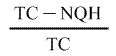
where—
TC is the market value (at the time of the disposal) of the total consideration for the disposal, and
NQH is the market value (at that time) of the new qualifying holdings.
(6)If at any time the value of the company's investments would by virtue of subsection (2)(b) be reduced to an amount less than the value of its qualifying holdings, the value of its investments at that time is to be treated as equal to the value of its qualifying holdings.
(7)“New qualifying holdings” means shares or securities which (on transfer to the company) are comprised in the company's qualifying holdings.
(8)If (and to the extent that) the holding was acquired with money the use of which is at any time ignored by virtue of section 280(2), subsections (2) to (6) do not apply in relation to that time.
(9)Nothing in this section applies in relation to disposals between companies that are merging (within the meaning of section 323).]
Textual Amendments
F841S. 280A inserted (with effect in accordance with Sch. 16 para. 20(5) of the amending Act) by Finance Act 2007 (c. 11), Sch. 16 para. 20(3), (4)
F842Word in s. 280A heading substituted (6.4.2019) by Finance Act 2018 (c. 3), Sch. 5 paras. 3(e), 13; S.I. 2018/931, reg. 4(a)
F843Word in s. 280A(2) substituted (6.4.2019) by Finance Act 2018 (c. 3), Sch. 5 paras. 3(e), 13; S.I. 2018/931, reg. 4(a)
F844Word in s. 280A(2)(a) substituted (6.4.2019) by Finance Act 2018 (c. 3), Sch. 5 paras. 4, 13; S.I. 2018/931, reg. 4(b)
[F845280BThe investment limits conditionU.K.
(1)This section applies for the purposes of the investment limits condition.
(2)Where a company (“the investor”) makes an investment (“the current investment”) in another company (“the relevant company”), that investment breaches the permitted investment limits [F846if one or more of the following applies—
(a)the total annual investment in the relevant company exceeds the amount for the time being specified in section 292A(1);
(b)the total investment in the relevant company at the investment date exceeds the amount specified in—
(i)if the relevant company is a knowledge-intensive company (see section 331A) at the investment date, section 292AA(1)(a), and
(ii)in any other case, section 292AA(1)(b);
(c)condition A or B is met and the total investment in the relevant company at any time during the 5-year post-investment period exceeds the amount specified in—
(i)if the relevant company is a knowledge-intensive company at the investment date, section 292AB(4)(a), and
(ii)in any other case, section 292AB(4)(b).]
[F847(2A)In this section—
“the investment date” means the date the current investment is made;
“the 5-year post-investment period” means the period of 5 years beginning with the day after the investment date.]
[F848(3)For the purposes of subsection (2)(a), the total annual investment in the relevant company is the sum of—
(a)the amount of the current investment,
(b)the total amount of other relevant investments made (whether or not by the investor), in the year ending with the day on which the current investment is made, in—
(i)the relevant company, or
(ii)a company that has at any time in that year been a 51% subsidiary of the relevant company,
(including investments made in such a company before it became such a subsidiary but, if it is not such a subsidiary at the end of that year, not investments made in it after it last ceased to be such a subsidiary), and
(c)the total amount of any other relevant investments (whether or not made by the investor) which are relevant imported investments.
(3A)For the purposes of subsection (2)(b), the total investment in the relevant company at the investment date is the sum of—
(a)the amount of the current investment,
(b)the total amount of other relevant investments made (whether or not by the investor), on or before the investment date, in—
(i)the relevant company, or
(ii)a company that is at the investment date, or has at any time before that date been, a 51% subsidiary of the relevant company,
(including investments made in such a company before it became such a subsidiary but, if it is not such a subsidiary at the investment date, not investments made in it after it last ceased to be such a subsidiary), and
(c)the total amount of any other relevant investments (whether or not made by the investor) which are relevant imported investments.
(3B)For the purposes of subsection (2)(c)—
(a)condition A is that—
(i)a company becomes a 51% subsidiary of the relevant company during the 5-year post-investment period,
(ii)all or part of the money raised by the current investment is employed for the purposes of an activity which consists wholly or in part of a trade carried on by that company, and
(iii)that trade (or a part of it) was carried on by that company before it became a 51% subsidiary as mentioned in sub-paragraph (i);
(b)condition B is that all or part of the money raised by the current investment is employed for the purposes of an activity which consists wholly or in part of a trade which, during the 5-year post-investment period, becomes a relevant transferred trade (see subsection (3F).
(3C)For the purposes of subsection (2)(c), the total investment in the relevant company at a time during the 5-year post-investment period (“the relevant time”) is the sum of—
(a)the amount of the current investment,
(b)the total amount of other relevant investments made, before the relevant time (whether or not by the investor), in—
(i)the relevant company, or
(ii)a company that at the relevant time is, or before that time has been, a 51% subsidiary of the relevant company,
(including investments made in such a company before it became such a subsidiary but, if it is not such a subsidiary at the relevant time, not investments made in it after it last ceased to be such a subsidiary), and
(c)the total amount of any other relevant investments (whether or not made by the investor) which are relevant imported investments.
(3D)In this section “relevant imported investment” means—
(a)a relevant investment
(i)which is made in a company at a qualifying time, and
(ii)the money raised by which is employed for the purposes of a trade carried on by another company that is, at a qualifying time, a 51% subsidiary of the relevant company (but, if at the latest possible qualifying time it has ceased to be such a subsidiary, ignoring any money so employed after it last ceased to be such a subsidiary), or
(b)a relevant investment—
(i)which is made in a company at a qualifying time, and
(ii)the money raised by which is employed for the purposes of a trade carried on by that company or another person,
where, at a qualifying time but after that investment was made, that trade (or a part of it) became a relevant transferred trade (see subsection (3F)).
(3E)In subsection (3D) “a qualifying time” means—
(a)for the purposes of subsection (3), any time in the year mentioned in that subsection,
(b)for the purposes of subsection (3A), any time on or before the investment date,
(c)for the purposes of subsection (3C), any time before the relevant time.
(3F)For the purposes of this section if—
(a)a trade is transferred—
(i)to the relevant company,
(ii)to a company that is a 51% subsidiary of the relevant company, or
(iii)to a partnership of which a company within sub-paragraph (i) or (ii) is a member,
(including where it is transferred to a company within sub-paragraph (ii), or a partnership of which such a company is a member, before the company became such a subsidiary), and
(b)the trade, or a part of it, was previously (at any time) carried on by another person,
the trade or part mentioned in paragraph (b) becomes a “ relevant transferred trade ” at the time it is transferred as mentioned in paragraph (a).]
(4)A “relevant investment” is made in a company if—
(a)an investment (of any kind) in the company is made by a VCT,
(b)the company issues shares (money having been subscribed for them), and (at any time) the company provides—
(i)a compliance statement under section 205 (enterprise investment scheme), or
(ii)a compliance statement under section 257ED (seed enterprise investment scheme),
in respect of the shares,F849...
[F850(ba)an investment is made in the company and (at any time) the company provides a compliance statement under section 257PB (tax relief for social investments) in respect of the investment, or]
(c)any other investment is made in the company which is aid received by it pursuant to a measure approved by the European Commission as compatible with Article 107 of the Treaty on the Functioning of the European Union in accordance with the principles laid down in the [F851European Commission's Guidelines on State aid to promote risk finance investment] [F852(as those guidelines had effect at the time of the approval)].
(5)For the purposes of subsections (2) [F853to (3E)], an investment within subsection (4)(b) is regarded as made when the shares are issued.]
[F854(6)Section 257KB applies in determining for those purposes when an investment within subsection (4)(ba) is made as it applies for the purposes of Part 5B (tax relief on social investments).
(7)If only a proportion of the money raised by a relevant investment is employed for the purposes of a trade which became a relevant transferred trade as mentioned in subsection (3D), only the corresponding proportion of the relevant investment falls within that subsection.
(8)For the purposes of this section—
(a)references to a trade include a part of a trade (and references to the carrying on of a trade are to be construed accordingly), and
(b)when determining the amount of money raised by a relevant investment which has been employed for the purposes of a trade such apportionments are to be made as are just and reasonable.
(9)In this section “trade” includes—
(a)any business or profession,
(b)so far as not within paragraph (a), the carrying on of research and development activities from which it is intended a trade will be derived or will benefit, and
(c)preparing to carry on a trade.]
Textual Amendments
F845S. 280B inserted (17.7.2012) (with effect in accordance with Sch. 8 para. 18 of the amending Act) by Finance Act 2012 (c. 14), Sch. 8 para. 3
F846Words in s. 280B(2) substituted (with effect in accordance with Sch. 6 para. 23(1) of the amending Act) by Finance (No. 2) Act 2015 (c. 33), Sch. 6 para. 4(2)
F847S. 280B(2A) inserted (with effect in accordance with Sch. 6 para. 23(1) of the amending Act) by Finance (No. 2) Act 2015 (c. 33), Sch. 6 para. 4(3)
F848S. 280B(3)-(3F) substituted for s. 280B(3) (with effect in accordance with Sch. 6 para. 23(1) of the amending Act) by Finance (No. 2) Act 2015 (c. 33), Sch. 6 para. 4(4)
F849Word in s. 280B(4)(b) omitted (with effect in accordance with Sch. 6 para. 23(1) of the amending Act) by Finance (No. 2) Act 2015 (c. 33), Sch. 6 para. 4(5)(a)
F850S. 280B(4)(ba) inserted (with effect in accordance with Sch. 6 para. 23(1) of the amending Act) by Finance (No. 2) Act 2015 (c. 33), Sch. 6 para. 4(5)(a)
F851Words in s. 280B(4)(c) substituted (with effect in accordance with Sch. 6 para. 23(1) of the amending Act) by Finance (No. 2) Act 2015 (c. 33), Sch. 6 para. 4(5)(b)
F852Words in s. 280B(4)(c) substituted (31.12.2020) by The Taxes (State Aid) (Amendments) (EU Exit) Regulations 2020 (S.I. 2020/1499), regs. 1, 4(8)
F853Words in s. 280B(5) substituted (with effect in accordance with Sch. 6 para. 23(1) of the amending Act) by Finance (No. 2) Act 2015 (c. 33), Sch. 6 para. 4(6)
F854S. 280B(6)-(9) inserted (with effect in accordance with Sch. 6 para. 23(1) of the amending Act) by Finance (No. 2) Act 2015 (c. 33), Sch. 6 para. 4(7)
[F855280BAThe minimum investment on further issue conditionU.K.
(1)A company breaches the minimum investment on further issue condition where—
(a)there has been an issue of ordinary share capital of the company (“the first issue”),
(b)a VCT approval of the company has taken effect on or before the day of the making of the first issue,
(c)a further issue (“the further issue”) of ordinary share capital of the company has been made since the making of the first issue, and
(d)the company does not, on or before the relevant deadline, invest at least 30% of the money raised by the further issue in shares or securities which when held by the company are comprised in the company's qualifying holdings.
(2)The relevant deadline is the last day of the period of 12 months immediately following the end of the accounting period in which the further issue is made.]
Textual Amendments
F855S. 280BA inserted (6.4.2018) by Finance Act 2018 (c. 3), Sch. 5 paras. 6, 13; S.I. 2018/931, reg. 4(c)
[F856280CThe permitted maximum age conditionU.K.
(1)This section applies for the purposes of the permitted maximum age condition.
(2)Where a company makes an investment in another company (“the relevant company”), that investment (“the current investment”) breaches the permitted maximum age limits if—
(a)the investment is made after the initial investing period, and
(b)none of conditions A to C is met.
(3)“The initial investing period” means—
(a)where the relevant company is a knowledge-intensive company on the investment date, the period of 10 years [F857beginning with—
(i)the relevant first commercial sale, or
(ii)if the relevant company so elects, the date by reference to which that company is treated as reaching an annual turnover of £200,000 (see section 331B),] and
(b)in any other case, the period of 7 years beginning with that sale.
(4)Condition A is that—
(a)a relevant investment was made in the relevant company before the end of the initial investing period, and
(b)some or all of the money raised by that investment was employed for the purposes of the same activities as the money raised by the current investment (or some of those activities).
(5)Condition B is that—
(a)the sum of—
(i)the amount of the current investment, and
(ii)the total amount of any other relevant investments made in the relevant company in a period of 30 consecutive days which includes the investment date,
is at least 50% of the average turnover amount, and
(b)the money raised by the current investment and the investments mentioned in paragraph (a)(ii) is employed for the purpose of entering a new product or geographical market.
(6)Condition C is that—
(a)condition B in subsection (5) or condition B in section 175A(4) (EIS: permitted company age requirement) was previously met in relation to one or more relevant investments made in the relevant company, and
(b)some or all of the money raised by those investments was employed for the purposes of the same activities as the money raised by the current investment.
(7)“The relevant first commercial sale” means the earliest of the following—
(a)the first commercial sale made by the relevant company,
(b)the first commercial sale made by a company that is at the investment date, or before that date has been, a 51% subsidiary of the relevant company (including a sale made by a company before it became such a subsidiary but, if it is not such a subsidiary at the investment date, not a sale made after it last ceased to be such a subsidiary),
(c)the first commercial sale made by any person who previously (at any time) carried on a trade which was subsequently carried on, on or before the investment date, by—
(i)the relevant company, or
(ii)a company that is at the investment date, or before that date has been, a 51% subsidiary of the relevant company,
(including a trade subsequently carried on by such a company before it became such a subsidiary but, if it is not such a subsidiary at the investment date, not a trade which it carried on only after it last ceased to be such a subsidiary);
(d)the first commercial sale made by a company which becomes a 51% subsidiary of the relevant company after the investment date in circumstances where all or part of the money raised by the current investment is employed for the purposes of an activity carried on by that subsidiary (including a sale made by such a company before it became such a subsidiary);
(e)the first commercial sale made by any person who previously (at any time) carried on a trade which was subsequently carried on by a company mentioned in paragraph (d) (including a trade carried on by such a company before it became such a subsidiary);
(f)if the money raised by the current investment or any part of it is employed for the purposes of a trade which has been transferred after the investment date to the relevant company or a 51% subsidiary of that company (or to a partnership of which the relevant company or such a subsidiary is a member), having previously been carried on (at any time) by another person, the first commercial sale made by that other person.
(8)“The average turnover amount” means one fifth of the total relevant turnover amount for the [F858relevant five year period.]
[F859(8A)Subject to subsection (8B), the relevant five year period is the five year period which ends immediately before the beginning of the last accounts filing period.
(8B)If the last accounts filing period ends more than 12 months before the investment date, the relevant five year period is the five year period which ends 12 months before the investment date.]
(9)In this section—
“entering a new product or geographical market” has the same meaning as in Commission Regulation (EU) No 651/2014 (General block exemption Regulation) [F860as it had effect in the United Kingdom immediately before IP completion day];
“first commercial sale” has the same meaning as in the European Commission's Guidelines on State aid to promote risk finance investments [F861(as those guidelines had effect in the United Kingdom immediately before IP completion day)];
“the investment date” means the day on which the current investment is made;
“the last accounts filing period” means the last period for filing (within the meaning of section 442 of the Companies Act 2006) for the relevant company which ends before the date on which the current investment is made;
“relevant investment” has the meaning given by section 280B(4) (and section 280B(5) and (6) apply for the purposes of this section as they apply for section 280B(2) to (3E));
“the total relevant turnover amount” for a period is—
(a)if the relevant company is a single company at the investment date, the sum of—
(i)the relevant company's turnover for that period,
(ii)if all or part of the money raised by the current investment is employed for the purposes of an activity carried on by a company which becomes a 51% subsidiary of the relevant company after the investment date, the turnover for that period of that subsidiary (or, if there is more than one, each of them), and
(iii)if all or part of the money raised by the current investment is employed for the purposes of a transferred trade, the turnover of that trade for so much of that period as falls before the trade became a transferred trade (except to the extent that it is already included in calculating the amounts within sub-paragraphs (i) and (ii));
(b)if the relevant company is a parent company at the investment date, the sum of—
(i)the relevant company's turnover for that period,
(ii)the turnover for that period of each company which at the investment date is a 51% subsidiary of the relevant company,
(iii)if all or part of the money raised by the issue of the current investment is employed for the purposes of an activity carried on by a company which becomes a 51% subsidiary of the relevant company after the investment date, the turnover for that period of that subsidiary (or, if there is more than one, each of them), and
(iv)if all or part of the money raised by the current investment is employed for the purposes of a transferred trade, the turnover of that trade for so much of that period as falls before the trade became a transferred trade (except to the extent that it is already included in calculating the amounts within sub-paragraphs (i) to (iii));
“transferred trade” means a trade which has been transferred to the company which is carrying on the trade at the time the money raised by the current investment is employed or to a partnership of which that company is a member;
“turnover”—
(a)in relation to a company, has the meaning given by section 474(1) of the Companies Act 2006 and is to be determined by reference to the accounts of companies and amounts recognised for accounting purposes (and such apportionments of those amounts as are just and reasonable are to be made for the purpose of determining a company's turnover for a period);
(b)in relation to any other person carrying on a trade, also has the meaning given by section 474(1) of that Act (reading references in that provision to a company as references to the person) and is to be determined by reference to the accounts of the person and amounts recognised for accounting purposes (and such apportionments of those amounts as are just and reasonable are to be made for the purpose of determining a person's turnover for a period);
(c)in relation to a transferred trade carried on by a company or other person, means such proportion of the turnover of the company or other person as it is just and reasonable to attribute to the transferred trade;
and section 280B(8) and (9) (meaning of “trade” etc) applies for the purposes of this section as it applies for the purposes of section 280B.
Textual Amendments
F856Ss. 280C, 280D inserted (with effect in accordance with Sch. 6 para. 23(1) of the amending Act) by Finance (No. 2) Act 2015 (c. 33), Sch. 6 para. 5
F857Words in s. 280C(3)(a) substituted (6.4.2018) by Finance Act 2018 (c. 3), Sch. 4 paras. 7, 10; S.I. 2018/931, reg. 3(b)
F858Words in s. 280C(8) substituted (retrospectively) by Finance Act 2016 (c. 24), s. 29(3)(a)(6) (with s. 30)
F859S. 280C(8A)(8B) inserted (retrospectively) by Finance Act 2016 (c. 24), s. 29(3)(b)(6) (with s. 30)
F860Words in s. 280C(9) inserted (31.12.2020) by The Taxes (State Aid) (Amendments) (EU Exit) Regulations 2020 (S.I. 2020/1499), regs. 1, 4(9)(a)
F861Words in s. 280C(9) substituted (31.12.2020) by The Taxes (State Aid) (Amendments) (EU Exit) Regulations 2020 (S.I. 2020/1499), regs. 1, 4(9)(b)
280DThe no business acquisition conditionU.K.
(1)This section applies for the purposes of the no business acquisition condition.
(2)Where a company makes an investment in another company (“the relevant company”), that investment breaches the prohibition on business acquisitions if any of the money raised by it is employed (whether on its own or together with other money) on the acquisition, directly or indirectly, of—
(a)an interest in another company such that a company becomes a 51% subsidiary of the relevant company,
(b)a further interest in a company which is a 51% subsidiary of the relevant company,
(c)a trade,
(d)intangible assets employed for the purposes of a trade, or
(e)goodwill employed for the purposes of a trade.
(3)The Treasury may by regulations provide that subsection (2) does not apply in relation to acquisitions of intangible assets which are of a description specified, or which occur in circumstances specified, in the regulations.
(4)In this section—
“goodwill” has the same meaning as in Part 8 of CTA 2009 (see section 715(3));
“intangible assets” means any asset which falls to be treated as an intangible asset in accordance with generally accepted accountancy practice;
and section 280B(8) and (9) apply for the purposes of this section as they apply for the purposes of section 280B.]
Textual Amendments
F856Ss. 280C, 280D inserted (with effect in accordance with Sch. 6 para. 23(1) of the amending Act) by Finance (No. 2) Act 2015 (c. 33), Sch. 6 para. 5
Withdrawal of approvalU.K.
281Withdrawal of VCT approval of a companyU.K.
(1)The Commissioners for Her Majesty's Revenue and Customs (“the Commissioners”) may withdraw the VCT approval of a company if at any time it appears to them that there are reasonable grounds for believing—
(a)that the conditions for the approval of the company were not met at the time of the approval,
(b)in a case where the Commissioners were satisfied for the purposes of section 274(1)(b) or 275(2) that any of the conditions mentioned in section 274(2) would be met in relation to any period, that the condition is one which will not be, or has not been, met in relation to that period,
(c)in the case of a company approved under subsection (2) of section 275 (read with paragraph (b) of subsection (3) of that section), that the company has not met such other conditions as may be prescribed by regulations made by the Commissioners in relation to—
(i)the period of 3 years mentioned in that paragraph, or
(ii)any part of that period,
(d)in a case where the use of any money falls to be ignored for any accounting period in accordance with section 280(2), that—
(i)the first accounting period of the company for which the use of that money will not be ignored will be a period in relation to which any of the conditions mentioned in section 274(2) will fail to be met, or
(ii)the company has not met such other conditions as may be prescribed by regulations made by the Commissioners in relation to, or to any part of, an accounting period for which the use of that money falls to be ignored, F862...
(e)that—
(i)the company's most recent complete accounting period or its current one is a period in relation to which there has been or will be a failure of any of the conditions mentioned in section 274(2) to be met, and
(ii)the failure was not or will not be one which, at the time of the approval, was allowed for in relation to that period by virtue of section 275(2).
F863[F864(f)that, while it has been a VCT, the company has issued shares and, before the end of the restricted period, the company, other than for the purpose of redeeming or repurchasing any of those shares, has—
(i)made a payment to all or any of its shareholders of an amount representing (directly or indirectly) a repayment of its share capital, whether that payment was made out of a reserve arising from a reduction of share capital or otherwise,
(ii)where the shares were issued at a premium, made a payment to all or any of its shareholders of an amount representing (directly or indirectly) that premium or any part of it, whether that payment was made out of a share premium reserve or otherwise, or
(iii)used an amount which represents (directly or indirectly) the company's share capital or an amount by which that share capital has been diminished, or, where the shares were issued at a premium, that premium (or any part of it), to pay up new shares to be allotted to all or any of its shareholders.]
[F865(1A)In subsection (1)(f)—
“payment”—
(a)does not include any distribution of assets made in connection with the winding up of the company, but
(b)does include every other description of distribution of the company's assets to its members,
and for this purpose “distribution” includes (but is not limited to) a distribution within the meaning of section 989,
“reduction of share capital” has the same meaning as in section 1027A(2) of CTA 2010, and
“the restricted period” means the period of 3 years beginning at the end of the accounting period of the company in which the shares were issued.]
(2)Subject to subsections (3) and (4), the withdrawal of the approval of a company for the purposes of this Part has effect as from the time when notice of the withdrawal is given to the company.
(3)If, in the case of a company approved as a VCT in the exercise of the power conferred by section 275(2), the approval is withdrawn at a time before all of the conditions mentioned in section 274(2) have been met with respect to the company concerned—
(a)in relation to a complete accounting period of 12 months, or
(b)in relation to successive complete accounting periods constituting a continuous period of at least 12 months,
the withdrawal of the approval has the effect that the approval is for all purposes treated as never having been given.
(4)A notice withdrawing the approval of a company for the purposes of this Part may specify a time falling before the time mentioned in subsection (2) as the time from which the withdrawal is to be treated as having effect for the purposes of section 100 of TCGA 1992 (exemption for venture capital trusts etc).
But the time so specified must be no earlier than the beginning of the accounting period in relation to which it appears to the Commissioners that the condition by reference to which the approval is withdrawn has not been, or will not be, met.
(5)Despite any limitation on the time for making assessments, an assessment to any tax chargeable in consequence of the withdrawal of any VCT approval may be made at any time before the end of the period of 3 years beginning with the time when the notice of withdrawal is given.
Textual Amendments
F862Word in s. 281(1)(d) omitted (with effect in accordance with Sch. 10 para. 3(4) of the amending Act) by virtue of Finance Act 2014 (c. 26), Sch. 10 para. 3(2)
F863S. 281(1)(f) applied (with modifications) by SI 2004/2199 reg. 13(10) as inserted (with effect in accordance with reg. 1(2) of the amending S.I.) by The Venture Capital Trust (Winding up and Mergers) (Tax) (Amendment) Regulations 2015 (S.I. 2015/361), regs. 1(1), 2(2)
F864S. 281(1)(f) inserted (with effect in accordance with Sch. 10 para. 3(4) of the amending Act) by Finance Act 2014 (c. 26), Sch. 10 para. 3(2)
F865S. 281(1A) inserted (with effect in accordance with Sch. 10 para. 3(4) of the amending Act) by Finance Act 2014 (c. 26), Sch. 10 para. 3(3)
Modifications etc. (not altering text)
C83S. 281(f)(i) modified (with effect in accordance with Sch. 10 para. 3(4) of the amending Act) by Finance Act 2014 (c. 26), Sch. 10 para. 3(5)
C84S. 281(f)(iii) modified (with effect in accordance with Sch. 10 para. 3(4) of the amending Act) by Finance Act 2014 (c. 26), Sch. 10 para. 3(5)
282Withdrawal of VCT approval in cases for which provision made under section 280(3)U.K.
(1)The Treasury may by regulations make provision for withdrawal of VCT approval of a company to be treated—
(a)in a case where the withdrawal is by reference to a condition for approval that would have been, or would be, met but for provision made under section 280(3), and
(b)for the purposes of enactments specified by regulations,
as having taken effect as from a time specified in the notice of withdrawal that is earlier than the time when the notice is given to the company.
(2)Provision made under subsection (1) has effect subject to the provisions of section 281(4) (retrospective effect of notices of withdrawal of VCT approval) as to the earliest time that may be specified by such a notice.
(3)Section 324 applies in relation to—
(a)regulations under subsection (1), and
(b)any power conferred by that subsection,
as it applies in relation to regulations under Chapter 5 and a power conferred by any provision of that Chapter.
SupplementaryU.K.
283Time as from which VCT approval has effectU.K.
(1)A VCT approval has effect as from the time specified in the approval.
(2)That time, if it falls before the time when the VCT approval is given, must be no earlier than the time when the application was made.
(3)If the Commissioners for Her Majesty's Revenue and Customs give a VCT approval, they may stipulate that the approval is to have effect as from the time when the application for the approval was made or any subsequent time.
284Power to make regulations as to procedureU.K.
[F866(1)Regulations under section 272 may make provision—
(a)as to the making of applications for VCT approvals and otherwise as to the procedure to be followed in relation to any such applications and the giving of such approvals,
[F867(aa)for and in connection with the making by a company of an application to the Commissioners for Her Majesty's Revenue and Customs (“the Commissioners”) for relief in respect of a breach (including a future breach) of the conditions for its VCT approval to continue in force,]
(b)as to the procedure to be followed in connection with the withdrawal of VCT approvals,
(c)as to the obligations of a company which is a VCT if it should appear to the company
[F868(i)that the conditions for its VCT approval to continue in force are no longer met, or
(ii)that it is likely that those conditions will cease to be met,]
(d)as to the accounts, records, returns and other information to be kept, and provided or otherwise made available to the Commissioners F869..., by companies which are or have been VCTs and by persons [F870(including nominees)] who hold or have held shares in such companies, and
(e)as to the persons liable to account for any tax becoming due where a VCT approval is withdrawn.]
[F871(2)In subsection (1)(aa), the reference to relief in respect of a breach of the conditions mentioned there is to a determination by the Commissioners that they will not exercise their power to withdraw the company's VCT approval by reason of the breach for such period as they may determine (and subject to such conditions as they may determine).
(3)The provision that may be made by virtue of subsection (1)(aa) includes—
(a)provision as to the procedure to be followed in relation to applications and determinations,
(b)provision as to the grounds on which applications may be made or determined, and
(c)provision conferring a discretion to be exercised by the Commissioners.]
Textual Amendments
F866S. 284(1): s. 284 renumbered as s. 284(1) (19.7.2007) by Finance Act 2007 (c. 11), Sch. 16 para. 21(1)
F867S. 284(1)(aa) inserted (19.7.2007) by Finance Act 2007 (c. 11), Sch. 16 para. 21(1)(a)
F868Words in s. 284(1)(c) substituted (19.7.2007) by Finance Act 2007 (c. 11), Sch. 16 para. 21(1)(b)
F869Words in s. 284(1)(d) repealed (19.7.2007) by Finance Act 2007 (c. 11), Sch. 16 para. 21(1)(c), Sch. 27 Pt. 2(16)
F870Words in s. 284(1)(d) inserted (17.7.2014) by Finance Act 2014 (c. 26), Sch. 10 para. 5
F871S. 284(2)(3) inserted (19.7.2007) by Finance Act 2007 (c. 11), Sch. 16 para. 21(2)
285Interpretation of ChapterU.K.
(1)Chapter 4 has effect for interpreting references in this Chapter to a “qualifying holding”.
(2)In this Chapter and the following Chapters of this Part “securities”, in relation to a company, includes any liability of the company in respect of a loan F872..., except that it does not include—
(a)any liability of the company in respect of a loan which has been made to the company on terms which allow any person to require—
(i)the loan to be repaid, or
(ii)any stock or security relating to the loan to be re-purchased or redeemed,
within the period of 5 years from the making of the loan or, as the case may be, the issue of the stock or security, or
(b)any stock or security relating to a loan which has been made to the company on terms which allow any person to require the loan to be repaid, or the stock or security to be re-purchased or redeemed, within that period [F873, or
(c)any liability of the company in respect of a loan to which subsection (2A) applies that has been made to the company.]
But see sections 317(4) and 328(2).
[F874(2A)This subsection applies to a loan if—
(a)the return on the loan represents more than a commercial rate of return, or
(b)the loan is made on terms which grant to a person or allow a person to acquire—
(i)any security or preferential rights in relation to assets of the company, or
(ii)the ability to control the company.
In sub-paragraph (ii) “control” has the meaning given by sections 450 and 451 of CTA 2010.
(2B)The return on a loan is not to be treated as representing more than a commercial rate for the purposes of subsection (2A)(a) if—
(a)the return on the loan during the period of 5 years from the making of the loan does not exceed 50% of the amount lent, and
(b)the total return on the loan does not exceed—

where—
N is the number of years (including any fraction) in the term of the loan;
A is the amount lent or, in a case where some of the loan is repaid during the term of the loan, the average amount outstanding during that term.
(2C)The Treasury may by regulations substitute a different figure for a figure that is at any time specified in subsection (2B)(a) or (b).
(2D)In subsections (2A)(a) and (2B) “return” means interest, fees, charges and other amounts payable in respect of the loan.
(2E)Where it is to any extent not known, before the end of the term of a loan, what amounts will be payable in respect of the loan—
(a)subsections (2A)(a) and (2B) apply, until the relevant matters are ascertained, on the basis of what amounts can reasonably be expected to be payable;
(b)when those matters are ascertained, any necessary adjustments must be made by making or amending assessments or by repayment or discharge of tax (regardless of any limitation on the time within which assessments or amendments may be made).]
[F875(3A)For the purposes of this Chapter, shares in a company are “eligible” unless they carry—
(a)a present or future preferential right to dividends that is within subsection (3B),
(b)a present or future preferential right to the company's assets on its winding up, or
(c)a present or future right to be redeemed.
(3B)A preferential right to dividends carried by a share in a company is within this subsection if—
(a)the amount of any dividends payable pursuant to the right, or the date or dates on which they are payable, depend to any extent on a decision of the company, the holder of the share or any other person, or
(b)the amount of any dividends that become payable at any time pursuant to the right includes any amount that became payable at any earlier time pursuant to the right, but has not been paid.]
(4)Any reference in this Chapter to a company's investments is taken to include, so far as it would not otherwise do so—
(a)money in the company's possession, and
(b)any sum owed to the company by another person if the company has account-holder's rights over that sum.
(5)For the purposes of subsection (4)(b) a company has “account-holder's rights” over a sum owed to the company if—
(a)the company has a right (whether or not the exercise of the right is subject to conditions) to require the other person to pay out the sum, or amounts out of the sum, to the company or at the company's direction, and
(b)the sum is owed to the company—
(i)as a result of amounts having been paid to the other person by or for the company, or
(ii)as a result of the other person having identified a sum in respect of which the company may exercise such a right.
(6)Subsection (5) does not have effect to cause a company's investments to be taken to include anything to which the company is not beneficially entitled, but for this purpose a company is taken to be beneficially entitled to—
(a)sums subscribed for shares issued by it, and
(b)anything to which it is entitled that (directly or indirectly) represents such sums.
Textual Amendments
F872Words in s. 285(2) omitted (15.3.2018) by virtue of Finance Act 2018 (c. 3), Sch. 5 paras. 7(2)(a), 13; S.I. 2018/931, reg. 4(d) (with reg. 5)
F873S. 285(2)(c) and word inserted (15.3.2018) by Finance Act 2018 (c. 3), Sch. 5 paras. 7(2)(b), 13; S.I. 2018/931, reg. 4(d) (with reg. 5)
F874S. 285(2A)-(2E) inserted (15.3.2018) by Finance Act 2018 (c. 3), Sch. 5 paras. 7(3), 13; S.I. 2018/931, reg. 4(d) (with reg. 5)
F875S. 285(3A)(3B) substituted (6.4.2011) for s. 285(3) (with effect in accordance with Sch. 2 paras. 6, 8 of the amending Act) by Finance (No. 3) Act 2010 (c. 33), Sch. 2 para. 2(6); S.I. 2011/662, art. 2
Chapter 4U.K.Qualifying holdings
IntroductionU.K.
286Qualifying holdings: introductionU.K.
(1)If any shares in or securities of any company (“the relevant company”) are at any time held by another company (“the investing company”), this Chapter applies for determining whether and to what extent those shares or securities (“the relevant holding”) are, for the purposes of Chapter 3, to be regarded as at that time comprised in the investing company's qualifying holdings.
(2)The relevant holding is to be regarded as comprised in the investing company's qualifying holding at any time if—
(a)all the following requirements of this Chapter are met at that time in relation to the relevant company and the relevant holding, F876...
(b)the relevant holding consists of shares or securities which were first issued by the relevant company to the investing company and have been held by the investing company ever since [F877, and
(c)those shares or securities were first issued by the relevant company in order to raise money for the purposes of promoting growth and development of—
(i)if the relevant company is a single company, the business of that company, and
(ii)if it is a parent company, what would be the business of the group if the activities of the group companies taken together were regarded as one business.]
(3)The requirements are those imposed as to—
[F878(1za)risk to capital (see section 286ZA),]
[F879(za)UK permanent establishment (see section 286A),
(zb)financial health (see section 286B),]
(a)maximum qualifying investment (see section 287),
(b)no guaranteed loan (see section 288),
(c)proportion of eligible shares (see section 289),
(d)trading (see section 290),
(e)the carrying on of a qualifying activity (see section 291),
[F880(ea)the maximum amount raised annually through risk [F881finance investments] (see section 292A),]
[F882(eaa)the maximum risk finance investments when the relevant holding is issued (see section 292AA),
(eab)the maximum risk finance investments during the 5-year post-investment period (see section 292AB),]
F883(eb). . . . . . . . . . . . . . . . . . . . . . . . . . . . . . . .
(f)use of the money raised (see section 293),
(g)the relevant company carrying on the relevant qualifying activity (see section 294),
[F884(ga)the permitted company age requirement (see section 294A),]
(h)unquoted status (see section 295),
(i)control and independence (see section 296),
(j)gross assets (see section 297),
[F885(ja)number of employees (see section 297A),]
[F886(jb)the proportion of skilled employees (see section 297B),]
(k)qualifying subsidiaries (see section 298), F887...
(l)property managing subsidiaries (see section 299) [F888, and
(m)no disqualifying arrangements (see section 299A)].
(4)Subject to section 293(7), subsection (5) applies if—
(a)the requirements of section 287, 293 or 294 would be met as to only part of the money raised by the issue of the relevant holding, and
(b)that holding is not otherwise capable of being treated as comprising separate holdings.
(5)If this subsection applies, this Chapter has effect in relation to the relevant holding as if it were two separate holdings consisting of—
(a)a holding from which the part of the money mentioned in subsection (4)(a) was raised, and
(b)a holding from which the remainder was raised.
Chapter 3 has effect as if the value of the relevant holding were to be apportioned between the two holdings treated as subsisting by this subsection.
Textual Amendments
F876Word in s. 286(2)(a) omitted (with effect in accordance with Sch. 6 para. 23(3) of the amending Act) by virtue of Finance (No. 2) Act 2015 (c. 33), Sch. 6 para. 6(2)
F877S. 286(2)(c) and preceding word inserted (with effect in accordance with Sch. 6 para. 23(3) of the amending Act) by Finance (No. 2) Act 2015 (c. 33), Sch. 6 para. 6(2)
F878S. 286(3)(1za) inserted (15.3.2018) by Finance Act 2018 (c. 3), s. 14(3)(a)(4); S.I. 2018/931, reg. 2(b)
F879S. 286(3)(za)(zb) inserted (6.4.2011) (with effect in accordance with Sch. 2 paras. 7(3), 8 of the amending Act) by Finance (No. 3) Act 2010 (c. 33), Sch. 2 para. 2(7); S.I. 2011/662, art. 2
F880S. 286(3)(ea) inserted (19.7.2007) by Finance Act 2007 (c. 11), Sch. 16 para. 6(2) (with Sch. 16 para. 6(5)(6))
F881Words in s. 286(3)(ea) substituted (with effect in accordance with Sch. 6 para. 23(3) of the amending Act) by Finance (No. 2) Act 2015 (c. 33), Sch. 6 para. 6(3)(a)
F882S. 286(3)(eaa)(eab) inserted (with effect in accordance with Sch. 6 para. 23(3) of the amending Act) by Finance (No. 2) Act 2015 (c. 33), Sch. 6 para. 6(3)(b)
F883S. 286(3)(eb) omitted (with effect in accordance with Sch. 6 para. 23(2) of the amending Act) by virtue of Finance (No. 2) Act 2015 (c. 33), Sch. 6 para. 6(3)(c)
F884S. 286(3)(ga) inserted (with effect in accordance with Sch. 6 para. 23(3) of the amending Act) by Finance (No. 2) Act 2015 (c. 33), Sch. 6 para. 6(3)(d)
F885S. 286(3)(ja) inserted (retrospective to 6.4.2007) by Finance Act 2007 (c. 11), Sch. 16 para. 3(2)(5) (with Sch. 16 para. 3(6)(7))
F886S. 286(3)(jb) inserted (with effect in accordance with Sch. 6 para. 23(3) of the amending Act) by Finance (No. 2) Act 2015 (c. 33), Sch. 6 para. 6(3)(e)
F887Word in s. 286(3)(k) omitted (17.7.2012) (with effect in accordance with Sch. 8 para. 19 of the amending Act) by virtue of Finance Act 2012 (c. 14), Sch. 8 para. 4
F888S. 286(3)(m) and preceding word inserted (17.7.2012) (with effect in accordance with Sch. 8 para. 19 of the amending Act) by Finance Act 2012 (c. 14), Sch. 8 para. 4
The requirementsU.K.
[F889286ZAThe risk-to-capital requirementU.K.
(1)The requirement of this section is that, having regard to all the circumstances existing at the time of the issue of the relevant holding, it would be reasonable to conclude that—
(a)the relevant company has objectives to grow and develop its trade in the long-term, and
(b)there is a significant risk that, for the investing company, there will be a loss of capital of an amount greater than its net investment return.
(2)For the purposes of subsection (1)(b)—
(a)the reference to a loss of capital is to a loss of some or all of the amounts given in consideration for the relevant holding, and
(b)the reference to the net investment return is to the net investment return to the investing company irrespective of whether the return takes the form of income, capital growth, fees or other payments or anything else.
(3)For the purposes of subsection (1) the circumstances to which regard may be had include—
(a)the extent to which the company's objectives include increasing the number of its employees or the turnover of its trade,
(b)the nature of the company's sources of income, including the extent to which there is a significant risk of the company not receiving some or all of the income,
(c)the extent to which the company has or is likely to have assets, or is or could become a party to arrangements for acquiring assets, that could be used to secure financing from any person,
(d)the extent to which the activities of the company are sub-contracted to persons who are not connected with it,
(e)the nature of the company's ownership structure or management structure, including the extent to which others participate in or devise the structure,
(f)how any opportunity for investment in the company is marketed, and
(g)the extent to which arrangements are in place under which opportunities for investments in the company are or may be marketed with, or otherwise associated with, opportunities for investments in other companies or entities.
(4)If the relevant company is a parent company—
(a)any reference in this section to the company's trade is to what would be the trade of the group if the activities of the group companies taken together were regarded as one trade, and
(b)any reference in subsection (3)(a) to (e) to the company is to any group company.]
Textual Amendments
F889S. 286ZA inserted (15.3.2018) by Finance Act 2018 (c. 3), s. 14(3)(b)(4); S.I. 2018/931, reg. 2(b)
[F890286AThe UK permanent establishment requirementU.K.
The requirement of this section, at any time on or after the issue of the relevant holding, is that the relevant company has a permanent establishment in the United Kingdom at all times from the issue of the holding to the time in question.
Textual Amendments
F890Ss. 286A, 286B inserted (6.4.2011) (with effect in accordance with Sch. 2 paras. 7(3), 8 of the amending Act) by Finance (No. 3) Act 2010 (c. 33), Sch. 2 para. 2(8); S.I. 2011/662, art. 2
286BThe financial health requirementU.K.
(1)The requirement of this section is that the relevant company is not, at the time of the issue of the relevant holding, in difficulty.
(2)The relevant company is “in difficulty” if it is reasonable to assume that it would be regarded as a firm in difficulty for the purposes of the Community Guidelines on State Aid for Rescuing and Restructuring Firms in Difficulty (2004/C 244/02) [F891as those guidelines had effect in the United Kingdom immediately before IP completion day].]
Textual Amendments
F890Ss. 286A, 286B inserted (6.4.2011) (with effect in accordance with Sch. 2 paras. 7(3), 8 of the amending Act) by Finance (No. 3) Act 2010 (c. 33), Sch. 2 para. 2(8); S.I. 2011/662, art. 2
F891Words in s. 286B(2) inserted (31.12.2020) by The Taxes (State Aid) (Amendments) (EU Exit) Regulations 2020 (S.I. 2020/1499), regs. 1, 4(10)
287The maximum qualifying investment requirementU.K.
(1)The requirement of this section is that [F892, if the condition in subsection (1A) is met,] the relevant holding did not, when it was issued, represent an investment in excess of the maximum qualifying investment for the relevant period.
[F893(1A)The condition is that—
(a)at the time of the issue of the relevant holding the relevant company or any of its qualifying subsidiaries was a member of a partnership or a party to a joint venture,
(b)the trade which meets the requirement of section 291 was at that time being carried on, or to be carried on, by those partners in partnership or by the parties to the joint venture, and
(c)the other partners or parties to the joint venture include at least one other company.]
(2)[F894The] maximum qualifying investment for any period is exceeded so far as the total amount of money which—
(a)is raised in that period, and
(b)is so raised by the issue to the investing company during that period of shares in or securities of the relevant company,
exceeds [F895the relevant fraction of] £1 million.
[F896(2A)The relevant fraction is—

where “N” is the number of companies (including the relevant company) which, at the time when the relevant holding was issued were members of the partnership or, as the case may be, parties to the joint venture.]
(3)If the relevant holding represented, when issued, an investment in excess of the maximum qualifying investment for the relevant period—
(a)the shares or securities which represented the excess are not to be regarded as part of the relevant holding, and
(b)the amount of money raised by those shares or securities is to be ignored for the purposes of any subsequent application of subsection (2).
(4)For the purposes of this section, if there is any question as to whether any shares in or securities of the relevant company which are for the time being held by the investing company represent an investment in excess of the maximum qualifying investment for any period, that question is determined on the following assumption in relation to disposals by the investing company.
(5)The assumption is that, as between shares or securities of the same description, those which represent the whole or any part of the excess are disposed of before those which do not.
F897(6). . . . . . . . . . . . . . . . . . . . . . . . . . . . . . . .
F898(7). . . . . . . . . . . . . . . . . . . . . . . . . . . . . . . .
(8)For the purposes of this section “the relevant period” is the period beginning with whichever is the earlier of—
(a)the time 6 months before the issue of the relevant holding, and
(b)the beginning of the tax year in which the issue of that holding took place,
and (in either case) ending with the issue of that holding.
Textual Amendments
F892Words in s. 287(1) inserted (17.7.2012) (with effect in accordance with Sch. 8 para. 19 of the amending Act) by Finance Act 2012 (c. 14), Sch. 8 para. 5(2)
F893S. 287(1A) inserted (17.7.2012) (with effect in accordance with Sch. 8 para. 19 of the amending Act) by Finance Act 2012 (c. 14), Sch. 8 para. 5(3)
F894Word in s. 287(2) substituted (17.7.2012) (with effect in accordance with Sch. 8 para. 19 of the amending Act) by Finance Act 2012 (c. 14), Sch. 8 para. 5(4)(a)
F895Words in s. 287(2) inserted (17.7.2012) (with effect in accordance with Sch. 8 para. 19 of the amending Act) by Finance Act 2012 (c. 14), Sch. 8 para. 5(4)(b)
F896S. 287(2A) inserted (17.7.2012) (with effect in accordance with Sch. 8 para. 19 of the amending Act) by Finance Act 2012 (c. 14), Sch. 8 para. 5(5)
F897S. 287(6) omitted (17.7.2012) (with effect in accordance with Sch. 8 para. 19 of the amending Act) by virtue of Finance Act 2012 (c. 14), Sch. 8 para. 5(6)
F898S. 287(7) omitted (17.7.2012) (with effect in accordance with Sch. 8 para. 19 of the amending Act) by virtue of Finance Act 2012 (c. 14), Sch. 8 para. 5(6)
288The no guaranteed loan requirementU.K.
(1)The requirement of this section is that there are no securities relating to a guaranteed loan in the relevant holding.
(2)For the purposes of this section, a security relates to a guaranteed loan if (and only if) there are arrangements for the investing company to be or to become entitled to receive anything (whether directly or indirectly) from a third party in the event of the failure by any person to comply with—
(a)the terms of the loan to which the security relates, or
(b)the terms of the security.
(3)For the purposes of subsection (2) it does not matter whether the arrangements apply in all cases of a failure to comply or only in some such cases.
(4)For the purposes of this section “third party” means any person except—
(a)the relevant company, and
(b)if the relevant company is a parent company that meets the trading requirement in section 290(1)(b), the subsidiaries of that company.
289The proportion of eligible shares requirementU.K.
(1)The requirement of this section is that eligible shares represent at least 10% by value of the totality of the shares in or securities of the relevant company (including the relevant holding) which are held by the investing company.
(2)For the purposes of this section the value at any time of any shares in or securities of a company is taken (subject to subsection (4)) to be their value immediately after—
(a)any relevant event occurring at that time, or
(b)if no relevant event occurs at that time, the last relevant event to occur before that time.
(3)In subsection (2) “the relevant event”, in relation to any shares in or securities of the relevant company, means—
(a)the acquisition by the investing company of those shares or securities,
(b)the acquisition by the investing company of any other shares in or securities of the relevant company which—
(i)are of the same description as those shares or securities, and
(ii)are acquired by the investing company otherwise than by being allotted to the investing company without its being liable to give any consideration, or
(c)the making of any such payment in discharge, in whole or in part, of any obligation attached to any shares in or securities of the relevant company held by the investing company as (by discharging that obligation) increases the value of any such shares or securities.
(4)If at any time the value of any shares or securities held by the investing company is less than the consideration given by the investing company for those shares or securities, it is to be assumed for the purposes of this section that the value of the shares or securities at that time is equal to the amount of that consideration.
(5)In this section “” has the same meaning as in Chapter 3 (see section [F899285(3A) and (3B)]).
Textual Amendments
F899Words in s. 289(5) substituted (6.4.2011) (with effect in accordance with Sch. 2 paras. 7(4), 8 of the amending Act) by Finance (No. 3) Act 2010 (c. 33), Sch. 2 para. 2(9); S.I. 2011/662, art. 2
290The trading requirementU.K.
(1)The requirement of this section is that—
(a)the relevant company, ignoring any incidental purposes, exists wholly for the purpose of carrying on one or more qualifying trades, or
(b)the relevant company is a parent company and the business of the group does not consist wholly or as to a substantial part in the carrying on of non-qualifying activities.
(2)If the relevant company intends that one or more other companies should become its qualifying subsidiaries with a view to their carrying on one or more qualifying trades—
(a)the relevant company is treated as a parent company for the purposes of subsection (1)(b), and
(b)the reference in subsection (1)(b) to the group includes the relevant company and any existing or future company that will be its qualifying subsidiary after the intention in question is carried into effect.
This subsection does not apply at any time after the abandonment of that intention.
(3)For the purposes of subsection (1)(b) the business of the group means what would be the business of the group if the activities of the group companies taken together were regarded as one business.
(4)For the purpose of determining the business of a group, activities are ignored so far as they are carried on by a mainly trading subsidiary otherwise than for its main purpose.
(5)For the purpose of determining the business of a group, activities of a group company are ignored so far as they consist in—
(a)the holding of shares in or securities of a qualifying subsidiary of the parent company,
(b)the making of loans to another group company, or
(c)the holding and managing of property used by a group company for the purpose of one or more qualifying trades carried on by a group company, or
(d)the holding and managing of property used by a group company for the purpose of research and development from which it is intended—
(i)that a qualifying trade to be carried on by a group company will be derived, or
(ii)that a qualifying trade carried on or to be carried on by a group company will benefit.
(6)Any reference in sub-paragraph (i) or (ii) of subsection (5)(d) to a group company includes a reference to any existing or future company which will be a group company at any future time.
(7)In this section—
“incidental purposes” means purposes having no significant effect (other than in relation to incidental matters) on the extent of the activities of the company in question,
“mainly trading subsidiary” means a qualifying subsidiary which, apart from incidental purposes, exists wholly for the purpose of carrying on one or more qualifying trades, and any reference to the main purpose of such a subsidiary is to be read accordingly,
“non-qualifying activities” means—
(a)excluded activities, and
(b)activities carried on otherwise than in the course of a trade.
(8)This section is supplemented by section 300 (meaning of “qualifying trade”) and sections 303 to 310 (excluded activities).
291The carrying on of a qualifying activity requirementU.K.
(1)The requirement of this section, at any time on or after the issue of the relevant holding, is that a qualifying company (whether or not the same such company at every such time) must have been carrying on a qualifying activity at all times from the issue of the holding to the time in question.
(2)[F900Carrying on a qualifying trade] is a qualifying activity.
(3)Preparing to carry on a qualifying trade is a qualifying activity if, at the time when the relevant holding was issued, the trade was intended to be carried on F901... by a qualifying company.
This is subject to subsections (4) and (5).
(4)The requirement of this section is not capable of being met by virtue of subsection (3) at any time after the end of the period of two years beginning with the issue of the relevant holding unless—
(a)the intended trade was begun to be carried on by a qualifying company before the end of that period, and
(b)at all times since the end of that period, a qualifying company (whether or not the same such company at every such time) has been carrying on a qualifying trade F902....
(5)The requirement of this section is also not capable of being met by virtue of subsection (3) at any time after the abandonment, within the period mentioned in subsection (4), of the intention in question.
(6)In determining for the purposes of subsection (4)(a) when the intended trade was begun to be carried on by a qualifying company which is a qualifying 90% subsidiary of the relevant company, any carrying on by it of the trade before it became such a subsidiary of the relevant company is ignored.
(7)In this section “qualifying company” means the relevant company or any qualifying 90% subsidiary of that company.
(8)The reference in subsection (7) to a qualifying company which is a qualifying 90% subsidiary of the relevant company includes, in its application to subsection (3), a reference to any existing or future qualifying company which will be a qualifying 90% subsidiary of the relevant company at any future time.
Textual Amendments
F900Words in s. 291(2) substituted (6.4.2011) (with effect in accordance with Sch. 2 paras. 7(3), 8 of the amending Act) by Finance (No. 3) Act 2010 (c. 33), Sch. 2 para. 2(10)(a); S.I. 2011/662, art. 2
F901Words in s. 291(3) omitted (6.4.2011) (with effect in accordance with Sch. 2 paras. 7(3), 8 of the amending Act) by virtue of Finance (No. 3) Act 2010 (c. 33), Sch. 2 para. 2(10)(b); S.I. 2011/662, art. 2
F902Words in s. 291(4)(b) omitted (6.4.2011) (with effect in accordance with Sch. 2 paras. 7(3), 8 of the amending Act) by virtue of Finance (No. 3) Act 2010 (c. 33), Sch. 2 para. 2(10)(c); S.I. 2011/662, art. 2
292Ceasing to meet requirements because of administration or receivershipU.K.
(1)A company is not regarded as ceasing to meet the requirement of section 290 or 291 merely because of anything done in consequence of its being in administration or receivership.
(2)Subsection (1) applies only if—
(a)the entry into administration or receivership, and
(b)everything done as a consequence of the company being in administration or receivership,
is for genuine commercial reasons, and is not part of a scheme or arrangement the main purpose or one of the main purposes of which is the avoidance of tax.
[F903292AThe maximum amount raised annually through risk [F904finance investments] requirementU.K.
(1)The total amount of relevant investments made in the relevant company in the year ending with the date the relevant holding is issued [F905must not exceed—
[F906(a)if at that date the relevant company is a knowledge-intensive company (see section 331A and subsection (6A)) and—
(i)not a specified Northern Ireland company, £20 million;
(ii)a specified Northern Ireland company, £10 million, and
(b)if at that date the relevant company is not a knowledge-intensive company and—
(i)not a specified Northern Ireland company, £10 million;
(ii)a specified Northern Ireland company, £5 million.]]
[F907(2)In subsection (1), the reference to relevant investments made in the relevant company includes—
(a)relevant investments made in any company that has at any time in the year mentioned there been a 51% subsidiary of the relevant company (including investments made in such a company before it became such a subsidiary but, if it was not a subsidiary at the end of that year, not those made after it last ceased to be such a subsidiary),
(b)any other relevant investment made in a company to the extent that the money raised by the investment has been employed for the purposes of a trade carried on by another company that has at any time in that year been a 51% subsidiary of the relevant company (but, if it is not such a subsidiary at the end of that year, ignoring any money so employed after it last ceased to be such a subsidiary), and
(c)any other relevant investment made in a company if—
(i)the money raised by the investment has been employed for the purposes of a trade carried on by that company or another person, and
(ii)in that year, after that investment was made, the trade (or a part of it) became a relevant transferred trade (see subsection (2B)).
(2A)If only a proportion of the money raised by a relevant investment is employed for the purposes of a trade which becomes a relevant transferred trade, the reference in subsection (2)(c) to the relevant investment is to be read as a reference to the corresponding proportion of that investment.
(2B)Where—
(a)in the year mentioned in subsection (1) a trade is transferred—
(i)to the relevant company,
(ii)to a company that is, or has at any time during that year been, a 51% subsidiary of the relevant company, or
(iii)to a partnership of which a company within sub-paragraph (i) or (ii) is a member,
(including where it is transferred to a company within sub-paragraph (ii), or a partnership of which such a company is a member, at a time in the year before the company became such a subsidiary but not where it is transferred to such a company or partnership in that year after the company last ceased to be such a subsidiary), and
(b)that trade or a part of it was previously (at any time) carried on by another person,
the trade or part mentioned in paragraph (b) becomes a “ relevant transferred trade ” at the time it is transferred as mentioned in paragraph (a).]
(3)A “relevant investment” is made in a company if—
(a)an investment (of any kind) in the company is made by a VCT, or
(b)the company issues shares (money having been subscribed for them), and (at any time) the company provides—
(i)a compliance statement under section 205 (enterprise investment scheme), or
[F908(ia)a compliance statement under section 257ED (seed enterprise investment scheme).]
F909(ii). . . . . . . . . . . . . . . . . . . . . . . . . . . . . . . .
in respect of the shares, or
[F910(ba)an investment is made in the company and (at any time) the company provides a compliance statement under section 257PB (tax relief for social investments) in respect of the investment, or]
(c)any other investment is made in the company which is aid received by it pursuant to a measure approved by the European Commission [F911before IP completion day] as compatible with Article 107 of the Treaty on the Functioning of the European Union in accordance with the principles laid down in the [F912European Commission's Guidelines on State aid to promote risk finance investment] [F913(as those guidelines had effect at the time of the approval)].
(4)For the purposes of subsections (1) [F914to (2B)], an investment within subsection (3)(b) is regarded as made when the shares are issued.
[F915(4A)Section 257KB applies in determining for those purposes when an investment within subsection (3)(ba) is made as it applies for the purposes of Part 5B (tax relief on social investments).]
(5)Subsection (6) applies if, by virtue of the provision of a compliance statement under section 205 [F916, 257ED or 257PB] above F917..., the requirement of this section is not met.
(6)The requirement is to be treated as having been met throughout the period—
(a)beginning with the time the relevant holding was issued, and
(b)ending with the time the compliance statement was provided.
[F918(6A)If the relevant company began to carry on a trade less than three years before the date the relevant holding is issued, section 331A as it applies for the purposes of this section has effect with the substitution of the following subsections for subsections (3) to (5A)—
“(3)The first operating costs condition is that in at least one of the relevant three succeeding years at least 15% of the relevant operating costs constitute expenditure on research and development or innovation.
(4)The second operating costs condition is that in each of the relevant three succeeding years at least 10% of the relevant operating costs constitute such expenditure.
(5)In subsections (3) and (4)—
“relevant operating costs” means—
(a)if the relevant company is a single company at the applicable time, the operating costs of that company, and
(b)if the relevant company is a parent company at the applicable time, the sum of—
(i)the operating costs of the relevant company, and
(ii)the operating costs of each company which is a qualifying subsidiary of the relevant company at that time, excluding a company's operating costs for any of the relevant three succeeding years during any part of which the company is not a qualifying subsidiary of the relevant company;
“the relevant three succeeding years” means the three consecutive years the first of which begins with the date the relevant holding is issued.”]
[F919(7)Section 280B(8) and (9) (meaning of “trade” etc) applies for the purposes of this section as it applies for the purposes of section 280B.]]
Textual Amendments
F903S. 292A inserted (19.7.2007) by Finance Act 2007 (c. 11), Sch. 16 para. 6(3) (with Sch. 16 paras. 6(5)(6), 8)
F904Words in s. 292A heading substituted (with effect in accordance with Sch. 6 para. 23(3) of the amending Act) by Finance (No. 2) Act 2015 (c. 33), Sch. 6 para. 7(8)
F905Words in s. 292A(1) substituted (6.4.2018) by Finance Act 2018 (c. 3), Sch. 4 paras. 3(2), 10; S.I. 2018/931, reg. 3(b)
F906S. 292A(1)(a)(b) substituted (6.4.2026) by Finance Act 2026 (c. 11), s. 15(3)(9)
F907S. 292A(2)-(2B) substituted for s. 292A(2) (with effect in accordance with Sch. 6 para. 23(3) of the amending Act) by Finance (No. 2) Act 2015 (c. 33), Sch. 6 para. 7(2)
F908S. 292A(3)(b)(ia) inserted (17.7.2012) (with effect in accordance with Sch. 6 para. 24(1)(2) of the amending Act) by Finance Act 2012 (c. 14), Sch. 6 para. 16
F909S. 292A(3)(b)(ii) omitted (17.7.2012) (with effect in accordance with Sch. 8 para. 19 of the amending Act) by virtue of Finance Act 2012 (c. 14), Sch. 8 para. 6(3)(a)
F910S. 292A(3)(ba) inserted (with effect in accordance with Sch. 6 para. 23(3) of the amending Act) by Finance (No. 2) Act 2015 (c. 33), Sch. 6 para. 7(3)(a)
F911Words in s. 292A(3)(c) inserted (31.12.2020) by The Taxes (State Aid) (Amendments) (EU Exit) Regulations 2020 (S.I. 2020/1499), regs. 1, 4(11)(a)
F912Words in s. 292A(3)(c) substituted (with effect in accordance with Sch. 6 para. 23(3) of the amending Act) by Finance (No. 2) Act 2015 (c. 33), Sch. 6 para. 7(3)(b)
F913Words in s. 292A(3)(c) substituted (31.12.2020) by The Taxes (State Aid) (Amendments) (EU Exit) Regulations 2020 (S.I. 2020/1499), regs. 1, 4(11)(b)
F914Words in s. 292A(4) substituted (with effect in accordance with Sch. 6 para. 23(3) of the amending Act) by Finance (No. 2) Act 2015 (c. 33), Sch. 6 para. 7(4)
F915S. 292A(4A) inserted (with effect in accordance with Sch. 6 para. 23(3) of the amending Act) by Finance (No. 2) Act 2015 (c. 33), Sch. 6 para. 7(5)
F916Words in s. 292A(5) inserted (with effect in accordance with Sch. 6 para. 23(3) of the amending Act) by Finance (No. 2) Act 2015 (c. 33), Sch. 6 para. 7(6)
F917Words in s. 292A(5) omitted (17.7.2012) (with effect in accordance with Sch. 8 para. 19 of the amending Act) by virtue of Finance Act 2012 (c. 14), Sch. 8 para. 6(4)
F918S. 292A(6A) inserted (6.4.2018) by Finance Act 2018 (c. 3), Sch. 4 paras. 3(3), 10; S.I. 2018/931, reg. 3(b)
F919S. 292A(7) inserted (with effect in accordance with Sch. 6 para. 23(3) of the amending Act) by Finance (No. 2) Act 2015 (c. 33), Sch. 6 para. 7(7)
[F920292AAMaximum risk finance investments when relevant holding is issued requirementU.K.
(1)The total amount of relevant investments made in the relevant company on or before the investment date must not exceed—
[F921(a)if at the investment date the relevant company is a knowledge-intensive company (see section 331A) and—
(i)not a specified Northern Ireland company, £40 million;
(ii)a specified Northern Ireland company, £20 million, and
(b)if at the investment date the relevant company is not a knowledge-intensive company and—
(i)not a specified Northern Ireland company, £24 million;
(ii)a specified Northern Ireland company, £12 million.]
(2)In subsection (1), the reference to relevant investments made in the relevant company includes—
(a)relevant investments made in any company that is at the investment date, or has at any time before that date been, a 51% subsidiary of the relevant company (including investments made in such a company before it became such a subsidiary but, if it is not such a subsidiary at the investment date, not investments made in it after it last ceased to be such a subsidiary),
(b)any other relevant investment made in a company to the extent that the money raised by the investment has been employed for the purposes of a trade carried on by another company that has at any time on or before the investment date been a 51% subsidiary of the relevant company (but, if it is not such a subsidiary at the investment date, ignoring any money so employed after it last ceased to be such a subsidiary), and
(c)any other relevant investment made in a company if—
(i)the money raised by the investment has been employed for the purposes of a trade carried on by that company or another person, and
(ii)after the investment was made, but on or before the investment date, that trade became a relevant transferred trade (see subsection (4)).
(3)If only a proportion of the money raised by a relevant investment is employed for the purposes of a trade which becomes a relevant transferred trade, the reference in subsection (2)(c) to the relevant investment is to be read as a reference to the corresponding proportion of that investment.
(4)Where—
(a)at any time on or before the investment date, a trade is transferred—
(i)to the relevant company,
(ii)to a company that at the investment date is, or has at any time before that date been, a 51% subsidiary of the relevant company, or
(iii)to a partnership of which a company within sub-paragraph (i) or (ii) is a member,
(including where it is transferred to a company within sub-paragraph (ii), or a partnership of which such a company is a member, before the company became such a subsidiary but, if the company is not such a subsidiary at the investment date, not where it is transferred to such a company or partnership after the company last ceased to be such a subsidiary), and
(b)the trade or a part of it was previously (at any time) carried on by another person,
the trade or part mentioned in paragraph (b) becomes a “ relevant transferred trade ” at the time it is transferred as mentioned in paragraph (a).
(5)In this section—
“the investment date” means the date the relevant holding is issued;
“relevant investment” has the meaning given by section 292A(3), and section 292A(4) and (4A) (which determine when certain investments are made) applies for the purposes of this section;
and section 280B(8) and (9) (meaning of “trade” etc) applies for the purposes of this section as it applies for the purposes of section 280B.
(6)Subsection (7) applies if, by virtue of the provision of a compliance statement under section 205, 257ED or 257PB, the requirement of this section is not met.
(7)The requirement is to be treated as having been met throughout the period—
(a)beginning with the investment date, and
(b)ending with the time the compliance statement was provided.
Textual Amendments
F920Ss. 292AA, 292AB inserted (with effect in accordance with Sch. 6 para. 23(3) of the amending Act) by Finance (No. 2) Act 2015 (c. 33), Sch. 6 para. 8
F921S. 292AA(1)(a)(b) substituted (6.4.2026) by Finance Act 2026 (c. 11), s. 15(4)(9)
292ABMaximum risk finance investments during the 5-year post-investment period requirementU.K.
(1)The requirement of this section applies if condition A or B is met.
(2)Condition A is that—
(a)a company becomes a 51% subsidiary of the relevant company at any time during the 5-year post-investment period,
(b)all or part of the money raised by the issue of the relevant holding is employed for the purposes of a relevant qualifying activity which consists wholly or in part of a trade carried on by that company, and
(c)that trade (or a part of it) was carried on by that company before it became a 51% subsidiary as mentioned in paragraph (a).
(3)Condition B is that all or part of the money raised by the issue of the relevant holding is employed for the purposes of a relevant qualifying activity which consists wholly or in part of a trade which, during the 5-year post-investment period, becomes a relevant transferred trade (see subsection (7)).
(4)The requirement of this section is that, at all times during the 5-year post-investment period, the total of the relevant investments made in the relevant company before the time in question (“the relevant time”) must not exceed—
[F922(a)if at the investment date the relevant company is a knowledge-intensive company (see section 331A) and—
(i)not a specified Northern Ireland company, £40 million;
(ii)a specified Northern Ireland company, £20 million, and
(b)if at the investment date the relevant company is not a knowledge-intensive company and—
(i)not a specified Northern Ireland company, £24 million;
(ii)a specified Northern Ireland company, £12 million.]
(5)In subsection (4) the reference to relevant investments made in the relevant company includes—
(a)any relevant investment made in any company that has at any time before the relevant time been a 51% subsidiary of the relevant company (including investments made in that company before it became such a subsidiary but, if it is not such a subsidiary at the relevant time, not investments made in it after it last ceased to be such a subsidiary),
(b)any other relevant investment made in a company to the extent that the money raised by the investment has been employed for the purposes of a trade carried on by another company that has at any time before the relevant time been a 51% subsidiary of the relevant company (but, if it is not such a subsidiary at the relevant time, ignoring any money so employed after it last ceased to be such a subsidiary), and
(c)any other relevant investments made in a company where—
(i)the money raised by the investment has been employed for the purposes of a trade carried on by that company or another person, and
(ii)after that investment was made, but before the relevant time, that trade (or a part of it) became a relevant transferred trade (see subsection (7)).
(6)If only a proportion of the money raised by a relevant investment is employed for the purposes of a trade which became a relevant transferred trade, the reference in subsection (5)(c) to the relevant investment is to be read as a reference to the corresponding proportion of that investment.
(7)Where—
(a)a trade is transferred—
(i)to the relevant company,
(ii)to a company that at the relevant time is, or has before that time been, a 51% subsidiary of the relevant company, or
(iii)to a partnership of which a company within sub-paragraph (i) or (ii) is a member,
(including where it is transferred to a company within sub-paragraph (ii), or a partnership of which such a company is a member, before the company became such a subsidiary but, if the company is not such a subsidiary at the relevant time, not where it is transferred to such a company or partnership after the company last ceased to be such a subsidiary), and
(b)the trade or a part of it was previously (at any time) carried on by another person,
the trade or part mentioned in paragraph (b) becomes a “ relevant transferred trade ” at the time it is transferred as mentioned in paragraph (a).
(8)In this section—
“5-year post-investment period” means the period of 5 years beginning with the day after the investment date;
“the investment date” means the date on which the relevant holding is issued;
“relevant investment” has the meaning given by section 292A(3), and section 292A(4) and (4A) (which determines when certain investments are made) applies for the purposes of this section;
and section 280B(8) and (9) (meaning of “trade” etc) applies for the purposes of this section as it applies for the purposes of section 280B.
(9)Subsection (10) applies if, by virtue of the provision of a compliance statement under section 205, 257ED or 257PB, the requirement of this section is not met.
(10)The requirement is to be treated as having been met throughout the period—
(a)beginning with the investment date, and
(b)ending with the time the compliance statement was provided.]
Textual Amendments
F920Ss. 292AA, 292AB inserted (with effect in accordance with Sch. 6 para. 23(3) of the amending Act) by Finance (No. 2) Act 2015 (c. 33), Sch. 6 para. 8
F922S. 292AB(4)(a)(b) substituted (6.4.2026) by Finance Act 2026 (c. 11), s. 15(5)(9)
F923292BThe spending of money raised by SEIS investment requirementU.K.
. . . . . . . . . . . . . . . . . . . . . . . . . . . . . . . .
Textual Amendments
F923S. 292B omitted (with effect in accordance with Sch. 6 para. 23(2) of the amending Act) by virtue of Finance (No. 2) Act 2015 (c. 33), Sch. 6 para. 9
293The use of the money raised requirementU.K.
[F924(1)[F925A] requirement of this section is that—
(a)less than two years has passed since the trading time, or
(b)at least two years has passed since the trading time and all of the money raised by the issue of the relevant holding has been employed wholly for the purposes of a relevant qualifying activity.]
F926(2). . . . . . . . . . . . . . . . . . . . . . . . . . . . . . . .
F926(3). . . . . . . . . . . . . . . . . . . . . . . . . . . . . . . .
F926(4). . . . . . . . . . . . . . . . . . . . . . . . . . . . . . . .
(5)In subsection (1) “the trading time” means whichever is applicable of the following—
(a)in a case where the requirement of section 291 was met in relation to the time when the relevant holding was issued and the relevant qualifying activity falls within subsection (2) of that section, the time when the relevant holding was issued, and
(b)in a case where that requirement was met in relation to that time and the relevant qualifying activity falls within subsection (3) of that section, the time when the condition in subsection (4)(a) of that section was met by a qualifying company beginning to carry on the intended trade.
[F927(5ZA)Employing money raised by the issue of the relevant holding (whether on its own or together with other money) on the acquisition, directly or indirectly, of—
(a)an interest in another company such that a company becomes a 51% subsidiary of the relevant company,
(b)a further interest in a company which is a 51% subsidiary of the relevant company,
(c)a trade,
(d)intangible assets employed for the purposes of a trade, or
(e)goodwill employed for the purposes of a trade,
does not amount to employing the money for the purposes of a relevant qualifying activity.
(5ZB)The Treasury may by regulations provide that subsection (5ZA) does not apply in relation to acquisitions of intangible assets which are of a description specified, or which occur in circumstances specified, in the regulations.
(5ZC)For the purposes of subsections (5ZA) and (5ZB)—
“goodwill” has the same meaning as in Part 8 of CTA 2009 (see section 715(3));
“intangible assets” means any asset which falls to be treated as an intangible asset in accordance with generally accepted accountancy practice;
and section 280B(8) and (9) (meaning of “trade” etc) applies for the purposes of this section as it applies for the purposes of section 280B.
(5A)Also, otherwise employing money on the acquisition of shares in a company does not of itself amount to employing the money for the purposes of a relevant qualifying activity.]
[F928(5B)Another requirement of this section is that, of the money raised by the issue of the relevant holding, only such part of that money as could have been raised by an issue of shares and securities falling within subsection (5C) is employed for the purposes of a qualifying business activity that is carried on by one or more specified Northern Ireland companies.
(5C)Shares and securities fall within this subsection if the requirements in section 286(2) as they apply in relation to a relevant company that is a specified Northern Ireland company are met in respect of them.]
(6)For the purposes of this section money is not to be treated as employed otherwise than wholly for the purposes of a relevant qualifying activity if the only amount employed for other purposes is an amount which is not a significant amount.
(7)Nothing in section 286(5) requires any money whose use is ignored by virtue of subsection (6) to be treated as raised by a different holding.
(8)In this section—
“qualifying activity” and “qualifying company” have the same meaning as in section 291, and
a qualifying activity is a “relevant qualifying activity” if—
(a)it was also a qualifying activity at the time when the relevant holding was issued, or
(b)it is a qualifying trade and preparing to carry it on was a qualifying activity at that time.
Textual Amendments
F924S. 293(1) substituted (with effect in accordance with Sch. 8 para. 14 of the amending Act) by Finance Act 2009 (c. 10), Sch. 8 para. 9(2)
F925Word in s. 293(1) substituted (6.4.2026) by Finance Act 2026 (c. 11), s. 15(6)(a)(9)
F926S. 293(2)-(4) omitted (with effect in accordance with Sch. 8 para. 14 of the amending Act) by virtue of Finance Act 2009 (c. 10), Sch. 8 para. 9(3)
F927S. 293(5ZA)-(5A) substituted for s. 293(5A) (with effect in accordance with Sch. 6 para. 23(3) of the amending Act) by Finance (No. 2) Act 2015 (c. 33), Sch. 6 para. 10
F928S. 293(5B)(5C) inserted (6.4.2026) by Finance Act 2026 (c. 11), s. 15(6)(b)(9)
294The relevant company to carry on the relevant qualifying activity requirementU.K.
(1)The requirement of this section is met if, at no time after the issue of the relevant holding, has the relevant qualifying activity in question been carried on by a person other than—
(a)the relevant company, or
(b)a qualifying 90% subsidiary of that company.
In this subsection “the relevant qualifying activity in question” means the relevant qualifying activity by reference to which the requirement of section 293 is met.
(2)The requirement of this section is not to be regarded as failing to be met merely because of the carrying on of the trade in question by a person other than the relevant company, or a qualifying subsidiary of that company, at any time—
(a)after the issue of the relevant holding, and
(b)before the relevant company, or any qualifying 90% subsidiary of that company, carries on that trade.
(3)The requirement of this section is not to be regarded as failing to be met merely because of the carrying on of the trade in question—
(a)by the partners in a partnership of which the relevant company, or a qualifying 90% subsidiary of that company, is a member, or
(b)by the parties to a joint venture to which the relevant company, or a qualifying 90% subsidiary of that company, is a party.
(4)The requirement of this section is not to be regarded as failing to be met if—
(a)merely because of anything done as a consequence of the relevant company or any other company being in administration or receivership, or
(b)merely because of the relevant company or any other company being wound up or dissolved without winding up,
the trade in question ceases to be carried on by the relevant company or a qualifying 90% subsidiary of that company and is subsequently carried on by a person who has not been connected, at any time after the date which is 12 months before the issue of the relevant holding, with the relevant company.
(5)Subsection (4) applies only if—
(a)the entry into administration or receivership and everything done in consequence of the company concerned being in administration or receivership, or
(b)the winding up or dissolution,
is for genuine commercial reasons and is not part of a scheme or arrangement the purpose or one of the main purposes of which is the avoidance of tax.
(6)In this section “the trade in question” means so much of the relevant qualifying activity mentioned in subsection (1) as consists of—
(a)a trade which was being carried on at the time when the relevant holding was issued, or
(b)a trade for the carrying on of which preparations were being made at that time.
(7)The definition of “relevant qualifying activity” in subsection (8) of section 293 applies for the purposes of this section as it applies for the purposes of that section.
[F929294AThe permitted company age requirementU.K.
(1)The requirement of this section is that, if the relevant holding is issued after the initial investing period, condition A, B or C must be met.
(2)“The initial investing period” means—
(a)where the relevant company is a knowledge-intensive company at the investment date, the period of 10 years [F930beginning with—
(i)the relevant first commercial sale, or
(ii)if the relevant company so elects, the date by reference to which that company is treated as reaching an annual turnover of £200,000 (see section 331B),] and
(b)in any other case, the period of 7 years beginning with that sale.
(3)Condition A is that—
(a)a relevant investment was made in the relevant company before the end of the initial investing period, and
(b)some or all of the money raised by that investment was employed for the purposes of the relevant qualifying activity (or a part of it).
(4)Condition B is that—
(a)the total amount of relevant investments made in the relevant company in a period of 30 consecutive days which includes the investment date is at least 50% of the average turnover amount, and
(b)the money raised by those investments is employed for the purpose of entering a new product or geographical market.
(5)Condition C is that—
(a)condition B in subsection (4) or condition B in section 175A(4) (EIS: permitted company age requirement) was previously met in relation to one or more relevant investments made in the relevant company, and
(b)some or all of the money raised by those investment was employed for the purposes of the relevant qualifying activity.
(6)“The relevant first commercial sale” means the earliest of the following—
(a)the first commercial sale made by the relevant company,
(b)the first commercial sale made by a company that is at the investment date, or before that date has been, a 51% subsidiary of the relevant company (including a sale made by a company before it became such a subsidiary but, if it is not such a subsidiary at the investment date, not a sale made after it last ceased to be such a subsidiary),
(c)the first commercial sale made by any person who previously (at any time) carried on a trade which was subsequently carried on, on or before the investment date, by—
(i)the relevant company, or
(ii)a company that is at the investment date, or before that date has been, a 51% subsidiary of the relevant company,
(including a trade subsequently carried on by such a company before it became such a subsidiary but, if it not such a subsidiary at the investment date, not a trade which it carried on only after it last ceased to be such a subsidiary);
(d)the first commercial sale made by a company which becomes a 51% subsidiary of the relevant company after the investment date in circumstances where all or part of the money raised by the issue of the relevant holding is employed for the purposes of an activity carried on by that subsidiary (including a sale made by such a company before it became such a subsidiary);
(e)the first commercial sale made by any person who previously (at any time) carried on a trade which was subsequently carried on by a company mentioned in paragraph (d) (including a trade carried on by such a company before it became such a subsidiary);
(f)if the money raised by the issue of the relevant holding (or any part of it) is employed for the purposes of a trade which has been transferred after the investment date to the relevant company or a 51% subsidiary of that company (or to a partnership of which the relevant company or such a subsidiary is a member), having previously (at any time) been carried on by another person, the first commercial sale made by that other person.
(7)“The average turnover amount” means one fifth of the total relevant turnover amount for the [F931relevant five year period. ]
[F932(7A)Subject to subsection (7B), the relevant five year period is the five year period which ends immediately before the beginning of the last accounts filing period.
(7B)If the last accounts filing period ends more than 12 months before the investment date, the relevant five year period is the five year period which ends 12 months before the investment date.]
(8)In this section—
“entering a new product or geographical market” has the same meaning as in Commission Regulation (EU) No 651/2014 (General block exemption Regulation) [F933as it had effect in the United Kingdom immediately before IP completion day];
“first commercial sale” has the same meaning as in the European Commission's Guidelines on State aid to promote risk finance investments [F934(as those guidelines had effect in the United Kingdom immediately before IP completion day)];
“the investment date” means the date the relevant holding is issued;
“the last accounts filing period” means the last period for filing (within the meaning of section 442 of the Companies Act 2006) for the relevant company which ends before the date on which the relevant holding is issued;
“relevant investment” has the meaning given by section 292A(3), and section 292A(4) and (4A) (which determines when certain investments are made) applies for the purposes of this section;
“relevant qualifying activity” means the qualifying activity for which the money raised by the issue of the relevant holding is employed;
“the total relevant turnover amount” for a period is—
(a)if the relevant company is a single company at the investment date, the sum of—
(i)the relevant company's turnover for that period,
(ii)if all or part of the money raised by the issue of the relevant shares is employed for the purposes of an activity carried on by a company which becomes a 51% subsidiary of the relevant company after the investment date, the turnover for that period of that subsidiary (or, if there is more than one, each of them), and
(iii)if all or part of the money raised by the issue of the relevant shares is employed for the purposes of a transferred trade, the turnover of that trade for so much of that period as falls before the trade became a transferred trade (except to the extent that it is already included in calculating the amounts within sub-paragraphs (i) and (ii));
(b)if the relevant company is a parent company at the investment date, the sum of—
(i)the relevant company's turnover for that period,
(ii)the turnover for that period of each company which at the investment date is a 51% subsidiary of the relevant company,
(iii)if all or part of the money raised by the issue of the relevant holding is employed for the purposes of an activity carried on by a company which becomes a 51% subsidiary of the relevant company after the investment date, the turnover for that period of that subsidiary (or, if there is more than one, each of them), and
(iv)if all or part of the money raised by the issue of the relevant shares is employed for the purposes of a transferred trade, the turnover of that trade for so much of that period as falls before the trade became a transferred trade (except to the extent that it is already included in calculating the amounts within sub-paragraphs (i) to (iii));
“transferred trade” means a trade which has been transferred to the company which is carrying on the trade at the time the money raised by the issue of the relevant holding is employed or to a partnership of which that company is a member;
“turnover”—
(a)in relation to a company, has the meaning given by section 474(1) of the Companies Act 2006 and is to be determined by reference to the accounts of companies and amounts recognised for accounting purposes (and such apportionments of those amounts as are just and reasonable are to be made for the purpose of determining a company's turnover for a period);
(b)in relation to any other person carrying on a trade, also has the meaning given by section 474(1) of that Act (reading references in that provision to a company as references to the person) and is to be determined by reference to the accounts of the person and amounts recognised for accounting purposes (and such apportionments of those amounts as are just and reasonable are to be made for the purpose of determining a person's turnover for a period);
(c)in relation to a transferred trade carried on by a company or other person, means such proportion of the turnover of the company or other person as it is just and reasonable to attribute to the transferred trade;
and section 280B(8) and (9) (meaning of “trade” etc) applies for the purposes of this section as it applies for the purposes of section 280B.]
Textual Amendments
F929S. 294A inserted (with effect in accordance with Sch. 6 para. 23(3) of the amending Act) by Finance (No. 2) Act 2015 (c. 33), Sch. 6 para. 11
F930Words in s. 294A(2)(a) substituted (6.4.2018) by Finance Act 2018 (c. 3), Sch. 4 paras. 8, 10; S.I. 2018/931, reg. 3(b)
F931Words in s. 294A(7) substituted (retrospectively) by Finance Act 2016 (c. 24), s. 29(4)(a)(6) (with s. 30)
F932S. 294A(7A)(7B) inserted (retrospectively) by Finance Act 2016 (c. 24), s. 29(4)(b)(6) (with s. 30)
F933Words in s. 294A(8) inserted (31.12.2020) by The Taxes (State Aid) (Amendments) (EU Exit) Regulations 2020 (S.I. 2020/1499), regs. 1, 4(12)(a)
F934Words in s. 294A(8) substituted (31.12.2020) by The Taxes (State Aid) (Amendments) (EU Exit) Regulations 2020 (S.I. 2020/1499), regs. 1, 4(12)(b)
295The unquoted status requirementU.K.
(1)The requirement of this section is that the relevant company must be an unquoted company.
(2)In this section “unquoted company” means a company none of whose shares, stocks, debentures or other securities are marketed to the general public.
(3)For the purposes of subsection (2), shares, stocks, debentures or other securities are marketed to the general public if they are—
(a)listed on [F935a recognised stock exchange, ]
(b)listed on a designated exchange in a country outside the United Kingdom, or
(c)dealt in F936... outside the United Kingdom by such means as may be designated.
(4)In subsection (3)(b) and (c) “designated” means designated by an order made by the Commissioners for Her Majesty's Revenue and Customs for the purposes of that provision.
(5)An order made for the purposes of subsection (3)(b) may designate an exchange by name, or by reference to any class or description of exchanges, including a class or description framed by reference to any authority or approval given in a country outside the United Kingdom.
(6)If—
(a)any shares in or securities of a company are included in the qualifying holdings of the investing company, and
(b)that company ceases to be an unquoted company at any time while the investing company is approved as a VCT,
the requirements of this section are to be treated, in relation to shares or securities acquired before that time, as continuing to be met for a period of 5 years after that time.
Textual Amendments
F935Words in s. 295(3)(a) substituted (19.7.2007) by Finance Act 2007 (c. 11), Sch. 26 para. 12(7)(a)
F936Words in s. 295(3)(c) repealed (19.7.2007) by Finance Act 2007 (c. 11), Sch. 26 para. 12(7)(b), Sch. 27 Pt. 6(5)
296The control and independence requirementU.K.
(1)The control element of the requirement is that—
(a)the relevant company must not control (whether on its own or together with any person connected with it) any company which is not a qualifying subsidiary of the relevant company, and
(b)no arrangements must be in existence by virtue of which the relevant company could fail to meet paragraph (a).
(2)The independence element of the requirement is that—
(a)the relevant company must not be under the control of another company (or of another company and any other person connected with that other company), and
(b)no arrangements must be in existence by virtue of which the relevant company could fail to meet paragraph (a).
(3)This section is subject to section 327(7) (exchange of shares).
297The gross assets requirementU.K.
[F937(A1)The requirement of this section in the case of a relevant company that is a single company and not a specified Northern Ireland company is that the value of the company’s gross assets—
(a)did not exceed £30 million immediately before the issue of the relevant holding, and
(b)did not exceed £35 million immediately afterwards.
(A2)The requirement of this section in the case of a relevant company that is a parent company and not a specified Northern Ireland company is that the value of the group assets—
(a)did not exceed £30 million immediately before the issue of the relevant holding, and
(b)did not exceed £35 million immediately afterwards.]
(1)The requirement of this section in the case of a relevant company that is a single company [F938and a specified Northern Ireland company] is that the value of the company's gross assets—
(a)did not exceed [F939£15 million] immediately before the issue of the relevant holding, and
(b)did not exceed [F940£16 million] immediately afterwards.
(2)The requirement of this section in the case of a relevant company that is a parent company [F941and a specified Northern Ireland company] is that the value of the group assets—
(a)did not exceed [F942£15 million] immediately before the issue of the relevant holding, and
(b)did not exceed [F943£16 million] immediately afterwards.
(3)The value of the group assets means the sum of the values of the gross assets of each of the members of the group, ignoring any that consist in rights against, or shares in or securities of, another member of the group.
Textual Amendments
F937S. 297(A1)(A2) inserted (6.4.2026) by Finance Act 2026 (c. 11), s. 15(7)(a)(9)
F938Words in s. 297(1) inserted (6.4.2026) by Finance Act 2026 (c. 11), s. 15(7)(b)(9)
F939Words in s. 297(1)(a) substituted (19.7.2012) (with effect in accordance with Sch. 8 para. 20(2) of the amending Act) by Finance Act 2012 (c. 14), Sch. 8 paras. 8(a), 20(2); S.I. 2012/1901, art. 2(b)
F940Words in s. 297(1)(b) substituted (19.7.2012) (with effect in accordance with Sch. 8 para. 20(2) of the amending Act) by Finance Act 2012 (c. 14), Sch. 8 paras. 8(b), 20(2); S.I. 2012/1901, art. 2(b)
F941Words in s. 297(2) inserted (6.4.2026) by Finance Act 2026 (c. 11), s. 15(7)(c)(9)
F942Words in s. 297(2)(a) substituted (19.7.2012) (with effect in accordance with Sch. 8 para. 20(2) of the amending Act) by Finance Act 2012 (c. 14), Sch. 8 paras. 8(a), 20(2); S.I. 2012/1901, art. 2(b)
F943Words in s. 297(2)(b) substituted (19.7.2012) (with effect in accordance with Sch. 8 para. 20(2) of the amending Act) by Finance Act 2012 (c. 14), Sch. 8 paras. 8(b), 20(2); S.I. 2012/1901, art. 2(b)
[F944297AThe number of employees requirementU.K.
(1)If the relevant company is a single company, the full-time equivalent employee number for it must be less than [F945the permitted limit] when the relevant holding is issued.
(2)If the relevant company is a parent company, the sum of—
(a)the full-time equivalent employee number for it, and
(b)the full-time equivalent employee numbers for each of its qualifying subsidiaries,
must be less than [F946the permitted limit] when the relevant holding is issued.
(3)The full-time equivalent employee number for a company is calculated as follows—
Step 1
Find the number of full-time employees of the company.
Step 2
Add, for each employee of the company who is not a full-time employee, such fraction as is just and reasonable.
The result is the full-time equivalent employee number.
[F947(3A)The permitted limit” means—
(a)if the relevant company is a knowledge-intensive company at the time the relevant holding is issued (see section 331A), 500, and
(b)in any other case, 250.
(3B)The Treasury may by regulations amend subsection (3A)(a) or (b) by substituting a different number for the number for the time being specified there.]
(4)In this section references to an employee—
(a)include a director, but
(b)do not include—
(i)an employee on maternity [F948, paternity [F949, shared parental [F950, parental bereavement or neonatal care]]] leave, or
(ii)a student on vocational training.]
Textual Amendments
F944S. 297A inserted (retrospective to 6.4.2007) by Finance Act 2007 (c. 11), Sch. 16 para. 3(3)(5) (with Sch. 16 para. 3(6), (7))
F945Words in s. 297A(1) substituted (with effect in accordance with Sch. 6 para. 23(3) of the amending Act) by Finance (No. 2) Act 2015 (c. 33), Sch. 6 para. 12(a)
F946Words in s. 297A(2) substituted (with effect in accordance with Sch. 6 para. 23(3) of the amending Act) by Finance (No. 2) Act 2015 (c. 33), Sch. 6 para. 12(a)
F947S. 297A(3A)(3B) inserted (with effect in accordance with Sch. 6 para. 23(3) of the amending Act) by Finance (No. 2) Act 2015 (c. 33), Sch. 6 para. 12(b)
F948Words in s. 297A(4)(b)(i) substituted (1.12.2014) by Children and Families Act 2014 (c. 6), s. 139(6), Sch. 7 para. 72; S.I. 2014/1640, art. 5(2)(cc)
F949Words in s. 297A(4)(b)(i) substituted (18.1.2020) by Parental Bereavement (Leave and Pay) Act 2018 (c. 24), s. 2(2), Sch. para. 54; S.I. 2020/45, reg. 2
F950Words in s. 297A(4)(b)(i) substituted (17.1.2025) by Neonatal Care (Leave and Pay) Act 2023 (c. 20), s. 3(3), Sch. para. 54; S.I. 2025/41, reg. 2
[F951297BThe proportion of skilled employees requirementU.K.
(1)The requirement of this section is that, where the conditions in subsection (2) are met, at all times in the period of 3 years beginning with the issue of the relevant holding—
(a)if the relevant company is a single company, the FTE skilled employee number must be at least 20% of the FTE employee number, and
(b)if the relevant company is a parent company, the FTE group skilled employee number must be at least 20% of the FTE group employee number.
(2)The conditions are that—
(a)the requirements one or more of sections [F952292A,] 292AA, 294A and 297A (the maximum risk finance investments when relevant holding is issued requirement and the number of employees requirement) is or are met only by reason of the relevant company being a knowledge-intensive company at the time the relevant holding was issued, and
(b)the innovation condition in section 331A(6) was not met by the relevant company at that time.
(3)The requirement of this section is not to be regarded as failing to be met at a time when the relevant company, by virtue of section 292 (companies in administration or receivership), is not regarded as having ceased to meet the trading requirement.
(4)In this section “FTE employee number”, “FTE group employee number”, “FTE skilled employee number” and “FTE group skilled employee number” have the meaning given by section 331A(10) (meaning of “knowledge-intensive company”).]
Textual Amendments
F951S. 297B inserted (with effect in accordance with Sch. 6 para. 23(3) of the amending Act) by Finance (No. 2) Act 2015 (c. 33), Sch. 6 para. 13
F952Word in s. 297B(2)(a) inserted (6.4.2018) by Finance Act 2018 (c. 3), Sch. 4 paras. 4, 10; S.I. 2018/931, reg. 3(b)
298The qualifying subsidiaries requirementU.K.
Any subsidiary that the relevant company has must be a qualifying subsidiary of the company.
299The property managing subsidiaries requirementU.K.
(1)Any property managing subsidiary that the relevant company has must be a qualifying 90% subsidiary of the company.
(2)“Property managing subsidiary” means a subsidiary of the relevant company whose business consists wholly or mainly in the holding or managing of land or any property deriving its value from land.
(3)In subsection (2) references to property deriving its value from land include—
(a)any shareholding in a company deriving its value directly or indirectly from land,
(b)any partnership interest deriving its value directly or indirectly from land,
(c)any interest in settled property deriving its value directly or indirectly from land, and
(d)any option, consent or embargo affecting the disposition of land.
[F953299AThe no disqualifying arrangements requirementU.K.
(1)The relevant holding must not have been issued, nor any money raised by the issue employed, in consequence or anticipation of, or otherwise in connection with, disqualifying arrangements.
(2)Arrangements are “disqualifying arrangements” if—
(a)the main purpose, or one of the main purposes, of the arrangements is to secure—
(i)that a qualifying activity is or will be carried on by the relevant company or a qualifying 90% subsidiary of that company, and
(ii)that shares or securities issued by the relevant company may be comprised in any company's qualifying holdings or that one or more persons may obtain relevant tax relief in respect of such shares which raise money for the purposes of that qualifying activity,
(b)that qualifying activity is the relevant qualifying activity by reference to which the requirement in section 293(1)(b) (money raised to be employed within two years for relevant qualifying activity) is met in relation to the relevant holding, and
(c)one or both of conditions A and B are met.
(3)Condition A is that, as a (direct or indirect) result of the money raised by the issue of the relevant holding being employed as required by section 293(1)(b), an amount representing the whole or the majority of the amount raised is, in the course of the arrangements, paid to or for the benefit of a relevant person or relevant persons.
(4)Condition B is that, in the absence of the arrangements, it would have been reasonable to expect that the whole or greater part of the component activities of the relevant qualifying activity would have been carried on as part of another business by a relevant person or relevant persons.
(5)For the purposes of this section it is immaterial whether the relevant company is a party to the arrangements.
(6)In this section—
“component activities” means—
(a)if the relevant qualifying activity is within section 291(2), the carrying on of a qualifying trade which constitutes that activity, and
(b)if the relevant qualifying activity is within section 291(3), the preparations to carry on a qualifying trade which constitute that activity;
“arrangements” includes any scheme, agreement, understanding, transaction or series of transactions (whether or not legally enforceable);
“relevant person” means a person who is a party to the arrangements or a person connected with such a party;
“qualifying activity” has the same meaning as in section 291;
“relevant tax relief”, in respect of shares, means one or more of the following—
(a)relief under Chapter 6 of Part 4 (losses on disposal of shares) in respect of the shares;
(b)EIS relief (within the meaning of Part 5) in respect of the shares;
(c)SEIS relief (within the meaning of Part 5A) in respect of the shares;
(ca)[F954SI relief (within the meaning of Part 5B) in respect of the shares;]
(d)relief under section 150A or 150E of TCGA 1992 (enterprise investment scheme and seed enterprise investment scheme) in respect of the shares;
(e)relief under Schedule 5B to that Act in consequence of which deferral relief is attributable to the shares;
(f)relief under Schedule 5BB to that Act (seed enterprise investment scheme: re-investment) in consequence of which SEIS re-investment relief is attributable to the shares (see paragraph 4 of that Schedule).]
Textual Amendments
F953S. 299A inserted (17.7.2012) (with effect in accordance with Sch. 8 para. 19 of the amending Act) by Finance Act 2012 (c. 14), Sch. 8 para. 10
F954Words in s. 299A(6) inserted (with effect in accordance with Sch. 1 para. 16 of the amending Act) by Finance (No. 2) Act 2017 (c. 32), Sch. 1 para. 11(4)
DefinitionsU.K.
300Meaning of “qualifying trade”U.K.
(1)For the purposes of this Chapter, a trade is a qualifying trade if—
(a)it is conducted on a commercial basis and with a view to the realisation of profits, and
(b)it does not consist wholly or as to a substantial part in the carrying on of excluded activities (see sections 303 to 310).
(2)The carrying on of any activities of research and development from which it is intended—
[F955(a)that a trade will be derived which will be a qualifying trade, or
(b)that a trade will benefit which is or will be a qualifying trade,]
is to be treated as the carrying on of a qualifying trade.
(3)But preparing to carry on such activities does not count as preparing to carry on a qualifying trade.
(4)References in this section to a trade are to be read without regard to the definition of “trade” in section 989.
Textual Amendments
F955S. 300(2)(a)(b) substituted (6.4.2011) (with effect in accordance with Sch. 2 paras. 7(3), 8 of the amending Act) by Finance (No. 3) Act 2010 (c. 33), Sch. 2 para. 2(11); S.I. 2011/662, art. 2
301Meaning of “qualifying 90% subsidiary”U.K.
(1)For the purposes of this Chapter, a company (“the subsidiary”) is a qualifying 90% subsidiary of the relevant company at any time when the following conditions are met—
(a)the relevant company possesses at least 90% of the issued share capital of, and at least 90% of the voting power in, the subsidiary,
(b)the relevant company would—
(i)in the event of a winding up of the subsidiary, or
(ii)in any other circumstances,
be beneficially entitled to receive at least 90% of the assets of the subsidiary which would then be available for distribution to equity holders of the subsidiary,
(c)the relevant company is beneficially entitled to receive at least 90% of any profits of the subsidiary which are available for distribution to equity holders of the subsidiary,
(d)no person other than the relevant company has control of the subsidiary, and
(e)no arrangements are in existence by virtue of which any of the conditions in paragraphs (a) to (d) would cease to be met.
[F956(1A)For the purposes of this Chapter, a company (“company A”) which is a subsidiary of a company that is not the relevant company (“company B”) is a qualifying 90% subsidiary of the relevant company if—
(a)company A would be a qualifying 90% subsidiary of company B (if company B were the relevant company), and company B is a qualifying 100% subsidiary of the relevant company, or
(b)company A is a qualifying 100% subsidiary of company B, and company B is a qualifying 90% subsidiary of the relevant company.
(1B)For the purposes of subsection (1A), no account is to be taken of any control the relevant company may have of company A.
(1C)For those purposes, a company (“company X”) is a qualifying 100% subsidiary of another company (“company Y”) at any time when the conditions in subsection (1)(a) to (e) would be met if—
(a)company X were the subsidiary,
(b)company Y were the relevant company, and
(c)in subsection (1) for “at least 90%” in each place there were substituted “100%”.]
(2)Subsections (3), (4) and (5) of section 302 apply in relation to the conditions in subsection (1)—
(a)as they apply in relation to the conditions in subsection (2) of that section, but
(b)with the omission from subsection (5) of “or (as the case may be) by another subsidiary of that company”.
(3)For the purposes of subsection (1)—
(a)the persons who are equity holders of the subsidiary, and
(b)the percentage of the assets of the subsidiary to which an equity holder would be entitled,
are to be determined in accordance with [F957 Chapter 6 of Part 5 of CTA 2010].
(4)In making that determination—
(a)references in [F958section 166 of that Act to company A] are to be read as references to an equity holder, and
(b)references in that [F959section] to a winding up are to be read as including references to any other circumstances in which assets of the subsidiary are available for distribution to its equity holders.
Textual Amendments
F956S. 301(1A)-(1C) inserted (retrospective to 6.4.2007) by Finance Act 2007 (c. 11), Sch. 16 paras. 17, 18
F957Words in s. 301(3) substituted (with effect in accordance with s. 1184(1) of the amending Act) by Corporation Tax Act 2010 (c. 4), s. 1184(1), Sch. 1 para. 504(a) (with Sch. 2)
F958Words in s. 301(4)(a) substituted (with effect in accordance with s. 1184(1) of the amending Act) by Corporation Tax Act 2010 (c. 4), s. 1184(1), Sch. 1 para. 504(b) (with Sch. 2)
F959Word in s. 301(4)(b) substituted (with effect in accordance with s. 1184(1) of the amending Act) by Corporation Tax Act 2010 (c. 4), s. 1184(1), Sch. 1 para. 504(c) (with Sch. 2)
302Meaning of “qualifying subsidiary”U.K.
(1)For the purposes of this Chapter, a company (“the subsidiary”) is a qualifying subsidiary of the relevant company if the following conditions are met.
(2)The conditions are that—
(a)the subsidiary is a 51% subsidiary of the relevant company,
(b)no person other than the relevant company, or another of its subsidiaries, has control of the subsidiary, and
(c)no arrangements are in existence by virtue of which either of the conditions in paragraphs (a) and (b) would cease to be met.
(3)The conditions do not cease to be met merely because the subsidiary or any other company is wound up, if the winding up—
(a)is for genuine commercial reasons, and
(b)is not part of a scheme or arrangement the main purpose or one of the main purposes of which is the avoidance of tax.
(4)The conditions do not cease to be met merely because of anything done as a consequence of the subsidiary or any other company being in administration or receivership, if—
(a)the entry into administration or receivership, and
(b)everything done as a consequence of the company concerned being in administration or receivership,
is for genuine commercial reasons, and is not part of a scheme or arrangement the main purpose or one of the main purposes of which is the avoidance of tax.
(5)The conditions do not cease to be met merely because arrangements are in existence for the disposal by the relevant company or (as the case may be) by another subsidiary of that company of all its interest in the subsidiary, if the disposal—
(a)is to be for genuine commercial reasons, and
(b)is not to be part of a scheme or arrangement the main purpose or one of the main purposes of which is the avoidance of tax.
[F960302AMeaning of “permanent establishment”U.K.
(1)This section applies for the purposes of this Chapter.
(2)A company has a “permanent establishment” in the United Kingdom if (and only if)—
(a)it has a fixed place of business there through which the business of the company is wholly or partly carried on, or
(b)an agent acting on behalf of the company has and habitually exercises there authority to enter into contracts on behalf of the company.
(3)For the purposes of this section “fixed place of business” includes (without prejudice to the generality of that expression)—
(a)a place of management,
(b)a branch,
(c)an office,
(d)a factory,
(e)a workshop,
(f)a mine, an oil or gas well, a quarry or any other place of extraction of natural resources, and
(g)a building site or construction or installation project.
(4)If the condition in subsection (5) is met, a company is not regarded as having a permanent establishment in the United Kingdom by reason of the fact that—
(a)a fixed place of business is maintained there for the purpose of carrying on activities for the company, or
(b)an agent carries on activities there for and on behalf of the company.
(5)The condition is that, in relation to the business of the company as a whole, the activities carried on are only of a preparatory or auxiliary character.
(6)For this purpose “activities of a preparatory or auxiliary character” include (without prejudice to the generality of that expression)—
(a)the use of facilities for the purpose of storage, display or delivery of goods or merchandise belonging to the company,
(b)the maintenance of a stock of goods or merchandise belonging to the company for the purpose of storage, display or delivery,
(c)the maintenance of a stock of goods or merchandise belonging to the company for the purpose of processing by another person, and
(d)purchasing goods or merchandise, or collecting information, for the company.
(7)A company is not regarded as having a permanent establishment in the United Kingdom by reason of the fact that it carries on business there through an agent of independent status (including a broker or a general commission agent) acting in the ordinary course of the agent's business.
(8)A company is not regarded as having a permanent establishment in the United Kingdom by reason of the fact that it controls a company that—
(a)is resident there, or
(b)carries on business there (whether through a permanent establishment or otherwise).
(9)The Treasury may by regulations amend this section.]
Textual Amendments
F960S. 302A inserted (6.4.2011) (with effect in accordance with Sch. 2 paras. 7(3), 8 of the amending Act) by Finance (No. 3) Act 2010 (c. 33), Sch. 2 para. 2(12); S.I. 2011/662, art. 2
Excluded activitiesU.K.
303Meaning of “excluded activities”U.K.
(1)The following are excluded activities for the purposes of sections 290 and 300—
(a)dealing in land, in commodities or futures or in shares, securities or other financial instruments,
(b)dealing in goods otherwise than in the course of an ordinary trade of wholesale or retail distribution,
(c)banking, insurance, money-lending, debt-factoring, hire-purchase financing or other financial activities,
(d)leasing (including letting ships on charter or other assets on hire),
(e)receiving royalties or licence fees,
(f)providing legal or accountancy services,
(g)property development,
(h)farming or market gardening,
(i)holding, managing or occupying woodlands, any other forestry activities or timber production,
[F961(ia)shipbuilding,
(ib)producing coal,
(ic)producing steel,]
(j)operating or managing hotels or comparable establishments or managing property used as an hotel or comparable establishment,
(k)operating or managing nursing homes or residential care homes or managing property used as a nursing home or residential care home, F962...
[F963(ka)generating or exporting electricity or making electricity generating capacity available,
(kb)generating heat,
(kc)generating any form of energy not within paragraph (ka) or (kb),
(kd)producing gas or fuel, and]
(l)any activities which are excluded activities under section 310 (provision of services or facilities for another business).
(2)Subsection (1) is supplemented by the following provisions—
(a)section 304 (wholesale and retail distribution),
(b)section 305 (leasing of ships),
(c)section 306 (receipt of royalties and licence fees),
(d)section 307 (property development),
[F964(da)section 307A (shipbuilding),
(db)section 307B (producing coal),
(dc)section 307C (producing steel),]
(e)section 308 (hotels and comparable establishments), F965...
(f)section 309 (nursing homes and residential care homes), F966... [F967and
(g)section 309A (export of electricity).]
F968(h). . . . . . . . . . . . . . . . . . . . . . . . . . . . . . . .
Textual Amendments
F961S. 303(1)(ia)-(ic) inserted (retrospective to 6.4.2008) by Finance Act 2008 (c. 9), Sch. 11 paras. 8(a), 10 (with Sch. 11 paras. 12, 13)
F962Word in s. 303(1)(k) omitted (17.7.2012) (with effect in accordance with Sch. 8 para. 22 of the amending Act) by virtue of Finance Act 2012 (c. 14), Sch. 8 para. 11(2)
F963S. 303(1)(ka)-(kd) substituted for s. 303(1)(ka)-(kc) (with effect in accordance with s. 28(6) of the amending Act) by Finance Act 2016 (c. 24), s. 28(2)
F964S. 303(2)(da)-(dc) inserted (retrospective to 6.4.2008) by Finance Act 2008 (c. 9), Sch. 11 paras. 8(b), 10 (with Sch. 11 paras. 12, 13)
F965Word in s. 303(2)(e) omitted (17.7.2012) (with effect in accordance with Sch. 8 para. 22 of the amending Act) by virtue of Finance Act 2012 (c. 14), Sch. 8 para. 11(3)
F966Word in s. 303(2)(f) omitted (with effect in accordance with s. 56(9) of the amending Act) by virtue of Finance Act 2014 (c. 26), s. 56(5)(b)
F967S. 303(2)(g) and word substituted for s. 303(2)(g) (with effect in accordance with s. 28(6) of the amending Act) by Finance Act 2016 (c. 24), s. 28(4)(a)(i)
F968S. 303(2)(h) omitted (with effect in accordance with s. 28(6) of the amending Act) by virtue of Finance Act 2016 (c. 24), s. 28(4)(a)(ii)
304Excluded activities: wholesale and retail distributionU.K.
(1)This section supplements section 303(1)(b).
(2)In this section—
(a)subsections (3) and (4) are for determining whether a trade is a trade of wholesale or retail distribution, and
(b)subsections (5) and (6) are for determining whether a trade of wholesale or retail distribution is an ordinary trade of wholesale or retail distribution.
(3)A trade of wholesale distribution is one in which goods are offered for sale and sold to persons for resale by them, or for processing and resale by them, to members of the general public for their use or consumption.
(4)A trade of retail distribution is one in which goods are offered or exposed for sale and sold to members of the general public for their use or consumption.
(5)A trade of wholesale or retail distribution is not an ordinary trade of wholesale or retail distribution if—
(a)it consists to a substantial extent—
(i)in dealing in goods of a kind which are collected or held as an investment, or
(ii)in that activity and any other excluded activity taken together, and
(b)a substantial proportion of those goods are held for a period which is significantly longer than the period for which the trader would reasonably be expected to hold them while trying to dispose of them at their market value.
(6)In determining whether a trade of wholesale or retail distribution is an ordinary trade of wholesale or retail distribution regard is to be had to the extent to which it has the following features—
(a)the goods are bought by the trader in quantities larger than those in which the trader sells them,
(b)the goods are bought and sold by the trader in different markets,
(c)the trader employs staff and incurs expenses in the trade in addition to the cost of the goods and, in the case of a trade carried on by a company, in addition to any remuneration paid to any person connected with it,
(d)there are purchases or sales from or to persons who are connected with the trader,
(e)purchases are matched with forward sales or vice versa,
(f)the goods are held by the trader for longer than is normal for goods of the kind in question,
(g)the trade is carried on otherwise than at a place or places commonly used for wholesale or retail trade, and
(h)the trader does not take physical possession of the goods.
(7)In subsection (6)—
(a)the features in paragraphs (a) to (c) are regarded as indications that the trade is an ordinary trade of wholesale or retail distribution, and
(b)those in paragraphs (d) to (h) are regarded as indications to the contrary.
305Excluded activities: leasing of shipsU.K.
(1)This section supplements section 303(1)(d) so far as it relates to the leasing of ships other than offshore installations or pleasure craft.
(2)In the following provisions “ship” accordingly means a ship other than an offshore installation or a pleasure craft.
(3)If the requirements of subsection (4) are met, a trade is not to be regarded as consisting in the carrying on of excluded activities within section 303(1)(d) as a result only of its consisting in letting ships on charter.
(4)The requirements of this subsection are that—
(a)every ship let on charter by the company carrying on the trade is beneficially owned by the company,
(b)every ship beneficially owned by the company is registered in the United Kingdom,
(c)the company is solely responsible for arranging the marketing of the services of its ships, and
(d)the conditions mentioned in subsection (5) are met in relation to every letting on charter by the company.
(5)The conditions referred to in subsection (4)(d) are—
(a)the letting is for a period not exceeding 12 months and no provision is made at any time (whether in the charterparty or otherwise) for extending it beyond that period otherwise than at the option of the charterer,
(b)no provision for the grant of a new letting to end more than 12 months after the provision is made (whether in the charterparty or otherwise) is in force during the period of the letting otherwise than at the option of the charterer,
(c)the letting is by way of a bargain at arm's length between the company and a person who is not connected with it,
(d)under the terms of the charter the company is responsible as principal—
(i)for taking, throughout the period of the charter, management decisions in relation to the ship, other than those of a kind generally regarded by persons engaged in trade of the kind in question as matters of husbandry, and
(ii)for defraying all expenses in connection with the ship throughout that period, or substantially all such expenses, other than those directly incidental to a particular voyage or to the employment of the ship during that period, and
(e)no arrangements exist by virtue of which a person other than the company may be appointed to be responsible for the matters mentioned in paragraph (d) on behalf of the company.
(6)If in the case of the company carrying on the trade (“the letting company”) the charterer is also a company and—
(a)the charterer is a qualifying subsidiary of the letting company, or
(b)the letting company is a qualifying subsidiary of the charterer, or
(c)both companies are qualifying subsidiaries of a third company,
subsection (5) has effect with the omission of paragraph (c).
(7)If any of the requirements of subsection (4) is not met in relation to any lettings of ships, the trade is not, as a result, to be treated as consisting in the carrying on of excluded activities if—
(a)those lettings, and
(b)any other excluded activities
do not, taken together, amount to a substantial part of the trade.
(8)In this section “pleasure craft” means any ship of a kind primarily used for sport or recreation.
306Excluded activities: receipt of royalties and licence feesU.K.
(1)This section supplements section 303(1)(e) (receipt of royalties and licence fees).
(2)If the requirement of subsection (3) is met, a trade is not to be regarded as consisting in the carrying on of excluded activities within section 303(1)(e) as a result only of its consisting to a substantial extent in the receiving of royalties or licence fees.
(3)The requirement of this subsection is that the royalties or licence fees (or all but for a part that is not a substantial part in terms of value) are attributable to the exploitation of relevant intangible assets.
(4)For this purpose an intangible asset is a “relevant intangible asset” if the whole or greater part (in terms of value) of it has been created—
[F969(a)by the relevant company, or]
[F969(b)by a company which was a qualifying subsidiary of the relevant company throughout a period during which it created the whole or greater part (in terms of value) of the intangible asset.]
(5)In the case of an intangible asset that is intellectual property, references to the creation of an asset by a company are to its creation in circumstances in which the right to exploit it vests in the company (whether alone or jointly with others).
(6)In this section—
F970...
“intangible asset” means any asset which falls to be treated as an intangible asset in accordance with generally accepted accountancy practice, and
“intellectual property” means—
(a)any patent, trade mark, registered design, copyright, design right, performer's right or plant breeder's right, or
(b)any rights under the law of a country or territory outside the United Kingdom which correspond or are similar to those falling within paragraph (a).
[F971(7)If—
(a)the relevant company acquired all the shares (“old shares”) in another company (“the old company”) at a time when the only shares issued in the relevant company were subscriber shares, and
(b)the consideration for the old shares consisted wholly of the issue of shares in the relevant company,
references in subsection (4) to the relevant company include the old company.]
Textual Amendments
F969S. 306(4)(a)(b) substituted (retrospective to 6.4.2007) by Finance Act 2007 (c. 11), Sch. 16 paras. 12(2), 13
F970Words in s. 306(6) repealed (retrospective to 6.4.2007) by Finance Act 2007 (c. 11), Sch. 16 paras. 12(3), 13, Sch. 27 Pt. 2(16)
F971S. 306(7) inserted (retrospective to 6.4.2007) by Finance Act 2007 (c. 11), Sch. 16 paras. 12(4), 13
307Excluded activities: property developmentU.K.
(1)This section supplements section 303(1)(g).
(2)“Property development” means the development of land—
(a)by a company which has, or at any time has had, an interest in the land, and
(b)with the sole or main object of realising a gain from the disposal of an interest in the land when it is developed.
(3)For this purpose “interest in land” means, subject to subsection (4)—
(a)any estate, interest or right in or over land, including any right affecting the use or disposition of land, or
(b)any right to obtain such an estate, interest or right from another which is conditional on the other's ability to grant it.
(4)References in this section to an interest in land do not include—
(a)the interest of a creditor (other than a creditor in respect of a rentcharge) whose debt is secured by way of mortgage, an agreement for a mortgage or a charge of any kind over land, or
(b)in the case of land in Scotland, the interest of a creditor in a charge or security of any kind over land.
[F972307AExcluded activities: shipbuildingU.K.
In section 303(1)(ia) “shipbuilding” has the same meaning as in the Framework on state aid to shipbuilding (2003/C 317/06), published in the Official Journal on 30 December 2003 [F973, except that references in that Framework to building in the Union are to be read as including building in the United Kingdom].
Textual Amendments
F972Ss. 307A-307C inserted (retrospective to 6.4.2008) by Finance Act 2008 (c. 9), Sch. 11 paras. 9, 10 (with Sch. 11 paras. 12, 13)
F973Words in s. 307A inserted (31.12.2020) by The Taxes (State Aid) (Amendments) (EU Exit) Regulations 2020 (S.I. 2020/1499), regs. 1, 4(13)
307BExcluded activities: producing coalU.K.
(1)This section supplements section 303(1)(ib).
(2)“Coal” has the meaning given by Article 2 of Council Regulation (EC) No. 1407/2002 (state aid to coal industry).
(3)The production of coal includes the extraction of it.
Textual Amendments
F972Ss. 307A-307C inserted (retrospective to 6.4.2008) by Finance Act 2008 (c. 9), Sch. 11 paras. 9, 10 (with Sch. 11 paras. 12, 13)
307CExcluded activities: producing steelU.K.
In section 303(1)(ic) “steel” means any of the steel products listed in Annex 1 to the Guidelines on national regional aid (2006/C 54/08), published in the Official Journal on 4 March 2006.]
Textual Amendments
F972Ss. 307A-307C inserted (retrospective to 6.4.2008) by Finance Act 2008 (c. 9), Sch. 11 paras. 9, 10 (with Sch. 11 paras. 12, 13)
308Excluded activities: hotels and comparable establishmentsU.K.
(1)This section supplements section 303(1)(j).
(2)The reference to a comparable establishment is to a guest house, hostel or other establishment the main purpose of maintaining which is the provision of facilities for overnight accommodation (with or without catering services).
(3)The activities of a person are not to be taken to fall within section 303(1)(j) unless that person has an estate or interest in, or is in occupation of, the hotel or comparable establishment in question.
309Excluded activities: nursing homes and residential care homesU.K.
(1)This section supplements section 303(1)(k).
(2)“Nursing home” means any establishment which exists wholly or mainly for the provision of nursing care—
(a)for persons suffering from sickness, injury or infirmity, or
(b)for women who are pregnant or have given birth.
(3)“Residential care home” means any establishment which exists wholly or mainly for the provision of residential accommodation, together with board and personal care, for persons in need of personal care because of—
(a)old age,
(b)mental or physical disability,
(c)past or present dependence on alcohol or drugs,
(d)any past illnesses, or
(e)past or present mental disorder.
(4)The activities of a person are not to be taken to fall within section 303(1)(k) unless that person has an estate or interest in, or is in occupation of, the nursing home or residential care home in question.
[F974309AExcluded activities: F975... export of electricityU.K.
(1)This section supplements section 303(1)(ka).
(2)Electricity is exported if it is exported onto a distribution system or transmission system (within the meaning of section 4 of the Electricity Act 1989).
F976(3). . . . . . . . . . . . . . . . . . . . . . . . . . . . . . . .
F976(4). . . . . . . . . . . . . . . . . . . . . . . . . . . . . . . .
F977(5). . . . . . . . . . . . . . . . . . . . . . . . . . . . . . . .
F977(6). . . . . . . . . . . . . . . . . . . . . . . . . . . . . . . .
F978(7). . . . . . . . . . . . . . . . . . . . . . . . . . . . . . . .
F978(8). . . . . . . . . . . . . . . . . . . . . . . . . . . . . . . .
F976(9). . . . . . . . . . . . . . . . . . . . . . . . . . . . . . . .]
Textual Amendments
F974S. 309A inserted (17.7.2012) (with effect in accordance with Sch. 8 para. 22 of the amending Act) by Finance Act 2012 (c. 14), Sch. 8 para. 12
F975Words in s. 309A heading omitted (with effect in accordance with s. 28(6) of the amending Act) by virtue of Finance Act 2016 (c. 24), s. 28(4)(b)(i)
F976S. 309A(3)-(9) omitted (with effect in accordance with s. 28(6) of the amending Act) by virtue of Finance Act 2016 (c. 24), s. 28(4)(b)(ii)
F977S. 309A(5)(6) omitted (with effect in accordance with Sch. 6 para. 14 of the amending Act) by virtue of Finance Act 2015 (c. 11), Sch. 6 para. 11(2)(a); S.I. 2015/1836, reg. 2(b)
F978S. 309A(7)(8) omitted (with effect in accordance with Sch. 6 para. 9 of the amending Act) by virtue of Finance Act 2015 (c. 11), Sch. 6 para. 8(1)(b)
F979309BExcluded activities: subsidised generation of heat and subsidised production of gas or fuelU.K.
. . . . . . . . . . . . . . . . . . . . . . . . . . . . . . . .
Textual Amendments
F979S. 309B omitted (with effect in accordance with s. 28(6) of the amending Act) by virtue of Finance Act 2016 (c. 24), s. 28(4)(c)
310Excluded activities: provision of services or facilities for another businessU.K.
(1)Providing services or facilities for a business carried on by another person (other than a company of which the provider of the services or facilities is a qualifying subsidiary) is an excluded activity if—
(a)the business consists wholly or as to a substantial part of activities falling within any of paragraphs (a) to [F980(ka)] of section 303(1), and
(b)a controlling interest in the business is held by a person who also has a controlling interest in the business carried on by the provider of the services or facilities.
(2)Subsections (3) to (5) explain what is meant by a controlling interest in a business for the purposes of subsection (1)(b).
(3)In the case of a business carried on by a company, a person (“A”) has a controlling interest in the business if—
(a)A controls the company,
(b)the company is a close company and A or an associate of A, being a director of the company, either—
(i)is the beneficial owner of more than 30% of the ordinary share capital of the company, or
(ii)is able, directly or through the medium of other companies or by any other indirect means, to control more than 30% of that share capital, or
(c)at least half the business could, in accordance with [F981section 942 of CTA 2010 (options for purposes of ownership condition)], be regarded as belonging to A for the purposes of [F981section 941 of that Act (trade transfers without change of ownership: ownership condition)].
(4)In any other case, a person has a controlling interest in a business if the person is entitled to at least half the assets used for, or of the income arising from, the business.
(5)For the purposes of this section—
(a)any rights or powers of a person who is an associate of another are to be attributed to that other person, and
(b)“business” includes any trade, profession or vocation.
Textual Amendments
F980Word in s. 310(1)(a) substituted (17.7.2012) (with effect in accordance with Sch. 8 para. 22 of the amending Act) by Finance Act 2012 (c. 14), Sch. 8 para. 13
F981Words in s. 310(3)(c) substituted (with effect in accordance with s. 1184(1) of the amending Act) by Corporation Tax Act 2010 (c. 4), s. 1184(1), Sch. 1 para. 505 (with Sch. 2)
SupplementaryU.K.
F982311Power to amend ChapterU.K.
. . . . . . . . . . . . . . . . . . . . . . . . . . . . . . . .
Textual Amendments
F982S. 311 omitted (18.11.2015) by virtue of Finance (No. 2) Act 2015 (c. 33), Sch. 6 para. 14
312Winding up of the relevant companyU.K.
None of the requirements of this Chapter is to be regarded, at a time when the relevant company is being wound up, as being, on that account, a requirement that is not met in relation to that company if—
(a)the requirements of this Chapter would be met in relation to that company apart from the winding up, and
(b)the winding up is for genuine commercial reasons, and is not part of a scheme or arrangement the main purpose or one of the main purposes of which is the avoidance of tax.
[F983312APower to require information relating to disqualifying arrangementsU.K.
(1)Subsection (2) applies if an officer of Revenue and Customs has reason to believe that the relevant company has issued the relevant holding to the investing company in consequence of or, or otherwise in connection with, disqualifying arrangements (within the meaning of section 299A(2)).
(2)The officer may by notice require any person concerned to supply the officer within such time as may be specified in the notice with—
(a)a declaration in writing stating whether or not, according to the information which that person has or can reasonably obtain, such arrangements exist or have existed, and
(b)such other information as the officer may reasonably require for the purposes of section 299A and as that person has or can reasonably obtain.
(3)The period specified in a notice under subsection (2) must be at least 60 days.
(4)A “person concerned” means—
(a)the relevant company,
(b)the investing company,
(c)any person connected with either of those companies, and
(d)any person whom the officer has reason to believe is or was a party to the arrangements in question.]
Textual Amendments
F983S. 312A inserted (17.7.2012) (with effect in accordance with Sch. 8 para. 19 of the amending Act) by Finance Act 2012 (c. 14), Sch. 8 para. 15
313Interpretation of ChapterU.K.
(1)In this Chapter —
“the investing company” has the meaning given by section 286(1),
“the relevant company” has the meaning given by section 286(1), and
“the relevant holding” has the meaning given by section 286(1).
(2)References in this Chapter to the issue of any securities, in relation to any security consisting in a liability in respect of an unsecured loan, have effect as references to the making of the loan.
(3)References in sections 303 to 309 to a trade are to be read without regard to the definition of “trade” in section 989 (see also section 300(4)).
(4)For the purposes of sections 296 and 310(3) and (4), the question whether a person controls a company is to be determined in accordance with [F984sections 450 and 451 of CTA 2010] with the modification given by subsection (6).
(5)For the purposes of this Chapter [F985(other than section 312A)], section 993 (meaning of “connected persons”) applies as if references to “control” in that section were to be read in accordance with [F986sections 450 and 451 of CTA 2010] with the modification given by subsection (6).
[F987But section 993 does not apply for the purposes of the definition of “independent expert” in section 331A(10).]
(6)The modification is that, in determining whether a person controls a company, the following are to be ignored—
(a)any person's possession of, or entitlement to acquire, fixed-rate preference shares in the company that do not carry voting rights, F988...
(b)any person's possession of, or entitlement to acquire, rights as a loan creditor of the company[F989, and
(c)any right to dividends carried by shares in the company where the shares—
(i)are eligible shares, and
(ii)are held by the investing company.]
(7)In subsection (6) “” means shares which—
(a)were issued wholly for new consideration,
(b)do not carry any right either to conversion into shares or securities of any other description or to the acquisition of any additional shares or securities, and
(c)do not carry any right to dividends other than dividends which—
(i)are of a fixed amount or at a fixed rate per cent of the nominal value of the shares, and
(ii)together with any sum paid on redemption, represent no more than a reasonable commercial return on the consideration for which the shares were issued,
and in paragraph (a) “new consideration” has the meaning given by [F990section 1115 of CTA 2010].
[F991(8)In subsection (6) “eligible shares” has the same meaning as in Chapter 3 (see section 285(3A) and (3B)).]
Textual Amendments
F984Words in s. 313(4) substituted (with effect in accordance with s. 1184(1) of the amending Act) by Corporation Tax Act 2010 (c. 4), s. 1184(1), Sch. 1 para. 506(a) (with Sch. 2)
F985Words in s. 313(5) inserted (17.7.2012) by Finance Act 2012 (c. 14), Sch. 8 para. 16
F986Words in s. 313(5) substituted (with effect in accordance with s. 1184(1) of the amending Act) by Corporation Tax Act 2010 (c. 4), s. 1184(1), Sch. 1 para. 506(b) (with Sch. 2)
F987Words in s. 313(5) inserted (18.11.2015) by Finance (No. 2) Act 2015 (c. 33), Sch. 6 para. 15
F988Word in s. 313(6)(a) omitted (6.4.2011) (with effect in accordance with Sch. 2 paras. 7(4), 8 of the amending Act) by virtue of Finance (No. 3) Act 2010 (c. 33), Sch. 2 para. 2(13)(a); S.I. 2011/662, art. 2
F989S. 313(6)(c) and word inserted (6.4.2011) (with effect in accordance with Sch. 2 paras. 7(4), 8 of the amending Act) by Finance (No. 3) Act 2010 (c. 33), Sch. 2 para. 2(13)(a); S.I. 2011/662, art. 2
F990Words in s. 313(7) substituted (with effect in accordance with s. 1184(1) of the amending Act) by Corporation Tax Act 2010 (c. 4), s. 1184(1), Sch. 1 para. 506(c) (with Sch. 2)
F991S. 313(8) inserted (6.4.2011) (with effect in accordance with Sch. 2 paras. 7(4), 8 of the amending Act) by Finance (No. 3) Act 2010 (c. 33), Sch. 2 para. 2(13)(b); S.I. 2011/662, art. 2
Chapter 5U.K.Powers: winding up and mergers of VCTs
Winding upU.K.
314Power to treat VCT-in-liquidation as VCTU.K.
(1)Regulations may make provision for tax enactments specified by the regulations to have effect as if—
(a)a VCT-in-liquidation that is not a VCT were, or were during any prescribed period of its winding up, a VCT,
(b)VCT approval withdrawn from a company—
(i)at any time during the period when it is a VCT-in-liquidation, or
(ii)at any time during a prescribed part of that period,
were withdrawn at a prescribed time (and not at the time when it is actually withdrawn).
(2)In this section “prescribed” means specified by, or determined under, regulations.
315Power to treat conditions for VCT approval as met with respect to VCT-in-liquidationU.K.
(1)Regulations may make provision for conditions mentioned in section 274(2) (conditions for approval as a VCT) to be treated for the purposes of section 274(1) as met, or as conditions that will be met, with respect to a VCT-in-liquidation.
(2)Provision under subsection (1) may be made so as to apply in relation to a VCT-in-liquidation—
(a)throughout its winding up, or
(b)during prescribed periods of its winding up.
(3)Regulations may, for purposes of tax enactments specified by the regulations, make provision for VCT approval to be treated as having been withdrawn, with effect from a time specified by or determined under the regulations, from a VCT-in-liquidation from which the Commissioners for Her Majesty's Revenue and Customs would have power to withdraw such approval but for provision made under subsection (1).
316Power to make provision about distributions by VCT-in-liquidationU.K.
(1)Regulations may make provision for tax enactments specified by the regulations—
(a)to apply in relation to distributions from a VCT-in-liquidation (including, in particular, distributions in the course of dissolving it or winding it up),
(b)not to apply in relation to such distributions,
(c)to apply in relation to such distributions with modifications specified by the regulations.
(2)Provision under subsection (1) may be made so as to apply in relation to distributions from a VCT-in-liquidation made—
(a)at any time during its winding up, or
(b)during periods of its winding up specified by, or determined under, regulations.
317Power to facilitate disposal to VCT by VCT-in-liquidationU.K.
(1)Regulations may make provision authorised by subsection (2) for cases where shares in or securities of a company are acquired by a VCT from a VCT-in-liquidation.
(2)The provision that may be made under subsection (1) for such a case is—
(a)provision for conditions mentioned in section 274(2) (conditions for approval as a VCT) to be treated for the purposes of section 274(1) as met, or as conditions that will be met, with respect to the VCT in relation to periods ending after the acquisition,
(b)provision for the shares or securities acquired to be treated, at times after the acquisition when they are held by the VCT, as meeting the requirements of Chapter 4 (provisions for determining whether shares or securities form part of qualifying holdings), and
(c)provision for shares in the VCT issued in connection with the acquisition of the shares or securities from the VCT-in-liquidation and either—
(i)issued to a person who is a member of the VCT-in-liquidation, or
(ii)issued to the VCT-in-liquidation and distributed by it in the course of its winding up or dissolution to a person who is one of its members,
to be treated, for the purposes of Schedule 5C to TCGA 1992 (VCTs: deferred charge on re-investment), as representing shares in the VCT-in-liquidation held by that person.
(3)Provision under subsection (1) may be made so as to apply in relation to shares or securities acquired from a VCT-in-liquidation—
(a)at any time during its winding up, or
(b)during periods of its winding up specified by, or determined under, regulations.
(4)In this section “securities” means any securities and includes any liability that is a security in relation to a company because of section 285(2) (securities).
318Power in respect of periods before and after winding upU.K.
(1)Any power under sections 314 to 317 to make provision in relation to a VCT-in-liquidation includes power to make corresponding or similar provision in relation to—
(a)a company for whose winding up an application has been made to a court and which is not a VCT-in-liquidation but would be if, at the time that the application was made, the court had ordered the company's winding up to commence at that time, or
(b)a company that has been a VCT-in-liquidation but no longer is a VCT-in-liquidation because it has been wound up.
(2)For the purposes of making provision in reliance on subsection (1), references in sections 314 to 317 (however expressed) to a VCT-in-liquidation's winding up, or the commencement or ending of its winding up, may be taken to be references to, or to the commencement or ending of, the extension period for a company to which subsection (1) applies.
(3)In this section—
“the extension period”—
(a)in relation to a company to which subsection (1)(a) applies, means the period beginning with the making of the application and ending with the earlier of its final determination and the company becoming a company that is being wound up, and
(b)in relation to a company to which subsection (1)(b) applies, means the period between the end of the company's winding up and the company's dissolution, and
“prescribed” means specified by, or determined under, regulations.
319Sections 314 to 318: supplementaryU.K.
(1)Provision made by regulations under sections 314 to 318 applies in cases, and subject to conditions, specified by regulations.
(2)Such provision may (but need not) be made so as to have effect in a particular case only for such period as may be specified by, or determined under, regulations.
(3)References in sections 314 to 318 to things done by a VCT-in-liquidation include things done by a liquidator of a VCT-in-liquidation.
320Meaning of “VCT-in-liquidation”U.K.
(1)In this Chapter “VCT-in-liquidation” means a company—
(a)that is being wound up (whether or not under the law of a part of the United Kingdom and whether under the law of one, or more than one, territory),
(b)that was a VCT immediately before the commencement of its winding up, and
(c)whose winding up is for genuine commercial reasons and is not part of a scheme or arrangement the main purpose or one of the main purposes of which is the avoidance of tax.
(2)Regulations may, for purposes of this Chapter, make provision as to when a company's winding up is to be treated as commencing or ending in a case where it is wound up otherwise than under the law of a part of the United Kingdom or otherwise than under the law of a single territory.
MergersU.K.
321Power to facilitate mergers of VCTsU.K.
(1)Regulations may make provision authorised by section 322 for cases where—
(a)there is a merger of two or more companies each of which is a VCT immediately before the merger begins to be effected, and
(b)the merger is for genuine commercial reasons and is not part of a scheme or arrangement the main purpose or one of the main purposes of which is the avoidance of tax.
(2)Provision made by regulations under subsection (1) applies—
(a)in cases, and
(b)subject to conditions (including conditions requiring approvals to be obtained),
specified by the regulations.
322Provision that may be made by regulations under section 321U.K.
(1)The provision that may be made under section 321(1) for a case where there is a merger of two or more companies (“the merging companies”) is as follows.
(2)Provision for the successor company, or any of the merging companies, to be treated (whether at times before, during or after the merger) as a VCT for purposes of tax enactments specified by regulations.
(3)Provision for section 266 (loss of relief on disposal of VCT shares within 5 years of their issue) not to apply in the case of disposals of shares in a merging company made in the course of effecting the merger.
(4)Provision for such disposals not to be chargeable events for the purposes of Schedule 5C to TCGA 1992 (VCTs: deferred charge on re-investment).
(5)Provision for conditions mentioned in section 274(2) (conditions for approval as a VCT) to be treated (whether at times before, during or after the merger) for purposes of section 274(1) as met, or as conditions that will be met, with respect to the successor company or any of the merging companies.
[F992(5A)Provision for section 281(1)(f) (withdrawal of VCT approval where company has made a repayment of share capital etc) not to apply, or to apply subject to modifications, to the successor company or any of the merging companies, in relation to payments made, or amounts used to pay up new shares, in connection with or after the merger.]
(6)Provision for shares in or securities of a company that are acquired (whether at times before, during or after the merger) by the successor company from a merging company to be treated, at times after the acquisition when they are held by the successor company, as meeting requirements of Chapter 4 (provisions for determining whether shares or securities held by a VCT form part of its qualifying holdings).
(7)Provision for tax enactments specified by regulations to apply, with or without adaptations, in relation to the merger or transactions taking place (whether before, during or after the merger) in connection with the merger.
(8)Provision authorising disclosure for tax purposes connected with the merger—
(a)by Her Majesty's Revenue and Customs,
(b)to any of the merging companies or the successor company,
(c)of any information provided to Her Majesty's Revenue and Customs by or on behalf of any of the merging companies or the successor company.
Textual Amendments
F992S. 322(5A) inserted (17.7.2014) by Finance Act 2014 (c. 26), Sch. 10 para. 4
323Meaning of “merger” and “successor company”U.K.
(1)For the purposes of this Chapter there is a merger of two or more companies (“the merging companies”) if—
(a)shares in one of the merging companies (“company A”) are issued to members of the other merging company or companies, and
(b)the shares issued to members of the other merging company or, in the case of each of the other merging companies, the shares issued to members of that other company, are issued—
(i)in exchange for their shares in that other company, or
(ii)by way of consideration for a transfer to company A of the whole or part of the business of that other company.
(2)For the purposes of this Chapter there is also a merger of two or more companies (“the merging companies”) if—
(a)shares in a company (“company B”) that is not one of the merging companies are issued to members of the merging companies, and
(b)in the case of each of the merging companies, the shares issued to members of that company are issued—
(i)in exchange for their shares in that company, or
(ii)by way of consideration for a transfer to company B of the whole or part of the business of that company.
(3)In this Chapter “the successor company”—
(a)in relation to a merger such as is described in subsection (1), means the company that performs the role of company A, and
(b)in relation to a merger such as is described in subsection (2), means the company that performs the role of company B.
SupplementaryU.K.
324Regulations under ChapterU.K.
(1)Regulations under this Chapter may—
(a)contain such administrative provisions (including provision for advance clearance and provision for the withdrawal of clearances) as appear to the Treasury to be necessary or appropriate,
(b)authorise the Commissioners for Her Majesty's Revenue and Customs to give notice to any person requiring that person to provide such information, specified in the notice, as they may reasonably require in order to determine whether any conditions imposed by regulations under this Chapter are met,
(c)make different provision for different cases,
(d)contain incidental, supplemental, consequential and transitional provision and savings, and
(e)include provision having retrospective effect.
(2)Without prejudice to any specific provision of this Chapter, a power conferred by any provision of this Chapter to make regulations includes power to provide for Her Majesty's Revenue and Customs to exercise a discretion in dealing with any matter.
325Interpretation of ChapterU.K.
In this Chapter—
“regulations” means regulations made by the Treasury, and
“tax enactments” means provisions of or made under—
(a)the Tax Acts,
(b)TCGA 1992 or any other enactment relating to capital gains tax, or
(c)TMA 1970.
Chapter 6U.K.Supplementary and general
Acquisitions for restructuring purposesU.K.
326Restructuring to which [F993sections 326A, 327 and 327A apply]U.K.
(1)[F994Sections 326A, 327 and 327A apply] if—
(a)arrangements are made for a company (“the new company”) to acquire all the shares (“old shares”) in another company (“the old company”),
(b)the acquisition provided for by the arrangements falls within subsection (2), and
(c)the Commissioners for Her Majesty's Revenue and Customs have, before any exchange of shares takes place under the arrangements, given an approval notification.
(2)An acquisition of shares falls within this subsection if—
(a)the consideration for the old shares consists wholly of the issue of shares (“new shares”) in the new company,
(b)new shares are issued in consideration of old shares only at times when there are no issued shares in the new company other than subscriber shares and new shares previously issued in consideration of old shares,
(c)the consideration for new shares of each description consists wholly of old shares of the corresponding description, and
(d)new shares of each description are issued to the holders of old shares of the corresponding description in respect of, and in proportion to, their holdings.
(3)For the purposes of subsection (1)(c) an approval notification is one which, on the application of either the old company or the new company, is given to the applicant company and states that the Commissioners for Her Majesty's Revenue and Customs are satisfied that the exchange of shares under the arrangements—
(a)will be effected for genuine commercial reasons, and
(b)will not form part of any such scheme or arrangements as are mentioned in section 137(1) of TCGA 1992 (schemes with avoidance purposes).
(4)[F995Nothing in section 326A treats any of the requirements of Chapter 3 as being met, and nothing in section 327 treats any of the requirement of Chapter 4 as being met] in relation to any new shares unless the matching old shares were first issued to the company holding them and have been held by that company from the time when they were issued until they are acquired by the new company.
(5)If, at any time after the arrangements first came into existence and before the new company acquired all the old shares, the arrangements—
(a)cease to be arrangements for the acquisition of all the old shares by the new company, or
(b)cease to be arrangements for an acquisition falling within subsection (2),
section [F996326A does not treat any requirement of Chapter 3 as being met and section] 327 does not treat any requirement of Chapter 4 as being met, and subsection (8) of that section does not apply, in the case of any new shares at any time after the arrangements have so ceased.
Textual Amendments
F993Words in s. 326 heading substituted (with effect in accordance with s. 12(4) of the amending Act) by Finance (No. 2) Act 2017 (c. 32), s. 12(2)(a)
F994Words in s. 326(1) substituted (with effect in accordance with s. 12(4) of the amending Act) by Finance (No. 2) Act 2017 (c. 32), s. 12(2)(b)
F995Words in s. 326(4) substituted (18.11.2015) by Finance (No. 2) Act 2015 (c. 33), Sch. 6 para. 16(3)
F996Words in s. 326(5) inserted (18.11.2015) by Finance (No. 2) Act 2015 (c. 33), Sch. 6 para. 16(4)
[F997326ACertain requirements of Chapter 3 to be treated as metU.K.
(1)If this section applies, subsections (2) to (6) have effect to determine the extent to which, and the time for which, the following conditions in Chapter 3 are met in relation to the old shares and the new shares—
the investment limits condition (see section 280B);
the permitted maximum age condition (see section 280C);
the no business acquisition condition (see section 280D).
(2)If—
(a)there is an exchange under the arrangements of any new shares for any old shares, and
(b)those old shares are an investment in relation to which the investment limits condition, the permitted maximum age condition or the no business acquisition condition is (or is treated as being) met to any extent,
those conditions are to be treated as met to the same extent in relation to the matching new shares.
See subsections (3) to (6) for further provision about when those conditions are treated as met in relation to the old shares.
(3)If—
(a)the exchange occurs during the period of 5 years beginning with the day after the day on which the old shares were issued, and
(b)those old shares are shares in relation to which section 280B(2)(c) applies,
section 280B(2)(c) is to be treated as applying in relation to the matching new shares.
(4)In determining whether section 280B(2)(c) applies in relation to the old shares—
(a)condition A is treated as met if it would be met if the reference in section 280B(3B)(a)(i) to a company which becomes a 51% subsidiary of the relevant company during the 5-year post-investment period included a reference to a company which becomes a 51% subsidiary of the new company during that period otherwise than as a result of the exchange, and
(b)in relation to investments made or trades transferred at or after the time of the exchange, references to the relevant company in section 280B(3C)(b) and (3F)(a) are to be read as references to the new company.
(5)The permitted maximum age condition is met in relation to the old shares if (and only if) it would be met if—
(a)in section 280C(5)(a)(ii) and (6)(a) the references to relevant investments made in the relevant company included a reference to the relevant investments made in the new company,
(b)in section 280C(7)(d) and (f) the references to the relevant company included a reference to the new company,
(c)in paragraphs (a)(ii) and (b)(iii) of the definition of “the total relevant turnover amount” in section 280C(9) the reference to a company which becomes a 51% subsidiary of the relevant company after the investment date included a reference to a company which becomes a 51% subsidiary of the new company after that date otherwise than as a result of the exchange.
(6)The no business acquisition condition is met in relation to the old shares if (and only if) it would be met if, in section 280D(2), references to the relevant company were read as including a reference to the new company.]
Textual Amendments
F997S. 326A inserted (18.11.2015) by Finance (No. 2) Act 2015 (c. 33), Sch. 6 para. 17
327Certain requirements of Chapter 4 to be treated as metU.K.
(1)If this section applies, subsections (2) to (8) have effect to determine the extent to which, and the times for which, the requirements of the following provisions of Chapter 4 are met in relation to the new shares—
section 287 (the maximum qualifying investment requirement),
section 289 (the proportion of eligible shares requirement),
section 290 (the trading requirement),
section 291 (the carrying on of a qualifying activity requirement),
[F998section 292A (the maximum amount raised annually through risk finance investments requirement),
section 292AA (the maximum amount raised through risk finance investments when relevant holding is issued requirement),
section 292AB (the maximum risk finance investments during the 5-year post-investment period requirement),]
section 293 (the use of the money raised requirement),
section 294 (the relevant company to carry on the relevant qualifying activity requirement),
[F999 section 294A (the permitted company age requirement),]
section 296 (the control and independence requirement), F1000...
section 297 (the gross assets requirement),F1001...
section 297A (the number of employees requirement) [F1002, and
section 297B (the proportion of skilled employees requirement).]
(2)If the requirements of sections 290 and 291 were met in relation to the old company and any old shares immediately before the beginning of the period for giving effect to the arrangements, then (so far as it would not otherwise be the case) those requirements are treated as being met in relation to the new company and the matching new shares at all times which—
(a)fall in that period, and
(b)do not fall after a time when (apart from the arrangements) those requirements would have ceased by virtue of—
(i)section 291(4) or (5), or
(ii)any cessation of a trade by any company,
to be met in relation to the old company and the matching old shares.
(3)For the purposes of section 291, the period of two years mentioned in subsection (4) of that section is treated, in the case of any new shares, as expiring at the same time as it would have expired (or by virtue of this subsection would have been treated as expiring) in the case of the matching old shares.
(4)Subject to subsection (5), if—
(a)there is an exchange under the arrangements of any new shares for any old shares, and
(b)those old shares are shares in relation to which the requirements of sections [F1003292A, 292AA, 292AB], 293, 294 [F1004, 294A], 297 [F1005, 297A and 297B] were (or were treated as being) met to any extent immediately before the exchange,
those requirements are to be treated, at all times after that time, as met to the same extent in relation to the matching new shares.
[F1006(4A)If—
(a)there is an exchange under the arrangements of any new shares for any old shares,
(b)that exchange occurs during the period of 5 years beginning with the day after the day on which the old shares were issued, and
(c)those old shares are shares in relation to which the requirement of section 292AB (maximum risk finance investments during 5-year post-investment period) applies and is met,
that requirement is to be treated as applying and met in relation to the matching new shares.
(4B)But, where that requirement applies in relation to the old shares, it is met in relation to those shares if (and only if) it would be met were—
(a)the first reference to the relevant company in section 292AB(4), and
(b)the references to the relevant company in section 292AB(5) and (7)(a)(i),
read, in relation to times in that 5 year period which fall at or after the time of the exchange, as references to the new company.
(4C)For the purposes of subsections (4A) and (4B), the requirement in section 292AB is treated as applying in relation to the old shares if condition A or B in that section would be met if references in section 292AB(5) and (7)(a)(i) to the relevant company were read as references to the new company.
(4D)The requirement in section 293 (the use of money raised) is met in relation to the old shares if (and only if) it would be met if references to the relevant company in section 293(5ZA) were read as including a reference to the new company.
(4E)The requirement of section 294A (permitted company age) is met in relation to the old shares if (and only if) it would be met if—
(a)in section 294A(4) the reference to relevant investments made in the relevant company included a reference to relevant investments made in the new company,
(b)in section 294A(6)(d) and (f) the references to the relevant company included a reference to the new company,
(c)in paragraphs (a)(ii) and (b)(iii) of the definition of “the total relevant turnover amount” in section 294A(8) the reference to a company which becomes a 51% subsidiary of the relevant company after the investment date included a reference to a company which becomes a 51% subsidiary of the new company after that date otherwise than as a result of the exchange.
(4F)If—
(a)there is an exchange under the arrangements of any new shares for any old shares,
(b)that exchange occurs during the period of 3 years beginning with the issue of the old shares, and
(c)those old shares are shares in relation to which the requirement of section 297B (proportion of skilled employees requirement) is met,
that requirement is to be treated as met in relation to the matching new shares.
(4G)The requirement of section 297B is met in relation to the old shares if (and only if) it would be met in relation to those shares were references to the relevant company, in subsections (1) and (3) of that section (and, in the definitions of the terms mentioned in subsection (4) as they apply for the purposes of those subsections), read as references to the new company in relation to times in that 3 year period which fall at or after the exchange.]
(5)If there is a time following any exchange under the arrangements of any new shares for any old shares when (apart from the arrangements) the requirement of section 293 would have ceased under—
(a)subsection (1) of that section, or
(b)this subsection,
to be met in relation to those old shares, that requirement ceases at that time to be met in relation to the matching new shares.
(6)For the purposes of section 287, any new shares acquired under the arrangements are to be treated as representing an investment which—
(a)raised the same amount of money as was raised (or, by virtue of this subsection, is treated as having been raised) by the issue of the matching old shares, and
(b)raised that amount by an issue of shares in the new company made at the time when the issue of the matching old shares took place (or, as the case may be, is treated as having taken place).
(7)In determining whether the requirements of section 296 are met in relation to the old company or the new company at a time in the period for giving effect to the arrangements, ignore both—
(a)the arrangements themselves, and
(b)any exchange of new shares for old shares that has already taken place under the arrangements.
(8)For the purposes of section 289, the value of the new shares, both—
(a)immediately after the time of their acquisition, and
(b)immediately after the time of any subsequent relevant event occurring by virtue of the arrangements,
is to be taken to be the same as the value, when last valued in accordance with that section, of the old shares for which they are exchanged.
Textual Amendments
F998Words in s. 327(1) inserted (18.11.2015) by Finance (No. 2) Act 2015 (c. 33), Sch. 6 para. 18(2)(a)
F999Words in s. 327(1) inserted (18.11.2015) by Finance (No. 2) Act 2015 (c. 33), Sch. 6 para. 18(2)(b)
F1000Word in s. 327(1) repealed (19.7.2007) by Finance Act 2007 (c. 11), Sch. 27 Pt. 2(16)
F1001Word in s. 327(1) omitted (18.11.2015) by virtue of Finance (No. 2) Act 2015 (c. 33), Sch. 6 para. 18(2)(c)
F1002Words in s. 327(1) inserted (18.11.2015) by Finance (No. 2) Act 2015 (c. 33), Sch. 6 para. 18(2)(c)
F1003Words in s. 327(4) inserted (18.11.2015) by Finance (No. 2) Act 2015 (c. 33), Sch. 6 para. 18(3)(a)
F1004Words in s. 327(4) inserted (18.11.2015) by Finance (No. 2) Act 2015 (c. 33), Sch. 6 para. 18(3)(b)
F1005Words in s. 327(4) substituted (18.11.2015) by Finance (No. 2) Act 2015 (c. 33), Sch. 6 para. 18(3)(c)
F1006S. 327(4A)-(4G) inserted (18.11.2015) by Finance (No. 2) Act 2015 (c. 33), Sch. 6 para. 18(4)
[F1007327AFollow-on fundingU.K.
(1)Subsections (2) and (3) apply where—
(a)this section applies (see section 326(1)),
(b)the acquisition by the new company of all the old shares, which is provided for by the arrangements mentioned in section 326(1), takes place, and
(c)the acquisition falls within section 326(2).
(2)If, after the acquisition, another company makes an investment in the new company, section 280C (the permitted maximum age condition) has effect in relation to that investment as if—
(a)in subsection (4)(a) the reference to a relevant investment having been made in the relevant company before the end of the initial investing period included a reference to a relevant investment having been made in the old company before the acquisition and before the end of the initial investing period, and
(b)in subsection (6)(a) the reference to relevant investments made in the relevant company included a reference to relevant investments made in the old company before the acquisition.
(3)In relation to any relevant holding issued by the new company after the acquisition, section 294A (the permitted company age requirement) has effect as if—
(a)in subsection (3)(a) the reference to a relevant investment having been made in the relevant company before the end of the initial investing period included a reference to a relevant investment having been made in the old company before the acquisition and before the end of the initial investing period, and
(b)in subsection (5)(a) the reference to relevant investments made in the relevant company included a reference to relevant investments made in the old company before the acquisition.
(4)In subsection (3) “relevant holding” has the same meaning as in Chapter 4.]
Textual Amendments
F1007S. 327A inserted (with effect in accordance with s. 12(4) of the amending Act) by Finance (No. 2) Act 2017 (c. 32), s. 12(3)
328SupplementaryU.K.
(1)Subject to subsection (2), references in sections 326 and 327 and this section, except in the expression “subscriber shares”, to shares in a company include references to any securities of that company.
(2)For the purposes of subsection (1) a relevant security of the old company is not to be treated as a security of the old company if—
(a)the arrangements do not provide for the acquisition of the security by the new company, or
(b)such treatment prevents section 326(1)(b) from being met in connection with the arrangements.
(3)In subsection (2) “relevant security” means an instrument which is a security for the purposes of Chapter 4 merely because of section 285(2).
(4)References in section 327 to the period for giving effect to the arrangements are references to the period which—
(a)begins with the time when the arrangements first came into existence, and
(b)ends with the time when the new company completes its acquisition under the arrangements of all the old shares.
(5)For the purposes of sections 326 and 327 and this section—
(a)old shares and new shares are of a corresponding description if, were they shares in the same company, they would be of the same description, and
(b)old shares and new shares are matching shares in relation to each other if the old shares are the shares for which the new shares are exchanged under the arrangements.
Conversion of shares etc and company reorganisationsU.K.
329Conversion of convertible shares and securitiesU.K.
(1)This section applies if—
(a)shares have been issued to a company (“the investing company”) by the exercise by it of any right of conversion attached to other shares or securities held by it (“the convertibles”),
(b)the shares so issued are in the same company as the convertibles to which the right was attached,
(c)the convertibles to which the right was attached were first issued to the investing company and were held by it from the time they were issued until converted, and
(d)the right was attached to the convertibles when they were first so issued and was not varied before it was exercised.
(2)If this section applies, subsections (3) and (4) have effect to determine the extent to which, and the times for which, the requirements of the following provisions of Chapter 4 are met in relation to the shares issued to the investing company by the exercise by it of the right of conversion—
section 287 (the maximum qualifying investment requirement),
section 289 (the proportion of eligible shares requirement),
section 291 (the carrying on of a qualifying activity requirement),
section 293 (the use of the money raised requirement),
section 294 (the relevant company to carry on the relevant qualifying activity requirement), and
section 297 (the gross assets requirement).
(3)Subsections (3) to (6) of section 327 apply in relation to the exchange of convertibles for shares by virtue of the exercise of the right of conversion as if—
(a)that exchange were an exchange, under any arrangements to which that section applies, of new shares for old shares, and
(b)the references in those subsections and section 328(5)(b) to the arrangements were references to the provision conferring the right of conversion.
(4)For the purposes of section 289 the value of the new shares immediately after the time of their acquisition by the investing company is to be taken as the same as the value, when last valued in accordance with that section, of the convertibles for which they are exchanged.
330Power to facilitate company reorganisations etc involving exchange of sharesU.K.
(1)The Treasury may by regulations make provision for cases where—
(a)a holding of shares or securities that meets the requirements of Chapter 4 is exchanged for other shares or securities,
(b)the exchange is made for genuine commercial reasons and does not form part of a scheme or arrangement the main purpose or one of the main purposes of which is the avoidance of tax, and
(c)the new shares or securities do not meet some or all of the requirements of Chapter 4,
providing that the new shares or securities are to be treated as meeting those requirements.
[F1008(1A)The Treasury may by regulations make provision for the purposes of this Part for cases where—
(a)a holding of shares or securities that does not meet the requirements of Chapter 4 is exchanged for other shares or securities not meeting those requirements, and
(b)the exchange is made for genuine commercial reasons and does not form part of a scheme or arrangement the main purpose or one of the main purposes of which is the avoidance of tax.]
(2)The references in [F1009subsections (1) and (1A)] to an exchange of shares or securities include any form of company reorganisation or other arrangement which involves a holder of shares in or securities of a company receiving other shares or securities—
(a)whether the original shares or securities are transferred, cancelled or retained, and
(b)whether the new shares or securities are in or of the same or another company.
(3)[F1010Regulations under subsection (1)] must specify—
(a)the cases in which, and conditions subject to which, they apply,
(b)which requirements of Chapter 4 are to be treated as met, and
(c)the period for which those requirements are to be treated as met.
[F1011(3A)Regulations under subsection (1A) may, among other things, make provision—
(a)for the new shares or securities to be treated in any respect in the same way as the original shares and securities for any period;
(b)as to when the new shares or securities are to be regarded as having been acquired;
(c)as to the valuation of the original or the new shares or securities.]
(4)[F1012Regulations under this section] may contain such administrative provisions (including provision for advance clearances) as appear to the Treasury to be necessary or appropriate.
F1013(5). . . . . . . . . . . . . . . . . . . . . . . . . . . . . . . .
(6)Regulations under this section —
(a)may make different provision for different cases,
(b)may contain incidental, supplemental, consequential and transitional provision and savings, and
(c)[F1014in the case of regulations under subsection (1)] may include provision having retrospective effect.
Textual Amendments
F1008S. 330(1A) inserted (16.11.2017) by Finance (No. 2) Act 2017 (c. 32), s. 13(2)
F1009Words in s. 330(2) substituted (16.11.2017) by Finance (No. 2) Act 2017 (c. 32), s. 13(3)
F1010Words in s. 330(3) substituted (16.11.2017) by Finance (No. 2) Act 2017 (c. 32), s. 13(4)
F1011S. 330(3A) inserted (16.11.2017) by Finance (No. 2) Act 2017 (c. 32), s. 13(5)
F1012Words in s. 330(4) substituted (16.11.2017) by Finance (No. 2) Act 2017 (c. 32), s. 13(6)
F1013S. 330(5) omitted (13.8.2009) by virtue of The Finance Act 2009, Schedule 47 (Consequential Amendments) Order 2009 (S.I. 2009/2035), art. 1, Sch. para. 48
F1014Words in s. 330(6)(c) inserted (16.11.2017) by Finance (No. 2) Act 2017 (c. 32), s. 13(7)
[F1015NomineesU.K.
Textual Amendments
F1015S. 330A and cross-heading inserted (17.7.2014) by Finance Act 2014 (c. 26), Sch. 10 para. 5
330ANomineesU.K.
Shares subscribed for, issued to, held by or disposed of for an individual by a nominee are treated for the purposes of this Part as subscribed for, issued to, held by or disposed of by the individual.]
[F1016Power to amend PartU.K.
Textual Amendments
F1016S. 330B and cross-heading inserted (18.11.2015) by Finance (No. 2) Act 2015 (c. 33), Sch. 6 para. 19
330BPowers to amend Chapters 3 and 4 by Treasury regulationsU.K.
(1)The Treasury may by regulations add to, repeal or otherwise amend any provision of Chapter 3 or 4.
(2)Regulations under this section may—
(a)make different provision for different cases or purposes;
(b)contain incidental, supplemental, consequential and transitional provision and savings.
(3)The provision which may be made as a result of subsection (2)(b) includes provision amending any provision of this or any other Act (including an Act passed after this Act).
(4)Regulations under this section may, so long as they do not increase any person's liability to any tax, be made to have retrospective effect in relation to any time in the tax year in which they are made or the previous tax year.
(5)This section is without prejudice to any other power to amend any provision of this Part.
(6)A statutory instrument containing regulations under this section may not be made unless a draft of it has been laid before and approved by a resolution of the House of Commons.]
SupplementaryU.K.
331Meaning of a company being “in administration” or “in receivership”U.K.
(1)References in this Part to a company being “in administration” or “in receivership” are to be read as follows.
(2)A company is “in administration” if—
(a)it is in administration within the meaning of Schedule B1 to the Insolvency Act 1986 (c. 45) or Schedule B1 to the Insolvency (Northern Ireland) Order 1989 (S.I. 1989/2405 (N.I. 19)), or
(b)there is in force in relation to it under the law of a country or territory outside the United Kingdom any appointment corresponding to an appointment of an administrator under either of those Schedules.
(3)A company is “in receivership” if there is in force in relation to it—
(a)an order for the appointment of an administrative receiver, a receiver and manager or a receiver under Chapter 1 or 2 of Part 3 of the Insolvency Act 1986 or Part 4 of the Insolvency (Northern Ireland) Order 1989, or
(b)any corresponding order under the law of a country or territory outside the United Kingdom.
[F1017331AMeaning of “knowledge-intensive company”U.K.
(1)For the purposes of this Part, the relevant company is a “knowledge-intensive company” at the applicable time if the company meets—
(a)one or both of the operating costs conditions (see subsections (3) and (4)), and
(b)one or both of—
(i)the innovation condition (see subsection (6)), and
(ii)the skilled employee condition (see subsection (9)).
(2)“The applicable time” means—
(a)in relation to references to a knowledge-intensive company in section 280B or 280C, the date the current investment (within the meaning of the section in question) is made, and
(b)in relation to any other reference to a knowledge-intensive company, the date the relevant holding is issued.
(3)The first operating costs condition is that in at least one of the relevant three preceding years at least 15% of the relevant operating costs constituted expenditure on research and development or innovation.
(4)The second operating costs condition is that in each of the relevant three preceding years at least 10% of the relevant operating costs constituted such expenditure.
(5)In subsections (3) and (4)—
“relevant operating costs” means—
(a)if the relevant company is a single company at the applicable time, the operating costs of that company, and
(b)if the relevant company is a parent company at the applicable time, the sum of—
(i)the operating costs of the relevant company, and
(ii)the operating costs of each company which is a qualifying subsidiary of the relevant company at that time;
“the relevant three preceding years” [F1018means, subject to subsection (5A), the three consecutive years the last of which ends immediately before the beginning of the last accounts filing period.]
[F1019(5A)If the last accounts filing period ends more than 12 months before the applicable time, the relevant three preceding years are the three consecutive years the last of which ends 12 months before the applicable time.]
(6)“The innovation condition” is—
(a)where the relevant company is a single company, that—
(i)the relevant company is engaged in intellectual property creation at the applicable time, and
(ii)it is reasonable to assume that, within 10 years of the applicable time, one or a combination of—
(a)the exploitation of relevant intellectual property held by the company, and
(b)business which results from new or improved products, processes or services utilising relevant intellectual property held by the company,
will form the greater part of its business;
(b)where the relevant company is a parent company, that—
(i)the parent company or one or more of its qualifying subsidiaries (or both that company and one or more of those subsidiaries) is or are engaged in intellectual property creation at the applicable time, and
(ii)it is reasonable to assume that, within 10 years of the applicable time, one or a combination of—
(a)the exploitation of relevant intellectual property held by the parent company or any of its qualifying subsidiaries, and
(b)business which results from new or improved products, processes or services utilising relevant intellectual property held by the parent company or any of its qualifying subsidiaries,
will form the greater part of the business of the group, if the activities of the group companies taken together are regarded as one business.
(7)For the purposes of subsection (6), a company is engaged in intellectual property creation if—
(a)relevant intellectual property is being created by the company, or has been created by it within the previous three years,
(b)the company is taking, or preparing to take, steps in order that relevant intellectual property will be created by it, or
(c)the company is carrying on activity which is the subject of a written evaluation which—
(i)has been prepared by an independent expert, and
(ii)includes a statement to the effect that, in the opinion of the expert, it is reasonable to assume that relevant intellectual property will, in the foreseeable future, be created by the company.
(8)For the purposes of this section—
(a)intellectual property is “relevant” intellectual property, in relation to a company, if the whole or greater part (in terms of value) of it is created by the company, and
(b)intellectual property is created by a company if it is created in circumstances in which the right to exploit it vests in the company (whether alone or jointly with others).
(9)“The skilled employee condition” is that at the applicable time—
(a)if the relevant company is a single company, the FTE skilled employee number is at least 20% of the FTE employee number, and
(b)if the relevant company is a parent company, the FTE group skilled employee number is at least 20% of the FTE group employee number.
(10)In this section—
“FTE employee number” for a company is the full-time equivalent employee number determined in accordance with section 297A(3);
“FTE group employee number” means the sum of—
(a)the FTE employee number for the relevant company, and
(b)the FTE employee number for each of its qualifying subsidiaries;
“FTE group skilled employee number” means the sum of—
(a)the FTE skilled employee number for the relevant company, and
(b)the FTE skilled employee number for each of its qualifying subsidiaries;
“FTE skilled employee number” for a company is determined in accordance with section 297A(3) in the same way as the full-time equivalent employee number except that only employees of the company who—
(a)hold a relevant HE qualification, and
(b)are engaged directly in research and development or innovation activities carried on—
(i)if the relevant company is a single company, by that company, or
(ii)if the relevant company is a parent company, by that company or any qualifying subsidiary of that company,
are to be taken into account;
“independent expert”, in relation to an evaluation of activity of a company, means an individual who—
(a)is not connected with the relevant company,
(b)holds a relevant HE qualification, and
(c)is an expert in the area of research and development or innovation being or to be pursued by the company in question,
and, for the purposes of paragraph (a), sections 167, 170 and 171 (but not section 168) apply to determine if an individual is connected with the relevant company (with references in those sections to the issuing company read as references to the relevant company);
“intellectual property” has the meaning given by section 306(6);
“the last accounts filing period” means the last period for filing (within the meaning of section 442 of the Companies Act 2006) for the relevant company which ends before the applicable time;
“operating costs”, of a company for a period, means expenses of the company which are recognised as expenses in the company's profit and loss account or income statement for that period, other than expenses relating to transactions between that company and another company at a time when both companies are members of the same group (but see also subsection (11));
“relevant HE qualification” means—
(a)a qualification which is at level 7, or a higher level, of the framework for higher education qualifications in England, Wales and Northern Ireland (as that framework may be amended or replaced from time to time),
(b)a qualification which is at level 11, or a higher level, of the framework for qualifications of higher education institutions in Scotland (as that framework may be amended or replaced from time to time), or
(c)a comparable qualification to one within paragraph (a) or (b).
(11)Such apportionments as are just and reasonable are to be made to amounts recognised in a company's profit and loss account or income statement for the purpose of determining the company's operating costs for a year.
(12)The Treasury may by regulations amend this section for the purposes of adding, amending or removing a condition which must be met for a company to be a knowledge-intensive company.
(13)A statutory instrument containing regulations under subsection (12) may not be made unless a draft of it has been laid before and approved by a resolution of the House of Commons.]
Textual Amendments
F1017S. 331A inserted (18.11.2015) by Finance (No. 2) Act 2015 (c. 33), Sch. 6 para. 20
F1018Words in s. 331A(5) substituted (retrospectively) by Finance Act 2016 (c. 24), s. 29(5)(a)(6) (with s. 30)
F1019S. 331A(5A) inserted (retrospectively) by Finance Act 2016 (c. 24), s. 29(5)(b)(6) (with s. 30)
[F1020331BKnowledge-intensive company reaching turnover of £200,000U.K.
(1)This section has effect for the purposes of sections 280C(3)(a)(ii) and 294A(2)(a)(ii) (alternative initial investing period in case of knowledge-intensive company).
(2)Where—
(a)the annual turnover of the relevant company in relation to an accounting period (see subsection (3)) is £200,000 or more, and
(b)the annual turnover for the company in relation to each previous accounting period is less than £200,000,
the company is treated as reaching an annual turnover of £200,000 or more by reference to the specified date (see subsection (4)).
(3)The annual turnover in relation to an accounting period is—
(a)the turnover for that accounting period (if the accounting period is for 12 months), or
(b)the turnover for the period of 12 months ending when that accounting period ends (if not).
(4)The specified date is—
(a)in the case of an accounting period of 12 months or less, the last day of that accounting period;
(b)in the case of an accounting period of more than 12 months, the last day of the period of 12 months beginning when that accounting period begins.
(5)The turnover of the relevant company for a period (“the period”) is treated for the purposes of this section as including the relevant turnover of any company that is a member of the same group as the relevant company during the whole or any part of the period (a “group company”).
(6)The relevant turnover of a group company is—
(a)its turnover for the period, if the group company is a member of the same group as the relevant company for the whole of the period;
(b)if the group company is a member of the same group as the relevant company for part of the period, its turnover for that part of the period.
(7)Any necessary apportionments of turnover are to be made, on a time basis according to the respective lengths of the periods in question, for the purposes of subsections (3)(b) and (6).
(8)In this section “turnover” has the meaning given by section 474(1) of the Companies Act 2006 and is to be determined by reference to—
(a)the accounts of the company, and
(b)amounts recognised for accounting purposes.]
Textual Amendments
F1020S. 331B inserted (6.4.2018) by Finance Act 2018 (c. 3), Sch. 4 paras. 9, 10; S.I. 2018/931, reg. 3(b)
[F1021331CMeaning of “specified Northern Ireland company”U.K.
For the purposes of this Part, a “specified Northern Ireland company” means a company that—
(a)has its registered office in Northern Ireland, and
(b)carries on a trade involving—
(i)a trade in goods, or
(ii)the generation, transmission, distribution, supply, wholesale trade or cross-border exchange of electricity.]
Textual Amendments
F1021S. 331C inserted (6.4.2026) by Finance Act 2026 (c. 11), s. 15(8)(9)
332Minor definitions etcU.K.
In this Part—
“associate” has the meaning given by section 253,
“company” includes any body corporate or unincorporated association but does not include a partnership, and is to be read in accordance with [F1022section 99] of TCGA 1992 (unit trust schemes),
“director” is read in accordance with [F1023section 452 of CTA 2010],
“group” means a parent company and its qualifying subsidiaries,
“group company”, in relation to a group, means the parent company or any of its qualifying subsidiaries,
“” means shares forming part of a company's ordinary share capital,
“parent company” means a company that has one or more qualifying subsidiaries and “single company” means a company that does not,
“research and development” has the meaning given by section 1006, and
“” includes stock.
Textual Amendments
F1022Words in s. 332 substituted (1.1.2018) by The Collective Investment Schemes and Offshore Funds (Amendment of the Taxation of Chargeable Gains Act 1992) Regulations 2017 (S.I. 2017/1204), regs. 1(1), 12(a) (with reg. 1(2)(3)) and words in s. 332 omitted (1.1.2018) by virtue of The Collective Investment Schemes and Offshore Funds (Amendment of the Taxation of Chargeable Gains Act 1992) Regulations 2017 (S.I. 2017/1204), regs. 1(1), 12(b) (with reg. 1(2)(3)) which amendments fall due to the omission of Finance Act, Sch. 22 para. 11(5) (with effect in accordance with reg. 1(2) of the amending S.I.) by virtue of The Collective Investment Schemes and Offshore Funds (Amendment of the Taxation of Chargeable Gains Act 1992) Regulations 2017 (S.I. 2017/1204), regs. 1(1), 13
F1023Words in s. 332 substituted (with effect in accordance with s. 1184(1) of the amending Act) by Corporation Tax Act 2010 (c. 4), s. 1184(1), Sch. 1 para. 507 (with Sch. 2)
Part 7U.K.Community investment tax relief
Modifications etc. (not altering text)
C85Pt. 7 modified by 2005 c. 7, s. 54A (as inserted (10.7.2008) by The Alternative Finance Arrangements (Community Investment Tax Relief) Order 2008 (S.I. 2008/1821), arts. 1, 2)
Chapter 1U.K.Introduction
CITRU.K.
333Meaning of “CITR”U.K.
This Part provides for community investment tax relief (“CITR”), that is, entitlement to tax reductions in respect of amounts invested by individuals in community development finance institutions.
334Eligibility for CITRU.K.
(1)An individual (“the investor”) who makes an investment (“the investment”) in a body is eligible for CITR in respect of the investment if—
(a)that body is accredited as a community development finance institution under Chapter 2 at the time the investment is made,
(b)the investment is a qualifying investment (see Chapter 3), and
(c)the general conditions of Chapter 4 are met.
(2)In this Part references to “the CDFI” are to the body in which the investment is made.
335Form and amount of CITRU.K.
(1)If the investor is eligible for CITR in respect of the investment, the investor may make a claim in respect of the investment for any one or more of the relevant tax years.
(2)If the investor makes a claim for a relevant tax year, the investor is entitled to a tax reduction for that year of 5% of the invested amount in respect of the investment for the year.
(3)For [F1024the purposes of this section and section 335A] the “relevant” tax years are—
(a)the tax year in which the investment date falls, and
(b)each of the 4 subsequent tax years.
(4)The tax reduction is given effect at Step 6 of the calculation in section 23.
(5)The investor is entitled to make a claim for CITR for a relevant tax year if—
(a)the investor considers that the conditions for the CITR are for the time being met, and
(b)the investor has received a tax relief certificate (see section 348) relating to the investment from the CDFI,
but no claim may be made before the end of the tax year to which it relates.
(6)Subsection (5) is subject to the following provisions—
(a)section 354 (loans: no claim after disposal or excessive repayments or receipts of value),
(b)section 355 (securities or shares: no claim after disposal or excessive receipts of value), and
(c)section 356 (no claim after loss of accreditation by CDFI).
Textual Amendments
F1024Words in s. 335(3) substituted (with effect in accordance with Sch. 27 para. 6 of the amending Act) by Finance Act 2013 (c. 29), Sch. 27 para. 2
[F1025335ACarry forward of CITRU.K.
(1)This section applies if—
(a)the investor is entitled to a tax reduction for a relevant tax year under section 335 in respect of the investment, but
(b)the amount of the tax reduction is not fully deducted at Step 6 for that relevant tax year.
(2)The amount (“the excess amount”) not deducted is treated as follows.
(3)For each subsequent relevant tax year for which the investor—
(a)is entitled to a tax reduction under section 335 in respect of the investment, and
(b)makes a claim under this subsection,
the investor is also entitled to a tax reduction under this subsection which is given effect at Step 6.
(4)The amount of the tax reduction under subsection (3) for any relevant tax year is the excess amount so far as it has not been deducted at Step 6 for any earlier relevant tax year by virtue of that subsection.
(5)In this section “Step 6” means Step 6 of the calculation in section 23.]
Textual Amendments
F1025S. 335A inserted (with effect in accordance with Sch. 27 para. 6 of the amending Act) by Finance Act 2013 (c. 29), Sch. 27 para. 3
MiscellaneousU.K.
336Meaning of “making an investment”U.K.
(1)For the purposes of this Part, an individual makes an investment in a body at any time when—
(a)the individual makes a loan (whether secured or unsecured) to the body, or
(b)an issue of securities of or shares in the body, for which the individual has subscribed, is made to the individual.
(2)The following provisions of this section apply for the purposes of subsection (1)(a).
(3)An individual does not make a loan to a body if—
(a)the body uses overdraft facilities provided by the individual, or
(b)the individual subscribes for or otherwise acquires securities of the body.
(4)If the loan agreement authorises the body to draw down amounts of the loan over a period of time, the loan is treated as made at the time when the first amount is drawn down.
337Determination of “the invested amount”U.K.
(1)This section applies for the purpose of determining “the invested amount” in respect of any loan, securities or shares included in the investment.
This is subject to sections 363(2) and 369 (which adjust “the invested amount” in certain cases where value is received).
(2)In the case of a loan, the invested amount is—
(a)for the tax year in which the investment date falls, the average capital balance for the first year of the 5 year period,
(b)for the next tax year, the average capital balance for the second year of the 5 year period, and
(c)for any subsequent tax year—
(i)the average capital balance for the period of 12 months beginning with the anniversary of the investment date falling in the tax year concerned, or
(ii)if less, the average capital balance for the period of 6 months beginning 18 months after the investment date.
(3)In the case of securities or shares, the invested amount for a tax year is the amount subscribed by the investor for the securities or shares.
(4)For the purposes of this section, the average capital balance of the loan for a period is the mean of the daily balances of capital outstanding during the period.
338Meaning of “the 5 year period” and “the investment date”U.K.
In this Part—
“the 5 year period” means the period of 5 years beginning with the investment date, and
“the investment date” means the day the investment is made.
339Overview of other Chapters of PartU.K.
In this Part—
(a)Chapter 5 provides for the making of claims for CITR and the attribution of CITR to investments,
(b)Chapter 6 provides for CITR to be withdrawn or reduced in the circumstances mentioned in that Chapter, and
(c)Chapter 7 contains supplementary and general provision.
Chapter 2U.K.Accredited community development finance institutions
340Application and criteria for accreditationU.K.
(1)Applications for accreditation as a community development finance institution must be made to the Secretary of State in the form and manner specified by the Secretary of State.
(2)The Secretary of State is to accredit a body if (and only if) the Secretary of State is satisfied—
(a)that the body's principal objective is to provide (directly or indirectly)—
(i)finance, or
(ii)finance and access to business advice,
for enterprises for disadvantaged communities, and
(b)that the body meets any other criteria specified in regulations made by the Treasury.
(3)For the purposes of this section “enterprises for disadvantaged communities” include—
(a)enterprises located in disadvantaged areas, and
(b)enterprises owned or operated by, or designed to serve, members of disadvantaged groups.
(4)The criteria mentioned in paragraph (b) of subsection (2) may include criteria relating to the enterprises to which the body provides or proposes to provide finance or access to business advice.
(5)Regulations under that paragraph may make the provision authorised by that paragraph by reference to any material published by, or on behalf of, the Secretary of State (whether before or after the coming into force of this section).
[F1026(5A)Regulations under that paragraph may include provision for the purposes of Part 7 of CTA 2010 in addition to provision made for the purposes of this Part.]
(6)Regulations under that paragraph—
(a)may make different provision for different cases or circumstances or in relation to different areas, and
(b)may, in particular, make different provision in the case of bodies whose principal objective in providing finance as mentioned in subsection (2)(a) is to invest directly in enterprises that meet the conditions of subsection (7).
(7)An enterprise meets the conditions of this subsection if it uses the money invested in it for the purposes of its business and either—
(a)that business does not include the provision of finance for other enterprises, or
(b)if it does, the nature and extent of such provision meets any conditions prescribed by regulations made by the Treasury.
(8)If the Secretary of State accredits a body of a kind mentioned in subsection (6)(b), the Secretary of State must specify in the accreditation that the body is accredited as a retail community development finance institution.
Textual Amendments
F1026S. 340(5A) inserted (with effect in accordance with s. 1184(1) of the amending Act) by Corporation Tax Act 2010 (c. 4), s. 1184(1), Sch. 1 para. 508 (with Sch. 2)
341Terms and conditions of accreditationU.K.
(1)An accreditation under this Chapter must—
(a)be made on—
(i)any terms required by regulations, and
(ii)any other terms the Secretary of State considers appropriate, and
(b)be made conditional on compliance with—
(i)any requirements imposed by regulations, and
(ii)any other requirements the Secretary of State considers appropriate.
(2)The requirements that may be imposed by virtue of subsection (1)(b) include requirements relating to the provision of information.
(3)Regulations may—
(a)make provision for appeals to the [F1027tribunal] against refusals to grant accreditation under this Chapter,
(b)make provision about the consequences of a failure to comply with any requirement of an accreditation, including—
(i)provision for the withdrawal of the accreditation with effect from the time of the failure or a later time, and
(ii)provision for the imposition of penalties,
(c)make provision for the making of decisions by the Secretary of State as to any matter required to be decided for the purposes of the regulations,
(d)make different provision for different cases or circumstances or in relation to different areas, and
(e)contain incidental, supplemental, consequential and transitional provision and savings.
[F1028(3A)Regulations under this section may include provision for the purposes of Part 7 of CTA 2010 in addition to provision made for the purposes of this Part.]
(4)In this section “regulations” means regulations made by the Treasury.
Textual Amendments
F1027Word in s. 341(3)(a) substituted (1.4.2009) by The Transfer of Tribunal Functions and Revenue and Customs Appeals Order 2009 (S.I. 2009/56), art. 1(2), Sch. 1 para. 451
F1028S. 341(3A) inserted (with effect in accordance with s. 1184(1) of the amending Act) by Corporation Tax Act 2010 (c. 4), s. 1184(1), Sch. 1 para. 509 (with Sch. 2)
342Period of accreditationU.K.
(1)An accreditation has effect for a period (an “accreditation period”) of 3 years beginning on the day specified in the accreditation.
(2)Subject to subsection (4), the accreditation must not specify a day which is earlier than—
(a)if the body is not accredited under this Chapter at the time the application is made, the day the accreditation is granted, and
(b)if the body is so accredited, the time the body's current accreditation expires.
(3)Subsection (4) applies if—
(a)the body is accredited at the time the application is made, and
(b)it makes a request under this subsection.
(4)The new accreditation may specify that the existing accreditation is to be treated for the purposes of this Part (including subsection (2)(b)) as expiring immediately before the grant of the new accreditation (if it would otherwise expire at a later time).
(5)This section has effect subject to section 341(3)(b) (power to provide for the withdrawal of accreditation).
343Delegation of Secretary of State's functionsU.K.
The Secretary of State may delegate any functions conferred on the Secretary of State by or under this Chapter.
Chapter 3U.K.Qualifying investments
344Qualifying investments: introductionU.K.
For the purposes of this Part the investment is a “qualifying investment” in the CDFI if—
(a)the investment consists of—
(i)a loan in relation to which the conditions of section 345 are met,
(ii)securities in relation to which the conditions of section 346 are met, or
(iii)shares in relation to which the conditions of section 347 are met,
(b)the investor receives from the CDFI a valid tax relief certificate in relation to the investment (see section 348), and
(c)the requirements of section 349 (no pre-arranged protection against risks) are met.
345Conditions to be met in relation to loansU.K.
(1)Condition A of this section is that either—
(a)the CDFI receives from the investor, on the investment date, the full amount of the loan, or
(b)if the loan agreement authorises the CDFI to draw down amounts of the loan over a period of time, the end of that period is not later than 18 months after the investment date.
(2)Condition B is that the loan must not carry any present or future right to be converted into or exchanged for a loan which is, or securities, shares or other rights which are, redeemable within the 5 year period.
(3)Condition C is that the loan must not have been made on terms that allow any person to require—
(a)the repayment during the first two years of the 5 year period of any of the loan capital advanced in those two years,
(b)the repayment during the third year of that period of more than 25% of the loan capital outstanding at the end of those two years,
(c)the repayment before the end of the fourth year of that period of more than 50% of that loan capital, or
(d)the repayment before the end of that period of more than 75% of that loan capital.
(4)Subsection (3) does not apply if the CDFI is required to make the repayment as a result of its failure to meet any obligation of the loan agreement which—
(a)is imposed merely because of the commercial risks to which the investor is exposed as lender under that agreement, and
(b)is no more likely to be breached than any obligation that might reasonably have been agreed in respect of the loan in the absence of this Part.
(5)The Treasury may by order substitute any other percentage for any percentage for the time being specified in subsection (3).
(6)Any such substitution is to have effect in relation to loans made by an individual on or after the date specified in the order.
346Conditions to be met in relation to securitiesU.K.
(1)Condition A of this section is that the securities must be—
(a)subscribed for wholly in cash, and
(b)fully paid for on the investment date.
(2)Condition B is that the securities must not carry—
(a)any present or future right to be redeemed within the 5 year period, or
(b)any present or future right to be converted into or exchanged for a loan which is, or securities, shares or other rights which are, redeemable within that period.
(3)[F1029For the purposes of subsection (1)(b), securities are not fully paid for] if there is any undertaking to pay cash to the CDFI at a future date in connection with the acquisition of the securities.
Textual Amendments
F1029Words in s. 346(3) substituted (with effect in accordance with s. 1184(1) of the amending Act) by Corporation Tax Act 2010 (c. 4), s. 1184(1), Sch. 1 para. 510 (with Sch. 2)
347Conditions to be met in relation to sharesU.K.
(1)Condition A of this section is that the shares must be—
(a)subscribed for wholly in cash, and
(b)fully paid up on the investment date.
(2)Condition B is that the shares must not carry—
(a)any present or future right to be redeemed during the 5 year period, or
(b)any present or future right to be converted into or exchanged for a loan which is, or securities, shares or other rights which are, redeemable within that period.
(3)Shares are not fully paid up for the purposes of subsection (1)(b) if there is any undertaking to pay cash to the CDFI at a future date in connection with the acquisition of the shares.
348Tax relief certificatesU.K.
(1)A “tax relief certificate” means a certificate issued by the CDFI in respect of the investment which is in the form specified by the Commissioners for Her Majesty's Revenue and Customs.
(2)The CDFI must not issue tax relief certificates under this section in respect of investments made in the CDFI in an accreditation period if the total value of—
(a)those investments, and
(b)any investments to which subsection (3) applies,
will exceed the limit for that period.
(3)This subsection applies to investments F1030...—
(a)[F1031which] have been made in the CDFI in the accreditation period, and
(b)in respect of which the CDFI has issued tax relief certificates under [F1032section 229 of CTA 2010] (which makes in relation to corporation tax provision corresponding to that made by this section).
(4)The limit for an accreditation period is—
(a)[F1033£25 million] if the CDFI is accredited for the period as a retail community development finance institution (see section 340(8)), and
(b)[F1034£100 million] in any other case.
(5)For the purposes of subsection (2) the value of an investment made in the CDFI is—
(a)if the investment consists of a loan—
(i)the amount of the loan, or
(ii)if the loan agreement authorises the CDFI to draw down amounts of the loan over a period of time, the amount committed under the loan agreement, and
(b)if the investment consists of securities or shares, the amount subscribed for them.
(6)The Treasury may by order substitute any other amount for any amount for the time being specified in subsection (4).
(7)Any such substitution is to have effect in relation to such accreditation periods as may be specified in the order; and those periods may, if the substitution increases [F1035an amount] for the time being specified in subsection (4), include periods beginning before the order [F1036comes into force].
(8)Any tax relief certificate issued in contravention of subsection (2) is invalid.
(9)A body is liable to a penalty of not more than £3,000 if it issues a tax relief certificate which is made fraudulently or negligently.
Textual Amendments
F1030Word in s. 348(3) repealed (with effect in accordance with s. 1184(1) of the amending Act) by Corporation Tax Act 2010 (c. 4), s. 1184(1), Sch. 1 para. 511(2)(a), Sch. 3 Pt. 1 (with Sch. 2)
F1031Word in s. 348(3)(a) inserted (with effect in accordance with s. 1184(1) of the amending Act) by Corporation Tax Act 2010 (c. 4), s. 1184(1), Sch. 1 para. 511(2)(b) (with Sch. 2)
F1032Words in s. 348(3)(b) substituted (with effect in accordance with s. 1184(1) of the amending Act) by Corporation Tax Act 2010 (c. 4), s. 1184(1), Sch. 1 para. 511(2)(c) (with Sch. 2)
F1033Sum in s. 348(4)(a) substituted (with effect in relation to accreditation periods ending on or after 1.6.2023) by The Community Investment Tax Relief (Amendment of Investment Limits) Regulations 2023 (S.I. 2023/518), regs. 1, 2(a)
F1034Sum in s. 348(4)(b) substituted (with effect in relation to accreditation periods ending on or after 1.6.2023) by The Community Investment Tax Relief (Amendment of Investment Limits) Regulations 2023 (S.I. 2023/518), regs. 1, 2(b)
F1035Words in s. 348(7) substituted (with effect in accordance with s. 1184(1) of the amending Act) by Corporation Tax Act 2010 (c. 4), s. 1184(1), Sch. 1 para. 511(3)(a) (with Sch. 2)
F1036Words in s. 348(7) substituted (with effect in accordance with s. 1184(1) of the amending Act) by Corporation Tax Act 2010 (c. 4), s. 1184(1), Sch. 1 para. 511(3)(b) (with Sch. 2)
349No pre-arranged protection against risksU.K.
(1)Any arrangements—
(a)under which the investment is made, or
(b)made, before the investor makes the investment, in relation to or in connection with the making of the investment,
must not include excluded arrangements.
(2)For the purposes of subsection (1) “excluded arrangements”—
(a)means arrangements the main purpose or one of the main purposes of which is (by means of any insurance, indemnity or guarantee or otherwise) to provide partial or complete protection for the investor against what would otherwise be the risks attached to making the investment, but
(b)does not include any arrangements which are confined to the provision for the investor of any protection against those risks which might reasonably be expected to be provided for commercial reasons if the investment were made in the course of a business of banking.
(3)For the purposes of this section “arrangements” includes any scheme, agreement or understanding, whether or not legally enforceable.
Chapter 4U.K.General conditions
350No control of CDFI by investorU.K.
(1)The investor must not control the CDFI at any time during the 5 year period.
(2)In this section references to the investor include any person connected with the investor.
(3)If the CDFI is a body corporate, the question whether the investor controls the CDFI is, for the purposes of this section, determined in accordance with section 995.
This is subject to subsection (6).
(4)In any other case the investor is treated, for those purposes, as having control of the CDFI if the investor has power to secure, as a result of—
(a)the possession of voting power in the CDFI, or
(b)any powers conferred by the constitution of, or any other document regulating, the CDFI,
that the affairs of the body are conducted in accordance with the investor's wishes.
This is subject to subsections (5) and (6).
(5)If—
(a)the CDFI is a partnership, and
(b)the investor is a member of that partnership,
for the purposes of determining in accordance with this section whether the investor controls the CDFI, the other members of that partnership are not, as a result of their membership of the CDFI, treated as partners of the investor.
(6)In determining whether the investor controls the CDFI there are attributed to the investor (so far as it would not otherwise be the case)—
(a)any rights or powers that the investor is entitled to acquire at a future date or will, at a future date, become entitled to acquire, and
(b)any rights or powers which another person holds on behalf of the investor or may be required to exercise, by direction, on the investor's behalf.
351Investor must have beneficial ownershipU.K.
(1)The investor must be the sole beneficial owner of the investment when it is made.
(2)If the investment consists of a loan, the person beneficially entitled to repayment of the loan is treated as the beneficial owner of the loan for the purposes of this Part.
352No acquisition of share in partnershipU.K.
(1)If the CDFI is a partnership, the investment must not consist of or include any amount of capital contributed by the investor on becoming a member of the partnership.
(2)For this purpose the amount of capital contributed by the investor on becoming a member of the partnership includes any amount which—
(a)purports to be provided by the investor by way of loan capital, and
(b)is accounted for as partners' capital in the accounts of the partnership.
353No tax avoidance purposeU.K.
The investment must not be made as part of a scheme or arrangement the main purpose or one of the main purposes of which is the avoidance of tax.
Chapter 5U.K.Claims for and attribution of CITR
ClaimsU.K.
354Loans: no claim after disposal or excessive repayments or receipts of valueU.K.
(1)If the investment consists of a loan, no claim may be made in respect of a tax year if—
(a)the investor disposes of the whole or any part of the loan before the qualifying date relating to that year,
(b)at any time after the investment is made but before that qualifying date, the amount of the capital outstanding on the loan is reduced to nil, or
(c)before that qualifying date, paragraphs (a) and (b) of section 362(1) (repayments of loan in 5 year period exceeding permitted limits) apply in relation to the investment (whether by virtue of section 363 (receipts of value treated as repayments) or otherwise).
(2)For the purposes of subsection (1)(a) any repayment of the loan is to be ignored.
(3)For the purposes of this section the qualifying date relating to a tax year is the next anniversary of the investment date to occur after the end of that year.
355Securities or shares: no claim after disposal or excessive receipts of valueU.K.
(1)If the investment consists of securities or shares, a claim made in respect of a tax year must relate only to those securities or shares held by the investor, as sole beneficial owner, continuously throughout the period—
(a)beginning when the investment is made, and
(b)ending immediately before the qualifying date relating to the tax year.
(2)No claim for CITR may be made in relation to a tax year if before the qualifying date relating to that year paragraphs (a) to (d) of section 364(1) (receipts of value in the [F10376] year period exceeding permitted limits) apply in relation to the investment or any part of it.
(3)For the purposes of this section the qualifying date relating to a tax year is the next anniversary of the investment date to occur after the end of that year.
Textual Amendments
F1037Figure in s. 355(2) substituted (with effect in accordance with s. 1184(1) of the amending Act) by Corporation Tax Act 2010 (c. 4), s. 1184(1), Sch. 1 para. 512 (with Sch. 2)
356No claim after loss of accreditation by the CDFIU.K.
(1)If the CDFI ceases to be accredited under Chapter 2 with effect from a timeF1038... within the 5 year period, no claim for CITR relating to the investment may be made by the investor—
(a)for the relevant tax year, or
(b)for any later tax year.
[F1039(2)To find the relevant tax year proceed under the rest of this section, in which references to the time of accreditation ceasing are to the time with effect from which the CDFI ceases to be accredited.
(3)If the time of accreditation ceasing falls within the first year of the 5 year period, the relevant tax year is the year in which the investment date fell.
(4)In any other case the relevant tax year is—
(a)the year in which fell the last anniversary of the investment date before the time of accreditation ceasing, or
(b)if the time of accreditation ceasing itself falls on an anniversary of the investment date, the year in which that anniversary falls.]
Textual Amendments
F1038Words in s. 356(1) repealed (with effect in accordance with s. 1184(1) of the amending Act) by Corporation Tax Act 2010 (c. 4), s. 1184(1), Sch. 1 para. 513(2), Sch. 3 Pt. 1 (with Sch. 2)
F1039S. 356(2)-(4) substituted for s. 356(2) (with effect in accordance with s. 1184(1) of the amending Act) by Corporation Tax Act 2010 (c. 4), s. 1184(1), Sch. 1 para. 513(3) (with Sch. 2)
AttributionU.K.
357Attribution: generalU.K.
(1)In this Part references to the CITR attributable to any loan, securities or shares in respect of a tax year are read as references to the reduction which—
(a)is made in the investor's liability to income tax for that year, and
(b)is attributed to that loan, or those securities or shares, in accordance with this section and section 358.
This is subject to the provisions of Chapter 6 for the withdrawal or reduction of CITR.
(2)Subsections (3) and (4) apply if the investor's liability to income tax is reduced for a tax year under this Part.
(3)If the reduction is obtained because of one loan, or securities or shares included in one issue, the amount of the tax reduction is attributed to that loan or those securities or shares.
(4)If the reduction is obtained because of a loan or loans, securities or shares included in two or more investments, the reduction—
(a)is apportioned between the loan or loans, securities or shares in each of those investments in the same proportions as the invested amounts in respect of the loan or loans, securities or shares for the year, and
(b)is attributed to that loan or those loans, securities or shares accordingly.
[F1040(4A)In the case of CITR under section 335A, in subsection (4)(a) the reference to the year is to be read as a reference to the year mentioned in section 335A(1)(a).]
(5)If under this section an amount of any reduction of income tax is attributed to any securities in the same issue, a proportionate part of that amount is attributed to each security.
(6)If under this section an amount of any reduction of income tax is attributed to any shares in the same issue, a proportionate part of that amount is attributed to each of those shares.
(7)If CITR attributable to a loan or any securities or shares falls to be withdrawn under Chapter 6, the CITR attributable to that loan or each of those securities or shares is reduced to nil.
(8)If CITR attributable to any securities or shares falls to be reduced under that Chapter by any amount, the CITR attributable to each of those securities or shares is reduced by a proportionate part of that amount.
Textual Amendments
F1040S. 357(4A) inserted (with effect in accordance with Sch. 27 para. 6 of the amending Act) by Finance Act 2013 (c. 29), Sch. 27 para. 4
358Attribution: bonus sharesU.K.
(1)This section applies if—
(a)corresponding bonus shares are issued to the investor in respect of any shares (“the original shares”) included in the investment, and
(b)the original shares have been continuously held by the investor, as sole beneficial owner, from the time they were issued until the issue of the bonus shares.
(2)A proportionate part of any amount attributed to the original shares, in respect of a tax year, immediately before the bonus shares are issued is attributed to each of the shares in the holding consisting of the original shares and the bonus shares, in respect of that year.
(3)After the issue of the bonus shares this Part applies as if—
(a)the original issue had included the bonus shares, and
(b)the bonus shares had been held by the investor, as sole beneficial owner, continuously from the time the original shares were issued until the bonus shares were issued.
(4)In this section—
“” means bonus shares that are in the same company, are of the same class, and carry the same rights as the original shares,
“original issue” means the issue of shares forming the investment.
Chapter 6U.K.Withdrawal or reduction of CITR
IntroductionU.K.
359Overview of ChapterU.K.
(1)This Chapter provides for CITR to be withdrawn or reduced under—
(a)section 360 (disposal of loan during 5 year period),
(b)section 361 (disposal of securities or shares during 5 year period),
(c)section 362 (repayment of loan capital during 5 year period),
(d)section 363 (value received by investor during 6 year period: loans),
(e)section 364 (value received by investor during 6 year period: securities or shares),
(f)section 371 (CITR subsequently found not to have been due).
(2)This Chapter also provides for the manner in which CITR is to be withdrawn or reduced (see section 372).
(3)In this Chapter “the 6 year period” in relation to the investment is the period of 6 years beginning 12 months before the investment date.
DisposalsU.K.
360Disposal of loan during 5 year periodU.K.
(1)If the investment consists of a loan and within the 5 year period—
(a)the investor disposes of the whole of the investment, otherwise than by way of a permitted disposal, or
(b)the investor disposes of a part of the investment,
any CITR attributable to the investment in respect of any tax year must be withdrawn.
(2)For the purposes of this section—
(a)a disposal is “permitted” if—
(i)it is by way of a distribution in the course of dissolving or winding up the CDFI,
(ii)it is a disposal within section 24(1) of TCGA 1992 (entire loss, destruction, dissipation or extinction of asset),
(iii)it is a deemed disposal under section 24(2) of that Act (claim that value of asset has become negligible), or
(iv)it is made after the CDFI has ceased to be accredited under this Part, and
(b)a full or partial repayment of the loan is not treated as giving rise to a disposal.
361Disposal of securities or shares during 5 year periodU.K.
(1)This section applies if the investment consists of securities or shares and—
(a)the investor disposes of the whole or any part of the investment (“the former investment”) within the 5 year period,
(b)the CDFI has not ceased to be accredited before the disposal, and
(c)the disposal does not arise as a result of an event within section 366(1)(a) (repayment, redemption or repurchase of securities or shares included in the investment).
(2)If the disposal is not a qualifying disposal, any CITR attributable to the former investment in respect of any tax year must be withdrawn.
[F1041(3)Subsections (3A) to (3H) apply if—
(a)the disposal is a qualifying disposal, and
(b)the investor has made a claim under section 335 in respect of the former investment for a tax year (“tax year X”).
(3A)Subsection (3B) applies if the total of the following CITR does not exceed A—
(a)any CITR attributable to the former investment in respect of tax year X given under section 335, and
(b)any CITR attributable to the former investment in respect of later tax years given under section 335A where tax year X is the tax year mentioned in section 335A(1)(a).
(3B)All CITR falling within subsection (3A)(a) or (b) must be withdrawn.
(3C)If the total of the CITR falling within subsection (3A)(a) or (b) exceeds A, that total must be reduced by A.
(3D)For the purposes of subsection (3C) CITR given in a later tax year must be reduced before CITR given in an earlier tax year.
(3E)For the purposes of subsections (3A) and (3C) “A” is an amount equal to 5% of the amount or value of the consideration (if any) which the investor receives for the former investment.
(3F)If—
(a)the total of the CITR falling within subsection (3A)(a) or (b)(“B”) is less than
(b)the amount (“C”) which is equal to 5% of the invested amount in respect of the former investment for tax year X,
“A” is to be reduced by multiplying it by the fraction—

(3G)If the amount of CITR attributable to the former investment in respect of a tax year has been reduced before the CITR is obtained, the amount referred to in subsection (3F) as B is to be treated for the purposes of that subsection as the amount it would have been without the reduction.
(3H)Subsection (3G) does not apply to a reduction by virtue of section 358 (attribution: bonus shares).]
(4)For the purposes of this section “qualifying disposal” means a disposal that is—
(a)by way of a bargain made at arm's length, or
(b)a permitted disposal (within the meaning of section 360).
F1042(5). . . . . . . . . . . . . . . . . . . . . . . . . . . . . . . .
F1042(6). . . . . . . . . . . . . . . . . . . . . . . . . . . . . . . .
F1042(7). . . . . . . . . . . . . . . . . . . . . . . . . . . . . . . .
Textual Amendments
F1041S. 361(3)-(3H) substituted for s. 361(3) (with effect in accordance with Sch. 27 para. 6 of the amending Act) by Finance Act 2013 (c. 29), Sch. 27 para. 5(2)
F1042S. 361(5)-(7) omitted (with effect in accordance with Sch. 27 para. 6 of the amending Act) by virtue of Finance Act 2013 (c. 29), Sch. 27 para. 5(3)
Repayment of loansU.K.
362Repayment of loan capital during 5 year periodU.K.
(1)If the investment consists of a loan and—
(a)the average capital balance of the loan for the third, fourth or final year of the 5 year period is less than the permitted balance for the year in question, and
(b)the difference between those balances is not an amount of insignificant value,
any CITR attributable to the investment in respect of any tax year must be withdrawn.
(2)For the purposes of this section—
“the average capital balance” of the loan for a period is the mean of the daily balances of capital outstanding during that period, ignoring any non-standard repayments of the loan made in that period or at any earlier time, and
“the permitted balance” of the loan is—
(a)for the third year of the 5 year period, 75% of the average capital balance for the period of 6 months beginning 18 months after the investment date,
(b)for the fourth year of that period, 50% of that balance, and
(c)for the final year of that period, 25% of that balance.
(3)For the purposes of subsection (2) a repayment of the loan is a non-standard repayment if subsection (4) or (5) applies.
(4)This subsection applies if the repayment is made at the choice or discretion of the CDFI, and not as a direct or indirect consequence of any obligation provided for under the terms of the loan agreement.
(5)This subsection applies if the repayment is made as a result of the failure of the CDFI to meet any obligation of the loan agreement which—
(a)is imposed merely because of the commercial risks to which the investor is exposed as lender under that agreement, and
(b)is no more likely to be breached than any obligation that might reasonably have been agreed in respect of the loan in the absence of this Part.
(6)For the purposes of this section “an amount of insignificant value” means an amount which—
(a)is not more than £1,000, or
(b)if it is more than £1,000, is insignificant in relation to the average capital balance of the loan for the year of the 5 year period in question.
Receipts of valueU.K.
363Value received by investor during 6 year period: loansU.K.
(1)This section applies if the investment consists of a loan and the investor receives any value (other than an amount of insignificant value) from the CDFI during the 6 year period.
(2)The investor is treated for the purposes of—
(a)section 337 (determination of “invested amount”), and
(b)section 362 (repayments of loan capital),
as having received a repayment of the loan of an amount equal to the amount of the value received.
(3)For those purposes the repayment is treated as made—
(a)if the value is received in the first or second year of the 6 year period, at the beginning of that second year, and
(b)if the value is received in a later year of that period, at the beginning of the year in question.
(4)For the purposes of section 362 the repayment is treated as a repayment other than a non-standard repayment (within the meaning of that section).
(5)For the purposes of this section “an amount of insignificant value” means an amount [F1043of value] which—
(a)is not more than £1,000, or
(b)if it is more than £1,000, is insignificant in relation to the average capital balance of the loan for the year of the 6 year period in which the value is received.
(6)For the purposes of subsection (5)(b)—
(a)“the average capital balance” of the loan for a year is the mean of the daily balances of capital outstanding during the year (ignoring the receipt of value in question), and
(b)any value received in the first year of the 6 year period is treated as received at the beginning of the second year of that period.
(7)This section is subject to section 368 (value received if there is more than one investment).
(8)Value received is ignored, for the purposes of this section, so far as the CITR attributable to any loan, securities or shares in respect of any one or more tax years has already been reduced or withdrawn on its account.
Textual Amendments
F1043Words in s. 363(5) inserted (with effect in accordance with s. 1184(1) of the amending Act) by Corporation Tax Act 2010 (c. 4), s. 1184(1), Sch. 1 para. 515 (with Sch. 2)
364Value received by investor during 6 year period: securities or sharesU.K.
(1)This section applies if the investment consists of securities or shares and—
(a)the investor receives any value (other than an amount of insignificant value) from the CDFI during the 6 year period,
(b)the investment or a part of it is held by the investor at the time the value is received and has been held by the investor, as sole beneficial owner, continuously since the investment was made (“the continuing investment”),
(c)the receipt is wholly or partly in excess of the permitted level of receipts in respect of the continuing investment, and
(d)the amount of that excess F1044... is not an amount of insignificant value.
(2)Any CITR attributable to the continuing investment in respect of any tax year must be withdrawn.
(3)For the purposes of subsection (1) the permitted level of receipts is exceeded if—
(a)any amount of value is received by the investor (ignoring any amounts of insignificant value) in the first 3 years of the 6 year period, or
(b)the total amount of value received by the investor (ignoring any amounts of insignificant value)—
(i)before the beginning of the fifth year of that period, exceeds 25% of the invested capital,
(ii)before the beginning of the final year of that period, exceeds 50% of the invested capital, or
(iii)before the end of that period, exceeds 75% of the invested capital.
(4)In this section—
“the invested capital”, in relation to the continuing investment, means the amount subscribed for the securities or shares concerned, and
“an amount of insignificant value” means an amount of value which—
(a)is not more than £1,000, or
(b)if it is more than £1,000, is insignificant in relation to the amount subscribed by the investor for the securities or shares included in the continuing investment.
(5)This section is subject to section 368 (value received if there is more than one investment).
(6)Value received is ignored, for the purposes of this section, so far as CITR attributable to any loan, securities or shares in respect of any one or more tax years has already been reduced or withdrawn on its account.
Textual Amendments
F1044Words in s. 364(1)(d) repealed (with effect in accordance with s. 1184(1) of the amending Act) by Corporation Tax Act 2010 (c. 4), s. 1184(1), Sch. 1 para. 516, Sch. 3 Pt. 1 (with Sch. 2)
365Receipts of insignificant value to be added togetherU.K.
(1)This section applies if—
(a)value is received (“the relevant receipt”) by the investor from the CDFI at any time during the 6 year period relating to the investment,
(b)the investor has received from the CDFI one or more receipts of insignificant value at a time or times—
(i)during that period, but
(ii)not later than the time of the relevant receipt, and
(c)the total amount of the value of the receipts within paragraph (a) and (b) is not an amount of insignificant value.
(2)The investor is treated for the purposes of this Part as if the relevant receipt had been a receipt of an amount of value equal to that total amount.
(3)A receipt does not fall within subsection (1)(b) if the whole or any part of it has previously formed part of a total amount falling within subsection (1)(c).
(4)For the purposes of this section “an amount of insignificant value” means an amount of value which—
(a)is not more than £1,000, or
(b)if it is more than £1,000, is insignificant in relation to the relevant amount.
(5)If the investment consists of a loan, the relevant amount for the purposes of subsection (4) is—
(a)if the relevant receipt is received in the first or second year of the 6 year period, the average capital balance of the loan for the second year of that period, and
(b)if the relevant receipt is received in a later year, the average capital balance of the loan for the year in question.
(6)For the purposes of subsection (5)—
(a)the average capital balance of the loan for a year is the mean of the daily balances of capital outstanding during the year, and
(b)the relevant receipt and any receipts within subsection (1)(b) are ignored when calculating the average capital balance for the year in question.
(7)If the investment consists of securities or shares, the relevant amount for the purposes of subsection (4) is—
(a)if the relevant receipt is received in the first year of the 6 year period, the amount subscribed for the securities or shares, and
(b)in any other case, the amount subscribed for such of the securities or shares as—
(i)are held by the investor at the time the relevant receipt is received, and
(ii)have been held by the investor, as sole beneficial owner, continuously since the investment was made.
[F1045(8)This section is subject to section 368 (value received if there is more than one investment).]
Textual Amendments
F1045S. 365(8) inserted (with effect in accordance with s. 1184(1) of the amending Act) by Corporation Tax Act 2010 (c. 4), s. 1184(1), Sch. 1 para. 517 (with Sch. 2)
366When value is receivedU.K.
(1)For the purposes of this Chapter the investor receives value from the CDFI at any time when the CDFI—
(a)repays, redeems or repurchases any securities or shares included in the investment,
(b)releases or waives any liability of the investor to the CDFI or discharges, or undertakes to discharge, any liability of the investor to a third person,
(c)makes a loan or advance to the investor which has not been repaid in full before the investment is made,
(d)provides a benefit or facility for the investor or any associate of the investor,
(e)disposes of an asset to the investor for no consideration or for a consideration of an amount or value which is less than the market value of the asset,
(f)acquires an asset from the investor for a consideration of an amount or value which is more than the market value of the asset, or
(g)makes a payment to the investor other than a qualifying payment.
(2)For the purposes of subsection (1)(b) the CDFI is treated as having released or waived a liability if the liability is not discharged within 12 months of the time when it ought to have been discharged.
(3)For the purposes of subsection (1)(c) the following are treated as loans made by the CDFI to the investor—
(a)the amount of any debt due from the investor to the CDFI (other than an ordinary trade debt), and
(b)the amount of any debt due from the investor to a third person which has been assigned to the CDFI.
(4)For the purposes of this section—
(a)references to a debt or liability do not, in relation to a person, include references to any debt or liability which would be discharged by the making by that person of a qualifying payment,
(b)references to a benefit or facility do not include references to any benefit or facility provided in circumstances such that, if a payment had been made of an amount equal to its value, that payment would have been a qualifying payment, and
(c)any reference to a payment or disposal to a person includes a reference to a payment or disposal made to that person indirectly or to that person's order or for that person's benefit.
(5)In subsection (4) references to “a person” include references to any other person who, at any time in the 6 year period, is connected with that person, whether or not the other person is so connected at the material time.
(6)In this section—
“qualifying payment” means—
(a)any payment by any person for any goods, services or facilities provided by the investor (in the course of the investor's trade or otherwise) which is reasonable in relation to the market value of those goods, services or facilities,
(b)the payment by any person of any interest which represents no more than a reasonable commercial return on money lent to that person,
(c)the payment by any company of any dividend or other distribution which does not exceed a normal return on any investment in shares in or securities of that company,
(d)any payment for the acquisition of an asset which does not exceed its market value,
(e)the payment by any person, as rent for any property occupied by the person, of an amount which is not more than a reasonable and commercial rent for the property, and
(f)a payment in discharge of an ordinary trade debt, and
“ordinary trade debt” means any debt for goods or services supplied in the ordinary course of a trade or business if any credit given—
(a)is for not more than 6 months, and
(b)is not longer than that normally given to customers of the person carrying on the trade or business.
367The amount of value receivedU.K.
In a case falling within a provision listed in column 1 of the following table, the amount of value received for the purposes of this Chapter is given by the corresponding entry in column 2 of the table.
| Provision | The amount of value received |
|---|---|
| Section 366(1)(a) | The amount received by the investor |
| Section 366(1)(b) | The amount of the liability |
| Section 366(1)(c) | The amount of the loan or advance, less the amount of any repayment made before the investment is made |
| Section 366(1)(d) | The cost to the CDFI of providing the benefit or facility, less any consideration given for it by the investor or any associate of the investor |
| Section 366(1)(e) or (f) | The difference between the market value of the asset and the consideration (if any) received for it |
| Section 366(1)(g) | The amount of the payment |
368Value received if there is more than one investmentU.K.
(1)This section applies if—
(a)the investor makes two or more investments in the CDFI,
(b)the investor is eligible for and claims CITR in respect of those investments, and
(c)the investor receives value (other than value within section 366(1)(a)) which [F1046is received] within the 6 year periods relating to two or more of those investments.
(2)Sections 363, 364, 365 and 369 have effect in relation to each investment referred to in subsection (1)(c) as if the amount of the value received were reduced by multiplying it by the fraction—
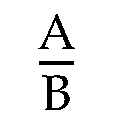
where—
(a) A is the appropriate amount in respect of the investment in question, and
(b) B is the sum of that amount and the appropriate amount or amounts in respect of the other investment or investments.
(3)If the investment consists of a loan, the appropriate amount for the purposes of subsection (2) is—
(a)if the value is received in the first or second year of the 6 year period, the average capital balance of the loan for the second year of that period, and
(b)if the value is received in a later year, the average capital balance of the loan for the year in question.
(4)For the purposes of subsection (3)—
(a)the average capital balance of the loan for a year is the mean of the daily balances of capital outstanding during the year, and
(b)the receipt of value is ignored when calculating the average capital balance for the year in question.
(5)If the investment consists of securities or shares, the appropriate amount for the purposes of subsection (2) is—
(a)if the value is received in the first year of the 6 year period, the amount subscribed for the securities or shares, and
(b)in any other case, the amount subscribed for such of the securities or shares as—
(i)are held by the investor at the time the value is received, and
(ii)have been held by the investor, as sole beneficial owner, continuously since the investment was made.
Textual Amendments
F1046Words in s. 368(1)(c) substituted (with effect in accordance with s. 1184(1) of the amending Act) by Corporation Tax Act 2010 (c. 4), s. 1184(1), Sch. 1 para. 518 (with Sch. 2)
369Effect of receipt of value on future claims for CITRU.K.
(1)This section applies if the investment consists of securities or shares and—
(a)the investor receives any value (other than an amount of insignificant value) from the CDFI during the 6 year period, and
(b)the investment or a part of it is held by the investor at the time the value is received and has been held by the investor, as sole beneficial owner, continuously since the investment was made (“the continuing investment”),
but no CITR attributable to the continuing investment is withdrawn under section 364 as a result of the receipt.
(2)For the purposes of calculating any CITR in respect of any securities or shares included in the continuing investment for any relevant tax year, the amount subscribed for the securities or shares included in the continuing investment is treated as reduced by the amount of the value received.
(3)For this purpose the “relevant” tax years are—
(a)any tax year ending on or after the anniversary of the investment date immediately before the receipt of value, or
(b)if the value was received on an anniversary of the investment date, any tax year ending on or after that anniversary.
(4)For the purposes of this section “an amount of insignificant value” means an amount of value which—
(a)is not more than £1,000, or
(b)if it is more than £1,000, is insignificant in relation to the amount subscribed by the investor for the securities or shares included in the continuing investment.
[F1047(5)This section is subject to section 368 (value received if there is more than one investment).]
Textual Amendments
F1047S. 369(5) inserted (with effect in accordance with s. 1184(1) of the amending Act) by Corporation Tax Act 2010 (c. 4), s. 1184(1), Sch. 1 para. 519 (with Sch. 2)
370Receipts of value by or from connected personsU.K.
In sections 363 to 369, if the context permits, references to the investor or the CDFI include references to any person who at any time in the 6 year period relating to the investment is connected with the investor or, as the case may be, the CDFI, whether or not the person is connected at the material time.
CITR not dueU.K.
371CITR subsequently found not to have been dueU.K.
If any CITR has been obtained which is subsequently found not to have been due, the CITR must be withdrawn.
Manner of withdrawal or reductionU.K.
372Manner of withdrawal or reduction of CITRU.K.
(1)This section applies if any CITR has been obtained which falls to be withdrawn or reduced under this Chapter.
(2)The CITR must be withdrawn or reduced by making an assessment to income tax for the tax year for which the CITR was obtained.
(3)No assessment may be made under subsection (2) because of any event occurring after the death of the investor.
[F1048(4)An assessment under this paragraph may be made at any time not more than 6 years after the end of the tax year for which the relief was obtained.
(5)Subsection (4) is without prejudice to section 36(1A) of TMA 1970 (loss of tax brought about deliberately etc).]
Textual Amendments
F1048S. 372(4)(5) inserted (1.4.2010) by Finance Act 2008 (c. 9), s. 118(2), Sch. 39 para. 60; S.I. 2009/403, art. 2(2) (with art. 10)
Chapter 7U.K.Supplementary and general
[F1049Alternative finance arrangementsU.K.
Textual Amendments
F1049S. 372A and cross-heading inserted (with effect in accordance with s. 381(1) of the amending Act) by Taxation (International and Other Provisions) Act 2010 (c. 8), s. 381(1), Sch. 2 para. 51 (with Sch. 9 paras. 1-9, 22)
372AMeaning of “loan” and “interest”U.K.
(1)In this Part and regulations made under Chapter 2 of this Part—
(a)references to a “loan” include references to alternative finance arrangements, and
(b)references to “interest” include references to alternative finance return.
(2)In subsection (1)—
“alternative finance arrangements” means arrangements to which any of the following applies—
(a)section 564C (purchase and resale arrangements),
(b)section 564E (deposit arrangements), and
(c)section 564F (profit share agency arrangements), and
“alternative finance return” has the meaning given by section 564I and 564L(1) and (2).
(3)Subsection (1) needs to be read with—
(a)section 372B, in the case of arrangements to which section 564C applies,
(b)section 372C, in the case of arrangements to which section 564E applies, and
(c)section 372D, in the case of arrangements to which section 564F applies.]
[F1050372BPurchase and resale arrangementsU.K.
(1)This section applies if, under arrangements to which section 564C applies, a person (“the first purchaser”) purchases an asset that is sold to another person (“the second purchaser”).
(2)This Part and regulations made under Chapter 2 of this Part have effect in relation to the arrangements in accordance with subsections (3) to (9).
(3)The first purchaser is treated as making a loan to the second purchaser.
(4)The amount of the loan is treated as being equal to the first purchase price.
(5)If the arrangements provide that the first purchaser will transfer ownership of the asset to the second purchaser in instalments—
(a)references to the loan being drawn down over a period of time include references to the asset being transferred to the second purchaser in instalments,
(b)references to the date on which the first amount of the loan is drawn down include references to the date on which the first instalment is transferred to the second purchaser, and
(c)references to the amount drawn down at a given date include references to the value of the instalments transferred at that date.
(6)In calculating the amount of capital outstanding on the loan, each payment of the second purchase price (or part of the second purchase price), as reduced by any amount of alternative finance return included within each payment, is treated as repayment of the loan capital.
(7)References to the beneficial owner of the loan include references to the person beneficially entitled to payment of the second purchase price.
(8)References to the disposal of the whole or any part of the loan include references to the disposal of the right to receive payment of the whole or any part of the outstanding second purchase price.
(9)If arrangements to which section 564C applies are, as a result of this section, qualifying investments under Chapter 3 of this Part, paragraph (f) of section 366(1) is to be ignored in relation to the arrangements concerned.
(10)In this section “the first purchase price” and “the second purchase price” have the same meaning as in section 564C.]
Textual Amendments
F1050S. 372B inserted (with effect in accordance with s. 381(1) of the amending Act) by Taxation (International and Other Provisions) Act 2010 (c. 8), s. 381(1), Sch. 2 para. 52 (with Sch. 9 paras. 1-9, 22)
[F1051372CDeposit arrangementsU.K.
(1)This section applies if, under arrangements to which section 564E applies, a person (“the depositor”) deposits money with a financial institution.
(2)This Part and regulations made under Chapter 2 of this Part have effect in relation to the arrangements in accordance with subsections (3) to (9).
(3)The depositor is treated as making a loan to the financial institution.
(4)The amount of the loan is treated as being equal to the money deposited under the arrangements.
(5)If the arrangements provide that the depositor will deposit a sum of money with the financial institution in instalments—
(a)references to the loan being drawn down over a period of time include references to the depositor depositing a sum of money with the financial institution in instalments,
(b)references to the date on which the first amount of the loan is drawn down include references to the date on which the first instalment is deposited with the financial institution, and
(c)references to the amount drawn down at a given date include references to the value of the instalments deposited with the financial institution at that date.
(6)The capital outstanding on the loan is treated as being equal to the balance of the repayable deposit.
(7)References to any repayment of the loan include references to any repayment of the deposit.
(8)References to the beneficial owner of the loan include references to the person beneficially entitled to repayment of the deposit.
(9)References to the disposal of the whole or any part of the loan include references to the disposal of the right to receive repayment of the whole or any part of the deposit.
(10)In this section “financial institution” has the same meaning as in Part 10A (see section 564B).]
Textual Amendments
F1051S. 372C inserted (with effect in accordance with s. 381(1) of the amending Act) by Taxation (International and Other Provisions) Act 2010 (c. 8), s. 381(1), Sch. 2 para. 53 (with Sch. 9 paras. 1-9, 22)
[F1052372DProfit share agency arrangementsU.K.
(1)This section applies if, under arrangements to which section 564F applies, a person (“the principal”) appoints a financial institution as agent.
(2)This Part and regulations made under Chapter 2 of this Part have effect in relation to the arrangements in accordance with subsections (3) to (9).
(3)The principal is treated as making a loan to the agent.
(4)The amount of the loan is treated as being equal to the money provided by the principal to the agent under the arrangements.
(5)If the arrangements provide that the principal will provide a sum of money to the agent in instalments—
(a)references to the loan being drawn down over a period of time include references to the principal providing a sum of money to the agent in instalments,
(b)references to the date on which the first amount of the loan is drawn down include references to the date on which the first instalment is provided to the agent, and
(c)references to the amount drawn down at a given date include references to the value of the instalments provided to the agent at that date.
(6)The capital outstanding on the loan is treated as being equal to the balance of the repayable money provided to the agent.
(7)References to any repayment of the loan include references to any repayment of the money provided to the agent.
(8)References to the beneficial owner of the loan include references to the person beneficially entitled to repayment of the money provided to the agent.
(9)References to the disposal of the whole or any part of the loan include references to the disposal of the right to receive repayment of the whole or any part of the money provided to the agent.
(10)In subsection (1) “financial institution” has the same meaning as in Part 10A (see section 564B).]
Textual Amendments
F1052S. 372D inserted (with effect in accordance with s. 381(1) of the amending Act) by Taxation (International and Other Provisions) Act 2010 (c. 8), s. 381(1), Sch. 2 para. 54 (with Sch. 9 paras. 1-9, 22)
MiscellaneousU.K.
373Information to be provided by the investorU.K.
(1)If—
(a)the investor has obtained CITR in respect of the investment, and
(b)an event occurs because of which CITR attributable to the investment [F1053in respect of] any tax year falls to be withdrawn or reduced by virtue of section 360, 361, 362 or 364,
the investor must give an officer of Revenue and Customs a notice containing particulars of the event.
(2)Subject to subsection (3), a notice under subsection (1) must be given not later than the normal self-assessment filing date for the tax year in which the event occurred.
(3)If—
(a)the investor is required to give a notice as a result of the receipt of value by a person connected with the investor (see section 370), and
(b)the end of the period of 60 days beginning when the investor comes to know of that event is later than the final notice date under subsection (2),
the notice must be given before the end of that 60 day period.
Textual Amendments
F1053Words in s. 373(1)(b) substituted (with effect in accordance with s. 1184(1) of the amending Act) by Corporation Tax Act 2010 (c. 4), s. 1184(1), Sch. 1 para. 520 (with Sch. 2)
374DisclosureU.K.
(1)No obligation as to secrecy or other restriction on the disclosure of information imposed by statute or otherwise prevents the disclosure of information—
(a)by the Secretary of State to an officer of Revenue and Customs for the purpose of assisting Her Majesty's Revenue and Customs to discharge their functions under the Income Tax Acts so far as relating to matters arising under this Part, or
(b)by an officer of Revenue and Customs to the Secretary of State for the purpose of assisting the Secretary of State to discharge the Secretary of State's functions under this Part.
(2)Information obtained by such disclosure is not to be further disclosed except for the purposes of legal proceedings arising out of the functions referred to.
375NomineesU.K.
(1)For the purposes of this Part—
(a)loans made by or to, or disposed of by, a nominee for a person are treated as made by or to, or disposed of by, that person, and
(b)securities or shares subscribed for by, issued to, acquired or held by or disposed of by a nominee for a person are treated as subscribed for by, issued to, acquired or held by or disposed of by that person.
(2)For the purposes of subsection (1) references to things done by or to a nominee for a person include things done by or to a bare trustee for a person.
376Application for postponement of tax pending appealU.K.
No application may be made under section 55(3) or (4) of TMA 1970 (application for postponement of payment of tax pending appeal) on the ground that an individual is eligible for CITR unless a claim for the CITR has been duly made by the individual under this Part.
377Identification of securities or shares on a disposalU.K.
(1)This section applies for the purpose of identifying the securities or shares disposed of in any case where—
(a)the investor disposes of part of a holding of securities or shares (“the holding”), and
(b)the holding includes securities or shares to which CITR is attributable in respect of one or more tax years that have been held continuously by the investor from the time they were issued until the disposal.
(2)Any disposal by the investor of securities or shares included in the holding which have been acquired by the investor on different days is treated as relating to those acquired on an earlier day rather than to those acquired on a later day.
(3)If there is a disposal by the investor of securities or shares included in the holding which have been acquired by the investor on the same day, any of those securities or shares—
(a)to which CITR is attributable, and
(b)which have been held by the investor continuously from the time they were issued until the time of disposal,
are treated as disposed of after any other securities or shares included in the holding which were acquired by the investor on that day.
(4)For the purposes of this section a holding of securities is any number of securities of a company which—
(a)carry the same rights,
(b)were issued under the same terms, and
(c)are held by the investor in the same capacity.
It does not matter for this purpose that the number of the securities grows or diminishes as securities carrying those rights and issued under those terms are acquired or disposed of.
(5)For the purposes of this section a holding of shares is any number of shares in a company which—
(a)are of the same class, and
(b)are held by the investor in the same capacity.
It does not matter for this purpose that the number of the shares grows or diminishes as shares of that class are acquired or disposed of.
(6)In a case to which section 127 of TCGA 1992 (equation of original shares and new holding) applies, shares comprised in the new holding are to be treated for the purposes of subsections (2) and (3) as acquired when the original shares were acquired.
(7)In subsection (6)—
(a)the reference to section 127 of TCGA 1992 includes a reference to that section as it is applied by virtue of any enactment relating to chargeable gains, and
(b)“” and “new holding” have the same meaning as in section 127 of TCGA 1992 or (as the case may be) that section as applied by virtue of the enactment in question.
DefinitionsU.K.
378Meaning of “issue of securities or shares”U.K.
(1)In this Part—
(a)references (however expressed) to an issue of securities of any body are to such securities of that body as carry the same rights and are issued under the same terms and on the same day, and
(b)references (however expressed) to an issue of shares in any body are to such shares in that body as are of the same class and issued on the same day.
(2)In this Part references (however expressed) to an issue of securities of or shares in a body to an individual are to such of the securities or shares in an issue of securities of or shares in that body as are issued to that individual in one capacity.
379Meaning of “disposal”U.K.
(1)Subject to subsection (2), in this Part “disposal” is read in accordance with TCGA 1992, and related expressions are read accordingly.
(2)An investor is treated as disposing of any securities or shares which but for section 151BC(1) of TCGA 1992 the investor—
(a)would be treated as exchanging for other securities or shares by virtue of section 136 of that Act, or
(b)would be so treated but for section 137(1) of that Act (which restricts section 136 to genuine reconstructions).
380Construction of references to being “held continuously”U.K.
(1)This section applies if for the purposes of this Part it becomes necessary to determine whether the investor has held the investment (or any part of it) continuously throughout any period.
(2)The investor is not treated as having held the investment (or any part of it) continuously throughout a period if the investor—
(a)is treated, under any provision of TCGA 1992, as having disposed of and immediately re-acquired the investment (or part) at any time during the period, or
(b)is treated as having disposed of the investment (or part) at any such time, by virtue of section 379(2).
381Meaning of “associate”U.K.
(1)In this Part “associate”, in relation to a person, means—
(a)any relative or partner of that person,
(b)the trustee or trustees of any settlement in relation to which that person, or any relative of that person (living or dead), is or was a settlor, and
(c)if that person has an interest in any shares or obligations of a company which are subject to any trust or are part of the estate of a deceased person—
(i)the trustee or trustees of the settlement concerned or, as the case may be, the personal representatives of the deceased, and
(ii)if that person is a company, any other company which has an interest in those shares or obligations.
(2)In subsection (1)(a) and (b) “relative” means spouse or civil partner, ancestor or lineal descendant.
(3)In subsection (1)(b) “settlor” and “settlement” have the same meaning as in Chapter 5 of Part 5 of ITTOIA 2005 (see section 620 of that Act).
382Minor definitions etcU.K.
(1)In this Part—
“body” includes an unincorporated association, and
“” means shares which are issued otherwise than for payment (whether in cash or otherwise).
(2)For the purposes of this Part shares in a company are not treated as being of the same class unless they would be so treated if dealt in on [F1054a recognised stock exchange].
(3)For the purposes of this Part the market value at any time of any asset is the price which it might reasonably be expected to fetch on a sale at that time in the open market free from any interest or right which exists by way of security in or over it.
(4)In this Part—
(a)references to CITR obtained by the investor in respect of any investment (or part of an investment) include references to CITR obtained by the investor in respect of that investment (or part) at any time after the investor has disposed of it, and
(b)references to the withdrawal or reduction of CITR obtained by the investor in respect of the investment (or any part of it) include references to the withdrawal or reduction of CITR obtained in respect of that investment (or part) at any such time.
(5)In the case of any condition that cannot be met until a future date—
(a)references in this Part to a condition being met for the time being are to nothing having occurred to prevent its being met, and
(b)references to its continuing to be met are to nothing occurring to prevent its being met.
Textual Amendments
F1054Words in s. 382(2) substituted (19.7.2007) by Finance Act 2007 (c. 11), Sch. 26 para. 12(8)
Part 8U.K.Other reliefs
Chapter 1U.K.Interest payments
The relief: introductionU.K.
383Relief for interest paymentsU.K.
(1)A person who pays interest in a tax year is entitled to relief for the tax year for the interest if—
(a)the loan on which the interest is payable is a loan to which a provision specified in subsection (2) applies,
(b)the interest is eligible for relief in accordance with this Chapter, and
(c)the person makes a claim.
(2)The provisions are—
(a)section 388 (loan to buy plant or machinery for partnership use),
(b)section 390 (loan to buy plant or machinery for employment use),
(c)section 392 (loan to buy interest in close company [F1055etc]),
(d)section 396 (loan to buy interest in employee-controlled company),
(e)section 398 (loan to invest in partnership),
(f)section 401 (loan to invest in co-operative), and
(g)section 403 (loan to pay inheritance tax).
(3)The amount of the relief given under subsection (1) is equal to the amount of the interest eligible for relief.
(4)The relief is given by deducting that amount in calculating the person's net income for the tax year in which the interest is paid (see Step 2 of the calculation in section 23).
(5)This section is subject to—
(a)section 384 (general restrictions on relief under this Chapter),
[F1056(aa)section 384B (restriction on relief where cash basis applies),]
(b)section 385 (general provisions about loans),
(c)section 386 (loans partly meeting requirements),
(d)section 387 (exclusion of double relief etc), and
(e)section 405 (carry back and forward of relief for interest on loans within section 403).
(6)See also [F1057section 564O] (under which this Chapter applies as if arrangements [F1058to which section 564C applies] were loans and alternative finance return were interest).
Textual Amendments
F1055Word in s. 383(2)(c) inserted (with effect in accordance with s. 13(5) of the amending Act) by Finance Act 2014 (c. 26), s. 13(4)(a)
F1056S. 383(5)(aa) inserted (with effect in accordance with Sch. 4 paras. 56, 57 of the amending Act) by Finance Act 2013 (c. 29), Sch. 4 para. 55(2)
F1057Words in s. 383(6) substituted (with effect in accordance with s. 381(1) of the amending Act) by Taxation (International and Other Provisions) Act 2010 (c. 8), s. 381(1), Sch. 8 para. 221(a) (with Sch. 9 paras. 1-9, 22)
F1058Words in s. 383(6) substituted (with effect in accordance with s. 381(1) of the amending Act) by Taxation (International and Other Provisions) Act 2010 (c. 8), s. 381(1), Sch. 8 para. 221(b) (with Sch. 9 paras. 1-9, 22)
384General restrictions on relief under ChapterU.K.
(1)Relief is not to be given under this Chapter for interest on a debt incurred—
(a)by overdrawing an account, or
(b)by debiting the account of any person as the holder of a credit card or under similar arrangements.
(2)If [F1059the interest paid on a loan in a tax year exceeds a reasonable commercial amount of interest on the loan for the relevant period] , relief is not to be given under this Chapter for so much of the interest as represents the excess.
[F1060(3)The relevant period is the tax year or, if the loan exists for part only of the tax year, the part of the tax year for which the loan exists.
(4)A reasonable commercial amount of interest on the loan for the relevant period is an amount which, together with any interest paid before that period (other than unrelieved interest), represents a reasonable commercial rate of interest on the loan from the date it was made to the end of that period.
(5)“Unrelieved interest” means interest which because of subsection (2) is not eligible for relief under this Chapter.]
Textual Amendments
F1059Words in s. 384(2) substituted (21.7.2008 with effect in accordance with Sch. 22 para. 21(4) of the amending Act) by Finance Act 2008 (c. 9), Sch. 22 para. 21(2)
F1060S. 384(3)-(5) inserted (21.7.2008 with effect in accordance with Sch. 22 para. 21(4) of the amending Act) by Finance Act 2008 (c. 9), Sch. 22 para. 21(3)
[F1061384ARestriction on relief where arrangements minimise risk to borrowerU.K.
(1)Relief is not to be given under this Chapter for interest paid by a person on a loan if—
(a)the loan is made to the person (“the borrower”) as part of arrangements which appear very likely to produce a post-tax advantage, and
(b)the arrangements seem to have been designed to reduce any income tax or capital gains tax to which the borrower (or any person whose circumstances are like those of the borrower) would be liable apart from the arrangements.
(2)Arrangements “appear very likely” to produce a post-tax advantage if (and only if) it would be reasonable to assume from either or both of—
(a)the likely effect of the arrangements, and
(b)the circumstances in which the arrangements, or any parts of the arrangements, are entered into or effected,
that there is no risk, or only an insignificant risk, that they will not produce a post-tax advantage.
(3)“Produce a post-tax advantage” means give rise to a sum or sums—
(a)payable to the borrower or a person connected with the borrower, or
(b)payable to any other person for the benefit of the borrower or a person connected with the borrower,
of an amount (or aggregate amount) which, after making the appropriate tax adjustments, is equal to or greater than the relevant amount.
(4)“The relevant amount” is the aggregate of—
(a)the amount required to meet the borrower's obligations in respect of the loan, and
(b)any amount which is used by the borrower in the same way as that which entitles the borrower to relief under this Chapter in respect of the loan and is not money lent to the borrower under any loan.
(5)If, with a view to securing that the condition in subsection (1)(a) is not met, the arrangements make provision for securing that, in all or any circumstances in which they do not produce a post-tax advantage, they will produce a broadly compensatory amount, the arrangements are to be regarded for the purposes of subsection (2) as making provision for securing the production of a post-tax advantage in those circumstances.
(6)“Produce a broadly compensatory amount” means give rise to a sum or sums payable as mentioned in subsection (3) of an amount (or aggregate amount) which, after making the appropriate tax adjustments, is not significantly less than the relevant amount.
(7)For the purposes of subsections (3) and (6) causing the value of an asset to be obtainable, directly or indirectly, by a person is to be treated as equivalent to giving rise to a sum payable to the person of an amount equal to that value.
(8)To make the appropriate tax adjustments for the purpose of subsection (3) or (6)—
(a)if A exceeds B, deduct the amount of the excess from the amount (or aggregate amount), and
(b)if B exceeds A, add the amount of the excess to the amount (or aggregate amount).
(9)For the purposes of subsection (8)—
A is the amount of any income tax, any capital gains tax and any tax under the law of a territory outside the United Kingdom to which the borrower is liable in consequence of the arrangements, and
B is the amount by which the borrower's liability to income tax and capital gains tax is (or apart from subsection (1) would be) reduced in consequence of the arrangements.
(10)Arrangements seem to have been designed to reduce any income tax or capital gains tax to which the borrower (or any person whose circumstances are like those of the borrower) would be liable apart from the arrangements if (and only if) it would be reasonable to assume from either or both of—
(a)the likely effect of the arrangements, and
(b)the circumstances in which the arrangements, or any parts of the arrangements, are entered into or effected,
that the arrangements, or any parts of the arrangements, are designed to do so.
(11)In this section “arrangements” means arrangements consisting of any number of agreements, understandings, schemes, transactions or other arrangements (whether or not legally enforceable); but in subsections (1)(a), (2), (5) and (9) the references to arrangements also include any related transactions.
(12)In subsection (11) “related transactions” means transactions in the case of which it is reasonable to assume from either or both of—
(a)the likely effect of the transactions, and
(b)the circumstances in which the transactions are entered into or effected,
that the transactions would not have been entered into or effected independently of the arrangements.
(13)Transactions are not prevented from being related transactions just because the transactions—
(a)are not between the same parties, or
(b)are not between parties to the arrangements.]
Textual Amendments
F1061S. 384A inserted (with effect in accordance with Sch. 30 para. 1(2) of the amending Act) by Finance Act 2009 (c. 10), Sch. 30 para. 1(1)
[F1062384BRestriction on relief where cash basis appliesU.K.
(1)Relief is not to be given under this Chapter for a tax year for interest paid by a person on a relevant loan if the partnership to which the loan relates [F1063carried on] [F1064a UK property business or overseas property business [F1065the profits of which] are calculated on the cash basis for the tax year (see section 271D of ITTOIA 2005).]
(2)A loan is a “relevant loan” if—
(a)it is a loan to which section 388 applies (loan to buy plant or machinery for partnership use), or
(b)it is a loan to which section 398 applies (loan to invest in partnership) and which is not used for purchasing a share in a partnership.]
Textual Amendments
F1062S. 384B inserted (with effect in accordance with Sch. 4 paras. 56, 57 of the amending Act) by Finance Act 2013 (c. 29), Sch. 4 para. 55(3)
F1063Words in s. 384B(1) substituted (6.4.2024 for the tax year 2024-25 and subsequent tax years) by Finance Act 2024 (c. 3), Sch. 10 paras. 8(b)(i), 47 (with Sch. 10 paras. 48-50)
F1064Words in s. 384B(1) inserted (with effect in accordance with Sch. 2 para. 64 of the amending Act) by Finance (No. 2) Act 2017 (c. 32), Sch. 2 para. 63
F1065Words in s. 384B(1) substituted (6.4.2024 for the tax year 2024-25 and subsequent tax years) by Finance Act 2024 (c. 3), Sch. 10 paras. 8(b)(ii), 47 (with Sch. 10 paras. 48-50)
385General provisions about loansU.K.
(1)References in this Chapter to a loan being used or used in any way—
(a)are references to the money lent being applied or, as the case may be, applied in that way, and
(b)except in section 403 include references to a loan being used to meet expenditure already incurred or, as the case may be, already incurred on such a use.
(2)Sections 392, 396, 398, 401 and 403 apply to a loan only if it is made—
(a)in connection with the use of money, and
(b)on the occasion of its use or within what is in the circumstances a reasonable time from its use.
(3)Those sections apply to a loan only if the loan is used as mentioned in those sections without first having been used for another purpose.
(4)For the purposes of this Chapter the giving of credit for any money due from the purchaser under a sale is treated as the making of a loan used by the purchaser in making the purchase.
386Loans partly meeting requirementsU.K.
(1)If, at the time a loan (“the mixed loan”) is used, only part of the mixed loan is a loan to which any of the provisions specified in section 383(2) apply, for the purposes of this Chapter that part (“the qualifying part”) is treated as a loan to which the provision in question applies.
(2)Accordingly, the corresponding proportion of the interest on the mixed loan is eligible for relief.
(3)If a mixed loan is partly repaid, for the purposes of this Chapter the corresponding proportion of the repayment is treated as repaying the qualifying part (but see section 406(5)).
(4)In this section “the corresponding proportion” means the proportion that the qualifying part bears to the whole of the mixed loan at the time the mixed loan is used.
387Exclusion of double relief etcU.K.
(1)Interest for which relief is given under this Chapter is not allowable as a deduction for any other income tax purposes.
(2)No relief is given under this Chapter for any tax year for the payment of any interest taken into account in calculating the profits of—
(a)any trade, profession or vocation,
(b)any UK property business, or
(c)any overseas property business.
(3)If interest is so taken into account, no relief is given under this Chapter for any relevant tax year for other interest on the same debt or liability.
(4)A tax year is a relevant one if the interest has been taken into account in calculating the profits of the trade, profession, vocation or business of the tax year.
(5)For the purposes of subsection (3) all interest which—
(a)is capable of being taken into account in calculating the profits of a trade, profession, vocation or business, and
(b)is payable by the same person on money advanced to the person on current account,
is treated as interest on the same debt.
(6)It does not matter whether the money is advanced—
(a)on one or more accounts, or
(b)by the same or separate banks or other persons.
(7)The reference in subsections (2) to (4) to interest taken into account is a reference to interest allowed as a deduction in an assessment which can no longer be varied (whether on appeal or otherwise).
Loans for plant or machineryU.K.
388Loan to buy plant or machinery for partnership useU.K.
(1)This section applies to a loan that is used for capital expenditure on the provision of plant or machinery to which subsection (2) applies.
(2)This subsection applies to plant or machinery if—
(a)it is in use for the purposes of a trade, profession or F1066... property business carried on by a partnership, and
(b)the partnership is entitled to a capital allowance or liable to a balancing charge in respect of it under section 264 of CAA 2001 (partnership using property of a partner) for the period of account in which the interest is paid.
(3)A partnership is treated as entitled to a capital allowance or liable to a balancing charge in respect of plant or machinery for a period of account (“the later period”) for the purposes of subsection (2)(b) if—
(a)it has been so entitled or liable for a previous period of account, and
(b)no disposal value has been brought into account in respect of it in the later period or any earlier period of account.
(4)In this section and sections 389 and 390—
“capital expenditure” has the meaning given in section 4 of CAA 2001,
“period of account” has the same meaning as in that Act (see section 6(2) to (6) of that Act), and
[F1067“property business”] has the same meaning as in Part 2 of that Act (see section 16 of that Act).
Textual Amendments
F1066Word in s. 388(2)(a) omitted (in relation to the tax year 2025-26 and subsequent tax years) by virtue of Finance Act 2025 (c. 8), Sch. 5 paras. 3(4)(a), 12(1) (with Sch. 5 paras. 15, 16, 18(4), 19)
F1067Words in s. 388(4) substituted (in relation to the tax year 2025-26 and subsequent tax years) by Finance Act 2025 (c. 8), Sch. 5 paras. 3(4)(b), 12(1) (with Sch. 5 paras. 15, 16, 18(4), 19)
389Eligibility requirements for interest on loans within section 388U.K.
(1)Interest on a loan within section 388(1) is eligible for relief if conditions A and B are met.
(2)Condition A is that the interest is paid by an individual who is a member of the partnership referred to in section 388(2).
(3)Condition B is that the interest falls due and payable not later than 3 years after the end of the period of account in which the loan was made.
(4)If the machinery or plant is in use partly for the purposes of the trade, profession or F1068... property business carried on by the partnership referred to in section 388(2) (“trade purposes”) and partly for other purposes, only part of the interest is eligible for relief.
(5)That part is such part as it is just and reasonable to attribute to trade purposes, having regard to all the relevant circumstances and, in particular, to the extent of the use for other purposes.
Textual Amendments
F1068Word in s. 389(4) omitted (in relation to the tax year 2025-26 and subsequent tax years) by virtue of Finance Act 2025 (c. 8), Sch. 5 paras. 3(5), 12(1) (with Sch. 5 paras. 15, 16, 18(4), 19)
390Loan to buy plant or machinery for employment useU.K.
(1)This section applies to a loan that is used for capital expenditure on the provision of plant or machinery to which subsection (2) applies.
(2)This subsection applies to plant or machinery if—
(a)it is in use for the purposes of an office or employment held by an individual in the tax year,
(b)the plant or machinery belongs to the individual, and
(c)the individual is entitled to a capital allowance or liable to a balancing charge in respect of it under Part 2 of CAA 2001 for the tax year.
(3)An individual is treated as entitled to a capital allowance or liable to a balancing charge in respect of plant or machinery for a tax year (“the later year”) for the purposes of subsection (2)(c) if—
(a)the individual has been so entitled or liable for a previous tax year, and
(b)no disposal value has been brought into account in respect of it in the later year or any earlier year.
(4)An individual is also treated as so entitled or liable for the purposes of this section if the individual would be so entitled or liable but for a contribution made by the individual's employer.
391Eligibility requirements for interest on loans within section 390U.K.
(1)Interest on a loan within section 390(1) is eligible for relief if conditions A and B are met.
(2)Condition A is that the interest is paid by the individual referred to in section 390(2).
(3)Condition B is that the interest falls due and payable not later than 3 years after the end of the tax year in which the loan was made.
(4)If the machinery or plant is in use partly for the purposes of the office or employment referred to in section 390(2) (“employment purposes”) and partly for other purposes, only part of the interest is eligible for relief.
(5)That part is such part as it is just and reasonable to attribute to employment purposes having regard to all the relevant circumstances and, in particular, to the extent of the use for other purposes.
Loans for interests in close companies [F1069etc] U.K.
Textual Amendments
F1069Word in s. 392 cross-heading inserted (with effect in accordance with s. 13(5) of the amending Act) by Finance Act 2014 (c. 26), s. 13(4)(b)
392Loan to buy interest in close company [F1070etc] U.K.
(1)This section applies to a loan to an individual that is used in one or more of the ways specified in subsection (2).
(2)The ways are—
(a)acquiring any part of the ordinary share capital of a close company that is not a close investment-holding company,
(b)lending to such a company money which is used wholly and exclusively—
(i)for the purposes of the business of the company, or
(ii)for the purposes of the business of any associated company of the company which is also a close company that is not a close investment-holding company, or
(c)repaying another loan to which this section applies.
(3)Subsection (2)(a) does not apply if at any time the individual by whom the shares are acquired or that individual's spouse or civil partner—
(a)makes a claim for relief in respect of them under Part 5 of this Act or, in the case of shares issued before 6 April 2007, Chapter 3 of Part 7 of ICTA (enterprise investment scheme), or
(b)makes a claim in respect of them under Schedule 5B to TCGA 1992 (enterprise investment scheme: reinvestment).
[F1071(3A)Subsection (2) does not apply if at any time the individual by whom the shares are acquired or the money is lent, or that individual's spouse or civil partner, makes—
(a)a claim under Part 5B of this Act for relief in respect of the amount invested in acquiring the shares or (as the case may be) in return for the debentures in respect of the money lent, or
(b)a claim in respect of the amount under Schedule 8B to TCGA 1992 (hold-over relief for gains re-invested in social enterprises).
(3B)For the purposes of subsection (3A)(a) “debenture” includes any instrument creating or acknowledging indebtedness.]
(4)In this section and section 393—
[F1072“close company” includes a company which—
(a)is resident in an EEA state F1073..., and
(b)if it were UK resident, would be a close company,]
“close investment-holding company” [F1074is to be read in accordance with [F1075section 393A]], and
“associated company” has the meaning given by [F1076section 449 of CTA 2010].
(5)This section is subject to section 411 (ineligibility of interest where business is occupation of commercial woodlands).
Textual Amendments
F1070Word in s. 392 heading inserted (with effect in accordance with s. 13(5) of the amending Act) by Finance Act 2014 (c. 26), s. 13(4)(c)
F1071S. 392(3A)(3B) inserted (17.7.2014) by Finance Act 2014 (c. 26), Sch. 11 para. 10
F1072Words in s. 392(4) inserted (with effect in accordance with s. 13(5) of the amending Act) by Finance Act 2014 (c. 26), s. 13(2)(a)
F1073Words in s. 392(4) omitted (31.12.2020) by virtue of The Taxes (Amendments) (EU Exit) Regulations 2019 (S.I. 2019/689), regs. 1, 15(3) (with regs. 39-41); 2020 c. 1, Sch. 5 para. 1(1)
F1074Words in s. 392(4) substituted (with effect in accordance with s. 1184(1) of the amending Act) by Corporation Tax Act 2010 (c. 4), s. 1184(1), Sch. 1 para. 521(a) (with Sch. 2)
F1075Words in s. 392(4) substituted (with effect in accordance with s. 13(5) of the amending Act) by Finance Act 2014 (c. 26), s. 13(2)(b)
F1076Words in s. 392(4) substituted (with effect in accordance with s. 1184(1) of the amending Act) by Corporation Tax Act 2010 (c. 4), s. 1184(1), Sch. 1 para. 521(b) (with Sch. 2)
393Eligibility requirements for interest on loans within section 392U.K.
(1)Interest on a loan within section 392(1) to an individual is eligible for relief only if—
(a)when the interest is paid the company is not a close investment-holding company, and
(b)the capital recovery condition and either the full-time working conditions or the material interest conditions are met.
(2)The capital recovery condition is that in the period from the use of the loan to the payment of the interest the individual has not recovered any capital from the company, apart from any amount taken into account under section 406(2) (recovered capital that is treated as a repayment of the loan).
(3)The full-time working conditions are that—
(a)when the interest is paid the individual holds part of the ordinary share capital of the company, and
(b)in the period from the use of the loan to the payment of the interest the greater part of the individual's time has been spent in the actual management or conduct of the company or of an associated company of the company.
(4)The material interest conditions are that—
(a)when the interest is paid the individual has a material interest in the company (see section 394), and
(b)if the company exists wholly or mainly for the purpose of holding investments or other property, either—
(i)the condition in subsection (3)(b) is met, or
(ii)no property held by the company is used as a residence by the individual.
[F1077393AClose investment-holding companiesU.K.
(1)For the purposes of sections 392 and 393, a close company (“the candidate company”) is a close investment-holding company in an accounting period unless throughout the period it exists wholly or mainly for one or more of the permitted purposes set out in subsection (2).
There is an exception to this rule in subsection (5).
(2)The candidate company exists for a permitted purpose so far as it exists—
(a)for the purpose of carrying on a trade or trades on a commercial basis,
(b)for the purpose of making investments in land, or estates or interests in land, in cases where the land is, or is intended to be, let commercially (see subsection (3)),
(c)for the purpose of holding shares in and securities of, or making loans to, one or more companies each of which—
(i)is a qualifying company, or
(ii)falls within subsection (4),
(d)for the purpose of co-ordinating the administration of two or more qualifying companies,
(e)for the purpose of the making of investments as mentioned in paragraph (b)—
(i)by one or more qualifying companies, or
(ii)by a company which has control of the candidate company, or
(f)for the purpose of a trade or trades carried on on a commercial basis—
(i)by one or more qualifying companies, or
(ii)by a company which has control of the candidate company.
(3)For the purposes of subsection (2)(b), any letting of land is taken to be commercial unless the land is let to—
(a)a person connected with the candidate company (“a connected person”), or
(b)a person who is—
(i)the spouse or civil partner of a connected person,
(ii)a relative of a connected person, or the spouse or civil partner of a relative of a connected person,
(iii)the relative of the spouse or civil partner of a connected person, or
(iv)the spouse or civil partner of a relative of a spouse or civil partner of the connected person.
(4)A company falls within this subsection (see subsection (2)(c)(ii)) if—
(a)it is under the control of the candidate company or of a company which has control of the candidate company, and
(b)it exists wholly or mainly for the purpose of holding shares in or securities of, or of making loans to, one or more qualifying companies.
(5)If a company is wound up and was not a close investment-holding company in the accounting period that ends (by virtue of section 12(2) of CTA 2009) immediately before the winding up starts, the company is not treated for the purposes of sections 392 and 393 as being a close investment-holding company in the subsequent accounting period.
(6)In this section “qualifying company” means a company which—
(a)is under the control of the candidate company or of a company which has control of the candidate company, and
(b)exists wholly or mainly for either or both of the purposes mentioned in subsection (2)(a) and (b).
(7)In this section—
“accounting period” has the meaning given by section 1119 of CTA 2010,
“close company” includes a company which—
(a)is resident in an EEA state F1078..., and
(b)if it were UK resident, would be a close company,
“control” has the meaning given by section 450 of CTA 2010, and
“relative” means brother, sister, ancestor or lineal descendant.]
Textual Amendments
F1077S. 393A inserted (with effect in accordance with s. 13(5) of the amending Act) by Finance Act 2014 (c. 26), s. 13(3)
F1078Words in s. 393A(7) omitted (31.12.2020) by virtue of The Taxes (Amendments) (EU Exit) Regulations 2019 (S.I. 2019/689), regs. 1, 15(4) (with regs. 39-41); 2020 c. 1, Sch. 5 para. 1(1)
394Meaning of “material interest” in section 393U.K.
(1)For the purposes of section 393(4)(a) an individual has a material interest in a company if a relevant person meets condition A or B.
(2)In this section “relevant person” means—
(a)the individual, either alone or with one or more associates (see section 395), or
(b)any associate of the individual with or without such other associates.
(3)Condition A is that the relevant person is the beneficial owner of, or able directly or indirectly to control, more than 5% of the ordinary share capital of the company.
(4)Condition B is that the relevant person possesses, or is entitled to acquire, such rights as would, in the event of the winding up of the company or in any other circumstances, give an entitlement to receive more than 5% of the assets which would then be available for distribution among the participators.
(5)In this section—
“control” [F1079is to be read in accordance with sections 450 and 451 of CTA 2010], and
“participator” has the meaning given by [F1080section 454 of CTA 2010].
Textual Amendments
F1079Words in s. 394(5) substituted (with effect in accordance with s. 1184(1) of the amending Act) by Corporation Tax Act 2010 (c. 4), s. 1184(1), Sch. 1 para. 522(a) (with Sch. 2)
F1080Words in s. 394(5) substituted (with effect in accordance with s. 1184(1) of the amending Act) by Corporation Tax Act 2010 (c. 4), s. 1184(1), Sch. 1 para. 522(b) (with Sch. 2)
395Meaning of “associate” in section 394U.K.
(1)For the purposes of determining under section 394 whether an individual has a material interest in a company, in that section “associate”, in relation to that individual and company, means—
(a)a relative or partner of the individual,
(b)the trustees of a settlement in relation to which—
(i)the individual is a settlor, or
(ii)a relative of the individual (living or dead) is or was a settlor,
(c)if the individual is interested in any shares or obligations of the company which are subject to a trust, the trustees of the settlement, and
(d)if the individual is interested in any shares or obligations of the company which are part of the estate of a deceased person, the personal representatives.
(2)But, despite subsection (1)(c), the trustees of an employee benefit trust are not regarded for the purposes of section 394 as the associates of an individual merely because the individual has an interest in shares or obligations of the company as a beneficiary of the trust, unless subsection (3) applies.
(3)This subsection applies if at any time after 26 July 1989 the individual, alone or with associates, or an associate of the individual, alone or with other such associates—
(a)has been the beneficial owner of more than 5% of the ordinary share capital of the company, or
(b)has been able directly or indirectly to control more than 5% of that share capital.
(4)In subsection (3) “associate” has the meaning given by section 549(4) of ITEPA 2003.
(5)Sections 552 to 554 of ITEPA 2003 (attribution of interests in company) apply for the purposes of subsection (3) in relation to the individual as they apply for the purposes of the provisions listed in section 549(2) of that Act in relation to an employee.
(6)In this section—
“control” [F1081is to be read in accordance with sections 450 and 451 of CTA 2010],
“employee benefit trust” has the meaning given by section 550 of ITEPA 2003 except that the reference in section 550(3) of that Act to 13 March 1989 is to be read as a reference to 26 July 1989, and
“relative” means spouse or civil partner, ancestor or lineal descendant or brother or sister.
Textual Amendments
F1081Words in s. 395(6) substituted (with effect in accordance with s. 1184(1) of the amending Act) by Corporation Tax Act 2010 (c. 4), s. 1184(1), Sch. 1 para. 523 (with Sch. 2)
Loans for interests in employee-controlled companiesU.K.
396Loan to buy interest in employee-controlled companyU.K.
(1)This section applies to a loan to an individual that is used in one or more of the ways specified in subsection (2).
(2)The ways are—
[F1082(a)acquiring part of the ordinary share capital of a company that first becomes an employee-controlled company—
(i)after the date of acquisition, or
(ii)not earlier than 12 months before that date, and]
(b)repaying another loan to which this section applies.
(3)For the purposes of this section and section 397, a company is employee-controlled at any time when—
(a)more than 50% of the issued ordinary share capital of the company is owned beneficially by persons who are full-time employees of the company, and
(b)more than 50% of the voting power in the company is so owned.
(4)If an individual owns beneficially more than 10% of the issued ordinary share capital of, or voting power in, a company, for the purposes of subsection (3) the excess is treated as being owned by an individual who is not a full-time employee of the company.
(5)In this section and section 397 “full-time employee”, in relation to a company, means an individual the greater part of whose time is spent working as an employee or director of the company or of a 51% subsidiary of the company.
(6)This section is subject to section 411 (ineligibility of interest where business is occupation of commercial woodlands).
Textual Amendments
F1082S. 396(2)(a) substituted (with effect in accordance with art. 1(2) of the amending S.I.) by Income Tax Act 2007 (Amendment) (No.3) Order 2007 (S.I. 2007/3506), arts. 1(1), 3(2)
397Eligibility requirements for interest on loans within section 396U.K.
(1)Interest on a loan within section 396 to an individual is eligible for relief only if conditions A to D are met.
(2)Condition A is that the company is, throughout the period beginning with the date on which the shares are acquired and ending with the date on which the interest is paid (“the payment date”)—
[F1083(a)an unquoted company that is resident in the United Kingdom or [F1084an] EEA state and is not resident outside the European Economic Area, and]
(b)a trading company or the holding company of a trading group.
(3)Condition B is that during the tax year in which the interest is paid the company either—
(a)first becomes an employee-controlled company, or
(b)is such a company throughout a period of at least 9 months.
(4)Condition C is that—
(a)the individual is a full-time employee of the company throughout the period beginning with the date on which the loan is used (“the use date”) and ending with the payment date, or
(b)the individual ceased to be such an employee not more than 12 months before the payment date and was such an employee throughout the period beginning with the use date and ending with the date the individual ceased to be such an employee.
(5)Condition D is that in the period from the use of the loan to the payment of the interest the individual has not recovered any capital from the company, apart from any amount taken into account under section 406(2) (recovered capital that is treated as a repayment of the loan).
(6)In this section—
“holding company” means a company whose business (ignoring any trade carried on by it) consists wholly or mainly of the holding of shares or securities of one or more companies which are its 75% subsidiaries,
“trading company” means a company whose business consists wholly or mainly of the carrying on of a trade or trades,
“trading group” means a group the business of whose members taken together consists wholly or mainly of the carrying on of a trade or trades (taking a group to consist of a company with one or more 75% subsidiaries and those subsidiaries), and
“unquoted company” means a company none of whose shares is [F1085included in the official UK list].
Textual Amendments
F1083S. 397(2)(a) substituted (with effect in accordance with s. 14(2) of the amending Act) by Finance Act 2014 (c. 26), s. 14(1)
F1084Word in s. 397(2)(a) substituted (31.12.2020) by The Taxes (Amendments) (EU Exit) Regulations 2019 (S.I. 2019/689), regs. 1, 15(5) (with regs. 39-41); 2020 c. 1, Sch. 5 para. 1(1)
F1085Words in s. 397(6) substituted (19.7.2007) by Finance Act 2007 (c. 11), Sch. 26 para. 12(9)
Loans for investing in partnershipsU.K.
398Loan to invest in partnershipU.K.
(1)This section applies to a loan to an individual that is used in one or more of the ways specified in subsection (2).
(2)The ways are—
(a)purchasing a share in a partnership,
(b)contributing money to a partnership, by way of capital or premium, that is used wholly for the purposes of the trade or profession carried on by the partnership,
(c)advancing money to a partnership that is so used, and
(d)repaying another loan to which this section applies.
(3)This section is subject to section 411 (ineligibility of interest where business is occupation of commercial woodlands).
399Eligibility requirements for interest on loans within section 398U.K.
(1)Interest on a loan within section 398 to an individual is eligible for relief only if conditions A and B are met.
(2)Condition A is that throughout the period from the use of the loan until the interest is paid the individual has been a member of the partnership otherwise than—
(a)as a limited partner in a limited partnership registered under the Limited Partnerships Act 1907 (c. 24), or
(b)as a member of an investment LLP.
(3)Condition B is that in that period the individual has not recovered any capital from the partnership, apart from any amount taken into account under section 406(2) (recovered capital that is treated as a repayment of the loan).
(4)If section 400 (film partnerships) applies in a tax year, only 40% of the interest that would otherwise be eligible for relief for that year is eligible.
(5)For the purposes of subsection (2) an individual who is not a member of a partnership is treated as such a member if—
(a)the partnership carries on a profession,
(b)the individual is employed by the partnership in a senior capacity, and
(c)the individual is allowed—
(i)to act independently in dealing with clients of the partnership, and
(ii)to act generally in such a way as to be indistinguishable from the partners in relations with those clients.
(6)For the purposes of subsection (2) “investment LLP” means a limited liability partnership—
(a)whose business consists wholly or mainly of the making of investments, and
(b)the principal part of whose income is derived from investments,
and whether a limited liability partnership is an investment LLP is determined for each period of account of the partnership.
[F1086399AProperty partnerships: restriction of relief for investment loan interestU.K.
(1)This section applies to interest on a loan within section 398 if—
(a)the partnership concerned carries on a property business, and
(b)that property business or part of it is carried on for the purpose of generating income from—
(i)land consisting of a dwelling-house or part of a dwelling-house, or
(ii)an estate, interest or right in or over land within sub-paragraph (i).
(2)Subsections (3) to (6) have effect to restrict relief under section 383(1) for so much of the interest as is referable (on a just and reasonable apportionment) to the property business or (as the case may be) the part of it within subsection (1)(b).
(3)For the tax year 2017-18, the amount of that relief is 75% of what would be given apart from this section.
(4)For the tax year 2018-19, the amount of that relief is 50% of what would be given apart from this section.
(5)For the tax year 2019-20, the amount of that relief is 25% of what would be given apart from this section.
(6)For the tax year 2020-21 and subsequent tax years, that interest is not eligible for relief under this Chapter.
(7)Section 399(4) is to be applied in relation to the tax year to which subsection (3), (4) or (5) applies before that subsection is applied in relation to that tax year.
(8)Anything that in the course of a property business is done for creating (by construction or adaptation) a dwelling-house, or part of a dwelling-house, from which income is to be generated is, for the purposes of subsection (1)(b), to be treated as done for the purpose mentioned in subsection (1)(b).
F1087(9). . . . . . . . . . . . . . . . . . . . . . . . . . . . . . . .
(10)A reference in this section to a “dwelling-house” includes any land occupied or enjoyed with it as its garden or grounds.
(11)In this section “property business” means a UK property business or an overseas property business.
Textual Amendments
F1086Ss. 399A, 399B inserted (18.11.2015) by Finance (No. 2) Act 2015 (c. 33), s. 24(7)
F1087S. 399A(9) omitted (in relation to the tax year 2025-26 and subsequent tax years) by virtue of Finance Act 2025 (c. 8), Sch. 5 paras. 3(6), 12(1) (with Sch. 5 paras. 15, 16, 18(4), 19)
Modifications etc. (not altering text)
C86S. 399A excluded by S.I. 2002/2006, reg. 11(2A) (as inserted (with effect in relation to awards of tax credit for the tax year 2017-18 and subsequent years of the amending S.I.) by The Tax Credits (Definition and Calculation of Income) (Amendment) Regulations 2017 (S.I. 2017/396), regs. 1, 5)
399BProperty partnerships: tax reduction for non-deductible loan interestU.K.
(1)Subsections (2) and (3) apply if for a tax year an individual would be given relief for an amount (“the relievable amount”) by section 383(1) but for section 399A.
(2)The individual is entitled to relief under this section for the tax year in respect of the relievable amount.
(3)The amount of the relief is given by—F1088

Textual Amendments
F1086Ss. 399A, 399B inserted (18.11.2015) by Finance (No. 2) Act 2015 (c. 33), s. 24(7)
F1088S. 399B(3) formula: “PBR” substituted for “BR” (for the tax year 2027-28 and subsequent tax years) by Finance Act 2026 (c. 11), s. 6(8), Sch. 1 para. 21(a)
F1089Word in s. 399B(3) substituted (for the tax year 2027-28 and subsequent tax years) by Finance Act 2026 (c. 11), s. 6(8), Sch. 1 para. 21(a)
F1090Words in s. 399B(3) substituted (for the tax year 2027-28 and subsequent tax years) by Finance Act 2026 (c. 11), s. 6(8), Sch. 1 para. 21(b)
400Film partnershipsU.K.
(1)This section applies in a tax year if—
(a)the partnership (“the film partnership”) carries on a trade,
(b)the profits or losses of the trade are calculated in accordance with Chapter 9 of Part 2 of ITTOIA 2005 (films etc),
(c)the loan is secured on an asset or activity of another partnership (“the investment partnership”),
(d)the individual to whom the loan is made (“A”) is or has been a member of the investment partnership, and
(e)at any time in the year the proportion of the profits of the investment partnership to which A is entitled is less than the proportion of that partnership's capital contributed by A at that time.
(2)For the purposes of subsection (1)(c), a loan is secured on an asset or activity of a partnership if there is an arrangement—
(a)under which such an asset may be used or relied upon wholly or partly to guarantee repayment of any part of the loan, or
(b)because of which any part of the loan is expected to be repaid directly or indirectly out of assets held by or income accruing to the partnership.
(3)In subsection (1)(e)—
“profits” excludes any amount that would not be taken into account as, or for the purposes of calculating, income for income tax purposes, and
“partnership's capital” means—
(a)anything that is, or in accordance with generally accepted accounting practice would be, accounted for as partners' capital or partners' equity, and
(b)amounts lent to the partnership by partners or persons connected with partners.
(4)So far as the investment partnership's capital includes at any time any of the following amounts, they are treated as amounts contributed by A—
(a)any amount A paid to acquire any interest in the partnership, so far as A retains the interest at that time,
(b)any amount made available by A directly or indirectly to another person, so far as that person retains any interest in the partnership at that time,
(c)any amount A lent to the partnership, so far as it has not been repaid at that time,
(d)any amount A made available directly or indirectly to another person, so far as any amount that person lent to the partnership has not been repaid at that time, and
(e)an amount made available in any other way prescribed by regulations made by the Commissioners for Her Majesty's Revenue and Customs.
(5)Regulations under subsection (4)(e)—
(a)may make provision having retrospective effect,
(b)may make provision generally or only in relation to specified cases or circumstances,
(c)may make different provision for different cases or circumstances,
(d)may make transitional, consequential or incidental provision, and
(e)may be made only if a draft of them has been laid before and approved by a resolution of the House of Commons.
(6)In this section a reference to A includes a reference to a person connected with A.
(7)Section 993 (meaning of “connected” persons) applies for the purposes of this section with the omission of subsections (3) to (7).
Loans for investing in co-operativesU.K.
401Loan to invest in co-operativeU.K.
(1)This section applies to a loan to an individual that is used in one or more of the ways specified in subsection (2).
(2)The ways are—
(a)acquiring shares in a body which is a co-operative,
(b)lending money to any such body which is used wholly and exclusively for the purposes of the business of that body or of a subsidiary of that body, and
(c)repaying another loan to which this section applies.
(3)In this Chapter—
“co-operative” means a common ownership enterprise or a co-operative enterprise as defined in section 2 of the Industrial Common Ownership Act 1976 (c. 78), and
“subsidiary”, in relation to a co-operative, has the same meaning as for the purposes of section 2 of that Act.
402Eligibility requirements for interest on loans within section 401U.K.
(1)Interest on a loan within section 401 to an individual is eligible for relief only if conditions A to C are met.
(2)Condition A is that when the interest is paid the body continues to be a co-operative.
(3)Condition B is that in the period from the use of the loan to the payment of the interest the greater part of the individual's time has been spent working as an employee of the body or of a subsidiary of the body.
(4)Condition C is that in that period the individual has not recovered any capital from the body, apart from any taken into account under section 406(2) (recovered capital that is treated as a repayment of the loan).
Loans for paying inheritance taxU.K.
403Loan to pay inheritance taxU.K.
(1)This section applies to a loan to the personal representatives of a deceased person if the loan is used—
(a)in paying inheritance tax that meets the condition specified in subsection (2), or
(b)in repaying another loan to which this section applies.
(2)The condition is that the personal representatives are obliged to pay the tax under section 226(2) of IHTA 1984 (obligation of personal representatives to pay tax on delivery of their account).
(3)A written statement appearing to be from an officer of Revenue and Customs is sufficient evidence—
(a)of the amount of inheritance tax that meets the condition specified in subsection (2), and
(b)of any statements relevant to its calculation.
(4)In this section references to inheritance tax include interest payable on that tax.
404Eligibility requirements for interest on loans within section 403U.K.
Interest on a loan within section 403(1) is eligible for relief only so far as it is paid in respect of a period ending within 12 months from the making of the loan used as mentioned in section 403(1)(a).
405Carry back and forward of relief for interest on loans within section 403U.K.
(1)This section applies if relief for any interest on a loan within section 403(1) that is eligible for relief cannot be given for the tax year in which the interest is paid because there is not enough income in that year.
(2)The person paying the interest is entitled to relief for that interest—
(a)for the preceding tax year, or
(b)if there is not enough income in that year, for the tax year preceding it,
and so on.
(3)If relief cannot be given under subsection (2), it may instead be given—
(a)for the tax year following that in which the interest is paid, or
(b)if there is not enough income in that year, for the tax year following it,
and so on.
General and supplementaryU.K.
406Effect of recovery of capital in the case of some loansU.K.
(1)This section applies if the individual to whom a loan is made to which section 392, 396, 398 or 401 applies recovers any amount of capital from the company, partnership or co-operative concerned at any time after the loan is used.
(2)The individual is treated for the purposes of this Chapter as having repaid that amount out of the loan at that time, whether or not such a repayment occurred.
(3)Accordingly, only part of the interest that, apart from any such repayment, would be payable on the loan for any period after that time and eligible for relief is so eligible.
(4)That part is so much of that interest as is attributable to the amount of the loan after the repayment.
(5)In the case of a loan to which section 386 applies (loans partly meeting requirements), subsection (3) applies instead of section 386(3) (under which repayments are apportioned between the qualifying and non-qualifying parts of such loans).
(6)The cases in which an individual is treated as having recovered an amount of capital for the purposes of this section are set out in section 407(1) to (3).
407Events counting as recovery of capital for section 406U.K.
(1)An individual is treated as having recovered an amount of capital from a company for the purposes of section 406 if—
(a)the individual receives consideration of that amount or value—
(i)for the sale, exchange or assignment of part of the ordinary share capital of the company,
(ii)by way of repayment of part of that ordinary share capital, or
(iii)for assigning a debt due to the individual from the company, or
(b)the company repays that amount of a loan or advance from the individual.
(2)An individual is treated as having recovered an amount of capital from a partnership for those purposes if—
(a)the individual receives consideration of that amount or value—
(i)for the sale, exchange or assignment of part of the individual's interest in the partnership, or
(ii)for assigning a debt due to the individual from the partnership, or
(b)the partnership repays that amount of a loan or advance from the individual, or
(c)the partnership returns that amount of capital to the individual.
(3)An individual is treated as having recovered an amount of capital from a co-operative for those purposes if—
(a)the individual receives consideration of that amount or value—
(i)for the sale, exchange or assignment of part of the individual's shares in the co-operative,
(ii)by way of repayment of part of the individual's shares in the co-operative, or
(iii)for assigning a debt due to the individual from the co-operative, or
(b)the co-operative repays that amount of a loan or advance from the individual.
(4)A sale or assignment that is not a bargain made at arm's length is treated for the purposes of this section as being made for a consideration of an amount equal to the market value of what is disposed of.
408Replacement loansU.K.
(1)This section applies to a replacement loan.
(2)In subsection (1) “replacement loan” means a loan to which section 392, 396, 398 or 401 applies because the loan is used in repaying another loan (“the replaced loan”) to which that section applies.
(3)This Chapter, except for sections 385 and 386, applies to the replacement loan as if that loan and the replaced loan were a single loan (subject to subsection (5)).
(4)Accordingly, any restriction under section 406 (effect of recovery of capital in the case of some loans) which applies to the replaced loan applies to the replacement loan.
(5)But this Chapter, except for sections 385 and 386, applies as if references to the use of the loan were references to the use of the original loan.
409Business successions between partnershipsU.K.
(1)This section applies if—
(a)a loan to which section 398 applies is made to an individual,
(b)the partnership in question (“the old partnership”) is dissolved,
(c)on its dissolution another partnership of which the individual is a member (“the new partnership”) is formed to carry on the whole or part of the undertaking carried on by the old partnership, and
(d)interest payable on the loan for the period ending with the dissolution of the old partnership was eligible for relief (or would have been had any been payable).
(2)This Chapter applies as if the old partnership and the new partnership were the same partnership.
(3)Section 399(5) (salaried partners etc treated as partners) applies for the purposes of subsection (1)(c) as it applies for the purposes of section 399(2).
410Other business successions and reorganisationsU.K.
(1)This subsection applies if—
(a)a loan to which one of the business loan provisions or section 398 (loan to invest in partnership) applies is made to an individual (“the original loan”),
(b)the company, partnership or co-operative in question is involved in a transaction as a result of which the individual acquires shares in or makes a loan to another company or a body that is a co-operative,
(c)interest payable on the original loan for the period ending with the time of the transaction was eligible for relief (or would have been had any been payable), and
(d)had the original loan been made at the time of the transaction and applied in acquiring the shares in or making the loan to the other company or the co-operative, the original loan would have fallen within one of the business loan provisions.
(2)If subsection (1) applies, from the time of the transaction referred to in subsection (1)(b) the original loan is treated as if it had been made and applied as mentioned in subsection (1)(d).
(3)In this section “the business loan provisions” means—
(a)section 392 (loan to buy interest in close company),
(b)section 396 (loan to buy interest in employee-controlled company), and
(c)section 401 (loan to invest in co-operative).
411Ineligibility of interest where business is occupation of commercial woodlandsU.K.
(1)Interest that would be eligible for relief under this Chapter apart from this section is not eligible if—
(a)the interest is on a loan to which section 392, 396 or 398 applies, and
(b)the business carried on by the close company, employee-controlled company or partnership concerned consists of the occupation of commercial woodlands.
(2)If only part of the business consists in such occupation, only part of the interest is ineligible for the relief.
(3)That part is such part of the interest as it is just and reasonable to attribute to that part of the business having regard to all the relevant circumstances and, in particular, to the extent of the other part of the business.
(4)For the purposes of this section two or more businesses carried on by a company or partnership are to be regarded as a single business.
(5)In this section “commercial woodlands” means woodlands in the United Kingdom which are managed on a commercial basis and with a view to the realisation of profits.
412InformationU.K.
(1)A person (“the payer”) who claims relief under this Chapter for a payment of interest made in a tax year is entitled to request the person to whom the interest is paid to give the payer a statement in writing about that interest containing the information specified in subsection (3).
(2)That request must be in writing.
(3)The information is—
(a)the date when the debt was incurred,
(b)the amount of the debt when incurred,
(c)the interest paid in the tax year, and
(d)the name and address of the debtor.
(4)The person to whom the interest is paid has a duty to comply with a request under subsection (1) and that duty is enforceable by the payer.
(5)This section does not apply if the interest is paid to a building society or to a local authority.
[F1091CHAPTER 1AU.K.Irrecoverable peer-to-peer loans
Textual Amendments
F1091Pt. 8 Ch. 1A inserted (15.9.2016) by Finance Act 2016 (c. 24), s. 32(2)
The reliefU.K.
412ARelief for irrecoverable peer-to-peer loansU.K.
(1)A person (“L”) is entitled to relief under this section if—
(a)L has made a peer-to-peer loan (“the relevant loan”),
(b)the loan was made through an operator,
(c)L has not assigned the right to recover the principal of the loan, and
(d)any outstanding amount of the principal of the loan has, on or after 6 April 2015, become irrecoverable.
(2)But if the outstanding amount became irrecoverable before 6 April 2016 L is entitled to relief under this section only on the making of a claim.
(3)The relief is given by deducting the outstanding amount in calculating L's net income for the tax year in which the amount became irrecoverable (see Step 2 of the calculation in section 23).
(4)The deduction under this section is to be made only from income arising from the payment to L of interest on—
(a)the relevant loan, and
(b)any other loan within subsection (5) or (6).
(5)A loan is within this subsection if—
(a)it is a peer-to-peer loan made by L, and
(b)it was made through the operator through whom the relevant loan was made.
(6)A loan is within this subsection if—
(a)the loan was made by someone other than L,
(b)the right to receive interest on the loan has been assigned to L,
(c)the right was assigned through the operator through whom the relevant loan was made, and
(d)either—
(i)L is a person within paragraph (a), (b) or (c) of section 412I(4), or
(ii)the recipient of the loan is a person within one of those paragraphs and the loan is a personal or small loan.
(7)The amount deducted under this section is limited in accordance with section 25(4) and (5).
(8)In this section “irrecoverable” means irrecoverable other than by legal proceedings or by the exercise of any right granted by way of security for the loan.
412BClaims for additional relief: sideways reliefU.K.
(1)A person (“L”) may make a claim for relief under this section if—
(a)L is entitled to relief under section 412A in respect of any outstanding amount of the principal of a loan (“the relevant loan”), but
(b)in the tax year in relation to which L is entitled to that relief (“the relevant year”)—
(i)L has no income of the kind mentioned in section 412A(4) from which to deduct the outstanding amount, or
(ii)L has insufficient income of that kind to enable the outstanding amount to be deducted in full under that section.
(2)The claim is for the outstanding amount or (in a case within subsection (1)(b)(ii)) the part of the outstanding amount not capable of being deducted under section 412A to be deducted under this section in calculating L's net income for the relevant year.
(3)The deduction under this section is to be made only from income arising from the payment to L of interest on loans within subsection (4) or (5).
(4)A loan is within this subsection if—
(a)it is a peer-to-peer loan made by L, and
(b)it was made through an operator who is not the operator through whom the relevant loan was made.
(5)A loan is within this subsection if—
(a)the loan was made by someone other than L,
(b)the right to receive interest on the loan has been assigned to L,
(c)that right was assigned through an operator who is not the operator through whom the relevant loan was made, and
(d)either—
(i)L is a person within paragraph (a), (b) or (c) of section 412I(4), or
(ii)the recipient of the loan is a person within one of those paragraphs and the loan is a personal or small loan.
(6)The amount deducted under this section is limited in accordance with section 25(4) and (5).
412CClaims for additional relief: carry-forward reliefU.K.
(1)A person (“L”) may make a claim for relief under this section if—
(a)L is entitled to relief under section 412A in respect of any outstanding amount of the principal of a loan (“the relevant loan”), but
(b)in the tax year in relation to which L is entitled to that relief (“the relevant year”)—
(i)L has no income of the kind mentioned in section 412A(4) or section 412B(3) from which to deduct the outstanding amount, or
(ii)L has insufficient income of that kind to enable the outstanding amount to be deducted in full under those sections.
(2)The claim is for the outstanding amount or (in a case within subsection (1)(b)(ii)) the part of the outstanding amount not capable of being deducted under sections 412A and 412B to be deducted under this section in calculating L's net income for the four tax years following the relevant year.
(3)The deduction under this section is to be made only from income arising from the payment to L of interest on—
(a)the relevant loan, and
(b)any other loan within subsection (4) or (5).
(4)A loan is within this subsection if—
(a)it is a peer-to-peer loan made by L, and
(b)it was made through an operator (whether or not that operator is the operator through whom the relevant loan was made).
(5)A loan is within this subsection if—
(a)the loan was made by someone other than L,
(b)the right to receive interest on the loan has been assigned to L,
(c)that right was assigned through an operator (whether or not that operator is the operator through whom the relevant loan was made), and
(d)either—
(i)L is a person within paragraph (a), (b) or (c) of section 412I(4), or
(ii)the recipient of the loan is a person within one of those paragraphs and the loan is a personal or small loan.
(6)This section needs to be read with section 412D (how relief works).
412DHow carry-forward relief worksU.K.
(1)This subsection explains how deductions are to be made under section 412C.
The amount to be deducted at any step is limited in accordance with section 25(4) and (5).
Step 1 Deduct the outstanding amount or (in a case within section 412C(1)(b)(ii)) the part of the outstanding amount not capable of being deducted under sections 412A and 412B from the lending income for the first tax year following the relevant year.
Step 2 Deduct from the lending income for the second tax year following the relevant year any part of the outstanding amount not previously deducted.
Step 3 Apply Step 2 in relation to the lending income for the third and fourth tax years following the relevant year, stopping if all of the outstanding amount is deducted.
(2)In this section—
“lending income” means income of a kind mentioned in section 412C(3);
“relevant year” has the meaning given by section 412C(1)(b).
Supplementary provisionsU.K.
412ESubsequent recovery of peer-to-peer loansU.K.
(1)This section applies where—
(a)any amount of the principal of a loan has been deducted under this Chapter in calculating a person's net income for a tax year, and
(b)the person subsequently recovers that amount or any part of it.
(2)The amount recovered is to be treated for the purposes of this Act as if it were interest on the loan paid to the person at the time it was recovered.
(3)For the purposes of this section, a person is to be treated as recovering an amount if the person (or any other person at his or her direction) receives any money or money's worth—
(a)in satisfaction of the person's right to recover that amount, or
(b)in consideration of the person's assignment of the right to recover it;
and where a person assigns such a right otherwise than by way of a bargain made at arm's length the person shall be treated as receiving money or money's worth equal to the market value of the right at the time of the assignment.
412FAssigned loans treated as made by the assignee etcU.K.
(1)This section applies where—
(a)a person (“A”) is assigned the right to recover the principal of a loan,
(b)the right is assigned through an operator (“O”),
(c)A makes a payment in consideration of the assignment, and
(d)A does not further assign the right.
(2)The loan is to be treated for the purposes of section 412A(1) as—
(a)having been made by A, and
(b)having been made through O.
(3)The amount (if any) of the principal of the loan which is treated as irrecoverable may not exceed the amount which is arrived at by—
(a)taking the amount of the payment mentioned in subsection (1)(c), and
(b)deducting any amount of the principal of the loan previously recovered by A.
412GNominees etcU.K.
For the purposes of this Chapter—
(a)a loan or a payment made by or to a nominee or bare trustee for a person is treated as made by or to that person, and
(b)a right assigned by or to a nominee or bare trustee for a person is treated as assigned by or to that person.
412HInteraction with other reliefsU.K.
(1)Subsection (2) applies in relation to a loan if any person has obtained income tax relief (other than under this Chapter) which is properly attributable to the loan.
(2)The amount (if any) of the principal of the loan which is treated as irrecoverable may not exceed the amount which is arrived at by—
(a)taking the amount of the principal of the loan, and
(b)deducting the amount of the relief mentioned in subsection (1).
InterpretationU.K.
412IMeaning of “loan”, “peer-to-peer loan” and related termsU.K.
(1)This section applies for the purposes of this Chapter.
(2)“Loan” means a loan of money which—
(a)is made on genuine commercial terms, and
(b)is not part of a scheme or arrangement the main purpose or one of the main purposes of which is to obtain a tax advantage (within the meaning given by section 208 of the FA 2013).
(3)A loan is a “peer-to-peer loan” only if it meets—
(a)Condition A or B, and
(b)Condition C.
(4)Condition A is that the person who made the loan is—
(a)an individual,
(b)a partnership which consists of—
(i)two or three persons, and
(ii)at least one person who is not a body corporate, or
(c)an unincorporated body of persons which—
(i)is not a partnership, and
(ii)consists of at least one person who is not a body corporate.
(5)Condition B is that—
(a)the recipient of the loan is a person within paragraph (a), (b) or (c) of subsection (4), and
(b)the loan is a personal or small loan.
(6)Condition C is that, assuming interest were paid on the loan, the person who made the loan would (except for this Chapter) be liable for income tax charged on the interest.
(7)“Personal loan” means a loan which is not used wholly or predominantly for the purposes of a business carried on, or intended to be carried on, by the recipient of the loan.
(8)“Small loan” means a loan of £25,000 or less.
412JMeaning of “operator” and related termsU.K.
(1)This section applies for the purposes of this Chapter.
(2)“Operator” means a person who—
(a)has permission under Part 4A of FISMA 2000 to carry on a regulated activity specified in Article 36H of the Financial Services and Markets Act 2000 (Regulated Activities) Order 2001 (S.I. 2001/544) (operating an electronic system in relation to lending), or
(b)has been granted equivalent permission under the law of a territory outside the United Kingdom that is within the European Economic Area.
(3)A loan is “made through” an operator if the person who makes the loan and the recipient of the loan enter the agreement under which the loan is made at the invitation of the operator.
(4)A right is “assigned through” an operator if the person who assigns the right and the person to whom the right is assigned enter the agreement under which the assignment takes effect at the invitation of the operator.
(5)A person is not to be treated as having entered an agreement at the invitation of an operator if the operator made the invitation otherwise than in the course of carrying on the activity to which the permission mentioned in subsection (2)(a) or (b) relates.]
Chapter 2U.K.Gift aid
The reliefU.K.
413Overview of ChapterU.K.
(1)This Chapter gives relief for some gifts of money to charities by individuals.
(2)The relief is set out in section 414.
(3)The Chapter contains provisions under which, in some circumstances—
(a)the individual's entitlement to some other reliefs may be restricted (see section 423), and
(b)the individual may be charged to income tax (see section 424).
(4)See section 430 for bodies that are treated as charities for the purposes of this Chapter.
[F1092(4A)This Chapter is subject to [F1093sections 809ZM and 809ZMB] (removal of income tax relief in respect of tainted charity donations etc).]
(5)For related reliefs for charities see Part 10 of [F1094this Act and Part 11 of CTA 2010.]
[F1095(6)For related reliefs for community amateur sports clubs see Chapter 9 of Part 13 of CTA 2010.]
Textual Amendments
F1092S. 413(4A) inserted (19.7.2011) (with effect in accordance with Sch. 3 para. 27 of the amending Act) by Finance Act 2011 (c. 11), Sch. 3 para. 10
F1093Words in s. 413(4A) substituted (with effect in accordance with s. 56(8) of the amending Act) by Finance Act 2026 (c. 11), s. 56(8), Sch. 9 para. 23(4)
F1094Words in s. 413(5) substituted (with effect in accordance with s. 1184(1) of the amending Act) by Corporation Tax Act 2010 (c. 4), s. 1184(1), Sch. 1 para. 524 (with Sch. 2)
F1095S. 413(6) inserted (17.7.2012) (with effect in accordance with Sch. 15 para. 17(2) of the amending Act) by Finance Act 2012 (c. 14), Sch. 15 para. 8
414Relief for gifts to charityU.K.
(1)An individual who makes a gift to a charity which is a qualifying donation is entitled to the relief set out in subsection (2).
(2)The Income Tax Acts have effect in their application to the individual for the tax year in which the gift is made as if—
(a)the gift had been made after deduction of [F1096income tax at the basic rate, and]
(b)the basic rate limit [F1097and the higher rate limit] (see [F1098section 10]) [F1099and additionally, in the case of a Scottish taxpayer, [F1100the upper limit for the Scottish basic rate and the limits for any Scottish rates above the Scottish basic rate,]] were increased by an amount equal to the grossed up amount of the gift.
(3)See subsection (7) of section 535 of ITTOIA 2005 (gains from contracts for life insurance etc: top slicing relief) for provision about how relief under this Chapter is to be ignored for the purpose of calculating relief under that section.
Textual Amendments
F1096Words in s. 414(2)(a) substituted (6.4.2018) by The Scottish Rates of Income Tax (Consequential Amendments) Order 2018 (S.I. 2018/459), arts. 1(2), 6(4)(a)
F1097Words in s. 414(2)(b) inserted (with effect in accordance with Sch. 2 para. 25 of the amending Act) by Finance Act 2009 (c. 10), Sch. 2 para. 6
F1098Words in s. 414(2)(b) substituted (21.7.2008 with effect in accordance with Sch. 1 para. 65 of the amending Act) by Finance Act 2008 (c. 9), Sch. 1 para. 20
F1099Words in s. 414(2)(b) inserted (with effect in accordance with reg. 1(2) of the amending S.I.) by The Scotland Act 2016 (Income Tax Consequential Amendments) Regulations 2017 (S.I. 2017/468), regs. 1(1), 10(2)
F1100Words in s. 414(2)(b) substituted (6.4.2018) by The Scottish Rates of Income Tax (Consequential Amendments) Order 2018 (S.I. 2018/459), arts. 1(2), 6(4)(b)
[F1101414ATax reduction or charge if basic rate, and devolved basic rate, differU.K.
(1)Subsections (3) and (4) apply if an individual makes a gift to a charity which is a qualifying donation, and for the tax year in which the gift is made—
(a)the individual is a Scottish taxpayer or a Welsh taxpayer,
(b)there is a difference between—
(i)the applicable devolved basic rate, and
(ii)the basic rate, and
(c)any of the individual’s income is liable to the applicable devolved basic rate.
(2)In this section—
““the applicable devolved basic rate”—
(a)is the Scottish basic rate if the individual is a Scottish taxpayer, and
(b)is the Welsh basic rate if the individual is a Welsh taxpayer,
“the ADBR amount” is the amount of the individual’s income liable to the applicable devolved basic rate, and
“the rate difference” means the difference between the basic rate and the applicable devolved basic rate.”
(3)If, for the tax year in which the gift is made, the applicable devolved basic rate is above the basic rate—
(a)the individual is entitled to a tax reduction for that tax year,
(b)the tax reduction is given effect at Step 6 of the calculation in section 23,
(c)where the ADBR amount is more than or equal to the grossed up amount of the gift, the amount of the tax reduction is equal to the grossed up amount of the gift multiplied by the rate difference, and
(d)otherwise, the amount of the tax reduction is equal to the ADBR amount multiplied by the rate difference.
(4)If, for the tax year in which the gift is made, the applicable devolved basic rate is lower than the basic rate—
(a)income tax is charged under this subsection for that tax year,
(b)the individual is the person liable for the tax,
(c)where the ADBR amount is more than or equal to the grossed up amount of the gift, the amount of the tax is equal to the grossed up amount of the gift multiplied by the rate difference, and
(d)otherwise, the amount of the tax is the ADBR amount multiplied by the rate difference,
but see subsection (5).
(5)If, in the case of an individual (and ignoring this subsection), the total amount of tax charged under subsection (4) for a tax year is greater than the individual’s section 414(2)(b) tax saving for that year, the total amount of that tax is limited so as to be equal to the individual’s section 414(2)(b) tax saving for that year.
(6)For the purposes of subsection (5), the amount of an individual’s “section 414(2)(b) tax saving” for a tax year is—
(a)if the amount calculated at Step 5 of the calculation in section 23 in the individual’s case for that year is less than it would be were section 414(2)(b) not to have effect, equal to the difference, and
(b)otherwise is nil.]
Textual Amendments
F1101S. 414A inserted (with effect in accordance with art. 1(2) of the amending S.I.) by The Devolved Income Tax Rates (Consequential Amendments) Order 2019 (S.I. 2019/201), arts. 1(1), 12(8)
415Meaning of “grossed up amount”U.K.
In this Chapter references to the grossed up amount of a gift are to the amount of the gift grossed up by reference to the basic rate for the tax year in which the gift is made F1102... .
Textual Amendments
F1102Words in s. 415 omitted (6.4.2018) by virtue of The Scottish Rates of Income Tax (Consequential Amendments) Order 2018 (S.I. 2018/459), arts. 1(2), 6(5)
416Meaning of “qualifying donation”U.K.
(1)A gift made to a charity by an individual is a qualifying donation for the purposes of this Chapter if—
(a)conditions A to [F1103F] are met, and
(b)the individual[F1104, or an intermediary representing the individual,] gives the charity[F1105, or an intermediary representing the charity,] a gift aid declaration relating to the gift (see section 428).
[F1106(1A)For the purpose of subsection (1)(b) an intermediary is—
(a)a person authorised by the individual to give a gift aid declaration on behalf of that individual to the charity,
(b)a person authorised by a charity to receive a gift aid declaration on behalf of that charity, or
(c)a person authorised to perform both of the roles described in paragraphs (a) and (b).]
(2)Condition A is that the gift takes the form of a payment of a sum of money.
(3)Condition B is that the payment is not subject to any condition as to repayment.
(4)Condition C is that the payment is not a sum falling within section 713(3) of ITEPA 2003 (payroll deduction scheme).
(5)Condition D is that the payment is not deductible in calculating the individual's income from any source.
(6)Condition E is that the payment is not conditional on, associated with or part of an arrangement involving, the acquisition of property by the charity from the individual or a person connected with the individual.
An acquisition by way of gift is ignored for the purposes of this condition.
[F1107(6A)Condition EA is that the payment is not by way of, and does not amount in substance to, waiver by the individual of entitlement to sums (whether of principal or return) due to the individual from the charity in respect of an amount—
(a)advanced to the charity, and
(b)in respect of which a person, whether or not the individual, has obtained relief under Part 5B (relief for social investments).]
(7)Condition F is that—
(a)there are no benefits associated with the gift, or
(b)there are benefits associated with the gift but the restrictions on those benefits are not breached.
See sections 417 to 421 for provision about benefits associated with gifts.
F1108(8). . . . . . . . . . . . . . . . . . . . . . . . . . . . . . . .
Textual Amendments
F1103Letter in s. 416(1)(a) substituted (8.4.2010 with effect in accordance with Sch. 8 para. 8(5) of the amending Act) by Finance Act 2010 (c. 13), Sch. 8 para. 3(2)(a)
F1104Words in s. 416(1)(b) inserted (with effect in accordance with s. 20(4) of the amending Act) by Finance Act 2015 (c. 11), s. 20(2)(a)(i); S.I. 2016/1010, reg. 4
F1105Words in s. 416(1)(b) inserted (with effect in accordance with s. 20(4) of the amending Act) by Finance Act 2015 (c. 11), s. 20(2)(a)(ii); S.I. 2016/1010, reg. 4
F1106S. 416(1A) inserted (with effect in accordance with s. 20(4) of the amending Act) by Finance Act 2015 (c. 11), s. 20(2)(b); S.I. 2016/1010, reg. 4
F1107S. 416(6A) inserted (17.7.2014) by Finance Act 2014 (c. 26), Sch. 11 para. 11
F1108S. 416(8) omitted (8.4.2010 with effect in accordance with Sch. 8 para. 8(5) of the amending Act) by virtue of Finance Act 2010 (c. 13), Sch. 8 para. 3(2)(b)
417Meaning of “benefits associated with a gift”U.K.
A benefit is associated with a gift for the purposes of this Chapter if it is received by the individual who makes the gift, or a person connected with the individual, in consequence of making the gift.
Restrictions on associated benefitsU.K.
418Restrictions on associated benefitsU.K.
(1)For the purposes of section 416(7), the restrictions on benefits associated with a gift are breached if condition A or B is met.
(2)Condition A is that the total value of the benefits associated with the gift exceeds the variable limit, which is—
[F1109(a)in a case where the amount of the gift is £100 or less, 25% of that amount, and
(b)in a case where the amount of the gift exceeds £100, the sum of £25 and 5% of the amount of the excess.]
(3)Condition B is that the sum of—
(a)the total value of the benefits associated with the gift, and
(b)the total value of the benefits (if any) associated with each relevant prior gift,
is more than [F1110£2,500].
(4)“Relevant prior gift” means a gift—
(a)which has already been made by the individual to the charity in the tax year, and
(b)which is a qualifying donation.
(5)This section needs to be read with sections 419 to 421.
Textual Amendments
F1109S. 418(2)(a)(b) substituted for s. 418(2)(a)-(c) (with effect in accordance with s. 40(2) of the amending Act) by Finance Act 2019 (c. 1), s. 40(1)
F1110Sum in s. 418(3) substituted (19.7.2011) (with effect in accordance with s. 41(4) of the amending Act) by Finance Act 2011 (c. 11), s. 41(1)
419Gifts and benefits linked to periods of less than 12 monthsU.K.
(1)This section modifies the application of section 418(2) in relation to a gift if condition A, B, C or D is met.
(2)Condition A is that a benefit associated with the gift relates to a period of less than 12 months.
(3)Condition B is that a benefit associated with the gift consists of a right to receive benefits at intervals over a period of less than 12 months.
(4)Condition C is that a benefit associated with the gift is one of a series of benefits which are—
(a)received at intervals, and
(b)associated with a series of gifts made at intervals of less than 12 months.
(5)Condition D is that—
(a)a benefit associated with the gift is not one of a series of benefits received at intervals, and
(b)the gift is one of a series of gifts made at intervals of less than 12 months.
(6)If condition A, B or C is met, then for the purposes of section 418(2)—
(a)the value of the benefit is taken to be the annual equivalent of its actual value, and
(b)the amount of the gift is taken to be the annual equivalent of its actual amount.
(7)If condition D is met, the amount of the gift is taken for the purposes of section 418(2) to be the annual equivalent of its actual amount.
(8)The annual equivalent of the value of a benefit, or of the amount of a gift, is calculated as follows.
Step 1
Multiply the value or amount by 365.
Step 2
If condition A or B is met in relation to the benefit (and neither condition C nor condition D is met in relation to it), divide the result by the number of days in the period of less than 12 months referred to in subsection (2) or (as the case may be) subsection (3).
If condition C or D is met in relation to the benefit, divide the result by the average number of days in the intervals of less than 12 months referred to in subsection (4)(b) or (as the case may be) subsection (5)(b).
Admission rightsU.K.
420Disregard of certain admission rightsU.K.
(1)A benefit associated with a gift is ignored for the purposes of this Chapter if the benefit consists of a relevant right of admission.
(2)“Right of admission” means a right which—
(a)benefits the individual who makes the gift or that individual and one or more members of that individual's family (whether or not the right must be exercised by all of them at the same time),
(b)authorises admission to premises or property to which the public are admitted on payment of an admission fee, and
(c)authorises admission to those premises or that property without payment of the admission fee or on payment of a reduced fee.
(3)A right of admission is a relevant right of admission if—
(a)conditions A and B are met in relation to it, and
(b)either condition C or condition D is met in relation to it.
(4)Condition A is that the opportunity to make a gift and to receive the right of admission in consequence is available to the public.
(5)Condition B is that the right of admission is a right granted by the charity for the purpose of viewing property preserved, maintained, kept or created by a charity for its charitable purposes.
(6)The property mentioned in subsection (5) includes, in particular—
(a)buildings,
(b)grounds or other land,
(c)plants,
(d)animals,
(e)works of art (but not performances),
(f)artefacts, and
(g)property of a scientific nature.
(7)Condition C is that the right of admission applies, during a period of at least 12 months, at all times at which the public can obtain admission.
(8)Condition D is that—
(a)a member of the public could purchase the same right of admission, and
(b)the amount of the gift is greater by at least 10% than the amount the member of the public would have to pay.
(9)This section needs to be read with section 421.
421Admission rights: supplementaryU.K.
(1)This section applies for the purposes of section 420.
(2)Condition C is to be treated as met even if the right does not apply on days which are specified by the charity as event days, provided no more than 5 days are so specified in relation to the applicable period.
(3)The applicable period is—
(a)the period during which the right applies, in the case of a right which applies for a period of 12 months, or
(b)each calendar year during all or part of which the right applies, in the case of a right which applies for a period of more than 12 months.
(4)An “event day” is a day on which an event is to take place on the premises to which the right relates.
(5)In condition D the “same right of admission” means a right relating to the same property, classes of persons and periods of time as the right received in consequence of the gift.
Disqualified overseas giftsU.K.
F1111422Disqualified overseas giftsU.K.
. . . . . . . . . . . . . . . . . . . . . . . . . . . . . . . .
Textual Amendments
F1111S. 422 omitted (8.4.2010 with effect in accordance with Sch. 8 para. 8(5) of the amending Act) by virtue of Finance Act 2010 (c. 13), Sch. 8 para. 3(3)
Measures to ensure donor's liability not less than tax treated as deductedU.K.
423Restriction of certain reliefsU.K.
(1)This section applies if—
(a)an individual makes one or more gifts to charities in a tax year which are qualifying donations, and
(b)amount A is greater than amount B.
(2)In this section—
“amount A” means the total amount of the tax treated as deducted from the gifts under section 414, and
“amount B” means the total amount of income tax and capital gains tax to which the individual is charged for the tax year (before applying this section).
(3)For the purposes of this section, the total amount of income tax to which the individual is charged for the tax year is the amount calculated in accordance with section 425.
(4)The individual's entitlement to the reliefs mentioned in subsection (5) is extinguished, so far as is necessary to ensure that the total amount of income tax and capital gains tax to which the individual is charged for the tax year (after applying this section)—
(a)is equal to amount A, or
(b)if that is not possible, falls short of amount A by as little as possible.
(5)The reliefs are—
(a)an allowance under Chapter 2 of Part 3 of this Act F1112... (personal allowance and blind person's allowance),
(b)a tax reduction under Chapter 3 of Part 3 of this Act F1112... (tax reductions for married couples and civil partners), [F1113and]
(c)relief under section 457 or 458 of this Act F1112... (payments to trade unions and police organisations), F1114...
F1114(d). . . . . . . . . . . . . . . . . . . . . . . . . . . . . . . .
Textual Amendments
F1112Words in s. 423(5) omitted (with effect in accordance with Sch. 1 para. 7 of the amending Act) by virtue of Finance Act 2009 (c. 10), Sch. 1 para. 6(o)(iii)
F1113Word in s. 423(5)(b) inserted (17.7.2012) (with effect in accordance with Sch. 39 para. 32(6) of the amending Act) by Finance Act 2012 (c. 14), Sch. 39 para. 32(2)(b)(i)
F1114S. 423(5)(d) and preceding word omitted (17.7.2012) (with effect in accordance with Sch. 39 para. 32(6) of the amending Act) by virtue of Finance Act 2012 (c. 14), Sch. 39 para. 32(2)(b)(ii)
424Charge to taxU.K.
(1)Income tax is charged under this section if—
(a)an individual makes one or more gifts to charity in a tax year which are qualifying donations, and
(b)amount A is greater than amount C.
(2)In this section—
“amount A” means the total amount of the tax treated as deducted from the gifts under section 414, and
“amount C” means the sum of—
(a)the amount of income tax to which the individual is charged for the tax year, and
(b)[F1115the amount of capital gains tax to which the individual would be chargeable for the tax year if the following were ignored—
(3)For the purposes of this section, the total amount of income tax to which the individual is charged for the tax year is the amount calculated in accordance with section 425, after taking into account any restriction of relief under section 423.
(4)The amount of the tax charged under this section is equal to the difference between amount A and amount C.
(5)Tax charged under this section is charged for the tax year in which the gift or gifts are made.
(6)The person liable for any tax charged under this section is the individual.
Textual Amendments
F1115Words in s. 424(2) substituted (retrospective with effect in accordance with art. 1(2) of the amending S.I.) by The Income Tax Act 2007 (Amendment) (No. 2) Order 2009 (S.I. 2009/2859), art. 4(3)
F1116Words in s. 424(2) substituted (with effect in accordance with s. 381(1) of the amending Act) by Taxation (International and Other Provisions) Act 2010 (c. 8), s. 381(1), Sch. 8 para. 79(1)(2) (with Sch. 9 paras. 1-9, 22)
F1117Words in s. 424(2) substituted (with effect in accordance with s. 381(1) of the amending Act) by Taxation (International and Other Provisions) Act 2010 (c. 8), s. 381(1), Sch. 8 para. 79(1)(3) (with Sch. 9 paras. 1-9, 22)
425Total amount of income tax to which individual charged for a tax yearU.K.
(1)For the purposes of sections 423 and 424, the total amount of income tax to which an individual is charged for a tax year is the amount calculated as follows.
(2)Calculate the individual's liability to income tax for the tax year in accordance with section 23, as modified by subsection (3).
(3)In applying section 23—
(a)at Step 6, ignore any tax reductions to which the individual is entitled for the tax year under a provision listed in subsection (4), and
(b)ignore Step 7.
(4)The tax reductions to be ignored are tax reductions under—
(a)section 453 (qualifying maintenance payments),
(b)[F1118sections 2 and 6 of TIOPA 2010] (double taxation arrangements: relief by agreement), or
(c)[F1119section 18(1)(b) and (2) of TIOPA 2010] (relief for foreign tax where no double taxation arrangements).
(5)From the amount calculated in accordance with subsections (2) to (4) deduct—
(a)any tax treated as having been paid under—
F1120(i). . . . . . . . . . . . . . . . . . . . . . . . . . . . . . . .
F1121(ii). . . . . . . . . . . . . . . . . . . . . . . . . . . . . . . .
F1121(iii). . . . . . . . . . . . . . . . . . . . . . . . . . . . . . . .
(iv)section 530(1) of that Act (gains from contracts for life insurance), or
(v)section 685A(3) of that Act (settlor-interested settlements), F1122... [F1123and]
(b)any tax treated as deducted from estate income under section 656(3) or 657(4) of ITTOIA 2005, so far as that income is treated under section 679 of that Act as paid from sums within section [F1124680(4)] of that Act F1125...
F1125(c). . . . . . . . . . . . . . . . . . . . . . . . . . . . . . . .
(6)For the purposes of this section a person is treated as being entitled to a tax reduction under [F1126sections 2 and 6 of TIOPA 2010] if the person is entitled to credit against income tax under double taxation arrangements.
Textual Amendments
F1118Words in s. 425(4)(b) substituted (with effect in accordance with s. 381(1) of the amending Act) by Taxation (International and Other Provisions) Act 2010 (c. 8), s. 381(1), Sch. 8 para. 80(2)(a) (with Sch. 9 paras. 1-9, 22)
F1119Words in s. 425(4)(c) substituted (with effect in accordance with s. 381(1) of the amending Act) by Taxation (International and Other Provisions) Act 2010 (c. 8), s. 381(1), Sch. 8 para. 80(2)(b) (with Sch. 9 paras. 1-9, 22)
F1120S. 425(5)(a)(i) omitted (for the tax year 2026-27 and subsequent tax years) by virtue of Finance Act 2026 (c. 11), s. 42(2)(a)(5)
F1121S. 425(5)(a)(ii)(iii) omitted (with effect in accordance with Sch. 1 para. 73 of the amending Act) by virtue of Finance Act 2016 (c. 24), Sch. 1 para. 63(4)(a)(ii)
F1122Word in s. 425(5)(a)(v) omitted (21.7.2008 with effect in accordance with s. 34(2) of the amending Act) by virtue of Finance Act 2008 (c. 9), Sch. 12 para. 24(a)
F1123Word in s. 425(5) inserted (with effect in accordance with Sch. 1 para. 73 of the amending Act) by Finance Act 2016 (c. 24), Sch. 1 para. 63(4)(b)
F1124Word in s. 425(5)(b) substituted (with effect in accordance with Sch. 1 para. 73 of the amending Act) by Finance Act 2016 (c. 24), Sch. 1 para. 63(4)(c)
F1125S. 425(5)(c) omitted (with effect in accordance with Sch. 1 para. 73 of the amending Act) by virtue of Finance Act 2016 (c. 24), Sch. 1 para. 63(4)(d)
F1126Words in s. 425(6) substituted (with effect in accordance with s. 381(1) of the amending Act) by Taxation (International and Other Provisions) Act 2010 (c. 8), s. 381(1), Sch. 8 para. 80(3) (with Sch. 9 paras. 1-9, 22)
Election to carry back reliefU.K.
426Election by donor: gift treated as made in previous tax yearU.K.
(1)If—
(a)an individual makes a gift to a charity that is a qualifying donation, and
(b)the condition in subsection (2) is met,
the individual may elect to be treated as if the gift had been made in the previous tax year (“year P”).
(2)The condition is that the individual's charged amount for year P (see section 427) is at least equal to the increased total of gifts.
(3)If an election is made, sections 414 and 423 to 425 have effect in relation to the individual as if the gift were a qualifying donation made by the individual in year P.
(4)The increased total of gifts is the sum of—
(a)the grossed up amount of the gift, and of any gifts that are the subject of the same election or an election made at the same time,
(b)the sum of the grossed up amounts of any gifts to charities made by the individual in year P which—
(i)are qualifying donations, and
(ii)are not themselves treated as made in the tax year before year P because of an election under this section, and
(c)the sum of the grossed up amounts of any gifts which, as a result of an earlier election under this section, are treated as made in year P.
(5)The grossed up amount of the gifts mentioned in paragraphs (a) and (c) of subsection (4) is to be determined as if the gifts were made in year P.
(6)An election must be made—
(a)on or before the date on which the individual delivers a return for year P under section 8 of TMA 1970 (personal return), and
(b)not later than the normal self-assessment filing date for year P.
(7)An election does not affect the position of the recipient of the gift (see section 520 (gifts to charitable trusts: income tax treated as paid) and [F1127and sections 471 and 475 of CTA 2010 (charitable companies and eligible bodies: income tax treated as paid etc)).]
F1128(8). . . . . . . . . . . . . . . . . . . . . . . . . . . . . . . .
Textual Amendments
F1127Words in s. 426(7) substituted (with effect in accordance with s. 1184(1) of the amending Act) by Corporation Tax Act 2010 (c. 4), s. 1184(1), Sch. 1 para. 525 (with Sch. 2)
F1128S. 426(8) omitted (retrospective to 6.4.2012) by virtue of Finance Act 2012 (c. 14), s. 50(2)(a)(4)
SupplementaryU.K.
427Meaning of “charged amount”U.K.
(1)For the purposes of this Chapter, an individual's charged amount is the amount calculated as follows.
(2)Calculate the amount of the individual's modified net income for year X (see section 1025).
(3)Calculate the amount on which the individual is chargeable to capital gains tax for year X.
(4)Add together the amounts calculated under subsections (2) and (3).
The result is the individual's charged amount for year X.
428Meaning of “gift aid declaration”U.K.
(1)In this Chapter “gift aid declaration” means a declaration which—
(a)is given in the manner specified by regulations made by the Commissioners for Her Majesty's Revenue and Customs, and
(b)contains any information and any statements required by the regulations.
(2)The regulations may provide for declarations—
(a)to have effect,
(b)to cease to have effect, or
(c)to be treated as never having had effect,
in any circumstances and for any purposes specified by the regulations.
[F1129(3)The regulations may also require—
(a)charities, or intermediaries within the meaning of section 416(1A), to keep records with respect to declarations received from individuals or from those intermediaries,
(b)charities or intermediaries to produce, for inspection by an officer of Revenue and Customs, any records required to be kept by those charities or intermediaries by regulations made under paragraph (a), and
(c)intermediaries to provide statements of account, and other specified information relating to declarations made, in such form and at such times as may be specified, to individuals who have authorised those intermediaries to give those declarations to charities on their behalf.
(4)The regulations may also make different provision for different cases or circumstances, including—
(a)different provision for declarations made in a different manner or by different descriptions of persons, and
(b)different provision depending on whether or not an intermediary, within the meaning of section 416(1A), is involved in the giving or receiving of the declaration.]
[F1130(5)The regulations may also make provision—
(a)for the imposition of a penalty of a specified amount (which must not exceed £3000) for a failure to comply with a specified requirement imposed by the regulations,
(b)for the assessment and recovery of the penalty (which may include provision about the reduction of the penalty in specified circumstances), and
(c)conferring a right of appeal against a decision that a penalty is payable.]
Textual Amendments
F1129S. 428(3)(4) substituted for s. 428(3) (with effect in accordance with s. 20(4) of the amending Act) by Finance Act 2015 (c. 11), s. 20(3); S.I. 2016/1010, reg. 2
F1130S. 428(5) inserted (14.11.2016) by Finance Act 2016 (c. 24), s. 173(1)(2); S.I. 2016/1010, reg. 3
F1131429Giving through self-assessment returnU.K.
. . . . . . . . . . . . . . . . . . . . . . . . . . . . . . . .
Textual Amendments
F1131S. 429 repealed (retrospective to 6.4.2012) by Finance Act 2012 (c. 14), s. 50(1)(4)
430“Charity” to include exempt bodiesU.K.
(1)In this Chapter “charity” includes—
(a)the Trustees of the National Heritage Memorial Fund, [F1132and]
(b)the Historic Buildings and Monuments Commission for England,
F1133(c). . . . . . . . . . . . . . . . . . . . . . . . . . . . . . . .
(d)a club that is registered as a community amateur sports club for the purposes of [F1134Chapter 9 of Part 13 of CTA 2010].
(2)For the purposes of the application of section 414(1) in relation to clubs that are charities as a result of subsection (1)(d) of this section, membership fees are not gifts.
Textual Amendments
F1132Word in s. 430(1) inserted (1.4.2012) by The Public Bodies (Abolition of the National Endowment for Science, Technology and the Arts) Order 2012 (S.I. 2012/964), arts. 1(2), 3(1), Sch.
F1133Word and S. 430(1)(c) omitted (1.4.2012) by virtue of The Public Bodies (Abolition of the National Endowment for Science, Technology and the Arts) Order 2012 (S.I. 2012/964), arts. 1(2), 3(1), Sch.
F1134Words in s. 430(1)(d) substituted (with effect in accordance with s. 1184(1) of the amending Act) by Corporation Tax Act 2010 (c. 4), s. 1184(1), Sch. 1 para. 526 (with Sch. 2)
Chapter 3U.K.Gifts of shares, securities and real property to charities etc
Entitlement to reliefU.K.
431Relief for gifts of shares, securities and real property to charities etcU.K.
(1)An individual who disposes of the whole of the beneficial interest in a qualifying investment (see section 432) to a charity is entitled to relief if—
(a)the disposal is otherwise than by way of a bargain made at arm's length, and
(b)the individual makes a claim.
(2)The relief is given by deducting the relievable amount in calculating the individual's net income for the tax year in which the disposal is made (see Step 2 of the calculation in section 23).
(3)For the calculation of the relievable amount, see section 434.
(4)If the qualifying investment is a qualifying interest in land (see section 433), this section is subject to—
section 441 (certificates),
section 442 (qualifying interests in land held jointly),
section 443 (calculation of relievable amount where joint disposal), and
section 444 (disqualifying events).
(5)See section 446 for bodies that are treated as charities for the purposes of this Chapter.
(6)See subsection (7) of section 535 of ITTOIA 2005 (top slicing relief) for provision about how relief under this Chapter is to be ignored for the purpose of calculating relief under that section.
[F1135(7)This Chapter is subject to [F1136sections 809ZM and 809ZMB] (removal of income tax relief in respect of tainted charity donations etc).]
Textual Amendments
F1135S. 431(7) inserted (19.7.2011) (with effect in accordance with Sch. 3 para. 27 of the amending Act) by Finance Act 2011 (c. 11), Sch. 3 para. 11
F1136Words in s. 431(7) substituted (with effect in accordance with s. 56(8) of the amending Act) by Finance Act 2026 (c. 11), s. 56(8), Sch. 9 para. 23(5)
432Meaning of “qualifying investment”U.K.
(1)In this Chapter “qualifying investment” means—
(a)shares or securities which are listed [F1137on a recognised stock exchange or dealt in on any designated market in the United Kingdom],
(b)units in an authorised unit trust,
(c)shares in an open-ended investment company,
(d)an interest in an offshore fund, and
(e)a qualifying interest in land.
(2)In this section—
[F1138“designated” means designated by an order made by the Commissioners for Her Majesty's Revenue and Customs for the purposes of subsection (1)(a),]
“offshore fund” has the same meaning as in Chapter 5 of Part 17 of ICTA (see sections 756A to 756C of that Act), and
“open-ended investment company” is to be read in accordance with [F1139sections 613 and 615 of CTA 2010].
[F1140(3)An order under subsection (2) may—
(a)designate a market by name or by reference to any class or description of market, and
(b)vary or revoke a previous order under that subsection.]
Textual Amendments
F1137Words in s. 432(1)(a) substituted (19.7.2007) by Finance Act 2007 (c. 11), Sch. 26 para. 12(10)(a)
F1138Words in s. 432(2) inserted (19.7.2007) by Finance Act 2007 (c. 11), Sch. 26 para. 12(10)(b)
F1139Words in s. 432(2) substituted (with effect in accordance with s. 1184(1) of the amending Act) by Corporation Tax Act 2010 (c. 4), s. 1184(1), Sch. 1 para. 527 (with Sch. 2)
F1140S. 432(3) inserted (19.7.2007) by Finance Act 2007 (c. 11), Sch. 26 para. 12(10)(c)
433Meaning of “qualifying interest in land”U.K.
(1)In this Chapter “qualifying interest in land” means—
(a)a freehold interest in land in the United Kingdom, or
(b)a leasehold interest in land in the United Kingdom which is a term of years absolute.
This is subject to subsections (2) to (5).
(2)Subsection (3) applies if an individual with a beneficial interest in a freehold or leasehold interest mentioned in subsection (1)(a) or (b) makes a disposal to a charity of—
(a)the whole of the beneficial interest, and
(b)an easement, servitude, right or privilege so far as benefiting the land in question.
(3)The disposal mentioned in subsection (2)(b) is regarded for the purposes of this Chapter as a disposal by the individual of the whole of the individual's beneficial interest in a qualifying interest in land separate from the disposal mentioned in subsection (2)(a).
(4)If an individual who has a freehold or leasehold interest in land in the United Kingdom grants a lease for a term of years absolute to a charity of the whole or part of that land, the grant of the lease is regarded for the purposes of this Chapter as a disposal by the individual of the whole of the beneficial interest in the leasehold interest so granted.
(5)Neither an agreement to acquire a freehold interest nor an agreement for a lease is a qualifying interest in land.
(6)In the application of this section to Scotland—
(a)references to a freehold interest in land are to the interest of the owner,
(b)references to a leasehold interest in land which is a term of years absolute are to a tenant's right over or interest in a property subject to a lease,
(c)references to an agreement for a lease do not include missives of let that constitute an actual lease, and
(d)in subsection (4) the reference to granting a lease for a term of years absolute is to granting a lease.
Amount of reliefU.K.
434The relievable amountU.K.
(1)If the disposal is a gift, the relievable amount is given by the formula—
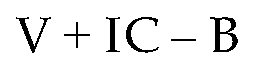
where—
V is the value of the net benefit to the charity at, or immediately after, the time when the disposal is made, whichever is less,
IC is the amount of the incidental costs of making the disposal to the individual making it, and
B is the total value of any benefits received in consequence of making the disposal by the individual making the disposal or a person connected with the individual.
(2)If the disposal is at an undervalue, the relievable amount is given by the formula—
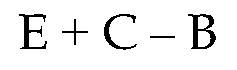
where—
E is the amount (if any) by which V (as defined in subsection (1)) exceeds the amount or value of the consideration for the disposal,
C is given by subsection (4), and
B is as defined in subsection (1).
(3)But if the amount given by the formula in subsection (1) or (2) is a negative amount, the relievable amount is nil.
(4)C is found by taking the following steps.
Step 1
Calculate the consideration for which the disposal is treated as made for the purposes of TCGA 1992 as a result of section 257(2)(a) of that Act (in case of disposal to charity etc, consideration to be such that no gain or loss accrues).
Step 2
Find the excess (if any) of the amount calculated at Step 1 over the amount or value of the consideration for the disposal.
If there is such an excess, C is the amount of that excess or, if less, the amount of the incidental costs of making the disposal to the individual making it.
If there is no such excess, C is nil.
(5)This section needs to be read with—
(a)section 435 (incidental costs of making disposal),
(b)section 436 (consideration), and
(c)sections 437 to 440 (value of net benefit to charity).
435Incidental costs of making disposalU.K.
References in section 434 to the incidental costs of making the disposal to the individual making it are to—
(a)fees, commission or remuneration paid for the professional services of a surveyor, valuer, auctioneer, accountant, agent or legal adviser which are wholly and exclusively incurred by the individual for the purposes of the disposal,
(b)costs of transfer or conveyance wholly and exclusively incurred by the individual for the purposes of the disposal,
(c)costs of advertising to find a buyer, and
(d)costs reasonably incurred in making any valuation or apportionment required for the purposes of this Chapter.
436ConsiderationU.K.
(1)For the purposes of the formula in section 434(2) consideration for the disposal is brought into account—
(a)without any discount for postponement of the right to receive any part of it,
(b)in the first instance, without regard to a risk of any part of it being irrecoverable, and
(c)in the first instance, without regard to the right to receive any part of it being contingent.
(2)If—
(a)any part of the consideration so brought into account subsequently proves to be irrecoverable, and
(b)a claim is made,
such adjustment as is required in consequence must be made.
(3)An adjustment under subsection (2) may be made by way of discharge or repayment of tax or otherwise.
Value of net benefit to charityU.K.
437Value of net benefit to charityU.K.
(1)For the purposes of this Chapter the value of the net benefit to a charity is—
(a)the [F1141relevant] value of the qualifying investment, or
(b)if the charity is, or becomes, subject to a disposal-related obligation, the [F1141relevant] value of the qualifying investment reduced by the total amount of the disposal-related liabilities of the charity.
[F1142(1A)In subsection (1) “relevant value” means—
(a)where subsection (1B) applies, the lower of the market value and the acquisition value, and
(b)otherwise, the market value.
(1B)This subsection applies where—
(a)the qualifying investment, or anything from which it derives or which it represents (whether in whole or in part and whether directly or indirectly), was acquired by the individual making the disposal within the period of 4 years ending with the day on which the disposal is made,
(b)the acquisition was made as part of a scheme, and
(c)the main purpose, or one of the main purposes, of the individual in entering into the scheme was to obtain relief, or an increased amount of relief, under this Chapter.
(1C)In subsection (1B) “scheme” includes any scheme, arrangement or understanding of any kind, whether or not legally enforceable, involving a single transaction or two or more transactions.]
(2)This section is supplemented by—
section 438 (market value of qualifying investments),
[F1143section 438A (acquisition value of qualifying investments),]
section 439 (meaning of “disposal-related obligation”), and
section 440 (meaning and amount of “disposal-related liability”).
Textual Amendments
F1141Word in s. 437(1) substituted (8.4.2010 with effect in accordance with Sch. 7 para. 9 of the amending Act) by Finance Act 2010 (c. 13), Sch. 7 para. 2(2)
F1142S. 437(1A)-(1C) inserted (8.4.2010 with effect in accordance with Sch. 7 para. 9 of the amending Act) by Finance Act 2010 (c. 13), Sch. 7 para. 2(3)
F1143Words in s. 437(2) inserted (8.4.2010 with effect in accordance with Sch. 7 para. 9 of the amending Act) by Finance Act 2010 (c. 13), Sch. 7 para. 2(4)
438Market value of qualifying investmentsU.K.
(1)The market value of a qualifying investment for the purposes of this Chapter is determined in accordance with sections 272 to 274 of TCGA 1992 (subject to Part 1 of Schedule 11 to that Act).
(2)But, in the case of an interest in an offshore fund for which separate buying and selling prices are published regularly by the managers of the fund, the market value for the purposes of this Chapter is equal to the buying price (that is the lower price) published on—
(a)the day of the disposal, or
(b)if none were published on that day, on the latest day on which the prices were published before that day.
[F1144438AAcquisition value of qualifying investmentsU.K.
(1)For the purposes of this Chapter the acquisition value of a qualifying investment disposed of by an individual is—
(a)where the qualifying investment was acquired by the individual within the period of 4 years ending with the day on which the disposal is made, the cost to the individual of acquiring it, or
(b)where something from which the qualifying investment derives or which it represents was so acquired, such proportion of the cost to the individual of acquiring that thing as is just and reasonable to attribute to the qualifying investment.
(2)A reference in subsection (1) to the cost to the individual of an acquisition is to—
(a)the consideration given by the individual for the acquisition, less
(b)any amount that is received in connection with the acquisition, by the individual or a person connected with the individual, as part of the scheme in question.]
Textual Amendments
F1144S. 438A inserted (8.4.2010 with effect in accordance with Sch. 7 para. 9 of the amending Act) by Finance Act 2010 (c. 13), Sch. 7 para. 3
439Meaning of “disposal-related obligation”U.K.
(1)In this Chapter an obligation is a “”, in relation to a qualifying investment, if condition A or condition B is met in relation to it.
(2)The obligation may be to any person (whether or not the individual making the disposal or a person connected with the individual).
(3)Condition A is that it is reasonable to suppose that the disposal of the qualifying investment to the charity would not have been made in the absence of the obligation.
(4)Condition B is that the obligation (whether in whole or in part) relates to, is framed by reference to, or is conditional on the charity receiving, the qualifying investment or a disposal-related investment.
(5)In applying condition A, all the circumstances must be taken into account (including, in particular, the difference in the value of the net benefit to the charity calculated under section 437(1)(a) and that value calculated under section 437(1)(b)).
(6)In subsection (4) “” means any of the following—
(a)an asset of the same class or description as the qualifying investment (irrespective of size, quantity or amount),
(b)an asset derived from, or representing, the qualifying investment, whether in whole or in part and whether directly or indirectly, and
(c)an asset from which the qualifying investment is derived, or which the qualifying investment represents, whether in whole or in part and whether directly or indirectly.
(7)In this Chapter “obligation” includes a reference to each of the following—
(a)a scheme, arrangement or understanding of any kind, whether or not legally enforceable, and
(b)a series of obligations (whether or not between the same parties).
440Meaning and amount of “disposal-related liability”U.K.
(1)In this Chapter a liability is a “disposal-related liability” in the case of a qualifying investment if it is a liability of the charity under a disposal-related obligation in relation to the qualifying investment.
(2)If the disposal-related obligation is contingent, the amount to be brought into account for the purposes of section 437 at any time in respect of the disposal-related liability, so far as contingent, is—
(a)if the contingency occurs, the amount or value of the liability actually incurred in consequence of the occurrence of the contingency, or
(b)if the contingency does not occur, nil.
Special provisions about qualifying interests in landU.K.
441Certificate required from charityU.K.
(1)This section applies if the qualifying investment is a qualifying interest in land.
(2)No individual may make a claim for relief under this Chapter unless the individual has received a certificate given by or on behalf of the charity.
(3)The certificate must—
(a)describe the qualifying interest in land,
(b)specify the date of the disposal, and
(c)state that the charity has acquired the qualifying interest in land.
442Qualifying interests in land held jointlyU.K.
(1)This section applies if the qualifying investment is a qualifying interest in land.
(2)It applies if two or more persons (“the owners”)—
(a)are jointly beneficially entitled to the qualifying interest in land, or
(b)are, taken together, beneficially entitled in common to the qualifying interest in land.
(3)Relief under this Chapter is available if—
(a)at least one of the owners is an individual, and
(b)all the owners dispose of the whole of their beneficial interests in the qualifying interest in land to the charity.
(4)Relief under this Chapter is available to each of the owners who is an individual.
(5)The amount of relief under this Chapter to be given to an individual is such share of the relievable amount as is allocated to the individual by an agreement made between those owners who are—
(a)individuals, or
(b)qualifying companies.
(6)A company is a qualifying company if—
(a)it is not itself a charity, and
F1145(b). . . . . . . . . . . . . . . . . . . . . . . . . . . . . . . .
(7)If one or more of the owners is not an individual—
(a)for the purpose of determining whether the owners' beneficial interests are disposed of as mentioned in subsection (3)(b) of this section, subsections (2) to (4) of section 433 apply as if references to an individual included a reference to a person who is not an individual, and
(b)the total amount of relief [F1146given, because of the disposal of the qualifying interest in land, under this Chapter and as a result of Chapter 3 of Part 6 of CTA 2010] is not to exceed the relievable amount.
Textual Amendments
F1145S. 442(6)(b) repealed (19.7.2007) by Finance Act 2007 (c. 11), Sch. 27 Pt. 2(10)
F1146Words in s. 442(7)(b) substituted (with effect in accordance with s. 1184(1) of the amending Act) by Corporation Tax Act 2010 (c. 4), s. 1184(1), Sch. 1 para. 528 (with Sch. 2)
443Calculation of relievable amount where joint disposal of interest in landU.K.
(1)This section applies for the purpose of calculating the relievable amount in a case where relief under this Chapter is available as a result of section 442(3).
(2)Calculate the relievable amount as if—
(a)the owners were a single individual, and
(b)the disposals of the owners' beneficial interests were a single disposal by that single individual of the whole of the beneficial interest in the qualifying interest in land.
(3)In particular, calculate the consideration mentioned at Step 1 in section 434(4) by—
(a)calculating, for each owner, the consideration for which the disposal of the owner's beneficial interest is treated as made for the purposes of TCGA 1992 as a result of section 257(2)(a) of that Act, and
(b)adding together all the consideration calculated under paragraph (a).
(4)Subsection (5) applies if one or more of the owners is neither—
(a)an individual, nor
(b)a qualifying company (see section 442(6)).
(5)In calculating the relievable amount make just and reasonable adjustments to reduce the relievable amount to reflect the fact that relief under this Chapter or [F1147as a result of Chapter 3 of Part 6 of CTA 2010] is not available to that owner or to those owners.
F1148(6). . . . . . . . . . . . . . . . . . . . . . . . . . . . . . . .
Textual Amendments
F1147Words in s. 443(5) substituted (with effect in accordance with s. 1184(1) of the amending Act) by Corporation Tax Act 2010 (c. 4), s. 1184(1), Sch. 1 para. 529 (with Sch. 2)
F1148S. 443(6) repealed (19.7.2007) by Finance Act 2007 (c. 11), Sch. 27 Pt. 2(10)
444Disqualifying eventsU.K.
(1)This section applies if the qualifying investment is a qualifying interest in land.
(2)If a disqualifying event occurs at any time in the provisional period, the following are treated as never having been entitled to relief under this Chapter in respect of the disposal of the qualifying interest in land—
(a)in a case to which section 442 does not apply, the individual who made the disposal, or
(b)in a case to which section 442 applies, each individual who is an owner.
(3)All such assessments and adjustments of assessments are to be made as are necessary to give effect to subsection (2).
(4)A disqualifying event occurs if a person mentioned in subsection (5) becomes, otherwise than for full consideration in money or money's worth—
(a)entitled to an interest or right in relation to all or part of the land to which the disposal relates, or
(b)party to an arrangement under which the person enjoys some right in relation to all or part of that land.
(5)The persons are—
(a)in a case to which section 442 does not apply—
(i)the individual who made the disposal, or
(ii)a person connected with that individual, and
(b)in a case to which section 442 applies—
(i)a person who is an owner, or
(ii)a person connected with such a person.
(6)A disqualifying event does not occur if a person becomes entitled to an interest or right as mentioned in subsection (4)(a) as a result of a disposition of property on death (whether the disposition is effected by will, under the law relating to intestacy or otherwise).
(7)“The provisional period” is the period beginning with the date of the disposal of the qualifying interest in land and ending with the fifth anniversary of the normal self-assessment filing date for the tax year in which the disposal was made.
SupplementaryU.K.
445Prohibition against double reliefU.K.
(1)If a claim is made for relief under this Chapter in respect of a disposal—
(a)section 108 of ITTOIA 2005 (gifts of trading stock to charities etc) does not apply in relation to the disposal, and
(b)no relief in respect of the disposal is allowable under any other provision of the Income Tax Acts.
(2)For the effect on capital gains tax or corporation tax on chargeable gains where an individual is entitled to relief under this Chapter, see section 257(2A) to (2C) of TCGA 1992 (gifts to charities etc).
446“Charity” to include exempt bodiesU.K.
In this Chapter “charity” includes—
(a)the Trustees of the National Heritage Memorial Fund, [F1149and]
(b)the Historic Buildings and Monuments Commission for England, F1150...
F1150(c). . . . . . . . . . . . . . . . . . . . . . . . . . . . . . . .
Textual Amendments
F1149Word in s. 446 inserted (1.4.2012) by The Public Bodies (Abolition of the National Endowment for Science, Technology and the Arts) Order 2012 (S.I. 2012/964), arts. 1(2), 3(1), Sch.
F1150S. 446(c) and preceding word omitted (1.4.2012) by virtue of The Public Bodies (Abolition of the National Endowment for Science, Technology and the Arts) Order 2012 (S.I. 2012/964), arts. 1(2), 3(1), Sch.
Chapter 4U.K.F1151Annual payments ...
Textual Amendments
F1151Words in Pt. 8 Ch. 4 heading omitted (with effect in accordance with s. 15(5) of the amending Act) by virtue of Finance Act 2013 (c. 29), s. 15(4)(c)
447Overview of ChapterU.K.
(1)This Chapter gives relief for some of the payments from which sums representing income tax must be deducted under Chapter 6 of Part 15 (deduction from annual payments and patent royalties).
(2)For the payments which attract relief, see sections 448 and 449.
448Relief for individualsU.K.
(1)This section applies to a payment made in a tax year if—
(a)the person who makes it is an individual,
(b)a sum representing income tax is required by section 900(2) F1152... (deduction from annual payments F1152...) to be deducted from it, and
(c)the payment is not deductible in calculating the individual's income from any source.
(2)The individual is entitled to relief for the tax year equal to the gross amount of the payment.
(3)But this is subject to the restrictions in subsection (4) F1153....
(4)The total amount of relief given under this section to an individual for a tax year cannot be greater than the amount of the individual's modified net income for the tax year (see section 1025).
(5)The relief is given by deducting the amount of the relief in calculating the individual's net income for the tax year (see Step 2 of the calculation in section 23).
Textual Amendments
F1152Words in s. 448(1)(b) omitted (with effect in accordance with s. 15(5) of the amending Act) by virtue of Finance Act 2013 (c. 29), s. 15(2)
F1153Words in s. 448(3) omitted (21.7.2008 with effect in accordance with s. 66(8) of the amending Act) by virtue of Finance Act 2008 (c. 9), s. 66(4)(l)(iii)
Modifications etc. (not altering text)
C87Ss. 448, 449 excluded (with effect in accordance with Sch. 18 para. 63 of the amending Act) by Finance Act 2016 (c. 24), Sch. 18 para. 20(8)
449Relief for other personsU.K.
(1)This section applies to a payment made in a tax year if—
(a)the person who makes it is not an individual,
(b)a sum representing income tax is required by section 901(3) F1154... (deduction from annual payments F1154...) to be deducted from it, and
(c)the payment is not deductible in calculating the person's income from any source.
(2)The person who makes the payment is entitled to relief for the tax year equal to the gross amount of the payment.
(3)But this is subject to the restrictions in subsections (4) and (5)F1155....
(4)Relief is not given for the payment so far as it is ineligible for relief (see section 450).
(5)The total amount of relief given under this section to a person for a tax year cannot be greater than the amount of the person's modified net income for the tax year (see section 1025).
(6)The relief is given by deducting the amount of the relief in calculating the person's net income for the tax year (see Step 2 of the calculation in section 23).
Textual Amendments
F1154Words in s. 449(1)(b) omitted (with effect in accordance with s. 15(5) of the amending Act) by virtue of Finance Act 2013 (c. 29), s. 15(3)
F1155Words in s. 449(3) omitted (21.7.2008 with effect in accordance with s. 66(8) of the amending Act) by virtue of Finance Act 2008 (c. 9), s. 66(4)(l)(iv)
Modifications etc. (not altering text)
C87Ss. 448, 449 excluded (with effect in accordance with Sch. 18 para. 63 of the amending Act) by Finance Act 2016 (c. 24), Sch. 18 para. 20(8)
450Other persons: payments ineligible for reliefU.K.
(1)This section sets out the circumstances in which a payment to which section 449 applies, or part of it, is ineligible for relief.
(2)The payment is ineligible for relief if, or so far as, it can lawfully be made only out of—
(a)capital, or
(b)income that is exempt from income tax.
(3)If the payment or any part of it is charged to capital, the payment or that part is ineligible for relief.
(4)If—
(a)the person who makes the payment treats it or any part of it as made out of income that is exempt from income tax, and
(b)the rights or obligations of any person are or may in the future be different from what they would have been if the payment or part had not been so treated,
the payment, or the part concerned, is ineligible for relief.
(5)If the payment or a part of it is not ultimately borne by the person who makes it, the payment or the part concerned is ineligible for relief.
(6)But subsection (5) does not apply to a payment or part of a payment if—
(a)the person who makes the payment is liable to income tax on an amount, and
(b)it is because the person receives that amount or benefits from it in some other way that the payment or the part concerned is not ultimately borne by that person.
Modifications etc. (not altering text)
C88S. 450 applied (6.4.2014) by The Unauthorised Unit Trusts (Tax) Regulations 2013 (S.I. 2013/2819), regs. 1(3), 19(2)
F1156451Special rule for persons affected by section 733 of ICTAU.K.
. . . . . . . . . . . . . . . . . . . . . . . . . . . . . . . .
Textual Amendments
F1156S. 451 omitted (21.7.2008 with effect in accordance with s. 66(8) of the amending Act) by virtue of Finance Act 2008 (c. 9), s. 66(4)(l)(v)
452The gross amount of a paymentU.K.
References in this Chapter to the gross amount of a payment are to the amount of the payment before deduction of the sum representing income tax deductible from it under Chapter 6 of Part 15 (deduction from annual payments and patent royalties).
Chapter 5U.K.Qualifying maintenance payments
453Tax reduction for qualifying maintenance paymentsU.K.
(1)An individual who makes a claim is entitled to a tax reduction for a tax year in which any qualifying maintenance payments made by the individual fall due.
(2)The amount of the tax reduction is 10% of—
(a)the total amount of qualifying maintenance payments made by the individual which fall due in the tax year, or
(b)if less, the amount specified in section 43 (tax reductions for married couples and civil partners: meaning of “the minimum amount”).
(3)The tax reduction is given effect at Step 6 of the calculation in section 23.
454Meaning of “qualifying maintenance payment”U.K.
(1)For the purposes of section 453 a payment is a “qualifying maintenance payment” if conditions A to E are met.
(2)Condition A is that the payment is a periodical payment made by—
(a)one of the parties to a marriage or civil partnership (including a marriage or civil partnership which has been dissolved or annulled) to or for the benefit of the other party and for the maintenance of the other party, or
(b)one parent of a child to the child's other parent for the maintenance of the child by the other parent or by one person to another for the maintenance by the other of a relevant child of theirs.
(3)Condition B is that—
(a)in a case falling within subsection (2)(a), either of the parties to the marriage or civil partnership was born before 6 April 1935, and
(b)in a case falling within subsection (2)(b), either the person who made the payment, or the person to whom it is made, was born before that date.
(4)Condition C is that the payment is made—
(a)under an order made by a court in [F1157the United Kingdom or] a member State, or
(b)under a written agreement the law applicable to which is the law of [F1158the United Kingdom or of a part of the United Kingdom or of] a member State or of a part of a member State.
(5)Condition D is that the payment is due at a time when—
(a)in a case falling within subsection (2)(a)—
(i)the two parties are not a married couple, or civil partners of each other, living together (see section 1011), and
(ii)the party to whom or for whose benefit the payment is made has not entered into a new marriage or a new civil partnership, and
(b)in a case falling within subsection (2)(b), the person making the payment and the person to whom the payment is made are not living together.
(6)Condition E is that relief from tax in respect of the payment is not available to the person making it under any provision of the Income Tax Acts other than section 453.
(7)In subsection (4) the reference to an order made by a court in [F1159the United Kingdom] includes a reference to a maintenance calculation.
(8)“Maintenance calculation” means—
(a)a maintenance calculation made under the Child Support Act 1991 (c. 48), or
(b)a maintenance assessment made under the Child Support (Northern Ireland) Order 1991 (S.I. 1991/2628 (N.I. 23)).
(9)In this section—
“child” means a person under 21 years of age,
“periodical payment” does not include an instalment of a lump sum, and
“relevant child”, in relation to any two persons, means a child who (not being a child who has been boarded out with them by a public authority or voluntary organisation) has been treated by both of them as a child of their family.
Textual Amendments
F1157Words in s. 454(4)(a) inserted (with effect in accordance with reg. 1(2) of the amending S.I.) by The Income Tax (Qualifying Maintenance Payments) (Amendment) Regulations 2022 (S.I. 2022/169), regs. 1(1), 2(2)(a)
F1158Words in s. 454(4)(b) inserted (with effect in accordance with reg. 1(2) of the amending S.I.) by The Income Tax (Qualifying Maintenance Payments) (Amendment) Regulations 2022 (S.I. 2022/169), regs. 1(1), 2(2)(b)
F1159Words in s. 454(7) substituted (with effect in accordance with reg. 1(2) of the amending S.I.) by The Income Tax (Qualifying Maintenance Payments) (Amendment) Regulations 2022 (S.I. 2022/169), regs. 1(1), 2(3)
455Child support maintenance paymentsU.K.
(1)Condition A in section 454(2) is treated as met in relation to a payment if—
(a)it is a periodical payment made under a maintenance calculation by any person,
(b)another person is, for the purposes of the Child Support Act 1991 or (as the case may be) the Child Support (Northern Ireland) Order 1991 (S.I. 1991/2628 (N.I. 23)), a parent of the child or children with respect to whom the calculation has effect,
(c)the calculation was not made under section 7 of the Child Support Act 1991 (right of child in Scotland to apply for maintenance calculation), and
(d)any of the conditions mentioned in subsection (2) is met.
(2)The conditions are that—
(a)the payment is made to the Secretary of State in accordance with regulations made under section 29 of the Child Support Act 1991 by virtue of subsection (3)(a)(ii) of that section (collection of child support maintenance: payment to or through Secretary of State),
(b)the payment is retained by the Secretary of State in accordance with regulations made under section 41 of that Act (arrears of child support maintenance),
(c)the payment is made to the Department of Health, Social Services and Public Safety for Northern Ireland in accordance with regulations made under Article 29 of the Child Support (Northern Ireland) Order 1991 (S.I. 1991/2628 (N.I. 23)), by virtue of paragraph (3)(a)(ii) of that Article (collection of child support maintenance: payment to or through Department), or
(d)the payment is retained by the Department of Health, Social Services and Public Safety for Northern Ireland in accordance with regulations made under Article 38 of that Order (arrears of child support maintenance).
(3)“Maintenance calculation” and “periodical payment” have the meanings given in section 454(8) and (9).
456Payments under orders for recovery of benefit etcU.K.
(1)Condition A in section 454(2) is treated as met in relation to a payment made by any person if—
(a)it is a periodical payment made to the Secretary of State or to the Department of Health, Social Services and Public Safety for Northern Ireland, and
(b)it is made under a recovery of benefit order.
(2)A “recovery of benefit order” is—
(a)one made under section 106 of the Social Security Administration Act 1992 (c. 5) or section 101 of the Social Security Administration (Northern Ireland) Act 1992 (c. 8) (recovery of expenditure on benefit from person liable for maintenance) in respect of income support claimed by any other person, or
(b)one made by virtue of section 23 of the Jobseekers Act 1995 (c. 18) or Article 25 of the Jobseekers (Northern Ireland) Order 1995 (S.I. 1995/2705 (N.I. 15)) (recovery of sums in respect of maintenance), in respect of an income-based jobseeker's allowance claimed by any other person.
(3)In subsection (2) “income-based jobseeker's allowance” has the same meaning as in—
(a)the Jobseekers Act 1995, or
(b)for Northern Ireland, the Jobseekers (Northern Ireland) Order 1995 (S.I. 1995/2705 (N.I. 15)).
(4)“Periodical payment” has the meaning given in section 454(9).
Chapter 6U.K.Miscellaneous other reliefs
Payments for life insurance etcU.K.
457Payments to trade unionsU.K.
(1)An individual who makes a payment to a trade union in a tax year is entitled to relief for the tax year if—
(a)part of the payment (the “qualifying amount”) is attributable to the provision of superannuation, life insurance or funeral benefits,
(b)the individual meets the requirements of section 460 (residence etc), and
(c)the individual makes a claim.
(2)The amount of the relief is equal to half the qualifying amount.
(3)But the maximum amount of relief under this section to which an individual is entitled for a tax year is £100.
(4)The relief is given by deducting the amount of the relief in calculating the individual's net income for the tax year (see Step 2 of the calculation in section 23).
(5)“Trade union” has the meaning given by section 1 of the Trade Union and Labour Relations (Consolidation) Act 1992 (c. 52).
458Payments to police organisationsU.K.
(1)An individual who makes a payment to a police organisation in a tax year is entitled to relief for the tax year if—
(a)part of the payment (the “qualifying amount”) is attributable to the provision of superannuation, life insurance or funeral benefits,
(b)the sum of the qualifying amounts for all the payments which the individual makes in the tax year is at least £20,
(c)the individual meets the requirements of section 460 (residence etc), and
(d)the individual makes a claim.
(2)The amount of the relief is equal to half the qualifying amount.
(3)But the maximum amount of relief under this section to which an individual is entitled for a tax year is £100.
(4)The relief is given by deducting the amount of the relief in calculating the individual's net income for the tax year (see Step 2 of the calculation in section 23).
(5)“Police organisation” means an organisation of persons in police service.
F1160459Payments for benefit of family membersU.K.
. . . . . . . . . . . . . . . . . . . . . . . . . . . . . . . .
Textual Amendments
F1160S. 459 omitted (17.7.2012) (with effect in accordance with Sch. 39 para. 32(6) of the amending Act) by virtue of Finance Act 2012 (c. 14), Sch. 39 para. 32(1)
460Residence etc of claimantsU.K.
(1)This section applies in relation to an individual who claims—
(a)relief under section 457 or 458 (payments to trade unions and police organisations) for a tax year, F1161...
F1161(b). . . . . . . . . . . . . . . . . . . . . . . . . . . . . . . .
(2)The individual meets the requirements of this section if the individual—
(a)is UK resident for the tax year, or
(b)meets the condition in subsection (3).
(3)An individual meets the condition in this subsection if, at any time in the tax year, the individual—
(a)is resident in the Isle of Man or the Channel Islands,
(b)has previously resided in the United Kingdom and is resident abroad for the sake of the health of—
(i)the individual, or
(ii)a member of the individual's family who is resident with the individual,
(c)is a person who is or has been employed in the service of the Crown,
(d)is employed in the service of any territory under Her Majesty's protection,
(e)is employed in the service of a missionary society, or
(f)is a person whose late spouse or late civil partner was employed in the service of the Crown.
[F1162(4)See also—
(a)section 809G, in relation to tax years before 2025-26 where a claim for the remittance basis to apply is made, and
(b) section 845E of ITTOIA 2005, in relation to tax years from 2025-26 where a foreign income claim, a foreign employment election or a foreign gain claim is made.
Those sections provide that where an individual makes such a claim or election for a tax year, the individual is not entitled to any relief under section 457 or 458 for that tax year.]
Textual Amendments
F1161S. 460(1)(b) and preceding word omitted (17.7.2012) (with effect in accordance with Sch. 39 para. 32(6) of the amending Act) by virtue of Finance Act 2012 (c. 14), Sch. 39 para. 32(2)(c)(i)
F1162S. 460(4) substituted (for the tax year 2025-26 and subsequent tax years) by Finance Act 2025 (c. 8), s. 37(2)(d)(4)
Patent royalty receiptsU.K.
461Spreading of patent royalty receiptsU.K.
(1)A person who makes a claim is entitled to a tax reduction for a tax year in which the person receives a payment of a royalty or other sum if—
(a)the payment is in respect of the use of a patent,
(b)the use of the patent has extended over a period of two years or more, and
(c)the payment is one from which a sum representing income tax is required to be deducted under section 903.
(2)The amount of the tax reduction is the difference between—
(a)the amount of income tax payable by the person in respect of the payment, and
(b)the total amount of income tax which would have been payable by the person in respect of the payment on the assumptions in subsection (3).
(3)Those assumptions are that—
(a)the payment was made in a number of equal instalments at yearly intervals,
(b)the last instalment was paid on the date on which the payment was in fact made, and
(c)the number of instalments was the same as the number of complete years in the period over which the use of the patent extended, but subject to a maximum of 6.
(4)The tax reduction is given effect at Step 6 of the calculation in section 23.
Part 9U.K.Special rules about settlements and trustees
Chapter 1U.K.Introduction
462Overview of PartU.K.
(1)This Part sets out special rules about settlements and trustees.
(2)Chapter 2 contains general provision about settlements and trustees, for example, definitions of expressions relating to settlements.
(3)Chapter 3 provides for income tax to be charged at [F1163the property trust rate, the savings trust rate or] the dividend trust rate or at the trust rate on certain amounts included in the net income of the trustees of a settlement.
(4)Chapter 4 provides—
(a)for expenses of the trustees of a settlement to be set against the trustees' trust rate income (see section 463(2)), and
(b)consequentially, for the amount of the trust rate income to be reduced.
(5)Chapter 5 qualifies section 479 (which is in Chapter 3) in the case of the trustees of [F1164a Schedule 2] share incentive plan.
F1165(6). . . . . . . . . . . . . . . . . . . . . . . . . . . . . . . .
(7)Chapter 7 deals with the treatment of payments made by the trustees of a settlement in the exercise of a discretion.
This affects the way the trustees and the recipients of such payments are taxed.
(8)Chapter 8 deals with the treatment of expenses of the trustees of a settlement where income arising to the trustees is, before being distributed, the income of a person other than the trustees themselves.
This affects the way that other person is taxed on that income.
F1166(9). . . . . . . . . . . . . . . . . . . . . . . . . . . . . . . .
(10)Chapter 10 deals with heritage maintenance settlements.
(11)See also Part 10 for special rules about charitable trusts [F1167 and section 838A for special provision about asbestos compensation settlements].
(12)See also Chapter 4 of Part 2 of FA 2005 for provision about trusts with vulnerable beneficiaries.
Textual Amendments
F1163Words in s. 462(3) inserted (for the tax year 2027-28 and subsequent tax years) by Finance Act 2026 (c. 11), s. 6(8), Sch. 1 para. 22
F1164Words in s. 462(5) substituted (6.4.2014) by Finance Act 2014 (c. 26), Sch. 8 paras. 69, 89 (with Sch. 8 paras. 90-96)
F1165S. 462(6) omitted (for the tax year 2024-25 and subsequent tax years) by virtue of Finance (No. 2) Act 2023 (c. 30), Sch. 2 paras. 13(3)(g), 14(4)
F1166S. 462(9) omitted (6.4.2014) by virtue of The Unauthorised Unit Trusts (Tax) Regulations 2013 (S.I. 2013/2819), regs. 1(3), 37(5) (with reg. 32)
F1167Words in s. 462(11) inserted (16.12.2010 with effect in accordance with Sch. 14 para. 3(4) of the amending Act) by Finance (No. 3) Act 2010 (c. 33), Sch. 14 para. 3(2)
463Interpretation of PartU.K.
(1)In this Part—
“other income” means income which is [F1168not property income, dividends income or] savings income, and
“the trustees of a settlement” does not include personal representatives.
(2)References in this Part to the trust rate income for a tax year of the trustees of a settlement are references to the trustees' net income for the tax year so far as it includes amounts on which income tax is charged at [F1169the property trust rate, the savings trust rate or] the dividend trust rate or at the trust rate (ignoring Chapters 4 and 6).
Textual Amendments
F1168Words in s. 463(1) substituted (for the tax year 2027-28 and subsequent tax years) by Finance Act 2026 (c. 11), s. 6(8), Sch. 1 para. 23(a)
F1169Words in s. 463(2) inserted (for the tax year 2027-28 and subsequent tax years) by Finance Act 2026 (c. 11), s. 6(8), Sch. 1 para. 23(b)
464Scottish trustsU.K.
(1)This section applies if—
(a)income arises to trustees under a trust having effect under the law of Scotland,
(b)the trustees are UK resident, and
(c)a beneficiary under the trust (“B”) would have an equitable right in possession to the income if the trust had effect under the law of England and Wales.
(2)B is treated for income tax purposes as having an equitable right in possession to the income (even though B has no such right under the law of Scotland).
Chapter 2U.K.General provision about settlements and trustees
Modifications etc. (not altering text)
C89Pt. 9 Ch. 2 applied (with effect in accordance with s. 1184(1) of the amending Act) by Corporation Tax Act 2010 (c. 4), ss. 1169(1), 1184(1) (with Sch. 2)
OverviewU.K.
465Overview of Chapter and interpretationU.K.
(1)This Chapter contains general provision about settlements and trustees.
(2)Section 466 explains what is meant by references to settled property.
(3)Sections 467 to 473 explain what is meant by references to a settlor in relation to a settlement.
(4)Sections 474 to 476 treat the trustees of a settlement as a single and distinct person and set out rules in relation to the residence F1170... of that person.
(5)Section 477 relates to sub-fund elections under paragraph 1 of Schedule 4ZA to TCGA 1992.
(6)Section 478 is about references to settled property etc in regulations.
(7)For the purposes of this Chapter property is derived from other property if—
(a)it derives (directly or indirectly and wholly or partly) from that other property or any part of that other property, and
(b)in particular, if it derives (directly or indirectly and wholly or partly) from income from that other property or any part of that other property.
(8)In this Chapter “arrangements” includes any scheme, agreement or understanding, whether or not legally enforceable.
Textual Amendments
F1170Words in s. 465(4) omitted (with effect in accordance with Sch. 46 para. 72 of the amending Act) by virtue of Finance Act 2013 (c. 29), Sch. 46 para. 55
Settled propertyU.K.
466Meaning of “settled property” etcU.K.
(1)This section applies for the purposes of the Income Tax Acts, except so far as, in those Acts, the context otherwise requires.
(2)“Settled property” means any property held in trust other than property excluded by subsection (3).
(3)Property is excluded for the purposes of subsection (2) if—
(a)it is held by a person as nominee for another person,
(b)it is held by a person as trustee for another person who is absolutely entitled to the property as against the trustee, or
(c)it is held by a person as trustee for another person who would be absolutely entitled to the property as against the trustee if that other person were not an infant or otherwise lacking legal capacity.
(4)References, however expressed, to property comprised in a settlement are references to settled property.
(5)A person is absolutely entitled to property as against a trustee if the person has the exclusive right to direct how the property is to be dealt with (subject to the trustees' right to use the property for the payment of duty, taxes, costs or other outgoings).
(6)References to a person who is or would be so entitled include references to two or more persons who are or would be jointly absolutely entitled as against the trustee.
Modifications etc. (not altering text)
C90S. 466(4) excluded (with effect in accordance with s. 1184(1) of the amending Act) by Corporation Tax Act 2010 (c. 4), ss. 1123(3)(b), 1184(1) (with Sch. 2)
SettlorsU.K.
467Meaning of “settlor” etcU.K.
(1)In the Income Tax Acts (except where the context otherwise requires) “settlor”, in relation to a settlement, means the person, or any of the persons, who has made the settlement.
(2)In the Income Tax Acts (except where the context otherwise requires) a person is a settlor of property if—
(a)the property is settled property because of—
(i)the person's having made the settlement, or
(ii)an event which leads to the person being treated by this Chapter as having made the settlement, or
(b)the property derives from settled property within paragraph (a).
(3)A person (“S”) is treated for the purposes of the Income Tax Acts as having made a settlement if—
(a)S has made or entered into the settlement (directly or indirectly), or
(b)the settled property, or property from which the settled property derives, is or includes property within subsection (4).
(4)Property is within this subsection if—
(a)the settlement arose on S's death (whether by S's will, on S's intestacy or in any other way), and
(b)immediately before S's death, the property was property of S—
(i)which was disposable property (see section 468), or
(ii)which represented S's severable share in any property to which S was beneficially entitled as joint tenant.
(5)In particular, S is treated for the purposes of the Income Tax Acts as having made a settlement if—
(a)S has provided property for the purposes of the settlement (directly or indirectly), or
(b)S has undertaken to do that.
(6)If a person (“A”) makes or enters into a settlement in accordance with reciprocal arrangements with another person (“B”)—
(a)B is treated for the purposes of the Income Tax Acts as having made the settlement, and
(b)A is not to be treated for the purposes of the Income Tax Acts as having made the settlement just because of the reciprocal arrangements.
(7)This section needs to be read with sections 469 to 473.
(8)This section and sections 469 to 473 do not apply for the purposes of Chapter 5 of Part 5 of ITTOIA 2005 (amounts treated as income of settlors).
468Meaning of “disposable property”U.K.
(1)This section applies for the purposes of section 467(4)(b)(i).
(2)Property is disposable if S could have disposed of it by S's will.
(3)In working out whether any property could have been so disposed of—
(a)make the assumptions mentioned in subsection (4), and
(b)ignore the powers mentioned in subsection (5).
(4)Assume that—
(a)S is of full age and capacity,
(b)the property is situated in England and Wales, and
(c)if S is not domiciled in the United Kingdom, S is domiciled in England and Wales.
(5)The powers to be ignored are—
(a)any power of appointment giving S the right to dispose of the property, and
(b)any testamentary power conferred by statute to dispose of entailed interests.
469Person ceasing to be a settlorU.K.
(1)A person (“S”) who is a settlor in relation to a settlement ceases to be so when the following condition is met.
(2)The condition is that—
(a)no property of which S is the settlor is comprised in the settlement,
(b)S has not undertaken to provide property (directly or indirectly) for the purposes of the settlement in the future, and
(c)S has not made reciprocal arrangements with another person for that other person to enter into the settlement in the future.
470Transfers between settlementsU.K.
(1)Section 471 applies in relation to a transfer of property from the trustees of one settlement (“settlement 1”) to the trustees of another settlement (“settlement 2”) if the transfer—
(a)is not for full consideration,
(b)is not by way of a bargain made at arm's length, and
(c)is not excluded by subsection (2).
(2)A transfer of property is excluded for the purposes of subsection (1) if—
(a)it occurs only because of the assignment by a beneficiary under settlement 1 of an interest in that settlement to the trustees of settlement 2,
(b)it occurs only because of the exercise of a general power of appointment, or
(c)section 473(4) applies in relation to it.
(3)In this section “transfer of property” means—
(a)a disposal of property by the trustees of settlement 1, and
(b)the acquisition by the trustees of settlement 2 of—
(i)property disposed of by the trustees of settlement 1, or
(ii)property created by the disposal.
(4)For the purposes of subsection (3) there is an acquisition or disposal of property if there would be an acquisition or disposal of property for the purposes of TCGA 1992.
471Identification of settlor following transfer covered by section 470U.K.
(1)If there is a transfer of property in relation to which this section applies, then the following subsections apply for the purposes of the Income Tax Acts, except so far as, in those Acts, the context otherwise requires.
(2)The settlor (or each settlor) of the property disposed of by the trustees of settlement 1 (“the disposed property”) is treated from the time of the disposal as having made settlement 2.
(3)If there is more than one settlor of the disposed property, each of them is treated in relation to settlement 2 as the settlor of a proportionate part of the property acquired by the trustees of settlement 2 on the disposal.
(4)So far as the disposed property—
(a)was provided for the purposes of settlement 1, or
(b)was derived from property so provided,
the property acquired by the trustees of settlement 2 on the disposal is treated from the time of the disposal as having been provided for the purposes of settlement 2.
(5)If as a result of subsection (4), property (“the transferred property”) is treated as having been provided for the purposes of settlement 2—
(a)the person who provided the disposed property, or the property from which it was derived, for the purposes of settlement 1 is treated as having provided the transferred property for the purposes of settlement 2, and
(b)if more than one person provided the disposed property, or the property from which it was derived, for the purposes of settlement 1, each of them is treated as having provided a proportionate part of the transferred property for the purposes of settlement 2.
472Settlor where property becomes settled because of variation of will etcU.K.
(1)This section applies if—
(a)a disposition of property following a person's death is varied, and
(b)section 62(6) of TCGA 1992 applies in relation to the variation.
(2)If property becomes settled property because of the variation (and would not, but for the variation, have become settled property), a person within subsection (3) is treated for the purposes of the Income Tax Acts (except where the context otherwise requires)—
(a)as having made the settlement, and
(b)as having provided the property for the purposes of the settlement.
(3)The persons within this subsection are—
(a)a person who immediately before the variation was entitled to the property, or to property from which it derived, absolutely as legatee,
(b)a person who immediately before the variation would have been so entitled if that person had not been an infant or otherwise lacking legal capacity,
(c)a person who, but for the variation, would have become so entitled, and
(d)a person who, but for the variation, would have become so entitled if that person had not been an infant or otherwise lacking legal capacity.
(4)For the purposes of subsection (3)—
(a)“legatee” includes a person taking property—
(i)under a testamentary disposition or on an intestacy or partial intestacy, whether beneficially or as trustee, or
(ii)under a donatio mortis causa, and
(b)a person who is a legatee as a result of paragraph (a)(ii) is treated as acquiring the property when the donor dies.
(5)For the purposes of subsection (4)(a) property taken under a testamentary disposition or on an intestacy or partial intestacy includes any property appropriated by the personal representatives in or towards satisfaction of—
(a)a pecuniary legacy, or
(b)any other interest or share in the property devolving under the disposition or intestacy.
473Deceased person as settlor where variation of will etcU.K.
(1)This section applies if—
(a)a disposition of property following the death of a person (“D”) is varied, and
(b)section 62(6) of TCGA 1992 applies in relation to the variation.
(2)If—
(a)property would have become comprised in a settlement within subsection (3), but
(b)as a result of the variation, the property, or property derived from it, becomes comprised in another settlement,
D is treated for the purposes of the Income Tax Acts (except where the context otherwise requires) as having made the other settlement.
(3)A settlement is within this subsection if—
(a)it arose on D's death (whether by D's will or on D's intestacy or in any other way), or
(b)it was in existence immediately before D's death (whether or not D was a settlor in relation to it).
(4)If—
(a)immediately before the variation property is comprised in a settlement and is property of which D is a settlor, and
(b)immediately after the variation the property, or property derived from it, becomes comprised in another settlement,
D is treated for the purposes of the Income Tax Acts (except where the context otherwise requires) as having made the other settlement.
(5)A settlement treated as made by D as a result of this section is treated for the purposes of the Income Tax Acts as made by D immediately before D's death.
(6)But subsection (5) does not apply in relation to a settlement which arose on D's death.
TrusteesU.K.
474Trustees of settlement to be treated as a single and distinct personU.K.
(1)For the purposes of the Income Tax Acts (except where the context otherwise requires), the trustees of a settlement are together treated as if they were a single person (distinct from the persons who are the trustees of the settlement from time to time).
(2)If different parts of the settled property in relation to a settlement are vested in different bodies of trustees, subsection (1) and sections 475 and 476 apply in relation to the different bodies as if they were all one body.
(3)The cases covered by subsection (2) include cases where settled land (within the meaning of the Settled Land Act 1925 (c. 18)) is vested in the tenant for life and investments representing capital money are vested in the trustees of the settlement.
475Residence of trusteesU.K.
[F1171(1)This section applies for income tax purposes and explains how to work out, in relation to the trustees of a settlement, whether or not the single person mentioned in section 474(1) is UK resident.]
(2)If at a time either condition A or condition B is met, then at that time the single person is [F1172UK resident].
(3)If at a time neither condition A nor condition B is met, then at that time the single person is [F1173non-UK resident].
(4)Condition A is met at a time if, at that time, all the persons who are trustees of the settlement are UK resident.
(5)Condition B is met at a time if at that time—
(a)at least one person who is a trustee of the settlement is UK resident and at least one such person is non-UK resident, and
(b)a settlor in relation to the settlement meets condition C (see section 476).
(6)If at a time a person (“T”) who is a trustee of the settlement acts as trustee in the course of a business which T carries on in the United Kingdom through a branch, agency or permanent establishment there, then for the purposes of subsections (4) and (5) assume that T is UK resident at that time.
[F1174(7)Subsection (8) applies if—
(a)an individual becomes or ceases to be a trustee of the settlement during a tax year,
(b)that year is a split year as respects the individual, and
(c)the only period in that year when the individual is a trustee of the settlement falls wholly within the overseas part of the year.
(8)The individual is to be treated for the purposes of subsections (4) and (5) as if he or she had been non-UK resident for the year (and hence for the period in that year when he or she was a trustee of the settlement).
(9)But subsection (8) is subject to subsection (6) and, accordingly, an individual who is treated under subsection (8) as having been non-UK resident is, in spite of that, to be treated as UK resident whenever the individual acts as mentioned in subsection (6).]
Textual Amendments
F1171S. 475(1) substituted (with effect in accordance with Sch. 46 para. 72 of the amending Act) by Finance Act 2013 (c. 29), Sch. 46 para. 56(2)
F1172Words in s. 475(2) substituted (with effect in accordance with Sch. 46 para. 72 of the amending Act) by Finance Act 2013 (c. 29), Sch. 46 para. 56(3)
F1173Words in s. 475(3) substituted (with effect in accordance with Sch. 46 para. 72 of the amending Act) by Finance Act 2013 (c. 29), Sch. 46 para. 56(4)
F1174S. 475(7)-(9) inserted (with effect in accordance with Sch. 45 para. 153(2) of the amending Act) by Finance Act 2013 (c. 29), Sch. 45 para. 103
476How to work out whether settlor meets condition CU.K.
(1)This section applies for the purpose of working out whether a settlor (“S”) in relation to a settlement meets condition C at a time.
(2)If—
(a)the settlement arose on S's death (whether by S's will, on S's intestacy or in any other way), and
(b)immediately before S's death, S was UK resident F1175... F1176...,
then S meets condition C from the time of S's death until S ceases to be a settlor in relation to the settlement.
(3)If—
(a)the settlement is not within subsection (2)(a), and
(b)at a time when S made the settlement (or is treated for the purposes of the Income Tax Acts as making the settlement), S was UK resident F1177... F1178...,
then S meets condition C from that time until S ceases to be a settlor in relation to the settlement.
[F1179(3ZA)In relation to a settlement—
(a)that arose before 6 April 2025 on S’s death, or
(b)that S made (or is treated for the purposes of the Income Tax Acts as having made) before 6 April 2025,
subsections (2)(b) and (3)(b) have effect as if after “UK resident” there were inserted “or domiciled in the United Kingdom”.]
[F1180(3A)Section 835BA (deemed domicile) applies for the purposes of [F1181subsection (3ZA)].]
(4)Further, if—
(a)there is a transfer of property in relation to which section 471 applies,
(b)S is a settlor in relation to settlement 2 as a result of that section, and
(c)immediately before the disposal by the trustees of settlement 1, S meets condition C as a settlor in relation to settlement 1 as a result of [F1182this section],
then S meets condition C as a settlor in relation to settlement 2 from the time S becomes such a settlor until S ceases to be such a settlor.
(5)“Settlement 1” and “settlement 2” are to be read in accordance with section 470(1).
Textual Amendments
F1175Words in s. 476(2)(b) omitted (with effect in accordance with Sch. 46 para. 72 of the amending Act) by virtue of Finance Act 2013 (c. 29), Sch. 46 para. 57(2) (with Sch. 46 para. 57(4))
F1176Words in s. 476(2)(b) omitted (for the tax year 2025-26 and subsequent tax years) by virtue of Finance Act 2025 (c. 8), s. 40(4), Sch. 9 para. 11(2)
F1177Words in s. 476(3)(b) omitted (with effect in accordance with Sch. 46 para. 72 of the amending Act) by virtue of Finance Act 2013 (c. 29), Sch. 46 para. 57(3) (with Sch. 46 para. 57(5))
F1178Words in s. 476(3)(b) omitted (for the tax year 2025-26 and subsequent tax years) by virtue of Finance Act 2025 (c. 8), s. 40(4), Sch. 9 para. 11(2)
F1179S. 476(3ZA) inserted (for the tax year 2025-26 and subsequent tax years) by Finance Act 2025 (c. 8), s. 40(4), Sch. 9 para. 11(3)
F1180S. 476(3A) inserted (with effect in accordance with Sch. 8 para. 12(2) of the amending Act) by Finance (No. 2) Act 2017 (c. 32), Sch. 8 para. 12(1)
F1181Words in s. 476(3A) substituted (for the tax year 2025-26 and subsequent tax years) by Finance Act 2025 (c. 8), s. 40(4), Sch. 9 para. 11(4)
F1182Words in s. 476(4)(c) substituted (for the tax year 2025-26 and subsequent tax years) by Finance Act 2025 (c. 8), s. 40(4), Sch. 9 para. 11(5)
Sub-fundsU.K.
477Sub-fund elections under Schedule 4ZA to TCGA 1992U.K.
(1)This section applies for the purposes of the Income Tax Acts (except so far as, in those Acts, the context otherwise requires) if the trustees of a settlement have made a sub-fund election under paragraph 1 of Schedule 4ZA to TCGA 1992.
(2)The sub-fund settlement is treated as a settlement that is created at the relevant time.
(3)Each trustee of the trusts on which property comprised in the sub-fund settlement is held is treated as a trustee of the sub-fund settlement.
(4)A person (“T”) who is a trustee of the sub-fund settlement is treated, from the relevant time, as having ceased to be a trustee of the principal settlement unless T is also a trustee of trusts on which property comprised in the principal settlement is held.
(5)A person (“T”) who is a trustee of the principal settlement is not to be treated as a trustee of the sub-fund settlement unless T is also a trustee of trusts on which property comprised in the sub-fund settlement is held.
(6)The trustees of the sub-fund settlement are treated as having become, at the relevant time, absolutely entitled to the property comprised in that settlement as against the trustees of the principal settlement.
(7)In this section—
“principal settlement” has the meaning given by paragraph 1 of Schedule 4ZA to TCGA 1992,
“the relevant time” means the time when the sub-fund election is treated as having taken effect under paragraph 2 of that Schedule,
“sub-fund election” has the meaning given by paragraph 2 of that Schedule, and
“sub-fund settlement” has the meaning given by paragraph 1 of that Schedule.
RegulationsU.K.
478References to settled property etc in regulationsU.K.
For the purposes of regulations (whenever made) made under a provision of the Income Tax Acts—
(a)references to settled property, a settlor or trustees are to be read in accordance with this Chapter, and
(b)references to the trustees of a trust are to be read as references to the trustees of a settlement.
Chapter 3U.K.Special rates for trustees' income
479Trustees' accumulated or discretionary income to be charged at special ratesU.K.
(1)This section applies if—
(a)accumulated or discretionary income arises to the trustees of a settlement, and
(b)the income does not arise under a [F1183charitable trust].
(2)Income tax is charged on the income at the rates referred to in this section instead of at the rates which would otherwise apply (for which see Chapter 2 of Part 2 (rates at which income tax is charged)).
[F1184(2A)Income tax is charged on the income at the property trust rate so far as the income is property income.
(2B)Income tax is charged on the income at the savings trust rate so far as the income is savings income.]
(3)Income tax is charged on the income at the dividend trust rate so far as the income is dividend income.
(4)Otherwise, income tax is charged on the income at the trust rate.
(5)Section 488 disapplies this section in cases relating to [F1185Schedule 2] share incentive plans.
Textual Amendments
F1183Words in s. 479(1)(b) substituted (8.3.2012) (with effect in accordance with art. 17 of the commencing S.I.) by Finance Act 2010 (c. 13), Sch. 6 paras. 23(2), 34(2); S.I. 2012/736, art. 17
F1184S. 479(2A)(2B) inserted (for the tax year 2027-28 and subsequent tax years) by Finance Act 2026 (c. 11), s. 6(8), Sch. 1 para. 24
F1185Words in s. 479(5) substituted (6.4.2014) by Finance Act 2014 (c. 26), Sch. 8 paras. 70, 89 (with Sch. 8 paras. 90-96)
Modifications etc. (not altering text)
C91S. 479 excluded (6.4.2014) by The Unauthorised Unit Trusts (Tax) Regulations 2013 (S.I. 2013/2819), regs. 1(3), 12(3)(d)
480Meaning of “accumulated or discretionary income”U.K.
(1)Income is accumulated or discretionary income so far as—
(a)it must be accumulated, or
(b)it is payable at the discretion of the trustees or any other person,
and it is not excluded by subsection (3).
(2)The cases covered by subsection (1)(b) include cases where the trustees have, or any other person has, any discretion over one or more of the following matters—
(a)whether, or the extent to which, the income is to be accumulated,
(b)the persons to whom the income is to be paid, and
(c)how much of the income is to be paid to any person.
(3)Income is excluded for the purposes of subsection (1) so far as—
(a)before being distributed, it is the income of any person other than the trustees,
(b)it is income from property within subsection (4), or
(c)it is income from service charges [F1186which are paid in respect of dwellings in the United Kingdom and are held on trust.]
(4)Property is within this subsection if it—
(a)is held for the purposes of a superannuation fund to which section 615(3) of ICTA (superannuation funds relating to undertakings outside the UK) applies, but
(b)is not held as a member of a property investment LLP.
[F1187(5)In subsection (3)(c) “service charges” has the meaning given by section 18 of the Landlord and Tenant Act 1985 (but as if that section also applied in relation to dwellings in Scotland and Northern Ireland).]
Textual Amendments
F1186Words in s. 480(3)(c) substituted (with effect in accordance with s. 65(4) of the amending Act) by Finance Act 2007 (c. 11), s. 65(2)
F1187S. 480(5) substituted for s. 480(5)(6) (with effect in accordance with s. 65(4) of the amending Act) by Finance Act 2007 (c. 11), s. 65(3)
481Other amounts to be charged at special rates for trusteesU.K.
(1)This section applies if—
(a)the trustees of a settlement are liable for income tax on an amount of a type set out in section 482,
(b)the trustees are not trustees of a unit trust scheme, and
(c)the amount is not income arising under a [F1188charitable trust].
(2)Income tax is charged on the amount at one of the rates referred to in this section instead of at the rate which would otherwise apply (for which see Chapter 2 of Part 2 (rates at which income tax is charged)).
This is subject to subsection (5).
(3)If the amount is within Type 1 [F1189or Type 12] as set out in section 482, income tax is charged on the amount at the dividend trust rate.
[F1190(3A)If the amount is within Type 2, 6 or 7 as set out in section 482, income tax is charged on the amount at the savings trust rate.
(3B)If the amount is within Type 5 as set out in section 482, income tax is charged on the amount at the property trust rate.]
(4)Otherwise, income tax is charged on the amount at the trust rate.
(5)Income tax is not to be charged as mentioned in subsection (2) so far as the amount—
(a)is accumulated or discretionary income,
(b)would be accumulated or discretionary income apart from section 480(3)(a) or (c), or
(c)is income from property within subsection (6).
(6)Property is within this subsection if it is held for the purposes of a superannuation fund to which section 615(3) of ICTA (superannuation funds relating to undertakings outside the UK) applies.
Textual Amendments
F1188Words in s. 481(1)(c) substituted (8.3.2012) (with effect in accordance with art. 17 of the commencing S.I.) by Finance Act 2010 (c. 13), Sch. 6 paras. 23(3), 34(2); S.I. 2012/736, art. 17
F1189Words in s. 481(3) inserted (with effect in accordance with s. 19(10) of the amending Act) by Finance Act 2015 (c. 11), s. 19(7)
F1190S. 481(3A)(3B) inserted (for the tax year 2027-28 and subsequent tax years) by Finance Act 2026 (c. 11), s. 6(8), Sch. 1 para. 25
482Types of amount to be charged at special rates for trusteesU.K.
The types of amount referred to in section 481 are as follows. Type 1
A payment—
(a)which is made to the trustees or to which the trustees are entitled, and
(b)which is made [F1191by way of F1192... distribution] by a company on the redemption, repayment or purchase of shares in the company or on the purchase of rights to acquire such shares.
Type 2
Accrued income profits treated as made by the trustees under section 628(5) or 630(2).
Type 3
Income treated as arising to the trustees under [F1193regulation 17 of the Offshore Funds (Tax) Regulations 2009 (S.I. 2009/3001)].
Type 4
Income which the trustees are treated as receiving under section 68(2) or 71(4) of FA 1989 (which relate to employee share ownership trusts).
Type 5
A sum to which Chapter 4 of Part 3 of ITTOIA 2005 (which provides for certain amounts to be treated as receipts of a property business) applies.
Type 6
A profit in relation to which the trustees are liable for income tax under section 429 of ITTOIA 2005 (profits from deeply discounted securities).
Type 7
A gain in relation to which the trustees are liable for income tax under section 467 of ITTOIA 2005 (gains from contracts for life insurance etc), other than a gain to which subsection (7) of that section applies.
Type 8
A profit or gain in relation to which the trustees are liable for income tax under section 554 of ITTOIA 2005 (transactions in deposits).
Type 9
A profit or gain—
(a)in relation to which the trustees are liable for income tax under section 557 of ITTOIA 2005 (disposals of futures and options), and
(b)which does not meet any of conditions A to C in section 568 of ITTOIA 2005.
Type 10
Proceeds in relation to which the trustees are liable for income tax under section 573 of ITTOIA 2005 (sales of foreign dividend coupons).
Type 11
Income treated as arising to the trustees under [F1194Part 9A of this Act (transactions in land)].
[F1195Type 12
Income treated as arising to the trustees under section 396A of ITTOIA 2005 (arrangements offering a choice of income or capital return).]
Textual Amendments
F1191Words in s. 482 inserted (with effect in accordance with s. 55(3) of the amending Act) by Finance Act 2007 (c. 11), s. 55(2)
F1192Word in s. 482 omitted (with effect in accordance with Sch. 1 para. 73 of the amending Act) by virtue of Finance Act 2016 (c. 24), Sch. 1 para. 63(5)
F1193Words in s. 482 substituted (with effect in accordance with art. 1(2)(3) Sch. 1 of the amending S.I.) by The Offshore Funds (Tax) Regulations 2009 (S.I. 2009/3001), regs. 1(1), 129(3)
F1194Words in s. 482 substituted (with effect in accordance with s. 82 of the amending Act) by Finance Act 2016 (c. 24), s. 79(3) (and also with effect in accordance with Finance (No. 2) Act 2017 (c. 32), s. 39(1)(2))
F1195Words in s. 482 inserted (with effect in accordance with s. 19(10) of the amending Act) by Finance Act 2015 (c. 11), s. 19(8)
483Sums paid by personal representatives to trusteesU.K.
(1)This section applies if, during or at the end of the administration period for an estate—
(a)the personal representatives pay the trustees of a settlement a sum representing income of the personal representatives, and
(b)if this Chapter had applied to personal representatives, income tax would have been charged on that income at [F1196the property trust rate, the savings trust rate or] the dividend trust rate or at the trust rate.
(2)The sum is treated as—
(a)being paid as income, and
(b)having borne income tax at the applicable rate.
(3)In this section—
“administration period” has the meaning given by section 653 of ITTOIA 2005, and
“the applicable rate” means the rate referred to in section 663(1) of ITTOIA 2005 (the applicable rate for grossing up basic amounts of estate income).
Textual Amendments
F1196Words in s. 483(1)(b) inserted (for the tax year 2027-28 and subsequent tax years) by Finance Act 2026 (c. 11), s. 6(8), Sch. 1 para. 26
Chapter 4U.K.Trustees' expenses and special rates for trustees
484Trustees' expenses to be set against trustees' trust rate incomeU.K.
(1)This section applies if the trustees of a settlement incur allowable expenses in a tax year (“the current tax year”).
(2)The allowable expenses are to be set against the trustees' trust rate income for the current tax year in accordance with section 486.
F1197(3). . . . . . . . . . . . . . . . . . . . . . . . . . . . . . . .
(4)So far as any of the trustees' trust rate income has an amount set against it in accordance with section 486, income tax is charged on it at the rate or rates which would apply apart from Chapter 3 (see Chapter 2 of Part 2).
(5)Expenses are allowable for the purposes of this Chapter only so far as—
(a)they are expenses of the trustees, and
(b)they are properly chargeable to income, ignoring the express terms of the settlement.
(6)Expenses are not allowable for the purposes of this Chapter if they are expenses which (apart from this section) have fallen, or may fall, to be taken into account for the purpose of calculating the trustees' liability to income tax for any tax year.
Textual Amendments
F1197S. 484(3) omitted (6.4.2024 in relation to the tax year 2024-25 and subsequent tax years) by virtue of Finance (No. 2) Act 2023 (c. 30), Sch. 2 paras. 13(3)(h), 14(4)
485Carry forward of unused expensesU.K.
(1)This section applies if (apart from this section) the trustees incur an allowable expense in a tax year prior to the current tax year (“the earlier tax year”).
(2)For the purposes of this Chapter the trustees are treated as having incurred the allowable expense in the current tax year so far as conditions A and B are met in relation to the expense.
(3)Condition A is that the allowable expense could not be set against the trustees' trust rate income for the earlier tax year only because the trustees' trust rate income was insufficient or they had no trust rate income.
(4)Condition B is that the allowable expense has not been set against the trustees' trust rate income for a tax year prior to the current tax year as a result of this section.
486How allowable expenses are to be set against trust rate incomeU.K.
(1)Take the following steps to determine how the allowable expenses are to be set against the trustees' trust rate income for the current tax year.
Step 1
Reduce the allowable expenses by the proportion of those expenses (if any) which is excluded in accordance with section 487.
References at Steps 3 to 6 below to the allowable expenses are references to the expenses as so reduced.
Step 2
Identify the type or types of income which make up the trust rate income.
The possible types are dividend income, savings income [F1198, property income] and other income.
Step 3
If there is dividend income within subsection (2)—
(a)gross up by reference to the dividend ordinary rate so much of the allowable expenses as is necessary to give a result equal to the amount of that income, or
(b)if there are not enough allowable expenses to give that result, gross them all up by reference to that rate.
The grossed up amount is set against the dividend income within subsection (2).
Step 4
If there are remaining expenses and there is dividend income not within subsection (2)—
(a)gross up by reference to the dividend ordinary rate so much of the remaining expenses as is necessary to give a result equal to the amount of that income, or
(b)if there are not enough remaining expenses to give that result, gross them all up by reference to that rate.
The grossed up amount is set against the dividend income not within subsection (2).
For the purposes of this step “the remaining expenses” are the allowable expenses so far as they have not been grossed up at Step 3.
Step 5
If there are remaining expenses and there is savings income—
(a)gross up by reference to [F1199the savings basic rate] so much of the remaining expenses as is necessary to give a result equal to the amount of that income, or
(b)if there are not enough remaining expenses to give that result, gross them all up by reference to that rate.
The grossed up amount is set against the savings income.
For the purposes of this step “the remaining expenses” are the allowable expenses so far as they have not been grossed up at Step 3 or 4.
[F1200Step 5A
If there are remaining expenses and there is property income—
(a)gross up by reference to the property basic rate so much of the remaining expenses as is necessary to give a result equal to the amount of that income, or
(b)if there are not enough remaining expenses to give that result, gross them all up by reference to that rate.
For the purposes of this step “the remaining expenses” are the allowable expenses so far as they have not been grossed up at Step 3, 4 or 5.]
Step 6
If there are remaining expenses and there is other income—
(a)gross up by reference to the basic rate so much of the remaining expenses as is necessary to give a result equal to the amount of that income, or
(b)if there are not enough remaining expenses to give that result, gross them all up by reference to that rate.
The grossed up amount is set against the other income.
For the purposes of this step “the remaining expenses” are the allowable expenses so far as they have not been grossed up at Step 3, 4 [F1201, 5 or 5A].
(2)Income is within this subsection so far as it is—
(a)chargeable under Chapter 3 of Part 4 of ITTOIA 2005 (dividends etc from UK resident companies),
(b)chargeable under Chapter 5 of that Part (stock dividends from UK resident companies), or
(c)chargeable under Chapter 6 of that Part (release of loan to participator in close company).
(3)If income tax would, apart from Chapter 3, be charged on any income mentioned at Steps 3 to 6 at a rate different to the rate mentioned at the step in question, for the purpose of setting any expenses against that income, gross up the expenses by reference to the different rate instead of at the rate mentioned.
Textual Amendments
F1198Words in s. 486(1) inserted (for the tax year 2027-28 and subsequent tax years) by Finance Act 2026 (c. 11), s. 6(8), Sch. 1 para. 27(a)
F1199Words in s. 486(1) substituted (for the tax year 2027-28 and subsequent tax years) by Finance Act 2026 (c. 11), s. 6(8), Sch. 1 para. 27(b)
F1200Words in s. 486(1) inserted (for the tax year 2027-28 and subsequent tax years) by Finance Act 2026 (c. 11), s. 6(8), Sch. 1 para. 27(c)
F1201Words in s. 486(1) substituted (for the tax year 2027-28 and subsequent tax years) by Finance Act 2026 (c. 11), s. 6(8), Sch. 1 para. 27(d)
487Non-UK resident trusteesU.K.
(1)This section applies if a proportion of the income arising to the trustees in the current tax year is untaxed income.
(2)A proportion of the allowable expenses is excluded for the purposes of section 486.
(3)That proportion is the same as the proportion of the income arising to the trustees which is untaxed income.
(4)For the purposes of this section the income arising to the trustees is untaxed income so far as they are not liable to income tax on it wholly or partly because they—
(a)have been non-UK resident, or
(b)have been treated as resident in a territory outside the United Kingdom under double taxation arrangements.
(5)If the income tax charged on the income arising to the trustees is limited under Chapter 1 of Part 14 (limits on liability to income tax of non-UK residents), the untaxed income includes so much of the income so arising which is disregarded income (within the meaning of that Chapter) except so far as the disregarded income is within subsection (6).
(6)The disregarded income is within this subsection so far as—
(a)sums representing income tax have been deducted from the income, [F1202or]
(b)sums representing income tax have been treated as deducted from or paid in respect of the income, F1203...
F1203(c). . . . . . . . . . . . . . . . . . . . . . . . . . . . . . . .
Textual Amendments
F1202Word in s. 487(6) inserted (with effect in accordance with Sch. 1 para. 73 of the amending Act) by Finance Act 2016 (c. 24), Sch. 1 para. 63(6)(a)
F1203S. 487(6)(c) and word omitted (with effect in accordance with Sch. 1 para. 73 of the amending Act) by virtue of Finance Act 2016 (c. 24), Sch. 1 para. 63(6)(b)
Chapter 5U.K.Share incentive plans
488Application of section 479 to trustees of [F1204Schedule 2] share incentive plansU.K.
(1)This section applies if—
(a)income arises to the trustees of [F1205a Schedule 2] share incentive plan, and
(b)the income consists of dividends or other distributions in respect of shares held by the trustees in relation to which the requirements of Part 4 of Schedule 2 to ITEPA 2003 (F1206... share incentive plans: types of shares that may be awarded) are met.
(2)Section 479 applies in relation to the income only if and when condition A or condition B has been met.
(3)Condition A is that—
(a)the applicable period in relation to the shares has ended, and
(b)that period came to an end without the shares being awarded to a participant in accordance with the plan.
(4)Condition B is that the trustees disposed of the shares before the end of the applicable period in relation to the shares.
(5)For the purpose of determining whether shares are awarded to a participant within the applicable period in relation to them, shares acquired by the trustees at an earlier time are taken to be awarded to a participant before shares of the same class acquired by the trustees at a later time.
(6)References in this section to shares being awarded to a participant include references to the shares being acquired on behalf of the participant as dividend shares.
Textual Amendments
F1204Words in s. 488 heading substituted (6.4.2014) by Finance Act 2014 (c. 26), Sch. 8 paras. 71(2), 89 (with Sch. 8 paras. 90-96)
F1205Words in s. 488(1)(a) substituted (6.4.2014) by Finance Act 2014 (c. 26), Sch. 8 paras. 71(3)(a), 89 (with Sch. 8 paras. 90-96)
F1206Word in s. 488(1)(b) omitted (6.4.2014) by virtue of Finance Act 2014 (c. 26), Sch. 8 paras. 71(3)(b), 89 (with Sch. 8 paras. 90-96)
489“The applicable period” in relation to sharesU.K.
(1)This section sets out how the applicable period in relation to any shares (“the relevant shares”) is determined for the purposes of section 488.
(2)The length of the applicable period depends on whether any shares in the relevant company were readily convertible assets at the time the relevant shares were acquired by the trustees.
(3)If any were, the applicable period is the period of two years beginning with the acquisition date.
(4)If none were, the applicable period is—
(a)the period of 5 years beginning with the acquisition date, or
(b)if within that period any shares in the relevant company become readily convertible assets, the period of two years beginning with the date on which they did so,
whichever ends first.
(5)Subsections (2) to (4) are subject to subsection (6).
(6)If the relevant shares were acquired by the trustees by virtue of a payment in respect of which a deduction is allowed under [F1207section 989 of CTA 2009] (deduction for contribution to plan trust), the applicable period is the period of 10 years beginning with the acquisition date.
(7)In this section—
“the acquisition date” means the date on which the trustees acquired the relevant shares,
“readily convertible assets” has, subject to subsection (8), the meaning given by sections 701 and 702 of ITEPA 2003, and
“the relevant company” means the company in which the relevant shares are shares.
(8)In determining for the purposes of this section whether shares are readily convertible assets, ignore any market for the shares that—
(a)is created by virtue of the trustees acquiring shares for the purposes of the [F1208Schedule 2] share incentive plan, and
(b)exists solely for the purposes of that plan.
Textual Amendments
F1207Words in s. 489(6) substituted (with effect in accordance with s. 1329(1) of the amending Act) by Corporation Tax Act 2009 (c. 4), s. 1329(1), Sch. 1 para. 702 (with Sch. 2 Pts. 1, 2)
F1208Words in s. 489(8)(a) substituted (6.4.2014) by Finance Act 2014 (c. 26), Sch. 8 paras. 72, 89 (with Sch. 8 paras. 90-96)
490Interpretation of ChapterU.K.
(1)This Chapter forms part of the SIP code (see section 488 of ITEPA 2003 (F1209... share incentive plans)).
(2)Therefore expressions used in this Chapter and contained in the index at the end of Schedule 2 to ITEPA 2003 have the meaning indicated by that index.
(3)For the purposes of this Chapter shares which are subject to provision for forfeiture are treated as acquired by the trustees if and when the forfeiture occurs.
Textual Amendments
F1209Word in s. 490(1) omitted (6.4.2014) by virtue of Finance Act 2014 (c. 26), Sch. 8 paras. 73, 89 (with Sch. 8 paras. 90-96)
F1210Chapter 6U.K.Trustees' first slice of trust rate income
Textual Amendments
F1210Pt. 9 Ch. 6 omitted (6.4.2024 in relation to the tax year 2024-25 and subsequent tax years) by virtue of Finance (No. 2) Act 2023 (c. 30), Sch. 2 paras. 13(2), 14(4)
F1210491Special rates not to apply to first slice of trustees' trust rate incomeU.K.
. . . . . . . . . . . . . . . . . . . . . . . . . . . . . . . .
F1210492Cases where settlor has made more than one settlementU.K.
. . . . . . . . . . . . . . . . . . . . . . . . . . . . . . . .
Chapter 7U.K.Discretionary payments
[F1211Payments constituting income of beneficiary (other than employment income)]U.K.
Textual Amendments
F1211S. 493 cross-heading inserted (with effect in accordance with art. 3(9) of the amending S.I.) by The Enactment of Extra-Statutory Concessions Order 2010 (S.I. 2010/157), arts. 1, 3(2) (with art. 3(10))
493Discretionary payments by trusteesU.K.
(1)Sections 494 and 495 apply for income tax purposes if—
(a)in a tax year the trustees of a settlement make an annual payment to a person (“the beneficiary”) in the exercise of a discretion (whether exercisable by the trustees or any other person),
(b)the trustees are UK resident for the tax year, and
(c)condition A or condition B is met.
(2)Condition A is that what is paid to the beneficiary is, only because of the payment, income of the beneficiary for income tax or corporation tax purposes.
“Income” does not include employment income.
(3)Condition B is that the payment is treated for income tax purposes as the income of a settlor under section 629 of ITTOIA 2005 (income paid to relevant children of settlor).
“Settlor” is to be read in accordance with section 620 of ITTOIA 2005.
(4)The payment is referred to in sections 494 and 495 as “the discretionary payment”.
(5)In this Chapter “payment” includes payment in money's worth.
494Grossing up of discretionary payment and payment of income taxU.K.
(1)The discretionary payment is treated as if it were made after the deduction of a sum representing income tax at the trust rate on the grossed up amount of the discretionary payment.
(2)The grossed up amount of the discretionary payment is the actual amount of the discretionary payment grossed up by reference to the trust rate.
(3)The person mentioned in subsection (4) is treated as having paid income tax of an amount equal to the sum deducted as mentioned in subsection (1).
(4)That person is—
(a)if condition A in section 493 is met, the beneficiary, and
(b)if condition B in section 493 is met, the settlor.
Modifications etc. (not altering text)
C92S. 494 excluded (6.4.2014) by The Unauthorised Unit Trusts (Tax) Regulations 2013 (S.I. 2013/2819), regs. 1(3), 12(4)
495Statement about deduction of income taxU.K.
(1)If the person who is treated as having paid income tax requests it in writing, the trustees must provide that person with a statement showing—
(a)the grossed up amount of the discretionary payment,
(b)the sum deducted as mentioned in section 494(1), and
(c)the actual amount of the discretionary payment.
(2)A statement under this section must be in writing.
(3)The duty to comply with a request under this section is enforceable by the person who made it.
Modifications etc. (not altering text)
C93S. 495 excluded (6.4.2014) by The Unauthorised Unit Trusts (Tax) Regulations 2013 (S.I. 2013/2819), regs. 1(3), 12(4)
496Income tax charged on trusteesU.K.
(1)Income tax is charged for a tax year if—
(a)in the tax year the trustees of a settlement make payments as a result of which income tax is treated as having been paid under section 494, and
(b)amount A is greater than amount B.
(2)Amount A is the total amount of the income tax treated under section 494 as having been paid.
(3)Amount B is the amount of the trustees' tax pool available for the tax year (see section 497).
(4)The amount of the tax charged under this section is equal to the difference between amounts A and B.
(5)The trustees are liable for the tax.
[F1212Payments constituting employment income of beneficiaryU.K.
Textual Amendments
F1212Ss. 496A , 496B and cross-heading inserted (with effect in accordance with art. 3(7) of the amending S.I.) by The Enactment of Extra-Statutory Concessions Order 2010 (S.I. 2010/157), arts. 1, 3(3) (with art. 3(10))
496ADiscretionary payments by trustees: employment incomeU.K.
(1)Section 496B applies if—
(a)in a tax year the trustees of a settlement make a discretionary employment income payment, and
(b)the trustees are UK resident for the tax year.
(2)In this section and section 496B, “discretionary employment income payment” means a payment to a person (“the beneficiary”) that—
(a)is made in the exercise of a discretion (whether exercisable by the trustees or any other person),
(b)is made out of income, and
(c)meets conditions A and B.
(3)Condition A is that what is paid to the beneficiary—
(a)is, only because of the payment, employment income of the beneficiary, but
(b)is not exempt income (as defined in section 8 of ITEPA 2003).
(4)Condition B is that the payment is made at a time when the settlement is an employee benefit settlement.
(5)A settlement is an employee benefit settlement if the trusts on which the settled property is held do not permit the settled property to be applied otherwise than—
(a)for the benefit of persons of one or more relevant classes, or
(b)for the benefit of such persons and for charitable purposes.
(6)“Relevant class” means a class defined by reference to one or more of the following—
(a)employment in a particular trade or profession,
(b)employment by, or holding office with, a body carrying on a trade, profession or undertaking, or
(c)marriage to or civil partnership with, or relationship to, or dependence on, persons of a class mentioned in paragraph (a) or (b).
(7)Where the trusts on which the settled property is held do not permit the settled property to be applied otherwise than as described in subsection (5) during a period (however defined), the settlement is an employee benefit settlement during (and only during) that period.
496BRelief for trusteesU.K.
(1)The trustees of a settlement are entitled (on making a claim in respect of a tax year) to repayment of an amount of income tax equal to the lesser of amount A and amount B.
(2)Amount A is—

where—
TEI is the total of the amounts that are employment income of beneficiaries of the settlement because of discretionary employment income payments made in the tax year by the trustees, and
TR is the trust rate in force for the tax year.
(3)Amount B is the amount of the trustees’ tax pool available for the tax year (see section 497) reduced (but not so that is goes below nil) by the total amount of income tax (if any) treated under section 494 as having been paid as a result of payments made by the trustees in the tax year.
(4)A claim under this section may not be made before the end of the tax year to which it relates.]
Modifications etc. (not altering text)
C94S. 496B excluded (6.4.2014) by The Unauthorised Unit Trusts (Tax) Regulations 2013 (S.I. 2013/2819), regs. 1(3), 12(4)
[F1213Tax pool]U.K.
Textual Amendments
F1213S. 497 cross-heading inserted (with effect in accordance with art. 3(7) of the amending S.I.) by The Enactment of Extra-Statutory Concessions Order 2010 (S.I. 2010/157), arts. 1, 3(4) (with art. 3(10))
497Calculation of trustees' tax poolU.K.
(1)Take the following steps to calculate the amount of the trustees' tax pool available for a tax year (“the current tax year”).
This is subject to subsections (2) and (3).
Step 1
Take the amount of the trustees' tax pool available for the previous tax year and deduct from that amount (but not so that it goes below nil)[F1214—
(a)]the total amount of income tax treated under section 494 as having been paid as a result of payments made by the trustees in the previous tax year[F1215, and
(b)the amount to which the trustees are entitled under section 496B in respect of the previous tax year.]
Step 2
Add together all amounts of income tax for which the trustees are liable for the current tax year and which are of a type set out in section 498.
Step 3
Add the sum calculated at Step 2 to the amount resulting from Step 1.
(2)If the trustees were non-UK resident for the previous tax year, references in subsection (1) to the previous tax year are to be read as references to the last tax year prior to the current tax year for which the trustees were UK resident.
(3)If—
(a)the current tax year is the tax year during which the settlement is established, or
(b)the trustees have been UK resident for no tax year prior to the current tax year,
ignore Steps 1 and 3 and, accordingly, the trustees' tax pool available for the current tax year is the sum calculated at Step 2.
Textual Amendments
F1214Word in s. 497(1) inserted (with effect in accordance with art. 3(8) of the amending S.I.) by The Enactment of Extra-Statutory Concessions Order 2010 (S.I. 2010/157), arts. 1, 3(5)(a) (with art. 3(10))
F1215Words in s. 497(1) inserted (with effect in accordance with art. 3(8) of the amending S.I.) by The Enactment of Extra-Statutory Concessions Order 2010 (S.I. 2010/157), arts. 1, 3(5)(b) (with art. 3(10))
498Types of income tax for the purposes of section 497U.K.
(1)The types of amount referred to at Step 2 in section 497 are as follows.
Type 1
The amount of any tax on income (other than income of a kind mentioned below in relation to Type F1216[F1217... 3A]) charged at the dividend trust rate or at the trust rate.
F1218...
F1218...
[F1219Type 3A
The amount of tax at the nominal rate on any amount in respect of which—
(a)the trustees are liable to income tax under section 467 of ITTOIA 2005 (gains from contracts for life insurance etc),
(b)the trustees are liable to income tax at the trust rate by virtue of section 482 above, and
(c)tax at the [F1220basic rate] is treated as having been paid by virtue of section 530 of ITTOIA 2005 (life insurance).]
F1221...
Type 5
The amount of tax on any income determined in accordance with section 26 of FA 2005 (special tax treatment for trusts for the benefit of vulnerable persons).
F1224(2). . . . . . . . . . . . . . . . . . . . . . . . . . . . . . . .
[F1225(2A)In relation to Type 3A, the reference to the nominal rate is a reference to a rate equal to the difference between the trust rate and the [F1226basic rate] .]
(3)In relation to Types 1 to 4, references to income do not include income the tax on which is reduced in accordance with section 26 of FA 2005.
Textual Amendments
F1216Words in s. 498(1) omitted (with effect in accordance with Sch. 1 para. 73 of the amending Act) by virtue of Finance Act 2016 (c. 24), Sch. 1 para. 63(7)(a)(i)
F1217Words in s. 498(1) substituted (21.7.2008 with effect in accordance with s. 56(4) of the amending Act) by Finance Act 2007 (c. 11), s. 56(2)(a)
F1218Words in s. 498(1) omitted (with effect in accordance with Sch. 1 para. 73 of the amending Act) by virtue of Finance Act 2016 (c. 24), Sch. 1 para. 63(7)(a)(ii)
F1219Words in s. 498(1) inserted (21.7.2008 with effect in accordance with s. 56(4) of the amending Act) by Finance Act 2007 (c. 11), s. 56(2)(b)
F1220Words in s. 498(1) substituted (21.7.2008 with effect in accordance with Sch. 1 para. 65 of the amending Act) by Finance Act 2008 (c. 9), Sch. 1 para. 22(2)
F1221Words in s. 498(1) omitted (6.4.2024 in relation to the tax year 2024-25 and subsequent tax years) by virtue of Finance (No. 2) Act 2023 (c. 30), Sch. 2 paras. 13(3)(i), 14(4)
F1222Words in s. 498(1) omitted (with effect in accordance with Sch. 1 para. 73 of the amending Act) by virtue of Finance Act 2016 (c. 24), Sch. 1 para. 63(7)(a)(iii)
F1223Words in s. 498(1) omitted (21.7.2008 with effect in accordance with Sch. 1 para. 65 of the amending Act) by virtue of Finance Act 2008 (c. 9), Sch. 1 para. 22(3)
F1224S. 498(2) omitted (with effect in accordance with Sch. 1 para. 73 of the amending Act) by virtue of Finance Act 2016 (c. 24), Sch. 1 para. 63(7)(b)
F1225S. 498(2A) inserted (21.7.2008 with effect in accordance with s. 56(4) of the amending Act) by Finance Act 2007 (c. 11), s. 56(3)
F1226Words in s. 498(2A) substituted (21.7.2008 with effect in accordance with Sch. 1 para. 65 of the amending Act) by Finance Act 2008 (c. 9), Sch. 1 para. 22(4)
Chapter 8U.K.Trustees' expenses and beneficiary's income
499Application of ChapterU.K.
(1)This Chapter applies if—
(a)in a tax year (“the current tax year”) income arises to the trustees of a settlement, and
(b)before being distributed, some or all of that income is income of another person (“the beneficiary”).
(2)It contains provision about how the beneficiary's income mentioned in subsection (1)(b) (“the beneficiary's income”) can be reduced for income tax purposes by reference to expenses of the trustees.
500Restrictions on use of trustees' expenses to reduce the beneficiary's incomeU.K.
(1)Expenses of the trustees can be used to reduce the beneficiary's income for income tax purposes only so far as—
(a)the expenses are incurred by the trustees in the current tax year or in an earlier tax year, and
(b)as a result of the expenses being chargeable to income as mentioned in subsection (2) or (3), the beneficiary's entitlement to the beneficiary's income is reduced by reference to the expenses.
(2)Expenses are chargeable to income for the purposes of subsection (1)(b) if they are chargeable to income by the trustees under a term of the settlement (subject to any overriding law which prevents the expenses from being so chargeable).
(3)Expenses are also chargeable to income for the purposes of subsection (1)(b) if they—
(a)are not chargeable to income by the trustees under a term of the settlement, but
(b)are chargeable to income by the trustees in accordance with any law (subject to any overriding term of the settlement which prevents the expenses from being so chargeable).
(4)Expenses cannot be used to reduce the beneficiary's income for income tax purposes so far as they are expenses which have fallen, or may fall, to be taken into account for the purpose of calculating the trustees' liability to income tax for any tax year.
Modifications etc. (not altering text)
C95S. 500 applied (with effect in accordance with s. 1184(1) of the amending Act) by Corporation Tax Act 2010 (c. 4), ss. 611(2), 1184(1) (with Sch. 2)
501Non-UK resident beneficiariesU.K.
(1)This section applies if—
(a)expenses of the trustees are to be used to reduce the beneficiary's income for income tax purposes, and
(b)a proportion of the beneficiary's income is untaxed income (see section 502).
(2)A proportion of those expenses is not to be so used.
(3)That proportion is the same as the proportion of the beneficiary's income which is untaxed income.
(4)In subsection (3) the references to the beneficiary's income and untaxed income do not, in either case, include so much (if any) of that income as is equal to the amount of income tax, or of any foreign tax, for which the trustees are liable on that income.
(5)“Foreign tax” means any tax which—
(a)is of a similar character to income tax, and
(b)is imposed by the laws of a territory outside the United Kingdom.
502Meaning of “untaxed income” in section 501U.K.
(1)For the purposes of section 501 the beneficiary's income is untaxed income so far as the beneficiary is not liable to income tax on it wholly or partly because the beneficiary—
(a)has been non-UK resident, or
(b)has been treated as resident in a territory outside the United Kingdom under double taxation arrangements.
(2)If the income tax charged on the beneficiary for the beneficiary's income is limited under Chapter 1 of Part 14 (limits on liability to income tax of non-UK residents), the untaxed income includes so much of the beneficiary's income which is disregarded income (within the meaning of that Chapter) except so far as the disregarded income is within subsection (3).
(3)The disregarded income is within this subsection so far as—
(a)sums representing income tax have been deducted from the income, [F1227or]
(b)sums representing income tax have been treated as deducted from or paid in respect of the income, F1228...
F1228(c). . . . . . . . . . . . . . . . . . . . . . . . . . . . . . . .
Textual Amendments
F1227Word in s. 502(3) inserted (with effect in accordance with Sch. 1 para. 73 of the amending Act) by Finance Act 2016 (c. 24), Sch. 1 para. 63(8)(a)
F1228S. 502(3)(c) and word omitted (with effect in accordance with Sch. 1 para. 73 of the amending Act) by virtue of Finance Act 2016 (c. 24), Sch. 1 para. 63(8)(b)
503How beneficiary's income is reducedU.K.
(1)This section applies if the beneficiary's income is to be reduced for income tax purposes by expenses of the trustees.
(2)The beneficiary's income is to be reduced in the following order—
first, reduce dividend income within subsection (3) (if any),
second, reduce dividend income not within that subsection (if any),
third, reduce savings income (if any), F1229...
[F1230fourth, reduce property income (if any), and
fifth, reduce other income (if any).]
(3)Income is within this subsection so far as it is—
(a)chargeable under Chapter 3 of Part 4 of ITTOIA 2005 (dividends etc from UK resident companies),
(b)chargeable under Chapter 5 of that Part (stock dividends from UK resident companies), or
(c)chargeable under Chapter 6 of that Part (release of loan to participator in close company).
(4)If the trustees are liable for income tax charged on a component of the beneficiary's income at a particular rate, then any reduction of that component is to be made in accordance with the steps set out in subsection (5).
(5)Here are the steps.
Step 1
Deduct from the component the amount of income tax charged on it at the particular rate for which the trustees are liable.
Step 2
Take the result from Step 1 and reduce it (but not below nil) by the amount of the trustees' expenses so far as they have not already been used to reduce other components of the beneficiary's income.
Step 3
Take the result from Step 2 and gross it up by reference to the particular rate.
The result is the reduced amount of the component of the beneficiary's income.
Textual Amendments
F1229Word in s. 503(2) omitted (for the tax year 2027-28 and subsequent tax years) by virtue of Finance Act 2026 (c. 11), s. 6(8), Sch. 1 para. 28
F1230Words in s. 503(2) substituted (for the tax year 2027-28 and subsequent tax years) by Finance Act 2026 (c. 11), s. 6(8), Sch. 1 para. 28
Modifications etc. (not altering text)
C96S. 503 applied (with effect in accordance with s. 1184(1) of the amending Act) by Corporation Tax Act 2010 (c. 4), ss. 611(2), 1184(1) (with Sch. 2)
Chapter 9U.K.Unauthorised unit trusts
F1231504Treatment of income of unauthorised unit trustU.K.
. . . . . . . . . . . . . . . . . . . . . . . . . . . . . . . .
Textual Amendments
F1231Ss. 504-505 omitted (6.4.2014) by virtue of The Unauthorised Unit Trusts (Tax) Regulations 2013 (S.I. 2013/2819), regs. 1(3), 37(6) (with reg. 32)
F1231504A.Treatment of capital expenditure of unauthorised unit trustU.K.
. . . . . . . . . . . . . . . . . . . . . . . . . . . . . . . .
Textual Amendments
F1231Ss. 504-505 omitted (6.4.2014) by virtue of The Unauthorised Unit Trusts (Tax) Regulations 2013 (S.I. 2013/2819), regs. 1(3), 37(6) (with reg. 32)
F1231505Relief for trustees of unauthorised unit trustU.K.
. . . . . . . . . . . . . . . . . . . . . . . . . . . . . . . .
Textual Amendments
F1231Ss. 504-505 omitted (6.4.2014) by virtue of The Unauthorised Unit Trusts (Tax) Regulations 2013 (S.I. 2013/2819), regs. 1(3), 37(6) (with reg. 32)
F1232506Special rules for trustees affected by section 733 of ICTAU.K.
. . . . . . . . . . . . . . . . . . . . . . . . . . . . . . . .
Textual Amendments
F1232S. 506 omitted (21.7.2008 with effect in accordance with s. 66(8) of the amending Act) by virtue of Finance Act 2008 (c. 9), s. 66(4)(l)(vii)
Chapter 10U.K.Heritage maintenance settlements
IntroductionU.K.
507Overview of ChapterU.K.
(1)This Chapter makes provision about income arising from heritage maintenance property comprised in a heritage maintenance settlement.
(2)In this Chapter—
“heritage body” means a body or charity of a kind mentioned in paragraph 3(1)(a)(ii) of Schedule 4 to IHTA 1984 (maintenance funds for historic buildings etc),
“heritage direction” means a direction under paragraph 1 of that Schedule,
“heritage maintenance property” means any property in respect of which a heritage direction has effect,
“heritage maintenance settlement” means a settlement which comprises heritage maintenance property, and
“property maintenance purpose” means any of the purposes mentioned in paragraph 3(1)(a)(i) of that Schedule.
(3)If a settlement comprises both heritage maintenance property and other property, the heritage maintenance property and the other property are treated as comprised in separate settlements for the purposes of Chapters 2 to 8 of this Part and the following provisions—
(a)sections 64 to 66 and sections 75 to 79 (trade loss relief against general income),
(b)sections 83 to 88 (carry-forward trade loss relief), and
(c)Chapter 5 of Part 5 of ITTOIA 2005.
Trustees' election in respect of income etcU.K.
508Election by trusteesU.K.
(1)The trustees of a heritage maintenance settlement may elect for this section to have effect for a tax year.
(2)If an election under subsection (1) has effect for a tax year, the rules in subsections (3) and (4) apply.
(3)Income arising in the year from the heritage maintenance property comprised in the settlement, which would otherwise be treated as income of the settlor under Chapter 5 of Part 5 of ITTOIA 2005, is not to be so treated.
(4)Any sum applied out of the heritage maintenance property in the year for a property maintenance purpose, which would otherwise be treated for income tax purposes as the income of a person—
(a)because of the person's interest in (or occupation of) the property in respect of which the sum is applied, or
(b)under section 633 of ITTOIA 2005 (capital sums paid to settlor by trustees of settlement),
is not to be so treated.
(5)An election under subsection (1) must be made on or before the first anniversary of the normal self-assessment filing date for the tax year to which it relates.
509Change of circumstances during a tax yearU.K.
(1)If a change of circumstances arises during a tax year—
(a)the part of the year before the change and the part of the year after the change are to be treated as separate tax years for the purposes of section 508, this section and section 510, and
(b)separate elections under section 508(1) may be made for each part.
(2)A change of circumstances arises if conditions A and B are met.
(3)Condition A is that for any part of the tax year—
(a)a heritage direction has effect, and
(b)income arising from the heritage maintenance property comprised in the settlement is treated as income of the settlor under Chapter 5 of Part 5 of ITTOIA 2005.
(4)Condition B is that for the remaining part of the year one or both of the following paragraphs applies—
(a)no heritage direction has effect, and
(b)no income arising from property comprised in the settlement is treated as income of the settlor under Chapter 5 of Part 5 of ITTOIA 2005.
Absence of election and income treated as income of settlor: special rulesU.K.
510Sums applied for property maintenance purposesU.K.
(1)This section applies if—
(a)income arises from the heritage maintenance property comprised in a heritage maintenance settlement in a tax year in respect of which no election is made under section 508,
(b)the income is treated under Chapter 5 of Part 5 of ITTOIA 2005 as income of the settlor, and
(c)a sum in excess of the income is applied for a property maintenance purpose in the year.
(2)Any such sum which is so applied in that year, which would otherwise be treated for income tax purposes as the income of a person—
(a)because of the person's interest in (or occupation of) the property in respect of which the sum is applied, or
(b)under section 633 of ITTOIA 2005 (capital sums paid to settlor by trustees of settlement),
is not to be so treated.
511Prevention of double taxation: reimbursement of settlorU.K.
(1)This section applies to income arising from heritage maintenance property if—
(a)the income is treated under Chapter 5 of Part 5 of ITTOIA 2005 as income of the settlor,
(b)the income is applied in reimbursing the settlor for expenditure incurred by the settlor for a property maintenance purpose, and
(c)the expenditure is deductible in calculating the profits of—
(i)a trade, or
(ii)a UK property business,
carried on by the settlor.
(2)Any such income—
(a)is not to be brought into account as a receipt in calculating the profits of that trade or business, and
(b)is not to be treated as income of the settlor otherwise than under Chapter 5 of Part 5 of ITTOIA 2005.
Application of property for non-heritage purposes: charge to taxU.K.
512Charge to tax on some settlementsU.K.
(1)Income tax is charged in respect of a heritage maintenance settlement on any of the occasions described in cases A to D, subject to sections 516 and 517.
(2)Case A is where any of the property comprised in the settlement (whether capital or income) is applied otherwise than—
(a)for a property maintenance purpose, or
(b)as respects income not so applied and not accumulated, for the benefit of a heritage body.
(3)Case B is where any of that property, on ceasing to be comprised in the settlement, devolves otherwise than on a heritage body.
(4)Case C is where the heritage direction ceases to have effect in respect of the settlement.
(5)Case D is where any of the property comprised in the settlement, on ceasing at any time to be comprised in the settlement—
(a)devolves on a heritage body, and
(b)at or before that time an interest under the settlement is or has been acquired for a consideration in money or money's worth by that or another such body.
(6)For the purposes of subsection (5)(b) any acquisition from another such body is to be ignored.
513Income chargedU.K.
(1)Tax is charged under section 512 on the whole of the income—
(a)which has arisen in the relevant period from the property comprised in the settlement, and
(b)which has not been applied (whether or not it has been first accumulated) for a property maintenance purpose or for the benefit of a heritage body.
(2)In this section “relevant period” means—
(a)if tax has become chargeable under section 512 in respect of the settlement on a previous occasion, the period since the last occasion, and
(b)in any other case, the period since the settlement took effect.
(3)Tax charged under section 512 is in addition to any tax otherwise chargeable.
(4)All the provisions of the Income Tax Acts relating to assessments and to the collection and recovery of income tax (so far as applicable) are to apply to that charge.
514Persons liableU.K.
The persons liable for any tax charged under section 512 are the trustees of the settlement.
515Rate of taxU.K.
Tax is charged under section 512 at the rate found by—
(a)taking the [F1233additional rate] for the tax year during which the charge arises, and
(b)reducing it by the trust rate for that year.
Textual Amendments
F1233Words in s. 515(a) substituted (with effect in accordance with Sch. 2 para. 25 of the amending Act) by Finance Act 2009 (c. 10), Sch. 2 para. 7
516Transfer of property between settlementsU.K.
(1)This section applies if the whole of the property comprised in a settlement becomes comprised in another settlement because of a tax-free transfer.
(2)The occasion of charge under section 512, which would otherwise occur at the time of transfer, occurs when tax first becomes chargeable under that section in respect of any settlement comprising the transferred property (“the chargeable settlement”).
(3)For the purposes of section 513(1) as it applies to the chargeable settlement, the relevant period is adjusted so that it begins—
(a)on the occasion when tax last became chargeable under section 512 in respect of any previous settlement from which the property was transferred, or
(b)if there has been no such occasion, when such previous settlement (or the first of them) took effect.
(4)In this section “tax-free transfer” means a transfer of property from one settlement into another in either of the following cases—
(a)where paragraph 9(1) of Schedule 4 to IHTA 1984 provides (or, but for paragraph 9(4) of that Schedule, would provide) an exception from charge in respect of the property, or
(b)where, both immediately before and immediately after the transfer, the property is heritage maintenance property.
517Exemption for income treated as income of settlorU.K.
(1)Tax is not chargeable under section 512 in respect of income which is treated under section 624 or 629 of ITTOIA 2005 as income of the settlor.
(2)If such income arises in a tax year, any sums applied in the year—
(a)for a property maintenance purpose, or
(b)for the benefit of a heritage body,
are to be treated as paid first out of that income and, so far as there is any excess, out of income that does not fall within subsection (1).
[F1234PART 9AU.K.Transactions in UK land
Textual Amendments
F1234Pt. 9A inserted (with effect in relation to disposals on or after 5.7.2016) by Finance Act 2016 (c. 24), s. 79(1), 82(1) (with s. 82(2)-(15)); which insertion also has effect so far as it would not otherwise have effect in accordance with Finance (No. 2) Act 2017 (c. 32), s. 39(1)(2)
IntroductionU.K.
517AOverview of PartU.K.
This Part contains provision about the income tax treatment of certain profits and gains realised from disposals concerned with land in the United Kingdom.
Amounts treated as profits of a tradeU.K.
517BDisposals of land in the United KingdomU.K.
(1)Section 517C(1) applies (subject to subsection (3) of that section) if—
(a)a person within subsection (2)(a), (b) or (c) realises a profit or gain from a disposal of any land in the United Kingdom, and
(b)any of conditions A to D is met in relation to the land.
(2)The persons referred to in subsection (1) are—
(a)the person acquiring, holding or developing the land,
(b)a person who is associated with the person in paragraph (a) at a relevant time, and
(c)a person who is a party to, or concerned in, an arrangement within subsection (3).
(3)An arrangement is within this subsection if—
(a)it is effected with respect to all or part of the land, and
(b)it enables a profit or gain to be realised—
(i)by any indirect method, or
(ii)by any series of transactions.
(4)Condition A is that the main purpose, or one of the main purposes, of acquiring the land was to realise a profit or gain from disposing of the land.
(5)Condition B is that the main purpose, or one of the main purposes, of acquiring any property deriving its value from the land was to realise a profit or gain from disposing of the land.
(6)Condition C is that the land is held as trading stock.
(7)Condition D is that (in a case where the land has been developed) the main purpose, or one of the main purposes, of developing the land was to realise a profit or gain from disposing of the land when developed.
(8)In this section “relevant time” means any time in the period beginning when the activities of the project begin and ending 6 months after the disposal mentioned in subsection (1).
(9)In this section “the project” means all activities carried out for any of the following purposes—
(a)the purposes of dealing in or developing the land, and
(b)any other purposes mentioned in Conditions A to D.
(10)For the purposes of this section a person (“A”) is associated with another person (“B”) if—
(a)A is connected with B by virtue of any of subsections (2) to (4) of section 993 (read in accordance with section 994), or
(b)A is related to B (see section 517U).
517CDisposals of land: profits treated as trading profitsU.K.
(1)The profit or gain is to be treated for income tax purposes as profits of a trade carried on by the chargeable person.
(2)If the chargeable person is non-UK resident, that trade is the person's trade of dealing in or developing UK land (as defined in section 6B of ITTOIA 2005).
(3)But subsection (1) does not apply to a profit or gain so far as it would (apart from this section) be brought into account as income in calculating profits (of any person)—
(a)for income tax purposes, or
(b)for corporation tax purposes.
(4)The profits are treated as arising in the tax year in which the profit or gain is realised.
(5)This section applies in relation to gains which are capital in nature as it applies in relation to other gains.
517DDisposals of property deriving its value from land in the United KingdomU.K.
(1)Section 517E(1) applies (subject to subsection (3) of that section) if—
(a)a person realises a profit or gain from a disposal of any property which (at the time of the disposal) derives at least 50% of its value from land in the United Kingdom,
(b)the person is a party to, or concerned in, an arrangement concerning some or all of the land mentioned in paragraph (a) (“the project land”), and
(c)the arrangement meets the condition in subsection (2).
(2)The condition is that the main purpose, or one of the main purposes, of the arrangement is to—
(a)deal in or develop the project land, and
(b)realise a profit or gain from a disposal of property deriving the whole or part of its value from that land.
517EDisposals within section 517D: profits treated as trading profitsU.K.
(1)The relevant amount is to be treated for income tax purposes as profits of a trade carried on by the chargeable person.
(2)If the chargeable person is non-UK resident, that trade is the chargeable person's trade of dealing in or developing UK land.
(3)But subsection (1) does not apply to an amount so far as it would (apart from this section) be brought into account as income in calculating profits (of any person)—
(a)for income tax purposes, or
(b)for corporation tax purposes.
(4)The profits are treated as arising in the tax year in which the profit or gain is realised.
(5)In this section the “relevant amount” means so much (if any) of the profit or gain mentioned in section 517D(1) as is attributable, on a just and reasonable apportionment, to the relevant UK assets.
(6)In this section “the relevant UK assets” means any land in the United Kingdom from which the property mentioned in section 517D(1) derives any of its value (at the time of the disposal mentioned in that subsection).
(7)This section applies in relation to gains which are capital in nature as it applies in relation to other gains.
517FProfits and lossesU.K.
(1)Sections 517B to 517E have effect as if they included provision about losses corresponding to the provision they make about profits and gains.
(2)Accordingly, in the following sections of this Part references to a “profit or gain” include a loss.
Person to whom profits attributedU.K.
517GThe chargeable personU.K.
(1)For the purposes of sections 517C and 517E the general rule is that the “chargeable person” is the person (“P”) that realises the profit or gain (as mentioned in section 517B(1) or 517D(1)).
(2)The general rule in subsection (1) is subject to the special rules in subsections (4) to (6).
(3)But those special rules do not apply in relation to a profit or gain to which section 517H(3) (fragmented activities) applies.
(4)If all or any part of the profit or gain accruing to P is derived from value provided directly or indirectly by another person (“B”), B is the “chargeable person”.
(5)Subsection (4) applies whether or not the value is put at the disposal of P.
(6)If all or any part of the profit or gain accruing to P is derived from an opportunity of realising a profit or gain provided directly or indirectly by another person (“D”), D is “the chargeable person” (unless the case falls within subsection (4)).
(7)For the meaning of “another person” see section 517P.
Anti-fragmentationU.K.
517HFragmented activitiesU.K.
(1)Subsection (3) applies if—
(a)a person (“P”) disposes of any land in the United Kingdom,
(b)any of conditions A to D in section 517B is met in relation to the land, and
(c)a person (“R”) who is associated with P at a relevant time has made a relevant contribution to activities falling within subsection (2).
(2)The following activities fall within this subsection—
(a)the development of the land,
(b)any other activities directed towards realising a profit or gain from the disposal of the land.
(3)For the purposes of this Part, the profit or gain (if any) realised by P from the disposal is to be taken to be what that profit or gain would be if R were not a distinct person from P (and, accordingly, as if everything done by or in relation to R had been done by or in relation to P).
(4)Subsection (5) applies to any amount which is paid (directly or indirectly) by R to P for the purposes of meeting or reimbursing the cost of income tax which P is liable to pay as a result of the application of subsection (3) in relation to R and P.
(5)The amount—
(a)is not to be taken into account in calculating profits or losses of either R or P for the purposes of income tax or corporation tax, and
(b)is not for any purpose of the Corporation Tax Acts to be regarded as a distribution.
(6)In subsection (1) “relevant time” means any time in the period beginning when the activities of the project begin and ending 6 months after the disposal.
(7)For the purposes of this section any contribution made by P to activities falling within subsection (2) is a “relevant contribution” unless the profit made or to be made by P in respect of the contribution is insignificant having regard to the size of the project.
(8)In this section “contribution” means any kind of contribution, including, for example—
(a)the provision of professional or other services, or
(b)a financial contribution (including the assumption of a risk).
(9)For the purposes of this section R is “associated” with P if—
(a)R is connected with P by virtue of any of subsections (2) to (4) of section 993 (read in accordance with section 994), or
(b)R is related to P (see section 517U).
(10)In this section “the project” means all activities carried out for any of the following purposes—
(a)the purposes of dealing in or developing the land, and
(b)any other purposes mentioned in Conditions A to D in section 517B.
Calculation of profit or gain on disposalU.K.
517ICalculation of surplus on a disposal of landU.K.
For the purposes of this Part, the profit or gain (if any) from a disposal of any property is to be calculated according to the principles applicable for calculating the profits of a trade under Part 2 of ITTOIA 2005, subject to any modifications that may be appropriate (and for this purpose the same rules are to apply in calculating losses from a disposal as apply in calculating profits).
517JApportionmentsU.K.
Any apportionment (whether of expenditure, consideration or any other amount) that is required to be made for the purposes of this Part is to be made on a just and reasonable basis.
Arrangements for avoiding taxU.K.
517KArrangements for avoiding taxU.K.
(1)Subsection (3) applies if an arrangement has been entered into the main purpose or one of the main purposes of which is to enable a person to obtain a relevant tax advantage.
(2)In subsection (1) the reference to obtaining a relevant tax advantage includes obtaining a relevant tax advantage by virtue of any provisions of double taxation arrangements, but only in a case where the relevant tax advantage is contrary to the object and purpose of the provisions of the double taxation arrangements (and subsection (3) has effect accordingly, regardless of anything in section 6(1) of TIOPA 2010).
(3)The tax advantage is to be counteracted by means of adjustments.
(4)For this purpose adjustments may be made (whether by an officer of Revenue and Customs or by the person) by way of an assessment, the modification of an assessment, amendment or disallowance of a claim, or otherwise.
(5)In this section “relevant tax advantage” means an advantage in relation to income tax charged (or which would, if the tax advantage were not obtained, be charged) in respect of amounts treated as profits of a trade by virtue of this Part.
(6)In this section “advantage” includes—
(a)a relief or increased relief from tax,
(b)repayment or increased repayment of tax,
(c)avoidance or reduction of a charge to tax or an assessment to tax,
(d)avoidance of a possible assessment to tax,
(e)deferral of a payment of tax or advancement of a repayment of tax, and
(f)avoidance of an obligation to deduct or account for tax.
ExemptionsU.K.
517LGain attributable to period before intention to develop formedU.K.
(1)Subsection (2) applies if—
(a)subsection (1) of section 517C applies because Condition D in section 517B is met (land developed with purpose of realising a gain from its disposal when developed), and
(b)part of the profit or gain mentioned in that subsection is fairly attributable to a period before the intention to develop was formed.
(2)Section 517C(1) has effect as if the person mentioned in section 517B(1) had not realised that part of the profit or gain.
(3)Subsection (4) applies if—
(a)section 517E(1) applies, and
(b)part of the profit or gain mentioned in section 517E(5) is fairly attributable to a period before the person mentioned in section 517D(1) was a party to, or concerned in, the arrangement in question.
(4)Section 517E has effect as if the person had not realised that part of the profit or gain.
(5)In applying this section account must be taken of the treatment under Part 2 of ITTOIA 2005 (trading income) of a person who appropriates land as trading stock.
517MPrivate residencesU.K.
No liability to income tax arises under this Part in respect of a gain accruing to an individual if—
(a)the gain is exempt from capital gains tax as a result of sections 222 to 226 of TCGA 1992 (private residences), or
(b)it would be so exempt but for section 224(3) of that Act (residences acquired partly with a view to making a gain).
Other supplementary provisionsU.K.
517NTracing valueU.K.
(1)This section applies if it is necessary to determine the extent to which the value of any property or right is derived from any other property or right for the purposes of this Part.
(2)Value may be traced through any number of companies, partnerships, trusts and other entities or arrangements.
(3)The property held by a company, partnership or trust must be attributed to the shareholders, partners, beneficiaries or other participants at each stage in whatever way is appropriate in the circumstances.
(4)In this section—
“partnership” includes an entity established under the law of a country or territory outside the United Kingdom of a similar nature to a partnership; and “partners”, in relation to such arrangements, is to be construed accordingly;
“trust” includes arrangements—
(a)which have effect under the law of a country or territory outside the United Kingdom; and
(b)under which persons acting in a fiduciary capacity hold and administer property on behalf of other persons,
and “beneficiaries”, in relation to such arrangements, is to be construed accordingly.
517ORelevance of transactions, arrangements, etcU.K.
(1)In determining whether section 517C(1) or 517E(1) applies, account is to be taken of any method, however indirect, by which—
(a)any property or right is transferred or transmitted, or
(b)the value of any property or right is enhanced or diminished.
(2)Accordingly—
(a)the occasion of the transfer or transmission of any property or right, however indirect, and
(b)the occasion when the value of any property or right is enhanced,
may be an occasion on which section 517C(1) or 517E(1) applies.
(3)Subsections (1) and (2) apply in particular—
(a)to sales, contracts and other transactions made otherwise than for full consideration or for more than full consideration,
(b)to any method by which any property or right, or the control of any property or right, is transferred or transmitted by assigning—
(i)share capital or other rights in a company,
(ii)rights in a partnership, or
(iii)an interest in settled property,
(c)to the creation of an option affecting the disposition of any property or right and the giving of consideration for granting it,
(d)to the creation of a requirement for consent affecting such a disposition and the giving of consideration for granting it,
(e)to the creation of an embargo affecting such a disposition and the giving of consideration for releasing it, and
(f)to the disposal of any property or right on the winding up, dissolution or termination of a company, partnership or trust.
InterpretationU.K.
517P“Another person”U.K.
(1)In this Part references to “other” persons are to be interpreted in accordance with subsections (2) to (4).
(2)A partnership or partners in a partnership may be regarded as a person or persons distinct from the individuals or other persons who are for the time being partners.
(3)The trustees of settled property may be regarded as persons distinct from the individuals or other persons who are for the time being the trustees.
(4)Personal representatives may be regarded as persons distinct from the individuals or other persons who are for the time being personal representatives.
517Q“Arrangement”U.K.
(1)In this Part “arrangement” (except in the phrase “double taxation arrangements”) includes any agreement, understanding, scheme, transaction or series of transactions, whether or not legally enforceable.
(2)For the purposes of this Part any number of transactions may be regarded as constituting a single arrangement if—
(a)a common purpose can be discerned in them, or
(b)there is other sufficient evidence of a common purpose.
517R“Disposal”U.K.
(1)In this Part references to a “disposal” of any property include any case in which the property is effectively disposed of (whether wholly or in part, as mentioned in subsection (2))—
(a)by one or more transactions, or
(b)by any arrangement.
(2)For the purposes of this Part—
(a)references to a disposal of land or any other property include a part disposal of the property, and
(b)there is a part disposal of property (“the asset”) where on a person making a disposal, any form of property derived from the asset remains undisposed of (including in cases where an interest or right in or over the asset is created by the disposal, as well as where it subsists before the disposal).
517S“Land” and related expressionsU.K.
(1)In this Part “land” includes—
(a)buildings and structures,
(b)any estate, interest or right in or over land, and
(c)land under the sea or otherwise covered by water.
(2)In this Part references to property deriving its value from land include—
(a)any shareholding in a company deriving its value directly or indirectly from land,
(b)any partnership interest deriving its value directly or indirectly from land,
(c)any interest in settled property deriving its value directly or indirectly from land, and
(d)any option, consent or embargo affecting the disposition of land.
517TReferences to realising a gainU.K.
(1)For the purposes of sections 517B(1) and 517D(1) it does not matter whether the person (“P”) realising the profit or gain in question realises it for P or another person.
(2)For the purposes of subsection (1), if, for example by a premature sale, a person (“A”) directly or indirectly transmits the opportunity of realising a profit or gain to another person (“B”), A realises B's profit or gain for B.
517URelated partiesU.K.
(1)For the purposes of this Part a person (“A”) is related to another person (“B”)—
(a)throughout any period for which A and B are consolidated for accounting purposes,
(b)on any day on which the participation condition is met in relation to them, or
(c)on any day on which the 25% investment condition is met in relation to them.
(2)A and B are consolidated for accounting purposes for a period if—
(a)their financial results for a period are required to be comprised in group accounts,
(b)their financial results for the period would be required to be comprised in group accounts but for the application of an exemption, or
(c)their financial results for a period are in fact comprised in group accounts.
(3)In subsection (2) “group accounts” means accounts prepared under—
(a)section 399 of the Companies Act 2006, or
(b)any corresponding provision of the law of a territory outside the United Kingdom.
(4)The participation condition is met in relation to A and B (“the relevant parties”) on a day if, within the period of 6 months beginning with that day—
(a)one of the relevant parties directly or indirectly participates in the management, control or capital of the other, or
(b)the same person or persons directly or indirectly participate in the management, control or capital of each of the relevant parties.
(5)The 25% investment condition is met in relation to A and B if—
(a)one of them has a 25% investment in the other, or
(b)a third person has a 25% investment in each of them.
(6)Section 259NC of TIOPA 2010 applies for the purposes of determining whether a person has a “25% investment” in another person for the purposes of this section as it applies for the purposes of section 259NB(2) of that Act.
(7)In Chapter 2 of Part 4 of TIOPA 2010, sections 157(2), 158(4), 159(2) and 160(2) (which are about the interpretation of references to direct and indirect participation) apply in relation to subsection (4) as they apply in relation to subsection (4) of section 259NA of that Act.]
Part 10U.K.Special rules about charitable trusts etc
IntroductionU.K.
518Overview of PartU.K.
(1)This Part makes provision about some gifts and payments made to charitable trusts, including provision imposing charges to income tax and conferring exemptions from those charges (see sections 520 to [F1235523A]).
(2)This Part also provides for some of the income of charitable trusts and others to be exempt from charges to income tax (see sections 524 to 537).
(3)In the provisions of this Part containing exemptions, references to total income of a charitable trust are to the total income of the trustees of the charitable trust concerned.
(4)See [F1236sections 538 and 538A] for provision about making claims for the exemptions under this Part.
(5)In the case of a charitable trust which has a non-exempt amount for a tax year (see section 540), the exemptions under this Part are subject to restrictions (see section 539).
(6)The non-exempt amount for a tax year depends on the charitable trust's attributable income and gains for the tax year and its non-charitable expenditure for the tax year (see sections 540 and 543 to 564).
Textual Amendments
F1235Word in s. 518(1) substituted (with effect in accordance with s. 54(10) of the amending Act) by Finance Act 2026 (c. 11), s. 54(2)(10)
F1236Words in s. 518(4) substituted (8.4.2010 with effect in accordance with Sch. 8 para. 8(6) of the amending Act) by Finance Act 2010 (c. 13), Sch. 8 para. 5(2)
F1237519Meaning of “charitable trust”U.K.
. . . . . . . . . . . . . . . . . . . . . . . . . . . . . . . .
Textual Amendments
F1237S. 519 omitted (8.3.2012) (with effect in accordance with art. 17 of the commencing S.I.) by virtue of Finance Act 2010 (c. 13), Sch. 6 paras. 23(4), 34(2); S.I. 2012/736, art. 17
Gifts and other paymentsU.K.
520Gifts entitling donor to gift aid relief: income tax treated as paidU.K.
(1)This section applies if a gift is made to a charitable trust by an individual and the gift is a qualifying donation for the purposes of Chapter 2 of Part 8 (gift aid).
(2)The charitable trust is treated as receiving, under deduction of income tax at the basic rate for the tax year in which the gift is made, a gift of an amount equal to the grossed up amount of the gift.
(3)The grossed up amount of the gift is the amount of the gift grossed up by reference to the basic rate for the tax year in which the gift is made.
(4)The income tax treated as deducted is treated as income tax paid by the trustees of the charitable trust.
521Gifts entitling donor to gift aid relief: income tax liability and exemptionU.K.
(1)This section applies if gifts are made to charitable trusts by individuals and the gifts are qualifying donations for the purposes of Chapter 2 of Part 8 (gift aid).
(2)Income tax is charged on the gifts under this section.
(3)It is charged on the grossed up amount of the gifts arising in the tax year.
(4)But a gift is not taken into account in calculating total income so far as it is applied to charitable purposes only.
(5)The grossed up amount of a gift is the amount of the gift grossed up by reference to the basic rate for the tax year in which the gift is made.
(6)The trustees of the charitable trust are liable for any tax charged under this section.
[F1238(7)Schedule 19 to FA 2008 contains provision for transitional payments to charitable trusts in respect of gifts made in the tax years 2008-09 to 2010-11.]
Textual Amendments
F1238S. 521(7) inserted (21.7.2008) by Finance Act 2008 (c. 9), Sch. 19 para. 9
[F1239521AGifts under payroll deduction schemes: income tax liability and exemptionU.K.
(1)This section applies if gifts are made to charitable trusts by individuals and the gifts are donations for the purposes of Part 12 of ITEPA 2003 (payroll giving).
(2)Income tax is charged on the gifts under this section.
(3)It is charged on the full amount of the gifts arising in the tax year.
(4)But a gift is not taken into account in calculating total income so far as it is applied to charitable purposes only.
(5)The trustees of the charitable trust are liable for any tax charged under this section.]
Textual Amendments
F1239S. 521A inserted (8.4.2010 with effect in accordance with Sch. 8 para. 8(1) of the amending Act) by Finance Act 2010 (c. 13), Sch. 8 para. 1(1)
522Gifts of money from companies: income tax liability and exemptionU.K.
(1)This section applies if gifts of sums of money are made to charitable trusts by companies.
(2)But this section does not apply to a gift of a sum of money made by a company that is itself a charity (see section 523).
(3)Income tax is charged on the gifts under this section.
(4)It is charged on the full amount of the gifts arising in the tax year.
(5)But a gift is not taken into account in calculating total income so far as it is applied to charitable purposes only.
(6)The trustees of the charitable trust are liable for any tax charged under this section.
523Payments from other charities: income tax liability and exemptionU.K.
(1)This section applies to payments which—
(a)are received by charitable trusts from other charities,
(b)are not made for full consideration in money or money's worth,
(c)are not charged to income tax, apart from this section, and
(d)are not of a description which (on a claim) would be exempt from income tax under any of the exemptions conferred by this Part.
(2)This section does not apply to a payment which arises from a source outside the United Kingdom.
(3)Income tax is charged under this section on the payments.
(4)It is charged on the full amount of the payments arising in the tax year.
(5)But a payment is not taken into account in calculating total income so far as it is applied to charitable purposes only.
(6)The amount charged under this section in the case of certain payments made by the trustees of a charitable trust in the exercise of a discretion is subject to section 494 (grossing up of discretionary payments from trusts).
(7)The trustees of the charitable trust are liable for any tax charged under this section.
[F1240523ALegacies: income tax liability and exemptionU.K.
(1)This section applies to a gift of property—
(a)that is made by will to a charitable trust, and
(b)that is not charged to income tax, apart from this section.
(2)Income tax is charged on the gift.
(3)It is charged on the total value of the property so received in the tax year; and for that purpose the value of any property other than money is its market value as at the time of the death of the person by whose will the gift of the property is made.
(4)But property is not taken into account in calculating total income so far as it is applied to charitable purposes only.
(5)The trustees of the charitable trust are liable for any tax charged under this section.
(6)A gift of property made to a charitable trust is treated for the purposes of this section as made by will if—
(a)the gift is made to the trust by virtue of the variation, after a person’s death, of a disposition of property effected by the person’s will, and
(b)the variation is treated under section 142 of IHTA 1984 (alteration of dispositions taking effect on death) as having been effected by the deceased.
(7)In this section—
“property” includes rights and interests of any description;
“will” includes a testament, a codicil and any testamentary disposition of property.]
Textual Amendments
F1240S. 523A inserted (with effect in accordance with s. 54(10) of the amending Act) by Finance Act 2026 (c. 11), s. 54(3)(10)
Other exemptionsU.K.
524Exemption for profits etc of charitable tradesU.K.
(1)The income mentioned in subsection (2) is not taken into account in calculating total income if conditions A and B are met.
(2)The income referred to in subsection (1) is—
(a)the profits of a trade carried on by a charitable trust,
(b)amounts treated as adjustment income of a charitable trust under section 228 of ITTOIA 2005 in respect of a trade carried on by the trust, and
(c)post-cessation receipts arising from a trade carried on by a charitable trust which are received by the trustees of the trust or to which they are entitled.
(3)Condition A is—
(a)in the case of the profits of a trade, that the profits are profits of a tax year in relation to which the trade is a charitable trade,
(b)in the case of an amount treated as adjustment income, that the amount arises in a tax year in relation to which the trade is a charitable trade, and
(c)in the case of a post-cessation receipt, that the trade was a charitable trade in relation to the tax year in which the cessation occurred.
See section 525 as to when a trade is a charitable trade in relation to a tax year.
(4)Condition B is that the profits are, or the amount or post-cessation receipt is, (as the case may be) applied to the purposes of the charitable trust only.
(5)Sections 232(1) and (2), 235 and 236 of ITTOIA 2005 (when adjustment income is treated as arising) apply for the purposes of subsection (3) as they apply for the purposes of Chapter 17 of Part 2 of that Act.
(6)In this section “post-cessation receipt” means an amount that is a post-cessation receipt for the purposes of Chapter 18 of Part 2 of ITTOIA 2005 (post-cessation receipts) (see sections 246 to 253 of that Act).
525Meaning of “charitable trade”U.K.
(1)For the purposes of this Part a trade carried on by a charitable trust is a charitable trade in relation to a tax year if throughout F1241... the tax year—
(a)the trade is exercised in the course of carrying out a primary purpose of the charitable trust, or
(b)the work in connection with the trade is mainly carried out by beneficiaries of the charitable trust.
(2)For the purposes of subsection (1)(a), if a trade is exercised partly in the course of carrying out a primary purpose of the charitable trust and partly otherwise, each part is to be treated as a separate trade.
(3)For the purposes of subsection (1)(b), if work in connection with a trade is carried out partly but not mainly by beneficiaries, the part in connection with which work is carried out by beneficiaries and the other part are to be treated as separate trades.
(4)If different parts of a trade are treated as separate trades under subsection (2) or (3), a just and reasonable apportionment is to be made for that purpose of—
(a)expenses and receipts of the trade, and
(b)any amounts which are treated as adjustment income under section 228 of ITTOIA 2005 in respect of the trade, or which are post-cessation receipts arising from the trade for the purposes of Chapter 18 of Part 2 of that Act.
F1242(5). . . . . . . . . . . . . . . . . . . . . . . . . . . . . . . .
Textual Amendments
F1241Words in s. 525(1) omitted (6.4.2024 for the tax year 2024-25 and subsequent tax years) by virtue of Finance Act 2022 (c. 3), Sch. 1 paras. 54(2), 61(1)
F1242S. 525(5) omitted (6.4.2024 for the tax year 2024-25 and subsequent tax years) by virtue of Finance Act 2022 (c. 3), Sch. 1 paras. 54(3), 61(1)
526Exemption for profits etc of small-scale tradesU.K.
(1)The income mentioned in subsection (2) is not taken into account in calculating total income if conditions A and B are met.
(2)The income referred to in subsection (1) is—
(a)the profits of a trade carried on by a charitable trust,
(b)amounts treated as adjustment income of a charitable trust under section 228 of ITTOIA 2005 in respect of a trade carried on by the trust, and
(c)post-cessation receipts arising from a trade carried on by a charitable trust which are received by the trustees of the trust or to which they are entitled.
(3)Subsection (1) does not apply in respect of—
(a)profits of a trade that are, apart from this section, exempt from income tax chargeable under Part 2 of ITTOIA 2005,
(b)amounts treated as adjustment income that are, apart from this section, exempt from income tax chargeable under Chapter 17 of Part 2 of that Act, or
(c)post-cessation receipts that are, apart from this section, exempt from income tax chargeable under Chapter 18 of Part 2 of that Act.
(4)Condition A is—
(a)in the case of the profits of a trade, that the profits are profits of a tax year in relation to which the condition specified in section 528 (condition as to trading and miscellaneous incoming resources) is met,
(b)in the case of an amount treated as adjustment income, that the amount arises in such a tax year, and
(c)in the case of a post-cessation receipt, that it is received in such a tax year.
(5)Condition B is that the profits are, or the amount or post-cessation receipt is, (as the case may be) applied to the purposes of the charitable trust only.
(6)Sections 232(1) and (2), 235 and 236 of ITTOIA 2005 (when adjustment income is treated as arising) apply for the purposes of subsection (4) as they apply for the purposes of Chapter 17 of Part 2 of that Act.
(7)In this section “post-cessation receipt” means an amount that is a post-cessation receipt for the purposes of Chapter 18 of Part 2 of that Act (post-cessation receipts) (see sections 246 to 253 of that Act).
527Exemption from charges under provisions to which section 1016 appliesU.K.
(1)Any income or gains of a charitable trust that is or are chargeable to income tax under or by virtue of any provision to which section 1016 applies is not or are not taken into account in calculating total income if conditions A and B are met.
(2)Subsection (1) does not apply in respect of any income or gains chargeable to income tax by virtue of any of—
(a)[F1243section 1086(2) of CTA 2010] (chargeable payments connected with exempt distributions),
F1244(b). . . . . . . . . . . . . . . . . . . . . . . . . . . . . . . .
(c)Chapter 9 of Part 4 of ITTOIA 2005 (gains from contracts for life insurance etc),
(d)Chapter 5 of Part 5 of that Act (settlements: amounts treated as income of settlor), [F1245and]
F1246(e). . . . . . . . . . . . . . . . . . . . . . . . . . . . . . . .
(f)any other enactment specified in an order made by the Treasury.
(3)Subsection (1) does not apply in respect of any income that is, or gains that are, apart from this section, exempt from income tax chargeable under or by virtue of any provision to which section 1016 applies.
(4)Condition A is that the income is, or the gains are, for a tax year in relation to which the condition specified in section 528 is met.
(5)Condition B is that the income is, or the gains are, applied to the purposes of the charitable trust only.
Textual Amendments
F1243Words in s. 527(2)(a) substituted (with effect in accordance with s. 1184(1) of the amending Act) by Corporation Tax Act 2010 (c. 4), s. 1184(1), Sch. 1 para. 530 (with Sch. 2)
F1244S. 527(2)(b) repealed (with effect in accordance with s. 381(1) of the amending Act) by Taxation (International and Other Provisions) Act 2010 (c. 8), s. 381(1), Sch. 8 para. 81, Sch. 10 Pt. 1 (with Sch. 9 paras. 1-9, 22)
F1245Word in s. 527(2)(d) inserted (with effect in accordance with s. 82 of the amending Act) by Finance Act 2016 (c. 24), s. 79(4)(a) (and also with effect in accordance with Finance (No. 2) Act 2017 (c. 32), s. 39(1)(2))
F1246S. 527(2)(e) omitted (with effect in accordance with s. 82 of the amending Act) by virtue of Finance Act 2016 (c. 24), s. 79(4)(b) (and also with effect in accordance with Finance (No. 2) Act 2017 (c. 32), s. 39(1)(2))
Modifications etc. (not altering text)
C97Ss. 527, 528 modified (22.7.2020) by Finance Act 2020 (c. 14), Sch. 16 para. 6(5)
528Condition as to trading and miscellaneous incoming resourcesU.K.
(1)The condition in this section is met in relation to a tax year if—
(a)the sum of the charitable trust's trading incoming resources and miscellaneous incoming resources for the tax year does not exceed the requisite limit for the tax year, or
(b)the trustees of the charitable trust had, at the beginning of the tax year, a reasonable expectation that it would not do so.
(2)The charitable trust's “trading incoming resources” for the tax year are—
(a)the incoming resources which are required to be taken into account in calculating the profits of, or losses made in, F1247... the tax year of any non-exempt trade carried on by the charitable trust, and
(b)the incoming resources which are treated as adjustment income under section 228 of ITTOIA 2005 in respect of such a trade, or which are post-cessation receipts arising from such a trade.
“Post-cessation receipt” has the meaning given by section 526(7).
(3)For the purposes of subsection (2) a trade is a “non-exempt trade” if any profits of the trade would not, apart from section 526, be exempt from income tax chargeable under Part 2 of ITTOIA 2005.
(4)The charitable trust's “miscellaneous incoming resources” for the tax year are the incoming resources which are required to be taken into account in calculating non-exempt miscellaneous income or non-exempt miscellaneous losses for the tax year.
(5)In this section—
“non-exempt miscellaneous income” means income or gains chargeable to income tax under or by virtue of any provision to which section 1016 applies that is not, or are not, apart from section 526 or 527, exempt from income tax chargeable under or by virtue of that provision, and
“non-exempt miscellaneous losses” means losses arising from a transaction which is of such a nature that if income or gains had arisen from it the income would have been non-exempt miscellaneous income.
(6)The requisite limit—
(a)is 25% of the charitable trust's total incoming resources for the tax year, but
(b)must not be less than [F1248£8,000] or more than [F1249£80,000.]
Textual Amendments
F1247Words in s. 528(2)(a) omitted (6.4.2024 for the tax year 2024-25 and subsequent tax years) by virtue of Finance Act 2022 (c. 3), Sch. 1 paras. 55, 61(1)
F1248Sum in s. 528(6)(b) substituted (with effect in accordance with s. 41(2) of the amending Act) by Finance Act 2019 (c. 1), s. 41(1)(a)
F1249Sum in s. 528(6)(b) substituted (with effect in accordance with s. 41(2) of the amending Act) by Finance Act 2019 (c. 1), s. 41(1)(b)
Modifications etc. (not altering text)
C97Ss. 527, 528 modified (22.7.2020) by Finance Act 2020 (c. 14), Sch. 16 para. 6(5)
529Exemption for profits from fund-raising eventsU.K.
(1)The profits of a trade carried on by a charitable trust are not taken into account in calculating total income so far as they arise from a VAT-exempt event.
(2)Subsection (1) applies so far as the profits are [F1250either applied for charitable purposes or transferred to another charity].
(3)An event is a VAT-exempt event if the supply of goods and services by the charitable trust in connection with the event would be exempt from value added tax under Group 12 of Schedule 9 to the Value Added Tax Act 1994 (c. 23) (fund-raising events by charities and other qualifying bodies).
Textual Amendments
F1250Words in s. 529(2) substituted (1.4.2011) (with effect in accordance with art. 14(2) of the amending S.I.) by The Enactment of Extra-Statutory Concessions Order 2011 (S.I. 2011/1037), arts. 1, 14(1)
530Exemption for profits from lotteriesU.K.
(1)The profits accruing to a charitable trust from a lottery are not taken into account in calculating total income if conditions A and B are met.
(2)Condition A is that—
[F1251(a)the lottery is an exempt lottery within the meaning of the Gambling Act 2005 by virtue of Part 1 or 4 of Schedule 11 to that Act,
(ab)the lottery is promoted in accordance with a lottery operating licence within the meaning of Part 5 of that Act, or]
(b)the lottery is promoted and conducted in accordance with Article 133 or 135 of the Betting, Gaming, Lotteries and Amusements (Northern Ireland) Order 1985 (S.I. 1985/1204 (N.I. 11)).
(3)Condition B is that the profits are applied to the purposes of the charitable trust only.
Textual Amendments
F1251S. 530(2)(a)(ab) substituted for s. 530(2)(a) (1.9.2007) by Finance Act 2007 (c. 11), Sch. 25 para. 2, 23(2); S.I. 2007/2532, art. 2
531Exemption for property income etcU.K.
(1)Income which is chargeable to income tax under Part 2 of ITTOIA 2005 (trading income) as a result of section 261 of that Act is not taken into account in calculating total income so far as—
(a)it arises in respect of rents or other receipts from an estate, interest or right in or over land, and
(b)the estate, interest or right is vested in any person in trust for a charitable trust or for charitable purposes.
(2)Income which is chargeable to income tax under Part 3 of ITTOIA 2005 (property income) is not taken into account in calculating total income so far as—
(a)it arises in respect of an estate, interest or right in or over land, and
(b)the estate, interest or right is vested in any person in trust for a charitable trust or for charitable purposes.
[F1252(2A)Distributions to which [F1253section 548 of CTA 2010] (Real Estate Investment Trusts: distributions) applies and which are chargeable to income tax under Part 2 or Part 3 of ITTOIA 2005 are not taken into account in calculating total income so far as they arise in respect of shares vested in a person in trust for a charitable trust or for charitable purposes.]
(3)Subsection (1) [F1254to (2A)] apply so far as the income is applied to charitable purposes only.
Textual Amendments
F1252S. 531(2A) inserted (with effect in accordance with s. 52(2) of the amending Act) by Finance Act 2007 (c. 11), Sch. 17 para. 18(a)
F1253Words in s. 531(2A) substituted (with effect in accordance with s. 1184(1) of the amending Act) by Corporation Tax Act 2010 (c. 4), s. 1184(1), Sch. 1 para. 531 (with Sch. 2)
F1254Words in s. 531(3) substituted (with effect in accordance with s. 52(2) of the amending Act) by Finance Act 2007 (c. 11), Sch. 17 para. 18(b)
532Exemption for savings and investment incomeU.K.
(1)The income mentioned in subsection (2) is not taken into account in calculating total income if—
(a)it is income of a charitable trust, or
(b)it is required, under an Act, court judgment, charter, trust deed or will, to be applied to charitable purposes only.
(2)The income referred to in subsection (1) is—
(a)interest,
(b)a dividend or other distribution of a UK resident company,
(c)a dividend of a non-UK resident company,
(d)an annuity payment under a purchased life annuity,
(e)profits on the disposal of deeply discounted securities, or
(f)income treated for the purposes of [F1255regulation 15 of the Unauthorised Unit Trusts (Tax) Regulations 2013 as received by a unit holder from an exempt unauthorised unit trust].
(3)Subsection (1) applies only so far as the income falls within, and is dealt with under, Part 4 of ITTOIA 2005 (see section 366 of that Act as to provisions given priority over Part 4).
(4)Subsection (1) applies so far as the income is applied to charitable purposes only.
(5)In this section—
“deeply discounted security” has the same meaning as in Chapter 8 of Part 4 of ITTOIA 2005 (profits from deeply discounted securities) (see section 430 of that Act),
“disposal”, in relation to a deeply discounted security, has the same meaning as in Chapter 8 of Part 4 of that Act (see section 437(1) of that Act),
“dividend”, in relation to a UK resident company, has the same meaning as in Chapter 3 of Part 4 of that Act (dividends etc from UK resident companies etc) (see section 382(4) of that Act),
“interest” includes anything treated as interest for the purposes of Chapter 2 of Part 4 of that Act (interest), and
“purchased life annuity” has the same meaning as in Chapter 7 of Part 4 of that Act (purchased life annuity payments) (see section 423 of that Act).
Textual Amendments
F1255Words in s. 532(2)(f) substituted (6.4.2014) by The Unauthorised Unit Trusts (Tax) Regulations 2013 (S.I. 2013/2819), regs. 1(3), 37(7) (with reg. 32)
533Exemption for public revenue dividendsU.K.
(1)Public revenue dividends on securities which are in the name of trustees are not taken into account in calculating total income so far as the dividends are applicable and applied only for the repair of—
(a)a cathedral, college, church or chapel, or
(b)a building used only for the purposes of divine worship.
(2)In this section “public revenue dividends” means—
(a)income from securities which is payable out of the public revenue of the United Kingdom or Northern Ireland, or
(b)income from securities issued by or on behalf of a government or a public or local authority in a country outside the United Kingdom.
534Exemption for transactions in depositsU.K.
(1)Profits or gains arising to a charitable trust from the disposal of exempt deposit rights are not taken into account in calculating total income.
(2)Subsection (1) applies so far as the profits or gains are applied to charitable purposes only.
(3)For the purposes of this section, the exercise of an exempt deposit right is a disposal of it, except so far as the right is a right to receive interest.
(4)In this section “exempt deposit rights” means—
(a)a right to receive, with or without interest, a principal amount stated in, or determined in accordance with, the current terms of issue of an eligible debt security, where in accordance with those terms the issue of uncertificated units of the eligible debt security corresponds to the issue of a certificate of deposit,
(b)a right to receive the principal amount stated in a certificate of deposit, with or without interest, and
(c)an uncertificated right to receive a principal amount, with or without interest, as a result of a deposit of money.
(5)In this section—
“eligible debt security” has the meaning given in regulation 3(1) of the Uncertificated Securities Regulations 2001 (S.I. 2001/3755),
“uncertificated”, in relation to a unit, has the meaning given in regulation 3(1) of the Uncertificated Securities Regulations 2001,
“uncertificated right” means a right in respect of which no certificate of deposit has been issued, although the person for the time being entitled to it is entitled to call for the issue of such a certificate, and
“unit” has the meaning given in regulation 3(1) of the Uncertificated Securities Regulations 2001.
535Exemption for offshore income gainsU.K.
(1)Offshore income gains accruing to a charitable trust are not taken into account in calculating total income.
(2)Subsection (1) applies if the gain is applicable and applied to charitable purposes only.
(3)In this section “offshore income gain” has the same meaning as in [F1256Chapter 5 of Part 2 of the Offshore (Tax) Funds Regulations 2009 (S.I. 2009/3001)].
(4)See [F1257regulation 31(3) to (5) of the Offshore Funds (Tax) Regulations 2009 (S.I. 2009/3001)], which—
(a)applies where property held on charitable trusts ceases to be subject to charitable trusts, and
(b)provides for any gain accruing under that subsection to be treated as an offshore income gain not accruing to a charity.
Textual Amendments
F1256Words in s. 535(3) substituted (with effect in accordance with art. 1(2)(3) Sch. 1 of the amending S.I.) by The Offshore Funds (Tax) Regulations 2009 (S.I. 2009/3001), regs. 1(1), 129(4)(a)
F1257Words in s. 535(4) substituted (with effect in accordance with art. 1(2)(3) Sch. 1 of the amending S.I.) by The Offshore Funds (Tax) Regulations 2009 (S.I. 2009/3001), regs. 1(1), 129(4)(b)
536Exemption for certain miscellaneous incomeU.K.
(1)The income mentioned in subsection (3) is not taken into account in calculating total income if—
(a)it is income of a charitable trust, or
(b)it is required, under an Act, court judgment, charter, trust deed or will, to be applied to charitable purposes only.
(2)Subsection (1) applies so far as the income is applied to charitable purposes only.
(3)The income referred to in subsection (1) is—
(a)royalties and other income from intellectual property that do not fall within Chapter 2 of Part 2 of ITTOIA 2005 (receipts of a trade etc),
(b)income derived from a relevant telecommunication right that is not income falling within Chapter 2 of Part 2 of ITTOIA 2005 (receipts of a trade etc),
(c)annual payments charged to tax under Chapter 7 of Part 5 of ITTOIA 2005, and
(d)relevant foreign distributions.
(4)In this section—
“intellectual property” has the same meaning as in section 579 of ITTOIA 2005,
“relevant foreign distribution” means a distribution of a non-UK resident company which—
(a)is not chargeable to tax under Chapter 4 of Part 4 of ITTOIA 2005 (dividends from non-UK resident companies), but
(b)would be chargeable to tax under Chapter 3 of that Part of that Act (dividends etc from UK resident companies etc) if the company were a UK resident company, and
“relevant telecommunication right” has the same meaning as in Chapter 10 of Part 2 of that Act (trade profits: certain telecommunications rights) (see section 146 of that Act).
537Exemption for income from estates in administrationU.K.
(1)If the person liable under section 659 of ITTOIA 2005 for any income tax charged under section 649 of that Act (charge to tax on estate income) is the trustee of a charitable trust, the estate income is not taken into account in calculating total income.
(2)Subsection (1) applies so far as the estate income is applied to the purposes of the charitable trust only.
(3)In this section “estate income” has the same meaning as in Chapter 6 of Part 5 of ITTOIA 2005 (beneficiaries' income from estates in administration) (see section 649(2) of that Act).
ClaimsU.K.
538Requirement to make claimU.K.
(1)The exemptions under this Part require a claim.
(2)Subsection (1) does not apply to an exemption under—
(a)section 534 (exemption for transactions in deposits), or
(b)section 535 (exemption for offshore income gains).
F1258(3). . . . . . . . . . . . . . . . . . . . . . . . . . . . . . . .
F1259(4). . . . . . . . . . . . . . . . . . . . . . . . . . . . . . . .
Textual Amendments
F1258S. 538(3) omitted (retrospective to 6.4.2012) by virtue of Finance Act 2012 (c. 14), s. 50(2)(b)(4)
F1259S. 538(4) omitted (1.4.2009) by virtue of The Transfer of Tribunal Functions and Revenue and Customs Appeals Order 2009 (S.I. 2009/56), art. 1(2), Sch. 1 para. 452
[F1260538AClaims in relation to gift aid relief [F1261etc] U.K.
[F1262(A1)This section applies to claims for—
(a)repayment of income tax treated as having been paid by virtue of section 520(4) (gift aid relief: income tax treated as paid by trustees of charitable trust), or
(b)repayment of income tax deducted at source from income to which any of the following applies—
(i)section 532 (exemption for savings and investment income),
(ii)section 533 (exemption for public revenue dividends),
(iii)section 536 (exemption for certain miscellaneous income), or
(iv)section 537 (exemption for income from estates in administration).]
(1)This section [F1263also ] applies to claims for amounts to be exempt from tax [F1264by virtue of—
(a)section 521(4) (gifts entitling donor to gift aid relief: charitable trusts), or
(b)any of the provisions mentioned in subsection (A1)(b).]
(2)A claim to which this section applies may be made—
(a)to an officer of Revenue and Customs, or
(b)by being included in a return under section 8A of TMA 1970 (trustee's self-assessment return).
(3)In this section—
“free-standing claim” means a claim made as mentioned in subsection (2)(a), and
“tax return claim” means a claim made as mentioned in subsection (2)(b).
(4)The Commissioners for Her Majesty's Revenue and Customs may by regulations make provision—
(a)limiting the number of free-standing claims that may be made by a person in a tax year, or
(b)requiring a claim for an amount below an amount specified in the regulations to be made as a tax return claim.
(5)The regulations may make different provision for different cases or purposes.]
Textual Amendments
F1260S. 538A inserted (8.4.2010) by Finance Act 2010 (c. 13), Sch. 8 para. 5(3)
F1261Word in s. 538A heading inserted (retrospective to 8.4.2010) by Finance Act 2012 (c. 14), Sch. 15 paras. 1(4), 17(1)
F1262S. 538A(A1) inserted (retrospective to 8.4.2010) by Finance Act 2012 (c. 14), Sch. 15 paras. 1(2), 17(1)
F1263Word in s. 538A(1) inserted (retrospective to 8.4.2010) by Finance Act 2012 (c. 14), Sch. 15 paras. 1(3)(a), 17(1)
F1264Words in s. 538A(1) substituted (retrospective to 8.4.2010) by Finance Act 2012 (c. 14), Sch. 15 paras. 1(3)(b), 17(1)
Restrictions on exemptionsU.K.
539Restrictions on exemptionsU.K.
(1)This section applies if a charitable trust has a non-exempt amount for a tax year (see section 540).
(2)The exemptions under this Part do not apply, and are treated as never having applied, to so much of any income of the charitable trust for the tax year as is attributed under section 541 to the non-exempt amount.
(3)Section 256(4) of TCGA 1992 contains corresponding restrictions which apply in relation to section 256(1) of that Act (gains accruing to charities not to be chargeable gains).
540The non-exempt amountU.K.
(1)A charitable trust has a non-exempt amount for a tax year if it has—
(a)non-charitable expenditure for the tax year (amount A), and
(b)attributable income and gains for the tax year (amount B).
(2)The non-exempt amount for the tax year is—
(a)amount A, or
(b)if less, amount B.
(3)For the purposes of this Part—
(a)a charitable trust's “attributable income” for a tax year is the charitable trust's income for the tax year that is exempt from income tax as a result of any of the exemptions under this Part,
(b)a charitable trust's “attributable gains” for a tax year are any gains accruing to the charitable trust in the tax year that as a result of [F1265section 256(1)] of TCGA 1992, are not chargeable gains, and
(c)a charitable trust's “attributable income and gains” for a tax year is the sum of its attributable income for the tax year and its attributable gains for the tax year.
(4)In applying subsection (3)(a) ignore any restrictions on the exemptions under this Part which result from section 539(2).
(5)In applying subsection (3)(b) ignore any restriction on the exemption under section 256(1) of TCGA 1992 which results from section 256(4) of that Act.
Textual Amendments
F1265Words in s. 540(3)(b) substituted (with effect in accordance with art. 1(2) of the amending S.I.) by Income Tax Act 2007 (Amendment) (No.3) Order 2007 (S.I. 2007/3506), arts. 1(1), 3(3)
541Attributing income to the non-exempt amountU.K.
(1)This section applies if a charitable trust has a non-exempt amount for a tax year.
(2)Attributable income of the charitable trust for the tax year may be attributed to the non-exempt amount but only so far as the non-exempt amount has not been used up.
(3)The non-exempt amount can be used up (in whole or in part) by—
(a)attributable income being attributed to it under this section, or
(b)attributable gains being attributed to it under section 256A of TCGA 1992.
(4)The whole of the non-exempt amount must be used up by—
(a)attributable income being attributed to the whole of it under this section,
(b)attributable gains being attributed to the whole of it under section 256A of TCGA 1992, or
(c)a combination of attributable income being attributed to some of it under this section and attributable gains being attributed to the rest of it under section 256A of TCGA 1992.
(5)See section 542 for the way in which income is to be attributed to the non-exempt amount under this section.
542How income is attributed to the non-exempt amountU.K.
(1)This section is about the ways in which attributable income can be attributed to a non-exempt amount under section 541.
(2)The trustees of the charitable trust may specify the attributable income that is to be attributed to the non-exempt amount.
(3)A specification under subsection (2) is made by notice to an officer of Revenue and Customs.
(4)Subsection (6) applies if—
(a)an officer of Revenue and Customs requires the trustees of a charitable trust to make a specification under this section, and
(b)the trustees have not given notice under subsection (3) of the specification before the end of the required period.
(5)The required period is 30 days beginning with the day on which the officer made the requirement.
(6)An officer of Revenue and Customs may determine the attributable income that is to be attributed to the non-exempt amount.
Non-charitable expenditureU.K.
543Meaning of “non-charitable expenditure”U.K.
(1)For the purposes of this Part a charitable trust's non-charitable expenditure for a tax year is—
(a)any loss made in the tax year in a trade carried on by the charitable trust unless—
(i)the trade is a charitable trade in relation to the tax year, or
(ii)the trade is not a charitable trade in relation to the tax year but profits of the trade arising in the tax year would be exempt from income tax as a result of one of the exemptions in sections 526, 529 or 530,
(b)any payment made in the tax year by the charitable trust in connection with a trade in circumstances where relief is available under section 96 (post-cessation trade relief) unless—
(i)the trade was a charitable trade in relation to the tax year in which the cessation occurred, or
(ii)the trade was not a charitable trade in relation to that tax year but profits of the trade arising immediately before the cessation would have been exempt from income tax as a result of one of the exemptions in sections 526, 529 or 530,
(c)any loss made in the tax year in a trade, or in a UK property business or an overseas property business, carried on by the charitable trust, if—
(i)the loss relates to land, and
(ii)profits of the trade, or income of the business, generated from the land in the tax year would not be exempt from income tax as a result of the exemptions in section 531,
(d)any payment made in the tax year by the charitable trust in connection with a trade or UK property business in circumstances where relief is available under section 96 or 125 (post-cessation trade or property relief), if—
(i)the payment relates to land, and
(ii)profits of the trade, or income of the business, generated from the land immediately before the cessation would not have been exempt from income tax as a result of the exemptions in section 531,
(e)any loss made in the tax year in a miscellaneous transaction entered into by the charitable trust otherwise than in the course of carrying out a charitable purpose,
(f)any expenditure incurred by the charitable trust in the tax year, not falling within paragraphs (b) or (d), which is not incurred for charitable purposes only and is not required to be taken into account in calculating—
(i)the profits of, or losses made in, any trade, UK property business or overseas property business carried on by the charitable trust, or
(ii)the profit or loss made in any miscellaneous transaction entered into by the charitable trust,
F1266(g). . . . . . . . . . . . . . . . . . . . . . . . . . . . . . . .
F1266(h). . . . . . . . . . . . . . . . . . . . . . . . . . . . . . . .
(i)the amount of any of the charitable trust's funds that is invested in the tax year in an investment which is not an approved charitable investment (see section 558), and
(j)any amount lent in the tax year by the charitable trust, if the loan is neither an investment nor an approved charitable loan (see section 561).
But anything which falls within more than one of the above paragraphs counts as non-charitable expenditure only once.
(2)An amount may also be non-charitable expenditure for a tax year as a result of section 562 (excess expenditure treated as non-charitable expenditure of earlier years).
(3)This section needs to be read with—
section 525 (meaning of “charitable trade”),
sections 544 to 548 (supplementary provision in relation to this section, in particular in relation to subsection (1)(f), (i) and (j)),
sections 549 to 557 (transactions with substantial donors),
section 558 (approved charitable investments), and
section 561 (approved charitable loans).
Textual Amendments
F1266S. 543(1)(g)(h) omitted (19.7.2011) (with effect in accordance with Sch. 3 para. 27 of the amending Act) by virtue of Finance Act 2011 (c. 11), Sch. 3 para. 12
Modifications etc. (not altering text)
C98S. 543(1)(f) modified by Income and Corporation Taxes Act 1988 (c. 1), s. 339(3B)(a) (as inserted by The Enactment of Extra-Statutory Concessions Order 2010 (S.I. 2010/157), arts. 1, 5(1)(2))
544Section 543: supplementaryU.K.
(1)This section applies for the purposes of section 543.
(2)For rules about the calculation of losses, see—
(a)section 26 of ITTOIA 2005 (losses of a trade calculated on same basis as profits),
(b)section 272 of that Act (which applies section 26 of that Act, so that losses of a UK property business or overseas property business are calculated on the same basis as profits), and
(c)section 872 of that Act (losses from miscellaneous transactions calculated on same basis as miscellaneous income).
(3)A transaction is a miscellaneous transaction if it is of such a nature that, if income or gains had arisen from it—
(a)ignoring section 527 (exemption from charges under provisions to which section 1016 applies), it would have been charged to income tax under or by virtue of any provision to which section 1016 applies, and
(b)the trustees of the charitable trust would have been liable for any tax so chargeable.
F1267(4). . . . . . . . . . . . . . . . . . . . . . . . . . . . . . . .
Textual Amendments
F1267S. 544(4) omitted (6.4.2024 for the tax year 2024-25 and subsequent tax years) by virtue of Finance Act 2022 (c. 3), Sch. 1 paras. 56, 61(1)
545Section 543(1)(f): meaning of expenditureU.K.
(1)For the purposes of section 543(1)(f) “expenditure” includes expenditure of a capital nature.
(2)None of the following is “expenditure” for those purposes—
(a)the investment of any of the charitable trust's funds,
(b)the making of a loan by the charitable trust, or
(c)the repayment by the charitable trust of the whole or a part of a loan made to it.
546Section 543(1)(f): tax year in which certain expenditure treated as incurredU.K.
(1)This section applies for the purposes of section 543(1)(f).
(2)Subsection (3) applies to expenditure which is referable to commitments (whether or not of a contractual nature) that the charitable trust has entered into before or during a tax year.
(3)The expenditure is treated as incurred in the tax year if, had the charitable trust been required to draw up accounts that met the requirements mentioned in subsection (4), the expenditure would have been required to be taken into account in preparing those accounts.
(4)The requirements referred to in subsection (3) are—
(a)that the accounts are drawn up for the tax year, and
(b)that UK generally accepted accounting practice applies with respect to them.
547Section 543(1)(f): payment to body outside the UKU.K.
A payment made, or to be made, to a body situated outside the United Kingdom is non-charitable expenditure under section 543(1)(f) if—
(a)it is incurred for charitable purposes only, but
(b)the trustees of the charitable trust have not taken such steps as [F1268the Commissioners for Her Majesty's Revenue and Customs consider ] are reasonable in the circumstances to ensure that the payment will be applied for charitable purposes.
Textual Amendments
F1268Words in s. 547(b) inserted (8.4.2010 with effect in accordance with Sch. 8 para. 8(3) of the amending Act) by Finance Act 2010 (c. 13), Sch. 8 para. 2(1)
548Section 543(1)(i) and (j): investments and loansU.K.
(1)Subsection (2) applies if in a tax year a charitable trust—
(a)realises the whole or part of an investment which was made in the tax year and is not an approved charitable investment (see section 558), or
(b)is repaid the whole or part of a loan which was made in the tax year and is neither an investment nor an approved charitable loan (see section 561).
(2)Any further investment or lending in the tax year of the sum realised or repaid, so far as it does not exceed the sum originally invested or lent, is not non-charitable expenditure as a result of section 543(1)(i) or (j).
Substantial donor transactionsU.K.
F1269549Transactions with substantial donorsU.K.
. . . . . . . . . . . . . . . . . . . . . . . . . . . . . . . .
Textual Amendments
F1269Ss. 549-557 repealed (19.7.2011) (with effect in accordance with Sch. 3 para. 27 of the amending Act) by Finance Act 2011 (c. 11), Sch. 3 para. 13 (with Sch. 3 para. 29 and S.I. 2012/700, art. 1(3), Sch. para. 8)
F1269550Meaning of “relievable gift”U.K.
. . . . . . . . . . . . . . . . . . . . . . . . . . . . . . . .
Textual Amendments
F1269Ss. 549-557 repealed (19.7.2011) (with effect in accordance with Sch. 3 para. 27 of the amending Act) by Finance Act 2011 (c. 11), Sch. 3 para. 13 (with Sch. 3 para. 29 and S.I. 2012/700, art. 1(3), Sch. para. 8)
F1269551Non-charitable expenditure in substantial donor transactionsU.K.
. . . . . . . . . . . . . . . . . . . . . . . . . . . . . . . .
Textual Amendments
F1269Ss. 549-557 repealed (19.7.2011) (with effect in accordance with Sch. 3 para. 27 of the amending Act) by Finance Act 2011 (c. 11), Sch. 3 para. 13 (with Sch. 3 para. 29 and S.I. 2012/700, art. 1(3), Sch. para. 8)
F1269552Adjustment if section 551(1) and (2) applied to single transactionU.K.
. . . . . . . . . . . . . . . . . . . . . . . . . . . . . . . .
Textual Amendments
F1269Ss. 549-557 repealed (19.7.2011) (with effect in accordance with Sch. 3 para. 27 of the amending Act) by Finance Act 2011 (c. 11), Sch. 3 para. 13 (with Sch. 3 para. 29 and S.I. 2012/700, art. 1(3), Sch. para. 8)
F1269553Section 551: certain payments and benefits to be ignoredU.K.
. . . . . . . . . . . . . . . . . . . . . . . . . . . . . . . .
Textual Amendments
F1269Ss. 549-557 repealed (19.7.2011) (with effect in accordance with Sch. 3 para. 27 of the amending Act) by Finance Act 2011 (c. 11), Sch. 3 para. 13 (with Sch. 3 para. 29 and S.I. 2012/700, art. 1(3), Sch. para. 8)
F1269554Transactions: exceptionsU.K.
. . . . . . . . . . . . . . . . . . . . . . . . . . . . . . . .
Textual Amendments
F1269Ss. 549-557 repealed (19.7.2011) (with effect in accordance with Sch. 3 para. 27 of the amending Act) by Finance Act 2011 (c. 11), Sch. 3 para. 13 (with Sch. 3 para. 29 and S.I. 2012/700, art. 1(3), Sch. para. 8)
F1269555Donors: exceptionsU.K.
. . . . . . . . . . . . . . . . . . . . . . . . . . . . . . . .
Textual Amendments
F1269Ss. 549-557 repealed (19.7.2011) (with effect in accordance with Sch. 3 para. 27 of the amending Act) by Finance Act 2011 (c. 11), Sch. 3 para. 13 (with Sch. 3 para. 29 and S.I. 2012/700, art. 1(3), Sch. para. 8)
F1269556Connected charitiesU.K.
. . . . . . . . . . . . . . . . . . . . . . . . . . . . . . . .
Textual Amendments
F1269Ss. 549-557 repealed (19.7.2011) (with effect in accordance with Sch. 3 para. 27 of the amending Act) by Finance Act 2011 (c. 11), Sch. 3 para. 13 (with Sch. 3 para. 29 and S.I. 2012/700, art. 1(3), Sch. para. 8)
F1269557Substantial donor transactions: supplementaryU.K.
. . . . . . . . . . . . . . . . . . . . . . . . . . . . . . . .
Textual Amendments
F1269Ss. 549-557 repealed (19.7.2011) (with effect in accordance with Sch. 3 para. 27 of the amending Act) by Finance Act 2011 (c. 11), Sch. 3 para. 13 (with Sch. 3 para. 29 and S.I. 2012/700, art. 1(3), Sch. para. 8)
Approved charitable investments and loansU.K.
558Approved charitable investmentsU.K.
[F1270(1)For the purposes of section 543 “approved charitable investment” means an investment—
(a)that is of a type listed in subsection (2) and is made for an allowable purpose, or
(b)that is not of a type listed in subsection (2) but that is approved under subsection (3).]
[F1271(2)][F1272The following are the types of investment mentioned in subsection (1)(a)—]
Type 1
An investment to which section 559 applies.
Type 2
An investment in a common investment fund established under—
(a)section 22 of the Charities Act 1960 (c. 58),
(b)section 24 of the Charities Act 1993 (c. 10),
(bb)[F1273section 96 of the Charities Act 2011, or]
(c)section 25 of the Charities Act (Northern Ireland) 1964.
Type 3
An investment in a common deposit fund established under—
Type 4
An investment in a fund which—
(a)is similar to a fund mentioned in relation to Type 2 or 3, and
(b)is established for the exclusive benefit of charities by or under a provision relating to any particular charities or class of charities contained in an Act.
Type 5
An interest in land, other than an interest held as security for a debt.
Type 6
Any of the following issued by Her Majesty's Government in the United Kingdom—
(a)bills,
(b)Certificates of Tax Deposit,
(c)Savings Certificates, and
(d)Tax Reserve Certificates.
Type 7
Northern Ireland Treasury Bills.
Type 8
Units in a unit trust scheme (as defined in section 237(1) of FISMA 2000) or in a recognised scheme (as defined in section 237(3) of FISMA 2000).
“Units” is defined in section 237(2) of FISMA 2000.
Type 9
A deposit with a bank (as defined in section 991)—
(a)in respect of which interest is payable at a commercial rate, and
(b)which is not made as part of an arrangement under which a loan is made by the bank to some other person.
Type 10
A deposit with—
(a)the National Savings Bank,
(b)a building society, or
(c)a credit institution which operates on mutual principles and which is authorised by an appropriate governmental body in the territory in which the deposit is taken.
Type 11
Certificates of deposit (including uncertificated eligible debt security units as defined in section 986(3)).
F1276...
[F1277(3)An officer of Revenue and Customs may approve a loan or other investment under this subsection if satisfied, on a claim, that it is made for an allowable purpose.
(4)For the purposes of this section an investment is made “for an allowable purpose” if it is reasonable to draw the conclusion, from all the circumstances of the case, that the investment is made—
(a)for the sole purpose of benefiting the charitable trust, or
(b)for that purpose and one or more ancillary or incidental purposes,
and is not made for the avoidance of tax (whether by the trust or any other person).]
Textual Amendments
F1270S. 558(1) inserted (with effect in accordance with s. 55(11) of the amending Act) by Finance Act 2026 (c. 11), s. 55(3)(11)
F1271S. 558 renumbered as s. 558(2) (with effect in accordance with s. 55(11) of the amending Act) by Finance Act 2026 (c. 11), s. 55(2)(11)
F1272Words in s. 558(2) substituted (with effect in accordance with s. 55(11) of the amending Act) by Finance Act 2026 (c. 11), s. 55(4)(a)(11)
F1273Words in s. 558 substituted (14.3.2012) by Charities Act 2011 (c. 25), s. 355, Sch. 7 para. 126(2) (with s. 20(2), Sch. 8)
F1274Word in s. 558 omitted (14.3.2012) by virtue of Charities Act 2011 (c. 25), s. 355, Sch. 7 para. 126(3), Sch. 10 (with s. 20(2), Sch. 8)
F1275Words in s. 558 inserted (14.3.2012) by Charities Act 2011 (c. 25), s. 355, Sch. 7 para. 126(3) (with s. 20(2), Sch. 8)
F1276Words in s. 558(2) omitted (with effect in accordance with s. 55(11) of the amending Act) by virtue of Finance Act 2026 (c. 11), s. 55(4)(b)(11)
F1277S. 558(3)(4) inserted (with effect in accordance with s. 55(11) of the amending Act) by Finance Act 2026 (c. 11), s. 55(5)(11)
559Securities which are approved charitable investmentsU.K.
(1)The investments to which this section applies are investments in securities—
(a)issued or guaranteed by [F1278Her Majesty’s Government in the United Kingdom or by] the government of a member State of the European Union,
(b)issued or guaranteed by the government or a governmental body of any territory or part of a territory,
(c)issued by an international entity listed in the Annex to Council Directive 2003/48/EC (directive on taxation of interest payments),
(d)issued by an entity meeting the four criteria set out at the end of that Annex,
(e)issued by a building society,
(f)issued by a credit institution which operates on mutual principles and which is authorised by an appropriate governmental body in the territory in which the securities are issued,
(g)issued by an open-ended investment company,
(h)issued by a company and listed on a recognised stock exchange, or
(i)issued by a company but not listed on a recognised stock exchange.
(2)Subsection (1) is subject to section 560.
(3)In this section and in section 560—
“debentures” includes—
(a)debenture stock and bonds (whether constituting a charge on assets or not), and
(b)loan stock or notes,
“open-ended investment company” is to be read in accordance with [F1279sections 613 and 615 of CTA 2010],
“securities” includes shares and debentures, and
“” includes stocks.
Textual Amendments
F1278Words in s. 559(1)(a) inserted (31.12.2020) by The Taxes (Amendments) (EU Exit) Regulations 2019 (S.I. 2019/689), regs. 1, 15(6) (with regs. 39-41); 2020 c. 1, Sch. 5 para. 1(1)
F1279Words in s. 559(3) substituted (with effect in accordance with s. 1184(1) of the amending Act) by Corporation Tax Act 2010 (c. 4), s. 1184(1), Sch. 1 para. 536 (with Sch. 2)
560Conditions to be met for some securitiesU.K.
(1)Section 559 does not apply to an investment by virtue of subsection (1)(b), (c) or (d) of that section unless—
(a)condition A is met in relation to the securities, and
(b)if the securities are shares or debenture stock, condition B is met in relation to the securities.
But see subsection (3) of this section.
(2)In the case of an investment in securities issued by a company which is incorporated, section 559 does not apply to the investment by virtue of subsection (1)(i) of that section unless—
(a)condition A is met in relation to the securities,
(b)if the securities are shares or debenture stock, condition B is met in relation to the securities, and
(c)condition C is met in relation to the company.
But see subsection (3) of this section.
(3)Conditions A and B need not be met if the securities are traded or quoted on a money market supervised by the government or a governmental body of any territory or part of a territory.
(4)Condition A is that the securities are traded or quoted on—
(a)a recognised investment exchange (as defined in section 285(1) of FISMA 2000), or
(b)an investment exchange which constitutes the principal or only market established in a territory on which securities admitted to official listing are dealt in or traded.
(5)Condition B is that—
(a)the securities are fully paid up,
(b)the terms of the issue of the securities require them to be fully paid up within the period of 9 months beginning with the day after the day on which they are issued, or
(c)the securities are shares issued with no nominal value.
(6)Condition C is that—
(a)throughout the last business day before the investment day, the company has total issued and paid up share capital of at least £1,000,000 (or the equivalent of £1,000,000 in some other currency), and
(b)in each of the five years immediately before the calendar year in which the investment day falls, the company paid a dividend on all the shares issued by the company (excluding any shares issued after the dividend was declared and any shares which by their terms of issue did not rank for dividend for that year).
(7)For the purposes of the words in brackets in subsection (6)(a) use the exchange rate prevailing in the United Kingdom at the close of business on the last business day before the investment day.
(8)For the purposes of subsection (6)(b) a company formed—
(a)to take over the business of another company or other companies, or
(b)to acquire the securities of, or control of, another company or other companies,
is treated as having paid a dividend in any year in which a dividend has been paid by the other company or all of the other companies (as the case may be).
(9)It is irrelevant that the company is formed for other purposes in addition to those mentioned in paragraph (a) or (b) of subsection (8).
(10)In this section—
“business day” means, in relation to an investment, a business day in the place where the investment is made, and
“the investment day” means, in relation to an investment, the day on which the investment is made.
561Approved charitable loansU.K.
(1)A loan is an approved charitable loan for the purposes of section 543 (meaning of “non-charitable expenditure”) if it meets conditions A and B.
(2)Condition A is that the loan is not made by way of investment.
(3)Condition B is that either—
(a)the loan is made to another charity for charitable purposes only,
(b)it is made to a beneficiary of the charitable trust in the course of carrying out the purposes of the charitable trust,
(c)it consists of money placed on current account with a bank otherwise than as part of an arrangement under which a loan is made by a bank to some other person, or
(d)an officer of Revenue and Customs is satisfied, on a claim, that the loan is made for the benefit of the charitable trust and not for the avoidance of tax (whether by the charitable trust or by some other person).
(4)In this section “bank” has the meaning given by section 991.
Carry back of excess non-charitable expenditureU.K.
562Excess expenditure treated as non-charitable expenditure of earlier yearsU.K.
(1)This section applies if a charitable trust's non-charitable expenditure for a tax year exceeds its available income and gains for the tax year.
(2)The excess is the charitable trust's “excess expenditure” for the tax year.
(3)The charitable trust's excess expenditure for the tax year is treated for the purposes of this Part as non-charitable expenditure for earlier tax years so far as it can be attributed to earlier tax years under section 563.
(4)For the purposes of this Part a charitable trust's “available income and gains” for a tax year is the sum of—
(a)the charitable trust's total income for the tax year (ignoring any restrictions on the exemptions under this Part which result from sections 539(2) and 541),
(b)any chargeable gains accruing to the charitable trust in the tax year (ignoring any restriction on the exemption under section 256(1) of TCGA 1992 which results from section 256(4) of that Act),
(c)the charitable trust's attributable income and gains for the tax year (see section 540), and
(d)any non-taxable sums received by the charitable trust in the tax year.
(5)In subsection (4) “non-taxable sums” means donations F1280... and other sums of a similar nature which, ignoring exemptions from income tax under this Part and from capital gains tax under section 256 of TCGA 1992, are not liable to income tax or capital gains tax.
Textual Amendments
F1280Word in s. 562(5) omitted (with effect in accordance with s. 54(10) of the amending Act) by virtue of Finance Act 2026 (c. 11), s. 54(4)(10)
563Rules for attributing excess expenditure to earlier yearsU.K.
(1)The rules in this section apply for attributing a charitable trust's excess expenditure for a tax year to earlier tax years under section 562.
(2)The excess expenditure for a tax year may be attributed to an earlier tax year if—
(a)the earlier tax year ends not more than 6 years before the end of the tax year in question, and
(b)the charitable trust's available income and gains for the earlier tax year exceed its non-charitable expenditure for the earlier tax year.
(3)If the conditions in subsection (2) are met in the case of more than one earlier tax year, the excess expenditure is to be attributed to a later tax year in priority to an earlier tax year.
(4)The amount of excess expenditure that is to be attributed to an earlier tax year must not be greater than the amount by which the charitable trust's available income and gains for the earlier tax year exceed its non-charitable expenditure for the earlier tax year.
(5)For the purposes of subsections (2)(b) and (4) the charitable trust's non-charitable expenditure for the earlier tax year includes any excess expenditure attributed to the earlier tax year as a result of a previous operation of this section, but ignores the attribution in question.
564Adjustments in consequence of section 562U.K.
Such adjustments must be made (whether by way of the making of assessments or otherwise) as may be required in consequence of section 562.
[F1281Part 10AU.K.Alternative finance arrangements
Textual Amendments
F1281Pt. 10A inserted (with effect in accordance with s. 381(1) of the amending Act) by Taxation (International and Other Provisions) Act 2010 (c. 8), s. 381(1), Sch. 2 para. 2 (with Sch. 9 paras. 1-9, 22)
IntroductionU.K.
564AIntroductionU.K.
(1)This Part—
(a)contains provisions about the treatment as interest for certain income tax purposes of alternative finance return under alternative finance arrangements F1282... (see sections 564M to 564Q), and
(b)contains some special provisions about the treatment of investment bond arrangements (see sections 564R to 564U) and some other rules about alternative finance arrangements (see sections 564V to 564Y).
(2)In this Part “alternative finance arrangements” means—
(a)purchase and resale arrangements,
(b)diminishing shared ownership arrangements,
(c)deposit arrangements,
(d)profit share agency arrangements, and
(e)investment bond arrangements.
(3)In this Part—
(a)“purchase and resale arrangements” means arrangements to which section 564C applies,
(b)“diminishing shared ownership arrangements” means arrangements to which section 564D [F1283or 564DA] applies,
(c)“deposit arrangements” means arrangements to which section 564E applies,
(d)“profit share agency arrangements” means arrangements to which section 564F applies, and
(e)“investment bond arrangements” means arrangements to which section 564G applies.
(4)For the meaning of “alternative finance return”, see sections 564I to 564L.
(5)For the meaning of “financial institution”, see section 564B.
(6)Also, see section 366 of TIOPA 2010 (power to extend this Part and other provisions to other arrangements by order).]
Textual Amendments
F1282Words in s. 564A(1)(a) omitted (24.5.2022) by virtue of The Alternative Finance (Income Tax, Capital Gains Tax and Corporation Tax) Order 2022 (S.I. 2022/572), arts. 1(2), 8(4) (with art. 1(3))
F1283Words in s. 564A(3)(b) inserted (with effect in accordance with Sch. 7 para. 4 of the amending Act) by Finance Act 2025 (c. 8), Sch. 7 paras. 1(2), 4
[F1284564B Meaning of “financial institution”U.K.
(1)In this Part “financial institution” means—
(a)a bank, as defined by section 991,
(b)a building society,
(c)a wholly-owned subsidiary—
(i)of a bank within paragraph (a), or
(ii)of a building society,
[F1285(d)a person with permission under Part 4A of the Financial Services and Markets Act 2000 to enter into, or to exercise or have the right to exercise rights and duties under, a contract of the kind mentioned in paragraph 23 or paragraph 23B of Schedule 2 to that Act (credit agreements and contracts for hire of goods);]
(e)a bond-issuer, within the meaning of section 564G, but only in relation to any bond assets which are rights under purchase and resale arrangements, diminishing shared ownership arrangements or profit share agency arrangements,
(f)a person authorised in a jurisdiction outside the United Kingdom—
(i)to receive deposits or other repayable funds from the public, and
(ii)to grant credits for its own account,
(g)an insurance company as defined in [F1286section 65 of FA 2012], or
(h)a person who is authorised in a jurisdiction outside the United Kingdom to carry on a business which consists of effecting or carrying out contracts of insurance or substantially similar business but not an insurance special purpose vehicle as defined in [F1287section 139(1) of FA 2012].
[F1288(1A)Subsection (1)(d) must be read with—
(a)section 22 of the Financial Services and Markets Act 2000,
(b)any relevant order under that section, and
(c)Schedule 2 to that Act.]
(2)For the purposes of subsection (1)(c) a company is a wholly-owned subsidiary of a bank or building society (“the parent”) if it has no members except—
(a)the parent or persons acting on behalf of the parent, and
(b)the parent's wholly-owned subsidiaries or persons acting on behalf of the parent's wholly-owned subsidiaries.]
Textual Amendments
F1284S. 564B inserted (with effect in accordance with s. 381(1) of the amending Act) by Taxation (International and Other Provisions) Act 2010 (c. 8), s. 381(1), Sch. 2 para. 3 (with Sch. 9 paras. 1-9, 22)
F1285S. 564B(1)(d) substituted (26.7.2013 for specified purposes, 1.4.2014 in so far as not already in force) by The Financial Services and Markets Act 2000 (Regulated Activities) (Amendment) (No.2) Order 2013 (S.I. 2013/1881), art. 1(2)(6), Sch. para. 12(a)
F1286Words in s. 564B(1)(g) substituted (17.7.2012) by Finance Act 2012 (c. 14), Sch. 16 para. 133(a)
F1287Words in s. 564B(1)(h) substituted (17.7.2012) by Finance Act 2012 (c. 14), Sch. 16 para. 133(b)
F1288S. 564B(1A) inserted (26.7.2013 for specified purposes, 1.4.2014 in so far as not already in force) by The Financial Services and Markets Act 2000 (Regulated Activities) (Amendment) (No.2) Order 2013 (S.I. 2013/1881), art. 1(2)(6), Sch. para. 12(b)
[F1289Arrangements that are alternative finance arrangementsU.K.
Textual Amendments
F1289S. 564C and cross-heading inserted (with effect in accordance with s. 381(1) of the amending Act) by Taxation (International and Other Provisions) Act 2010 (c. 8), s. 381(1), Sch. 2 para. 4 (with Sch. 9 paras. 1-9, 22)
564CPurchase and resale arrangementsU.K.
(1)This section applies to arrangements if—
(a)they are entered into between two persons (“the first purchaser” and “the second purchaser”), [F1290and—
(i)at least one of those persons is a financial institution, or
(ii)the arrangements are regulated electronic system facilitated arrangements, and]
(b)under the arrangements—
(i)the first purchaser purchases an asset and sells it to the second purchaser,
(ii)the sale occurs immediately after the purchase or in the circumstances mentioned in subsection (2),
(iii)all or part of the second purchase price is not required to be paid until a date later than that of the sale,
(iv)the second purchase price exceeds the first purchase price, and
(v)the excess equates, in substance, to the return on an investment of money at interest.
(2)The circumstances are that—
(a)the first purchaser is a financial institution, and
(b)the asset referred to in subsection (1)(b)(i) was purchased by the first purchaser for the purpose of entering into arrangements within this section.
[F1291(2A)Arrangements are regulated electronic system facilitated arrangements if—
(a)the arrangements substantially consist of an article 36H agreement in relation to the deferral of the payment of all or part of the second purchase price,
(b)the first purchaser would be regarded, for the purposes of that agreement, as the lender under it,
(c)the second purchaser would be regarded, for the purposes of that agreement, as the borrower under it, and
(d)those purchasers becoming parties to the agreement was facilitated by an electronic system operated by a person who has permission under Part 4A of FISMA 2000 to car