Schedule 4 – Rules of the air23.
(1)
Schedule 4 is amended as follows.
(2)
“Protection of persons and property2A.
An aircraft must not be operated in a negligent or reckless manner so as to endanger life or property of others.”.
(3)
“(3A)
In controlled airspace, aircraft must not fly in formation except where—
(a)
the pilots-in-command of the aircraft flying in formation designate a flight leader for the formation (“the flight leader”) before the formation flight;
(b)
in relation to navigation and position reporting, all aircraft flying in formation fly as if each were a single aircraft;
(c)
the pilots-in-command of each aircraft maintain adequate separation between the aircraft flying in formation, including during periods of transition into, or out of, the formation;
(d)
the aircraft maintain a distance between the aircraft in the formation of not more than 1 km laterally and 30 metres vertically from the flight leader; and
(e)
the aircraft comply with any other conditions for the formation flight which are imposed by the air traffic control unit for the relevant airspace.”.
(4)
In rule 8(4), at the end insert “, taking into account the effects of aircraft wake turbulence”.
(5)
In rule 8(7), for “Paragraphs (3) and (5)” substitute “Paragraphs (3), (3A) and (5)”.
(6)
“Water operations11A.
(1)
This rule applies to aircraft when on the water.
(2)
When two aircraft are approaching each other, or an aircraft is approaching a vessel, the aircraft must proceed with caution.
(3)
An aircraft which has another aircraft or a vessel on its right must give way and keep well clear of it.
(4)
An aircraft approaching another aircraft or vessel head-on either directly or approximately, must alter its course to the right, so as to keep clear of it.
(5)
An aircraft or vessel being overtaken by another aircraft has right of way and the overtaking aircraft must alter its course, so as to keep clear of it.
(6)
When landing or taking off an aircraft must keep clear of all vessels (including other aircraft on the water) and not impede their navigation.
(7)
Between sunset and sunrise, or during such other hours as the Governor may prescribe, an aircraft must display lights in accordance with the International Regulations for Preventing Collisions at Sea 1972 published by the International Maritime Organization9 or, if it is not practical to do so, it must display similar lights and in a similar position.”.
(7)
“20.
Subject to rule 28A, an aircraft must always be flown in accordance with either the Visual Flight Rules or the Instrument Flight Rules.”.
(8)
“(3)
Rules 28A, 29 and 30 are the Visual Flight Rules which apply at night.”.
(9)
“Visual Flight Rules at night28A.
An aircraft flying at night in the Territory may be flown—
(a)
on a Special VFR flight within a control zone; or
(b)
in accordance with any relevant supplementary Rules of the Air made by the Governor under article 67(1) which are in force in the Territory.”.
(10)
In rule 29—
(a)
in paragraph (1), after “airspace”, insert “, or at night,”;
(b)
in paragraph (3), for “articles 89, 90 or 91”, substitute “article 92 or 93”.
(11)
In rule 31(1), for “Rule” substitute “Except at night, rule”.
(12)
In rule 33(1), after the second “aircraft”, insert “or, when over high terrain or in mountainous areas, at a height of less than 2000 feet,”.
(13)
In rule 34—
(a)
in the heading, omit “Quadrantal rule and”;
(b)
in paragraph (1), omit “or Table 2, as appropriate”;
(c)
“Table 1Semi-circular rule
From 000 degrees to 179 degrees
From 180 degrees to 359 degrees
IFR flights
VFR flights
IFR flights
VFR flights
Level
Level
Level
Level
Feet
Metres
FL
Feet
Metres
FL
Feet
Metres
FL
Feet
Metres
010
1,000
300
-
-
-
020
2,000
600
-
-
-
030
3,000
900
035
3,500
1,050
040
4,000
1.200
045
4,500
1,350
050
5,000
1,500
055
5,500
1,700
060
6,000
1,850
065
6,500
2,000
070
7,000
2,150
075
7,500
2,300
080
8,000
2,450
085
8,500
2,600
090
9,000
2,750
095
9,500
2,900
100
10,000
3,050
105
10,500
3,200
110
11,000
3,350
115
11,500
3,350
120
12,000
3,650
125
12,500
3,800
130
13,000
3,950
135
13,500
4,100
140
14,000
4,250
145
14,500
4,400
150
15,000
4,550
155
15,500
4,700
160
16,000
4,900
165
16,500
5,050
170
17,000
5,200
175
17,500
5,350
180
18,000
5,500
185
18,500
5,650
190
19,000
5,800
195
19,500
5,950
200
20,000
6,100
205
20,500
6,250
210
21,000
6,400
215
21,500
6,550
220
22,000
6,700
225
22,500
6,850
230
23,000
7,000
235
23,500
7,150
240
24,000
7,300
245
24,500
7,450
250
25,000
7,600
255
25,500
7,750
260
26,000
7,900
265
26,500
8,100
270
27,000
8,250
275
27,500
8,400
280
28,000
8,550
285
28,500
8,700
290
29,000
8,850
300
30,000
9,150
310
31,000
9,450
320
32,000
9,750
330
33,000
10,050
340
34,000
10,350
350
35,000
10,650
360
36,000
10,950
370
37,000
11,300
380
38,000
11,600
390
39,000
11,900
400
40,000
12,200
410
41,000
12,500
430
43,000
13,100
450
45,000
13,700
470
47,000
14,350
490
49,000
14,950
510
51,000
15,500
etc.
etc.
etc.
etc.
etc.
etc.”
(14)
In rule 35(2)(b), for “articles” substitute “article”.
(15)
“Co-ordinated Universal Time, time checks and time accuracy37A.
(1)
When communicating the time with an air traffic control unit a pilot must use Co-ordinated Universal Time (“UTC”), expressed in hours, minutes and seconds, as used in the 24 hour clock.
(2)
Before entering controlled airspace, and at such other times during the flight as may be necessary, the pilot of an aircraft must check the time.
(3)
Whenever time is utilised by an aircraft operator in the use of data-link communications, the time must be accurate to 1 second UTC.
(4)
In paragraph (3), “data-link communications” means a form of communication intended for the exchange of messages via a data link.
SECTION 6AACTS OF UNLAWFUL INTERFERENCE AND INTERCEPTION
Duties of pilot-in-command37B.
(1)
This rule applies if an aircraft is subjected to an act of unlawful interference.
(2)
The pilot-in-command must attempt to notify the appropriate air traffic control unit immediately of the interference and of any actual or required deviation from the filed flight plan.
(3)
The pilot-in-command must attempt to land as soon as reasonably practicable at the nearest suitable aerodrome, or at another aerodrome as instructed by the appropriate air traffic control unit, unless circumstances on board the aircraft make this impracticable.
(4)
Interception37C.
(1)
Interception of civil aircraft must be governed by these rules and any administrative instructions, directions or requirements issued by the Governor.
(2)
The pilot-in-command of a civil aircraft, when intercepted, must comply with any instructions, directions or requirements issued by the Governor under paragraph (1).”.
(16)
“(5A)
A flying machine taxiing on the manoeuvring area must stop and hold at—
(a)
runway-holding positions, until otherwise authorised by the air traffic control unit; and
(b)
lighted “stop” bars, until the stop lights are turned off.”.
(17)
In rule 61(1)—
(a)
for “described” substitute “illustrated”;
(b)
for “as illustrated in column 3” substitute “described in column 2”.
(18)
In rule 61(2)—
(a)
after “by hand” insert “, by glove,”;
(b)
after “by night” insert “or in low visibility”;
(c)
omit “torches or by”.
(19)
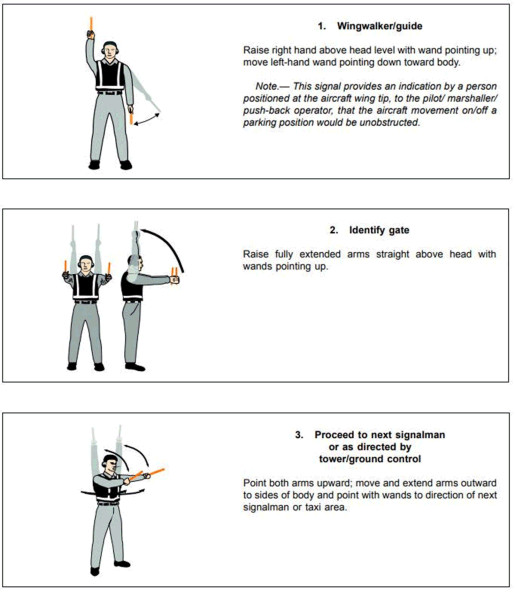
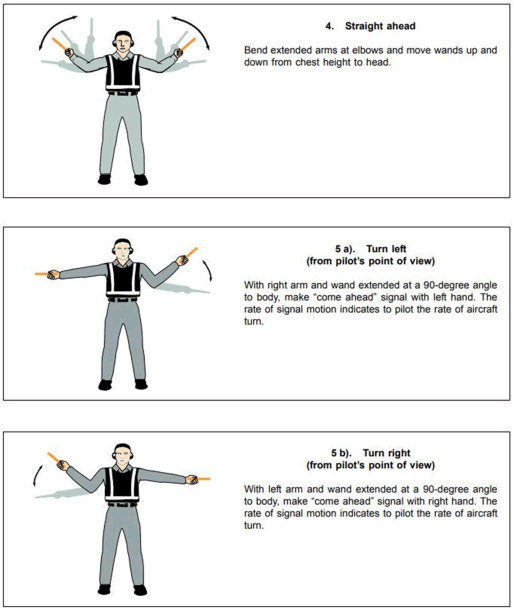
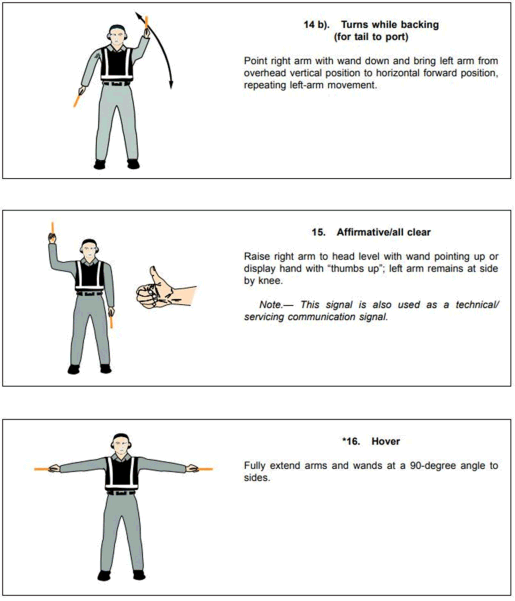
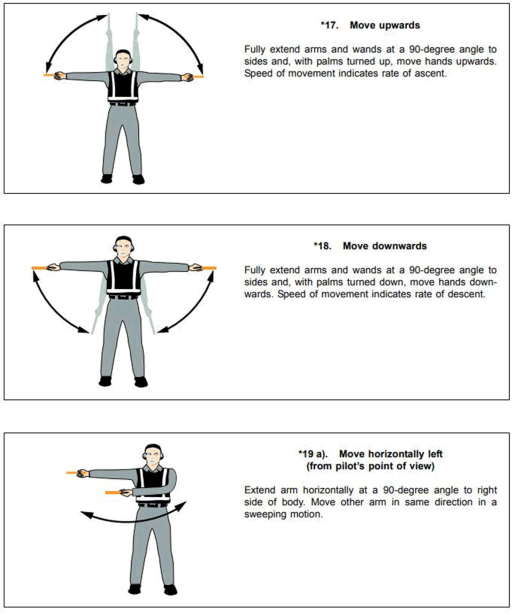
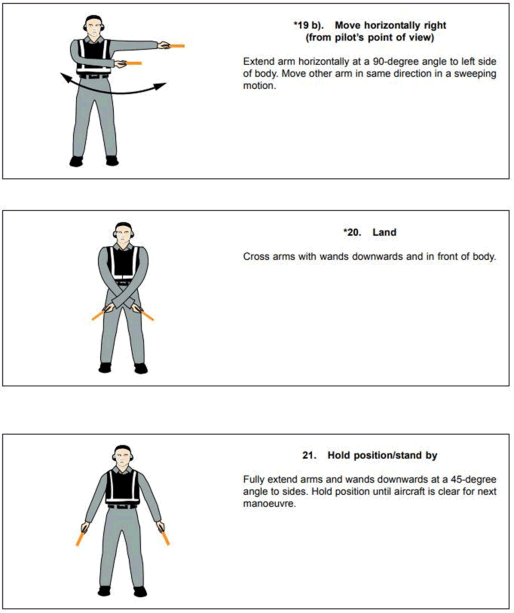
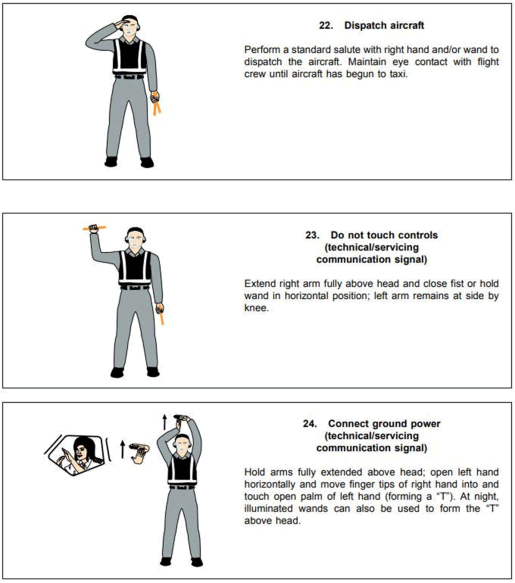
“Table 5Meaning of marshalling signals (from a marshaller to an aircraft on or off the ground)
Column 1
Column 2
Illustration of signal
Meaning and description of signal”.
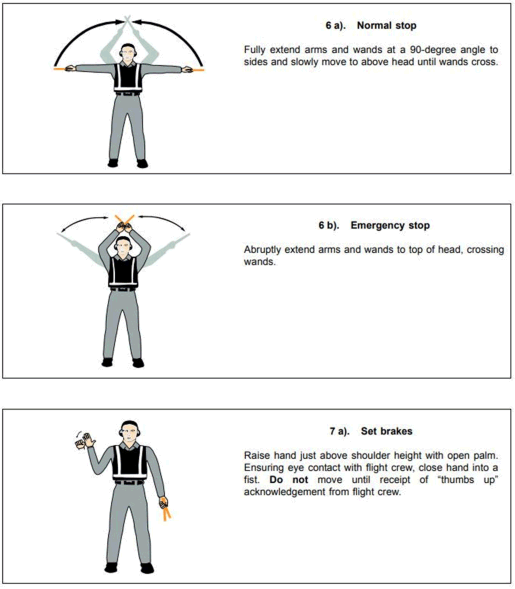
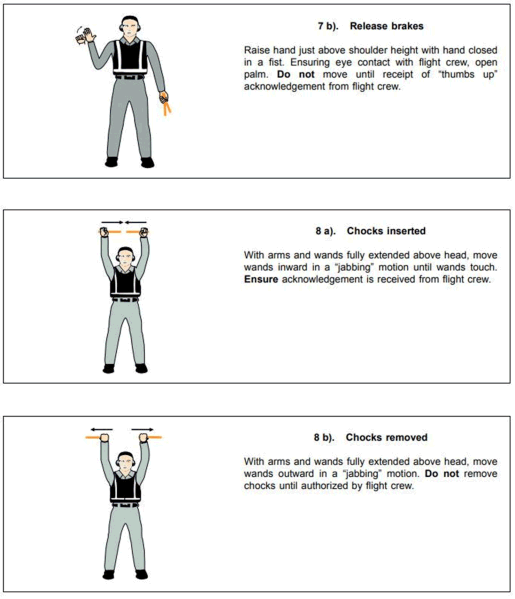
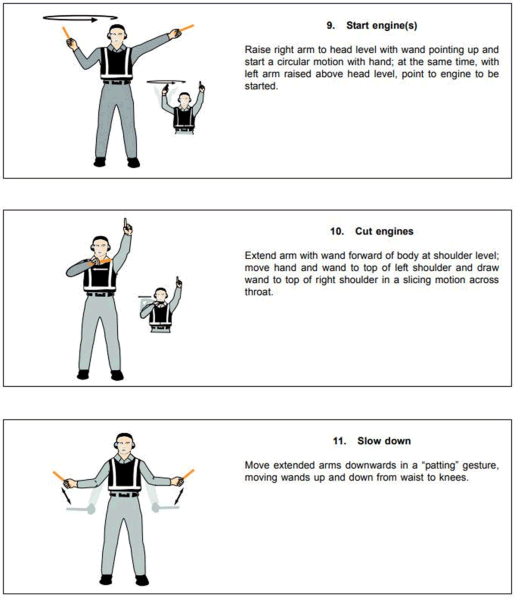
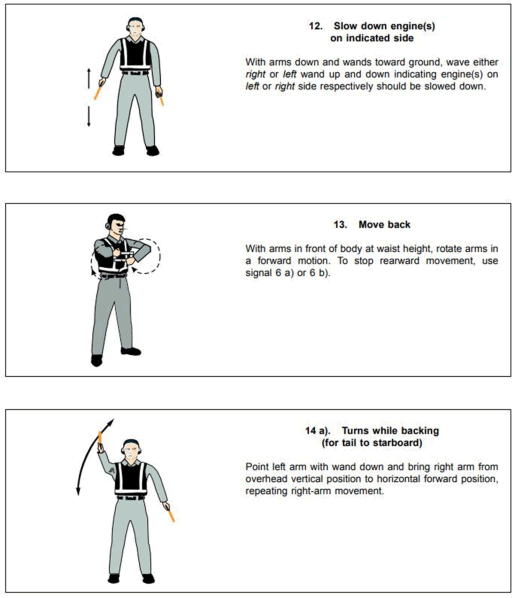
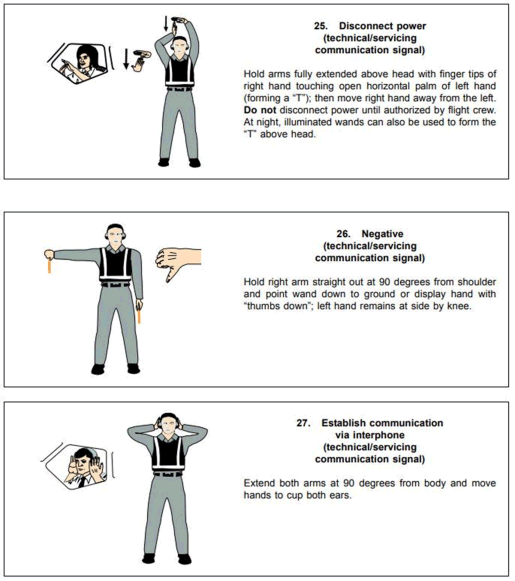
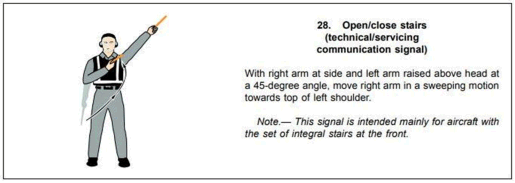
(20)
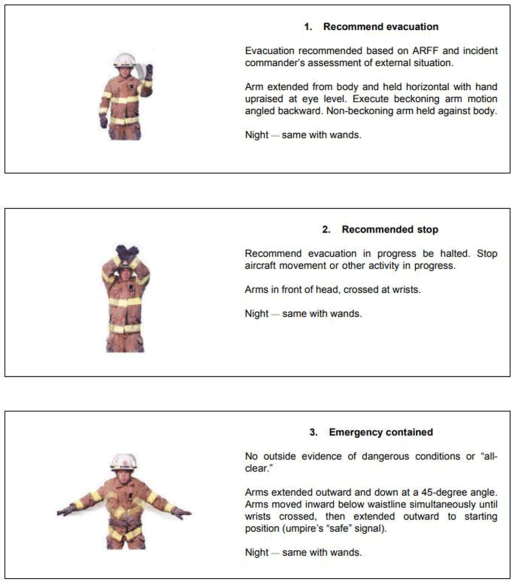
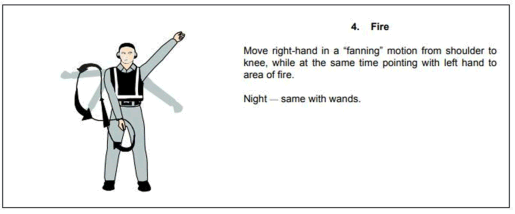
“Emergency signals by firemen and marshallers to aircraft on or off the ground61A.
(1)
Each of the signals illustrated in column 1 and described in column 2 of Table 5A, when given by a fireman or marshaller to an aircraft on or off the ground, shall have the meanings given to them in column 1 of the Table.
(2)
By day any such signals shall be given by glove, hand or by circular bats and by night or in low visibility shall be given by illuminated wands.
Table 5AMeaning of emergency signals (from a fireman or marshaller to an aircraft on or off the ground)
Column 1
Column 2
Illustration of signal
Meaning and description of signal
Requirements for marshallers61B.
(1)
This rule applies to persons acting as marshallers of aircraft at a certificated aerodrome.
(2)
A marshaller must not guide an aircraft on the ground unless trained and approved by, or on behalf of, the aerodrome certificate holder.
(3)
A marshaller must, when marshalling an aircraft, wear a distinctive, fluorescent identification vest.”.