Act of Sederunt (Civil Legal Aid Rules Amendment) 2017
Citation, commencement and transitional provision, etc.1.
(1)
This Act of Sederunt may be cited as the Act of Sederunt (Civil Legal Aid Rules Amendment) 2017.
(2)
It comes into force on 13th November 2017.
(3)
A certified copy is to be inserted in the Books of Sederunt.
(4)
Amendment of the Civil Legal Aid Rules2.
(1)
(2)
““motion”, in a simple procedure case, means an incidental orders application;”.
(3)
In rule 2(1) (revocations and transitional provision), for “the Schedule” substitute “schedule 1”.
(4)
“Expenses out of the Scottish Legal Aid Fund6.
(1)
An application to the court for an award of expenses under section 19(1) of the Act is to be made by motion in the proceedings.
(2)
The applicant must—
(a)
no later than 28 days before the motion is enrolled or lodged, send the Board6—(i)
a completed notice in the form set out in schedule 2; and
(ii)
where the form of notice identifies a requirement for circumstances to be established or vouched, such documents as are required to establish or vouch those circumstances;
(b)
intimate the motion to the Board; and
(c)
lodge with the motion copies of the notice and documents sent to the Board.
(3)
The Board may—
(a)
oppose the motion; and
(b)
appear and be represented at the hearing of the motion.
(4)
For the purposes of intimating and opposing such a motion, the relevant rules of procedure are to apply as if the Board was a party to the proceedings.”.
(5)
“(3A)
Such intimation must be made no less than 14 days before the date fixed for the hearing of the motion.”.
(6)
(7)
The schedule is renumbered as schedule 1.
(8)
After schedule 1, as renumbered, insert schedule 2 as set out in the schedule of this Act of Sederunt.
Edinburgh
SCHEDULE
“SCHEDULE 2


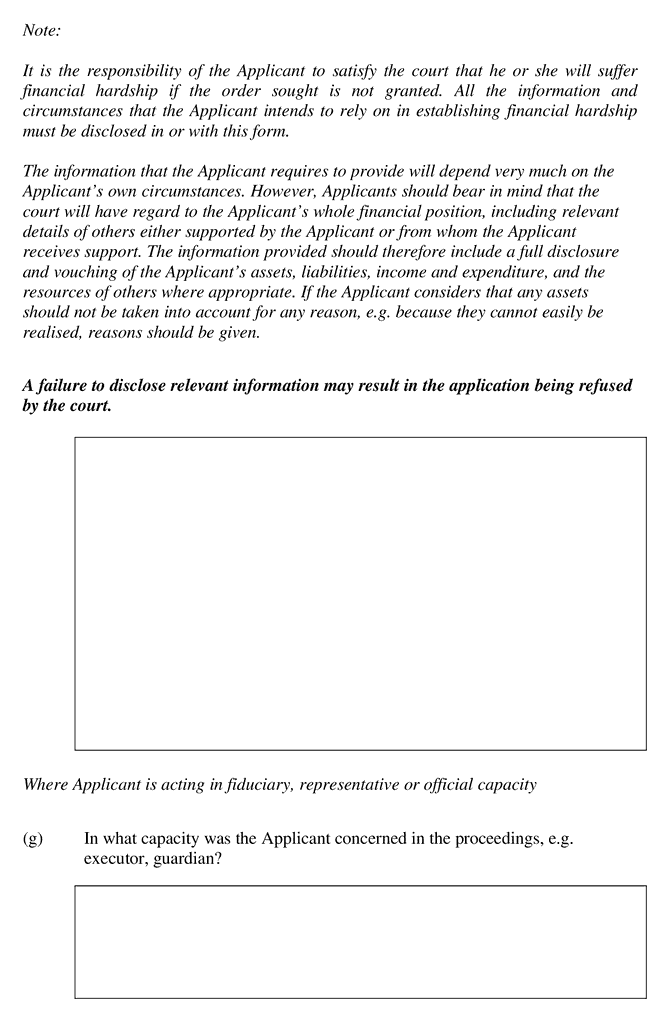

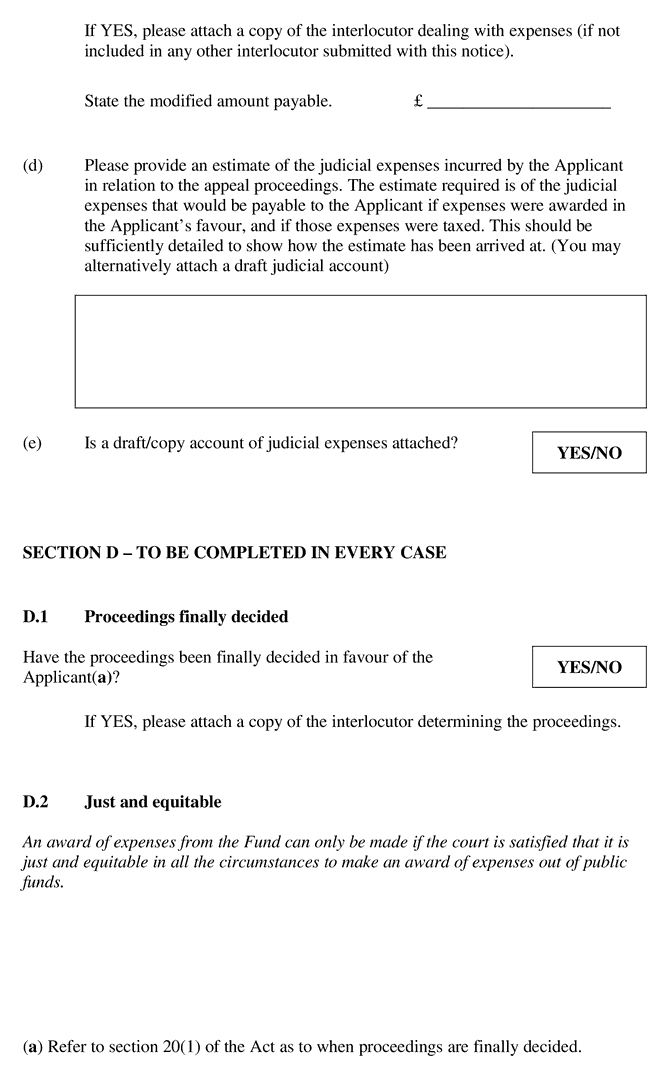


This Act of Sederunt amends the Act of Sederunt (Civil Legal Aid Rules) 1987 by replacing rule 6 which concerns procedure in applications under section 19(1) of the Legal Aid (Scotland) Act 1986 (applications for expenses out of the Legal Aid Fund).
The new rule requires applicants to give the Scottish Legal Aid Board (“the Board”) advance notice of intention to apply for an award of expenses out of the Legal Aid Fund by completing a prescribed form and sending both it and supporting documents to the Board. The form and documents must be sent to the Board no less than 28 days before any motion applying for an award is enrolled or lodged.
Applications for awards of expenses out of the Legal Aid Fund continue to be made by motion, but such motions require to be intimated on the Board, and may be opposed by the Board as if it was a party to the proceedings.