Act of Sederunt (Simple Procedure) 2016
In accordance with section 4 of the Scottish Civil Justice Council and Criminal Legal Assistance Act 2013 M1, the Court of Session has, taking into consideration the matters in section 75 of the Courts Reform (Scotland) Act 2014 M2, approved draft rules submitted to it by the Scottish Civil Justice Council with such modifications as it thinks appropriate.
The Court of Session therefore makes this Act of Sederunt under the powers conferred by section 14(7) of the Scottish Commission for Human Rights Act 2006 M3, section 104(1) of the Courts Reform (Scotland) Act 2014 M4 and all other powers enabling it to do so.
Citation and commencement, etc.1.
(1)
This Act of Sederunt may be cited as the Act of Sederunt (Simple Procedure) 2016.
(2)
It comes into force on 28th November 2016.
(3)
A certified copy is to be inserted in the Books of Sederunt.
The Simple Procedure Rules2.
(1)
Schedule 1 contains rules for simple procedure cases and may be cited as the Simple Procedure Rules.
(2)
A form referred to in the Simple Procedure Rules means—
(a)
the form with that name in Schedule 2, or
F1(b)
an electronic version of the form with that name in Schedule 2, adapted for use by the Scottish Courts and Tribunals Service with—
(i)
the portal on its website, or
(ii)
the internet interface to its case management system.
(3)
Where the Simple Procedure Rules require a form to be used, that form may be varied where the circumstances require it.
Interpretation of the Simple Procedure Rules3.
(1)
In the Simple Procedure Rules—
“a case where the expenses of a claim are capped” means a simple procedure case—
(a)
to which an order made under section 81(1) of the Courts Reform (Scotland) Act 2014 M5 applies; or
(b)
F2...
“F3a decision which absolves the respondent” means a decree of absolvitor;
“F4a decision which orders the respondent to deliver something to the claimant” means a decree for delivery or for recovery of possession;
“F5a decision which orders the respondent to do something for the claimant” means a decree ad factum praestandum;
“advocate” means a practising member of the Faculty of Advocates;
“any time before the decision of the sheriff has been fully implemented” means, where a charge or arrestment has been executed, any time within 14 days of that execution (or, where there has been more than one, the first such execution);
“a person otherwise entitled to conduct proceedings in the sheriff court” means any person so entitled, including a member of a body which has made a successful application under section 25 of the Law Reform (Miscellaneous Provisions) (Scotland) Act 1990 M6, but only to the extent that the member is exercising rights acquired by virtue of section 27 of that Act;
“a question of EU law” means a question which might lead to a reference to the Court of Justice of the European Union for—
(a)
a preliminary ruling under Article 267 of the Treaty on the Functioning of the European Union;
(b)
a ruling on the interpretation of the Conventions mentioned in Article 1 of Schedule 2 to the Civil Jurisdiction and Judgments Act 1982 M7 under Article 3 of that Schedule; or
(c)
a preliminary ruling on the interpretation of the instruments mentioned in Article 1 of Schedule 3 to the Contracts (Applicable Law) Act 1990 M8 under Article 2 of that Schedule;
“child's property administration order” means an order under section F611(1)(d) of the Children (Scotland) Act 1995 M9;
“Child Witness Notice” means a child witness notice under section 12(2) of the Vulnerable Witnesses (Scotland) Act 2004 M10;
“damages management order” means an order about how a sum of money awarded as damages is to be paid to and managed for a person under a legal disability;
“Equality Act 2010 claim” means a claim which, in Scotland, the sheriff has jurisdiction to determine as a result of section 114(1) of the Equality Act 2010 M11;
“EU member state” means a state which is a member of the European Union, within the meaning of Part II of Schedule 1 to the European Communities Act 1972 M12;
“Hague Convention country” means a country in respect of which the Convention of 15 November 1965 on the Service Abroad of Judicial and Extrajudicial Documents in Civil or Commercial Matters is in force, other than an EU member state M13;
“independent person” means a commissioner before whom evidence is taken in accordance with section 19 of the Vulnerable Witnesses (Scotland) Act 2004 M14;
“next-day postal service which records delivery” means a postal service which—
(a)
seeks to deliver documents or other things by post no later than the next working day in all or the majority of cases; and
(b)
provides for the delivery of documents or other things by post to be recorded;
“order for time to pay” means—
(a)
a time to pay direction under section 1 of the Debtors (Scotland) Act 1987 M15;
(b)
a time to pay order under section 5 of of the Debtors (Scotland) Act 1987 M16;
(c)
a time order under section 129 of the Consumer Credit Act 1974 M17.
“ordinary cause” means an action under the Ordinary Cause Rules 1993 M18;
“pause a case” means sist a case;
“postal service which records delivery” means a postal service which provides for the delivery of documents or other things by post to be recorded;
“provisional order” means a warrant for—
(a)
arrestment on the dependence or inhibition on the dependence under section 15A(1) of the Debtors (Scotland) Act 1987 M19; or
(b)
interim attachment under section 9A(1) of the Debt Arrangement and Attachment (Scotland) Act 2002 M20;
“Provisional Orders Reconsideration Application” means an application under—
(a)
section 15K(2) or 15L(1) of the Debtors (Scotland) Act 1987 M21; or
(b)
section 9M(2) or 9N(1) of the Debt Arrangement and Attachment (Scotland) Act 2002 M22;
“provisional orders review hearing” means a hearing under—
(a)
section 15K(4) or 15L(3) of the Debtors (Scotland) Act 1987 M23; or
(b)
section 9M(4) or 9N(3) of the Debt Arrangement and Attachment (Scotland) Act 2002 M24;
“F7restart the case” means recall a sist;
“schedule of inhibition” means a schedule of inhibition in the form prescribed by regulation 3(1)(a) of and Schedule 1 to the Diligence (Scotland) Regulations 2009 M25;
“Service Regulation” means Regulation (EC) No. 1393/2007 of the European Parliament and of the Council of 13 November 2007 on the service in the Member States of judicial and extrajudicial documents in civil or commercial matters (service of documents), and repealing Council Regulation (EC) No. 1348/2000, as amended from time to time and as applied by the Agreement made on 19 October 2005 between the European Community and the Kingdom of Denmark on the service of judicial and extrajudicial documents in civil and commercial matters;
“Sheriff Personal Injury Court” means the all-Scotland sheriff court sitting by virtue of the All-Scotland Sheriff Court (Sheriff Personal Injury Court) Order 2015 M26;
“Special Measures Review Application” means an application under section 13 of the Vulnerable Witness (Scotland) Act 2004 M27;
“solicitor” means a qualified solicitor under section 4 of the Solicitors (Scotland) Act 1980 M28;
“standard order” means one of the standard orders in Schedule 3;
F8“statutory intervener” means a person established by an enactment on whom a power to intervene in proceedings other than by taking part as a party has been conferred by an enactment;
“the principles of simple procedure” means the principles in rule 1.2;
“trading name” means the trading or descriptive name of a person, partnership, limited liability partnership or company;
F9“trainee solicitor” means a person who is training to be a solicitor and is supervised by a solicitor in accordance with regulations made by the Council of the Law Society of Scotland under section 5 of the Solicitors (Scotland) Act 1980;
“Vulnerable Witness Application” means a vulnerable witness application under section 12(6) of the Vulnerable Witnesses (Scotland) Act 2004 M29.
(2)
In Part 2 of the Simple Procedure Rules, “other legislation” means any enactment which entitles a person to act as a lay representative in a simple procedure case.
(3)
In Part 11 of the Simple Procedure Rules, “supporter” means a supporter within the meaning of section 22(1) of the Vulnerable Witnesses (Scotland) Act 2004 M30.
(4)
In Part 17 of the Simple Procedure Rules, “initial writ”, “intimate”, “defences”, “options hearing” and “lodging” have the meaning they have in the Ordinary Cause Rules 1993 M31.
Warrants4.
(1)
In the Simple Procedure Rules—
(a)
a claim being registered—
(i)
is warrant for the service of the Claim Form on the respondent;
(ii)
is warrant for the citation of witnesses;
(b)
a Response Form being registered is warrant for the citation of witnesses;
(c)
a certified copy of a written order granting a provisional order is sufficient authority for execution of the diligence specified in the provisional order;
(d)
in Part 11, a sheriff ordering a witness to be brought to court—
(i)
is warrant for the apprehension of that witness and for having that witness brought to court,
(ii)
that warrant is effective in all sheriffdoms without endorsation, and
(iii)
the expenses of that warrant may be awarded against the witness.
(2)
In a claim for delivery in a simple procedure case, the court may—
(a)
grant warrant to search for and take possession of goods and to open shut and lockfast places, and
(b)
that warrant only applies to premises occupied by the respondent.
Arrestment to found jurisdiction5.
(1)
This paragraph applies to a simple procedure case where the claimant has used an arrestment to found jurisdiction before the Claim Form is formally served on the respondent.
(2)
The service of the arrestment must be reported to the sheriff clerk as soon as possible.
(3)
The arrestment ceases to have effect unless the Claim Form is formally served on the respondent within 21 days from the date of formal service of the arrestment.
I.P.D.
Edinburgh
SCHEDULE 1The Simple Procedure Rules
Part 1 An overview of simple procedure | ||
|---|---|---|
1.1 | The simple procedure is a court process designed to provide a speedy, inexpensive and informal court way to resolve disputes. | |
1.2 | What are the principles of simple procedure? | |
1.3 | Who takes part in a simple procedure case? | |
1.4 | What are the sheriff's responsibilities? | |
1.5 | What are parties' responsibilities? | |
1.6 | What are representatives' responsibilities? | |
1.7 | What are the sheriff clerk's responsibilities? | |
1.8 | What are the sheriff's powers? | |
Part 2 Representation and support | ||
2.1 | This Part is about who may represent a party, and what that representative may and may not do. | |
This Part is also about who may provide support to a party in the courtroom, and what that courtroom supporter may and may not do. | ||
Representation | ||
2.2 | Who can be a representative? | |
2.3 | What can a representative do? | |
2.4 | Who is entitled by these Rules to be a lay representative? | |
Support | ||
2.5 | Who can be a courtroom supporter? | |
2.6 | What can a courtroom supporter do? | |
Part 3 How to make a claim | ||
3.1 | This Part is about how the claimant makes a claim and what the court will do with that claim. | |
3.2 | How is a claim made? | |
3.3 | How do you complete a Claim Form? | |
3.4 | What if there is more than one claimant? | |
3.5 | What if there are more than two respondents? | |
3.6 | What if the respondent uses a trading name? | |
3.7 | What do you do with a completed Claim Form? | |
3.8 | How do you ask for provisional orders to be made? | |
3.9 | What will the court do with the Claim Form? | |
3.10 | What happens next? | |
3.11 | What is the last date for service? | |
3.12 | What is the last date for a response? | |
3.13 | How can the timetable be changed? | |
Part 4 How to respond to a claim | ||
4.1 | This Part is about how the respondent responds to a claim and what the court will do with that response. | |
4.2 | How do you respond to a claim? | |
4.3 | What responses can you make? | |
4.4 | What has to go in the Response Form? | |
4.5 | What will the court do with the Response Form? | |
Part 5 How to ask for time to pay | ||
5.1 | This Part is about how the respondent may ask for time to pay if a claim for payment of a sum of money is admitted, and how the claimant can consent or object to that. | |
5.2 | What is an order for time to pay? | |
5.3 | How can a respondent ask for time to pay? | |
5.4 | What will the court do with a Time to Pay Application? | |
5.5 | How can the claimant consent to a Time to Pay Application? | |
5.6 | How can the claimant object to a Time to Pay Application? | |
5.7 | What if the claimant does not consent or object to a Time to Pay Application? | |
Part 6 Sending and formal service | ||
6.1 | This Part is about what has to be done when these Rules require something to be sent to someone. | |
This Part is also about what has to be done when these Rules require a document to be formally served on someone. | ||
6.2 | What is the difference between sending and formally serving? | |
6.3 | When must something be sent or formally served? | |
6.4 | Can a party object to how sending or formal service was done? | |
Sending | ||
6.5 | How can the court send something to a party? | |
6.6 | How can a party send something to the court? | |
6.7 | How can a party send something to another party? | |
Formal service | ||
6.8 | How can you formally serve a document on someone living within Scotland? | |
6.9 | How can you formally serve a document on someone living outside Scotland? | |
6.10 | What if a person uses a trading name? | |
6.11 | How can the Claim Form be formally served on the respondent? | |
6.12 | What if the claimant does not know the respondent's address? | |
6.13 | What if the sheriff considers that formal service of the Claim Form has not been done properly? | |
Part 7 What happens to a case | ||
7.1 | This Part is about what happens after a Response Form has been received and what happens if no Response Form is received. | |
Admitted claims | ||
7.2 | What if parties settle the claim before the last date for a response? | |
7.3 | What if the respondent makes a Time to Pay Application? | |
7.4 | What if no Response Form is received by the court? | |
Disputed claims | ||
7.5 | What if the respondent disputes the claim? | |
7.6 | What will be in the first written orders? | |
7.7 | What is a case management discussion? | |
7.8 | What is a hearing? | |
Part 8 Orders | ||
8.1 | This Part is about the orders which the sheriff can give to manage or decide a case. | |
8.2 | What are orders? | |
8.3 | What are standard orders? | |
8.4 | What are unless orders? | |
8.5 | What if a party does not follow an order? | |
Part 9 Applications | ||
9.1 | This Part is about applications which parties may make to the court to ask for things to be done in a case. | |
Pausing and restarting cases | ||
9.2 | How can a party ask for the progress of a case to be paused? | |
9.3 | What happens if the progress of a case is paused? | |
9.4 | How can a party ask for a paused case to be restarted? | |
9.5 | What can the court do with a paused case? | |
Miscellaneous applications | ||
9.6 | How can a person become an additional respondent in a case? | |
9.7 | How can a party ask to amend the Claim Form or the Response Form? | |
9.8 | How can a claimant abandon a claim? | |
9.9 | What can happen if a party dies or becomes legally incapacitated? | |
9.10 | How can a party ask the sheriff to make any other orders? | |
Part 10 Documents and other evidence | ||
10.1 | This Part is about how parties should lodge documents and other evidence with the court before a hearing. | |
This Part is also about how parties can apply for orders to recover documents from other people. | ||
Lodging documents and other evidence | ||
10.2 | How can you lodge documents and other evidence with the court? | |
10.3 | What documents and other evidence can a party bring to a hearing? | |
10.4 | How can other parties borrow or inspect documents and other evidence lodged with the court? | |
10.5 | How long will the court keep documents and other evidence for? | |
Orders to recover documents | ||
10.6 | How can a party recover documents to lodge them with the court? | |
10.7 | What happens when an order to recover documents is made? | |
10.8 | What happens if the person who has the documents claims they are confidential? | |
10.9 | What happens if a party does not believe that an order to recover documents has been complied with? | |
10.10 | What happens when a special order to recover documents is made? | |
10.11 | What happens if the person who has the documents claims they are confidential? | |
Part 11 Witnesses | ||
11.1 | This Part is about the citation of witnesses and their attendance at hearings. | |
This Part is also about measures that the court can take to assist vulnerable witnesses in giving evidence. | ||
The citation of witnesses | ||
11.2 | How can a party arrange the attendance of witnesses at a hearing? | |
11.3 | What if a witness does not appear at a hearing? | |
Vulnerable witnesses | ||
11.4 | How will the court treat a child witness? | |
11.5 | How will the court treat other vulnerable witnesses? | |
11.6 | What are special measures? | |
11.7 | How can a party ask the court to review the arrangements for a child witness or a vulnerable witness? | |
11.8 | What happens when evidence is to be given before an independent person? | |
Part 12 The hearing | ||
12.1 | This Part is about the hearing at which the dispute between the parties should be resolved. | |
12.2 | What is the purpose of the hearing? | |
12.3 | How will the dispute between the parties be resolved? | |
12.4 | What will the sheriff do at the hearing? | |
12.5 | What if a party does not come to the hearing? | |
12.6 | How will evidence be given at the hearing? | |
Part 13 The decision | ||
13.1 | This Part is about the decisions which the sheriff can make to resolve a dispute. | |
This Part is also about the circumstances in which a party can apply to have a decision recalled. | ||
13.2 | When must the sheriff make the decision? | |
13.3 | How will the sheriff make the decision? | |
13.4 | What sort of decisions can the sheriff make? | |
Recalling a decision | ||
13.5 | When can a decision of the sheriff be recalled? | |
13.6 | How can a party apply to have a decision of the sheriff recalled? | |
13.7 | What happens when a sheriff decides to recall a decision? | |
Part 14 Expenses | ||
14.1 | This Part is about the expenses of a claim which the sheriff can order a party to pay for. | |
14.2 | What orders about expenses can the sheriff make? | |
14.3 | When will the sheriff make an order about expenses? | |
14.4 | What if the sheriff does not make an order about expenses when deciding the claim? | |
14.5 | What is an expenses hearing? | |
Part 15 How to enforce a decision | ||
15.1 | This Part is about the steps which a successful party must take to enforce a decision. | |
15.2 | When can a party enforce a decision? | |
15.3 | How can a party enforce a decision? | |
15.4 | What if the claimant does not know the respondent's address? | |
15.5 | What if the respondent does not comply with a decision? | |
Part 16 How to appeal a decision | ||
16.1 | This Part is about how a party can appeal a decision and how the sheriff and Sheriff Appeal Court will deal with an appeal. | |
16.2 | How do you appeal a decision? | |
16.3 | What will the sheriff do with an appeal? | |
16.4 | What will the Sheriff Appeal Court do with an appeal? | |
Part 17 Miscellaneous matters | ||
17.1 | This Part is about some miscellaneous matters which can arise during a case. | |
17.2 | How can a case be transferred out of the simple procedure? | |
17.3 | How can the sheriff make a reference to the Court of Justice of the European Union? | |
17.4 | How can the Commission for Equality and Human Rights (“CEHR”) or the Scottish Commission for Human Rights (“SCHR”) intervene? | |
17.5 | What can the CEHR or the SCHR do in an intervention? | |
Management of damages | ||
17.6 | When is a damages management order available? | |
17.7 | When must the sheriff make a damages management order? | |
17.8 | What can the sheriff do in a damages management order? | |
17.9 | How can the damages management order be changed? | |
17.10 | How can further instructions about managing the money be given? | |
17.11 | When can someone apply for a child's property administration order? | |
17.12 | How can someone apply for a child's property administration order? | |
The Equality Act 2010 | ||
17.13 | What is an Equality Act 2010 claim? | |
17.14 | How can the Commission for Equality and Human Rights (“the CEHR”) be notified of an Equality Act 2010 claim? | |
17.15 | How can an Equality Act 2010 claim be transferred to the Employment Tribunal? | |
17.16 | How can an Employment Tribunal case be transferred to simple procedure? | |
17.17 | What if a question of national security arises in an Equality Act 2010 claim? | |
Part 18 Formal service in Scotland | ||
18.1 | This Part is about how to formally serve a document on someone living in Scotland. | |
18.2 | How can you formally serve a document on someone who lives in Scotland? | |
18.3 | What if service by post does not work? | |
Part 19 Formal service outside Scotland | ||
19.1 | This Part is about how to formally serve a document on someone outside Scotland. | |
19.2 | How can you formally serve a document on someone who lives outside Scotland? | |
19.3 | How can you formally serve a document on someone who lives in England and Wales, Northern Ireland, the Isle of Man or the Channel Islands? | |
19.4 | How can you formally serve a document on someone who lives in an EU member state (including Denmark) under the Service Regulation? | |
19.5 | How can you formally serve a document on someone who lives in a Hague Convention country (other than an EU member state)? | |
19.6 | How can you formally serve a document on someone who lives in a country with which the United Kingdom has a convention about how to serve court documents? | |
19.7 | How can you formally serve a document on someone who lives in any other country? | |
Part 20 Provisional orders | ||
20.1 | This Part is about provisional orders which protect or secure the claimant's position before the sheriff makes a final decision in a case. | |
20.2 | When can a claimant ask for provisional orders to be made? | |
20.3 | What happens when the court receives a Provisional Orders Application? | |
20.4 | How can the claimant tell the respondent or an interested party about a hearing? | |
20.5 | How can you ask the court to reconsider provisional orders that it has made? | |
20.6 | How can you ask the court to consider other applications about provisional orders? | |
20.7 | How are provisional orders made effective? | |
20.8 | How is an arrestment on the dependence made effective? | |
20.9 | How is an inhibition on the dependence made effective if the claimant does not know the respondent's address? | |
Part 21 Glossary | ||
21.1 | This Part contains a guide for litigants, lay representatives and courtroom supporters to the meaning of certain legal words and expressions used in these rules. | |
PART 1: An overview of simple procedure
1.1 | What is simple procedure? |
|---|---|
(1) | Simple procedure is a court process designed to provide a speedy, inexpensive and informal way to resolve disputes. |
1.2 | What are the principles of simple procedure? |
(1) | Cases are to be resolved as quickly as possible, at the least expense to parties and the courts. |
(2) | The approach of the court to a case is to be as informal as is appropriate, taking into account the nature and complexity of the dispute. |
(3) | Parties are to be treated even-handedly by the court. |
(4) | Parties are to be encouraged to settle their disputes by negotiation or alternative dispute resolution, and should be able to do so throughout the progress of a case. |
(5) | Parties should only have to come to court when it is necessary to do so to progress or resolve their dispute. |
1.3 | Who takes part in a simple procedure case? |
(1) | A simple procedure case involves a claim being made in the sheriff court. |
(2) | The person who makes the claim is the claimant. |
(3) | The person the claim is made against is the respondent. |
(4) | The claimant and the respondents are the parties. |
(5) | The case will be decided by the sheriff, who is in charge of the court. |
(6) | The sheriff clerk provides administrative support to the sheriff. |
(7) | A claim which is registered by the sheriff clerk is a simple procedure case. |
(8) | Parties may represent themselves or have representatives. |
(9) | Parties may be assisted by courtroom supporters. |
1.4 | What are the sheriff's responsibilities? |
(1) | The sheriff must take into account the principles of simple procedure when managing cases and when interpreting these rules. |
(2) | The sheriff must ensure that parties who are not represented, or parties who do not have legal representation, are not unfairly disadvantaged. |
(3) | The sheriff must encourage cases to be resolved by negotiation or alternative dispute resolution, where possible. |
(4) | If a case cannot be resolved by negotiation or alternative dispute resolution, the sheriff must decide the case. |
1.5 | What are parties' responsibilities? |
(1) | Parties must respect the principles of simple procedure. |
(2) | Parties must be honest with each other, with representatives and with the sheriff. |
(3) | Parties must be respectful and courteous to each other, to representatives, to witnesses and to the sheriff. |
(4) | Parties must not try to make a witness give misleading evidence. |
(5) | Parties must consider throughout the progress of a case whether their dispute could be resolved by negotiation or alternative dispute resolution. |
(6) | Parties must approach any negotiation or alternative dispute resolution with an open and constructive attitude. |
(7) | Parties must follow the sheriff's orders. |
1.6 | What are representatives' responsibilities? |
(1) | Representatives must respect the principles of simple procedure. |
(2) | Representatives must be honest with each other, with parties and with the sheriff. |
(3) | Representatives must be respectful and courteous to each other, to parties, to witnesses and to the sheriff. |
(4) | Representatives must act in the best interests of the person being represented, and not allow any personal interest to influence their advice or actions. |
(5) | Representatives must not knowingly make claims or arguments which have no factual or legal basis. |
(6) | Representatives must maintain client confidentiality. |
(7) | Representatives must not try to make a witness give misleading evidence. |
(8) | Representatives must not act where they have a conflict of interest. |
(9) | When appearing against a party who is not represented, or who is not legally represented, representatives must not take advantage of that party. |
(10) | When appearing against a party who is not represented, or who is not legally represented, representatives must help the court to allow that person to argue a case fairly. |
(11) | Representatives must follow the sheriff's orders. |
1.7 | What are the sheriff clerk's responsibilities? |
(1) | The sheriff clerk must maintain a register of simple procedure cases. |
(2) | The sheriff clerk must send the sheriff's written orders to the parties. |
1.8 | What are the sheriff's powers? |
(1) | The sheriff may give orders to the parties, either in person or by giving written orders. |
(2) | The sheriff may do anything or give any order considered necessary to encourage negotiation or alternative dispute resolution between the parties. |
(3) | The sheriff may do anything or give any order considered necessary to decide the case. |
(4) | The sheriff may relieve a party from the consequences of failing to comply with any of the Simple Procedure Rules. When doing so, the sheriff may impose conditions or make orders about expenses. |
(5) | The sheriff may give orders which vary a deadline or period of time set out in the Simple Procedure Rules. |
(6) | The sheriff may make decisions about the form, location and conduct of a discussion in court, case management discussion or hearing. The sheriff must explain to parties why these decisions were made. |
(7) | The sheriff may combine separate cases, so that any discussion in court, case management discussion or hearing in the cases is held at the same time. |
(8) | The sheriff may continue any discussion in court, case management discussion or hearing to another day only if it is necessary to do so. |
(9) | The sheriff may pause and restart the progress of a case. |
(10) | The sheriff may decide a case without a hearing. |
(11) | If a claim, or part of a claim, obviously has no real prospect of success, the sheriff may dismiss the claim or that part of it at any time. |
(F1011A) | If a response, or part of a response, obviously has no real prospect of success, the sheriff may decide the case, or that part of it, at any time. |
(12) | If a claim, or F11part of a claim, obviously will not succeed because it is incompetent, the sheriff may dismiss the claim or that part of it at any time. |
(13) | If a response, or part of a response, obviously will not succeed because it is incompetent, the sheriff may decide a case, or that part of it, at any time. |
(14) | The sheriff may make provisional orders or interim orders which protect or secure a claimant's position before a hearing. |
(15) | The sheriff may order an authenticated copy of any document to be treated as an original, where the original is lost or destroyed. |
(16) | The sheriff may transfer a simple procedure case to another court, whether in the same sheriffdom or not. |
(17) | If a claim should have been raised in a different sheriff court the sheriff must transfer the claim to a court in which the claim could have been raised, unless the sheriff is satisfied that there is a good reason not to. |
PART 2: Representation and support
2.1 | What is this Part about? |
|---|---|
(1) | This Part is about who may represent a party, and what that representative may and may not do. |
(2) | This Part is also about who may provide support to a party in the courtroom, and what that courtroom supporter may and may not do. |
Representation | |
2.2 | Who can be a representative? |
(1) | A party may be represented by a legal representative or a lay representative. |
(2) | A legal representative is a person who is an advocate, a solicitor F12, trainee solicitor or a person otherwise entitled to conduct proceedings in the sheriff court. |
(3) | A lay representative is a person who is not a legal representative but is entitled to be a lay representative, either by these Rules or by other legislation. |
2.3 | What can a representative do? |
(1) | A representative may do anything involved in the preparation or conduct of a case that a party can do. |
2.4 | Who is entitled by these Rules to be a lay representative? |
(1) | If a party wants to be represented by a lay representative throughout a case, then that lay representative must complete a Lay Representation Form and send it to the court when the Claim Form F13, Response Form or Time to Pay Application is sent to court. |
(2) | If a party wants to be represented by a lay representative during a particular discussion or hearing only, then the lay representative must complete a Lay Representation Form and give it to the sheriff clerk in person at court at that discussion or hearing. |
(3) | The sheriff may at any time order a person to stop acting as a lay representative if the sheriff considers that person unsuitable. |
(4) | For the purposes of considering suitability, the sheriff may take into account any interest that person has in the case and whether that person has been declared a vexatious litigant. |
(5) | A person is unsuitable to act as a lay representative if their behaviour does not respect the principles of simple procedure. |
(6) | A person may only act as a lay representative if that person agrees not to receive any remuneration from the party, whether directly or indirectly, for acting as a lay representative. This rule does not apply where the party is a company, limited liability partnership or partnership. |
Support | |
2.5 | Who can be a courtroom supporter? |
(1) | A courtroom supporter is a person (for example, a family member, friend or colleague) who may accompany a party in court in order to provide quiet support, encouragement and advice during a hearing. |
(2) | A party may ask the sheriff in court for permission for someone to be a courtroom supporter. |
(3) | The sheriff may permit a person to act as a courtroom supporter only if that person agrees not to receive any remuneration from the party, whether directly or indirectly, for acting as a courtroom supporter. |
(4) | If at any point the sheriff considers that a person is not suitable to act as a courtroom supporter, the sheriff may withdraw permission to act as a courtroom supporter. |
(5) | A person is unsuitable to act as a courtroom supporter if their behaviour does not respect the principles of simple procedure. |
2.6 | What can a courtroom supporter do? |
(1) | A courtroom supporter may sit beside or behind the party in court. |
(2) | A courtroom supporter may provide moral support to the party. |
(3) | A courtroom supporter may help to manage the party's court documents and other papers. |
(4) | A courtroom supporter may take notes in court. |
(5) | A courtroom supporter may quietly advise the party on points of law and procedure, on issues the party might wish to raise with the sheriff or on questions the party might want to ask any witness. |
(6) | A courtroom supporter may be given any document or information connected to the case. |
(7) | However, if disclosure of that document or that information is prohibited or restricted in any way, then the courtroom supporter must respect that prohibition or restriction. |
PART 3: How to make a claim
3.1 | What is this Part about? | |
|---|---|---|
(1) | This Part is about how the claimant makes a claim and what the court will do with that claim. | |
3.2 | How is a claim made? | |
(1) | The process for making a claim is: | |
(a) | the claimant completes a Claim Form (see rule 3.3), | |
(b) | the claimant sends the Claim Form to the court (see rule 3.7), | |
(c) | the sheriff clerk checks and registers the Claim Form (see rule 3.9), | |
(d) | the sheriff clerk issues a timetable for the case (see rule 3.10), and | |
(e) | the Claim Form is formally served on the respondent, either by the sheriff clerk, a solicitor or a sheriff officer (see Part 6). | |
3.3 | How do you complete a Claim Form? | |
(1) | The claimant must set out the following information in the Claim Form: | |
(a) | the identity of the claimant, including the claimant's address and whether the claimant is an individual, a company or another type of organisation, | |
(b) | the identity of the respondent, including the respondent's address (where known) and whether the respondent is an individual, a company or another type of organisation, | |
(c) | the essential factual background to the dispute, | |
(d) | what the claimant wants from the respondent if the claim is successful, | |
(e) | why the claim should succeed, | |
(f) | what steps the claimant has already taken (if any) to try to resolve the dispute with the respondent. | |
F14(2) | . . . | |
F15(3) | . . . | |
F163.4 | . . . | |
F173.5 | . . . | |
3.6 | What if the respondent uses a trading name? | |
(1) | If the respondent uses a trading name, a claim may be made against them using that trading name. | |
3.7 | What do you do with a completed Claim Form? | |
F18(1) | The completed Claim Form must be sent to the sheriff court by submitting it to the court using: | |
(a) | the portal on the Scottish Courts and Tribunals Service website (see rule 6.6(1)(c)), or | |
(b) | the Scottish Courts and Tribunals Service’s internet interface to its case management system (see rule 6.6(2)). | |
(1A) | Where the completed Claim Form cannot be sent in either of the ways mentioned in paragraph (1), it may be sent by one of the other ways mentioned in rule 6.6(1), but the claim will only be registered where: | |
(a) | the Claim Form is accompanied with a note explaining why it could not have been sent in either of the ways mentioned in paragraph (1), and | |
(b) | the sheriff considers, from the explanation in the note, that the claimant could not have sent it in either of those ways. | |
F19(2) | If the Claim Form has been completed on paper and indicates that the claimant would like the sheriff clerk to formally serve the Claim Form then two copies must be sent to the court. | |
3.8 | How do you ask for provisional orders to be made? | |
(1) | Provisional orders are orders which protect or secure the claimant's position before the sheriff makes a final decision in a case. | |
(2) | There are three types of provisional order: | |
(a) | an arrestment on the dependence under section 15A(1) of the Debtors (Scotland) Act 1987 (this is an order freezing the respondent's goods or money held by a third party), | |
(b) | an inhibition on the dependence under section 15A(1) of the Debtors (Scotland) Act 1987 (this is an order preventing the respondent from selling their home or other land, or taking out a secured loan), and | |
(c) | an interim attachment under section 9A(1) of the Debt Arrangement and Attachment (Scotland) Act 2002 (this is an order preventing the respondent from selling or removing their goods). | |
(3) | Part 20 of these Rules is about how the claimant may apply for provisional orders. | |
3.9 | What will the court do with the Claim Form? | |
(1) | The sheriff clerk will check the Claim Form for problems which mean that it cannot be registered. Such problems might include: | |
(a) | the Claim Form not being accompanied by the correct fee, | |
(b) | the Claim Form being sent to the wrong sheriff court, | |
(c) | the Claim Form asking for something that is not possible in simple procedure, such as making a claim for over £5,000, | |
(d) | the Claim Form being incomplete. | |
(2) | If there are no such problems, the sheriff clerk must register the claim. | |
(3) | The sheriff clerk must ask for the approval of the sheriff before registering the claim if: | |
(a) | the respondent's address is unknown, | |
F20(aa) | the Claim Form has been sent by submitting it to the court using neither the portal on the Scottish Courts and Tribunals Service website nor the Scottish Courts and Tribunals Service’s internet interface to its case management system, | |
(b) | the claimant is seeking provisional orders or interim orders, or | |
(c) | the sheriff clerk thinks that the claim requires the attention of the sheriff for some other reason. | |
3.10 | What happens next? | |
(1) | After registering a claim, the sheriff clerk must send the claimant a Timetable. | |
(2) | The Timetable must set out the timetable for the case, including: | |
(a) | the last date for service, and | |
(b) | the last date for a response. | |
3.11 | What is the last date for service? | |
(1) | The last date for service is the date by which the Claim Form must be formally served on the respondent. | |
(2) | This must normally be 3 weeks before the last date for a response. | |
(3) | If the respondent does not live in an EU member state, the last date for service must normally be 6 weeks before the last date for a response. | |
(4) | If the respondent is a business with no place of business in an EU member state, the last date for service must normally be 6 weeks before the last date for a response. | |
3.12 | What is the last date for a response? | |
(1) | The last date for a response is the date by which the respondent must F21respond to the claim (see rule 4.2). | |
3.13 | How can the timetable be changed? | |
(1) | The sheriff may change the timetable at the request of the sheriff clerk or at the request of one of the parties. | |
(2) | The claimant may request a change (if, for example, there has been a difficulty serving the Claim Form on the respondent) by sending the court F22an Additional Orders Application (see Part 9). | |
(3) | The respondent may request a change (if, for example, the Claim Form was formally served on them late) by sending the court F23an Additional Orders Application (see Part 9). | |
(4) | If the sheriff changes the timetable, the sheriff clerk must send a new Timetable to the claimant or to the parties. | |
PART 4: How to respond to a claim
4.1 | What is this Part about? | |
|---|---|---|
(1) | This Part is about how the respondent responds to a claim and what the court will do with that response. | |
4.2 | How do you respond to a claim? | |
F24(1) | The respondent must respond to the claim by the last date for a response. | |
(2) | The respondent may respond to a claim in one of two ways: | |
(a) | by completing a Response Form and sending it to the court and the claimant, or | |
(b) | if the respondent wants to admit the claim and ask for time to pay, by completing a Time to Pay Application and sending it to the court. | |
4.3 | What responses can you make? | |
(1) | There are three ways in which the respondent may respond to the claim. | |
(2) | The respondent may: | |
(a) | admit the claim and settle it before the last date for a response, | |
(b) | admit the claim and ask the court for time to pay (see Part 5), or | |
(c) | dispute the claim or part of the claim (such as the amount the respondent should pay the claimant). | |
This flow-chart sets out how the respondent may respond to a claim: | ||

4.4 | What has to go in the Response Form? | |
|---|---|---|
(1) | The respondent must set out in the Response Form the following information: | |
(a) | which facts (if any) set out in the Claim Form that the respondent agrees with, | |
(b) | which facts (if any) set out in the Claim Form that the respondent disagrees with and why, | |
(c) | why the respondent thinks that the claimant should not get what was asked for in the Claim Form, or why the claimant should only get some of what was asked for in the Claim Form, | |
(d) | what steps the respondent has already taken (if any) to try to resolve the dispute with the claimant. | |
(2) | The respondent must indicate in the Response Form if the respondent thinks that there should be any additional respondents. | |
F29(3) | . . . | |
F30(4) | . . . | |
4.5 | What will the court do with the Response Form? | |
(1) | When the court receives a Response Form, the sheriff clerk must register it. | |
(2) | The sheriff clerk must then present the Claim Form, the Confirmation of Formal Service and the Response Form to the sheriff (see Part 7). | |
PART 5: How to ask for time to pay
5.1 | What is this Part about? | |
|---|---|---|
(1) | This Part is about how the respondent may ask for time to pay if a claim for payment of a sum of money is admitted, and how the claimant can consent or object to that. | |
5.2 | What is an order for time to pay? | |
(1) | An order for time to pay is an order of the sheriff that the respondent must pay the claimant a sum of money in a particular way, such as by instalments or by a delayed payment. | |
5.3 | How can a respondent ask for time to pay? | |
(1) | The respondent may ask for time to pay in three ways: | |
(a) | by completing a Time to Pay Application and sending it to court F31by the last date for a response, | |
(b) | by completing a Time to Pay Application and giving it to the sheriff clerk at a discussion in court, case management discussion or a hearing, or | |
(c) | by completing a Time to Pay Application and sending it to court after the sheriff has made a decision. | |
5.4 | What will the court do with a Time to Pay Application? | |
(1) | If the respondent sends a Time to Pay Application to the court, the sheriff clerk must send a copy of it to the claimant along with a Time to Pay Notice. | |
5.5 | How can the claimant consent to a Time to Pay Application? | |
(1) | To consent to a Time to Pay Application, the claimant must indicate consent on the Time to Pay Notice and send it to the court within 2 weeks after the claimant is sent the Time to Pay Notice. | |
(2) | The sheriff may then grant the Time to Pay Application and decide the case. | |
5.6 | How can the claimant object to a Time to Pay Application? | |
(1) | To object to a Time to Pay Application, the claimant must indicate objection on the Time to Pay Notice and send it to the court within 2 weeks after the claimant is sent the Time to Pay Notice. | |
(2) | When the court receives an objection to a Time to Pay Application, the sheriff F32may give the parties F33an order arranging a time to pay hearing. | |
(3) | F34The sheriff must decide the case and decide whether to grant or refuse the Time to Pay Application. | |
5.7 | What if the claimant does not consent or object to a Time to Pay Application? | |
(1) | If the claimant has not consented or objected to a Time to Pay Application within 2 weeks after the claimant is sent the Time to Pay Notice, the sheriff must decide the case (if the case has not yet been decided) and grant or refuse the Time to Pay Application. | |
PART 6: Sending and formal service
6.1 | What is this Part about? | |
|---|---|---|
(1) | This Part is about what has to be done when these Rules require something to be sent to someone. | |
(2) | This Part is also about what has to be done when these Rules require a document to be formally served on someone. | |
6.2 | What is the difference between sending and formally serving? | |
(1) | When these Rules require something to be “sent”, that may be done by anyone and in a number of ways. | |
(2) | When these Rules require a document to be “formally served” on someone, that may only be done by certain people (sheriff officers, sheriff clerks or solicitors) and may only be done in certain ways. | |
6.3 | When must something be sent or formally served? | |
(1) | If these Rules say that something must be sent or formally served within a period or number of days, it must be sent or formally served in time for it to arrive before the end of that period or the last day. | |
(2) | If these Rules say that something must be sent or formally served by a particular day, it must be sent or formally served in time for it to arrive before the end of that day. | |
(3) | If these Rules say that something must be sent to court within a period, number of days or by a particular day and the end of that period or that day is a Saturday, Sunday, public holiday or court holiday, then it must be sent so that it will be received before the end of the next working day. | |
6.4 | Can a party object to how sending or formal service was done? | |
(1) | A party who responds to something (such as sending a Response Form in response to a Claim Form or objecting to an application) may not object to how that thing was sent or formally served. | |
Sending | ||
6.5 | How can the court send something to a party? | |
(1) | The court may send something to a party in one of F355 ways: | |
(a) | handing it to that party or to that party's representative in person, | |
(b) | posting it to that party or that party's representative, | |
(c) | emailing it to that party or that party's representative, using an email address given on the Claim Form F36, Response Form or Time to Pay Application, | |
(d) | making it available to that party F37or that party’s representative using the portal on the Scottish Courts and Tribunals Service website. | |
F38(e) | delivering it to a document exchange of which that party or that party’s representative is a member. | |
6.6 | How can a party send something to the court? | |
(1) | A party may send something to the court in one of F394 ways: | |
(a) | handing it in to the court in person, | |
(b) | posting it to the court using a postal service which records delivery, | |
(c) | submitting it to the court using the portal on the Scottish Courts and Tribunals Service website. | |
F40(d) | delivering it to a document exchange of which the sheriff clerk is a member. | |
F41(2) | A claimant may also send a Claim Form to the court by submitting it to the court using the Scottish Courts and Tribunals Service’s internet interface to its case management system. | |
6.7 | How can a party send something to another party? | |
(1) | A party may send something to another party in one of F424 ways: | |
(a) | posting it to that party or that party's representative using a next-day postal service which records delivery, | |
(b) | emailing it to that party or that party's representative, using an email address given on the Claim Form F43, Response Form or Time to Pay Application, | |
(c) | making it available to that party F44or that party’s representative using the portal on the Scottish Courts and Tribunals Service website. | |
F45(d) | delivering it to a document exchange of which that party or that party’s representative is a member. | |
F46(2) | If none of those ways has worked, a party may send it to another party by sheriff officer using one of the methods of formal service mentioned in rule 18.3. | |
Formal service | ||
6.8 | How can you formally serve a document on someone living within Scotland? | |
(1) | Part 18 of these Rules is about formal service on someone living in Scotland. | |
6.9 | How can you formally serve a document on someone living outside Scotland? | |
(1) | Part 19 of these Rules is about formal service on someone living outside Scotland. | |
6.10 | What if a person uses a trading name? | |
(1) | If a person uses a trading name, a document may be formally served on that person at any place of business or office at which that business is carried on within the sheriffdom. | |
(2) | If that person does not have a place of business or office within the sheriffdom, a document may be formally served on that person at any place where that business is carried on (including the office of the clerk or secretary of a company, association or firm). | |
6.11 | How can the Claim Form be formally served on the respondent? | |
(1) | As well as following the rules for formal service in Part 18 or Part 19, there are some additional requirements when formally serving the Claim Form. | |
(2) | The sheriff clerk may formally serve the Claim Form F47by a next-day postal service which records delivery if: | |
(a) | the claimant is not a company, limited liability partnership or partnership, and | |
(b) | the claimant is not legally represented. | |
(3) | When formally serving a Claim Form, the envelope must contain only the following: | |
(a) | a copy of the Claim Form, | |
F48(b) | . . . | |
(c) | a blank Response Form, | |
(d) | a copy of the Notice of Claim, | |
(e) | a copy of the Timetable, | |
(f) | if the respondent can apply for time to pay, a blank Time to Pay Application, and | |
(g) | any other document approved by the sheriff principal in that sheriffdom. | |
(4) | If a solicitor or sheriff officer has formally served the Claim Form, then a Confirmation of Formal Service must be sent to the court at least 2 days before the last date for a response. | |
6.12 | What if the claimant does not know the respondent's address? | |
(1) | The claimant must take all reasonable steps to find out the respondent's address. | |
(2) | If the claimant does not know the respondent's address and cannot find it out, then the claimant does not need to formally serve a copy of the Claim Form on the respondent. | |
(3) | The claimant must instead complete a Service by Advertisement Application and send it to court with the Claim Form. | |
(4) | The sheriff may order the details of the claim to be publicised by advertisement on the Scottish Courts and Tribunals Service website. | |
(5) | The sheriff clerk must make a copy of the Claim Form available for the respondent to collect at the sheriff court. | |
(6) | If the respondent's address becomes known, the sheriff must order: | |
(a) | the Claim Form to be amended, | |
(b) | the claimant to formally serve the Claim Form on the respondent, | |
(c) | a change to the timetable. | |
6.13 | What if the sheriff considers that formal service of the Claim Form has not been done properly? | |
(1) | If the sheriff considers that formal service of the Claim Form was not done correctly, then the sheriff may change the timetable. | |
(2) | If the sheriff changes the timetable, the sheriff clerk must send a new Timetable to the claimant or to the parties. | |
PART 7: What happens to a case
7.1 | What is this Part about? | |
|---|---|---|
(1) | This Part is about what happens after a Response Form has been received and what happens if no Response Form F49or Time to Pay Application is received by the last date for a response. | |
Admitted claims | ||
7.2 | What if parties settle the claim before the last date for a response? | |
(1) | If the Response F50Form indicates that the respondent admits the claim and will settle it before the last date for a response, then the sheriff does not have to send written orders to the parties. | |
(2) | If the claimant then sends an Application for a Decision to the court within 2 weeks from the last date for a response, the sheriff may F51...: | |
(a) | dismiss the claim, | |
(b) | make a decision awarding the claimant some or all of what was asked for in the Claim Form, | |
(c) | if the sheriff considers that a decision cannot be made awarding the claimant some or all of what was asked for in the Claim Form, order the claimant F52or the parties to come to court to discuss the terms of the decision. | |
(3) | The claimant must, at the same time, send the court evidence that the Claim Form was formally served on the respondent. | |
(4) | If the claimant does not send an Application for a Decision to the court within 2 weeks from the last date for a response, the sheriff must dismiss the claim. | |
7.3 | What if the respondent makes a Time to Pay Application? | |
(1) | If the respondent admits the claim and asks for time to pay, then the sheriff does not have to send written orders to the parties. | |
(2) | Part 5 of these Rules is about what happens when a Time to Pay Application is made. | |
7.4 | What if no Response Form F53or Time to Pay Application is received by the court? | |
(1) | If no Response Form F54or Time to Pay Application has been received by the court by the last date for a response, then the sheriff does not have to send written orders to the parties. | |
(2) | If the claimant sends an Application for a Decision to the court within 2 weeks from the last date for a response, then the sheriff may make a decision awarding the claimant some or all of what was asked for in the Claim Form. | |
(3) | If the sheriff considers that a decision cannot be made awarding the claimant some or all of what was asked for in the Claim Form, then the sheriff may order the claimant to come to court to discuss the terms of the decision. | |
(4) | If the claimant does not send an Application for a Decision to the court within 2 weeks from the last date for a response, then the sheriff must dismiss the claim. | |
Disputed claims | ||
7.5 | What if the respondent disputes the claim? | |
(1) | If the respondent disputes the claim, the sheriff must consider the case in private. | |
(2) | The sheriff must then send the parties the first written orders within 2 weeks from the date the court received the Response Form. | |
(3) | If the Response Form indicates that the respondent thinks that there should be additional respondents, then the sheriff does not have to send first written orders to the parties. | |
(4) | Instead, the sheriff may order that the Claim Form and Response F55Form should be formally served on those persons by the respondent before the sheriff issues the first written orders. | |
F56(5) | If the sheriff makes an order under paragraph (4), the sheriff will issue written orders within two weeks of the final date on which the additional respondent is required to lodge a response. | |
(6) | The sheriff clerk may formally serve the Claim Form and Response Form by a next-day postal service which records delivery if— | |
(a) | the respondent is not a company, limited liability partnership or partnership, and | |
(b) | the respondent is not legally represented. | |
7.6 | What will be in the first written orders? | |
(1) | The first written orders may F57...: | |
(a) | refer parties to alternative dispute resolution, | |
(b) | arrange a case management discussion, | |
(c) | arrange a hearing, | |
(d) | if the sheriff thinks that a decision could be made without a hearing, indicate that the sheriff is considering doing so, F58and give the parties an opportunity to object to a decision being made without a hearing | |
(e) | use the sheriff's powers to dismiss a claim or decide a case under F59rule 1.8(11), (11A), (12) or (13). | |
7.7 | What is a case management discussion? | |
(1) | A case management discussion may take place in a courtroom, by videoconference, conference call, or in any other form or location ordered by the sheriff. | |
(2) | The purpose of a case management discussion is so that the sheriff may: | |
(a) | discuss the claim and response with the parties and clarify any concerns the sheriff has, | |
(b) | discuss negotiation and alternative dispute resolution with the parties, | |
(c) | give the parties, in person, guidance and orders about the witnesses, documents and other evidence which they need to bring to a hearing, | |
(d) | give the parties, in person, orders which arrange a hearing. | |
(3) | The sheriff may refer parties to alternative dispute resolution at a case management discussion. | |
(4) | The sheriff may do anything at a case management discussion that can be done at a hearing, including making a decision in a case or part of a case. | |
7.8 | What is a hearing? | |
(1) | The purpose of a hearing is to help the sheriff to resolve the dispute between the parties. | |
(2) | Part 12 of these Rules is about hearings. | |
PART 8: Orders
8.1 | What is this Part about? | |
|---|---|---|
(1) | This Part is about the orders which the sheriff can give to manage or decide a case. | |
8.2 | What are orders? | |
(1) | Orders are the way that the sheriff uses the powers of the sheriff to manage or decide a case. | |
(2) | Orders may be given to the parties in writing, using the Order of the Sheriff Form. | |
(3) | Orders may be given to the parties in person at a hearing, case management discussion or discussion in court. | |
(4) | Written orders must be signed or authenticated electronically by either the sheriff or the sheriff clerk. | |
8.3 | What are standard orders? | |
(1) | There are standard orders which the sheriff may give in typical situations. | |
(2) | The sheriff may F60...: | |
(a) | give parties a standard order, | |
(b) | give parties an amended version of a standard order, or | |
(c) | give parties an order customised to their case. | |
8.4 | What are unless orders? | |
(1) | The sheriff may give a party an order which states that unless that party does something or takes a step, then the sheriff will make a decision in the case, including: | |
(a) | dismissing the claim, | |
(b) | awarding the claimant some or all of what was asked for in the Claim Form. | |
(2) | If that party does not do the thing or take the step that the party was ordered to, then the decision in the case must be made. | |
F61(3) | An order made under paragraph (1) must be formally served by the sheriff clerk on the party given the order unless the sheriff directs otherwise. | |
8.5 | What if a party does not follow an order? | |
(1) | Where a party does not follow an order the sheriff may make a decision in the case, including: | |
(a) | dismissing the claim or part of the claim, | |
(b) | awarding the claimant some or all of what was asked for in the Claim Form. | |
F62PART 9: Additional Orders Applications
9.1 | What is this Part about? | |
(1) | This Part is about applications which the parties may make to the court to ask for things to be done in a case (additional orders to those mentioned in Part 8). | |
9.2 | How do you ask for orders to be made? | |
(1) | A party may apply for an order by: | |
(a) | asking the sheriff to make an order in person at a case management discussion or hearing, or | |
(b) | completing an Additional Orders Application and sending it to the court (see rule 9.3). | |
9.3 | How do you complete an Additional Orders Application? | |
(1) | A party may apply for an order by sending the other party an Additional Orders Application unless it is not possible to send it to the other party. | |
(2) | That party must, at the same time, send the court a copy of the Additional Orders Application with evidence that it was sent to the other party (for example, a postal receipt or copy of an email) or, if it is not possible to send it to the other party, with an explanation of why it is not possible to send it to the other party. | |
(3) | The Additional Orders Application must set out: | |
(a) | the order the party wants the sheriff to make, and | |
(b) | why the party thinks the sheriff should make the orders. | |
9.4 | How do you object to an Additional Orders Application? | |
(1) | If the party who has been sent the Additional Orders Application objects to the order requested, that party must do two things: | |
(a) | set out the objection in the Additional Orders Application, and | |
(b) | send the Additional Orders Application to the court and the other party within 10 days of the Additional Orders Application being sent. | |
9.5 | What will the court do with an Additional Orders Application? | |
(1) | The sheriff will consider the Additional Orders Application and any objection to it. | |
(2) | The sheriff may: | |
(a) | grant the Additional Orders Application, or part of it, and give written orders to the parties, | |
(b) | refuse the Additional Orders Application, and make no orders, or | |
(c) | order the parties to appear at a discussion in court, where the sheriff will consider whether to make any orders. | |
Pausing cases | ||
9.6 | What happens if a case is paused? | |
(1) | If a case is paused, then any discussions or hearings in the case are cancelled and the case will not progress until it is restarted. | |
9.7 | What can the court do with a paused case? | |
(1) | The sheriff clerk must present to the sheriff a case which has been paused for 6 months or more. | |
(2) | The sheriff may then formally serve on the parties written orders which provide that unless a party does something or takes a step, then the sheriff may dismiss the claim. | |
(3) | An order made under paragraph (2) must be formally served by the sheriff clerk on the party given the order unless the sheriff directs otherwise. | |
(4) | If that party does not do the thing or take the step ordered, the sheriff may make a decision in the case, including— | |
(a) | dismissing the claim or part of the claim, | |
(b) | awarding the claimant some or all of what was asked for in the claim form. | |
Miscellaneous applications | ||
9.8 | How can a person become an additional respondent in a case? | |
(1) | A person who is not a respondent may apply to become a respondent in a case by sending an Additional Orders Application to the court and all parties (see rule 9.3). | |
(2) | The Additional Orders Application must set out why that person has an interest in becoming a respondent. | |
(3) | The Additional Orders Application must have attached to it a draft Response Form. | |
(4) | The sheriff may grant the application without a discussion in court, but must order a discussion if considering refusing the application. | |
(5) | If ordering a discussion in court, the sheriff must also order the person wishing to become a respondent to formally serve a copy of the notice of the discussion on all of the parties. | |
(6) | If granting the application, the sheriff must give orders allowing the additional respondent to participate in the case as a respondent. | |
(7) | The sheriff clerk may formally serve the copy of the notice of the discussion if the person wishing to become a respondent is: | |
(a) | not a company, limited liability partnership or partnership, and | |
(b) | is not legally represented. | |
9.9 | What can happen if a party dies or becomes legally incapacitated? | |
(1) | If a party dies or becomes legally incapacitated before a sheriff decides a case, then a person who asserts a right to represent that party or that party’s estate may apply to represent that party by sending an Additional Orders Application to the court (see rule 9.3). | |
(2) | The Additional Orders Application must set out why that person should be allowed to represent that party or that party’s estate. | |
PART 10: Documents and other evidence
10.1 | What is this Part about? | |
|---|---|---|
(1) | This Part is about how parties should lodge documents and other evidence with the court before a hearing. | |
(2) | This Part is also about how parties can apply for orders to recover documents from other people. | |
Lodging documents and other evidence | ||
10.2 | How can you lodge documents and other evidence with the court? | |
(1) | Parties must send each other and the court a List of Evidence Form at least 2 weeks before the hearing. | |
(2) | The List of Evidence Form must set out the documents and other evidence that they are lodging with the court. | |
F63(3) | The parties must at the same time as sending each other and the court a List of Evidence Form— | |
(a) | lodge the documents and other evidence with the court, and | |
(b) | send copies of the documents and, if possible, other evidence to the other parties. | |
(4) | Documents and other evidence may be lodged with the court by sending them to the sheriff clerk. | |
(5) | If a party considers that there would be practical difficulties involved in sending evidence to the sheriff clerk, that party must contact the sheriff clerk. | |
(6) | In that situation, the sheriff clerk may give that party permission to lodge only a brief description of the evidence. The party must bring the evidence to any hearing. | |
10.3 | What documents and other evidence can a party bring to a hearing? | |
(1) | A party may bring to a hearing documents and other evidence which have not been lodged with the court. | |
(2) | The sheriff may refuse to consider these. | |
10.4 | How can other parties borrow or inspect documents and other evidence lodged with the court? | |
(1) | A solicitor, or the authorised assistant of a solicitor, may borrow any documents or other evidence which have been lodged with the court. | |
(2) | Any documents or other evidence borrowed must be returned to the court before midday (1200 hours) on the last day the court is open before the hearing. | |
(3) | A party who is not represented by a solicitor may, during normal business hours, inspect documents or other evidence at the sheriff clerk's office. | |
(4) | Where it is possible to do so, that party may take copies or photographs of documents or other evidence. | |
10.5 | How long will the court keep documents and other evidence for? | |
(1) | The court must keep the documents and other evidence for at least 4 weeks after the sheriff has made a decision. | |
(2) | If a party has appealed the sheriff's decision, the court must keep the documents and other evidence until that appeal has been decided. | |
F64(3) | Each party must collect the documents or other evidence which that party lodged with the court within 2 weeks of: | |
(a) | the end of the 4 week period, or | |
(b) | if the decision is appealed, the date of the appeal decision. | |
(4) | If a party has not collected the documents and other evidence by the end of that 2 weeks, the sheriff clerk must send the party a warning that if the documents and other evidence is not collected within 2 weeks of the warning, then it will be destroyed or disposed of. | |
(5) | If the documents and other evidence are not collected by the end of that further 2 weeks, the sheriff must order it to be destroyed or disposed of. | |
Orders to recover documents | ||
10.6 | How can a party recover documents to lodge them with the court? | |
(1) | Where a party wants to lodge a document which they do not possess, the sheriff may make an order to recover a document from the person who possesses it. | |
(2) | A party may ask the sheriff to make an order to recover documents by sending F65an Additional Orders Application to the court and the other party F66(see Part 9). | |
F67(3) | That Additional Orders Application must set out— | |
(a) | the documents the party would like to recover, | |
(b) | who has the documents, and | |
(c) | why the court should make the order to recover the documents. | |
(4) | After considering the F68Additional Orders Application, and any objection that may have been sent, the sheriff may F69...: | |
(a) | grant the application, and make an order to recover documents, | |
(b) | grant the application in part, and make an order to recover documents, | |
(c) | refuse the application, | |
(d) | order the parties to appear at a discussion in court, where the sheriff will consider whether to make an order to recover documents. | |
10.7 | What happens when an order to recover documents is made? | |
(1) | A party who has been granted an order to recover documents must formally serve it on the person who is named in the order. | |
(2) | When the sheriff clerk receives documents in response to an order to recover documents, the sheriff clerk must lodge them and send the parties a notice indicating that the documents have been received and lodged. | |
10.8 | What happens if the person who has the documents claims they are confidential? | |
(1) | A person who has documents mentioned in an order to recover documents must tell the court if that person believes them to be confidential. | |
(2) | This is done by: | |
(a) | sealing the confidential documents in an envelope, marked as confidential, | |
(b) | completing the confidential documents part of the order to recover documents, and | |
(c) | sending these to the court. | |
(3) | If the party who obtained the order to recover documents wishes to open the sealed envelope containing the confidential document, the party must send an F70Additional Orders Application (see Part 9) to the court, the other party and the person who sent the document to the court. | |
(4) | If a person who has been sent the F70Additional Orders Application (see Part 9) objects to the confidential document being seen by the parties, that party must send that F70Additional Orders Application (see Part 9) to the court within 10 days of it being sent, setting out that objection. | |
(5) | After considering the F70Additional Orders Application (see Part 9), and any objection that may have been sent, the sheriff may F71...: | |
(a) | grant the application, and allow the sealed envelope containing the confidential document to be opened, | |
(b) | refuse the application, | |
(c) | order the parties and the person who sent the document to the court to appear at a discussion in court, where the sheriff will consider whether to allow the sealed envelope containing the confidential document to be opened. | |
(6) | When granting an application, the sheriff may order parts of the document to be redacted. | |
10.9 | F72What happens if an order to recover documents has not been complied with? | |
(1) | The party who obtained the order to recover documents can ask the sheriff to make a special order to recover documents by sending F73an Additional Orders Application to the court and the other party F74(see Part 9). | |
F75(2) | . . . | |
F76(3) | . . . | |
10.10 | What happens when a special order to recover documents is made? | |
(1) | A special order to recover documents appoints a person to recover the documents mentioned in the order for the court. This person is called a commissioner. | |
(2) | The party who obtained the special order to recover documents must send it to the commissioner. | |
(3) | The commissioner must carry out the recovery of documents mentioned in the order. | |
(4) | When the sheriff clerk receives documents from the commissioner, the sheriff clerk must lodge them and send the parties a notice explaining that the documents have been received and lodged. | |
10.11 | What happens if the person who has the documents claims they are confidential? | |
(1) | A person who has documents mentioned in a special order to recover documents must tell the court F77if the person believes them to be confidential | |
(2) | This is done by telling the commissioner why the document is considered to be confidential and giving the commissioner the confidential document in a sealed envelope. | |
(3) | If the party who obtained the special order to recover documents wishes to open the sealed envelope containing the confidential document, the party must send an F78Additional Orders Application (see Part 9) to the court, the other party and the person who sent the document to the F79commissioner. | |
(4) | If anyone who has been sent the F78Additional Orders Application (see Part 9) objects to the confidential document being seen by the parties, that party must send that F78Additional Orders Application (see Part 9) to the court within 10 days of it being sent, setting out that objection. | |
(5) | After considering the F78Additional Orders Application (see Part 9), and any objection that may have been sent, the sheriff may F80...: | |
(a) | grant the application, and allow the sealed envelope containing the confidential document to be opened, | |
(b) | refuse the application, | |
(c) | order the parties and the person who sent the document to the F81commissioner to appear at a discussion in court, where the sheriff will consider whether to allow the sealed envelope containing the confidential document to be opened. | |
(6) | When granting an application, the sheriff may order parts of the document to be redacted. | |
PART 11: Witnesses
11.1 | What is this Part about? | |
|---|---|---|
(1) | This Part is about the citation of witnesses and their attendance at hearings. | |
(2) | This Part is also about measures that the court can take to assist vulnerable witnesses in giving evidence. | |
The citation of witnesses | ||
11.2 | How can a party arrange the attendance of witnesses at a hearing? | |
(1) | Parties must send each other and the court a List of Witnesses Form at least 2 weeks before the hearing. | |
(2) | The List of Witnesses Form must set out the witnesses that they want to appear at a hearing. | |
(3) | A party only needs to cite a witness to appear at a hearing if the party is unable otherwise to arrange for that witness to appear. | |
(4) | A witness may be cited to appear at a hearing by formally serving on that witness a Witness Citation Notice. | |
(5) | The Witness Citation Notice must be formally served on the witness at least 3 weeks before the hearing. | |
11.3 | What if a witness does not appear at a hearing? | |
(1) | If a witness is cited to appear at a hearing, the witness must appear at that hearing. | |
(2) | If a witness who has been cited does not appear at a hearing, the sheriff may order the witness to be brought to court. | |
F82. . . | F82. . . | |
Vulnerable witnesses | ||
11.4 | How will the court treat a child witness? | |
(1) | If a party cites (or intends to arrange the attendance of) a child as a witness, that party must send the court and the other party a Child Witness Notice. | |
(2) | A Child Witness Notice asks the sheriff to authorise the use of a special measure in taking the child witness's evidence, or to decide that the child witness is to give evidence without the benefit of any special measure. | |
(3) | Before the sheriff decides how to deal with the Child Witness Notice, the sheriff may order the parties to provide further information. | |
(4) | The sheriff may decide to make the orders requested in the Child Witness Notice with or without ordering a discussion in court. | |
(5) | Where the sheriff decides to have a discussion, the sheriff clerk must send the parties notice of when it will be held. | |
(6) | At the discussion, the sheriff must consider the Child Witness Notice and decide whether to authorise the use of a special measure in taking the child witness's evidence, or that the child witness is to give evidence without the benefit of any special measure. | |
11.5 | How will the court treat other vulnerable witnesses? | |
(1) | If a party cites (or intends to arrange the attendance of) a witness who is not a child, but the party thinks that the witness is a vulnerable witness, that party may send the court and the other party a Vulnerable Witness Application. | |
(2) | A Vulnerable Witness Application asks the sheriff to decide whether the witness is a vulnerable witness. If the sheriff agrees, the sheriff may authorise the use of a special measure in taking the vulnerable witness's evidence. | |
(3) | Before the sheriff decides how to deal with the Vulnerable Witness Application, the sheriff may order the parties to provide further information. | |
(4) | The sheriff may decide to make the orders requested in the Vulnerable Witness Application with or without a discussion in court. | |
(5) | Where the sheriff decides to have a discussion, the sheriff clerk must send the parties notice of when it will be held. | |
(6) | At the discussion, the sheriff must consider the Vulnerable Witness Application and decide whether the witness is a vulnerable witness. If the sheriff agrees, the sheriff may authorise the use of a special measure in taking the vulnerable witness's evidence. | |
11.6 | What are special measures? | |
(1) | Special measures are ways of taking the evidence of a child witness or a vulnerable witness. | |
(2) | The sheriff may authorise the use of any of these special measures: | |
(a) | allowing that witness to give evidence before an independent person, | |
(b) | allowing that witness to give evidence by live television link, | |
(c) | allowing that witness to use a screen while giving evidence, | |
(d) | allowing that witness to be supported by someone while giving evidence. | |
11.7 | How can a party ask the court to review the arrangements for a child witness or a vulnerable witness? | |
(1) | The party who sent a Child Witness Notice or Vulnerable Witness Application to the court may ask the sheriff to review the arrangements for the child witness or vulnerable witness to give evidence by sending the court and the other party a Special Measures Review Application. | |
(2) | A Special Measures Review Application asks the sheriff to vary or revoke the current arrangements for the child witness or vulnerable witness to give evidence. | |
F83(3) | When a Special Measures Review Application is received, the sheriff may F84...: | |
(a) | vary a special measure, | |
(b) | add a new special measure, | |
(c) | substitute a new special measure for an existing one, | |
(d) | delete a special measure, or | |
(e) | revoke the order authorising the use of special measures entirely. | |
(4) | Before the sheriff decides how to deal with the Special Measures Review Application, the sheriff may order the parties to provide further information. | |
(5) | The sheriff may decide to make the orders requested in the Special Measures Review Application with or without a discussion in court. | |
(6) | Where the sheriff decides to have a discussion, the sheriff clerk must send the parties notice of when it will be held. | |
(7) | At the discussion, the sheriff must consider the Special Measures Review Application and decide whether to vary or revoke the current arrangements for the child witness or vulnerable witness to give evidence. | |
11.8 | What happens when evidence is to be given before an independent person? | |
(1) | Where the sheriff authorises a child witness or a vulnerable witness to give evidence before an independent person, the hearing at which the evidence is taken is to be video recorded. | |
(2) | A party may be present when a child witness or vulnerable witness gives evidence before an independent person only if the sheriff has given permission for this to happen. | |
(3) | The independent person must send the video recording and any relevant documents from the hearing to the sheriff clerk. | |
(4) | The sheriff clerk must send the parties a notice indicating that the video recording has been received. | |
(5) | If any relevant documents or other evidence are also received, the sheriff clerk must send the parties notice of what they are and when they were received. | |
PART 12: The hearing
12.1 | What is this Part about? |
|---|---|
(1) | This Part is about the hearing at which the dispute between the parties should be resolved. |
12.2 | What is the purpose of the hearing? |
(1) | The purpose of the hearing is to help the sheriff to resolve the dispute between the parties. |
12.3 | How will the dispute between the parties be resolved? |
(1) | The sheriff may refer parties to alternative dispute resolution at a hearing. |
(2) | If the sheriff thinks a negotiated settlement is possible, the sheriff must help the parties to negotiate a settlement to the dispute. |
(3) | If no negotiated settlement is possible, the sheriff must resolve the dispute by deciding it at that hearing. |
(4) | The sheriff may continue the hearing to another day without resolving the dispute only if it is necessary to do so. |
F85(5) | But the sheriff must not continue a hearing to another day solely because a witness did not appear. |
12.4 | What will the sheriff do at the hearing? |
(1) | The sheriff must ask the parties about their attitudes to negotiation and alternative dispute resolution. |
(2) | The sheriff must identify the factual basis and legal basis of the claim and the response to the claim. |
(3) | The sheriff must identify the factual and legal matters genuinely in dispute between the parties. |
(4) | The sheriff must take a note of the hearing. This note is for the sheriff's own purposes and must be kept until any appeal is no longer possible or until any appeal has been concluded. |
12.5 | What if a party does not come to the hearing? |
(1) | If the claimant does not come to the hearing or is not represented at the hearing, the sheriff may dismiss the claim. |
(2) | If the respondent does not come to the hearing or is not represented at the hearing, the sheriff may make a decision in the case at that hearing. |
(3) | If neither party comes to the hearing and neither party is represented at the hearing, the sheriff must dismiss the claim. |
12.6 | How will evidence be given at the hearing? |
(1) | Before evidence is heard, the sheriff must explain to the parties the way the sheriff has decided to consider evidence at the hearing. |
(2) | The sheriff may impose conditions on how evidence is presented or dealt with, including conditions on how witnesses are questioned or setting time limits on how long witnesses may be questioned. |
(3) | The sheriff may decide whether the evidence of a witness is to be taken on oath or affirmation or not. |
(4) | The sheriff may ask questions to the parties or to witnesses. |
(5) | The sheriff may inspect any evidence with the parties or their representatives present. |
(6) | The sheriff may inspect any place with the parties or their representatives present. |
PART 13: The decision
13.1 | What is this Part about? | |
|---|---|---|
(1) | This Part is about the decisions which the sheriff can make to resolve a dispute. | |
(2) | This Part is also about the circumstances in which a party can apply to have a decision recalled. | |
13.2 | When must the sheriff make the decision? | |
(1) | At the end of the hearing, the sheriff may either make a decision there and then, or may take time to consider before making a decision. | |
(2) | If the sheriff takes time to consider a decision, the decision must be made within 4 weeks from the date of the hearing. | |
13.3 | How will the sheriff make the decision? | |
(1) | If the sheriff makes a decision there and then, the sheriff must explain the reasons for that decision to the parties in person. | |
(2) | If the sheriff takes time to consider a decision, the sheriff must prepare a note of the reasons for the decision, and the sheriff clerk must send that note to the parties. | |
(3) | In every case, the sheriff must set out the decision in the case in a Decision Form. | |
(4) | The sheriff may correct any errors in a Decision Form F86.... | |
F87(5) | The party in possession of a Decision Form which is to be corrected must return that original Decision Form to the court before the corrected Decision Form is sent to that party. | |
(6) | The Decision Form must be sent to all parties to the action. | |
13.4 | What sort of decisions can the sheriff make? | |
(1) | The sheriff may make any decision which resolves the dispute between the parties, including a decision which: | |
(a) | orders the respondent to pay the claimant a sum of money, | |
(b) | orders the respondent to deliver something to the claimant, | |
(c) | orders the respondent to do something for the claimant, | |
(d) | dismisses the claim (or part of the claim) made by the claimant, | |
(e) | absolves the respondent of the claim (or part of the claim) made by the claimant. | |
(2) | A decision which absolves the respondent in a claim means that the claimant cannot make a claim about the same subject against the respondent again. | |
Recalling a decision | ||
13.5 | When can a decision of the sheriff be recalled? | |
F88(1) | A party may apply to have a decision of the sheriff recalled where the sheriff either dismissed a claim in that party’s absence or made a decision in that party’s absence. | |
(2) | If the sheriff dismissed the claim, a party may only apply for recall within 2 weeks of the claim being dismissed. | |
(3) | If the sheriff made a decision (other than dismissal) in the case, a party may apply for recall at any time before the decision of the sheriff has been fully implemented. | |
F89(4) | A party may only apply to have a decision of the sheriff recalled in a case once. | |
F9013.6 | How can a party apply to have a decision of the sheriff recalled? | |
(1) | A party may apply to have a decision of the sheriff recalled by completing an Application to Recall and sending it to the court. | |
(2) | If the sheriff made a decision following an Application for a Decision and the respondent wants to dispute the claim or part of the claim, the respondent must include a completed Response Form with the Application to Recall. | |
(3) | The sheriff clerk will check whether the Application to Recall is the first Application to Recall in the case by the party making the application. | |
(4) | If it is the first Application to Recall by that party, the sheriff must send the parties an order arranging a discussion in court at which the sheriff will consider whether to recall the decision. | |
(5) | The party making the application must send a copy of the Application to Recall and any Response Form to the other party at least 5 days before the date of the discussion in court. | |
13.7 | What happens when a sheriff decides to recall a decision? | |
(1) | If the sheriff recalls a decision then the sheriff must give each party orders setting out the next steps they are to take to allow the dispute to be resolved. | |
PART 14: Expenses
14.1 | What is this Part about? | |
|---|---|---|
(1) | This Part is about the expenses of a claim which the sheriff can order a party to pay for. | |
14.2 | What orders about expenses can the sheriff make? | |
(1) | Once a claim has been resolved, the sheriff must make an order about expenses, such as: | |
(a) | that no payments are to be made in respect of the expenses of any party, | |
(b) | that a payment is to be made to a party or to a party's solicitor. | |
(2) | Expenses incurred by a party to do with a courtroom supporter may not be part of an order about expenses. | |
14.3 | When will the sheriff make an order about expenses? | |
(1) | In a case where the expenses of a claim are capped, the sheriff must make an order about expenses when deciding the claim. | |
(2) | In any other case, the sheriff must, if able to, make an order about expenses when deciding the claim. | |
(3) | If not able to make an order about expenses when deciding the claim, the sheriff may make an order about expenses after deciding the claim. | |
14.4 | What if the sheriff does not make an order about expenses when deciding the claim? | |
(1) | If the sheriff makes an order about expenses after deciding the claim, then the sheriff must not set out the final decision in a case in a Decision Form until the order about expenses is made. | |
(2) | If the sheriff does not make an order about expenses when deciding the claim, the sheriff must give the parties written orders. | |
(3) | Those orders must arrange an expenses hearing. | |
(4) | Those orders F91must require a party to send an account of expenses to the court and to each other before the expenses hearing. | |
(5) | Those orders may then require the sheriff clerk to assess the level of expenses (if any) that should be awarded to a party and to send notice of that assessment to the parties before the expenses hearing. | |
14.5 | What is an expenses hearing? | |
(1) | The purpose of an expenses hearing is to assess the level of expenses (if any) that should be awarded to a party. | |
(2) | At the expenses hearing, the sheriff must make an order about expenses, such as: | |
(a) | that no payments are to be made in respect of the expenses of any party, | |
(b) | that a payment is to be made to a party or to a party's solicitor. | |
PART 15: How to enforce a decision
15.1 | What is this Part about? | |
|---|---|---|
(1) | This Part is about the steps which a successful party must take to enforce a decision. | |
15.2 | When can a party enforce a decision? | |
(1) | After the Decision Form is sent, a party must wait 4 weeks before enforcing a decision. | |
(2) | A party must not enforce a decision if that decision is being appealed (see Part 16). | |
F92(3) | A party who is sent an order arranging a discussion in court at which the sheriff will consider an Application to Recall must not enforce a decision until the sheriff has decided whether to recall the decision. | |
(4) | A party must not enforce a decision which has been recalled. | |
15.3 | How can a party enforce a decision? | |
(1) | If a party uses a trading name, a decision which names the party using that trading name may be enforced against the party by that name. | |
F93(2) | Before enforcing a decision for the payment of a sum of money in the following ways: | |
(a) | an earnings arrestment (which is where a deduction is made from the earnings of the other party as a way of paying that sum of money), | |
(b) | an attachment (which is where certain goods owned by the other party are seized and sold as a way of paying that sum of money), | |
(c) | a money attachment (which is where money in the possession of the other party is seized as a way of paying that sum of money), | |
the successful party must formally serve a Charge on the other party by sheriff officer using a method of formal service mentioned in rule 18.3. | ||
(3) | The purpose of formally serving the Charge is to give the other party one last chance to pay the sum of money ordered by the court. | |
(4) | The Charge must demand payment: | |
(a) | within 2 weeks if the other party is in the United Kingdom, | |
(b) | within 4 weeks if the other party is outside the United Kingdom, | |
(c) | within 4 weeks if the other party's address is unknown. | |
(5) | If the demand in the Charge is not complied with, then the successful party may instruct a sheriff officer to enforce the decision. | |
F94(6) | The requirement to formally serve by sheriff officer is subject to the exceptions in sections 2 and 3 of the Execution of Diligence (Scotland) Act 1926. | |
F95(7) | The Charge must be in the form set out in the schedule of the Act of Sederunt (Form of charge for payment) 1988. | |
F96(8) | Where the Charge is formally served, the sheriff officer is not required to send a Confirmation of Formal Service to the court. | |
15.4 | What if the claimant does not know the respondent's address? | |
(1) | Where the claimant is successful but does not know the respondent's address, the claimant must take all reasonable steps to find out the respondent's address. | |
(2) | If the claimant does not know the respondent's address, then instead of formally serving the Charge on the respondent, the claimant must formally serve it F97by sheriff officer on the sheriff clerk in the sheriff court district where the respondent's last known address was. | |
(3) | The sheriff clerk must then publicise the Charge by advertising its details on the Scottish Courts and Tribunals Service website for 4 weeks. | |
F98(4) | After that 4 weeks, the sheriff clerk must certify on the Charge that the advertisement took place and send it to the F99person who formally served it. | |
F98(5) | The claimant may then instruct a sheriff officer to enforce the decision. | |
15.5 | What if the respondent does not comply with a decision? | |
(1) | A claimant may make an Alternative Decision Application where the respondent does not comply with a decision which: | |
(a) | orders the respondent to deliver something to the claimant, or | |
(b) | orders the respondent to do something for the claimant. | |
(2) | An Alternative Decision Application may only be made where the sheriff alternatively ordered the respondent to pay the claimant a sum of money. | |
(3) | The application is made by sending an Alternative Decision Application to the court. | |
(4) | After considering the Alternative Decision Application, F100...the sheriff may F101...: | |
(a) | grant the application, and order the respondent to pay the claimant a sum of money, | |
(b) | refuse the application, | |
(c) | order the claimant to appear at a discussion in court, where the sheriff will consider whether to make any orders. | |
F102(5) | A copy of the alternative Decision Form is to be sent to all parties. | |
PART 16: How to appeal a decision
16.1 | What is this Part about? | |
|---|---|---|
(1) | This Part is about how a party can appeal a decision and how the sheriff and Sheriff Appeal Court will deal with an appeal. | |
16.2 | How do you appeal a decision? | |
(1) | A party may appeal a decision within 4 weeks from the Decision Form being sent. | |
(2) | A party may appeal a decision by sending a completed Appeal Form to the sheriff court. | |
(3) | That party must at the same time send a copy of the completed Appeal Form to the other party. | |
(4) | The Appeal Form must set out the legal points which the party making the appeal wants the Sheriff Appeal Court to answer. | |
(5) | A party may not appeal a decision if that party can apply to have that decision recalled (see Part 13). | |
16.3 | What will the sheriff do with an appeal? | |
(1) | The sheriff must prepare a draft Appeal Report within 4 weeks of the court receiving an Appeal Form. | |
(2) | The draft Appeal Report must set out the factual and legal basis for the decision which the sheriff came to. | |
(3) | The draft Appeal Report must set out legal questions for the Sheriff Appeal Court to answer. | |
(4) | The sheriff clerk must send the draft Appeal Report to all parties. | |
(5) | All parties may, within 2 weeks of the draft Appeal Report being sent to them, send the sheriff a note of any other legal points they wish the Sheriff Appeal Court to answer and any factual points in the draft Appeal Report they disagree with. | |
(6) | The sheriff may order a discussion in court to consider whether amendments should be made to the Appeal Report. | |
(7) | The sheriff may then amend the Appeal Report. | |
(8) | The sheriff must then sign F103or authenticate electronically the Appeal Report. | |
(9) | The sheriff clerk must send a copy of the signed Appeal Report to each party. | |
(10) | The sheriff clerk must transmit the following to the Clerk of the Sheriff Appeal Court: | |
(a) | the note of the reasons for the sheriff's decision (if one was prepared), | |
(b) | a copy of the Decision Form, | |
(c) | all written orders, | |
(d) | the signed Appeal Report, and | |
(e) | any note sent to the court by a party. | |
16.4 | What will the Sheriff Appeal Court do with an appeal? | |
(1) | The Clerk of the Sheriff Appeal Court must, within 2 weeks of receiving the signed Appeal Report, arrange an appeal hearing and send all parties notice of where and when the appeal hearing is to be held. | |
(2) | Unless the Sheriff Appeal Court orders otherwise, an appeal hearing must be before one Appeal Sheriff. | |
(3) | At the end of the appeal hearing, the Sheriff Appeal Court may either make a decision there and then, or may take time to consider the decision. | |
(4) | If the Sheriff Appeal Court takes time to consider the decision, the decision must be made within 4 weeks from the date of the appeal hearing. | |
F104(4A) | The President of the Sheriff Appeal Court may vary the period mentioned in paragraph (4). | |
(5) | If the Sheriff Appeal Court makes a decision there and then, it must explain the reasons for that decision to the parties in person. | |
(6) | If the Sheriff Appeal Court takes time to consider a decision, the court must prepare a note of the reasons for the decision, and the Clerk of the Sheriff Appeal Court must send that note to the parties. | |
(7) | The Sheriff Appeal Court may alter the decision which the sheriff made by either amending the Decision Form or issuing a new Decision Form. | |
F105(8) | Parts 2, 4, 5 and 6 of the F106Act of Sederunt (Sheriff Appeal Court Rules) 2021 apply to the appeal. | |
PART 17: Miscellaneous matters
17.1 | What is this Part about? | |
|---|---|---|
(1) | This Part is about some miscellaneous matters which can arise during a case. | |
17.2 | How can a case be transferred out of the simple procedure? | |
(1) | Where a sheriff orders that a case should no longer proceed subject to these rules, that order must identify the procedure under which the case is to continue. | |
(2) | If the sheriff orders that the case should proceed as an ordinary cause, the sheriff must also order three things: | |
(a) | that the claimant must lodge an initial writ and intimate it to every other party within 2 weeks from the date of the order, | |
(b) | that the respondent must lodge defences within 4 weeks from the date of the order, and | |
(c) | that an options hearing is to be held on the first suitable court day occurring not sooner than 10 weeks (or such lesser period as the sheriff considers appropriate) after the last date for lodging the initial writ. | |
(3) | If the sheriff orders that the case should proceed as an ordinary cause the sheriff may also certify in the order that the importance or difficulty of the proceedings makes it appropriate to transfer the case to the Sheriff Personal Injury Court. | |
17.3 | How can the sheriff make a reference to the Court of Justice of the European Union? | |
(1) | If a question of EU law arises in a case, the sheriff may refer that question to the Court of Justice of the European Union using the CJEU Reference Form. | |
(2) | The sheriff may decide to do this when asked to by a party, or without being asked. | |
(3) | The sheriff must draft the reference within 4 weeks of deciding to do so. | |
(4) | Once a reference has been drafted, the sheriff clerk must send a copy to the parties. | |
(5) | Once the draft reference has been sent to the parties, each party has 4 weeks to send suggested amendments of that reference to the sheriff. | |
(6) | Once that 4 weeks has passed, the sheriff has 2 weeks to consider any suggested amendments. | |
(7) | At the end of that period of 2 weeks, the sheriff must finalise and sign the reference. | |
(8) | The sheriff clerk must transmit the reference to the Court of Justice of the European Union and inform parties that the reference has been made. | |
17.4 | F107How can a statutory intervener intervene? | |
(1) | F108A statutory intervener may apply to the sheriff to intervene in a case by sending to the court and to the parties an Application to Intervene. | |
(2) | The Application to Intervene must set out the reasons for the proposed intervention, the issues which the intervention would address, and the reasons why the intervention would assist the sheriff. | |
(3) | The sheriff may grant the application with or without a discussion, but there must be a discussion if a party asks for one. | |
(4) | The sheriff may grant the Application to Intervene only if satisfied that: | |
(a) | the case has a relevant connection to one of the functions of F109the statutory intervener, | |
(b) | the intervention is likely to assist the sheriff, and | |
(c) | the intervention will not unduly delay or otherwise prejudice the interests of the parties, including their liability for expenses. | |
(5) | The sheriff may impose conditions on the intervention. | |
(6) | The sheriff may invite F110the statutory intervener to intervene in a simple procedure case by sending to F110the statutory intervener and to all parties an Invitation to Intervene. | |
(7) | An Invitation to Intervene must be accompanied by a copy of the Claim Form and the Response Form, and any other documents relevant to the reasons for the proposed intervention. | |
(8) | The sheriff may impose conditions on an intervention when making an invitation. | |
17.5 | F111What can a statutory intervener do in an intervention? | |
(1) | An intervention is a written submission of 5,000 words or less (including any appendices). | |
(2) | A copy of the intervention must be sent to all parties. | |
(3) | In exceptional circumstances, the sheriff may allow a longer written submission or an oral submission. | |
Management of damages | ||
17.6 | When is a damages management order available? | |
(1) | Damages management orders are available: | |
(a) | where a claimant who is under a legal disability asks for the payment of a sum of money as damages, | |
(b) | where another person makes a claim on behalf of a person who is under a legal disability asking for the payment of a sum of money as damages. | |
(2) | In either case, a damages management order is only available if the person who is under a legal disability is 16 years of age or older. | |
17.7 | When must the sheriff make a damages management order? | |
(1) | The sheriff must make a damages management order if the sheriff orders the respondent to pay the claimant a sum of money as damages. | |
(2) | The sheriff must also make a damages management order if the claimant accepts an offer from the respondent to pay a sum of money as damages to settle the claim. | |
17.8 | What can the sheriff do in a damages management order? | |
(1) | The sheriff must make an order about how the money is to be paid to and managed for the person under a legal disability. | |
(2) | The sheriff may order the money to be paid to different people to be managed for the benefit of the person under a legal disability. | |
(3) | The sheriff may order the money to be paid to: | |
(a) | the Accountant of Court, | |
(b) | the sheriff clerk, or | |
(c) | the guardian of the person who is under a legal disability. | |
(4) | Alternatively, the sheriff may decide that the person under a legal disability is capable of managing the money and order that the money is paid directly to that person. | |
(5) | Where the sheriff orders the money to be paid to the sheriff clerk or a guardian, the sheriff may also tell that person how to manage the money for the benefit of the person under a legal disability. | |
17.9 | How can the damages management order be changed? | |
(1) | An interested person can ask the sheriff to change the damages management order by sending an Application to Change a Damages Management Order to the court and every party. | |
(2) | If a person who has been sent the Application to Change a Damages Management Order objects to the proposed orders, that person must send that Application to Change a Damages Management Order to the court within 10 days of it being sent, setting out that objection. | |
(3) | After considering the Application to Change a Damages Management Order, and any objection that may have been sent, the sheriff may F112...: | |
(a) | grant the application, and send written orders to the parties and the interested person, | |
(b) | refuse the application, | |
(c) | order the parties and the interested person to appear at a discussion in court, where the sheriff will consider whether to make any orders. | |
17.10 | How can further instructions about managing the money be given? | |
(1) | An interested person can also ask the sheriff to tell the sheriff clerk or a guardian how to manage the money by sending an Application for Instructions about a Damages Management Order to the court and every party. | |
(2) | If a guardian is managing the money, the Application for Instructions about a Damages Management Order must also be sent to the guardian. | |
(3) | If a person who has been sent the Application for Instructions about a Damages Management Order, objects to the proposed instructions, that person must send that Application for Instructions about a Damages Management Order to the court within 10 days of it being sent, with a note setting out that objection. | |
(4) | After considering the Application for Instructions about a Damages Management Order, and any objection that may have been sent, the sheriff may F113...: | |
(a) | grant the application, and send further instructions to the parties, the interested person and the sheriff clerk or guardian, | |
(b) | refuse the application, | |
(c) | order the parties, the interested person and the guardian (if there is one) to appear at a discussion in court, where the sheriff will consider whether to give further instructions. | |
17.11 | When can someone apply for a child's property administration order? | |
(1) | A person may ask the sheriff to make a child's property administration order in any simple procedure case where the sheriff has made an order under section 13 of the Children (Scotland) Act 1995 (section 13 is about the payment and management of money to (or for the benefit of) a child). | |
17.12 | How can someone apply for a child's property administration order? | |
(1) | A person can ask the sheriff to make a child's property administration order by sending an Application for a Child's Property Administration Order to the court and every party. | |
(2) | If a person who has been sent the Application for a Child's Property Administration Order objects to the proposed orders, that person must send that Application for a Child's Property Administration Order to the court within 10 days of it being sent, setting out that objection. | |
(3) | After considering the Application for a Child's Property Administration Order, and any objection that may have been sent, the sheriff may F114...: | |
(a) | grant the application, and send written orders to the parties and the applicant, | |
(b) | refuse the application, | |
(c) | order the parties and the applicant to appear at a discussion in court, where the sheriff will consider whether to make any orders. | |
The Equality Act 2010 | ||
17.13 | What is an Equality Act 2010 claim? | |
(1) | An Equality Act 2010 claim is a claim made under section 114(1) of the Equality Act 2010 (section 114 is about claims related to the provision of services, the exercise of public functions, the disposal and management of premises, education (other than in relation to disability), and associations). | |
17.14 | How can the Commission for Equality and Human Rights (“the CEHR”) be notified of an Equality Act 2010 claim? | |
(1) | The claimant must send a copy of the Claim Form in an Equality Act 2010 claim to the CEHR. | |
17.15 | How can an Equality Act 2010 claim be transferred to the Employment Tribunal? | |
(1) | The sheriff may order an Equality Act 2010 claim to be transferred to the Employment Tribunal. | |
(2) | The sheriff must state in that order the reasons for making it. | |
(3) | That order may include an order about expenses. | |
(4) | When the sheriff makes that order, the sheriff clerk must transmit, within one week of the order, the following things to the Employment Tribunal: | |
(a) | the Claim Form, | |
(b) | the Response Form, | |
(c) | any written orders, and | |
(d) | any other document the sheriff orders to be transmitted. | |
17.16 | How can an Employment Tribunal case be transferred to simple procedure? | |
(1) | When proceedings are transferred to simple procedure from the Employment Tribunal under section 140(3) of the Equality Act 2010, the sheriff clerk must register those proceedings as a claim. | |
(2) | The sheriff must, within 2 weeks of the claim being registered, order a case management discussion. | |
17.17 | What if a question of national security arises in an Equality Act 2010 claim? | |
(1) | Where the sheriff considers it expedient in the interests of national security, the sheriff may order any of the following persons to be excluded from any or all hearings, case management discussions or discussions in court of an Equality Act 2010 claim: | |
(a) | the claimant, | |
(b) | the claimant's representative, | |
(c) | the claimant's courtroom supporter. | |
(2) | That order may allow an excluded claimant or representative to send a written statement to the court before the case (or part of the case) from which they have been excluded. | |
(3) | When the sheriff makes an order excluding persons, the sheriff clerk must send a copy of the order to the Advocate General for Scotland. | |
(4) | Where the sheriff considers it expedient in the interests of national security, the sheriff may take any steps or make any order required to keep secret any or all of the reasons for the sheriff's decision in an Equality Act 2010 claim. | |
PART 18: Formal service in Scotland
18.1 | What is this Part about? | |
|---|---|---|
(1) | This Part is about how to formally serve a document on someone living in Scotland. | |
18.2 | How can you formally serve a document on someone who lives in Scotland? | |
F115(1) | When these Rules require a document to be formally served, the first attempt must be by— | |
(a) | a next-day postal service which records delivery, or | |
(b) | email, if the person to be formally served with a document has indicated a willingness to accept service by email. | |
F116(1A) | Willingness to accept email service of a document may be expressed specifically to the claimant or generally (for example on a website). | |
(2) | That may only be done by one of three persons: | |
(a) | the party's solicitor, | |
(b) | a sheriff officer instructed by the party, | |
(c) | F117in respect of next-day postal service which records delivery only, the sheriff clerk (where provided for by rule F1186.11(2)). | |
(3) | F119An envelope which contains the document must have the following label written or printed on it: | |
THIS ENVELOPE CONTAINS A [NAME OF DOCUMENT] FROM | ||
[NAME OF SHERIFF COURT] | ||
IF DELIVERY CANNOT BE MADE, THE LETTER MUST BE | ||
RETURNED F120IMMEDIATELY TO THE SHERIFF CLERK AT | ||
[FULL ADDRESS OF SHERIFF COURT] | ||
F121(4) | After formally serving a document, a Confirmation of Formal Service must be completed and any evidence of sending or, in the case of email, proof of receipt attached to it (for example, a postal receipt or a copy of an email acknowledgement). | |
(4A) | Where service is by email, the period of notice runs from the beginning of the day after the date of email service. | |
(5) | Where a solicitor or sheriff officer has formally served the document, then the Confirmation of Formal Service must be sent to the sheriff court within one week of service taking place. | |
18.3 | What if service by post does not work? | |
(1) | If service by post has not worked, a sheriff officer may formally serve a document in one of three ways: | |
(a) | delivering it personally, | |
(b) | leaving it in the hands of a resident at the person's home, | |
(c) | leaving it in the hands of an employee at the person's place of business. | |
(2) | If none of those ways has worked, the sheriff officer must make diligent inquiries about the person's whereabouts and current residence, and may then formally serve the document in one of two ways: | |
(a) | depositing it in the person's home or place of business by means of a letter box or other lawful way of doing so, or | |
(b) | leaving it at the person's home or place of business in such a way that it is likely to come to the attention of that person. | |
(3) | If formal service is done in either of those ways, the sheriff officer must also do two more things: | |
(a) | send a copy of the document to the person by post to the address at which the sheriff officer thinks the person is most likely to be found, and | |
(b) | write or print on the envelope containing the document the following label: | |
THIS ENVELOPE CONTAINS A [NAME OF DOCUMENT] FROM | ||
[NAME OF SHERIFF COURT] | ||
PART 19: Formal service outside Scotland
19.1 | What is this Part about? | |
|---|---|---|
(1) | This Part is about how to formally serve a document on someone outside Scotland. | |
19.2 | How can you formally serve a document on someone who lives outside Scotland? | |
(1) | Different rules apply depending on the country that the person lives in. | |
(2) | If the person lives in England and Wales, Northern Ireland, the Isle of Man or the Channel Islands, see rule 19.3. | |
(3) | If the person lives in an EU member state (including Denmark), see rule 19.4. | |
(4) | If the person lives in a Hague Convention country (other than an EU member state), see rule 19.5. | |
(5) | If the person lives in a country with which the United Kingdom has a convention about how to serve court documents (such as Algeria, Libya and the United Arab Emirates), see rule 19.6. | |
(6) | If none of the above applies, see rule 19.7. | |
19.3 | How can you formally serve a document on someone who lives in England and Wales, Northern Ireland, the Isle of Man or the Channel Islands? | |
Method | ||
(1) | There are two ways to formally serve a document on someone who lives in England and Wales, Northern Ireland, the Isle of Man or the Channel Islands. | |
(2) | It may be done by posting the document to the person's home or business address using a postal service which records delivery. This is called postal service. | |
(3) | It may also be done by using the rules for personal service under the domestic law of the country where the document is to be served. This is called personal service. | |
Who can formally serve the document? | ||
(4) | The sheriff clerk may formally serve a Claim Form on the respondent by postal service only if: | |
(a) | the claimant is not a company or a partnership, and | |
(b) | the claimant is not legally represented. | |
(5) | Otherwise, postal service may only be done by one of two persons: | |
(a) | the party's solicitor, | |
(b) | a sheriff officer instructed by the party. | |
(6) | Personal service may be done by a person who is authorised to do so under the domestic law of the country where the document is to be served. | |
Additional requirements | ||
(7) | Where postal service is used, the envelope containing the document must have the following label printed or written on it: | |
THIS ENVELOPE CONTAINS A [NAME OF DOCUMENT] FROM | ||
[NAME OF SHERIFF COURT], SCOTLAND | ||
IF DELIVERY CANNOT BE MADE, THE LETTER MUST BE | ||
RETURNED F122IMMEDIATELY TO THE SHERIFF CLERK AT | ||
[FULL ADDRESS OF SHERIFF COURT] | ||
(8) | After formally serving a document, a Confirmation of Formal Service must be F123completed by the person who served it. | |
(9) | If postal service has been used, any postal receipts must be attached to the Confirmation of Formal Service. | |
(10) | If a solicitor or a sheriff officer has formally served a document, the Confirmation of Formal Service must be sent to the sheriff court within one week of service taking place. | |
19.4 | How can you formally serve a document on someone who lives in an EU member state (including Denmark) under the Service Regulation? | |
Method | ||
(1) | There are up to 4 ways to formally serve a document on someone who lives in an EU member state (including Denmark) under the Service Regulation, depending on what the law of that member state permits. | |
(2) | It may be done by posting the document to the person's home or business address using a postal service which records delivery. This is called postal service. | |
(3) | It may be done by sending the document to a messenger-at-arms and asking them to arrange for it to be served. This is called service by transmitting agency. | |
(4) | It may be done by sending the document to a person who is entitled to serve court documents in that member state and asking them to arrange for it to be formally served. This is called direct service. This method can only be used if the law of the member state permits it. | |
(5) | It may be done by sending the document to F124the Secretary of State for Foreign, Commonwealth and Development Affairs and asking the Secretary of State to arrange for it to be formally served by a British consular authority. This is called consular service. This method can always be used if the document is being served on a British national. Otherwise, it can only be used if the law of the member state permits it. | |
Who can formally serve the document? | ||
(6) | The sheriff clerk may formally serve a Claim Form on the respondent by postal service only if: | |
(a) | the claimant is not a company or a partnership, and | |
(b) | the claimant is not legally represented. | |
(7) | Otherwise, postal service may only be done by one of two persons: | |
(a) | the party's solicitor, | |
(b) | a sheriff officer instructed by the party. | |
(8) | For the other methods of formal service, the party sends the document to F125the Secretary of State for Foreign, Commonwealth and Development Affairs or a person who is entitled to serve court documents in the country where the Form or Notice is to be formally served. That person will make the necessary arrangements for formal service. | |
Additional requirements | ||
(9) | Where a party chooses service by transmitting agency, the party must give the messenger-at-arms a translation of the document into a language which the recipient understands or an official language of the member state where the document is to be served. | |
(10) | After translating a document, the translator must F126complete a Translation Certificate and give it to the party who is formally serving the document. | |
(11) | Where postal service is used, the envelope containing the document must have the following label printed or written on it: | |
THIS ENVELOPE CONTAINS A [NAME OF DOCUMENT] FROM | ||
[NAME OF SHERIFF COURT], SCOTLAND | ||
IF DELIVERY CANNOT BE MADE, THE LETTER MUST BE | ||
RETURNED F127IMMEDIATELY TO THE SHERIFF CLERK AT | ||
[FULL ADDRESS OF SHERIFF COURT] | ||
(12) | That label must also be translated into an official language of the country where the document is to be served, unless English is an official language of that country. | |
(13) | After formally serving a document by postal service, a Confirmation of Formal Service must be F128completed by the person who formally served it. | |
(14) | Any postal receipts must be attached to the Confirmation of Formal Service. | |
(15) | If a solicitor or a sheriff officer has used postal service, the Confirmation of Formal Service must be sent to the sheriff court within one week of formal service taking place. | |
(16) | If any other method of formal service was used, the party who requested service of the document must send the certificate that the party receives from the person who served the document to the sheriff court within one week of receiving it. | |
(17) | If the document was translated into another language, the Translation Certificate must be sent to the sheriff court with the Confirmation of Formal Service or the certificate from the person who served the document. | |
19.5 | How can you formally serve a document on someone who lives in a Hague Convention country (other than an EU member state)? | |
Method | ||
(1) | There are up to 4 ways to formally serve a document on someone who lives in a Hague Convention country, depending on what the law of that country permits. | |
(2) | It may be done by posting the document to the person's home or business address using a postal service which records delivery. This is called postal service. This method can only be used if the law of the country permits it. | |
(3) | It may be done by sending the document to the Scottish Ministers and asking them to arrange for it to be formally served. This is called service via central authority. This method can always be used. | |
(4) | It may be done by sending the document to F129the Secretary of State for Foreign, Commonwealth and Development Affairs and asking the Secretary of State to arrange for it to be formally served by a British consular authority. This is called consular service. This method can always be used if the document is being formally served on a British national. Otherwise, it can only be used if the law of the country permits it. | |
(5) | It may be done by sending the document to a person who is entitled to serve court documents in that country and asking them to arrange for it to be formally served. This is called service by competent person. This method can only be used if the law of the country permits it. | |
Who can formally serve the document? | ||
(6) | The sheriff clerk may formally serve a Claim Form on the respondent by postal service only if: | |
(a) | the claimant is not a company or a partnership, and | |
(b) | the claimant is not legally represented. | |
(7) | Otherwise, postal service may only be done by one of two persons: | |
(a) | the party's solicitor, | |
(b) | a sheriff officer instructed by the party. | |
(8) | For the other methods of formal service, the party sends the Form or Notice to the Scottish Ministers, F130the Secretary of State for Foreign, Commonwealth and Development Affairs or a person who is entitled to serve court documents in the country where the Form or Notice is to be formally served. That person will make the necessary arrangements for formal service. | |
Additional requirements | ||
(9) | Any document must be accompanied by a translation into an official language of the country where it is to be formally served, unless English is an official language of that country. | |
(10) | After translating a document, the translator must F131complete a Translation Certificate and give it to the party who is formally serving the Form or Notice. | |
(11) | Where postal service is used, the envelope containing the document must have the following label printed or written on it: | |
THIS ENVELOPE CONTAINS A [NAME OF DOCUMENT] FROM | ||
[NAME OF SHERIFF COURT], SCOTLAND | ||
IF DELIVERY CANNOT BE MADE, THE LETTER MUST BE | ||
RETURNED F132IMMEDIATELY TO THE SHERIFF CLERK AT | ||
[FULL ADDRESS OF SHERIFF COURT] | ||
(12) | That label must also be translated into an official language of the country where the Form or Notice is to be served, unless English is an official language of that country. | |
(13) | After formally serving a document by postal service, a Confirmation of Formal Service must be F133completed by the person who served it. | |
(14) | Any postal receipts must be attached to the F134Confirmation of Formal Service. | |
(15) | If a solicitor or a sheriff officer has used postal service, the Confirmation of Formal Service must be sent to the sheriff court within one week of service taking place. | |
(16) | If any other method of formal service was used, the party who requested formal service of the document must send the certificate that the party receives from the person who formally served the document to the sheriff court within one week of receiving it. | |
(17) | If the document was translated into another language, the Translation Certificate must be sent to the sheriff court with the Confirmation of Formal Service or the certificate from the person who served the document. | |
19.6 | How can you formally serve a document on someone who lives in a country with which the United Kingdom has a convention about how to serve court documents? | |
Method | ||
(1) | The ways of formally serving a document on someone who lives in a country with which the United Kingdom has a convention about how to serve court documents depends on the convention between the United Kingdom and that country. | |
(2) | Accordingly, a document can be formally served in any way that is allowed in the convention between the United Kingdom and the country where it is to be served. | |
Who can formally serve the document? | ||
(3) | A document can be formally served by a person who is authorised to do so by the convention between the United Kingdom and the country where it is to be served. | |
Additional requirements | ||
(4) | Where the convention requires that a document must be accompanied by a translation into an official language of the country where it is to be served, the translator must F135complete a Translation Certificate and give it to the party who is serving the document. | |
(5) | The party who requested formal service of the document must send the certificate that the party receives from the person who served the document to the sheriff court within one week of receiving it. | |
(6) | If the document was translated into another language, the Translation Certificate must be sent to the sheriff court with the certificate from the person who served the document. | |
19.7 | How can you formally serve a document on someone who lives in any other country? | |
Method | ||
(1) | There are two ways to formally serve a document on someone who lives in a country where none of the other rules apply. | |
(2) | It can be done by posting the document to the person's home or business address using a postal service which records delivery. This is called postal service. | |
(3) | It can also be done by using the rules for personal service under the domestic law of the country where the document is to be served. This is called personal service. | |
Who can formally serve the document? | ||
(4) | The sheriff clerk may formally serve a Claim Form on the respondent by postal service only if: | |
(a) | the claimant is not a company or a partnership, and | |
(b) | the claimant is not legally represented. | |
(5) | Otherwise, postal service many only be done by one of two persons: | |
(a) | the party's solicitor, | |
(b) | a sheriff officer instructed by the party. | |
(6) | Personal service may be done by a person who is authorised to do so under the domestic law of the country where the document is to be served. | |
Additional requirements | ||
(7) | Any document must be accompanied by a translation into an official language of the country where it is to be formally served, unless English is an official language of that country. | |
(8) | After translating a document, the translator must F136complete a Translation Certificate and give it to the party who is formally serving the Form or Notice. | |
(9) | Where postal service is used, the envelope containing the document must have the following label printed or written on it: | |
THIS ENVELOPE CONTAINS A [NAME OF DOCUMENT] FROM | ||
[NAME OF SHERIFF COURT], SCOTLAND | ||
IF DELIVERY CANNOT BE MADE, THE LETTER MUST BE | ||
RETURNED F137IMMEDIATELY TO THE SHERIFF CLERK AT | ||
[FULL ADDRESS OF SHERIFF COURT] | ||
(10) | That label must also be translated into an official language of the country where the document is to be served, unless English is an official language of that country. | |
(11) | After formally serving a document by postal service, a Confirmation of Formal Service must be F138completed by the person who served it. | |
(12) | Any postal receipts must be attached to the Confirmation of Formal Service. | |
(13) | If a solicitor or a sheriff officer has used postal service, the Confirmation of Formal Service must be sent to the sheriff court within one week of service taking place. | |
(14) | If any other method of formal service was used, the party who requested formal service of the document must send the certificate that the party receives from the person who formally served the document to the sheriff court within one week of receiving it. | |
(15) | If any other method of formal service was used, the party who requested formal service of the document must also send a Method of Service Abroad Certificate to the sheriff court with the certificate that the party receives from the person who served the document to the sheriff court within one one week of receiving it. | |
(16) | If the document was translated into another language, the Translation Certificate must be sent to the sheriff court with the Confirmation of Formal ServiceF139... or the certificate from the person who formally served the document. | |
PART 20: Provisional orders
20.1 | What is this Part about? | |
|---|---|---|
(1) | This Part is about provisional orders which protect or secure the claimant's position before the sheriff makes a final decision in a case. | |
20.2 | When can a claimant ask for provisional orders to be made? | |
(1) | The claimant may apply for provisional orders to be made by completing a Provisional Orders Application and sending it to the sheriff court with the Claim Form. | |
(2) | The claimant may also apply for provisional orders at any time before the sheriff makes a final decision in a case by completing a Provisional Orders Application and sending it to the sheriff court. | |
(3) | The claimant must also send the Provisional Orders Application to the respondent and any interested person, unless the claimant has asked the court to make the provisional orders without holding a provisional orders hearing. | |
F14020.3 | What happens when the court receives a Provisional Orders Application? | |
(1) | The next steps depend on whether the claimant has asked the court to grant the Provisional Orders Application with or without holding a hearing. | |
(2) | If the claimant has asked the court to hold a hearing, before deciding whether to grant the Provisional Orders Application, the sheriff must— | |
(a) | send the claimant notice of when and where the hearing is to be held, and | |
(b) | order the claimant to tell the respondent and any interested person when and where it is to be held. | |
(3) | If the claimant has asked the court to grant the Provisional Orders Application without holding a hearing, the sheriff may F141...: | |
(a) | grant the Provisional Orders Application and send the claimant written orders containing the provisional orders, | |
(b) | refuse to grant the Provisional Orders Application without holding a hearing and send the claimant notice of when and where the hearing is to be held, or | |
(c) | where the claimant has indicated in Form 20A that they do not want the court to arrange a hearing under paragraph (3)(b), refuse the Provisional Orders Application. | |
(4) | Where the sheriff grants the Provisional Orders Application without holding a hearing, the sheriff must also fix a provisional orders review hearing and order the claimant to tell the respondent and any interested person when and where it is to be held. | |
(5) | If the sheriff refuses to grant the Provisional Orders Application without holding a hearing, the sheriff must also order the claimant to send the respondent and any interested person notice of when and where the hearing is to be held. | |
20.4 | How can the claimant tell the respondent or an interested party about a hearing? | |
(1) | The claimant can tell the respondent or an interested party about any hearing under this Part by sending a Provisional Orders Hearing Notice to the respondent or interested party. | |
20.5 | How can you ask the court to reconsider provisional orders that it has made? | |
(1) | The respondent can ask the sheriff to reconsider a provisional order by sending a Provisional Orders Reconsideration Application to the court, the claimant and any interested person. | |
(2) | An interested person can ask the sheriff to reconsider a provisional order by sending a Provisional Orders Reconsideration Application to the court, the claimant, the respondent and any other interested person. | |
(3) | When the court receives a Provisional Orders Reconsideration Application, the sheriff must order every person to whom the application was sent to appear at a provisional orders review hearing where the sheriff will consider whether to change the provisional order. | |
(4) | The sheriff may also order notice of the provisional orders review hearing to be given to any other person that the sheriff is satisfied has an interest. | |
20.6 | How can you ask the court to consider other applications about provisional orders? | |
(1) | A party may make any other application mentioned in Part 1A of the Debtors (Scotland) Act 1987 M32 or Part 1A of the Debt Arrangement and Attachment (Scotland) Act 2002 M33 by sending an F142Additional Orders Application (see Part 9) to the court, the other party and any interested person. | |
(2) | An interested person may make any other application mentioned in Part 1A of the Debtors (Scotland) Act 1987 or Part 1A of the Debt Arrangement and Attachment (Scotland) Act 2002 by sending an F142Additional Orders Application (see Part 9) to the court, the parties and any other interested person. | |
(3) | When the court receives such an Incidental Orders Application, the sheriff must order every person to whom the application was sent to appear at a provisional orders discussion in court, where the sheriff will consider whether to make any orders. | |
20.7 | How are provisional orders made effective? | |
(1) | The method for making a provisional order effective depends on the type of provisional order. | |
(2) | An arrestment on the dependence (see rule 3.8(2)(a)) is made effective in accordance with F143rule 20.8. | |
(3) | An inhibition on the dependence (see rule 3.8(2)(b)) is made effective in accordance with section 148(3)(b) of the Bankruptcy and Diligence (Scotland) Act 2007 M34 and the Diligence (Scotland) Regulations 2009 M35 (but see rule 20.9 if the respondent's address is not known). | |
(4) | An interim attachment (see rule 3.8(2)(c)) is made effective in accordance with Chapter 1A of the Rules for Applications in the Sheriff Court under the Debt Arrangement and Attachment (Scotland) Act 2002 M36. | |
20.8 | How is an arrestment on the dependence made effective? | |
(1) | An arrestment on the dependence is made effective by formally serving an Arrestment Notice on the person named in the provisional order who holds the respondent's goods or money. | |
(2) | An arrestment Notice must be formally served by a sheriff officer. The sheriff officer must use one of the methods of formal service mentioned in rule 18.3. | |
(3) | After formally serving an Arrestment Notice, the sheriff officer must complete a Confirmation of Formal Service of Arrestment Notice and send it to the sheriff court within one week of service taking place. | |
F144(4) | The requirement to formally serve by sheriff officer is subject to the exceptions in sections 2 and 3 of the Execution of Diligence (Scotland) Act 1926. | |
20.9 | How is an inhibition on the dependence made effective if the claimant does not know the respondent's address? | |
(1) | If the claimant does not know the respondent's address, an inhibition on the dependence is made effective if the sheriff officer does two additional things: | |
(a) | send the schedule of inhibition to the sheriff clerk of the sheriff court district where the respondent's last known address is located; | |
(b) | send a copy of the schedule of inhibition by post to the respondent's last known address. | |
PART 21: Glossary
21.1 | What is this Part about? | |
|---|---|---|
(1) | This Part contains a guide for litigants, lay representatives and courtroom supporters to the meaning of certain legal words and expressions used in these rules. | |
Word or expression | Meaning | |
Additional respondent | A person who is not named as a respondent by the claimant in the Claim Form but who enters the case later. | |
Admitting a claim | Where the respondent accepts the claim made by the claimant, including the things which the claimant wants from the respondent. | |
Appeal | Asking the Sheriff Appeal Court to reverse or vary the decision of a sheriff on a point of law. | |
Application | A way for a party to ask the court to do something by sending it and other parties a written application in a special form. | |
Arrestment on the dependence | An order freezing the respondent's funds or good held by a third party (typically money held in a bank account), in advance of the sheriff making a decision in a case. | |
Case management discussion | An informal discussion of how a case is progressing, involving the sheriff and the parties. | |
Cite a witness | Demand that a witness attend a hearing by an officer of court formally serving a Witness Citation Notice. | |
Claim | The things which the claimant wants from the respondent. | |
Claimant | The person making a claim. | |
Courtroom supporter | A person who may accompany a party in court to provide moral support. | |
Decision | The final order which the sheriff makes about the merits of a case, setting out who has been successful. | |
Discussion | A discussion of a particular issue (such as an application), involving the sheriff and the parties, which may take place in court. | |
Dismissing a claim | An order by the sheriff ending the case without deciding which party has been successful. | |
Expenses | The contribution the court can order one party to make towards how much it costs another party to conduct a case. | |
Formal service | The formal process of sending a copy of a court document to a party or other person. | |
Hearing | An appearance by both parties in court at which witnesses and evidence can be considered and the sheriff will make a decision. | |
Last date for a response | The date by which the Respondent must F145respond to the claim by sending a Response Form to the court and to the claimant, or respond to the claim by sending a Time to Pay Application to the court. | |
Last date for service | The date by which the Claim Form must be formally served on the respondent. | |
Lay representative | A representative who is not a lawyer. | |
Legal representative | A representative who is a lawyer. | |
Lodge | To deposit documents and other evidence to the sheriff clerk before a hearing, for their use at that hearing. | |
Order | A direction given by the sheriff to the parties telling them what they must do or what will happen next in a case. | |
Party | A person involved on one side of a simple procedure case – either a claimant or a respondent. | |
Pause | Temporarily suspend the progress of a case. | |
Portal on the Scottish Courts and Tribunals Service website | The portal for conducting a simple procedure case at http://www.scotcourts.gov.uk/. | |
Principles of simple procedure | The 5 principles listed in rule 1.2. | |
Provisional order | An order which protects or secures a claimant's position before a hearing, such as freezing a sum of money in the respondent's bank account. | |
Recall | An order cancelling a decision made by the sheriff. | |
Representative | A person who assists a party and speaks on their behalf in court, who may be either a legal representative or a lay representative. | |
Respondent | The person a claim is made against. | |
Response | The respondent's reasons why the claim should not be successful. | |
Restart | Resuming the progress of a paused case. | |
Send | Sending something in a way provided for in Part 6 of the rules. | |
Sheriff | The judge who will decide a simple procedure case. | |
Sheriff clerk | A court official who provides administrative support to the sheriff. | |
Sheriff officer | A court officer who may formally serve court documents. | |
Simple procedure case | A claim which is registered by the sheriff clerk. | |
F146Statutory intervener | A statutory body with the power to intervene in a simple procedure case. | |
Timetable | The dates by which the first two steps that the parties must take in a simple procedure case are to be completed – the last date for service and the last date for a response. | |
Time to pay | An order giving the respondent time to pay the claimant in instalments or in a deferred lump sum. | |
Trading name | A name under which a person, partnership or company carries out its business. | |
SCHEDULE 2Forms
PART 2 |
F1472A. Lay Representation Form |
PART 3 |
F1483A. Claim Form |
F1493B. Further Claimant Form |
F1503C. Further Respondent Form |
F1513D. Timetable |
F1523E. Change of Timetable Application |
PART 4 |
F1534A. Response Form |
PART 5 |
F1545A. Time to Pay Application |
F1555B. Time to Pay Notice |
PART 6 |
F1606B. Service by Advertisement Application |
F1616C. Confirmation of Formal Service |
PART 7 |
F1627A. Application for a Decision |
PART 8 |
F1638A. Order of the Sheriff |
PART 9 |
F1649A. Application to Pause |
F1659B. Application to Restart |
F1659C. Additional Respondent Application |
F1659D. Application to Amend |
F1659E. Abandonment Notice |
F1659F. Application to Represent |
F1659G. Incidental Orders Application |
PART 10 |
F16610A. List of Evidence Form |
F16710B. Recovery of Documents Application |
F16710C. Application to Open Confidential Document |
F16710D. Special Recovery of Documents Application |
PART 11 |
F16811A. List of Witnesses Form |
F16911B. Witness Citation Notice |
F17311D. Vulnerable Witness Application |
F17411E. Special Measures Review Application |
PART 13 |
F17513A. Decision Form |
F17613B. Application to Recall |
PART 15 |
F17715A. Charge to Pay |
F17815B. Alternative Decision Application |
PART 16 |
16A. Appeal Form |
16B. Appeal Report |
PART 17 |
17A. CJEU Reference Form |
F187F18817D. Application to Change a Damages Management Order |
F189F190F19117E. Application for Instructions about a Damages Management Order |
F192F19317F. Application for a Child's Property Administration Order |
PART 19 |
19A. Translation Certificate |
F19419B. Method of Service Abroad Certificate |
PART 20 |
20A. Provisional Orders Application |
20B. Provisional Orders Hearing Notice |
F19520C. Provisional Orders Reconsideration Application |
F199F200F20120E. Confirmation of Formal Service of Arrestment Notice |


F148Form 3A The Simple Procedure Claim Form


F149Form 3B...
F150Form 3C ...

F152Form 3E ...
F153Form 4A The Simple Procedure Response Form


F155Form 5B The Simple Procedure Time to Pay Notice


F162Form 7A The Simple Procedure Application for a Decision


F164Form 9A The Simple Procedure Additional Orders Application


F165Form 9B ...
F165Form 9C ...
F165Form 9D ...
F165Form 9E ...
F165Form 9F ...
F165Form 9G ...
F166Form 10A List of Evidence Form


F167Form 10B ...
F167Form 10C ...
F167Form 10D ...
F168Form 11A List of Witnesses Form


F169Form 11B Witness Citation Notice


F175Form 13A Decision Form


F202SCHEDULE 3F203F204F205F206F207F208F209F210F211F212F213F214F215F216F217F218F219F220F221F222F223F224Standard Orders


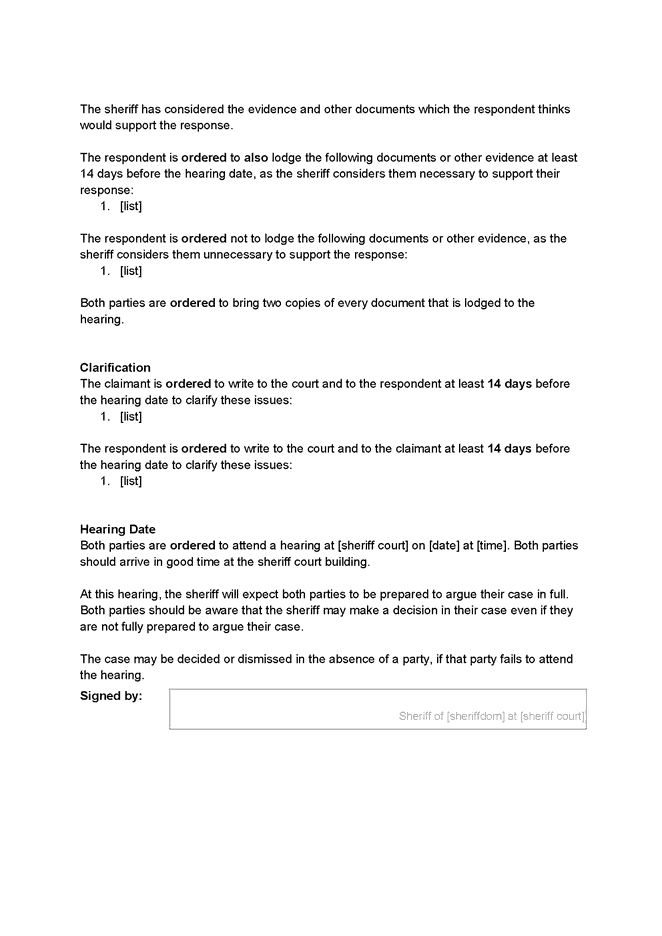


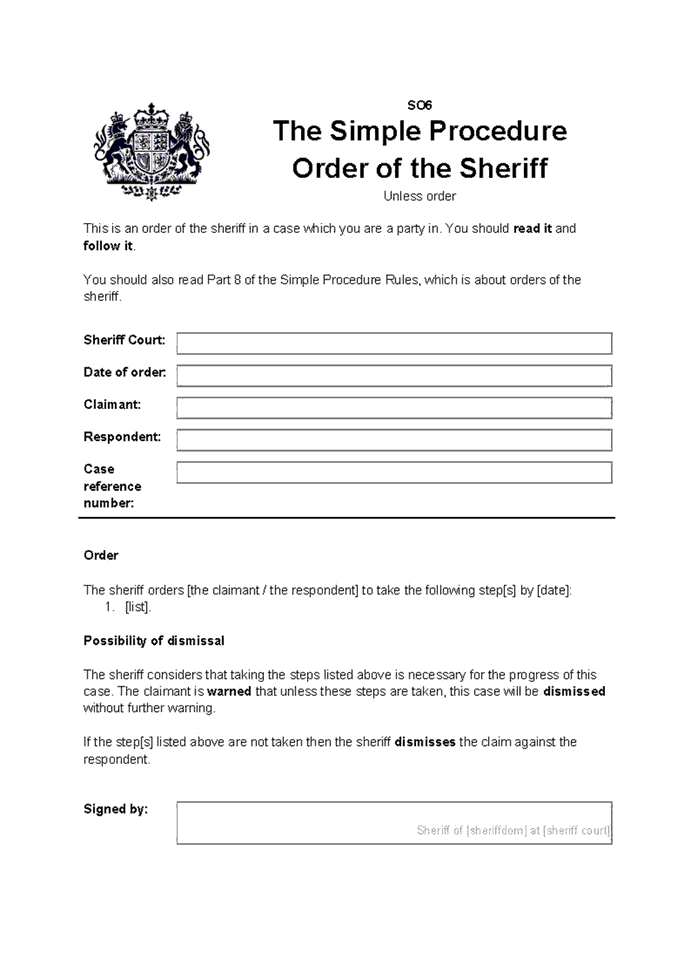


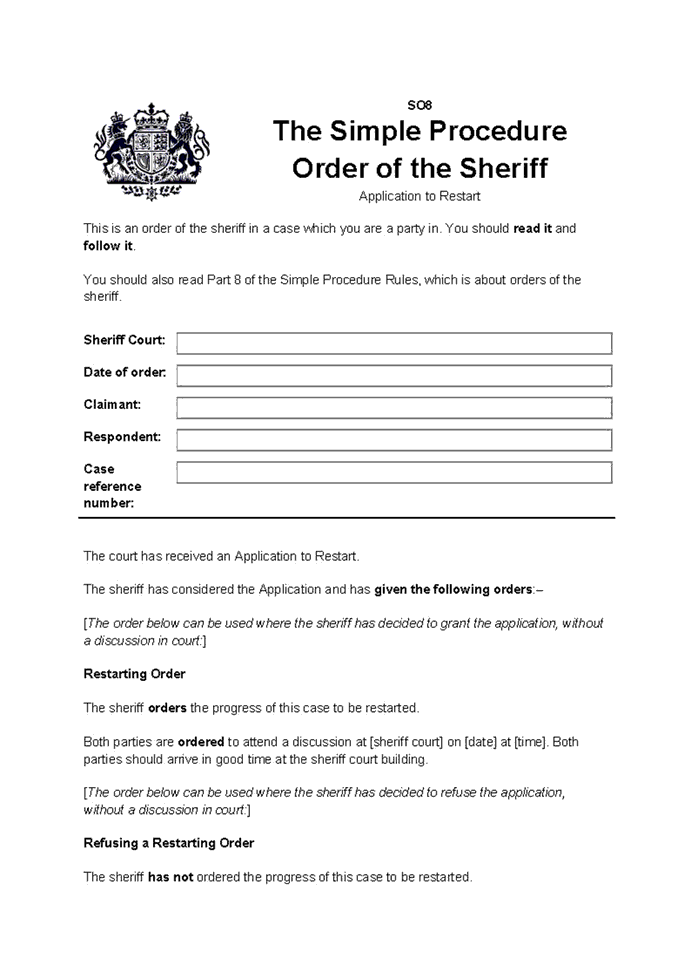


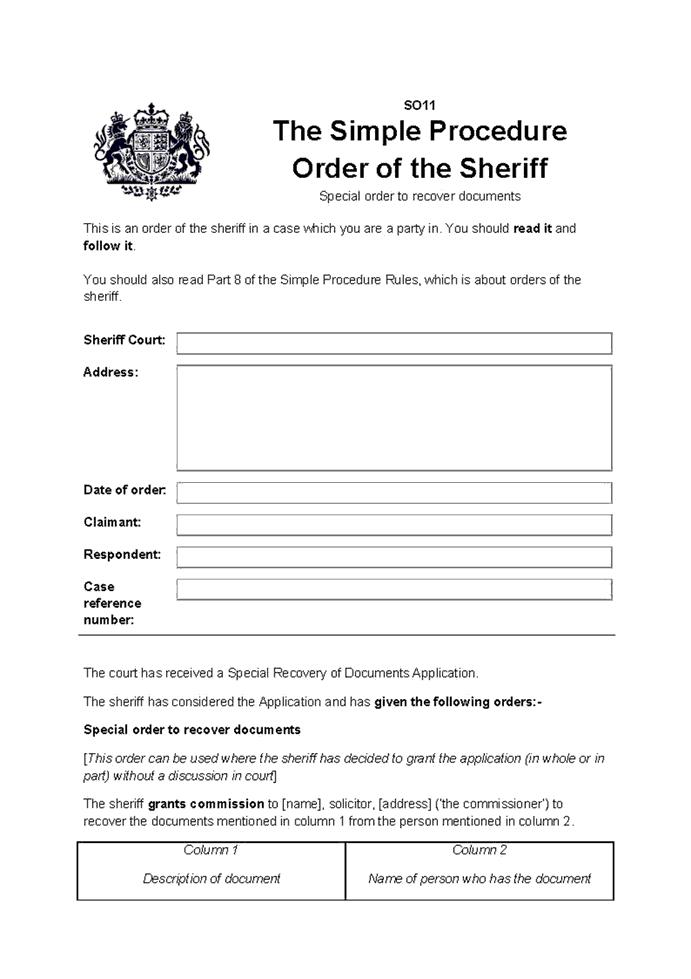


(This note is not part of the Act of Sederunt)
This Act of Sederunt makes provision about the procedure to be followed in simple procedure cases. It comes into force on 28 November 2016, when the first set of cases will become subject to simple procedure. Those will be cases which formerly would have proceeded as a small claim, but which have a value of £5,000 or less.
The Act of Sederunt
Paragraph 2 introduces the Simple Procedure Rules in Schedule 1 (“the Rules”) and the forms for use with simple procedure in Schedule 2. It also provides for the Scottish Courts and Tribunals Service (“SCTS”) to be able to adapt those forms for use with the litigation portal on the SCTS website.
Paragraph 3 contains interpretation provision for the Rules, including provision which renames certain aspects of civil procedure, such as the use of the word ‘pause’ for ‘sist’.
Paragraph 4 provides for certain steps in simple procedure to be warrant for taking certain actions.
Paragraph 5 provides for arrestments to found jurisdiction in simple procedure.
Schedule 1 – The Simple Procedure Rules
Part 1 of the Rules is an overview of simple procedure, the principles of simple procedure, the persons involved in a simple procedure case and their responsibilities.
Part 2 of the Rules is about who may represent a party, and what that representative may and may not do. It is also about who may provide support to a party in the courtroom, and what that courtroom supporter may and may not do.
Part 3 of the Rules is about how the claimant makes a claim and what the court will do with that claim.
Part 4 of the Rules is about how the respondent responds to a claim and what the court will do with that response.
Part 5 of the Rules is about how the respondent may ask for time to pay if a claim for payment of a sum of money is admitted, and how the claimant can consent or object to that.
Part 6 of the Rules is about what has to be done when the Rules require something to be sent to someone. It is also about what has to be done when the Rules require a document to be formally served on someone.
Part 7 of the Rules is about what happens after a Response Form has been received and what happens if no Response Form is received.
Part 8 of the Rules is about the orders which the sheriff can give to manage or decide a case.
Part 9 of the Rules is about applications which parties may make to the court to ask for things to be done in a case.
Part 10 of the Rules is about how the parties should lodge documents and other evidence with the court before a hearing. It is also about how parties can apply for orders to recover documents from other people.
Part 11 of the Rules is about the citation of witnesses and their attendance at hearings. It is also about measures that the court can take to assist vulnerable witnesses in giving evidence.
Part 12 of the Rules is about the hearing at which the dispute between the parties should be resolved.
Part 13 of the Rules is about the decisions which the sheriff can make to resolve a dispute. It is also about the circumstances in which a party can apply to have a decision recalled.
Part 14 of the Rules is about the expenses of a claim which the sheriff can order a party to pay for.
Part 15 of the Rules is about when and by whom a decision can be enforced. It is also about the steps which a successful claimant must take to enforce a decision.
Part 16 of the Rules is about how a party can appeal a decision and how the sheriff and Sheriff Appeal Court will deal with an appeal.
Part 17 of the Rules is about some miscellaneous matter which can arise during a case.
Part 18 of the Rules is about how to formally serve a document on someone living in Scotland.
Part 19 of the Rules is about how to formally serve a document on someone outside Scotland.
Part 20 of the Rules is about provisional orders which protect or secure the claimant's position before the sheriff makes a final decision in a case.
Part 21 of these Rules contains a guide for litigants, lay representatives and courtroom supporters to the meaning of certain legal words and expressions used in these rules.
Schedule 2 – Forms
Schedule 2 contains the forms for use with simple procedure.
Schedule 3 – Standard Orders
Schedule 3 contains standard orders which the sheriff may use in a simple procedure case.